A person sitting on the edge of a bed in a dark bedroom at predawn hours, silhouetted against a window showing a deep indigo and violet sky transitioning toward dawn
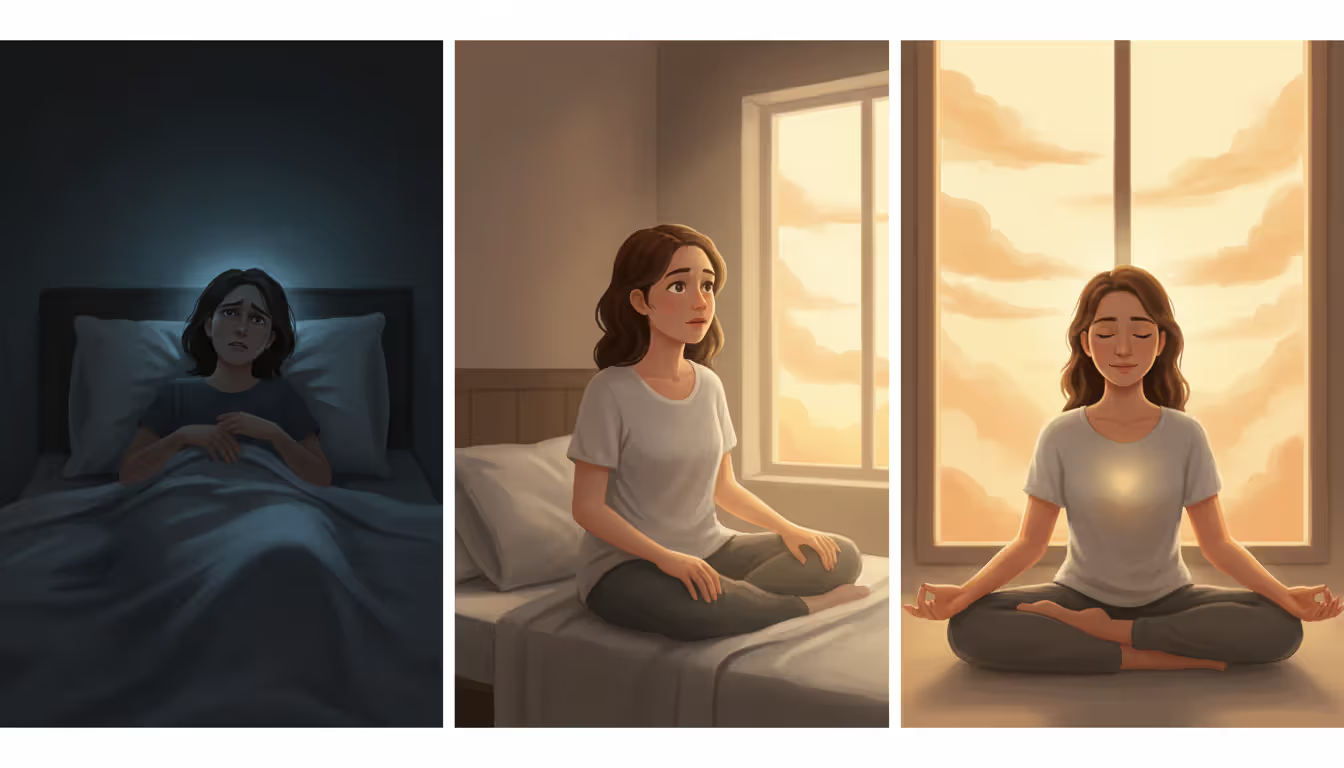
Here's something that happens more often than you'd think: Your eyes snap open at 4am. No alarm. No noise. Just sudden, complete alertness in the middle of the night. Meanwhile, your partner snores peacefully beside you.
Most people's first thought? "Great, now I'm awake."
But across cultures—from Vedic India to Christian monasteries to traditional Chinese healing—these specific early-morning hours aren't considered random wake-up calls. They're viewed as deliberate openings, moments when spiritual energy flows differently than at noon or midnight.
Maybe you've noticed this pattern three nights running. Maybe it's been happening for weeks. Before you blame stress or that late coffee, consider this: your consciousness might be expanding faster than your sleep schedule can keep up with. The question isn't always "How do I stop this?" Sometimes it's "What's trying to get my attention?"
The Spiritual Significance of Early Morning Waking
Between 3 and 5 in the morning, something shifts in the energetic atmosphere. You won't find this mentioned in conventional sleep medicine, but spiritual practitioners worldwide have tracked this pattern for centuries.
Think about it—at 4am, fewer cars are on the road. Fewer people are scrolling their phones. The electromagnetic buzz of modern life dials down several notches. In that quiet, your own internal signal gets clearer, like finally hearing a radio station once you've driven out of range of competing frequencies.
Traditional Chinese Medicine maps the 24-hour cycle onto different organ systems and their corresponding meridians. The 3-5am slot? That's the lung meridian's domain. And the lungs, in this framework, don't just handle oxygen. They're responsible for processing grief, for releasing what you've been holding too tightly, for creating space in your system.
So waking during this window might mean your body's initiating a spiritual decluttering session.
During early morning hours, your conscious mind hasn't booted up completely yet. You're in a strange in-between state—the dream-logic part of your brain is still active, but you're aware enough to observe it. That combination creates perfect conditions for nighttime spiritual experiences that would get drowned out by daytime mental noise.
Some people describe feeling almost pulled awake by an invisible force. Not startled—that's different. More like their awareness was gently but insistently summoned. There's no panic, no heart racing. Just presence.
Understanding Brahma Muhurta and Sacred Hours
The ancient yogis had a specific term for the pre-dawn period: brahma muhurta, literally "the creator's time." This window opens roughly 96 minutes before the sun appears—depending where you live and what season it is, that usually falls somewhere between 4 and 6am.
Why did they call it the creator's hour? According to Vedic texts, the three gunas (fundamental qualities of nature) align differently at this time. Sattva—the quality of clarity, lightness, and harmony—dominates. Rajas (agitation) and tamas (dullness) recede. It's like the universe briefly tips the scales in favor of spiritual work.
Modern science has caught up in interesting ways. Your cortisol naturally starts climbing around 4am, preparing your body for wakefulness. Body temperature begins rising. In sleep labs, researchers see the last REM cycle happening right around this time—which means you're already closer to consciousness than you were at 2am.
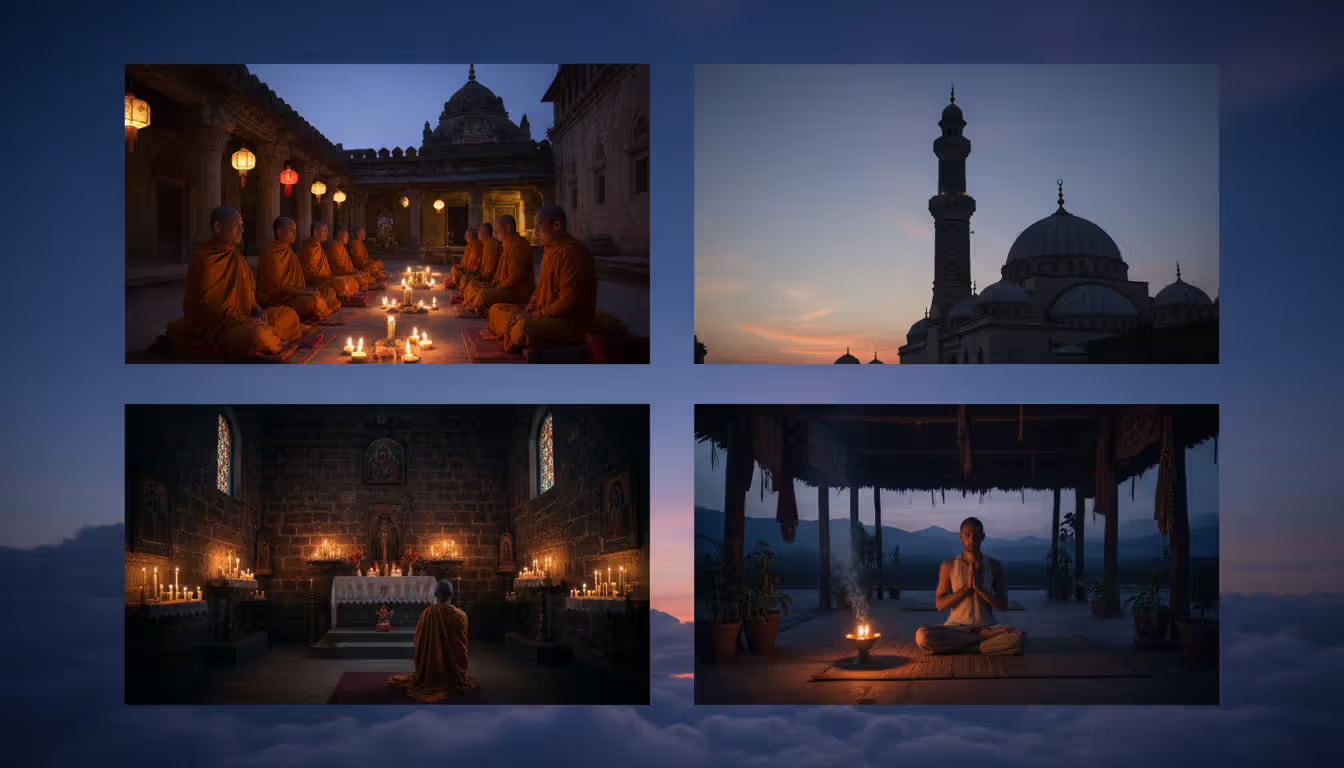
Muslims know this timing too. The Fajr prayer happens before sunrise, when the first thread of light appears. Christian monks practicing the Liturgy of the Hours would rise for Vigils—prayers conducted in total darkness, often around 3 or 4am. Buddhist monasteries start meditation practice well before dawn breaks.
That's four different traditions, continents apart, all pointing at the same time window. Coincidence? Or are they all tuning into something real about these hours?
Author: Caleb Montrose;
Source: 5sensesspa.com
What Makes 4am Different from Other Hours
Four in the morning sits right in the sweet spot. It's late enough that you've gotten some actual sleep (assuming you went to bed at a reasonable hour), but early enough that the world hasn't started making demands yet.
Unlike 2am—which often signals genuine sleep disruption or anxiety—4am waking tends to feel qualitatively different. You might notice your mind is quiet but active. Thoughts come, but they're not the hamster-wheel variety. They're more like observations floating through clear water.
Creative people often report their best ideas arriving at this hour. Musicians hear melodies. Writers see entire paragraphs. Entrepreneurs solve problems they've wrestled with for weeks.
Your brainwave patterns at 4am can shift into alpha and theta states more easily than during full daytime consciousness. These are the same frequencies accessed in meditation. So you're essentially waking up already halfway to a meditative state, no cushion required.
The 3am vs 4am Spiritual Distinction
Here's where the hour makes a real difference. Three am has a heavier quality to it. Spiritual teachers across traditions describe 3am as when the shadow material surfaces—old traumas, suppressed emotions, the parts of yourself you've been avoiding.
The spiritual meaning of waking up at 3am often involves confrontation. Not pleasant, but necessary. You might wake with your heart pounding, fragments of disturbing dreams still clinging to you, emotions you can't quite name churning in your chest.
That's the lung meridian doing its job: helping you release, grieve, let go.
Four am, though? Different energy entirely. By 4am, if you've processed through 3am's intensity, you emerge into something lighter. The approaching dawn brings its own quality—possibility rather than purgation. Expansion instead of extraction.
I've talked to dozens of people who wake at both hours in the same night. The pattern's consistent: 3am feels like doing the dishes after a big meal (necessary but not fun), while 4am feels like stepping onto a clean porch at sunrise (optional but rewarding).
Common Spiritual Awakening Sleep Disturbances
Let's be direct: spiritual growth messes with your sleep. There's no elegant way around that fact.
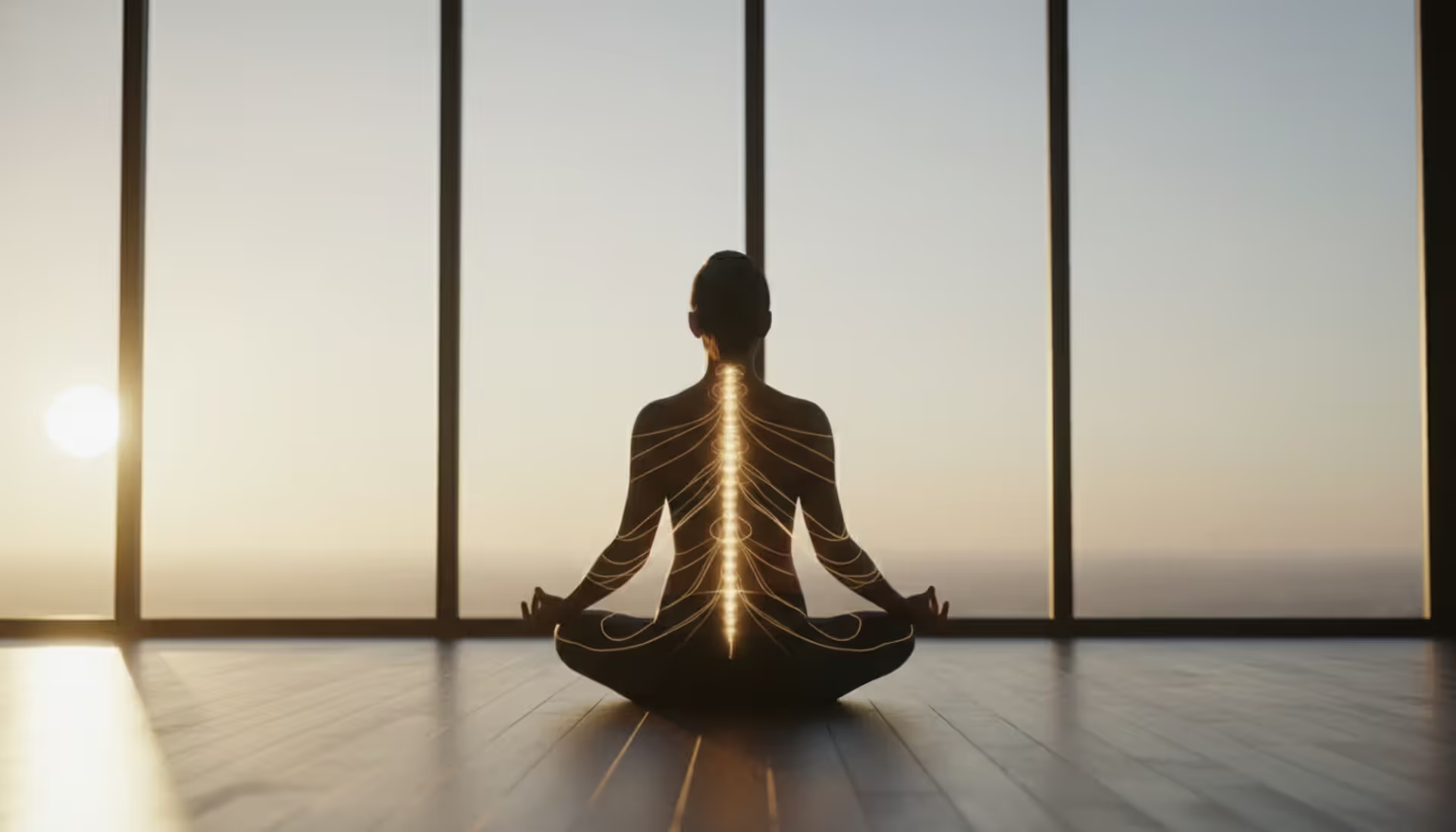
As your consciousness shifts into higher gears, your energy body—what yogic philosophy calls the pranamaya kosha—undergoes renovation. Channels that were blocked start opening. Chakras that ran at 30% capacity suddenly kick up to 70%. Your whole system vibrates at a different frequency.
Your physical body, conservative creature that it is, needs time to adjust. During that adjustment period, sleep gets weird.
Spiritual awakening sleep disturbances show up in various flavors. Some people wake at the same time nightly for weeks. Others suddenly need only four hours of sleep instead of eight, yet feel completely rested. Still others cycle between nights of crystalline wakefulness and days of overwhelming drowsiness that come out of nowhere.
Here's the crucial distinction: spiritual sleep changes versus medical insomnia feel different from the inside.
Regular insomnia leaves you foggy, irritable, desperately craving more rest. You wake up tired and stay tired. Your thinking gets muddy. Simple tasks feel harder.
Spiritually-driven waking? You open your eyes at 4am feeling more alert than you do at 3pm on a normal day. Your mind is sharp. If anything, you might feel slightly euphoric, like you've been given a secret gift of extra time. Sure, you might hit an energy dip around lunch, but it's not the grinding exhaustion of true sleep deprivation.
That said—and this matters—not every sleep problem has a spiritual cause. Depression disrupts sleep. Anxiety disrupts sleep. Sleep apnea, restless leg syndrome, hormonal imbalances, chronic pain, medication side effects... the list goes on.
If you're experiencing persistent daytime dysfunction, difficulty concentrating, mood crashes, or physical health symptoms, see a doctor. Spiritual growth doesn't require sacrificing your wellbeing. Sometimes the spiritual lesson is actually "get your thyroid checked."
Author: Caleb Montrose;
Source: 5sensesspa.com
How Meditation and Spiritual Practice Affect Your Sleep
Regular meditators discover something counterintuitive: they often need less sleep than before starting their practice. Not because they're sleep-deprived, but because meditation provides some of the restorative functions that sleep normally handles.
During deep meditation, your nervous system drops into profound rest states. Research shows that these states can be deeper than sleep—your oxygen consumption decreases, your heart rate drops, your brain produces the slow waves typically seen only during sleep's deepest phases.
Translation? Twenty minutes of deep meditation might give your system some of the same benefits as an hour of sleep.
The connection between meditation and sleep patterns gets more interesting with consistent practice. Your body's an excellent pattern-recognition machine. If you meditate every morning at 5:30am for three months, your system starts preparing for that. You might begin waking naturally at 5am, ready to practice, even on days you'd planned to sleep in.
Some practitioners worry this means they're "overstimulating" their nervous system or meditating incorrectly. Usually the opposite is true. Their practice is working exactly as designed—it's heightening their sensitivity to natural rhythms they've been sleeping through for years.
Spiritual practice and sleep influence each other in both directions. For some people, meditation dramatically improves sleep quality, reducing the time it takes to fall asleep and minimizing middle-of-the-night wake-ups. For others, it creates a kind of useful alertness that shifts their entire sleep architecture.
Neither response is wrong. They're just different. Your job is to work with whatever pattern emerges rather than fighting it.
The solution usually isn't stopping your practice. It's adjusting timing, modifying evening routines, or simply accepting that you're evolving from an 8-hour sleeper into a 6-hour sleeper who feels equally rested.
What to Do When You Wake Up at 4am
You're lying there. Fully awake. It's 4:07am. Now what?
You've got options, and choosing wisely depends on reading your own state accurately.
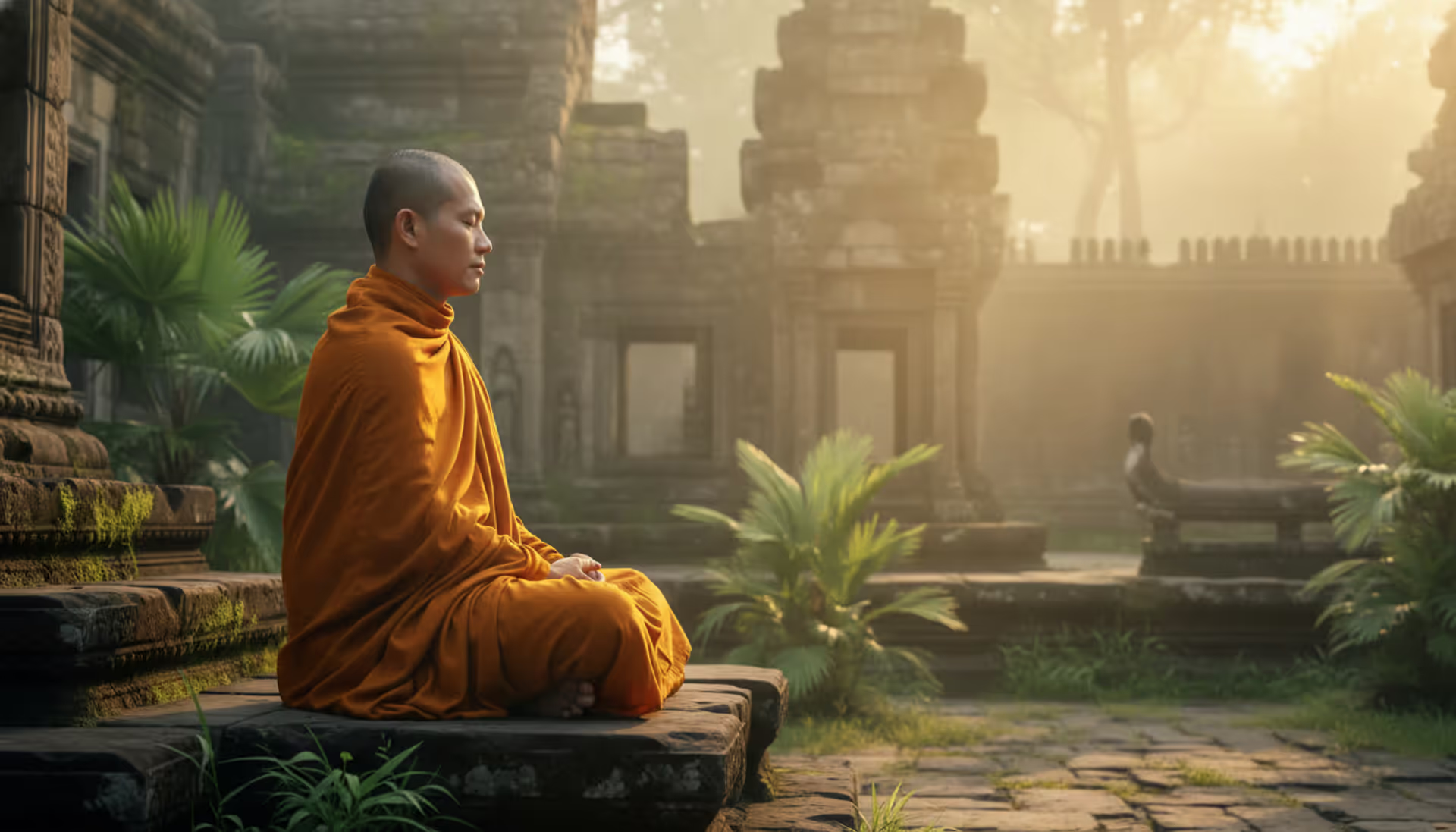
Option one: Embrace meditation before dawn. If you feel energized, clear-headed, maybe even excited to be awake—go with it. Sit up (don't stay horizontal or you'll drift off). Your practice doesn't need to be complicated. Twenty minutes of watching your breath can feel more potent at 4am than an hour of practice at noon. The brahma muhurta effect is real, even if you can't explain it.
One woman I spoke with described her 4am meditations as "accessing a frequency that's jammed during the day." Another person said it felt like "meditation on easy mode—less effort, deeper results."
Keep it simple: breath awareness, a mantra you already know, or just sitting in silence. Save complex techniques for when you're fully caffeinated.
Option two: Capture what's emerging. Keep a notebook within arm's reach of your bed. These early hours often deliver insights about problems you've been chewing on for weeks. Suddenly the solution's obvious. Or you remember a dream fragment that feels significant. Or you get clear guidance about a decision you've been avoiding.
Write it down immediately. These downloads evaporate fast once your analytical mind fully boots up around 7am.
Option three: Move your body gently. Sometimes the energy that woke you needs physical expression. Gentle yoga, qi gong, or simple stretching lets you honor the wakefulness without triggering full-on alertness. This approach works well if you're hoping to return to sleep afterward.
Option four: Go back to sleep mindfully. Maybe you've got a presentation at 9am and genuinely need more rest. That's legitimate. The difference is how you return to sleep. Instead of fighting the wake-up ("Why is this happening again?!"), acknowledge it. Take five conscious breaths. Maybe say a quick prayer or set an intention. Then let yourself drift.
This transforms an interruption into a brief spiritual check-in. No stress, no problem, just a momentary awareness before returning to rest.
Author: Caleb Montrose;
Source: 5sensesspa.com
The key: Avoid rigid rules. Some mornings warrant a full meditation session. Others call for jotting down three sentences, then going back to sleep. Developing flexibility prevents these wake-ups from becoming another source of tension.
Oh, and one critical mistake to avoid: Don't turn on bright overhead lights or check your phone. Both will flood your system with blue light and cortisol, making it nearly impossible to return to sleep if you want to. Use a dim lamp if you need light. And social media at 4am is a terrible idea unless you enjoy starting your day with other people's anxiety.
Signs Your Early Waking Is Spiritually Significant
The early morning has gold in its mouth. The Brahmamuhurta is the most important time for spiritual practices. During this time, the mind is fresh, the air is pure, and the spiritual vibrations are at their peak. Those who wake and practice during this sacred hour advance rapidly on the spiritual path
— Swami Sivananda
How do you actually tell the difference between spiritual waking and garden-variety insomnia?
First indicator: The quality of your consciousness. Spiritually-motivated waking brings unusual clarity. Your thinking feels sharp, not foggy. Ideas connect in novel ways. There's often a sense of peace or even subtle joy, despite the inconvenient timing. You feel more present, more "here" than you sometimes do at 2pm on a Tuesday.
Anxiety-driven insomnia feels completely different. Your thoughts spiral. You replay conversations from three years ago. Your mind races without getting anywhere productive. There's a trapped, hamster-wheel quality to it.
Second sign: What else is happening. Do you remember vivid dreams right before waking? Some people describe clear spiritual content in these dreams—receiving teachings, meeting guides, getting shown solutions to waking-life problems. Others report physical sensations: tingling in the spine, warmth in the chest, feelings of expansion or energy movement. These accompanying phenomena suggest something beyond ordinary sleep disruption.
Third clue: Consistency of timing. Random wake-ups scattered throughout the night—1:30am one night, 4:15am the next, 3:45am after that—usually point toward stress or medical issues. Waking at almost exactly the same time night after night, especially within that 3-5am sacred window? That's your system responding to something more intentional.
Fourth marker: Your daytime energy. Here's the weird part: despite sleeping less, do you feel surprisingly functional? You might get sleepy around 2pm, sure. But overall, you're managing. You're not mainlining coffee just to form sentences. That disconnection between reduced sleep and maintained energy suggests spiritual waking rather than true sleep deprivation.
If you're utterly wrecked all day, having trouble focusing, forgetting things, getting irritable—your body genuinely needs more sleep, regardless of any spiritual dimensions.
Fifth factor: The pattern's evolution. Spiritual awakening sleep disturbances don't usually last forever at the same intensity. They might run strong for six weeks during an active growth phase, then gradually ease as your energy body adjusts. The pattern shifts, evolves, responds to your practice changes.
Medical insomnia tends to be more static or to worsen over time without intervention.
Author: Caleb Montrose;
Source: 5sensesspa.com
Sixth consideration: Context in your journey. Did these wake-ups start right after you began a daily meditation practice? After a retreat? Following a major life transition or loss? Sleep changes that correlate clearly with spiritual milestones suggest a connection worth exploring.
When in doubt? Consult multiple perspectives. A sleep study can rule out apnea or other disorders that definitely need medical treatment. Meanwhile, talking with an experienced meditation teacher can help you understand and work with spiritual dimensions. These aren't competing explanations—you might have both physical and spiritual factors operating simultaneously, each deserving attention.
Early Morning Wake Times: A Spiritual Comparison
Hour
Tradition/System
Energetic Quality
What It Often Signals
What Works Well
2am
Liver meridian (TCM)
Detoxifying, processing
Anger needing release, questions about life direction, creative breakthroughs pushing through
Journal writing, emotional release techniques, or simply returning to sleep
3am
Lung meridian (TCM), Christian contemplative practice
Purging, grief-processing
Shadow work surfacing, the "dark night" experiences, releasing old patterns
Conscious breathing, prayer, allowing grief to move through
4am
Brahma muhurta's beginning (Vedic)
Expansive, generative
Receiving higher guidance, mental clarity, opening to spiritual connection
Setting intentions, accessing divine inspiration, feeling called to action
Yoga practice, mantra repetition, active spiritual disciplines
Frequently Asked Questions About Spiritual Waking Times
Is waking up at 4am every night a sign of spiritual awakening?
Consistent 4am waking can absolutely indicate spiritual awakening, but it's not definitive proof by itself. Context matters significantly. Are you also experiencing other shifts—increased synchronicities, changing values, heightened intuition, feeling drawn to solitude or nature? Did the wake-ups start around the same time as beginning a meditation practice or after a significant life transition? How do you feel when you wake—energized and clear, or anxious and exhausted? If you're waking alert rather than tired, noticing heightened awareness during these hours, and experiencing other markers of consciousness expansion, spiritual significance becomes much more likely. That said, thyroid issues, perimenopause, anxiety, and sleep apnea also cause 4am waking, so don't dismiss medical possibilities.
What is the spiritual meaning of waking up at 3am vs 4am?
These adjacent hours carry distinctly different energetic signatures. Three am corresponds to the lung meridian in Traditional Chinese Medicine, which governs not just respiration but also processing grief and releasing what no longer serves you. People often describe 3am waking as confrontational—you might wake with your heart racing, disturbing dream fragments lingering, or unnamed emotions churning. It's shadow work time, when suppressed material surfaces for healing. Four am sits deeper into brahma muhurta and feels lighter, more expansive. Instead of purging darkness, you're opening to possibility. This hour favors receiving guidance, creative inspiration, and connecting with higher states rather than wrestling with lower ones. Many people wake at both times in sequence—processing at 3am, then emerging into clarity at 4am.
Should I meditate if I wake up at 4am or go back to sleep?
There's no one-size-fits-all answer—read your own state. Feeling genuinely alert, peaceful, and drawn toward practice? These hours can deliver profound meditation experiences that exceed longer sessions at other times. Even 15 minutes can be remarkably potent. But if you're tired, have a demanding day ahead, or your body's clearly asking for more rest, honor that. Going back to sleep is completely valid. You can still acknowledge the wake-up with a few conscious breaths or a brief intention before allowing yourself to drift off again. The goal is flexibility, not rigid rules. Some mornings call for full practice; others need you to simply notice the opening, then return to sleep. Over time, you'll develop reliable intuition about which response each situation requires.
How long do spiritual awakening sleep disturbances last?
Duration varies wildly depending on individual circumstances and how intensely your spiritual growth is unfolding. Some people experience disrupted patterns for just two or three weeks during a particularly active phase. Others notice changes lasting several months while their energy system undergoes major recalibration. The pattern typically isn't constant—you might have intense weeks followed by periods when sleep normalizes. Most long-term practitioners eventually settle into a new baseline that differs from before (maybe needing less total sleep or naturally waking earlier) but feels sustainable rather than exhausting. If severe disruption continues past six months without any improvement or evolution in the pattern, consulting both medical professionals and experienced spiritual teachers makes good sense.
Can sleep problems during spiritual growth be harmful?
Temporary shifts in sleep patterns during spiritual growth generally aren't harmful if you're otherwise healthy and not experiencing severe daytime impairment. Many practitioners function perfectly well on reduced sleep during active phases—they're accessing rest through deep meditation states in addition to sleep. However, chronic sleep deprivation from any cause absolutely affects physical health, emotional stability, and cognitive function over time. Warning signs include persistent exhaustion during the day, serious difficulty concentrating, mood disturbances that impact relationships, or physical health symptoms emerging. If these appear, prioritize rest and consider medical evaluation. Authentic spiritual growth doesn't demand sacrificing your wellbeing. Sometimes the real spiritual lesson is learning to honor your body's needs and establish healthier boundaries around practice schedules.
What is brahma muhurta and why does it matter?
Brahma muhurta translates from Sanskrit as "the creator's hour"—it's a Vedic concept identifying the pre-dawn period (approximately 96 minutes before sunrise) as uniquely powerful for spiritual practice. During these hours, according to yogic philosophy, the quality of consciousness shifts because sattva (purity and harmony) dominates over rajas (agitation) and tamas (dullness). The world is quieter, mental chatter decreases across the collective consciousness, and the atmosphere itself feels charged differently. Practitioners report unusual clarity, deeper concentration, and stronger spiritual connection during early morning practice compared to other times. Modern meditators often experience this as ideas flowing more freely, meditation requiring less effort, or insights arriving more readily. While not everyone can or should wake this early, those who do frequently find that even brief practices during brahma muhurta produce results disproportionate to the time invested.
That 4am wake-up might feel inconvenient at first, but understanding its potential significance can completely shift your relationship with it. You're not broken. Your sleep isn't necessarily disrupted in a negative way. You might be tuning into the brahma muhurta window that spiritual practitioners have honored for millennia, processing deep emotional material through the lung meridian's territory, or simply becoming more sensitive to natural rhythms through your meditation practice.
The difference between frustration and opportunity often comes down to perspective. These early hours offer access to states of consciousness that afternoon meditation sessions might never reach. The world at 4am operates under different rules—quieter, clearer, more conducive to spiritual connection.
That doesn't mean every 4am wake-up requires a full meditation practice. Sometimes your body just needs acknowledgment before returning to rest. Other times, these hours become gateways to profound insights, creative solutions, or spiritual experiences unavailable during normal waking life.
Balance matters more than rigid adherence to any system. Honor your spiritual growth, yes—but also honor your physical needs. If early waking leaves you energized and clear, work with it. If it's creating genuine exhaustion and impairment, adjust your approach and prioritize rest.
Sleep patterns typically stabilize once your energy system completes its current phase of adjustment. What feels disruptive this month may become your natural rhythm by next season—one that supports both your spiritual development and your practical life requirements. Stay flexible, trust the intelligence of your own system, and let these sacred pre-dawn hours reveal whatever gifts they're carrying for you.
Meditation sits at the heart of Buddhist practice, but not for stress relief. Buddhists meditate to fundamentally transform their understanding of reality and liberate themselves from suffering. This distinction shapes everything from technique selection to measuring progress
Tantric meditation represents one of the most misunderstood spiritual practices in Western culture. Learn the authentic origins, core techniques including breathwork and kundalini energy work, and how to begin a safe, effective practice that integrates body, mind, and spirit
Spiritual meditation with God transforms the practice of quieting your mind into sacred conversation. Unlike secular mindfulness, this approach centers on opening yourself to divine communion through techniques like centering prayer, contemplative scripture reading, and silent listening meditation
The RAIN meditation technique offers a structured approach to difficult emotions through four steps: Recognize, Allow, Investigate, and Nurture. Developed by Tara Brach, this mindfulness practice helps you process emotional pain with compassion rather than resistance
The content on this website is provided for general informational and educational purposes only. It is intended to explain concepts related to meditation, mindfulness, mental health, and spiritual practices.
All information on this website, including articles, guides, and examples, is presented for general educational purposes. Meditation outcomes may vary depending on individual practices, health conditions, and guidance.
This website does not provide medical, mental health, or spiritual advice, and the information presented should not be used as a substitute for consultation with qualified professionals.
The website and its authors are not responsible for any errors or omissions, or for any outcomes resulting from decisions made based on the information provided on this website.