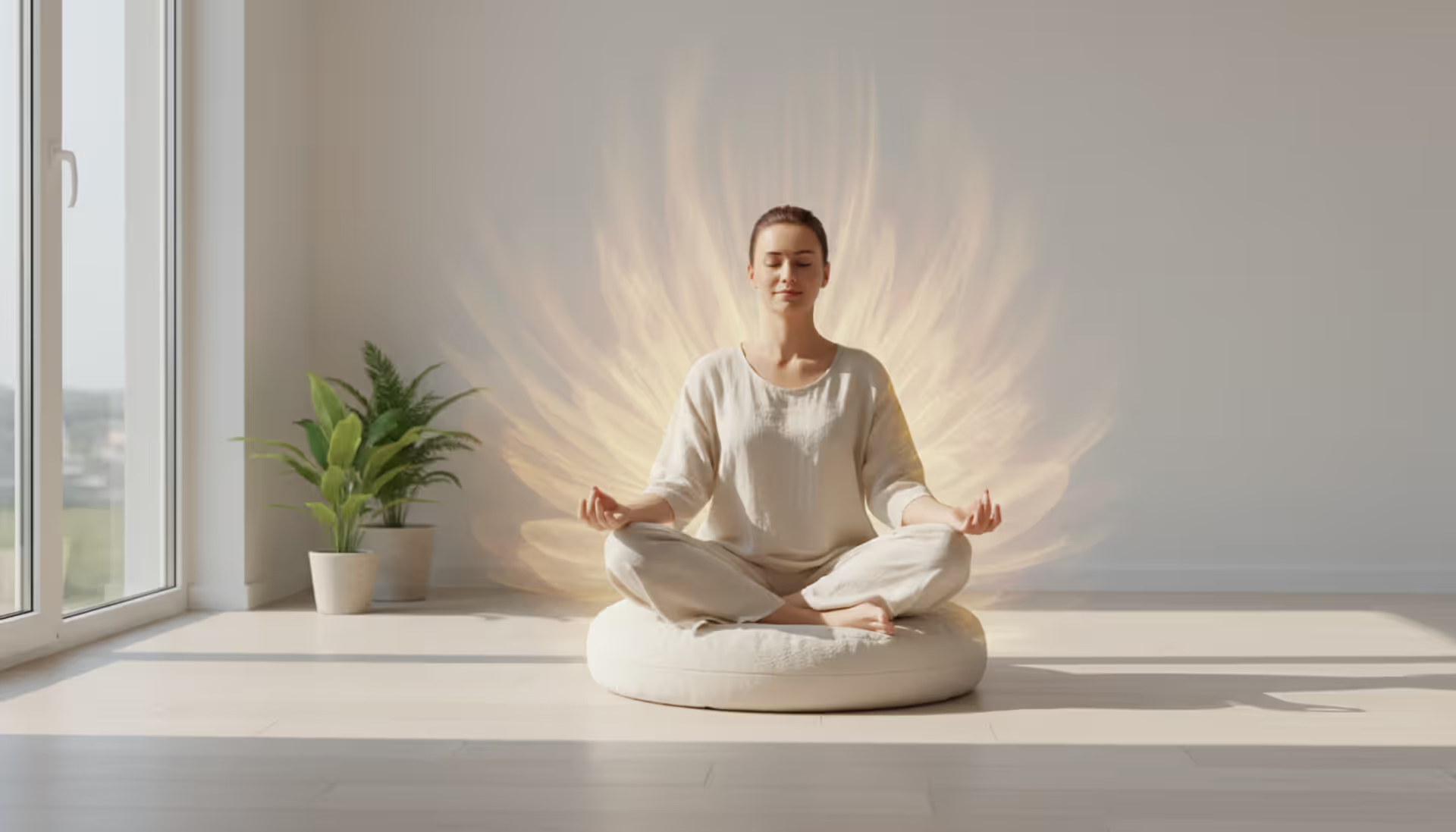
Person sitting in meditation pose on a cushion in a bright minimalist room with soft morning light, eyes closed, peaceful expression, warm gentle glow around the figure
When uncomfortable emotions surface—anger, shame, anxiety, or grief—most of us instinctively try to push them away. We distract ourselves, rationalize, or numb out. But what if there was a structured way to turn toward these difficult feelings with curiosity instead of resistance? The RAIN meditation technique offers exactly that: a four-step framework for meeting emotional pain with mindfulness and compassion.
Understanding RAIN Meditation
RAIN is an acronym that stands for Recognize, Allow, Investigate, and Nurture. This structured mindfulness practice was developed and popularized by psychologist and meditation teacher Tara Brach, who has been teaching it since the early 2000s. While the first three steps (Recognize, Accept, Investigate) appeared in Buddhist psychology for decades, Brach added the crucial fourth step—Nurture—to emphasize self-compassion as an essential component of emotional healing.
The method serves as a bridge between formal meditation and real-life emotional challenges. Unlike practices that require sitting still for extended periods, RAIN can be applied in the moment when difficult emotions arise—during a conflict with a partner, after receiving criticism at work, or when anxiety spikes before an important event.
At its core, RAIN addresses a fundamental human struggle: we suffer not just from painful emotions themselves, but from our relationship to those emotions. When we judge ourselves for feeling anxious, or feel ashamed of our anger, we create a second layer of suffering. The rain method emotional processing works by changing that relationship, helping practitioners move from resistance to acceptance, from judgment to curiosity.
Tara Brach describes RAIN as a practice of "radical compassion"—radical because it goes against our conditioning to fix, suppress, or escape uncomfortable feelings. Instead, it invites us to pause and create space for whatever is present.
The Four Steps of RAIN Explained
Recognize What You're Experiencing
The first step asks a deceptively simple question: What's happening right now? This isn't about analysis or storytelling. You're not trying to figure out why you feel this way or who's to blame. Instead, you're naming the present-moment experience with clarity.
You might recognize a physical sensation: "My chest feels tight." Or an emotion: "There's anger here." Or a thought pattern: "I'm replaying that conversation over and over." The key is to identify what's actually present rather than what you think should be there.
Many people skip past this step too quickly, assuming they already know what they're feeling. But recognition requires pausing long enough to actually check in. A woman preparing for a difficult conversation with her boss might assume she's nervous, but when she truly recognizes her experience, she discovers it's actually resentment mixed with fear of being dismissed.
This step creates what psychologists call "affect labeling"—the act of putting feelings into words, which research shows can reduce the intensity of emotional reactions by engaging the prefrontal cortex.
Author: Caleb Montrose;
Source: 5sensesspa.com
Allow the Experience to Be There
After recognizing what's present, the second step asks you to let it be there without trying to change it. This doesn't mean you like the feeling or want it to stay forever. It means you're temporarily suspending the urge to fix, escape, or argue with reality.
You might silently say to yourself: "This can be here" or "Let it be" or simply "Yes." Some practitioners find it helpful to imagine their feelings as weather passing through—you don't try to stop rain or rush sunshine; you acknowledge what's present.
This step directly challenges our habitual resistance. When anxiety arises, we typically tense up against it, which paradoxically intensifies the anxiety. Allowing creates a different possibility: the emotion can move through its natural cycle without getting stuck in a loop of resistance.
A useful distinction: allowing is not the same as resignation or giving up. You're not saying "I'll always feel this way" or "There's nothing I can do." You're simply acknowledging that right now, in this moment, this is what's here. Fighting with the present moment is exhausting and ineffective. Allowing conserves energy for wise action later.
Investigate with Kindness
The third step shifts from acknowledging to exploring. You bring gentle curiosity to your experience, asking questions like: Where do I feel this in my body? What does this emotion need? What beliefs or thoughts are feeding this feeling? What's the most difficult part of this experience?
The phrase "with kindness" is crucial. This isn't interrogation or psychoanalysis. You're not trying to fix yourself or figure out everything that's wrong with you. Instead, imagine you're a caring friend checking in on someone you love.
Investigation often reveals layers beneath the surface emotion. A man feeling angry at his teenage daughter might discover, upon investigation, that underneath the anger is fear—fear that she'll make choices that harm her, fear that he's failing as a parent. This deeper layer is where real healing happens.
Physical investigation can be particularly powerful. When you locate an emotion in your body—perhaps shame feels like a heavy stone in your stomach—you can direct kind attention there. Sometimes simply placing a hand on that area and breathing into it creates a sense of being accompanied rather than alone with the pain.
One common pitfall: investigation can slip into rumination if you're not careful. The difference is that investigation stays connected to present-moment sensation and asks open-ended questions, while rumination loops through the same thoughts about the past or future.
Author: Caleb Montrose;
Source: 5sensesspa.com
Nurture with Self-Compassion
The final step, added by Tara Brach, recognizes that turning toward pain requires support. After investigating your experience, you actively offer yourself compassion. This might take several forms:
You could place a hand on your heart or cheek and speak kindly to yourself: "This is really hard right now" or "You're not alone in feeling this way." You might ask: "What does this part of me need right now?" and then offer it—perhaps reassurance, forgiveness, permission to rest, or a reminder of your inherent worth.
Some people visualize receiving compassion from a figure they trust—a grandparent, a spiritual teacher, even a beloved pet. Others imagine their wisest, most loving self offering care to the part that's suffering.
This step addresses a crucial gap in many mindfulness practices. Awareness alone can sometimes feel cold or detached. Nurturing brings warmth. It acknowledges that you're a human being worthy of care, especially when you're struggling.
The inquiry of RAIN challenges the belief that we are deficient or unworthy. When we regard our inner life with kindness, we begin to trust our basic goodness
— As Tara Brach
How to Use RAIN Meditation for Difficult Emotions
The recognize allow investigate nurture method works best when you practice it both formally and informally. Here's a practical approach:
Formal practice: Set aside 10-20 minutes to sit quietly and intentionally bring to mind a moderately difficult situation—not your most traumatic experience, but something that carries emotional charge. Maybe a recent conflict, a persistent worry, or a familiar pattern of self-criticism. Walk through each step of RAIN deliberately, taking several minutes with each one.
Informal practice: When difficult emotions arise during your day, pause for even 60-90 seconds to run through RAIN quickly. You don't need to be sitting in meditation posture. You can practice RAIN while stopped at a red light after a frustrating phone call, or in the bathroom before returning to a tense family dinner.
Author: Caleb Montrose;
Source: 5sensesspa.com
Common scenarios where RAIN helps:
After receiving criticism or rejection (recognizing the hurt, allowing the sting, investigating beliefs about your worth, nurturing the part that feels wounded)
During conflict with someone you love (recognizing anger or defensiveness, allowing it rather than immediately reacting, investigating what you're really afraid of, offering yourself compassion for being imperfect)
When anxiety about the future spirals (recognizing the worried thoughts and physical tension, allowing the uncertainty, investigating what you can and can't control, nurturing yourself with reassurance)
Facing shame or self-judgment (recognizing the harsh inner voice, allowing the discomfort of shame, investigating the beliefs driving it, actively offering kindness to counter the criticism)
Tips for beginners:
Start with emotions at a 4-6 intensity on a scale of 1-10. If you begin with your most overwhelming feelings, you might become flooded and the practice won't work. Build your capacity gradually.
Write out the steps on a notecard you can reference until they become natural. Many people forget the "N" step initially because we're not conditioned to offer ourselves compassion.
Don't expect emotions to disappear. RAIN isn't about making feelings go away; it's about changing your relationship to them. Sometimes after RAIN, an emotion softens. Sometimes it doesn't change intensity but feels more bearable because you're no longer fighting it.
Practice when you're relatively calm too, not only during crises. This builds the neural pathways so the practice is more accessible when you really need it.
Building compassion, countering resentment, connection
10-30 minutes
Beginner to Moderate
Traditional Mindfulness Meditation
Present-moment awareness of breath/sensations
General stress reduction, attention training, calm
10-60 minutes
Beginner to Advanced
Noting Practice
Labeling mental events as they arise
Understanding thought patterns, reducing reactivity
10-30 minutes
Moderate to Advanced
The rain meditation mindfulness approach differs from general mindfulness in its active engagement with difficult content. While traditional meditation often emphasizes returning to the breath when emotions arise, RAIN asks you to turn toward the emotion itself. This makes it particularly valuable for processing specific emotional challenges rather than developing general awareness.
Compared to loving-kindness meditation, which generates positive emotions toward self and others, RAIN works directly with whatever negative emotion is already present. Both cultivate compassion, but through different pathways.
Common Mistakes When Practicing RAIN
Rushing through the steps: Many people, eager to feel better, race through RAIN like a checklist. They recognize their anger in two seconds, allow it for three, investigate briefly, add a quick "be kind to yourself," and wonder why nothing shifted. Each step needs time—usually at least a minute or two, sometimes much longer. The practice works through sustained attention, not speed.
Using "allow" as a way to force feelings away: Some practitioners misunderstand allowing as a subtle form of pushing away. They say "I allow this anger" while secretly hoping it will leave immediately. True allowing means genuinely making space for the emotion to be present for as long as it needs to be. It's a paradox: only by truly allowing feelings to stay do they naturally move through.
Skipping self-compassion: The nurture step often feels awkward or self-indulgent, especially for people raised to be self-reliant or critical. But practicing RAIN without the final step is like opening a wound without bandaging it. Investigation can bring you face-to-face with deep pain; nurturing ensures you don't leave yourself alone with that pain.
Practicing only during crisis: If you only turn to RAIN when you're overwhelmed, you're trying to learn to swim while drowning. The practice is much more accessible when you've built familiarity with the steps during calmer moments. Practice with minor irritations and small disappointments first.
Turning investigation into rumination: As mentioned earlier, investigation should feel curious and open, not like picking at a scab. If you notice yourself looping through the same thoughts or getting more agitated rather than more clear, return to the body. Ask simpler questions: "Where do I feel this?" rather than "Why do I always mess everything up?"
Expecting immediate relief: RAIN is not a magic formula that makes pain vanish. Sometimes after practicing, you feel lighter. Other times, you simply feel more honest about what's present. Both outcomes are valuable. The goal isn't to feel good; it's to relate to your experience with less resistance and more compassion.
Author: Caleb Montrose;
Source: 5sensesspa.com
Building a Regular RAIN Mindfulness Practice
Consistency matters more than duration. Practicing RAIN for five minutes three times a week will serve you better than a single 30-minute session every few weeks.
How often to practice: Aim for 2-4 formal sessions per week, plus informal moments as needed. A formal session means sitting down with the intention to practice RAIN, either with a current emotion or by bringing to mind something that's been bothering you. Informal practice happens spontaneously when life triggers difficult emotions.
Journaling prompts to deepen your practice:
What did I recognize today that I usually ignore or suppress?
When I allowed the feeling to be there, what happened in my body?
What did investigation reveal that surprised me?
How did I nurture myself? What made that easy or difficult?
What would change if I offered myself this kind of attention regularly?
Integrating into daily routine: Some practitioners use RAIN as part of their morning routine, checking in with whatever emotions are present as they start the day. Others practice before bed, processing the day's challenges. You might also link RAIN to specific triggers—every time you notice self-criticism arising, that's your cue to pause and practice.
Guided vs. self-directed practice: When you're learning, guided RAIN meditations (available through apps, podcasts, or Tara Brach's website) provide valuable structure. A teacher's voice reminds you to slow down and helps you remember the steps. As you become more familiar with the framework, self-directed practice allows you to customize the pace and focus to your specific needs. Most experienced practitioners use both, depending on the situation.
Consider finding a practice partner or joining a meditation group that includes RAIN. Having someone to share experiences with—what worked, what was difficult—can sustain motivation and provide new insights.
The rain self compassion practice becomes more natural over time. What initially feels mechanical or forced gradually becomes an intuitive response to difficulty. You might notice yourself spontaneously recognizing and allowing emotions before you consciously remember you're practicing RAIN.
Frequently Asked Questions About RAIN Meditation
How long does a RAIN meditation session take?
A complete RAIN session typically takes 10-20 minutes when practiced formally. However, you can use an abbreviated version in as little as 2-3 minutes during daily life when emotions arise. The key is giving each step enough time to be meaningful—you can't rush recognition or force allowing. With practice, you'll develop a feel for how long each step needs. Some emotions require extended investigation, while others shift quickly once recognized and allowed.
Can beginners practice RAIN meditation?
Yes, RAIN is accessible to beginners, though it's helpful to have some basic mindfulness experience first—even just a few weeks of simple breath awareness practice. The structure of RAIN actually makes it easier for beginners than open-ended meditation because you have clear steps to follow. Start with moderately difficult emotions rather than your deepest traumas. If you find yourself becoming overwhelmed, return to your breath or open your eyes and focus on your surroundings. You can also work with a therapist or experienced meditation teacher when addressing more intense emotional material.
Do I need a teacher to learn RAIN meditation?
You don't need a teacher to begin practicing RAIN. The framework is straightforward enough to learn from books, articles, or guided recordings. Tara Brach offers free guided RAIN meditations on her website and podcast. That said, working with a teacher—either in person or through online courses—can help you avoid common pitfalls and deepen your understanding. A teacher can also provide support when you encounter difficult emotions that feel too big to handle alone. Many people successfully combine self-study with occasional guidance.
What's the difference between RAIN and traditional meditation?
Traditional mindfulness meditation typically focuses on present-moment awareness, often using the breath as an anchor. When emotions or thoughts arise, you note them and return attention to the breath. RAIN, by contrast, makes the emotion itself the object of meditation. Rather than returning to the breath when anger appears, you turn toward the anger with curiosity and compassion. Think of traditional meditation as building general awareness skills, while RAIN is a specific tool for emotional processing. Both are valuable, and many practitioners use both.
Can RAIN meditation help with anxiety and depression?
RAIN can be a helpful component of managing anxiety and depression, though it shouldn't replace professional treatment for clinical conditions. For anxiety, RAIN helps you recognize worried thoughts without getting swept away by them, investigate the underlying fears, and offer yourself reassurance. For depression, it can address the harsh self-criticism and shame that often accompany low moods. Research on mindfulness-based interventions shows promise for both conditions. However, if you're experiencing severe anxiety or depression, work with a mental health professional who can integrate RAIN into a broader treatment plan.
How is RAIN different from suppressing emotions?
This is a crucial distinction. Suppression involves pushing emotions away, denying they exist, or trying to force yourself not to feel them. RAIN does the opposite: it asks you to fully acknowledge what you're feeling, make space for it, and explore it with curiosity. The "allow" step might seem like suppression because you're not acting on the emotion, but allowing means letting the emotion be present in your awareness without resistance. Suppression creates tension and often makes emotions stronger over time. RAIN creates space for emotions to move through their natural cycle, which often leads to resolution or integration.
The RAIN meditation technique offers a practical pathway through emotional difficulty that honors both the reality of pain and our capacity for self-compassion. By learning to recognize what we're experiencing, allow it without resistance, investigate with kindness, and nurture ourselves through the process, we develop a fundamentally different relationship with challenging emotions.
This isn't about becoming immune to pain or transcending human difficulty. Life will continue to bring loss, conflict, disappointment, and fear. What changes is your capacity to meet those experiences without adding layers of resistance, judgment, and shame. Over time, practitioners often find that emotions move through more quickly, that reactivity decreases, and that self-compassion becomes more accessible even in difficult moments.
The practice requires patience. Your first several attempts at RAIN might feel awkward or ineffective. You might forget steps, judge yourself for having difficult emotions in the first place, or wonder if you're doing it right. All of that is normal. Like any skill, RAIN develops through repetition and gentle persistence.
Start small. Choose a moment of mild frustration or disappointment. Walk through the four steps slowly. Notice what happens—not just whether the emotion changes, but how it feels to turn toward your experience with curiosity instead of criticism. That shift, subtle as it may seem, is the beginning of transformation.
Waking at 4am without an alarm can feel unsettling at first. But what if this early waking isn't random? Many spiritual traditions view these pre-dawn hours as a sacred window when the veil between physical and spiritual realms grows thin
Meditation sits at the heart of Buddhist practice, but not for stress relief. Buddhists meditate to fundamentally transform their understanding of reality and liberate themselves from suffering. This distinction shapes everything from technique selection to measuring progress
Tantric meditation represents one of the most misunderstood spiritual practices in Western culture. Learn the authentic origins, core techniques including breathwork and kundalini energy work, and how to begin a safe, effective practice that integrates body, mind, and spirit
Spiritual meditation with God transforms the practice of quieting your mind into sacred conversation. Unlike secular mindfulness, this approach centers on opening yourself to divine communion through techniques like centering prayer, contemplative scripture reading, and silent listening meditation
The content on this website is provided for general informational and educational purposes only. It is intended to explain concepts related to meditation, mindfulness, mental health, and spiritual practices.
All information on this website, including articles, guides, and examples, is presented for general educational purposes. Meditation outcomes may vary depending on individual practices, health conditions, and guidance.
This website does not provide medical, mental health, or spiritual advice, and the information presented should not be used as a substitute for consultation with qualified professionals.
The website and its authors are not responsible for any errors or omissions, or for any outcomes resulting from decisions made based on the information provided on this website.