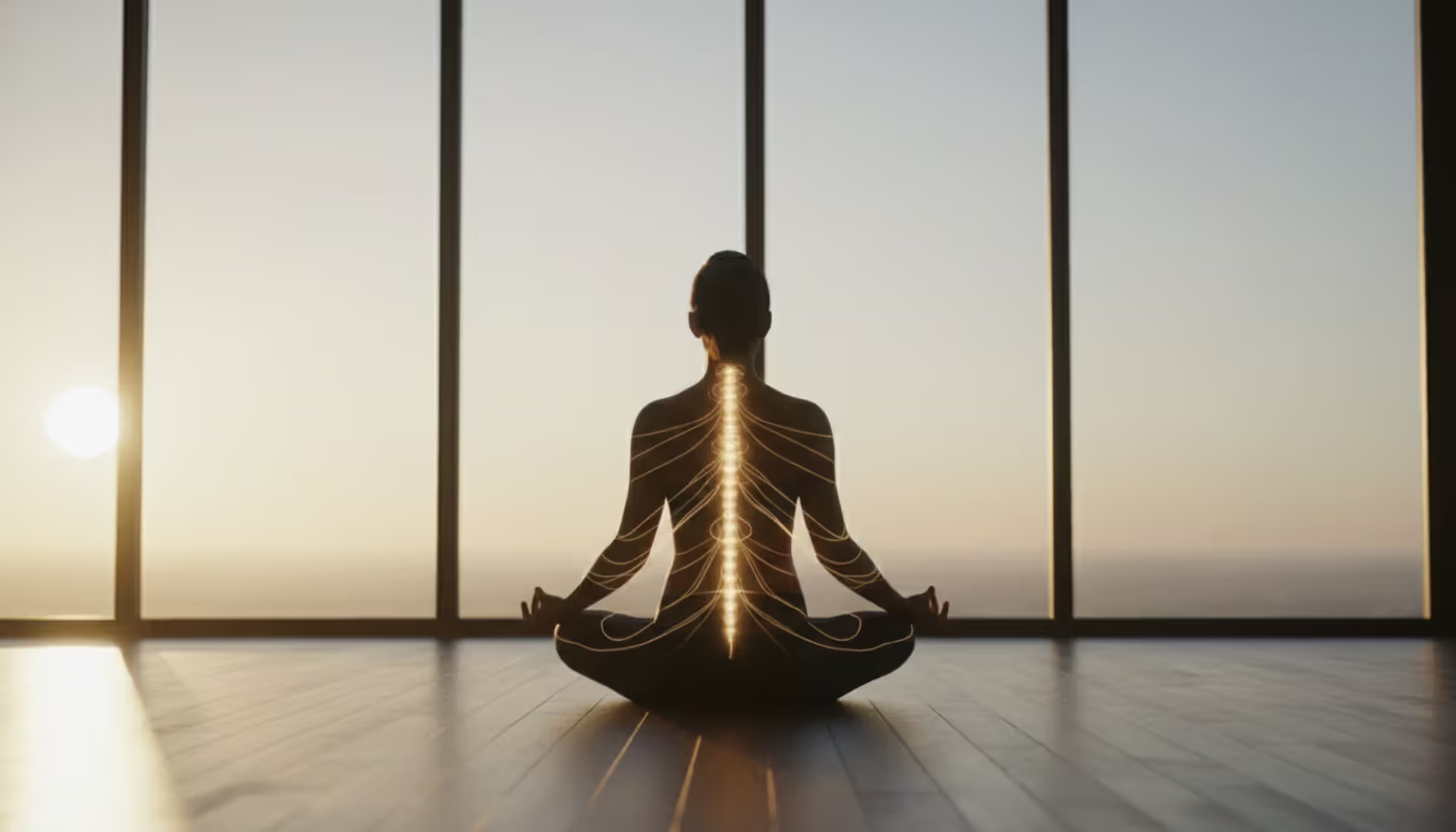
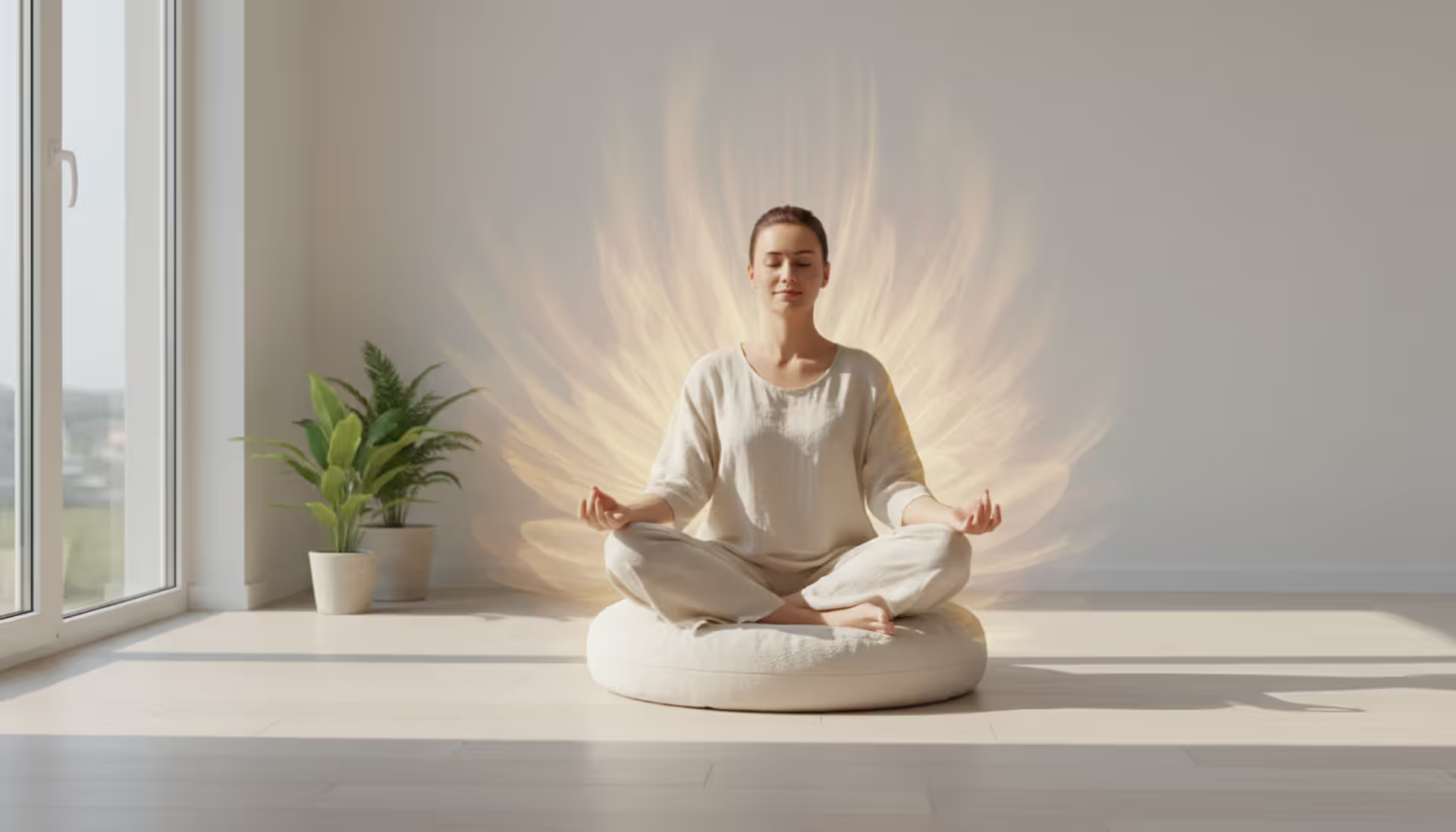
Person sitting in lotus pose during sunrise in a minimalist room with golden light streaming through a large window and subtle glowing energy lines along the spine
You've probably seen the magazine covers, the weekend workshops promising better intimacy, the Instagram posts with half-dressed couples in lotus position. Here's the reality: authentic tantric meditation has about as much to do with tantric sex workshops as astronomy has to do with astrology. They share a name, but that's where the similarities end.
Tantric meditation emerged somewhere between 500-900 CE in India, woven through both Hindu and Buddhist communities. What made it radical? While most spiritual paths at the time told followers to renounce pleasure, deny the body, and escape the material world, tantra said the opposite. Your body isn't a prison. Your desires aren't obstacles. Everything—yes, everything—can become a doorway to awakening.
Why does this matter in 2026? Because you're busy. You've got work deadlines, relationship challenges, and a phone that won't stop buzzing. Tantric meditation doesn't ask you to flee to a monastery. It teaches you to work with your actual life—your stress, your body, your chaotic schedule—as the raw material for transformation.
Understanding Tantric Meditation Origins and Philosophy
So what is tantric meditation, really?
At its foundation, it's a practice built on one startling premise: consciousness comes first. Not matter, not energy, but awareness itself. Everything you see, touch, taste, or think? According to tantra, these are just consciousness taking different forms, like water appearing as ice, liquid, or steam.
The word "tantra" comes from Sanskrit roots—"tan" (to stretch or expand) and "tra" (tool or instrument). Put them together and you get something like "a tool for expansion" or "weaving." That second meaning matters. Tantra weaves together everything other spiritual paths try to separate: body and spirit, pleasure and discipline, worldly life and transcendence.
Author: Ethan Solberg;
Source: 5sensesspa.com
The old texts describe reality as vibration—spanda in Sanskrit. Your desk, your coffee cup, your racing thoughts? All vibrations at different frequencies. Dense matter vibrates slowly. Consciousness vibrates so fast it appears still, like a fan blade spinning into invisibility. Tantric meditation trains you to perceive these energetic layers directly, not just believe in them intellectually.
Here's where tantra breaks from other paths. Most spiritual traditions create divisions. Spirit versus matter. Good versus evil. Enlightenment versus delusion. Tantra says these divisions are illusions. Divinity doesn't live somewhere "up there"—it's right here, in your messy human experience, waiting for you to recognize it.
Now let's clear up some garbage.
First misconception: Tantra equals sex. Wrong. Some advanced practitioners in certain lineages use sexual energy as a consciousness tool, true. But that's like saying Christianity is all about wine-drinking because communion exists. The vast majority of tantric practice involves breathwork, mantra, visualization, and energy techniques—zero sexual content.
Second misconception: Tantra means "do whatever feels good." Also wrong. Authentic practice demands fierce discipline. The difference? You're not suppressing desires or pretending they don't exist. You're developing such precise awareness that desires stop controlling you. You can ride the wave instead of getting dragged under.
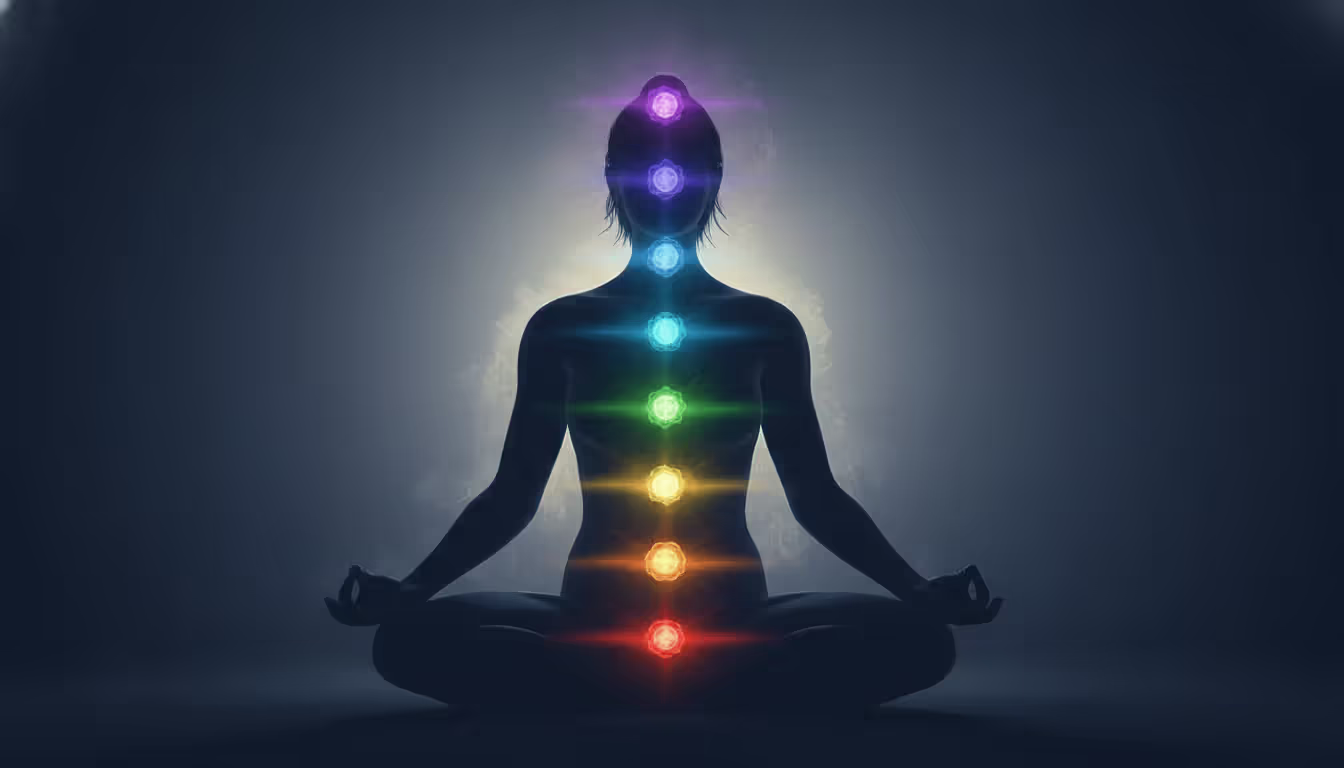
Traditional tantric systems map consciousness through chakras (energy centers along your spine), nadis (channels carrying subtle energy), and multiple reality layers. Western teachers sometimes oversimplify these maps, but understanding basic energetic anatomy actually helps. You wouldn't try to drive without knowing where the steering wheel is.
Tantric meditation is not about escaping the world but fully entering it. Through heightened awareness of energy, breath, and sensation, practitioners discover that ordinary experience contains extraordinary depths
— Dr. Christopher Wallis
Core Components of Tantra Meditation Practice
Three elements form the foundation. Miss any one, and you're not really doing tantric practice—you're just sitting there breathing.
Tantric Breathwork Techniques
Your breath does something remarkable: it connects your conscious mind to processes usually running on autopilot. Heart rate, digestion, nervous system activation—all respond to how you breathe. Tantric breathwork goes further, using specific patterns to shift consciousness and move energy deliberately.
Start with alternate nostril breathing (nadi shodhana). Close your right nostril with your thumb. Inhale through the left for four counts. Hold for sixteen counts. Now close the left nostril with your ring finger, release the right, and exhale for eight counts. That 1:4:2 ratio appears across multiple tantric lineages for a reason—it balances your nervous system's solar and lunar channels.
Breath retention (kumbhaka) intensifies everything. After a full inhale, you hold while visualizing energy concentrating somewhere specific—usually your spine's base, your heart center, or the spot between your eyebrows. Beginners might hold for five seconds. Advanced practitioners? Several minutes. The held breath creates pressure, like compressing a spring. When you finally release it, energy floods through the pathways you've been visualizing.
Then there's breath of fire (bhastrika). Sit up straight and start pumping your abdomen, creating rapid, forceful breaths—about two per second. Keep going for one to three minutes. Your head might feel buzzy. You might see colors behind closed eyelids. Some people report altered states similar to certain psychedelics, just from breathing. Follow it with retention and simple observation. Notice what just changed in your system.
Different breath patterns create different states. Slow, deep breathing activates your parasympathetic nervous system—rest and digest mode. Rapid breathing? That can launch you into non-ordinary consciousness. Retention builds concentrated energy that you direct through intention.
Author: Ethan Solberg;
Source: 5sensesspa.com
Energy Awareness and Kundalini
Western culture doesn't have great language for this part. We talk about feeling "energized" or "drained," but that's about it. Tantric meditation works directly with subtle energy (called prana or shakti) that animates your physical body. You can't see it with your eyes or measure it with instruments—yet.
Start simple. Sit comfortably and scan through your body systematically. Right foot. Left foot. Calves. Thighs. Keep going. What do you notice? Warmth, tingling, pressure, vibration, numbness? You're beginning to sense energy distribution. Some areas feel alive and buzzing. Others feel dead or blocked. This sensitivity is the prerequisite for everything else.
Kundalini represents a specific type of dormant spiritual energy, traditionally pictured as a coiled snake sleeping at your spine's base. Here's the thing: kundalini awakening isn't always pleasant. When that energy rises through your central channel (sushumna nadi), it activates consciousness centers (chakras) along your spine. Each activation can dissolve limiting patterns and expand awareness. It can also feel like you're losing your mind if your system isn't ready.
You need preparation. Clear pathways. Stable nervous system. Rushing this process causes problems—physical discomfort, emotional chaos, psychological instability. People end up in emergency rooms thinking they're having heart attacks when actually they've triggered kundalini prematurely.
What does activation feel like? Your body might start moving spontaneously. Intense heat or freezing cold along your spine. Closed-eye visuals—lights, colors, geometric patterns. Emotions flooding through for no apparent reason. Periods of expanded awareness where normal reality feels translucent, followed by integration phases where you just feel weird and disoriented.
These experiences should unfold gradually across months or years. Not explosively in your first session.
Author: Ethan Solberg;
Source: 5sensesspa.com
Tantric Mindfulness and Present-Moment Awareness
Tantric awareness practice asks you to be totally present with whatever shows up. Sensation. Emotion. Thought. External perception. No judgment. No trying to change anything. Just complete presence.
This differs from concentration meditation, where you focus on one thing (your breath, a mantra, a candle flame) and exclude everything else. Tantric awareness is more like... turning up the volume on reality. Everything gets included.
You're cultivating witness consciousness (sakshi bhava)—awareness that observes experience without getting tangled up in it. Thoughts happen, but you don't become the thoughts. Emotions arise, but you don't become the emotions. Sensations occur, but you don't react automatically.
Try this exercise. Sit quietly and just note whatever grabs your attention: "hearing," "thinking," "feeling," "seeing." The labeling keeps you present without getting absorbed. After a few minutes, drop the labels entirely. Rest in awareness itself, before it divides into categories.
Here's where tantric mindfulness gets practical. You can extend this into everything. Eating? Fully experience taste, texture, satisfaction. Walking? Notice movement, balance, how your body relates to space. Conversations? Actually be present instead of planning your next comment.
This comprehensive awareness creates the container that makes breathwork and energy work safe and effective. Without mindful presence, breathing techniques become mechanical exercises that might produce some effects but won't transform anything fundamental. With awareness, each breath reveals subtle energetic shifts and consciousness fluctuations you'd otherwise miss.
How Tantric Meditation Differs from Other Meditation Styles
Different meditation styles aren't just variations on a theme. They come from different philosophies and aim at different destinations.
Meditation Style
Focus
Technique
Energy Work
Goal
Best For
Tantric Meditation
Consciousness expansion using all experience as material
Breathwork combined with visualization, energy direction, and mantra
Primary emphasis—directly manipulating subtle energy and kundalini
Freedom through complete embodiment and energy mastery
People wanting integrated spiritual practice that includes body and energy dimensions
Mindfulness Meditation
Paying attention to present-moment mental and physical phenomena
Systematic noting, body scanning, watching breath naturally
Rarely addressed—main focus stays on observable mental/physical events
Reduced stress, mental clarity, less reactivity to thoughts/emotions
Beginners or anyone seeking practical mental health tools
Transcendental Meditation
Reaching transcendent states beyond thought
Silently repeating assigned mantra for 20 minutes twice daily
Not addressed—purely mental approach
Deep relaxation, stress relief, moments of transcendence
People who want straightforward, structured practice without philosophy
Kundalini Yoga
Awakening spiritual energy through dynamic practice
Specific sequences combining postures, breath, mantra, and meditation
Central component—similar emphasis to tantra but more systematized
Kundalini awakening, energetic clearing and activation
Those who prefer movement-based practice over sitting meditation
Looking at this comparison, you'll notice tantra meditation practice pulls from multiple approaches while keeping its unique emphasis on working with energy directly. It's not purely mental like TM, not purely observational like mindfulness.
A mindfulness practitioner watches breath sensations without manipulating them. A tantric practitioner uses breath patterns to deliberately move energy through specific channels while maintaining awareness of the entire process. See the difference?
Transcendental Meditation gives everyone the same technique: effortless mantra repetition to settle into transcendent awareness. Simple, standardized, effective for what it does. Tantra also uses mantras, but combines them with energy visualization, philosophical understanding of the mantra's meaning, and awareness of how different sound vibrations affect consciousness.
Kundalini Yoga—developed by Yogi Bhajan in the 1960s—systematizes tantric practices into set sequences called kriyas. There's significant overlap, but Kundalini Yoga follows prescribed routines while traditional tantra emphasizes direct teacher-student transmission with personalized practices tailored to your specific constitution and development stage.
Beginning a Tantric Meditation Technique Practice
You can't just sit down, close your eyes, and start moving kundalini energy. Well, you can try, but you might not like the results.
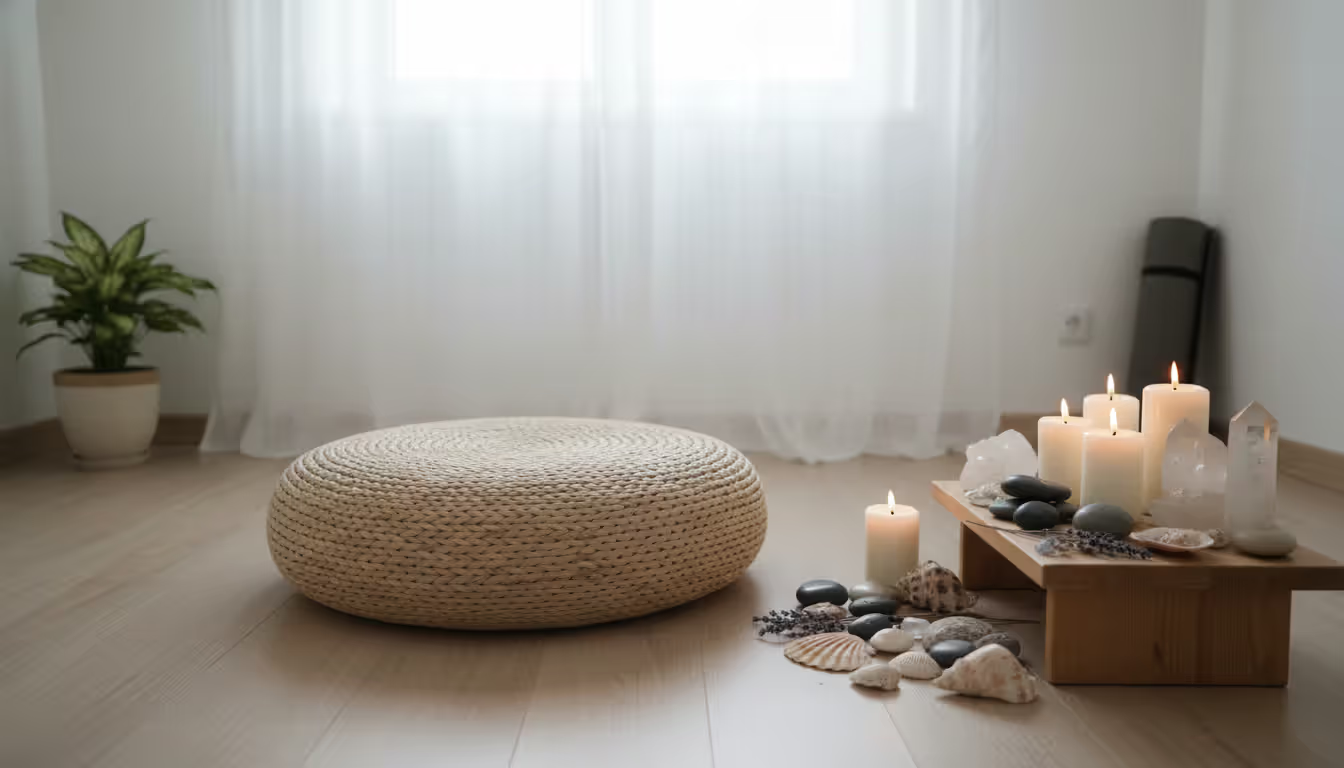
Set up your space first. Find somewhere quiet where you won't be interrupted for 20-30 minutes. Doesn't need to be fancy. Clean is more important than aesthetic. Many practitioners create a small altar—candles, meaningful objects, images, natural elements like stones or shells. This signals a transition from regular time to practice time.
Get your posture right. Sit cross-legged on a cushion or in a chair with feet flat on the floor. The crucial thing: keep your spine naturally erect without straining. Why? Energy flows through your central channel most easily when your spine is straight. Slumping restricts the flow. Shoulders relaxed, chest open, hands resting on your knees or in your lap.
Ground before you do anything else. Spend three to five minutes just connecting with your body. Feel where you touch the floor or chair. Notice your breathing's natural rhythm without changing it. Release obvious tension in your jaw, shoulders, belly.
Watch your breath without messing with it. For several minutes, just observe natural breathing. What's the texture? Temperature? Depth? Rhythm? This builds awareness—the foundation for everything that comes next.
Now introduce conscious breathing. Slowly inhale through your nose for four counts. Hold gently for four counts. Exhale through your nose for six counts. Continue for five to ten minutes. Keep your attention relaxed—you're not trying to perfect anything.
Add energy awareness. While breathing consciously, start noticing subtle sensations. Tingling. Warmth. Vibration. Or just the sense of aliveness itself. Don't manufacture sensations or imagine them. Notice what's actually there. Each inhale, sense energy gathering. Each exhale, sense it distributing through your body.
Close with integration. Drop all techniques. Sit in simple awareness for two to three minutes. What effects do you notice? Mental state? Emotional tone? Physical sensations? This integration period lets the practice settle into your system instead of just evaporating when you stand up.
Start small and build slowly. Fifteen to twenty minutes, three or four times weekly, beats hour-long sessions you can't sustain. Consistency trumps duration every time. As the practice becomes habitual, gradually extend session length and frequency.
Author: Ethan Solberg;
Source: 5sensesspa.com
Biggest beginner mistakes? Forcing experiences that aren't happening naturally. Practicing erratically—three days in a row, then nothing for two weeks. Skipping the grounding and integration phases because they seem boring. Remember: tantric practices accumulate effects over time. Rushing or straining just creates problems.
Kundalini Energy Meditation Explained
Kundalini energy meditation zeroes in specifically on awakening and working with kundalini shakti—that dormant spiritual energy coiled at your spine's base. But there's a crucial distinction between spontaneous awakening and deliberate cultivation.
Think of kundalini as coiled potential resting at your muladhara chakra (root center). In its dormant state, it maintains basic life functions. When awakened—either through practice or spontaneously through trauma, childbirth, near-death experiences, or other intense events—kundalini rises through your central energy channel, activating consciousness centers and burning through psychological and energetic blockages.
The rising process unfolds through stages corresponding to seven major chakras. At your root chakra, awakening brings awareness of survival patterns and raw physical vitality. Sacral center activation illuminates emotional patterns and creative energy. Solar plexus brings personal power and will into consciousness. Heart opening floods you with compassion and connection. Throat activation enhances authentic expression. Third eye opening expands intuitive perception beyond normal sensing. Crown activation? That brings temporary experiences of unity consciousness, where the boundary between you and everything else dissolves.
Energy meditation tantra approaches kundalini awakening systematically, not forcefully. Traditional methods gradually prepare your body and energy channels through:
Purification practices (kriyas) that clear energetic blockages. These might involve alternate nostril breathing for 15 minutes, spinal flexes coordinated with breath, or visualizing light streaming through your nadis.
Mantra practice using seed sounds (bija mantras) matched to each chakra. LAM for root, VAM for sacral, RAM for solar plexus, YAM for heart, HAM for throat, OM for third eye, and silence for crown. The sound vibration resonates with and activates corresponding centers.
Bandhas (energy locks) that direct and contain energy. Root lock (mula bandha) engages your pelvic floor muscles. Abdominal lock (uddiyana bandha) draws your navel toward your spine. Throat lock (jalandhara bandha) brings your chin down slightly. These locks prevent energy from dispersing and guide it upward through the central channel.
Visualization practices where you imagine energy as light, fire, or liquid ascending through your spine, activating each chakra sequentially. You might visualize each center as a lotus flower opening petal by petal, or a wheel of light beginning to spin.
Safety isn't optional here:
Never force energy upward through sheer will or strain
Balance practice with grounding activities—walking barefoot, physical exercise, time in nature
Work with an experienced teacher for intensive practice
If you experience severe physical symptoms, psychological instability, or can't function in daily life, stop and seek guidance
Allow adequate integration time between intensive sessions
Balance upward energy movement with downward grounding practices
Author: Ethan Solberg;
Source: 5sensesspa.com
Kundalini activation signs vary wildly but commonly include spontaneous body movements or hand positions (mudras), intense heat or energy sensations racing up your spine, vivid dreams or waking visions, emotional releases that come out of nowhere, heightened sensitivity to energy in people and places, and sudden insights or understanding about things you've never studied.
These experiences should feel manageable. They should integrate into daily life over weeks and months. If kundalini symptoms become overwhelming—you can't sleep, can't work, can't relate to people normally—reduce practice intensity immediately, emphasize grounding activities, and find an experienced teacher who's navigated this territory personally.
Common Mistakes in Tantric Awareness Practice
Even dedicated practitioners fall into predictable traps.
Reducing tantra to sex. Yes, some tantric lineages incorporate sexual practices. But authentic tantric awareness practice covers vastly more territory. If you approach tantra wanting only better orgasms or longer-lasting arousal, you're missing about 95% of the tradition. Sexuality might be one dimension of advanced practice, but breathwork, energy cultivation, mantra, and meditation form the actual foundation.
Jumping to advanced practices too soon. The tantric path unfolds in stages. Each stage requires months or years of practice. Attempting kundalini awakening techniques without building capacity through basic breathwork and energy awareness? That's like trying to run a marathon without ever jogging around the block. Build gradually through consistent foundational practice before advancing.
Skipping grounding practices. Tantric techniques move energy upward and expand consciousness. Without corresponding grounding—physical exercise, time outdoors, practical responsibilities, healthy relationships—you become unbalanced. Warning signs: spaciness, difficulty concentrating, losing interest in regular life, feeling perpetually "high" or dissociated. Counter this by walking barefoot on earth, eating root vegetables and protein, engaging fully with mundane tasks like washing dishes or paying bills.
Going it alone when you need guidance. Basic techniques—breath awareness, simple breathwork, body scanning—are safe for self-practice using quality books or videos. But intensive energy work and advanced methods require transmission from a qualified teacher. Books provide information; teachers provide transmission and personalized guidance that texts can't offer. Start with foundational practices on your own, then seek a teacher as you deepen.
Forcing or faking experiences. Authentic tantric experiences arise naturally from correct practice. They can't be willed into existence or imagined. Some practitioners convince themselves they're experiencing kundalini awakening when they're actually just feeling normal physical sensations and calling them special. Stay honest about your actual experience rather than claiming attainments to impress others or validate your practice.
Bypassing psychological material. As tantric awareness practice deepens, suppressed emotions, memories, and patterns surface. Some practitioners avoid this uncomfortable material by focusing exclusively on "spiritual" experiences—bliss states, visions, energy phenomena. Real transformation requires facing and integrating shadow material, not transcending it. Consider combining tantric practice with therapy or psychological work.
Getting addicted to altered states. Powerful energetic sensations, blissful states, expanded awareness—these can become new objects of craving. But the practice's goal is liberation, not collecting impressive experiences. When extraordinary states arise, observe them with the same equanimity as boredom or restlessness, then let them go and continue practicing.
Frequently Asked Questions About Tantric Meditation
Is tantric meditation only for couples?
Not even close. Partner practices exist within some tantric traditions, sure. But the vast majority of tantric meditation happens solo. Individual practice builds awareness, energy sensitivity, and presence that enhance all your relationships—romantic, professional, familial. Plenty of dedicated tantric practitioners remain celibate or practice exclusively alone. Partner practices represent advanced applications of skills you develop through individual meditation.
How long should a tantric meditation session last?
Start with 15-20 minutes, three to four times weekly. That's enough for meaningful practice without burning out. As your capacity develops over weeks and months, extend sessions to 30-45 minutes. Advanced practitioners might sit for 60-90 minutes or longer, but duration matters far less than consistency and quality of attention. A focused 20-minute session produces more transformation than an hour of distracted, restless sitting.
Can beginners practice kundalini meditation safely?
Yes, with appropriate caution and common sense. Beginners should focus on gentle preparatory practices—basic breathwork, body awareness, developing energy sensitivity—rather than trying to force kundalini awakening. Simple practices like alternate nostril breathing and chakra awareness are safe and beneficial. Avoid intensive kundalini techniques (extended breath retention beyond 30 seconds, advanced visualizations, rapid breathing for more than three minutes) without proper instruction. Work with a qualified teacher for intensive kundalini energy meditation.
What's the difference between tantric and transcendental meditation?
Transcendental Meditation uses silent mantra repetition to settle your mind into transcendent awareness. It works primarily at the mental level. Tantric meditation technique integrates breathwork, energy cultivation, visualization, and awareness practices—engaging body, energy, and mind together. TM follows a standardized approach taught uniformly to all practitioners. Tantra emphasizes direct transmission and individualized practices adapted to your constitution and development stage. Both are legitimate paths with different methodologies and underlying philosophies.
Do I need a teacher to start tantric meditation?
For basic practices—breath awareness, simple breathwork patterns, body scanning, mindfulness—no. These are safe and effective using quality written or video instruction. But as practice deepens, a qualified teacher becomes increasingly valuable and eventually essential. Teachers provide personalized guidance, correct technical errors you don't even know you're making, help you navigate difficult experiences, and transmit subtle aspects of practice that books simply cannot convey. Start with foundational practices independently, then seek a teacher as you progress beyond basics.
What are the benefits of tantric breathwork?
Tantric breathwork produces both immediate and cumulative benefits. Short-term effects include reduced stress and anxiety, increased energy and vitality, better emotional regulation, and improved mental clarity. You might notice these after just a few sessions. Long-term practice (months to years) develops greater energy sensitivity, increased capacity for pleasure and sensation, access to deeper meditative states, and improved overall health through nervous system regulation. Breathwork serves as the foundation for more advanced energy practices while offering substantial benefits as a standalone practice.
Tantric meditation offers a comprehensive path for modern people seeking spiritual development without rejecting their bodies, emotions, or daily lives. By weaving together breathwork, energy awareness, and mindfulness, the practice transforms ordinary experience into opportunities for awakening.
Success requires three things: patience with yourself, consistency even when you don't feel like practicing, and honesty about your actual experience rather than imagined spiritual attainments. Start with foundational practices, maintain regular sessions even when motivation fluctuates, and seek qualified guidance as your practice deepens beyond basic techniques.
The journey unfolds gradually across months and years, revealing progressively subtler dimensions of consciousness and energy. Don't treat tantric meditation as a quick fix for stress or a shortcut to extraordinary experiences. Approach it as a lifelong exploration of your deepest nature and untapped potential—because that's exactly what it is.
Waking at 4am without an alarm can feel unsettling at first. But what if this early waking isn't random? Many spiritual traditions view these pre-dawn hours as a sacred window when the veil between physical and spiritual realms grows thin
Meditation sits at the heart of Buddhist practice, but not for stress relief. Buddhists meditate to fundamentally transform their understanding of reality and liberate themselves from suffering. This distinction shapes everything from technique selection to measuring progress
Spiritual meditation with God transforms the practice of quieting your mind into sacred conversation. Unlike secular mindfulness, this approach centers on opening yourself to divine communion through techniques like centering prayer, contemplative scripture reading, and silent listening meditation
The RAIN meditation technique offers a structured approach to difficult emotions through four steps: Recognize, Allow, Investigate, and Nurture. Developed by Tara Brach, this mindfulness practice helps you process emotional pain with compassion rather than resistance
The content on this website is provided for general informational and educational purposes only. It is intended to explain concepts related to meditation, mindfulness, mental health, and spiritual practices.
All information on this website, including articles, guides, and examples, is presented for general educational purposes. Meditation outcomes may vary depending on individual practices, health conditions, and guidance.
This website does not provide medical, mental health, or spiritual advice, and the information presented should not be used as a substitute for consultation with qualified professionals.
The website and its authors are not responsible for any errors or omissions, or for any outcomes resulting from decisions made based on the information provided on this website.