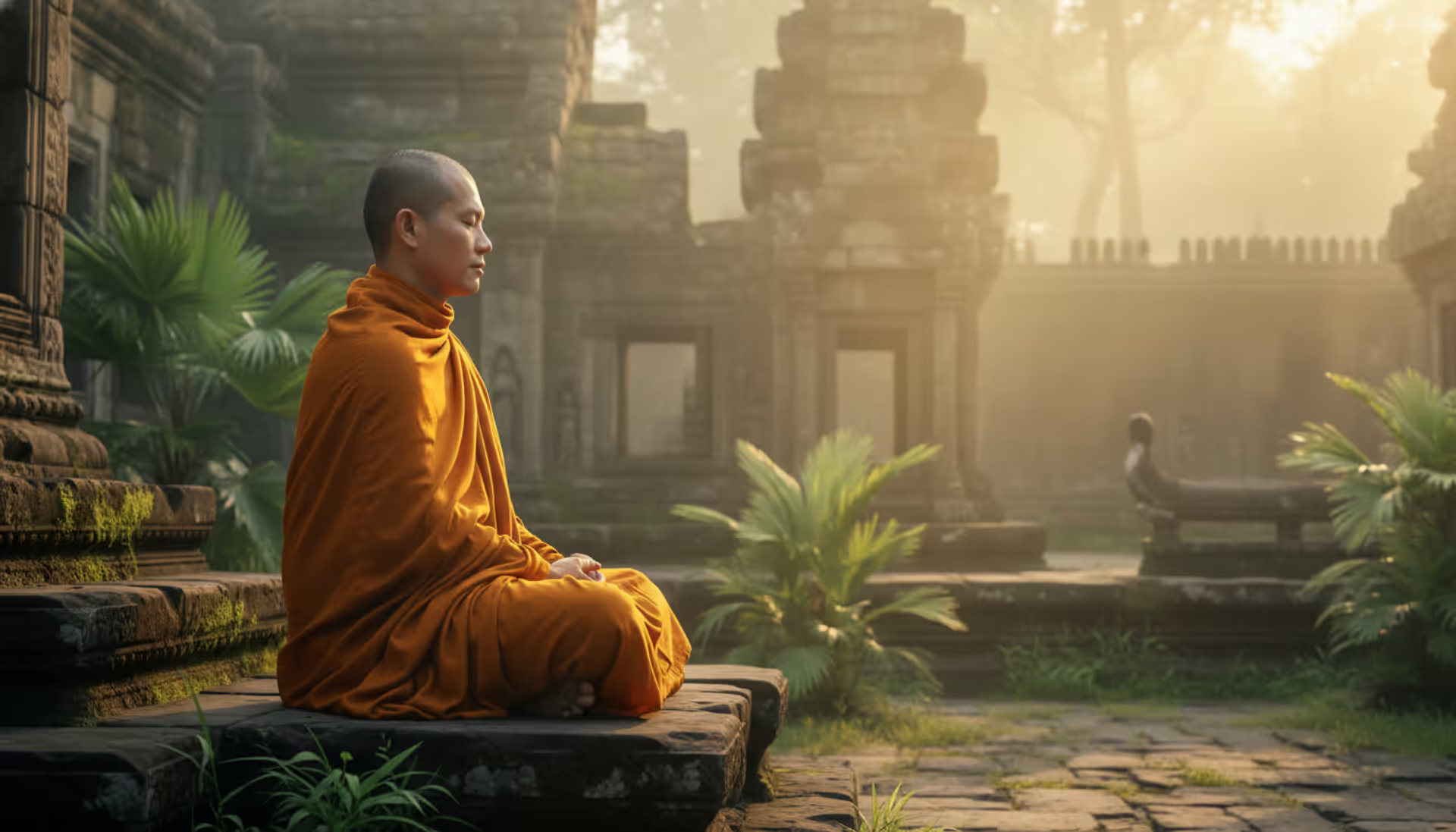
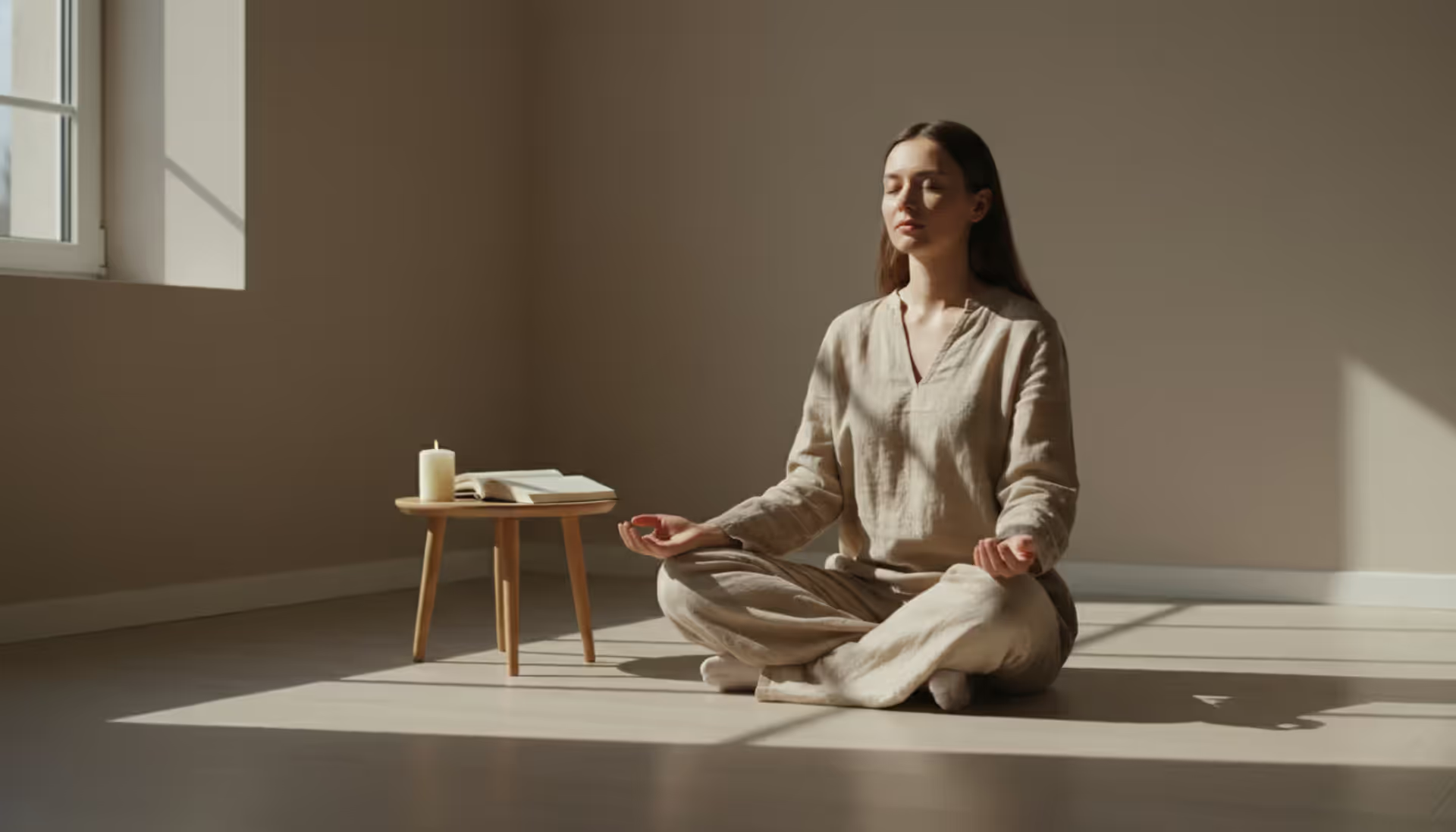
Meditation sits at the heart of Buddhist practice, but not for the reasons many assume. While modern wellness culture often presents meditation as a tool for stress relief or productivity, Buddhists meditate with a radically different aim: to fundamentally transform their understanding of reality and liberate themselves from suffering. This distinction matters because it shapes everything from technique selection to how practitioners measure progress.
Understanding why Buddhists meditate requires looking beyond the cushion to the philosophical framework that gives the practice meaning. For over 2,500 years, meditation has served as the primary method for investigating the mind's nature, testing the Buddha's teachings through direct experience, and cultivating the wisdom needed to break free from cyclical patterns of dissatisfaction.
The Core Purpose of Meditation in Buddhism
The Buddhist approach to meditation centers on three interconnected goals: achieving enlightenment, ending dukkha (often translated as suffering or unsatisfactoriness), and directly perceiving the true nature of mind and reality.
Enlightenment, or nirvana, represents the complete cessation of craving, aversion, and delusion—the three poisons that keep beings trapped in samsara, the cycle of rebirth and suffering. Meditation in Buddhism functions as the laboratory where practitioners examine their own mental processes, noticing how attachment creates suffering and how letting go brings relief.
The second goal addresses dukkha at its root. Buddhists don't meditate to feel better temporarily or to escape difficult emotions. Instead, they use meditation to understand why suffering arises in the first place. By observing how the mind clings to pleasant experiences and rejects unpleasant ones, meditators gain insight into the mechanics of dissatisfaction. This isn't theoretical knowledge—it's lived understanding that emerges from watching your own reactions unfold in real time.
The third purpose involves penetrating the three marks of existence: impermanence (anicca), suffering (dukkha), and non-self (anatta). Through sustained meditation practice, Buddhists investigate whether anything in their experience remains constant, whether any phenomenon can provide lasting satisfaction, and whether a permanent, unchanging self actually exists. These aren't philosophical puzzles to solve intellectually but realities to be directly witnessed through careful observation.
A common mistake beginners make is treating these goals as distant achievements rather than present investigations. The point isn't to meditate for twenty years until enlightenment suddenly arrives. Each session offers opportunities to notice impermanence in the breath, to observe how the mind creates suffering through resistance, and to question assumptions about who's doing the meditating.
Author: Lena Ashcroft;
Source: 5sensesspa.com
How Buddhist Meditation Differs From Other Practices
Buddhism and mindfulness have become so intertwined in popular culture that many people assume they're synonymous. Yet Buddhist meditation operates with different intentions and frameworks than secular mindfulness programs or stress-reduction techniques.
Secular mindfulness typically emphasizes present-moment awareness for practical benefits: reduced anxiety, improved focus, better emotional regulation. These outcomes matter in Buddhist practice too, but they're considered side effects rather than the primary goal. Buddhist mindfulness aims at liberating insight, not just calm attention.
The distinction becomes clearer when examining what practitioners do with their awareness. In a corporate mindfulness program, you might notice stress arising and use breathing techniques to manage it. In Buddhist meditation, you'd notice stress arising and investigate its causes—what story are you telling yourself? What are you clinging to? How does the stress feel in the body? Where does it go when it passes?
Other religious contemplative practices, such as Christian centering prayer or Sufi dhikr, often seek union with the divine or communion with God. Buddhist meditation moves in the opposite direction: rather than connecting with something external, practitioners examine the mind that's doing the seeking. The Buddha explicitly rejected metaphysical speculation about ultimate realities in favor of practical investigation into suffering and its cessation.
This doesn't make Buddhist meditation superior or inferior to other approaches—just different in intent. Someone meditating to lower their blood pressure before surgery has a perfectly valid goal. A Buddhist meditating to uproot the delusion of a permanent self is working toward something else entirely. Both might sit quietly watching their breath, but the context transforms the practice.
One trade-off worth noting: the Buddhist approach to meditation demands more commitment and can feel less immediately gratifying. You won't necessarily feel relaxed after a session spent observing how your mind generates suffering. The payoff comes from deeper transformation over time rather than quick symptom relief.
Meditation Techniques Across Buddhist Traditions
Buddhist meditation traditions have developed diverse techniques over centuries, each designed to address specific aspects of the path to enlightenment. While they differ in method and emphasis, all serve the broader purpose of liberating practitioners from suffering.
Theravada Meditation Practices
Theravada meditation, the oldest surviving Buddhist tradition, emphasizes two complementary practices: samatha (calm abiding) and vipassana (insight meditation).
Samatha develops concentration by focusing attention on a single object—typically the breath, but sometimes a mantra, visualization, or body sensation. The goal is to calm the mind's restless movement and develop the stability needed for deeper investigation. Practitioners work through progressive stages called jhanas, states of absorbed concentration where distractions fade and mental clarity intensifies.
Vipassana builds on that stability to investigate the three marks of existence. Rather than concentrating on one object, practitioners observe whatever arises—thoughts, sensations, emotions—with bare attention. The technique involves noting phenomena without judgment, watching how they appear, change, and disappear. This direct observation reveals impermanence and non-self not as concepts but as lived realities.
Theravada meditation often appeals to practitioners who appreciate systematic, technique-focused approaches. The instructions are precise: sit in this posture, place attention here, note experiences this way. Progress follows recognizable stages, though the timeline varies dramatically between individuals.
Mahayana Meditation Approaches
Mahayana meditation expands the focus beyond personal liberation to include all beings. While Theravada emphasizes individual enlightenment, Mahayana practitioners cultivate bodhicitta—the aspiration to achieve enlightenment for the benefit of all sentient beings.
Loving-kindness meditation (metta) and compassion practices feature prominently. Practitioners systematically extend goodwill toward themselves, loved ones, neutral people, difficult people, and eventually all beings. This isn't positive thinking or forced emotion but a methodical cultivation of genuine care that counteracts the self-centeredness underlying suffering.
Mahayana traditions also employ analytical meditation, where practitioners contemplate teachings logically before resting in direct experience. You might spend twenty minutes reasoning through the concept of emptiness—how phenomena lack inherent existence and depend on causes and conditions—then shift to non-conceptual awareness of that understanding.
Tonglen, a distinctive Mahayana practice, involves breathing in suffering and breathing out relief. When you encounter pain (your own or others'), you imagine inhaling it as dark smoke and exhaling healing light. This reverses the usual self-protective instinct and trains the mind in compassion.
Author: Lena Ashcroft;
Source: 5sensesspa.com
Vajrayana and Zen Methods
Vajrayana (Tibetan Buddhism) incorporates elaborate visualization practices, mantra recitation, and ritual elements. Practitioners might visualize themselves as enlightened deities, not from ego but to recognize their own buddha-nature. The complexity serves a purpose: engaging multiple aspects of mind simultaneously can accelerate transformation.
Zen takes the opposite approach, stripping meditation to its essence. Zazen (sitting meditation) involves just sitting—no mantra, no visualization, often no specific focus object. Practitioners maintain upright posture and open awareness, watching thoughts arise and pass without engagement. Some Zen schools use koans, paradoxical questions like "What's the sound of one hand clapping?" that short-circuit conceptual thinking and point toward direct realization.
The variety of Buddhist meditation techniques reflects different temperaments and cultural contexts. Someone drawn to structure might thrive with Theravada's systematic approach, while someone who finds elaborate instructions stifling might prefer Zen's simplicity.
The Role of Mindfulness in Buddhist Practice
Buddhist mindfulness extends far beyond the meditation cushion into every aspect of daily life. In the traditional framework, mindfulness (sati in Pali) represents one factor of the Noble Eightfold Path—Right Mindfulness—and serves as a foundation for ethical conduct, mental cultivation, and wisdom.
The Buddha described four foundations of mindfulness: awareness of body, feelings, mind states, and mental objects (categories of experience). This isn't casual awareness but systematic investigation. When walking, you notice the sensations of each step. When anger arises, you recognize it as anger, observe how it feels, and watch it change. When thinking, you know you're thinking and can note the quality of thoughts without getting lost in their content.
This type of mindfulness functions as a tool for insight rather than mere present-moment awareness. By maintaining continuous observation of experience, practitioners gather evidence about impermanence, suffering, and non-self. You can't notice that everything changes unless you're paying attention when things change. You can't see how craving creates suffering unless you're aware when craving arises.
A practical example: you're washing dishes and notice irritation arising because you'd rather be doing something else. Ordinary awareness might just register "I'm annoyed." Buddhist mindfulness investigates further—where do you feel the irritation in your body? What story is your mind telling about why you shouldn't have to wash dishes? What happens to the feeling if you stop resisting the task? This investigation reveals how the mind creates suffering through resistance and how that suffering dissolves when resistance ceases.
The relationship between mindfulness and the Eightfold Path is reciprocal. Mindfulness supports ethical conduct (Right Speech, Action, Livelihood) by making you aware of intentions before acting. It supports mental cultivation (Right Effort, Concentration) by noticing when attention wanders. And it directly develops wisdom (Right View, Intention) by revealing how reality actually operates.
Common mistakes include treating mindfulness as a relaxation technique or thinking it means accepting everything passively. Buddhist mindfulness can be quite energetic—it takes effort to maintain continuous awareness. And while it involves accepting what's already present, that acceptance serves investigation and transformation, not resignation.
What Buddhists Experience During Meditation
The experiences Buddhists report during meditation vary widely depending on technique, tradition, individual temperament, and practice duration. Rather than a single progression, meditation reveals different layers of experience as practice deepens.
Early practitioners often notice how restless the mind is. Before meditation, you might assume your thoughts are mostly coherent and logical. Five minutes on the cushion reveals a chaotic stream: planning, remembering, fantasizing, judging, all happening simultaneously. This isn't failure—it's the first genuine insight into the mind's actual condition.
As concentration develops, periods of calm emerge. The mind settles like muddy water left undisturbed, and practitioners experience states of ease and clarity. These pleasant states can become traps if you start meditating just to feel good, but they also provide the stability needed for deeper investigation.
Insight experiences often arrive unexpectedly. You might suddenly perceive the impermanence of all phenomena with startling clarity, or recognize that what you call "self" is actually a collection of changing processes. These insights aren't intellectual realizations but direct perceptions that can fundamentally shift how you relate to experience.
The traditional texts describe specific stages of insight, though not all practitioners experience them in the same sequence. The "Progress of Insight" map from Theravada tradition outlines phases like the arising and passing away of phenomena, dissolution, fear, misery, and eventually equanimity. Understanding these stages helps practitioners recognize where they are without getting stuck or mistaking difficult phases for regression.
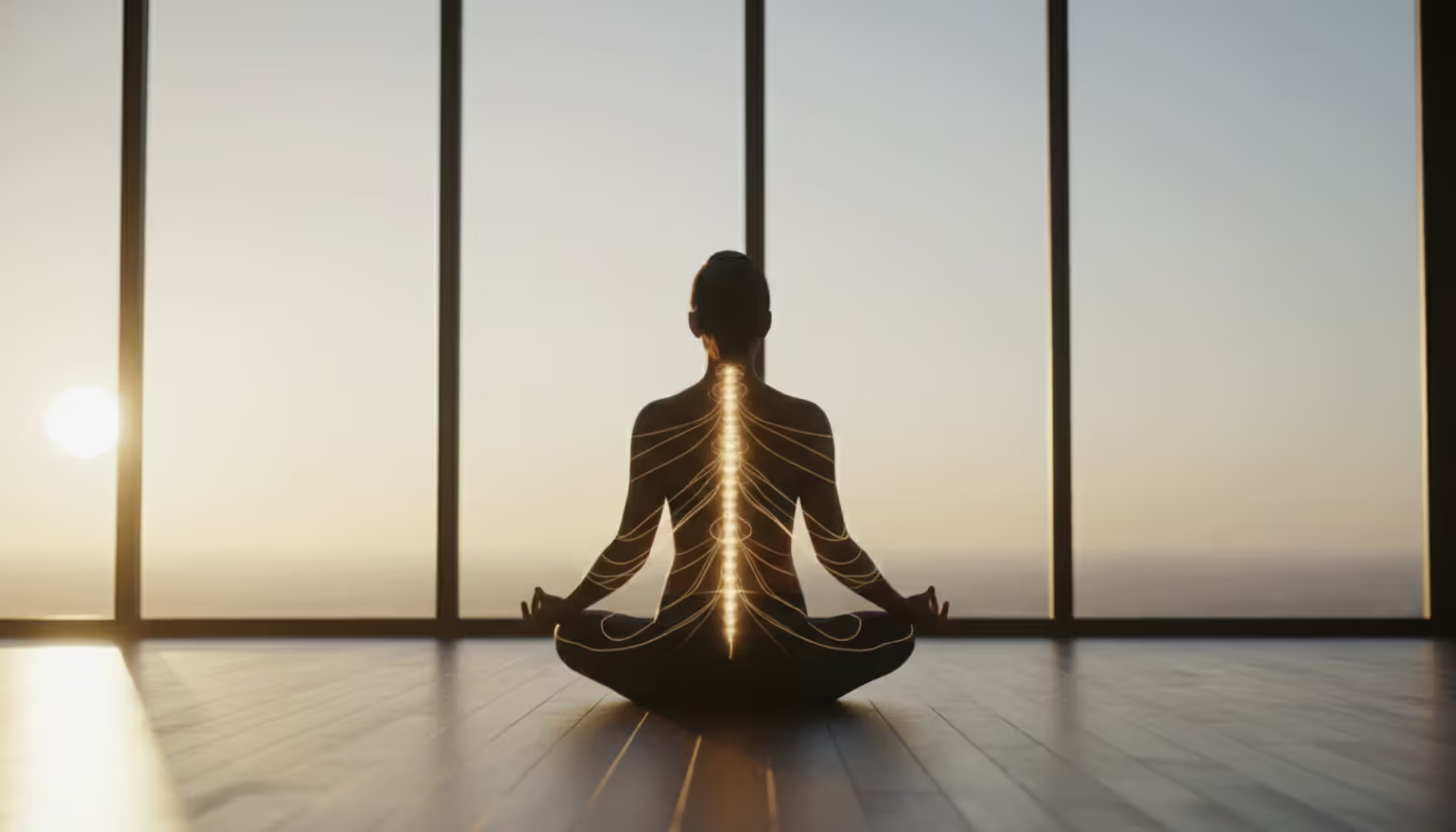
Physical experiences accompany mental shifts. Some practitioners report tingling, heat, pressure, or energy movements. Others experience emotional purging as suppressed feelings surface. These phenomena are considered normal byproducts of practice rather than goals themselves.
One aspect rarely discussed in popular accounts: meditation can be uncomfortable and challenging. You might spend weeks confronting anxiety, boredom, or resistance. You'll notice unflattering things about yourself—how often you judge others, how persistent your self-centered thinking is, how much you avoid discomfort. This isn't pleasant, but it's necessary for genuine transformation.
Advanced practitioners describe experiences of profound peace, unconditional love, or non-dual awareness where the distinction between observer and observed dissolves. However, Buddhist teachers consistently warn against fixating on special experiences. The point isn't to collect interesting states but to develop the wisdom that liberates.
How to Start Meditating Like a Buddhist
Author: Lena Ashcroft;
Source: 5sensesspa.com
Beginning Buddhist meditation doesn't require converting to Buddhism or mastering complex philosophy. The practice is accessible to anyone willing to sit down and investigate their own experience.
Start with posture. Sit on a cushion or chair with your spine upright but not rigid. The physical position matters because it affects alertness—lying down invites sleep, while slouching promotes dullness. Your hands can rest on your knees or in your lap. Eyes can be closed or open with a soft downward gaze. The key is finding a position you can maintain for 20-30 minutes without excessive discomfort.
Focus on breath awareness as your initial technique. Notice where you feel the breath most clearly—nostrils, chest, or abdomen—and rest your attention there. You're not controlling the breath, just observing it. When your mind wanders (and it will, constantly), gently return attention to the breath without judgment.
This simple instruction contains the entire practice. Notice the breath, notice when you've stopped noticing the breath, return to the breath. Repeat thousands of times. The wandering isn't failure—catching yourself and returning is the actual exercise, like a bicep curl for attention.
Set realistic expectations. You won't achieve enlightenment in your first session or probably your first thousand sessions. You might not even feel relaxed. What you will do is begin understanding how your mind works, which is the foundation for everything else.
Consider finding a teacher or sangha (community). While you can learn basics from books or apps, an experienced teacher can provide personalized guidance, correct misunderstandings, and help you navigate challenges. Many Buddhist centers offer beginner meditation classes regardless of religious affiliation.
Choose a technique that matches your temperament. If you're analytical, you might appreciate Vipassana's systematic approach. If you struggle with self-criticism, loving-kindness meditation could provide balance. If you prefer simplicity, basic breath awareness works perfectly well.
Practice regularly but start small. Twenty minutes daily beats an hour once a week. Consistency matters more than duration because you're developing a skill that requires repetition. Think of it like learning an instrument—short daily practice builds competence faster than occasional marathon sessions.
One rule of thumb: if you're meditating to feel a certain way, you're setting yourself up for frustration. The goal is to observe whatever arises, pleasant or unpleasant, with curiosity and equanimity. Some sessions will feel peaceful, others agitated. Both provide valuable information about your mind.
Common Misconceptions About Buddhist Meditation
The practice of meditation is not to escape from life, but to come back to life
— Thich Nhat Hanh
Several persistent myths about Buddhist meditation create confusion for beginners and misrepresent the practice to the broader public.
Myth: Meditation means emptying your mind. The goal isn't to stop thinking or create mental blankness. Thoughts will arise—that's what minds do. The practice involves changing your relationship with thoughts, observing them without getting absorbed in their content. Even advanced practitioners have thoughts; they just don't identify with them as strongly.
Myth: Buddhist meditation is escapism. Some critics claim meditation encourages withdrawal from the world's problems. Actually, Buddhist meditation trains you to face reality more directly by removing the filters of preference and aversion. Rather than escaping difficulty, you learn to meet it with clarity and wisdom. Many engaged Buddhist teachers—think of Thich Nhat Hanh's peace activism or the Dalai Lama's advocacy—demonstrate how meditation supports rather than replaces action.
Myth: Meditation is just relaxation. While meditation can produce calm, that's not its primary purpose. Sometimes meditation surfaces uncomfortable material that needs examination. A session spent observing anxiety or grief might be more valuable than one spent in blissful peace because it develops the capacity to remain present with difficulty.
Myth: Meditation requires no effort. The instruction to "just sit" sounds passive, but maintaining continuous awareness takes significant energy. You're working against deeply conditioned patterns of distraction and reactivity. Buddhist meditation requires discipline, persistence, and willingness to repeatedly return attention when it wanders.
Myth: All meditation is the same. As discussed earlier, Buddhist meditation differs from other contemplative practices in intention and method. Even within Buddhism, techniques vary significantly. Treating all meditation as interchangeable misses these important distinctions.
Myth: You need to be calm to meditate. You can meditate in any state—anxious, angry, restless, sad. In fact, meditation with difficult emotions often provides the most insight. The practice isn't about achieving a particular state before you begin but about observing whatever state is already present.
Understanding what Buddhist meditation actually involves—systematic investigation of experience to develop liberating wisdom—helps avoid these misconceptions and sets realistic expectations for practice.
Comparison of Buddhist Meditation Traditions
Tradition
Primary Technique
Main Goal/Focus
Typical Practice Duration
Best Suited For
Theravada
Vipassana (insight) and Samatha (concentration)
Direct perception of impermanence, suffering, and non-self
45-60 minutes per session; intensive retreats of 7-30 days
Practitioners who appreciate systematic, technique-focused approaches with clear instructions
Recognizing one's own buddha-nature through transformation
Variable; often includes preliminary practices (ngondro) requiring 100,000+ repetitions
Advanced practitioners comfortable with complex visualizations and ritual elements
Zen
Zazen (sitting meditation), koan practice
Direct realization beyond conceptual thinking
25-40 minute periods (often multiple consecutive periods)
Those who prefer minimal instruction and direct, non-conceptual approaches
Frequently Asked Questions
Do Buddhists meditate every day?
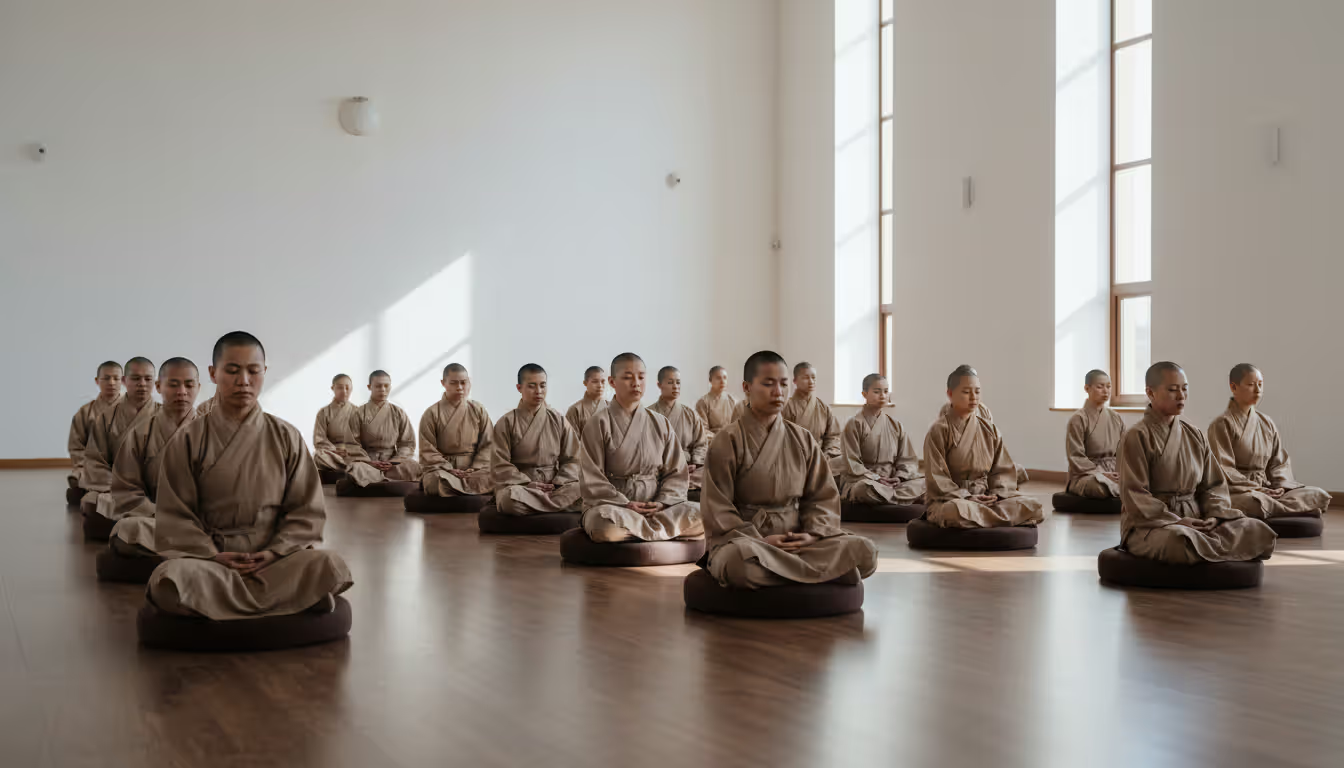
Many committed Buddhist practitioners meditate daily, but there's no universal requirement. Monks and nuns typically meditate multiple times per day as part of their monastic schedule. Lay practitioners vary widely—some maintain daily practice, others meditate several times weekly, and some practice intensively during retreats but less frequently otherwise. The Buddha emphasized finding a sustainable practice rhythm rather than forcing rigid schedules that lead to burnout or guilt.
How long do Buddhist monks meditate?
Monastic meditation schedules vary by tradition and monastery. Theravada monks might meditate 4-6 hours daily split between morning and evening sessions. Zen monasteries often follow a schedule of multiple 25-40 minute sitting periods throughout the day, totaling 5-8 hours. During intensive retreat periods, monks may meditate 10-15 hours daily. However, monks also engage in walking meditation, mindful work, and other practices that extend contemplative awareness beyond formal sitting.
Can you practice Buddhist meditation without being Buddhist?
Absolutely. The meditation techniques themselves don't require religious commitment or belief in Buddhist cosmology. Many people practice Vipassana, loving-kindness meditation, or mindfulness within secular frameworks or alongside other religious traditions. However, understanding the Buddhist context can deepen practice since the techniques were developed to serve specific philosophical goals. You might practice the mechanics without the worldview, though some teachers argue this limits the transformative potential.
What is the difference between mindfulness and meditation in Buddhism?
Mindfulness (sati) is a quality of awareness—continuous, non-judgmental attention to present experience. Meditation (bhavana, meaning "cultivation") is the formal practice that develops mindfulness along with other qualities like concentration, equanimity, and wisdom. Think of meditation as the training session and mindfulness as the skill being trained. Buddhists aim to maintain mindfulness throughout daily activities, not just during seated meditation. The formal practice strengthens the capacity for continuous awareness.
Is Buddhist meditation religious or spiritual?
This depends on context and intention. Within traditional Buddhism, meditation is inseparable from the religious framework—it serves the goal of enlightenment and liberation from samsara. When practiced in secular settings like mindfulness-based stress reduction programs, the same techniques function as psychological tools without religious content. The practices themselves are neutral; the framework you bring determines whether you're engaging religiously, spiritually, or secularly. Many practitioners find value in the techniques without adopting Buddhist religious beliefs.
What are Buddhists thinking about when they meditate?
This varies by technique. In concentration practices, practitioners focus on a single object like the breath rather than thinking discursively. In insight meditation, they observe thoughts, sensations, and emotions as they arise without engaging with content—noticing "thinking is happening" rather than following the thought's storyline. In analytical meditation, they actively contemplate teachings before resting in non-conceptual awareness. In loving-kindness practice, they deliberately generate phrases like "may all beings be happy." The common thread is intentional direction of attention rather than random mind-wandering.
Buddhist meditation serves purposes that extend far beyond stress relief or improved focus, though it may produce those benefits along the way. At its core, meditation in Buddhism functions as the primary method for investigating the nature of mind and reality, understanding the causes of suffering, and cultivating the wisdom needed for liberation.
The diversity of Buddhist meditation techniques—from Theravada's systematic Vipassana to Zen's direct Zazen—reflects different approaches to the same fundamental goals. Whether you're drawn to concentration practices that calm the mind or insight techniques that reveal impermanence and non-self, the underlying intention remains: transforming your relationship with experience and freeing yourself from the patterns that create suffering.
Starting a Buddhist meditation practice doesn't require religious conversion or years of philosophical study. It requires only willingness to sit down, pay attention to your actual experience, and investigate what you find with curiosity and honesty. The insights that emerge from this investigation—about impermanence, the constructed nature of self, and the mechanics of suffering—aren't beliefs to adopt but realities to discover through direct observation.
Waking at 4am without an alarm can feel unsettling at first. But what if this early waking isn't random? Many spiritual traditions view these pre-dawn hours as a sacred window when the veil between physical and spiritual realms grows thin
Tantric meditation represents one of the most misunderstood spiritual practices in Western culture. Learn the authentic origins, core techniques including breathwork and kundalini energy work, and how to begin a safe, effective practice that integrates body, mind, and spirit
Spiritual meditation with God transforms the practice of quieting your mind into sacred conversation. Unlike secular mindfulness, this approach centers on opening yourself to divine communion through techniques like centering prayer, contemplative scripture reading, and silent listening meditation
The RAIN meditation technique offers a structured approach to difficult emotions through four steps: Recognize, Allow, Investigate, and Nurture. Developed by Tara Brach, this mindfulness practice helps you process emotional pain with compassion rather than resistance
The content on this website is provided for general informational and educational purposes only. It is intended to explain concepts related to meditation, mindfulness, mental health, and spiritual practices.
All information on this website, including articles, guides, and examples, is presented for general educational purposes. Meditation outcomes may vary depending on individual practices, health conditions, and guidance.
This website does not provide medical, mental health, or spiritual advice, and the information presented should not be used as a substitute for consultation with qualified professionals.
The website and its authors are not responsible for any errors or omissions, or for any outcomes resulting from decisions made based on the information provided on this website.