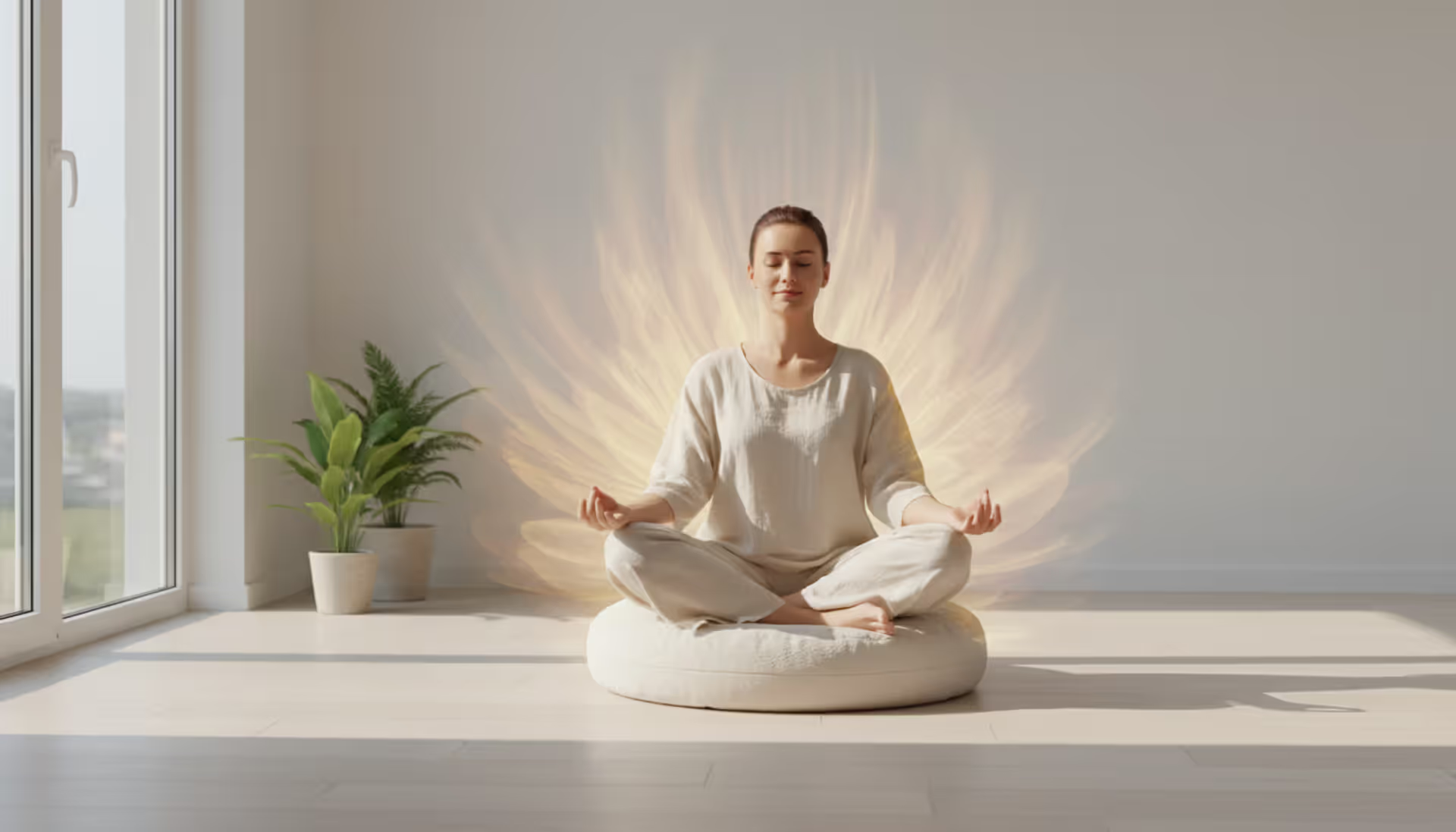
The first time you try sitting quietly before God, your brain basically throws a party. Tomorrow's meeting. That weird thing you said three years ago. Did you remember to lock the door? Beneath all that mental chaos, though, there's this pull—you want to meet the Divine somewhere beyond the constant stream of words.
When you center meditation on God rather than just calming your nervous system, something shifts. Standard mindfulness apps teach you to watch your breath and lower your cortisol. That's fine work. But spiritual meditation with God? You're doing something else entirely. You're learning to listen instead of just talking at heaven.
Here's what surprised me about this practice: it doesn't cancel out your regular prayers. It adds a different dimension. You already know how to ask God for things. Petition prayers have their place. But how often do you just... sit there? Available? Most of us spend years speaking at God without ever developing the muscle to hear what might come back in the quiet spaces.
What Makes Spiritual Meditation Different from Regular Meditation
Strip away the spiritual language from most meditation apps, and you're left with attention training. Focus on sensations. Notice thoughts without judgment. Return to the breath. Your awareness stays contained within your own skull—observing mental weather patterns, basically.
Meditation and spirituality diverge at the question of who else is in the room. When you practice spiritual meditation, you're operating on the assumption that silence isn't empty. You're clearing space for an encounter with someone beyond yourself. That one shift changes the entire enterprise.
Think about it practically. Secular meditation treats distracting thoughts as clouds passing through awareness. Acknowledge them, let them go, return to breath. Effective for anxiety management. But in your spiritual meditation practice, that same silence serves a different master. You're not achieving emptiness for its own sake—you're making room for God to show up however God chooses.
Prayer weaves through the practice differently too. Maybe you begin by asking the Spirit to guide what happens next. You might anchor yourself with a verse from Psalms. Some people keep a single word ready—"Father" or "peace"—to redirect attention when it wanders toward grocery lists. These aren't mantras in the Eastern sense. They're reminders of who you're meeting with.
The endpoint differs as well. Meditation apps promise better sleep, sharper focus, reduced blood pressure. Great outcomes, all of them. God-centered meditation seeks those benefits as side effects rather than goals. The real target? Deepening relationship with the Divine. When peace comes—and it does come—you receive it as gift rather than achievement.
Your spiritual meditation practice also makes peace with mystery. Neuroscience can map what happens in your brain during meditation. Helpful information. But meditation and the soul operates in territory that PET scans can't fully capture. Some experiences resist quantification. You're okay with that.
Preparing Your Mind and Space for Divine Connection
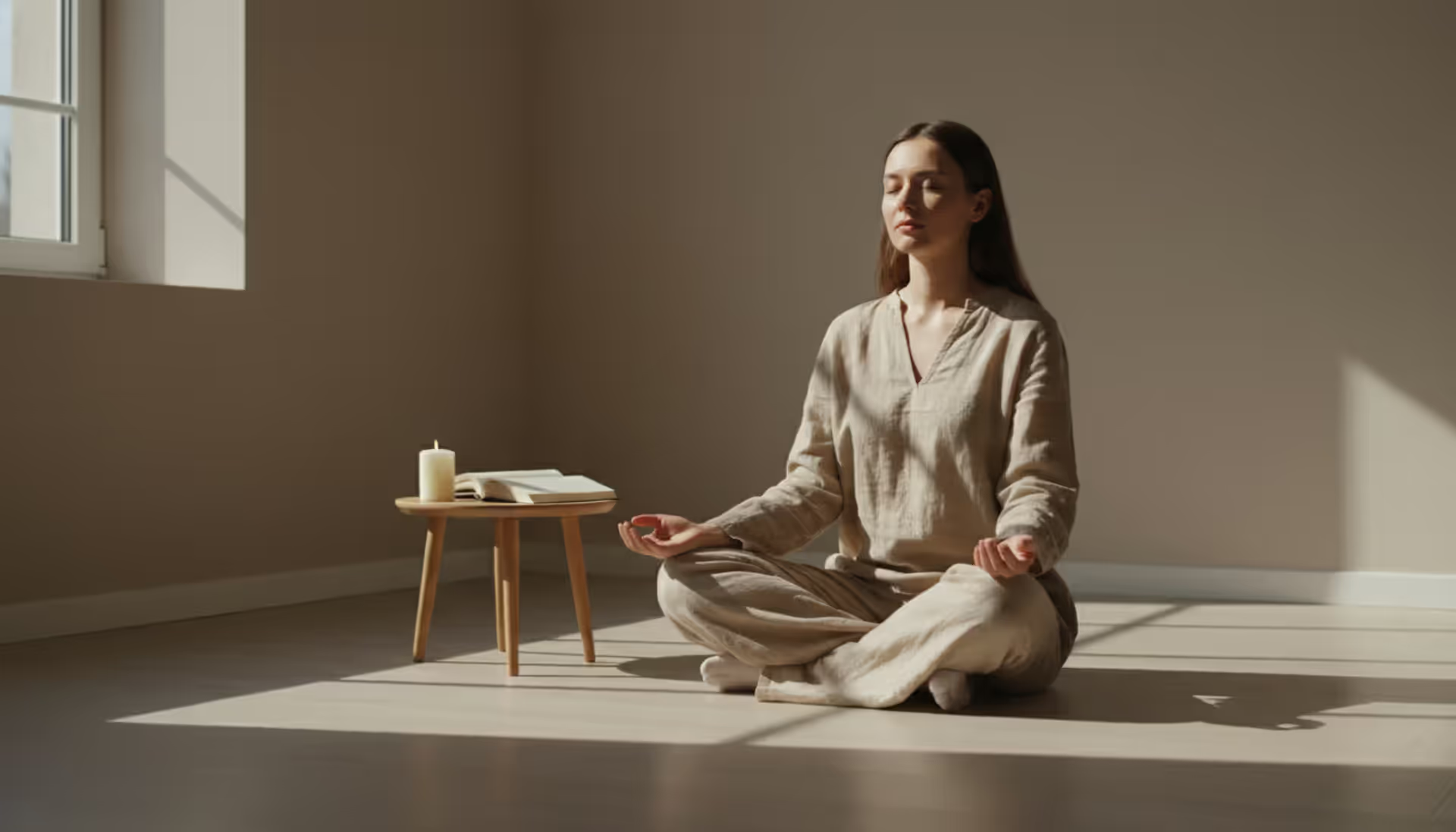
Where you sit matters more than you'd think. Not because God can't meet you in a noisy coffee shop, but because your attention needs all the help it can get. Find a corner where your phone won't buzz every ninety seconds. Perfect silence? Not required. But reasonable odds of fifteen uninterrupted minutes? Essential.
Small environmental cues train your unconscious mind. One woman I know uses the same wool blanket every session—wrapping herself becomes the physical signal that sacred time is starting. Another guy lights the same candle. One teacher recommends leaving a Bible open to the passage you'll contemplate. These objects aren't magic talismans. They're breadcrumbs for your wandering attention.
Before you settle in, clarify why you're here. Not rigid expectations—God doesn't perform on command. But a simple statement of intent: "I'm here to listen" or "Show me what I need to see" or "I'm yours for the next twenty minutes." Try writing these down once a week. You'll spot patterns in what you're actually seeking versus what you claim to want.
Choosing a scripture passage provides scaffolding for presence meditation practice. Don't pick something long. A single verse often works better than a chapter. Read it three or four times before you stop talking. Let the words settle. They become ground beneath your feet when your mind starts spinning stories about work deadlines.
Here's the hardest part: releasing the achievement mentality. You can't force God to appear through perfect technique. Connecting with higher self through meditation happens through surrender, which is basically the opposite of trying harder. Come empty-handed. Acknowledge that divine presence isn't something you manufacture through correct breathing patterns. This humble availability matters more than any method you choose.
Author: Sophie Ellington;
Source: 5sensesspa.com
Step-by-Step Spiritual Meditation Techniques
Different approaches work for different personalities. Try these for a few weeks each. See what actually helps versus what sounds good on paper.
Centering Prayer Method
Thomas Keating and Basil Pennington revived this ancient Christian practice back in the 1970s. They pulled from medieval mystics and repackaged it for modern practitioners. Here's how it works.
Pick one word that represents your consent to God's presence. Common choices: "Jesus," "Abba," "stillness," "love." Keep it short—one or two syllables. This isn't a word you'll repeat constantly. It's more like a reset button.
Sit down, close your eyes, and gently introduce your sacred word. Just once. Then wait. When you notice you've drifted into planning tomorrow or replaying yesterday, use the word again. Softly. Not as punishment for losing focus—just as a gentle redirect back toward openness.
Don't fight distractions. That creates more noise. Notice the thought ("Oh, I'm thinking about email"), return to the word, continue. Some days you'll need that word every thirty seconds. Other days you'll rest in wordless awareness for long stretches. Both count as successful practice.
Most teachers suggest twenty to thirty minutes, once or twice daily. When you're starting out, even ten minutes feels eternal. That's normal. The consistency builds the capacity. People often notice results more in daily life than during the actual sitting—you're less reactive, more patient, better at listening.
Contemplative Scripture Reading
Lectio divina treats the Bible as living conversation rather than information download. The monks who developed this weren't trying to memorize verses or extract moral lessons. They were listening for God's voice through the text.
Pick something short. Maybe Psalm 46:10. Maybe John 15:4. Definitely not all of Romans. Read it out loud slowly—slower than feels natural. Notice which phrase snags your attention. Don't ask why. Just notice.
Read it again. Let that phrase or word echo. Maybe it's "Be still." Maybe it's "Abide in me." Whatever caught you.
Now stop reading. Sit with that word or phrase gently held in awareness. You're not analyzing grammar or historical context. You're resting with this word in God's presence. Sometimes insights bubble up. Sometimes nothing happens. Both are fine. You're practicing availability, not productivity.
End with a brief spoken response. Could be thanks. Could be a question. Could be silence. Some people journal what emerged. Others prefer leaving it unprocessed. Try both ways.
Breath Prayer Practice
The Jesus Prayer—"Lord Jesus Christ, have mercy on me"—has been synchronized with breathing for over a thousand years in Eastern Christianity. You can borrow the structure with different words: "You are here / I am listening" or "Spirit, come / Spirit, guide."
Breathe normally. Don't manufacture some special yogic pattern. As air comes in, pray the first half silently. As air goes out, complete the phrase. Your breath becomes a vehicle carrying attention back to God.
Your mind will wander. Guaranteed. Mine goes to what I'm making for dinner within about forty-five seconds. When you catch yourself planning or worrying, return to the breath prayer. No guilt. That gentle return is the practice.
Start with ten minutes. Extend as it becomes sustainable. The beauty of breath prayer is portability—you can pray this way while walking, waiting in line, or lying awake at 3 AM. It becomes a thread of connection running through your entire day.
Author: Sophie Ellington;
Source: 5sensesspa.com
Silent Listening Meditation
This is the stripped-down version. No techniques, no focus objects, no words. Just the intention to be available to God.
Sit in silence with this simple prayer: "Here I am. I'm listening." Then... wait. Stay present without grasping for specific experiences.
Thoughts arrive constantly. Plans, memories, judgments, random song lyrics. You're not trying to create mental blankness (which is impossible anyway). You're cultivating a listening quality that notices thoughts without getting absorbed into them. They pass like weather.
Don't expect burning bushes or audible voices. God often "speaks" through subtle shifts—a gentle impression, a slight change in how you're holding some question, a deepening quiet. Many sessions feel like absolutely nothing happened. That's part of it. You're learning to stay present even when nothing obvious occurs.
This approach requires the most patience. It yields the quietest fruits. But people who stick with it often report gradual changes: recognizing God's presence in ordinary moments, clearer discernment about decisions, a baseline contentment that doesn't depend on circumstances.
Common Obstacles When Seeking God Through Meditation
Distractions will dominate your early sessions. Accept this now. Your brain will suddenly remember seventeen urgent tasks the moment you sit down. This isn't spiritual failure. It's normal human consciousness doing its thing. The practice isn't achieving distraction-free meditation. It's returning to God when you notice you've wandered. That return? That's the actual practice.
Spiritual dryness hits everyone eventually. God feels absent. Prayer feels like talking to the ceiling. Meditation seems pointless. These desert seasons aren't punishment. They're not evidence you're doing it wrong. Often they're invitations to practice faithfulness when feelings disappear. You learn to meditate not for pleasant experiences but because you're committed to showing up.
Doubts about whether anything real is happening will surface. "Am I just sitting here talking to myself?" Valid question. Faith isn't the absence of doubt—they're companions on this path. Continue practicing even when uncertainty shows up. Genuine transcendent meditation experience often arrives quietly, without the dramatic confirmation you might want.
Expectations sabotage more meditation sessions than distractions do. You anticipate mystical visions or profound insights or overwhelming peace. Then the session feels boring and ordinary. Disappointment follows. Here's the truth: release demands about how God should show up. Sometimes the most significant spiritual growth happens in sessions that feel completely unremarkable at the time.
Patience is brutal in a culture optimized for instant results. Meditation and consciousness transformation unfolds across months and years, not days. You're rewiring neural pathways. You're reshaping spiritual habits. You're opening channels of awareness that might've been closed for decades. Trust the slow work even when you can't see progress.
Signs of Deepening Spiritual Awareness During Practice
Inner peace that persists through chaos marks one indicator something's shifting. Not temporary calm from a relaxing activity—more fundamental settledness. A quiet center that remains steady when life gets messy. You notice you're less reactive. More able to pause before responding rather than just reacting automatically.
A sense of being accompanied during meditation signals growing sensitivity. Hard to articulate. You might describe it as feeling "held" or "met" rather than alone in the silence. This doesn't always arrive with emotional fireworks. Sometimes it's just a quiet knowing that you're not isolated. Some people feel warmth. Others describe fullness or an attention that seems to answer their own.
Clarity about what actually matters often emerges from consistent practice. Issues that seemed impossibly complex become simpler (not easier, just clearer). You gain perspective on what truly deserves attention versus what merely demands it. This clarity isn't always comfortable—it might reveal how you've been living out of alignment with your deepest convictions.
Spiritual awakening through meditation rarely shows up as one dramatic moment. More often it unfolds gradually—a slow opening to dimensions of reality you'd been missing. You notice beauty more readily. Feel compassion more naturally. Recognize sacred moments in ordinary experiences like washing dishes or watching your kid sleep.
Connecting with higher self through meditation manifests as increased alignment between your values and your actual choices. The gap between who you want to be and how you actually live narrows. You're not achieving perfection. But you're growing in integrity—becoming more whole, more integrated, more authentically yourself.
Changes in relationships often provide the clearest external evidence of internal shifts. Friends comment that you seem calmer or more present. You notice yourself listening more deeply, judging less quickly, responding with greater patience. These relational fruits often prove more reliable indicators than dramatic experiences during meditation itself.
Author: Sophie Ellington;
Source: 5sensesspa.com
Building a Consistent Spiritual Meditation Practice
Daily practice—even five minutes—beats occasional hour-long sessions every time. Your nervous system and spiritual awareness respond better to consistent small doses than sporadic marathons. Mornings work well for many people because the day hasn't yet crowded in with demands. Others prefer evenings to release accumulated tension. Experiment until you find what you'll actually sustain.
How long should you sit? Teachers vary wildly on this. Beginners might start with ten minutes and gradually extend to twenty or thirty as the practice becomes familiar. Some traditions recommend two sessions daily. Here's my advice: don't let ambitious goals sabotage consistency. Better to maintain a modest practice than abandon an overly ambitious one after three weeks.
Journaling after meditation helps you notice patterns over time. Keep it brief—three or four sentences about what you noticed or how you felt. Over months, themes emerge that you'd miss otherwise. Also note specific questions or concerns you brought to meditation and any sense of response or clarity that arose, even subtle ones.
Community support sustains practice when individual motivation inevitably flags. Find others committed to spiritual meditation practice. Could be a formal meditation group. Could be three friends who text each other on meditation mornings. Could be an online community. Knowing others are engaged in similar practice encourages you during dry stretches.
If you're part of a faith tradition, explore how meditation complements worship, scripture study, and service. Most religions have contemplative streams—Christian centering prayer, Jewish hitbodedut, Sufi dhikr, Hindu bhakti meditation. Learning from established paths provides guidance and prevents reinventing wheels that already work fine.
Meditation and inner peace deepen when practice extends beyond formal sessions. Look for ways to carry meditative awareness into daily activities. Practice presence while folding laundry, waiting in traffic, walking to your car. These micro-moments of returning to God throughout the day multiply the effects of your seated practice exponentially.
The contemplative life is not a life of withdrawal from the world, but a life of deeper engagement with it. In the silence, we find not escape but encounter—with God, with ourselves, and with the suffering and beauty of the world
— Thomas Merton
Frequently Asked Questions About Spiritual Meditation
How long should I meditate to feel God's presence?
No universal timeline exists. Some people sense divine presence in their first session. Others practice for months before experiencing anything they'd clearly identify as God. But the question itself contains a problematic assumption—that presence is primarily a feeling. God's presence doesn't depend on your awareness of it. Meditation trains you to recognize what's already true rather than conjuring something absent. Focus on showing up faithfully rather than achieving specific experiences within a certain timeframe.
Can I practice spiritual meditation if I'm new to prayer?
Yes. Meditation can actually serve as your entry point into deeper prayer life. You don't need theological degrees or years of traditional prayer practice. Start with simple techniques like breath prayer or silent listening. Your willingness to show up and be present with God matters infinitely more than prior experience. Many people discover that meditation makes verbal prayer more meaningful because they've developed greater interior stillness and receptivity.
What's the difference between spiritual meditation and contemplative prayer?
Honestly? The boundary between these is porous, and different traditions use the terms in varying ways. Generally speaking, contemplative prayer emphasizes resting in God's presence with minimal words or mental activity. Spiritual meditation might include contemplative prayer but can also encompass other practices like contemplative scripture reading or visualization. Don't get hung up on terminology. Both involve moving beyond discursive thinking into more direct, experiential awareness of the Divine.
Do I need a religious background to practice spiritual meditation?
Not necessarily, though having a faith framework helps provide context and language for experiences that arise. If you're drawn to spiritual meditation but don't identify with a specific religion, you might explore various traditions to see what resonates. That said, spiritual meditation with God assumes belief in a personal Divine reality, which distinguishes it from purely secular mindfulness. Without some openness to transcendence, you're essentially practicing secular meditation regardless of what label you use.
How do I know if I'm actually connecting with God during meditation?
This question troubles nearly every practitioner at some point. You might never have absolute certainty during a session. Faith involves trusting what you can't empirically prove. That said, look for fruits in daily life: increased peace, growing compassion, greater alignment between values and actions, deepening sense of meaning. These provide more reliable evidence than dramatic experiences during meditation. Also recognize that connection with God doesn't always produce feelings. Sometimes the most profound communion happens in sessions that feel completely ordinary.
Can spiritual meditation replace traditional prayer?
No, and it shouldn't. Meditation complements other prayer forms rather than replacing them. Verbal prayer, petition, confession, thanksgiving—these have their own value and purpose. Meditation adds a listening dimension that balances the speaking aspects of prayer. Most spiritual teachers recommend balanced practice that includes both talking to God and creating space to listen. Think of meditation as deepening your prayer life rather than substituting for it.
Spiritual meditation with God invites you into relationship rather than technique mastery. Methods matter—they provide structure and guidance—but they're means to an end, not destinations themselves. You're learning to recognize and rest in divine presence, developing capacity for sacred attention that transforms how you move through your actual life.
Your practice won't mirror anyone else's. Your temperament, life circumstances, spiritual tradition, and unique relationship with God shape what emerges. Some sessions will feel profound. Many will feel ordinary. Both contribute to the slow, patient work of opening yourself to divine love.
Start where you are. Five minutes of sincere presence beats an hour of distracted obligation. Pick one technique that resonates and practice it consistently for several weeks before adding or changing approaches. Notice what happens not just during meditation but in the hours and days that follow.
This path requires patience, humility, and trust. You're cultivating relationship with infinite Mystery—expect the journey to unfold in ways you can't predict or control. Show up faithfully. Release expectations about how it should go. Trust that God meets you in the silence, whether you feel it or not.
Waking at 4am without an alarm can feel unsettling at first. But what if this early waking isn't random? Many spiritual traditions view these pre-dawn hours as a sacred window when the veil between physical and spiritual realms grows thin
Meditation sits at the heart of Buddhist practice, but not for stress relief. Buddhists meditate to fundamentally transform their understanding of reality and liberate themselves from suffering. This distinction shapes everything from technique selection to measuring progress
Tantric meditation represents one of the most misunderstood spiritual practices in Western culture. Learn the authentic origins, core techniques including breathwork and kundalini energy work, and how to begin a safe, effective practice that integrates body, mind, and spirit
The RAIN meditation technique offers a structured approach to difficult emotions through four steps: Recognize, Allow, Investigate, and Nurture. Developed by Tara Brach, this mindfulness practice helps you process emotional pain with compassion rather than resistance
The content on this website is provided for general informational and educational purposes only. It is intended to explain concepts related to meditation, mindfulness, mental health, and spiritual practices.
All information on this website, including articles, guides, and examples, is presented for general educational purposes. Meditation outcomes may vary depending on individual practices, health conditions, and guidance.
This website does not provide medical, mental health, or spiritual advice, and the information presented should not be used as a substitute for consultation with qualified professionals.
The website and its authors are not responsible for any errors or omissions, or for any outcomes resulting from decisions made based on the information provided on this website.