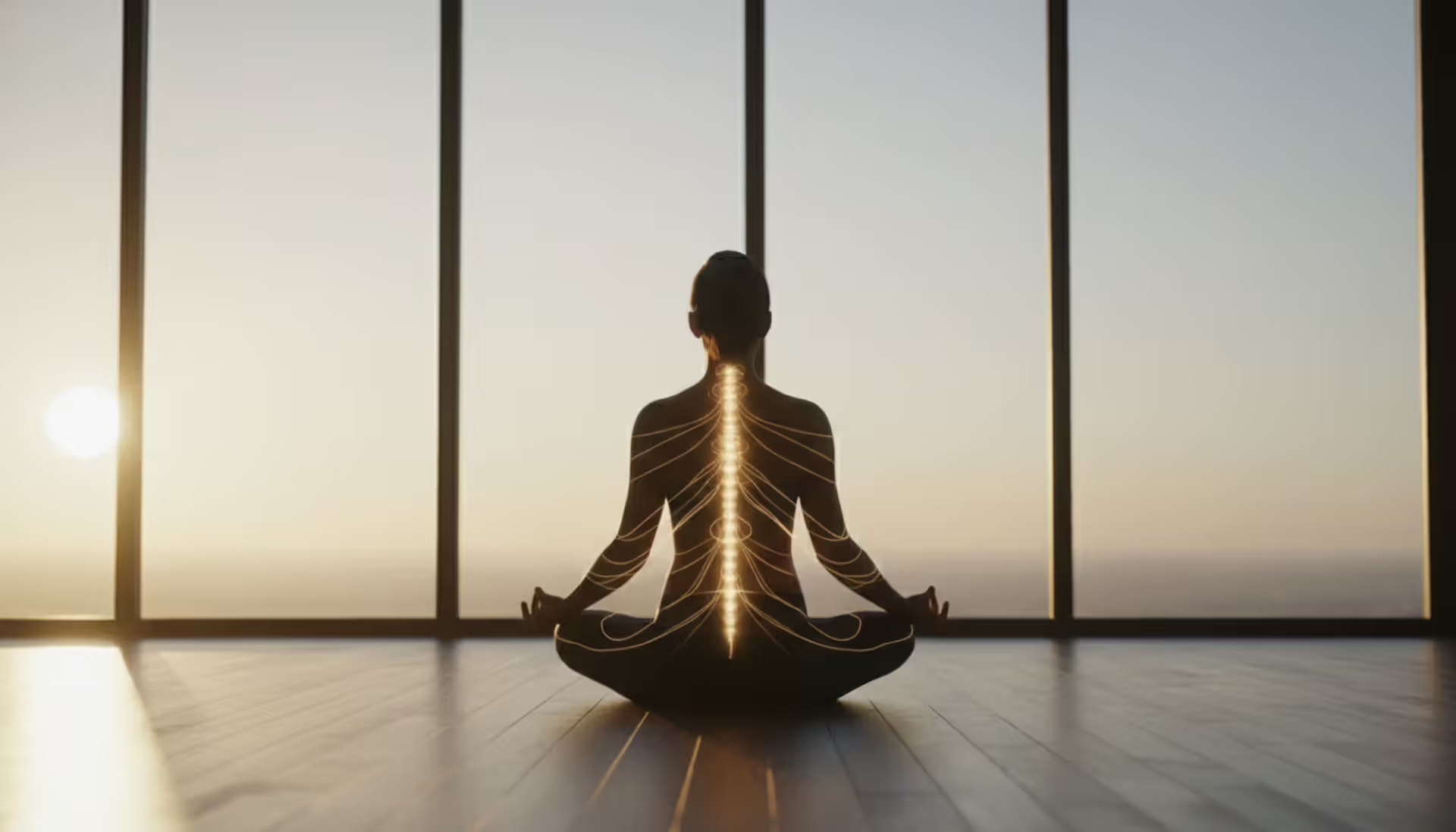
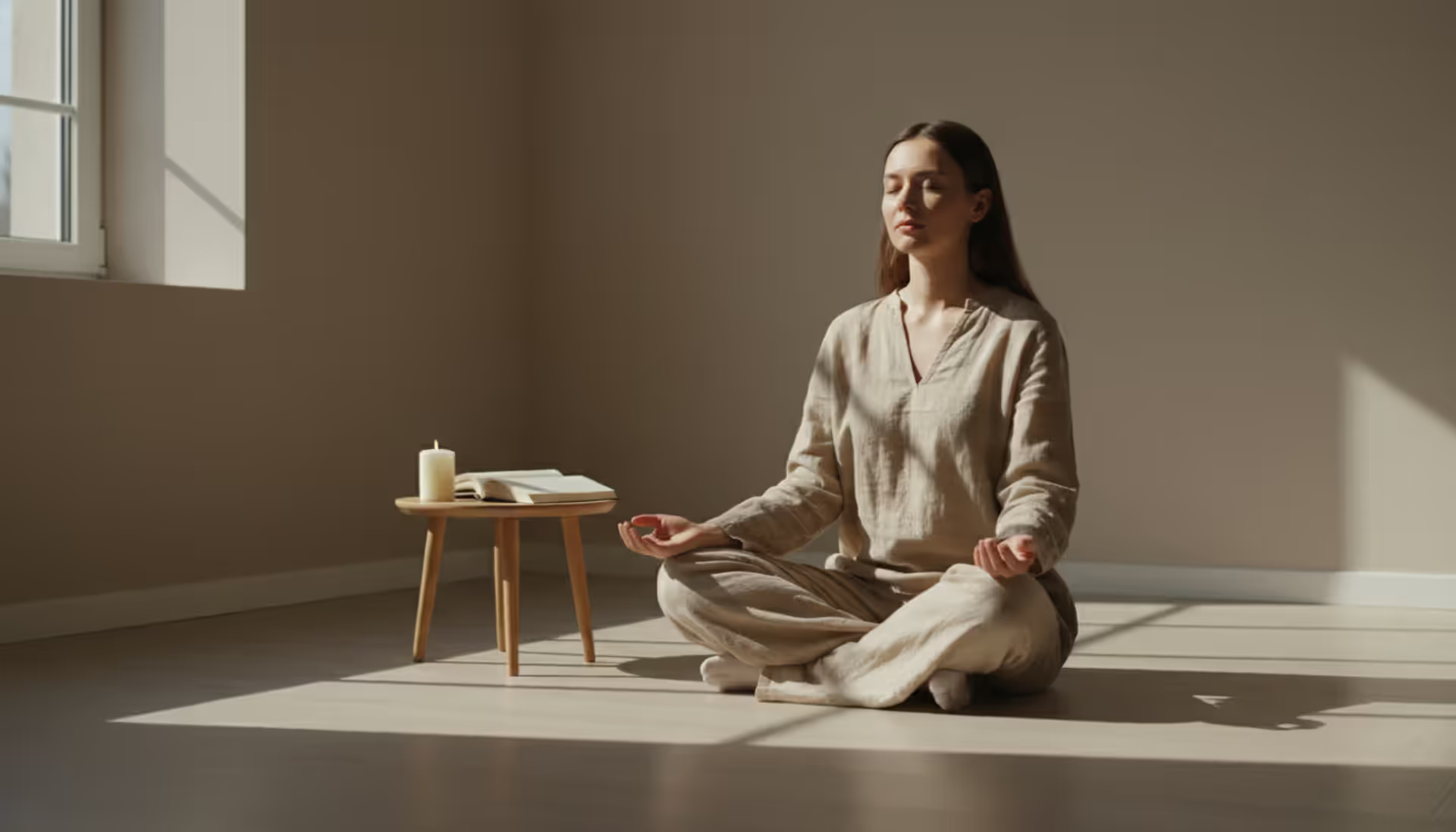
Standing at the threshold of Canaan, Joshua received an unusual battle strategy from God. No military tactics, no siege equipment instructions—just this: keep Scripture constantly in your thoughts and ponder it continually. This single directive from Joshua 1:8 reveals everything about how biblical meditation differs from the practices flooding American culture today.
When most people hear "meditation," they picture cross-legged silence, emptied minds, or yoga mats. Biblical meditation operates on completely different principles. Rather than clearing mental space, it intentionally occupies your thoughts with God's Word. Instead of seeking inner blankness, you're actively wrestling with Scripture until divine truth fundamentally rewires your thinking patterns.
This distinction matters profoundly for Christians navigating a landscape where meditation apps, mindfulness workshops, and yoga classes have become ubiquitous. Understanding what Scripture actually teaches about meditation helps you discern between practices that draw you closer to God and those rooted in contrary spiritual frameworks.
Biblical Meditation Defined
The primary Hebrew term translated "meditate" is hagah—a word that literally describes muttering, murmuring, or speaking under your breath. Imagine ancient Jewish students rocking rhythmically as they repeated Torah passages aloud, voices barely audible, until every word became permanently etched in memory and heart. This same word appears when Scripture describes a lion's growl or a dove's coo—sounds of sustained, focused attention.
A second Hebrew word, siyach, conveys the idea of rehearsing thoughts repeatedly, turning something over mentally from different angles. Psalm 119:15 uses this term when declaring focused attention on God's instructions and careful consideration of His pathways. This isn't lazy daydreaming but intentional mental labor.
Author: Ethan Solberg;
Source: 5sensesspa.com
The Greek New Testament employs meletao, which means to attend to carefully, to practice diligently, or to give sustained thought. Paul's instruction to Timothy uses this word, directing him toward concentrated attention on spiritual realities.
So what is meditation in the bible? It's the purposeful, extended concentration on Scripture with specific goals: understanding it more completely, embedding it deeper in memory, and applying it more consistently in daily decisions. Where secular meditation frequently pursues thoughtlessness, biblical meditation loads your mind with particular content—God's character, His redemptive work, His promises, and His commands.
This practice assumes transformation happens through what fills your thoughts, not through mental vacancy. Paul writes in Romans 12:2 about refusing conformity to cultural patterns and instead experiencing renewal through transformed thinking. Biblical meditation provides the practical mechanism for that mental renovation.
What the Bible Says About Meditation
Scripture doesn't merely describe meditation—it demands it. The opening Psalm paints a picture of someone truly blessed, someone who finds genuine joy in God's instruction and thinks about it constantly, around the clock. The imagery that follows compares this person to a healthy tree growing beside flowing water, producing fruit at the proper time, maintaining vibrant leaves through every season, and succeeding in every endeavor.
Notice the agricultural metaphor's implications. Meditation isn't occasional spiritual snacking—it's the extensive root network that continuously draws nourishment from living water. Regular meditators develop spiritual stability, fruitfulness, and resilience that shallow-rooted believers never achieve.
Psalm 119, Scripture's longest chapter, circles back to meditation themes repeatedly. One verse celebrates intense love for God's instruction that fuels constant daily reflection. Another describes staying awake through night hours specifically to ponder divine promises. For the psalmist, this wasn't religious obligation squeezed between other priorities—it was a lifestyle integrated into natural daily rhythms.
Author: Ethan Solberg;
Source: 5sensesspa.com
David's psalms frequently reference meditation practices. One psalm describes remembering God while lying in bed, thinking about Him throughout sleepless hours. Another recounts recalling ancient history, reflecting on everything God accomplished, and carefully considering His mighty works. When David faced crises, meditation on God's past faithfulness provided stability during present chaos.
Even the patriarchs meditated. Genesis records Isaac going to the fields for evening meditation. Scripture presents this practice as normal expectation for every believer pursuing closeness with God, not specialized activity reserved for religious professionals.
Meditate on It Day and Night – Joshua 1:8 Explained
Joshua 1:8 delivers perhaps Scripture's most direct meditation instruction. Following Moses' death, Joshua inherited the overwhelming responsibility of leading Israel into territory filled with hostile enemies. God's success formula skipped military strategy and political maneuvering entirely, centering instead on one practice: continual Scripture meditation.
The divine command specifically requires keeping the law book constantly on your lips and pondering it around the clock, ensuring careful obedience to everything written there. The attached promise guarantees prosperity and success through this practice.
"Day and night" doesn't demand literally every waking moment but does indicate consistent, rhythmic patterns. Ancient Israelites naturally structured meditation around morning and evening, reciting the Shema as they started and ended each day. The phrasing suggests letting Scripture bookend your days, shaping how you launch into morning responsibilities and how you process evening experiences.
Author: Ethan Solberg;
Source: 5sensesspa.com
The promised blessing sequence matters: meditation produces careful obedience, which produces genuine flourishing. This success isn't material wealth generated by positive thinking. It's the comprehensive thriving that follows aligning your entire life with divine wisdom.
"Keep this Book of the Law always on your lips" emphasizes verbal repetition. Ancient meditation commonly involved speaking Scripture audibly, engaging multiple senses simultaneously. This aided memorization in cultures without mass-produced Bibles while creating what modern psychology recognizes as embodied learning—truth reinforced through physical action strengthens mental retention.
How Biblical Meditation Differs from Yoga and Mindfulness
Recent years have seen Americans invest over $18 billion annually in yoga classes, meditation apps, and related products. Mindfulness programs now appear in schools, corporate training, and even church buildings. These trends raise important questions Christians must address: what does the bible say about meditation and yoga, and can believers safely participate in these practices?
The core distinction centers on meditation's object and purpose. Eastern practices, including Buddhist and yogic meditation, typically pursue mental emptiness, detachment from thought patterns, or realization of inherent divinity. Practitioners often describe transcending individual self or merging consciousness with universal reality.
Biblical meditation inverts this completely. It fills your mind with specific content (Scripture), actively engages thoughts (analyzing meaning and identifying applications), and reinforces the fundamental distinction between Creator and created beings. The objective isn't self-transcendence but God-focused transformation into Christ's likeness.
Christian mindfulness, properly understood, can align with biblical principles if it means heightened awareness of God's active presence and ongoing work in each moment. Psalm 46:10 invites pausing to recognize divine sovereignty—legitimate biblical practice. However, when mindfulness becomes merely a self-improvement technique disconnected from Scripture or relationship with God, it departs completely from biblical meditation.
Yoga introduces additional complications. Though some treat it as purely physical exercise, authentic yoga remains inseparable from Hindu spirituality. Traditional poses honor specific deities, and breathing techniques aim to manipulate spiritual energy called prana. Christians participating should understand these origins and thoughtfully consider whether the practice, even stripped of explicit religious elements, promotes worldviews incompatible with biblical faith.
Consider these key contrasts:
Aspect
Biblical Meditation
Secular Mindfulness
Eastern Meditation
Purpose
Knowing God personally and obeying His Word
Managing stress and sharpening mental focus
Achieving enlightenment and transcending individual self
Method
Concentrated thinking about specific Scripture passages
Mantras, energy centers, undifferentiated consciousness
Spiritual Goal
Being transformed into Christ's image
Improving mental health and personal performance
Merging with universal divine or escaping suffering
Foundation
Divine revelation recorded in Scripture
Therapeutic psychological methods
Pantheistic or non-theistic philosophies
Christians practicing biblical meditation aren't pursuing blank minds but renewed ones. You're not escaping reality but engaging it more thoroughly through God's interpretive framework revealed in Scripture.
Prayer and Meditation in Christian Practice
Christians frequently ask about prayer versus meditation—are they identical practices with different labels, or do they serve distinct purposes? Though intimately related, they're separate spiritual disciplines that powerfully complement each other.
Prayer constitutes conversation with God. You address Him directly through praise, confession, gratitude, and requests. Prayer can be spontaneous or liturgical, communal or private, but always involves communication aimed toward God.
Meditation involves reflection on divine truth. You're primarily in listening mode—letting Scripture address you, wrestling with its meaning, and allowing it to reshape your thinking patterns. Meditation cultivates the heart soil where prayer takes root and flourishes.
Think of this relationship: meditation teaches you God's language, while prayer gives you opportunity to speak it. You meditate on passages revealing God's faithfulness, which then informs prayers you offer when facing uncertainty. You reflect on Gospel accounts of Jesus's compassion, which shapes how you intercede for suffering people.
Meditation and faith develop through mutual reinforcement. Romans 10:17 explains that faith grows from hearing the message about Christ. As you meditate on Scripture, you encounter Christ more fully, deepening faith. Strengthened faith motivates increased meditation, revealing still more of Christ's character and work.
Puritan writers described meditation as "prayer's best beginning and best ending." They meditated on Scripture to prepare their hearts before praying, then meditated on God's attributes after prayer to reinforce what they'd expressed in conversation with Him.
The steady, sustained reading and pondering of Scripture, with the intent of finding and obeying God, is the most important thing we can do in this life. It is the primary means of spiritual growth and transformation
— Dallas Willard
Many Christians discover that meditation flows organically into prayer. Reading Philippians 4:6-7 about anxiety, meditating on God's peace surpassing comprehension, naturally transitions into praying about specific worries. The boundary between disciplines blurs because both fundamentally involve personal engagement with God.
How to Meditate on the Bible
Understanding biblical meditation's definition provides little value without knowing practical implementation steps. Here's a framework anyone can follow immediately:
Select Scripture purposefully. Random Bible-flipping hoping for magical guidance doesn't work. Choose passages addressing current needs or follow structured reading plans. Beginners typically benefit from shorter texts—individual verses, single psalms, or Gospel paragraphs. Psalm 23, Philippians 4:4-9, or Romans 8:28-39 provide excellent starting points.
Read deliberately and repeatedly. Speed contradicts meditation's purpose. Read your selected passage three, four, or five times, noticing different details each time. Which words repeat? What verbs describe God's actions? What emotions does the author express? What would someone hearing this originally have understood?
Interrogate the text actively. Who wrote this passage, and for whom? What circumstances prompted it? What does this reveal about God's character? What does it teach about human nature? How does this connect with other Scripture passages? How would my life change if I genuinely believed this truth?
Commit key phrases to memory. Memorize at least one complete verse. Repeat it throughout your day—during commutes, while exercising, or doing household chores. Psalm 119:11 explains this practice's value: storing God's word internally prevents sin.
Practice lectio divina. This ancient Christian method involves four movements: lectio (reading), meditatio (reflecting), oratio (responding in prayer), and contemplatio (resting in God's presence). Read the passage, reflect on what captures attention, respond to God through prayer, and quietly rest in His presence. This naturally integrates meditation with prayer.
Author: Ethan Solberg;
Source: 5sensesspa.com
Record your discoveries in writing. Journal what you notice, questions that surface, and applications God brings to mind. Writing slows thinking and creates reviewable records. Many find that journaling transforms vague impressions into clear understanding.
Identify specific applications. Biblical meditation remains incomplete without behavioral change. James 1:22 warns against merely hearing without doing, which constitutes self-deception. After meditating on Jesus's enemy-love command, identify one difficult person you'll specifically pray for this week. After reflecting on Philippians 4:8's call toward noble and pure thinking, decide which social media account promotes opposite values and should be unfollowed.
Establish consistent meditation patterns. Consistency outweighs duration. Five focused minutes daily produces more transformation than occasional hour-long sessions. Many Christians meditate first thing mornings before distractions multiply. Others prefer evening reflection, processing the day's events through Scripture's lens. Some practice both, bookending days with God's Word as Joshua 1:8 suggests.
Employ physical aids when beneficial. Some Christians meditate while walking, combining physical movement with mental concentration. Others light candles marking meditation time as set apart. Reading Scripture aloud engages additional senses beyond visual processing. No single correct method exists—discover what enhances your focus.
Anticipate gradual development. Your mind will wander constantly. You'll feel distracted, discouraged, or frustrated. That's completely normal. Biblical meditation develops as a skill over time, not a technique instantly mastered. When thoughts drift, gently redirect attention to the Scripture before you without self-condemnation.
Common Questions About Christian Meditation
Is meditation biblical or New Age?
Meditation itself saturates Scripture from Genesis through Revelation—God commands it repeatedly. What determines whether meditation is "New Age" or Christian isn't the practice of focused thinking but what receives that focus. New Age meditation typically centers on self-discovery, inner divinity, or universal energy. Biblical meditation centers exclusively on God's revealed Word in Scripture. The Bible predates New Age spirituality by thousands of years—Christians aren't borrowing from other traditions but reclaiming a practice that originated with God's people and always belonged within biblical faith.
What does "meditate day and night" mean practically?
This language from Joshua 1:8 and Psalm 1:2 describes a lifestyle where Scripture continuously shapes your thinking throughout each day, not literal round-the-clock meditation without sleeping. Practically, establish definite morning and evening meditation times, then carry verses mentally throughout your day. When standing in lines, recall and ponder Scripture instead of checking your phone. When making decisions, let biblical principles you've meditated on inform your choices. It means saturating your mind with God's Word until it becomes your automatic reference point for interpreting all experiences.
Can Christians practice mindfulness meditation?
Christians can legitimately practice mindfulness defined as paying careful attention to God's presence and ongoing work in each present moment. Recognizing God's goodness in sunsets, noticing His provision through daily meals, or acknowledging His sovereignty during stressful situations—these align with biblical practice. However, mindfulness disconnected from Scripture and relationship with God, focusing purely on self-awareness or stress management, misses Christian meditation's whole point. The critical question isn't whether you're mindful, but what specifically you're being mindful of. Biblical meditation constitutes God-focused and truth-centered mindfulness.
What's the difference between prayer and meditation?
Prayer involves talking directly to God; meditation involves thinking deeply about God and His revealed Word. Prayer expresses your heart toward God; meditation allows God's Word to reshape your heart. In actual practice, they overlap extensively. You might meditate on God's covenant faithfulness, prompting prayers offered with greater confidence. Or pray requesting wisdom, then meditate on James 1 to understand wisdom's biblical characteristics. Consider meditation as careful listening and prayer as thoughtful responding—both essential for healthy relationship with God.
How long should I meditate on Scripture daily?
Quality consistently trumps quantity. Fifteen focused minutes beats an hour of distracted page-turning. Most Christians find 10-20 minutes daily provides adequate time for reading passages multiple times, asking probing questions, and identifying applications without feeling rushed. Beginners might start with just five minutes, gradually increasing duration. The objective isn't checking spiritual boxes but genuinely engaging God's Word. Some days you'll spend thirty minutes on one verse because it grips your heart. Other days, five minutes matches your schedule's realistic capacity. Consistency over months and years produces transformation, not perfection in any individual session.
Does biblical meditation require silence or can I use music?
Scripture prescribes neither silence nor music for meditation—both can work depending on individual personality and specific context. Many find silence aids concentration, eliminating distractions so God's voice through His Word comes through clearly. Others use instrumental worship music creating contemplative atmosphere. Avoid music with lyrics competing for attention against Scripture. The simple test: does this element help me focus on God's Word, or does it distract me from it? Some Christians meditate in silence during morning quiet time but reflect on memorized verses while listening to worship music during commutes. Experiment freely to discover what genuinely aids your concentration and engagement.
Biblical meditation isn't trendy spiritual practice borrowed from other religions—it's a divine command woven throughout Scripture's entire narrative. When you meditate on God's Word, you follow the faithful pattern established by Joshua, David, and countless believers who discovered that sustained Scripture reflection fundamentally transforms thinking, feeling, and living.
The contrast between biblical meditation and secular alternatives couldn't be sharper. You're not emptying your mind but intentionally filling it with revealed truth. You're not seeking detachment but pursuing deeper engagement with the God who speaks through His Word. You're not chasing self-improvement techniques but cultivating relationship with the One who created and redeems you.
Begin simply today. Select one verse—perhaps the opening of Psalm 23 or a promise from Philippians 4. Read it slowly five times. Ask what it reveals about God's character. Commit it to memory. Carry it mentally throughout your day. Notice how it reshapes your perspective on circumstances you encounter.
Biblical meditation won't instantly solve every problem or immediately answer every question. But practiced faithfully over months and years, it accomplishes what God promises in Joshua 1:8—it leads toward careful obedience, which produces the kind of success that matters eternally. Like trees planted beside flowing streams, you'll discover roots extending deeper, fruit developing richer, and spiritual life flourishing through every season of experience.
Waking at 4am without an alarm can feel unsettling at first. But what if this early waking isn't random? Many spiritual traditions view these pre-dawn hours as a sacred window when the veil between physical and spiritual realms grows thin
Meditation sits at the heart of Buddhist practice, but not for stress relief. Buddhists meditate to fundamentally transform their understanding of reality and liberate themselves from suffering. This distinction shapes everything from technique selection to measuring progress
Tantric meditation represents one of the most misunderstood spiritual practices in Western culture. Learn the authentic origins, core techniques including breathwork and kundalini energy work, and how to begin a safe, effective practice that integrates body, mind, and spirit
Spiritual meditation with God transforms the practice of quieting your mind into sacred conversation. Unlike secular mindfulness, this approach centers on opening yourself to divine communion through techniques like centering prayer, contemplative scripture reading, and silent listening meditation
The content on this website is provided for general informational and educational purposes only. It is intended to explain concepts related to meditation, mindfulness, mental health, and spiritual practices.
All information on this website, including articles, guides, and examples, is presented for general educational purposes. Meditation outcomes may vary depending on individual practices, health conditions, and guidance.
This website does not provide medical, mental health, or spiritual advice, and the information presented should not be used as a substitute for consultation with qualified professionals.
The website and its authors are not responsible for any errors or omissions, or for any outcomes resulting from decisions made based on the information provided on this website.