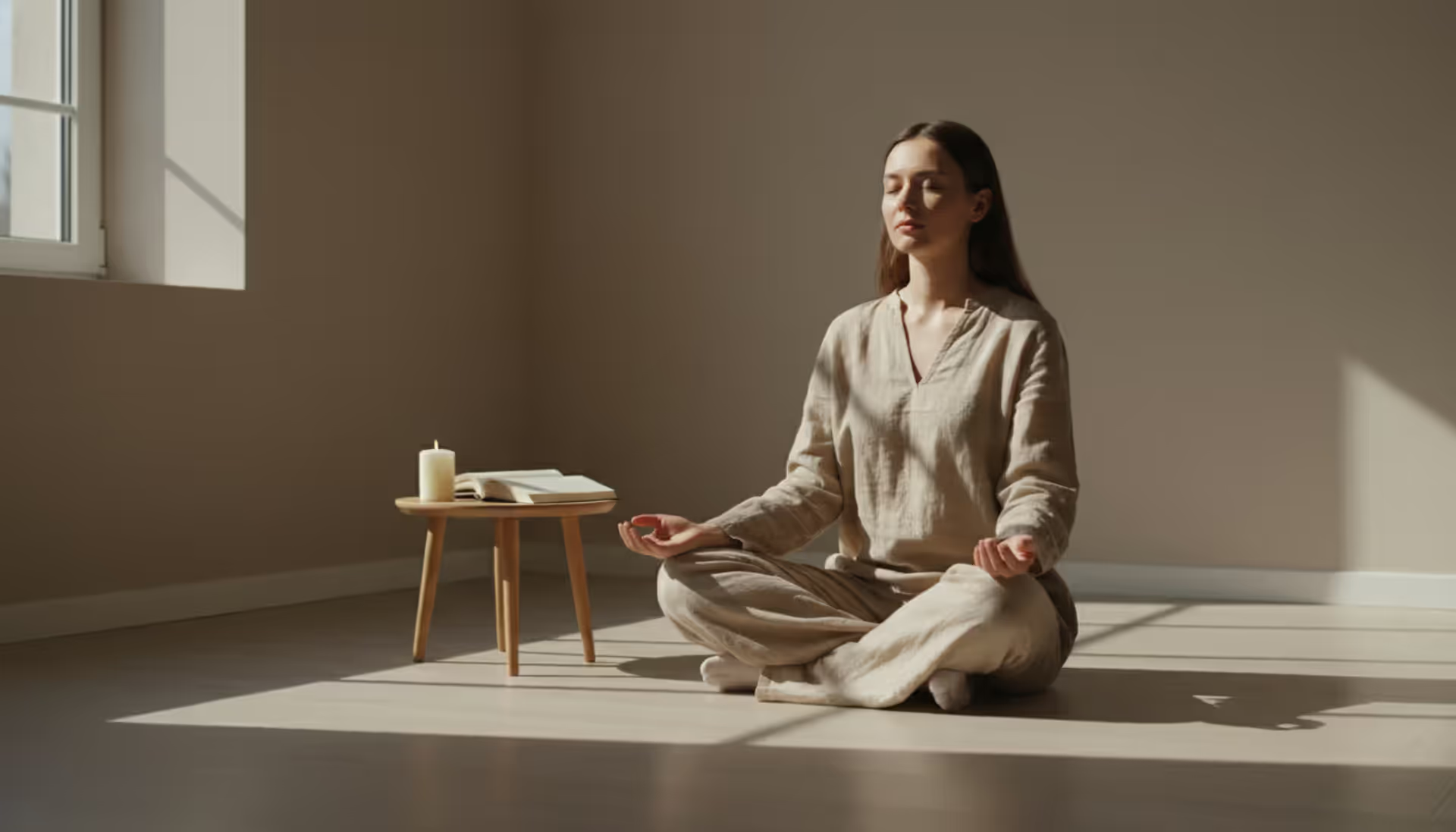
A person sitting in a meditation pose on a cushion in a softly lit quiet room with gentle morning light coming through a large window, creating a calm and contemplative atmosphere
Grief doesn't arrive on a schedule. It shows up in waves—sometimes predictable, often not. You might feel fine one moment, then find yourself unable to breathe the next. The death of someone you love, the end of a relationship, or any significant loss can reshape your entire world. While nothing can eliminate the pain of loss, meditation offers a way to sit with grief rather than run from it.
This isn't about "getting over" someone or rushing through stages. Meditation for grief and loss creates space to acknowledge what you're feeling without being consumed by it. It won't make the hurt disappear, but it can help you find moments of calm within the storm.
How Grief Affects the Mind and Body
Grief is exhausting. Most people expect the emotional weight—the sadness, anger, or numbness—but the physical toll often catches them off guard.
Your body responds to loss as a threat. Cortisol levels spike. Sleep patterns fracture. Some people can't eat; others can't stop eating. Headaches, chest tightness, and digestive issues are common. You might feel foggy, forgetting simple things like where you put your keys or what you had for breakfast.
The brain's reward system takes a hit too. The person or thing you lost likely activated dopamine pathways—sources of joy, comfort, or meaning. When that source vanishes, your brain scrambles to adjust. This isn't weakness. It's neurobiology.
Grief also disrupts your sense of time. Minutes feel like hours. Weeks blur together. This temporal distortion happens because grief hijacks the hippocampus, the brain region involved in memory and spatial navigation. You're not just sad—you're literally disoriented.
Many people experience intrusive thoughts: replaying final conversations, imagining different outcomes, or suddenly remembering small details at random moments. These aren't signs you're "doing grief wrong." They're normal responses to trauma and loss.
Author: Lena Ashcroft;
Source: 5sensesspa.com
How Meditation Helps with Grief
Meditation doesn't fix grief, but research shows it changes how your brain processes emotional pain. A 2023 study in the journal Frontiers in Psychology found that regular meditation practice strengthens the prefrontal cortex—the part of your brain responsible for emotional regulation—while reducing activity in the amygdala, your brain's fear center.
When you're grieving, your nervous system often gets stuck in fight-or-flight mode. Meditation activates the parasympathetic nervous system, signaling to your body that it's safe to rest. This doesn't erase the pain, but it can reduce the physiological panic that often accompanies it.
Dr. Tara Brach, clinical psychologist and meditation teacher, explains: "Meditation doesn't remove grief, but it offers a sanctuary where we can hold our pain with compassion rather than resistance. This shift from fighting our experience to allowing it is where healing begins."
Mindfulness and Grief Processing
Mindfulness for grief means observing your thoughts and feelings without trying to change them. You notice the tightness in your chest without immediately trying to make it go away. You acknowledge the thought "I can't do this" without building a story around it.
This practice interrupts rumination—the endless loop of "what if" and "if only" that can trap you for months. When you notice a thought without attaching to it, you create a small gap between stimulus and response. Over time, these gaps widen.
Mindfulness also helps you recognize that grief isn't constant. Even in deep mourning, there are moments when the pain lessens—maybe just for seconds. Meditation trains you to notice these fluctuations rather than believing you'll feel terrible forever.
Author: Lena Ashcroft;
Source: 5sensesspa.com
Physical Benefits During Bereavement
Meditation during bereavement addresses the body's stress response. Studies show that consistent practice can:
Lower blood pressure and reduce inflammation markers
Improve sleep quality (or at least reduce the anxiety about not sleeping)
Decrease tension headaches and muscle pain
Restore appetite regulation by calming the nervous system
These changes don't happen overnight. Most research suggests benefits emerge after 4-6 weeks of regular practice, though some people notice improvements sooner.
Types of Meditation for Grief
Not every meditation style works for every person or every type of loss. What helps after a sudden death might not suit someone processing a breakup. Here are approaches worth trying.
Guided Meditation for Grief
Guided meditation for grief involves listening to someone lead you through a practice. This works well when your mind is too scattered to meditate alone. A voice gives you something to anchor to when your thoughts spiral.
Good guided meditations for grief often include:
Body scans that help you locate and release physical tension
Visualizations where you imagine a safe space or connect with memories of the person you lost
Compassion practices that address guilt or regret
Apps like Insight Timer and Calm offer specific grief tracks. Look for sessions between 10-20 minutes—long enough to settle in, short enough that you won't lose focus.
One mistake: choosing overly upbeat or "healing-focused" meditations too soon. If a meditation tells you to "release" your grief before you're ready, it can feel invalidating. Find guides who acknowledge that grief is necessary, not something to eliminate.
Mindfulness for Grief
This approach emphasizes present-moment awareness without a specific script. You might focus on your breath, the sounds around you, or sensations in your body.
The practice is simple: when your mind wanders to the past (memories) or future (fears about life without this person), you gently return to the present. Not because the present is better, but because it's the only place you can actually breathe.
Start with 5 minutes. Sit comfortably. Notice your breath moving in and out. When thoughts about your loss arise—and they will—acknowledge them ("I'm thinking about the funeral," "I'm feeling angry") and return to the breath. You're not pushing feelings away; you're practicing the skill of not drowning in them.
Meditation for Heartbreak
Meditation for heartbreak addresses romantic loss specifically. The techniques overlap with general grief meditation, but the focus often includes:
Loving-kindness meditation directed at yourself (not the ex)
Practices that help you separate your identity from the relationship
Meditations addressing attachment and letting go
Heartbreak activates the same brain regions as physical pain. When you say your heart hurts, that's not metaphorical—your brain processes it similarly to an injury. Meditation can reduce this neural pain response over time.
One useful practice: place your hand on your heart, feel it beating, and repeat a simple phrase like "This is hard, and I'm doing my best." This self-compassion practice, developed by Dr. Kristin Neff, helps counteract the self-criticism that often follows breakups.
How to Start Meditating When You're Grieving
Starting a meditation practice while grieving feels counterintuitive. You might think, "I can barely get through the day—how am I supposed to sit still?" Here's how to begin without adding pressure.
Start with 3 minutes. Not 20. Not even 10. Set a timer for 3 minutes and just breathe. If that feels manageable, add a minute every few days. If it doesn't, stick with 3.
Don't force positivity. Coping with loss through meditation doesn't mean forcing yourself to feel grateful or peaceful. If you sit down and immediately cry, that's the practice. Meditation creates space for what's actually happening, not what you wish was happening.
Choose a consistent time, but be flexible. Many people meditate in the morning, but if mornings are when grief hits hardest, try afternoon or evening. The "best" time is whenever you'll actually do it.
Use a physical anchor. If sitting with your thoughts feels overwhelming, focus on something tangible: the feeling of your feet on the floor, your hands on your knees, or the temperature of the air on your skin. Physical sensations can ground you when emotions feel too big.
Expect resistance. Your mind will offer reasons not to meditate: "This isn't working," "I don't have time," "I should be doing something productive." Notice these thoughts, then meditate anyway. Consistency matters more than perfection.
Meditate before you "feel like it." You'll rarely feel like meditating when you're grieving. Do it anyway—not as punishment, but as a commitment to yourself. Motivation follows action more often than it precedes it.
One practical tip: keep your meditation spot simple. A chair, a cushion, a quiet corner. Don't wait to create the perfect environment. Use what you have.
Author: Lena Ashcroft;
Source: 5sensesspa.com
Common Mistakes When Using Meditation During Bereavement
Meditation can help with grief, but certain approaches backfire. Here's what to avoid.
Expecting meditation to "fix" you. Meditation during bereavement isn't about returning to who you were before the loss. That person doesn't exist anymore. Grief changes you. Meditation helps you navigate that change, not reverse it.
Using meditation to avoid feelings. Some people meditate to escape grief rather than process it. If you're using meditation to numb out or distract yourself from pain, it becomes another form of avoidance. The goal is to create space for feelings, not bury them.
Meditating in isolation when you need support. Meditation complements therapy and community support; it doesn't replace them. If your grief includes suicidal thoughts, severe depression, or inability to function, you need professional help alongside any meditation practice.
Comparing your practice to others. Someone else might meditate for 45 minutes daily and feel transformed. You might manage 5 minutes and feel worse some days. Neither experience is wrong. Grief is individual. Your practice should be too.
Quitting after a hard session. Some meditation sessions will be awful. You'll cry the whole time, or your mind will race, or you'll feel more agitated than when you started. This doesn't mean meditation isn't working. Grief is messy. Your practice will reflect that.
Forcing a timeline. There's no schedule for when meditation should "start working." Some people feel calmer after a few sessions. Others practice for months before noticing changes. Trust the process without demanding immediate results.
Meditation Practices and Resources for Coping with Loss
Finding the right resources can make the difference between a practice that sticks and one that fizzles out.
Apps with grief-specific content: - Insight Timer offers hundreds of free meditations tagged for grief and loss - The Grief Recovery Method app combines meditation with structured grief work - Headspace includes a course on navigating grief and loss
Author: Lena Ashcroft;
Source: 5sensesspa.com
YouTube channels worth exploring: - The Honest Guys (guided meditations, including grief-focused sessions) - Jason Stephenson (sleep meditations that address grief and anxiety) - Tara Brach's channel (dharma talks and meditations on difficult emotions)
In-person and virtual grief groups: Many hospice organizations offer free meditation and mindfulness groups for people experiencing bereavement. These combine meditation practice with peer support. The Dinner Party brings together young adults dealing with loss, often incorporating mindfulness practices.
Therapist-led meditation: Grief counselors and therapists trained in mindfulness-based approaches can guide you through meditation for healing from loss in a clinical setting. This is particularly helpful if meditation brings up overwhelming emotions you're not ready to handle alone.
Books that combine meditation and grief work: - Bearing the Unbearable by Joanne Cacciatore - Grief Works by Julia Samuel (includes mindfulness exercises) - It's OK That You're Not OK by Megan Devine
Local meditation centers: Many Buddhist centers and secular meditation groups offer sessions focused on working with difficult emotions. These are often donation-based or free.
One underused resource: hospital chaplains and bereavement coordinators. Even if you're not religious, many are trained in mindfulness and grief processing and can point you toward local resources.
Meditation Type
Best For
Duration
Difficulty Level
Recommended Resources
Guided Body Scan
Physical tension from grief, trouble sleeping
10-30 min
Beginner
Insight Timer, Headspace
Loving-Kindness (Metta)
Guilt, anger, or relationship loss
10-20 min
Intermediate
Tara Brach, UCLA Mindful App
Breath Awareness
Anxiety, panic, or feeling overwhelmed
3-15 min
Beginner
Any quiet space, no app needed
Walking Meditation
Restlessness, inability to sit still
10-30 min
Beginner
Local parks, grief walking groups
Grief-Specific Guided
Processing loss, need for structure
15-25 min
Beginner
The Grief Recovery Method, Calm
Silent Sitting
Deep grief work, established practice
20-40 min
Advanced
Local meditation centers, retreats
Frequently Asked Questions
Can meditation replace therapy for grief?
No. Meditation is a tool, not a substitute for professional mental health care. If your grief includes symptoms of clinical depression, prolonged dysfunction, or thoughts of self-harm, you need a therapist. Meditation can complement therapy, but it doesn't replace the guidance, accountability, and specialized interventions a trained counselor provides.
How long should I meditate when grieving?
Start with whatever feels manageable—even 3-5 minutes. There's no minimum threshold for benefit. Research on mindfulness and grief processing suggests that consistency matters more than duration. Twenty minutes daily is ideal according to most studies, but 5 minutes every day beats 30 minutes once a week.
Is it normal to cry during grief meditation?
Completely normal. Crying during meditation isn't a sign you're doing it wrong—it often means you've created enough safety to let emotions surface. Some sessions you'll cry the entire time. Others you won't cry at all. Both are fine. Keep tissues nearby and let whatever needs to happen, happen.
What if I can't focus while meditating after a loss?
Lack of focus is expected when you're grieving. Your brain is processing trauma; concentration is impaired. Instead of fighting distraction, make it part of the practice. Notice when your mind wanders, acknowledge where it went ("thinking about the funeral," "worrying about finances"), and gently return to your breath. You'll do this hundreds of times per session. That's the practice.
How soon after a loss should I start meditating?
There's no "right" time. Some people meditate the day after a loss and find it grounding. Others need weeks or months before they're ready. If you're in the acute shock phase—the first days or weeks—prioritize basic functioning: eating, sleeping, accepting help. Meditation can wait. When you feel even slightly ready, start small.
Can meditation help with complicated grief?
Meditation can be part of treating complicated grief (now called prolonged grief disorder), but it shouldn't be the only intervention. This condition—characterized by intense grief lasting more than a year that significantly impairs functioning—typically requires specialized therapy like Prolonged Grief Disorder Therapy or Complicated Grief Treatment. Meditation can support these treatments but won't resolve complicated grief alone.
Grief doesn't end. It transforms. The sharp edges dull over time, but the loss remains. Meditation won't change that fundamental truth, but it can change your relationship with the pain.
You're not meditating to become someone who doesn't grieve. You're meditating to find moments of steadiness within the grief. To learn that you can feel terrible and still breathe. That you can carry loss and still experience small pockets of peace.
Some days, meditation will feel like the only thing keeping you afloat. Other days, it will feel pointless. Both experiences are part of the process. Keep showing up anyway—not because you have to, but because you deserve those moments of quiet in the chaos.
Start small. Be patient with yourself. Cry when you need to. And remember that healing doesn't mean forgetting. It means learning to hold both the love and the loss, the past and the present, the pain and the possibility of peace—all at the same time.
Your grief is unique. Your practice should be too. Take what helps, leave what doesn't, and trust that you know what you need better than any article can tell you.
Waking at 4am without an alarm can feel unsettling at first. But what if this early waking isn't random? Many spiritual traditions view these pre-dawn hours as a sacred window when the veil between physical and spiritual realms grows thin
Meditation sits at the heart of Buddhist practice, but not for stress relief. Buddhists meditate to fundamentally transform their understanding of reality and liberate themselves from suffering. This distinction shapes everything from technique selection to measuring progress
Tantric meditation represents one of the most misunderstood spiritual practices in Western culture. Learn the authentic origins, core techniques including breathwork and kundalini energy work, and how to begin a safe, effective practice that integrates body, mind, and spirit
Spiritual meditation with God transforms the practice of quieting your mind into sacred conversation. Unlike secular mindfulness, this approach centers on opening yourself to divine communion through techniques like centering prayer, contemplative scripture reading, and silent listening meditation
The content on this website is provided for general informational and educational purposes only. It is intended to explain concepts related to meditation, mindfulness, mental health, and spiritual practices.
All information on this website, including articles, guides, and examples, is presented for general educational purposes. Meditation outcomes may vary depending on individual practices, health conditions, and guidance.
This website does not provide medical, mental health, or spiritual advice, and the information presented should not be used as a substitute for consultation with qualified professionals.
The website and its authors are not responsible for any errors or omissions, or for any outcomes resulting from decisions made based on the information provided on this website.