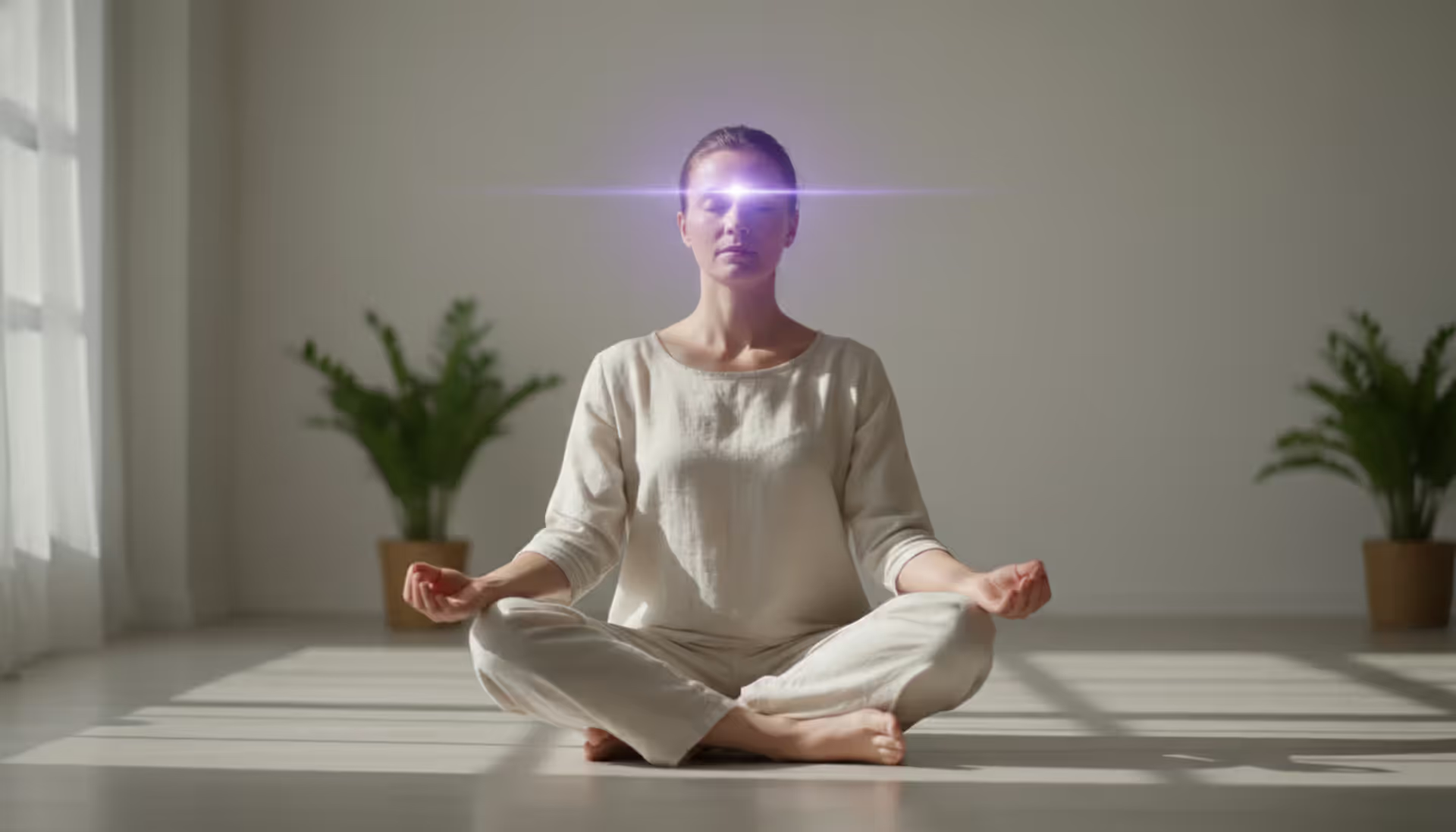
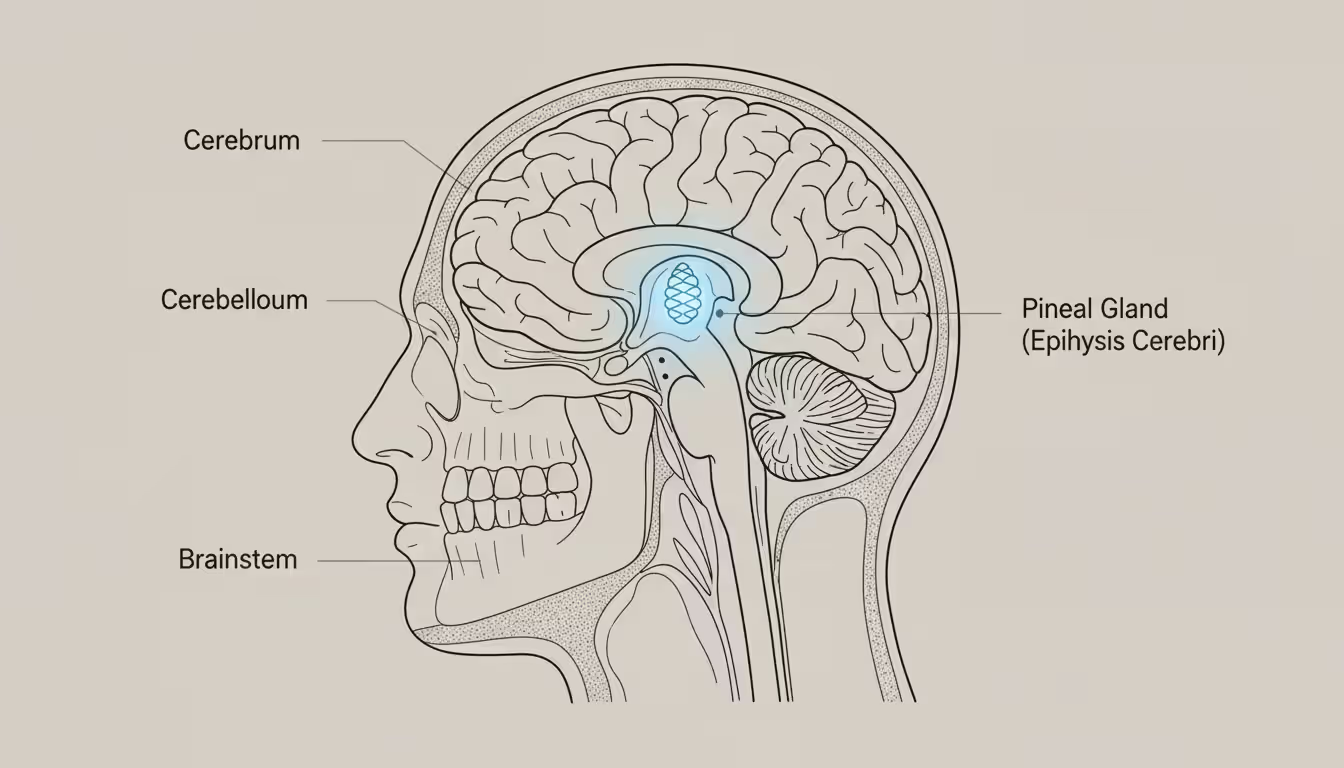
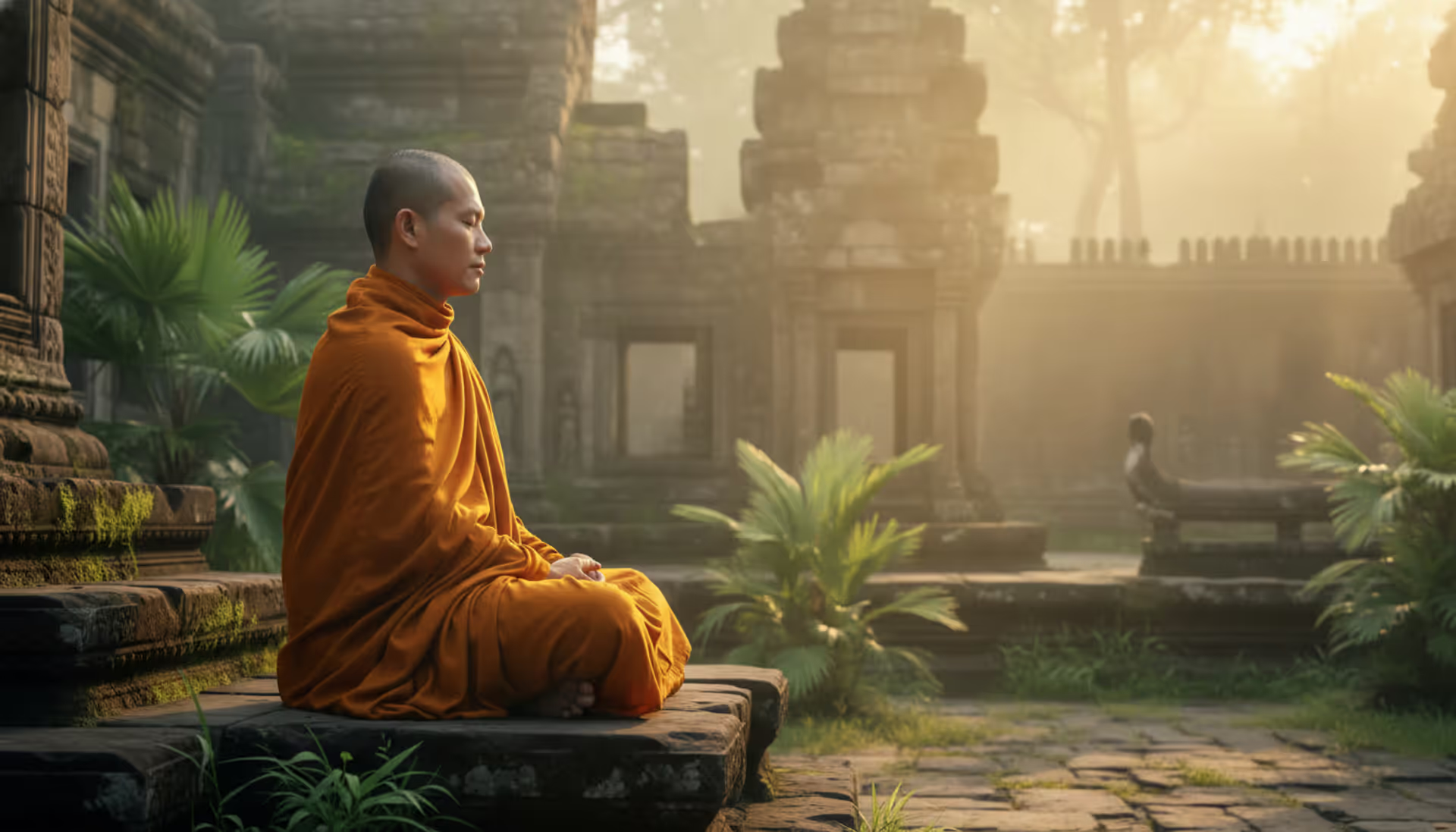
For years, I dismissed the pineal gland as just another brain structure—until I learned what it actually does. This rice-grain-sized organ, buried between your brain's hemispheres, has become central to Dr. Joe Dispenza's meditation work. His method targets this specific spot using breathing patterns you won't find in typical meditation apps.
What makes his approach different? He's taking ancient "third eye" concepts and pairing them with breathing mechanics that change cerebrospinal fluid pressure. Sounds technical, but the practice itself is surprisingly straightforward once you get past the first awkward week.
What Is Pineal Gland Meditation
Your pineal gland sits roughly where ancient yogis placed the "third eye." Coincidence? Maybe. But this location—dead center in your brain—makes it uniquely responsive to meditation practices.
Most people know the pineal gland makes melatonin. True, but incomplete. It lacks the blood-brain barrier that protects other neural tissue, meaning whatever's in your bloodstream reaches it directly. This vulnerability (or accessibility, depending on your perspective) explains why it responds so dramatically to chemical and energetic changes.
Pineal gland meditation isn't about vague mindfulness. You're directing mental focus and breath pressure toward one specific target. The goal? Stimulate this gland enough to trigger altered chemistry—potentially releasing compounds that shift how you perceive reality.
Here's where it gets interesting for anyone into consciousness work: traditional meditation asks you to observe thoughts. Pineal-focused methods ask you to create pressure and energy flow patterns that physically stimulate brain tissue. Different ballgame entirely.
The third eye pineal gland activation concept has roots going back thousands of years, but modern practitioners report consistent experiences: geometry behind closed eyelids, sudden clarity about stuck problems, dreams that feel more real than waking life. Scientists debate whether the pineal gland produces DMT naturally (it might, in tiny amounts). Either way, something measurable happens when you consistently work with this area.
Why does this matter for your practice? Because you're not waiting around hoping for enlightenment to strike. You've got a biological structure you can work with deliberately. The pineal gland and consciousness connection gives you an actual anchor point instead of abstract concepts.
Author: Sophie Ellington;
Source: 5sensesspa.com
How Joe Dispenza's Meditation Technique Works
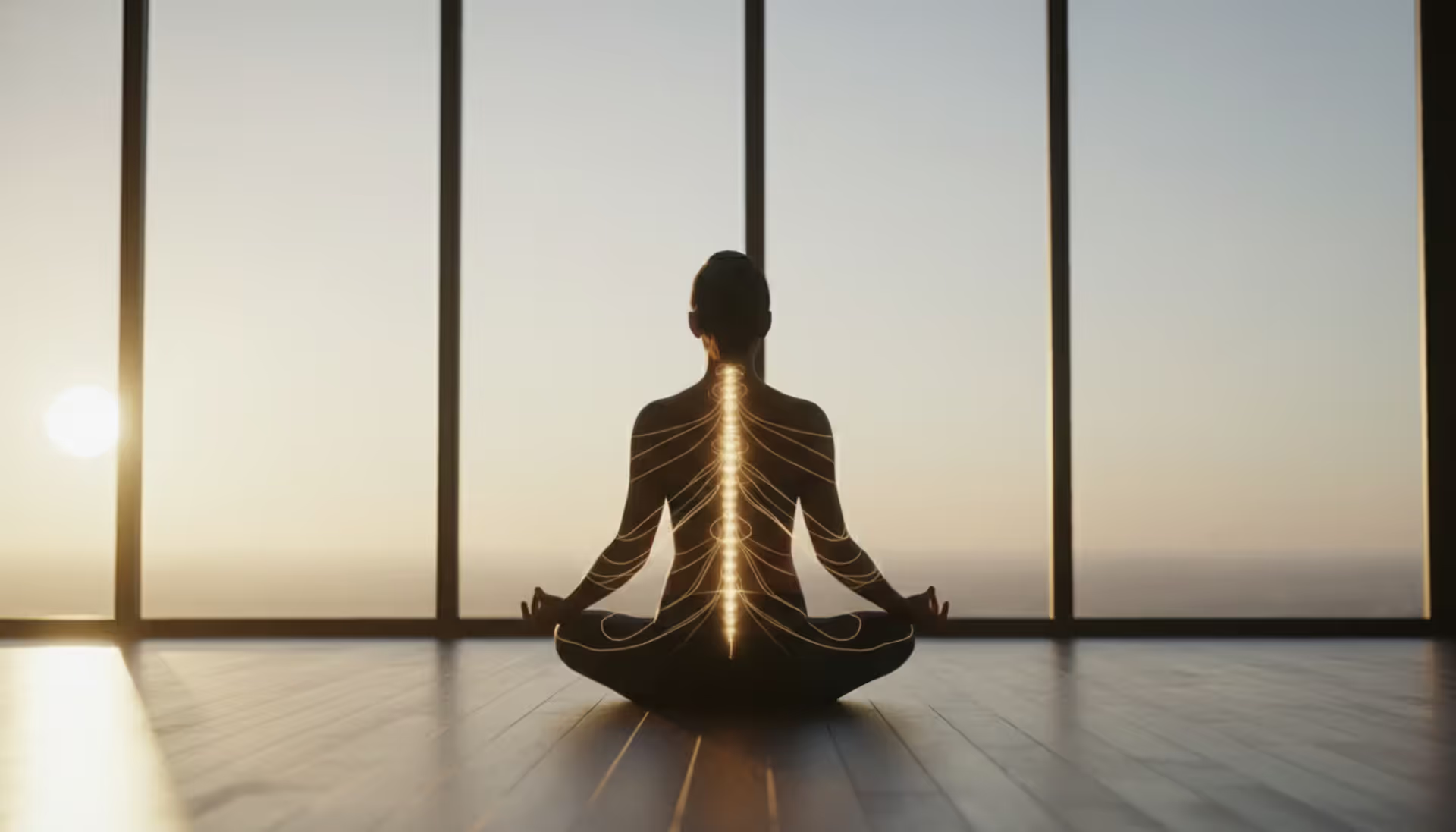
Dispenza's technique centers on reverse breathing—pulling energy up your spine while contracting your lower belly. This isn't relaxation breathing. You're creating hydraulic pressure that pushes cerebrospinal fluid toward your brain.
The breathing mechanics work like this: contract your pelvic floor and lower abdomen simultaneously, then hold that squeeze while imagining energy shooting up your spine. This pressure change affects the fluid surrounding your brain and spinal cord, essentially "bathing" the pineal gland in fresh nutrients. Do this repeatedly, and you're increasing circulation to an area that normally gets whatever's leftover.
But here's what separates joe dispenza meditation technique from similar practices—you don't just mechanically breathe. Before starting, you deliberately cultivate feelings of gratitude or appreciation. Not fake positivity. Actual felt emotion.
Why? Your autonomic nervous system responds to emotional states. Gratitude shifts you from fight-or-flight into rest-and-digest mode. This creates completely different brain chemistry than if you tried the same breathing while stressed or neutral.
The pineal gland is the alchemist. It takes the heightened energy we're creating in the body and transduces it into some very profound, radical, mystical chemistry. When we combine that energy with an elevated emotion, we're signaling the pineal gland to create a different experience in our life
— Dr. Joe Dispenza
The visualization component adds another layer. You're not just breathing—you're tracking imagined energy movement up your spine, through specific points, ultimately to the top of your head and beyond. Brain scans show that visualization activates similar neural pathways as actual physical movement. Your brain doesn't fully distinguish between vividly imagined and real experiences.
Put these pieces together: mechanical pressure from breathing, chemical changes from joe dispenza elevated emotions, and neural activation from visualization. Each element reinforces the others, creating a feedback loop that builds intensity.
First-timers often feel warmth or tingling during the breathing phase. That's increased blood flow responding to the pressure changes and focused attention. The sensation confirms you're affecting actual physiology, not just thinking happy thoughts.
Step-by-Step Joe Dispenza Morning Meditation Practice
Preparation and Environment Setup
Pick somewhere you won't be interrupted for 45 minutes minimum. I learned this the hard way—getting disrupted mid-practice feels like being yanked out of deep sleep.
Why morning? Your cortisol peaks naturally after waking, giving you energy for the intensive breathing ahead. Trying this technique when you're already exhausted from a full day rarely works well.
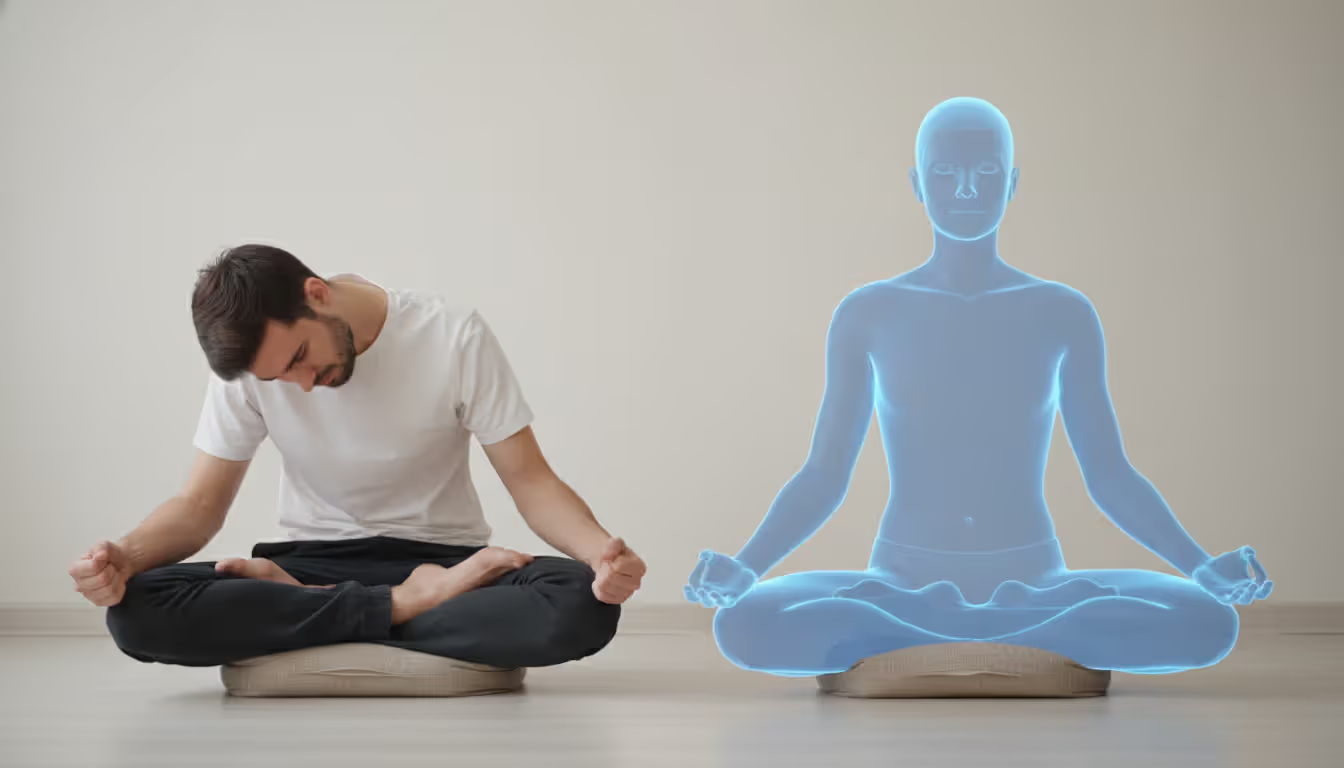
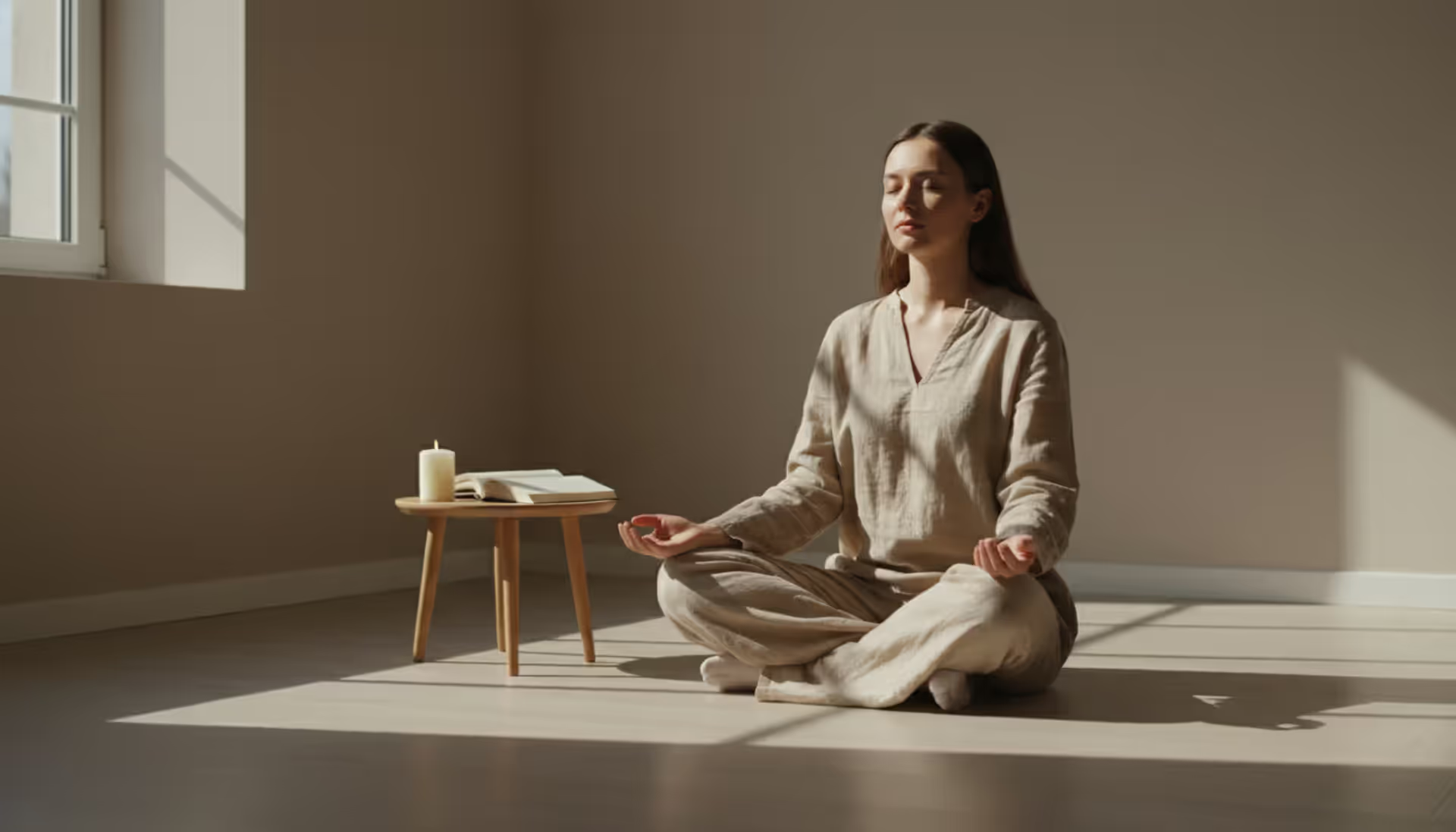
Sit upright—chair or floor doesn't matter, but your spine needs to stay straight without straining. Slumping compresses your torso, making the breathing contractions less effective. Think dignified, not rigid.
Temperature matters more than you'd expect. Too cold, you'll tense up. Too warm, you might get drowsy. Comfortable room temperature, maybe slightly cool.
Before touching the breath work, spend five minutes just sitting. Notice whatever's happening in your body. Tight shoulders? Restless legs? Just observe without trying to fix anything.
Then—and this step determines whether the rest works—generate genuine appreciation. Not because someone told you to feel grateful. Remember something that actually moves you. A person you love, a moment of unexpected beauty, whatever legitimately opens your chest. You're priming your nervous system for the work ahead.
The Breathing Sequence
Standard meditation breathing this is not. You'll inhale normally through your nose, then forcefully contract everything from your belly button down—abdominal muscles, pelvic floor, the whole lower trunk.
The contraction should feel like you're trying to pull energy from the base of your spine up to the top. It's a "squeeze and lift" sensation, not just tightening your abs. Hold that contraction briefly at the top, then release completely and inhale again.
Beginners: start with 10 repetitions. Don't be a hero and try 50 on day one. You might hyperventilate or create so much neck tension that you'll quit entirely.
I've seen people rush through this, treating it like cardio. Wrong approach. Each contraction deserves full attention. Quality beats quantity here—one properly executed breath cycle does more than ten sloppy ones.
Warning signs you're overdoing it: dizziness, seeing spots, or tension migrating into your neck and shoulders. If that happens, slow down. The effort should concentrate below your ribcage.
Activating the Pineal Gland
After you've completed your breathing rounds, shift attention to the center of your head. Not your forehead—deeper, like there's a small sphere of light where your brain's two halves meet.
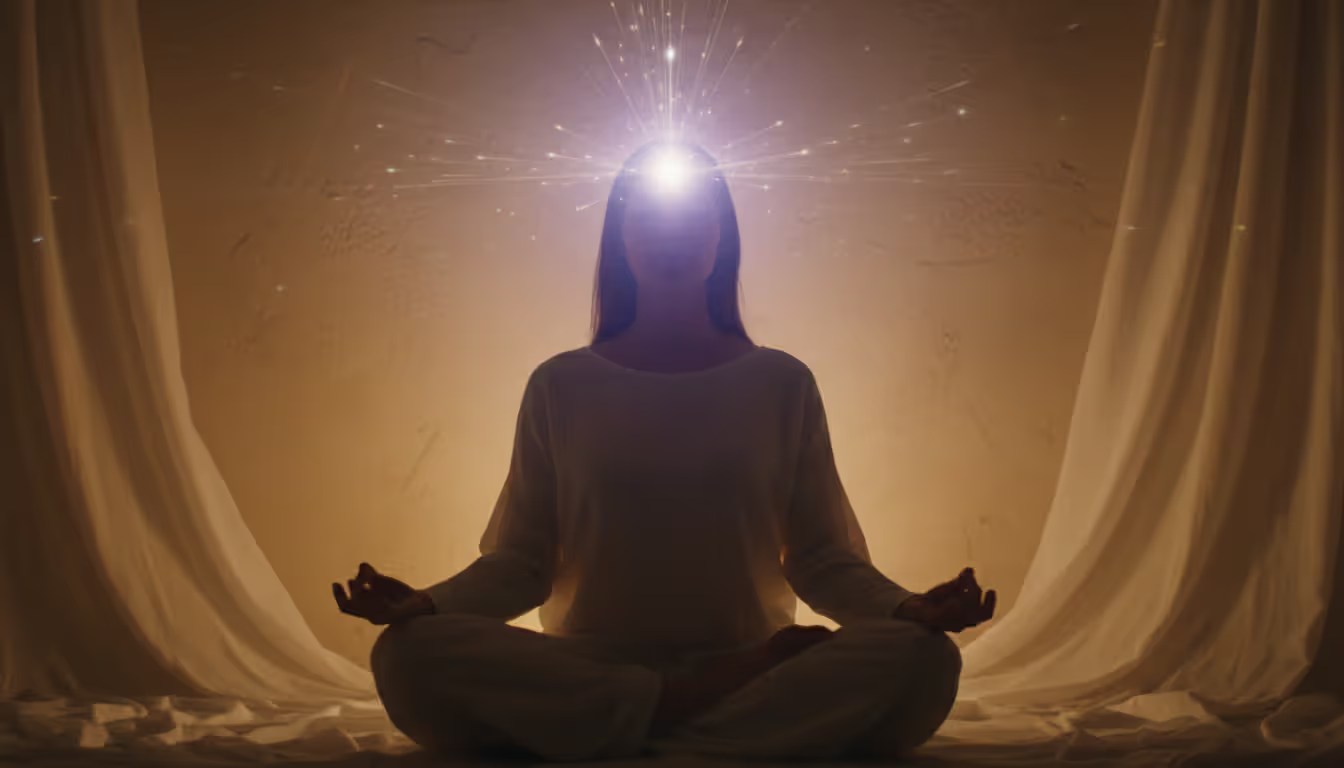
Visualize this light getting brighter with each breath. Some people see indigo or violet; others just sense increasing luminosity. The color doesn't matter. Your focus does.
You might feel pressure between your eyebrows. Or warmth spreading across your scalp. Maybe a sensation like your head's expanding beyond its normal boundaries. These aren't imagination—they're real physiological responses to concentrated attention and increased blood flow.
This awakening pineal gland meditation phase requires 15-20 minutes minimum. Your mind will wander. Constantly. When you notice you're thinking about dinner or tomorrow's meeting, just return to that central point of light. No drama, no self-criticism.
Advanced practitioners report something interesting: the light stops feeling like something they're creating and starts feeling like something that's independently there. They're observing it rather than generating it. I can't explain that scientifically, but it happens consistently enough to mention.
Author: Sophie Ellington;
Source: 5sensesspa.com
Maintaining Elevated Emotional States
Here's where most people lose the thread—they nail the breathing mechanics but forget the emotional component.
Every few minutes during your visualization, check in with that gratitude or appreciation you started with. Still there? If it's faded, pause and reconnect with it. This isn't optional window dressing. The combination of focused attention plus positive emotion creates the neurochemical environment that makes everything else work.
Think of it like this: the breathing and visualization are hardware; elevated emotions are the operating system. Run the hardware without the OS, and you get partial results at best.
The feeling should be authentic, not performed. You're training your nervous system to link this meditative state with safety and openness. If you're white-knuckling your way through, forcing yourself to "feel grateful," you're creating stress, which defeats the entire purpose.
People practicing joe dispenza morning meditation for months or years describe entering states where the boundary between effort and flow disappears. You're not trying to focus anymore; focus is simply happening. Not everyone gets there, and it's fine if you don't, but it illustrates what consistent practice can develop.
Pineal Gland Healing and Third Eye Activation Benefits
Regular practice affects sleep first for most people. Makes sense—you're working directly with the melatonin factory. Expect deeper sleep, more vivid dreams, sometimes even lucid dreaming if that wasn't already happening for you.
Beyond sleep, practitioners report lower baseline stress. One person I know dropped their blood pressure enough to reduce medication (with their doctor's supervision, obviously). Another noticed chronic tension headaches disappeared after three months of daily practice.
The pineal gland healing meditation might work through multiple pathways. Better circulation to the area means more oxygen, more nutrients, faster waste removal. When blood flow to any tissue increases consistently, that tissue functions better. Not complicated.
But the consciousness effects get weirder and more interesting. Enhanced intuition shows up commonly—knowing who's calling before you check your phone, sensing which project to pursue without logical reasons, reading people more accurately. Skeptics call it confirmation bias. People experiencing it call it useful.
Visual phenomena during third eye pineal gland activation range from mild to completely disorienting (in a good way). Mild: geometric patterns with closed eyes, colors that seem more vibrant during the day. Intense: full visionary experiences during meditation, feeling like you're perceiving energy fields, or what some describe as "downloading information" from somewhere.
What does awakening actually feel like? Common threads include: - Recognition that your normal consciousness is just one setting among many - Reduced fear around death (not seeking it, just less anxious about it) - Sense of coming home to yourself after being gone a long time - Intuitive hits that prove accurate later - Spontaneous solutions to problems you've been grinding on for months
Author: Sophie Ellington;
Source: 5sensesspa.com
Physical markers some people notice: increased light sensitivity, preference for lighter foods (heavy meals feel unpleasant), heightened awareness of electromagnetic fields from devices. These aren't universal, but they're frequent enough that workshop participants regularly compare notes about them.
One pattern I find fascinating—people often report temporary symptoms that eventually resolve. Headaches in week two that disappear by week four. Disrupted sleep that becomes exceptional sleep. Emotional volatility that settles into uncommon equanimity. It's like you're upgrading hardware and software simultaneously; there's a transition period where things get glitchy before they improve.
Common Mistakes When Practicing Pineal Gland Meditation
Rushing the breathing kills results. I've watched people treat the contraction phase like they're trying to set a speed record. You're building pressure systematically, not hyperventilating. Slow, controlled, forceful—that's the combination that works.
Forcing sensations backfires spectacularly. If you don't see colors or feel tingling in your first week, that's completely normal. Your pineal gland might be calcified from years of fluoride in tap water, irregular sleep schedules, or environmental toxins. Activation could take 60-90 days of consistent practice before obvious effects emerge.
Sporadic practice guarantees minimal results. This isn't like going to the gym where you can skip a week and pick back up. You're rewiring neural pathways. That requires daily repetition. Commit to 30 consecutive days minimum before deciding whether it works for you.
Another mistake—stopping the breathing sequence mid-cycle because your mind wandered or you felt uncomfortable. Complete the full set you planned (10, 15, 20 contractions—whatever you committed to) before moving to visualization. Interrupting prevents the necessary pressure buildup.
Wrong expectations sink beginners constantly. This technique energizes you. If you're expecting peaceful relaxation, you'll be confused by the activation you feel. Some people get so stimulated initially that they can't sit still for the visualization phase. That's temporary. Your nervous system adapts.
Also: emotional releases. Stored tension surfaces during this work. You might cry for no apparent reason. Or feel angry. Or laugh inappropriately. Not everyone experiences this, but it's common enough to expect it might happen. It's not a breakdown; it's your system clearing backlogged emotional data.
Practicing while exhausted or on a full stomach wastes your time. You need energy and focus. A full stomach redirects blood to digestion—the exact opposite of what you're trying to achieve by increasing circulation to your brain.
Finally, skipping the emotional elevation component because it feels "woo-woo" or unnecessary. The joe dispenza meditation technique without elevated emotions is like a car missing half its engine. It'll move, but nowhere near what it's capable of.
Author: Sophie Ellington;
Source: 5sensesspa.com
Guided Meditation Options vs Self-Practice
Dr joe dispenza guided meditation recordings provide structure that's invaluable when you're learning. His audio cues tell you exactly when to breathe, when to hold, when to shift to visualization. Ambient music tracks support specific brainwave states. For your first 20-30 sessions, this external framework prevents the common trap of stopping too early when things get uncomfortable.
But guided sessions create dependency if you never practice solo. You might need the recording to access deeper states instead of developing that capacity internally. I've met people who've been using the same guided meditation for three years. Works for them, but they're essentially renting the experience rather than owning it.
Results differences between guided and self-directed practice are subtle. Guided sessions keep you on track for the full duration—when left to your own devices, cutting the practice short becomes tempting. However, self-practice develops internal navigation skills. You learn to sense when you've gone deep enough, when to extend the breathing, when to shift phases.
Most successful practitioners I know started guided for the first month, then alternated guided/solo for the next two months, eventually landing on primarily self-directed with occasional guided sessions when they need recalibration.
Practice Type
Best For
Pros
Cons
Cost
Dr. Joe Dispenza Guided Audio
Anyone learning the technique, people who need external structure to stay committed
Can create dependence on recordings, less scheduling flexibility, requires playback device
$15-$25 per recording
Self-Directed Practice
People who've internalized the sequence, those with established meditation habits
Complete schedule flexibility, no equipment required, develops internal timing and sensing skills
Easy to unconsciously modify technique incorrectly, requires more discipline, slower progress initially
Free
Live Workshop/Retreat
Committed practitioners ready for intensive immersion, people who've plateaued with solo practice
Group coherence amplifies individual experience, direct feedback from instructors, immersive environment eliminates normal life distractions
Significant financial investment, requires extended time away, can feel overwhelming
$1,500-$5,000+
When to use guided recordings: learning phase (obviously), when your motivation tanks, when exploring different technique variations. Dispenza offers multiple recordings targeting healing, manifestation, general pineal activation, or specific life areas. Each emphasizes different aspects of the core technique.
Self-practice becomes preferable once you've memorized the sequence. Adjust timing based on your schedule. Emphasize phases that resonate most. Develop your personalized version that fits your neurological quirks.
Live workshops and retreats offer something solo practice can't replicate—group coherence. When 200 people practice simultaneously in the same room, many report breakthrough experiences they'd never accessed alone. Collective energy amplifies individual capacity. Trade-off? You're spending serious money and time. These events work best as periodic intensives, not your primary practice method.
Frequently Asked Questions About Pineal Gland Meditation
How long does it take to activate the pineal gland with meditation?
Depends entirely on your starting point. Some people feel pressure or warmth during their first session. Others practice daily for two months before noticing anything definitive. Your pineal gland's calcification level matters significantly—people who've drunk fluoridated water their whole lives, maintained poor sleep habits, or taken certain medications often have more calcification to work through. Instead of fixating on a timeline, watch for indirect markers: dreams becoming more vivid, sleep quality improving, random intuitive hits that prove accurate. These often appear before dramatic meditation experiences.
Is Joe Dispenza pineal gland meditation safe for beginners?
Generally yes, with important caveats. The forceful breathing raises intracranial pressure temporarily. If you have high blood pressure, glaucoma, detached retina risk, or recent head trauma, consult your doctor first. Pregnant women should avoid the intense abdominal contractions. People prone to anxiety sometimes find the activation overwhelming initially—start with fewer breathing repetitions and build gradually. Emotional releases happen. Suppressed feelings surface. This is normal but can feel destabilizing. Having a therapist or experienced instructor to process these experiences helps. Most side effects (headaches, sleep disruption, emotional volatility) resolve within 2-3 weeks as your system adapts.
What sensations should I expect during pineal gland activation?
Physical sensations vary wildly. Common ones: pressure between eyebrows or at your crown, warmth spreading through your skull, tingling down your spine, feeling like your head's expanding beyond normal boundaries. Visual phenomena include colors (especially indigo, violet, or white), geometric patterns behind closed eyelids, or what looks like inner light. Some people hear high-pitched frequencies or feel energy moving in specific pathways. Here's the important part: no dramatic sensations doesn't mean you're failing. Some practitioners notice only subtle awareness shifts during practice but see clear life changes—better decisions, improved relationships, increased creativity. The meditation's effects often show up in daily living more clearly than during the practice itself.
Can I practice pineal gland meditation at night instead of morning?
You can, but you probably won't sleep well afterward. This technique energizes you, sometimes dramatically. Practicing within four hours of bedtime risks lying awake feeling activated when you want rest. Morning practice aligns with your natural cortisol peak, giving you fuel for the intensive breathing work. If mornings are genuinely impossible due to your schedule, late afternoon works better than evening. Some advanced practitioners use a modified gentler version at night—reducing breathing intensity, emphasizing visualization and emotional components. This supports lucid dreaming and deep rest without the overstimulation. But if you're starting out, stick with mornings or you'll likely create sleep problems.
Do I need Dr. Joe Dispenza's guided meditation or can I do it alone?
Neither option is inherently superior—they serve different purposes. Guided meditations provide training wheels. Precise timing, verbal cues, structured progression prevent technique drift. Invaluable when learning or returning after breaks. Self-practice develops your internal guidance system. Schedule flexibility. Personalization. Many successful long-term practitioners use guided sessions 2-3 times weekly while practicing solo other days. Budget tight? Learn the technique thoroughly from one guided meditation or free resources, then practice independently. The determining factor isn't which format you choose—it's whether you practice consistently. A mediocre technique done daily beats a perfect technique done sporadically.
How is Joe Dispenza's technique different from other third eye meditations?
Most traditional third eye meditations involve passive awareness—focusing attention on the spot between your eyebrows, perhaps chanting specific sounds, observing whatever arises. Dispenza's approach actively manipulates cerebrospinal fluid through forceful breathing mechanics. You're creating measurable hydraulic pressure changes, not just directing attention. The elevated emotion component also distinguishes his work. Traditional methods rarely emphasize generating gratitude or joy before practice. Dispenza insists on it, claiming the emotional state creates different brain chemistry that enhances activation. Finally, his framework explicitly bridges ancient spiritual concepts and modern neuroscience. He'll talk about energy centers in one breath and brain wave states in the next. This makes the practice accessible to people who might dismiss purely esoteric approaches while giving scientifically-minded folks permission to explore consciousness expansion.
The joe dispenza pineal gland meditation offers a systematic way into consciousness exploration that doesn't require you to accept anything on faith. You can practice it, track what happens, and decide based on your actual experience.
Expect the first two weeks to feel awkward. You're learning breathing mechanics that feel unnatural, trying to visualize things you can't see, attempting to generate emotions on demand. That awkwardness is normal and temporary.
Success requires patience and consistency—qualities that sound boring but determine everything. Dramatic breakthroughs make good workshop testimonials, but daily incremental progress builds lasting transformation. Twenty minutes every morning outperforms occasional hour-long sessions dramatically.
Choose guided sessions, self-practice, or mix them based on what actually gets you to sit down daily. The perfect approach you don't do consistently loses to the imperfect approach you maintain.
Track practical changes: sleep quality, emotional resilience, clarity when making decisions, moments when you knew something without knowing how you knew it. These everyday improvements often precede (and outlast) dramatic visionary experiences.
This practice isn't about escaping your life. It's about showing up to your life with expanded capacity—more awareness, more creative options, less reactivity to circumstances. The pineal gland gives you a biological anchor point for work that might otherwise remain frustratingly abstract. Use it.
Waking at 4am without an alarm can feel unsettling at first. But what if this early waking isn't random? Many spiritual traditions view these pre-dawn hours as a sacred window when the veil between physical and spiritual realms grows thin
Meditation sits at the heart of Buddhist practice, but not for stress relief. Buddhists meditate to fundamentally transform their understanding of reality and liberate themselves from suffering. This distinction shapes everything from technique selection to measuring progress
Tantric meditation represents one of the most misunderstood spiritual practices in Western culture. Learn the authentic origins, core techniques including breathwork and kundalini energy work, and how to begin a safe, effective practice that integrates body, mind, and spirit
Spiritual meditation with God transforms the practice of quieting your mind into sacred conversation. Unlike secular mindfulness, this approach centers on opening yourself to divine communion through techniques like centering prayer, contemplative scripture reading, and silent listening meditation
The content on this website is provided for general informational and educational purposes only. It is intended to explain concepts related to meditation, mindfulness, mental health, and spiritual practices.
All information on this website, including articles, guides, and examples, is presented for general educational purposes. Meditation outcomes may vary depending on individual practices, health conditions, and guidance.
This website does not provide medical, mental health, or spiritual advice, and the information presented should not be used as a substitute for consultation with qualified professionals.
The website and its authors are not responsible for any errors or omissions, or for any outcomes resulting from decisions made based on the information provided on this website.