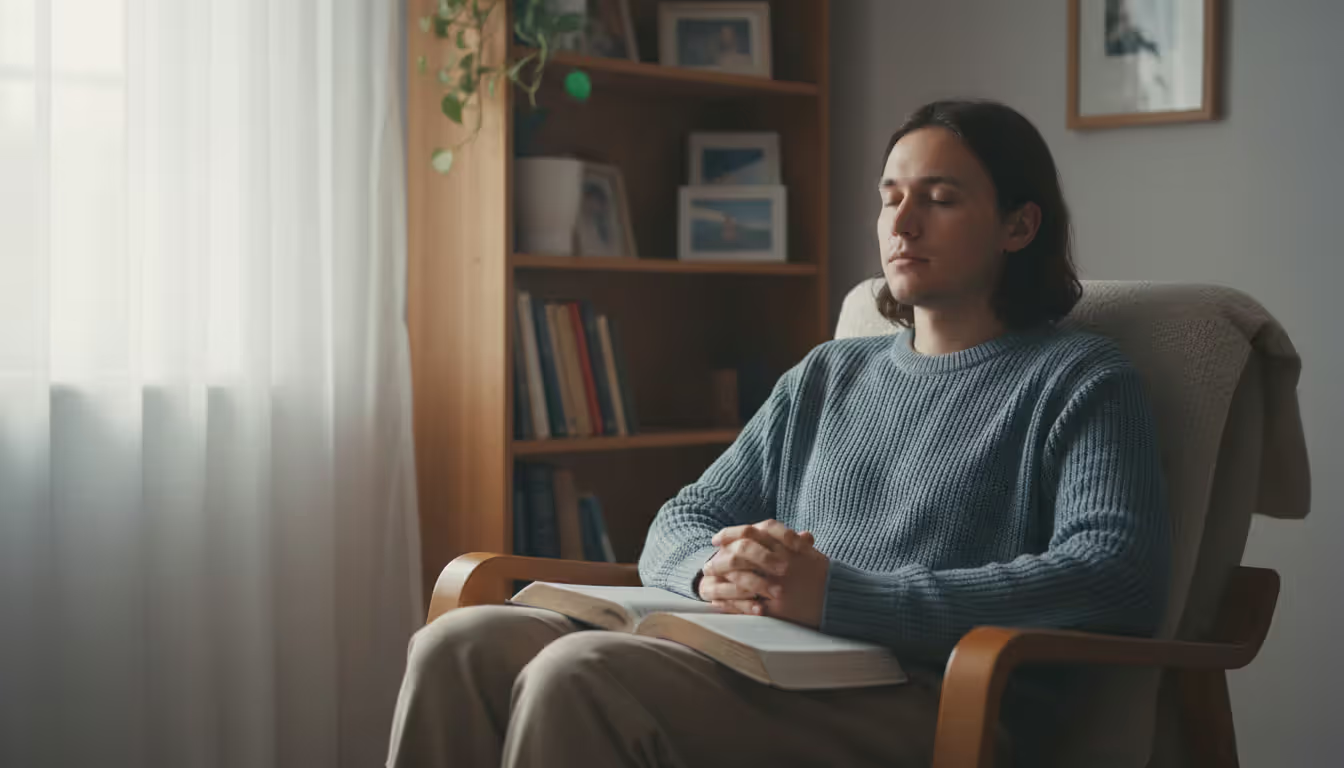
Most Christians read their Bibles the same way they scroll social media—quickly, superficially, already thinking about the next thing. I've done it myself. Checked off my "read three chapters" goal while my brain was making grocery lists.
Scripture meditation works differently. It's less like scanning a news feed and more like savoring a meal prepared by someone who loves you. You're not racing to finish—you're lingering over each bite, noticing flavors you'd miss if you rushed.
This isn't new. Christians have practiced deep Scripture engagement for two thousand years. But somewhere between Sunday school gold stars for memorization and one-year Bible reading plans, many of us lost the art of actually sitting with God's words until they rearrange our insides.
What Is Scripture Meditation and Why It Matters
When Joshua received his marching orders as Moses's successor, God didn't tell him to read the Law. He said to meditate on it "day and night" (Joshua 1:8). The Hebrew word there—hagah—means something like muttering under your breath. Picture someone repeating words so often they become second nature, the way you might rehearse a difficult conversation or replay a song lyric stuck in your head.
That's biblical meditation. You're chewing on a verse, turning it over, letting it soak into how you see the world.
Here's what it's not: sitting cross-legged trying to empty your brain. Eastern meditation traditions aim for that blank-slate mental state. Meditating on the word of God goes the opposite direction. You're deliberately filling your mind with specific truth—God's truth—and asking the Holy Spirit to make it real in your actual Tuesday afternoon, not just theoretically true.
Why bother? Because your brain needs more than information. I can know Philippians 4:6 says "don't be anxious about anything" while my stomach stays twisted in knots about my bank account. Knowledge sitting on top of my mind like a sticky note doesn't change me. But when I've meditated on that verse—really wrestled with what "anything" includes, talked to God about my specific fears, sat in silence letting his peace settle deeper than my anxiety—that's when transformation happens.
Author: Caleb Montrose;
Source: 5sensesspa.com
Regular scripture meditation practice does something Bible trivia can't. It trains you to recognize God's voice in daily situations. Gives you wisdom in the moment when a decision can't wait. Replaces the anxious thought loops with truth that actually calms you down. Psalm 119:11 puts it this way: "I have hidden your word in my heart that I might not sin against you."
People sometimes think meditation means zoning out while holding a Bible. Actually, it requires more mental effort than normal reading. You're questioning, applying, responding. Or they assume it demands hours they don't have. Not true. Ten focused minutes with one verse beats thirty distracted minutes every time.
How to Prepare Your Heart and Mind for Biblical Meditation
You wouldn't start a phone call in a loud restaurant, right? Same principle applies here. Sacred reading meditation works better when you've set yourself up for success.
Find a spot with minimal chaos. I use my car in the garage before heading into work some days. My friend Sarah claims the bathroom (only room with a lock when you have toddlers). A college student I know goes to an empty classroom. Location matters less than reducing interruptions.
Put your phone somewhere you can't see it. Not vibrate. Not face-down. In another room if possible. You know how this goes—one glance at a notification and you've mentally left the conversation with God.
Author: Caleb Montrose;
Source: 5sensesspa.com
Pick a Bible translation you don't have to decode. If you're constantly translating seventeenth-century English in your head, you're not meditating—you're studying linguistics. ESV, NIV, NLT all work fine. Some people read better on paper because screens whisper "check your email." Others love Bible apps. You know your weaknesses.
Before you open to your passage, pray something simple. "God, I can't understand this without your help. Show me what you want me to see." That's it. You're acknowledging you're not just reading ancient literature—you're listening for a living voice.
Check your energy level honestly. If you're exhausted, maybe biblical meditation isn't happening right now. That's okay. Better to schedule it when you can actually stay conscious. I learned this after falling asleep during morning meditation so many times I drooled on my Bible.
Decide ahead of time how long you'll spend. Otherwise you'll bail when it gets hard (usually around minute three) or keep going past the point where you're genuinely engaged. Start with ten or fifteen minutes. You can always adjust.
Step-by-Step Methods for Meditating on Bible Verses
Different christian meditation techniques work for different people and different seasons. Here are three solid approaches for how to do biblical meditation without making it complicated.
The Lectio Divina Approach (Reading, Meditation, Prayer, Contemplation)
Lectio divina meditation—"divine reading" in Latin—comes from medieval monks but works perfectly well in a 21st-century apartment. It has four movements, like a song with distinct sections.
Lectio (Reading): Read your chosen passage slowly. Then read it again. Maybe once more. You're not analyzing anything yet—just listening. Notice which word or phrase snags your attention. Don't force it. Something will stand out. Keep reading even after you notice it, giving the whole passage its due.
Author: Caleb Montrose;
Source: 5sensesspa.com
Meditatio (Meditation): Circle back to whatever caught you. Say it quietly, several times. Get curious. Why this word? What's God highlighting here? How does this connect to what's happening in my life right now? Let the text ask you questions instead of you interrogating the text.
Oratio (Prayer): Talk to God about what surfaced. Might be confession—"I've been ignoring this truth." Might be gratitude—"Thank you for reminding me." Might be a request—"Help me actually believe this." Just honest conversation about what the meditation stirred up.
Contemplatio (Contemplation): Sit quietly with God. No words. No agenda. Two or three minutes of simply being present, letting everything settle. You're not trying to achieve some mystical experience. Just resting.
Example: You're meditating on Philippians 4:6-7. During lectio, "in every situation" grabs you. In meditatio, you realize you pray about the big scary stuff but never bring God your daily frustrations—traffic, your coworker's passive-aggressive emails, your kid's teacher conference. Oratio becomes you confessing how you've compartmentalized God into emergencies only. Contemplatio is resting in the reality that he actually cares about your whole day.
Meditation's aim is learning to recognize and respond to God's voice. It takes in Scripture and responds to Scripture. Through this practice, we develop capacity to hear God more accurately and follow him more completely
— Richard Foster
The Verse-by-Verse Reflection Method
This works great for narratives or when you want to understand how a longer passage flows. Instead of pulling out one phrase, you move through each verse slowly, mining each one.
Pick five to ten verses. Read verse one, then stop. Rewrite it in your own words—no spiritual language allowed. This forces you to actually understand it instead of skating over familiar phrases. Then ask: What does this show me about God? About people? About how life works?
Write down one specific action point. Not "trust God more"—that's too vague to stick. Try "When my boss criticizes my work this week, I'll remember God's approval matters most" or "I'll text three friends who've been on my mind instead of just thinking about it."
Don't move to verse two until you've genuinely engaged verse one. Some days you'll cover all ten verses. Other days, one verse will fill your entire meditation time. Both outcomes are good. You're not trying to finish—you're trying to absorb.
This prevents what happens when I read an entire chapter and can't remember anything thirty seconds later. Forcing yourself to articulate meaning verse by verse builds comprehension that lasts.
Praying Through the Psalms
Meditation on psalms offers something unique because you're reading prayers. You don't have to figure out how to turn narrative into prayer—it's already prayer.
Choose a psalm that matches where you are emotionally. Grateful today? Try Psalm 103. Anxious? Psalm 46. Angry about injustice? Psalm 94 won't tell you to calm down—it'll give you words for that anger before God.
Read slowly, pausing after natural breaks. When a line resonates, make it yours. Psalm 23:4 says "Even though I walk through the darkest valley"—name your valley out loud. The job you lost. The relationship that's falling apart. The diagnosis.
Watch how the psalm moves. Most start in one emotional place and end somewhere different—complaint to confidence, fear to faith. Does your heart make that same journey? Where do you get stuck?
The psalms also show you it's okay to be brutally honest with God. Psalm 88 ends without resolution. Just raw pain. No neat bow. That gives you permission to bring your unedited emotions instead of cleaning them up first.
Common Mistakes When Meditating on the Word of God
Even people genuinely trying to build a scripture meditation practice fall into predictable traps.
Rushing wins first place. We're so trained in productivity that we treat meditation like another item to check off. But transformation doesn't happen on a schedule. Three verses deeply engaged beats thirty verses skimmed. You're aiming for change, not coverage.
Author: Caleb Montrose;
Source: 5sensesspa.com
Confusing it with Bible study creates problems too. Study asks what the text meant to its original audience—historical context, Greek grammar, authorial intent. Important work. Meditation asks what the text means for you today, in this situation, with this struggle. Different questions. You need both, but they're not the same activity.
Inconsistency undermines everything. Your brain needs regular exposure to Scripture to build new mental pathways. Meditating when you feel like it yields results when you feel like it. Daily ten-minute sessions reshape your thinking more than monthly hour-long marathons. Slow and steady beats enthusiastic and sporadic.
Ripping verses out of context leads to weird applications. Jeremiah 29:11—"plans to prosper you and not to harm you"—sounds great until you realize God said it to people facing seventy years in exile. Context matters. Read the surrounding verses before personalizing anything. Otherwise you're meditating on what you wish the Bible said instead of what it actually says.
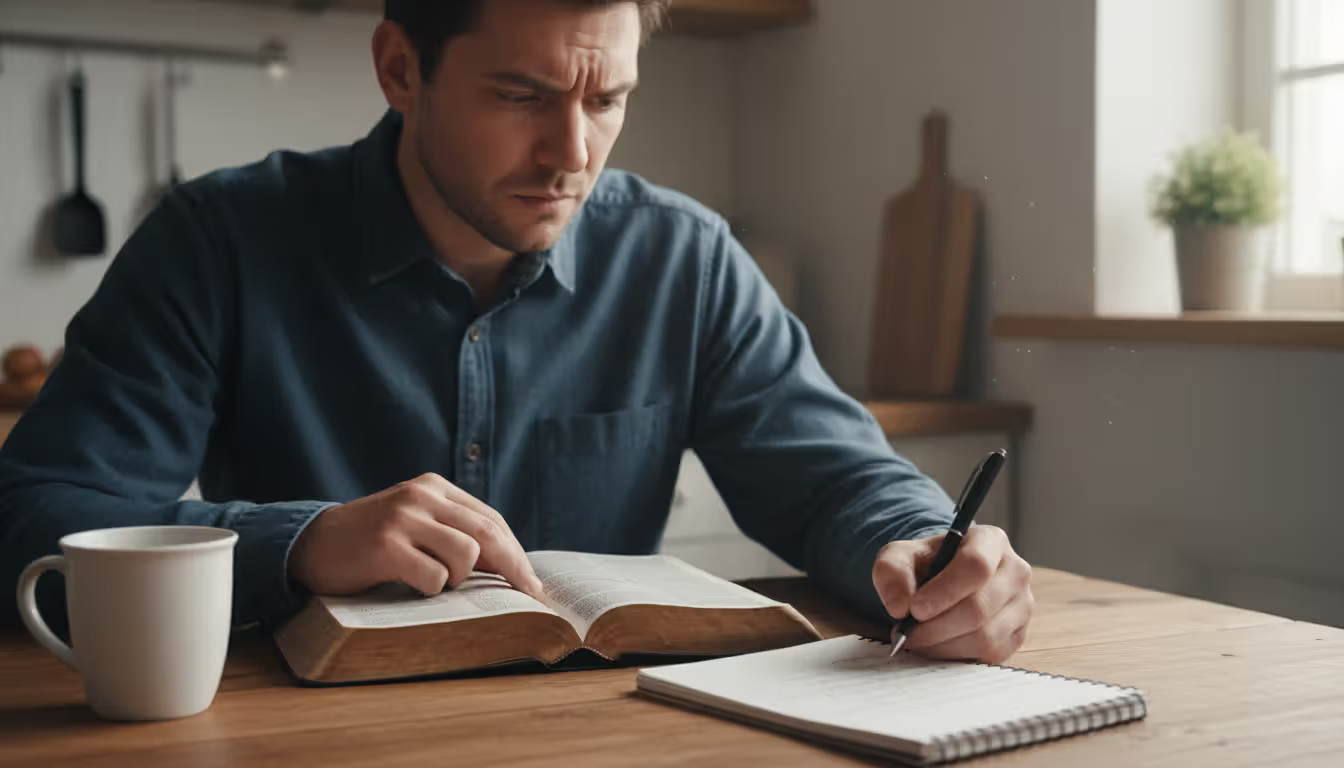
Not writing things down means losing them. Your memory lies to you. A journal with the date, passage, and one key insight creates a record you can review later. Six months from now you'll forget today's revelation. Write it down. I use a basic spiral notebook. Fancy journals are great if you'll actually use them, but a $2 notebook works fine.
How to Build a Sustainable Scripture Meditation Practice
Sustainability beats intensity. Here's how to make this stick when the initial excitement wears off.
Attach meditation to an existing habit. James Clear's habit-stacking works perfectly here. "After I pour my coffee, I'll meditate for ten minutes." "Before lunch, I'll spend time in lectio divina." "When I get in bed, I'll pray through a psalm." Linking new habits to established routines dramatically increases follow-through.
Choose passages strategically instead of randomly. Follow a plan that includes reflection time, not just reading. Meditate on next Sunday's sermon text. Work through a single book slowly—one paragraph daily. Pick passages addressing current struggles. Random works sometimes, but intentionality works better.
Use tools that help without becoming distractions. Apps like Lectio 365 or Pray As You Go guide you through christian contemplative prayer sessions. Physical journals work better if screens pull you toward notifications. The medium doesn't matter much. Consistent use does.
Combine Scripture with silent prayer. After meditating, sit quietly for a few minutes. Just being with God, no words. This keeps meditation from becoming another task you complete before moving on. You're nurturing relationship, not checking boxes.
Track fruit, not just activity. Sure, note what you learn. But also watch how you're changing. Are you forgiving quicker? Less reactive when criticized? More generous? Less controlled by money anxiety? Those changes indicate your meditation is working even when individual sessions feel unremarkable.
Richard Foster wrote in Celebration of Discipline that meditation's aim is learning to recognize and respond to God's voice. It takes in Scripture and responds to Scripture. Through this practice, he said, we develop capacity to hear God more accurately and follow him more completely
Expect your capacity to fluctuate across life seasons. Meditating with a newborn differs from meditating in retirement. During intense seasons, five minutes preserves the habit better than abandoning it entirely because you can't do thirty. Give yourself grace while maintaining some minimal practice.
Method
Time Investment
Works Best For
Core Process
Learning Curve
Lectio Divina
15-30 min
Personal encounter with shorter texts
Read, meditate, pray, rest in silence
Takes practice but accessible
Verse-by-Verse
10-20 min
Grasping narrative movement and specific application
Paraphrase each verse, question it, apply it concretely
Easy to start
Psalm Prayer
10-15 min
Processing emotions and developing prayer vocabulary
Match psalm to current mood, personalize verses, notice emotional shifts
Easy to start
Frequently Asked Questions About Christian Meditation
How is Christian meditation different from Eastern meditation?
Eastern meditation generally aims to empty your mind, detach from desire, or achieve an impersonal enlightenment. Christian meditation fills your mind—specifically with Scripture—and pursues relationship with a personal God. You're not trying to transcend thought. You're directing thought toward God's revealed truth. The goal isn't escaping into blankness but engaging with Someone. Content matters. You meditate on God's Word, not away from all content.
How long should I meditate on a Bible verse?
Honestly? However long keeps you genuinely engaged. Beginners often do well with 10-15 minutes—enough to build the habit without overwhelming their schedule. As you develop capacity, maybe extend to 20-30 minutes. Some days one verse will occupy your whole session. Other days you'll move through several. Follow engagement, not the clock. Daily ten-minute sessions create more transformation than occasional hour-long attempts anyway. Consistency beats duration.
What are the best Bible passages for beginners to meditate on?
Psalm 23, Philippians 4:4-9, or Romans 8:31-39 give you solid starting ground—rich content, clear meaning, lots of comfort. Gospel stories work beautifully too. Watch Jesus interact with people in Mark or Luke. Avoid Revelation or Ezekiel's visions initially. Choose passages where God's character shows up clearly. Once you've built the skill, tackle harder texts.
Can I meditate on Scripture without using lectio divina?
Absolutely. Lectio divina provides helpful structure, but it's not mandatory. Verse-by-verse reflection works. Praying psalms works. Memorizing a verse and repeating it throughout your day works. Simply sitting with a passage asking "What's God saying here?" works. Method matters less than posture—approaching Scripture slowly, expectantly, ready to respond to what you hear.
Should I meditate on Scripture daily or weekly?
Daily practice rewires your thinking most effectively because you're constantly reorienting toward God's truth. That said, imperfect daily practice beats perfect weekly practice. If daily feels impossible right now, start three times weekly. Increase from there as it becomes routine. Psalm 1:2 describes meditating "day and night," but grace yourself during the learning phase. Progress, not perfection.
What if my mind wanders during biblical meditation?
It will. That's normal human experience, not spiritual failure. When you notice you've drifted—and you will notice—gently return focus to your passage. Don't beat yourself up. Some people write down distracting thoughts so they can address them later, which frees their mind to refocus now. Physical engagement helps too: read aloud, walk while meditating, write the verse repeatedly. If something keeps yanking your attention, maybe pause and pray about that concern, then return to your planned meditation. Focus strengthens with practice.
Learning how to meditate on scripture shifts Bible reading from information download to actual encounter with God. Whether you practice lectio divina meditation, work verse by verse, or pray the psalms, what matters is consistent engagement at a pace that lets truth penetrate past your surface thoughts.
Start small. Pick one approach. Choose a manageable passage. Commit to ten minutes daily this week. Watch what shifts when you stop sprinting through Scripture and start dwelling in it.
Some sessions will feel dry as dust. Others will crack you open. Both kinds contribute to the slow work of renewing your mind and deepening your connection with God. You're not chasing some advanced spiritual state. You're just showing up regularly to listen, respond, and let the living Word reshape you from the inside out.
Waking at 4am without an alarm can feel unsettling at first. But what if this early waking isn't random? Many spiritual traditions view these pre-dawn hours as a sacred window when the veil between physical and spiritual realms grows thin
Meditation sits at the heart of Buddhist practice, but not for stress relief. Buddhists meditate to fundamentally transform their understanding of reality and liberate themselves from suffering. This distinction shapes everything from technique selection to measuring progress
Tantric meditation represents one of the most misunderstood spiritual practices in Western culture. Learn the authentic origins, core techniques including breathwork and kundalini energy work, and how to begin a safe, effective practice that integrates body, mind, and spirit
Spiritual meditation with God transforms the practice of quieting your mind into sacred conversation. Unlike secular mindfulness, this approach centers on opening yourself to divine communion through techniques like centering prayer, contemplative scripture reading, and silent listening meditation
The content on this website is provided for general informational and educational purposes only. It is intended to explain concepts related to meditation, mindfulness, mental health, and spiritual practices.
All information on this website, including articles, guides, and examples, is presented for general educational purposes. Meditation outcomes may vary depending on individual practices, health conditions, and guidance.
This website does not provide medical, mental health, or spiritual advice, and the information presented should not be used as a substitute for consultation with qualified professionals.
The website and its authors are not responsible for any errors or omissions, or for any outcomes resulting from decisions made based on the information provided on this website.