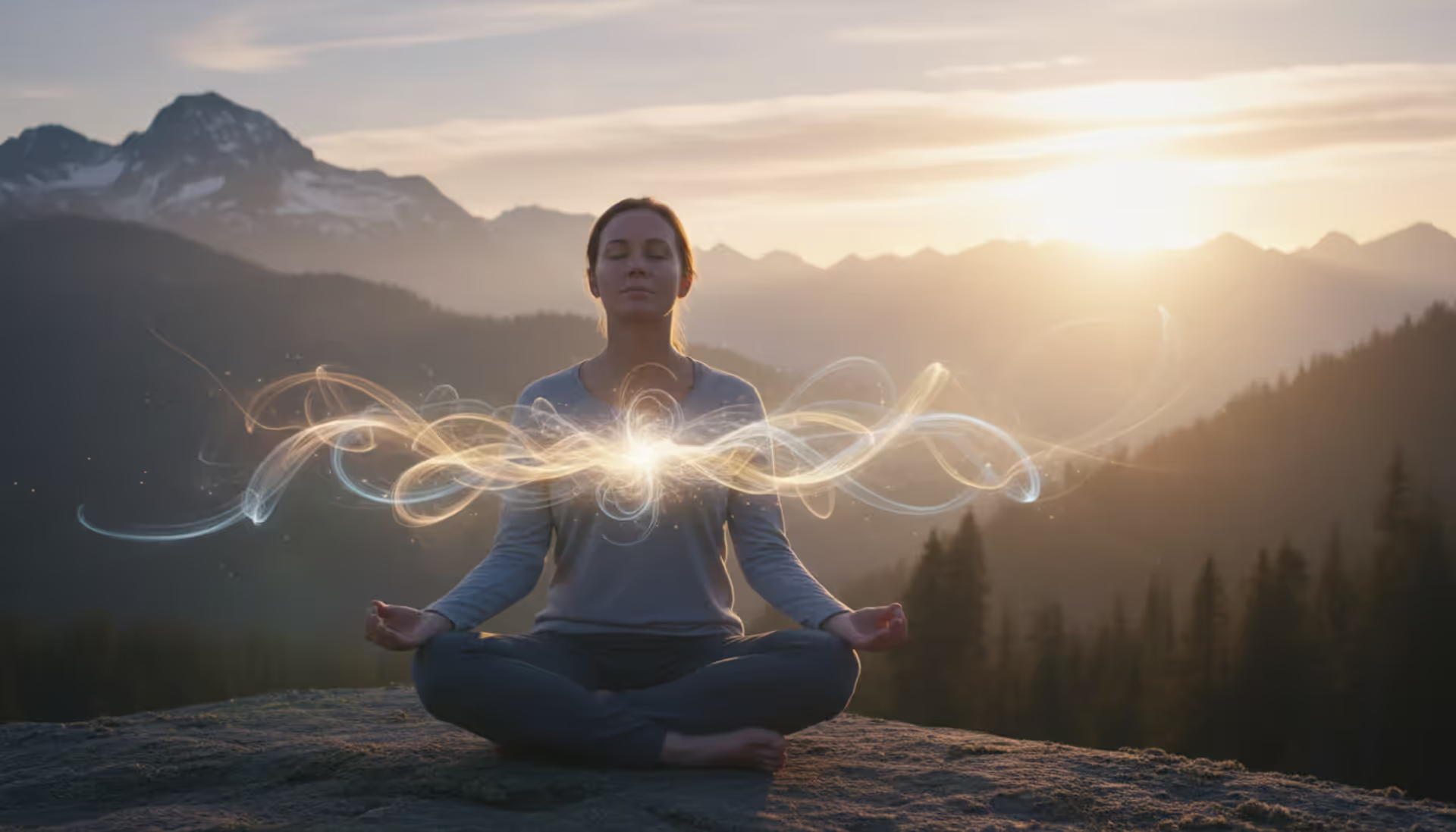
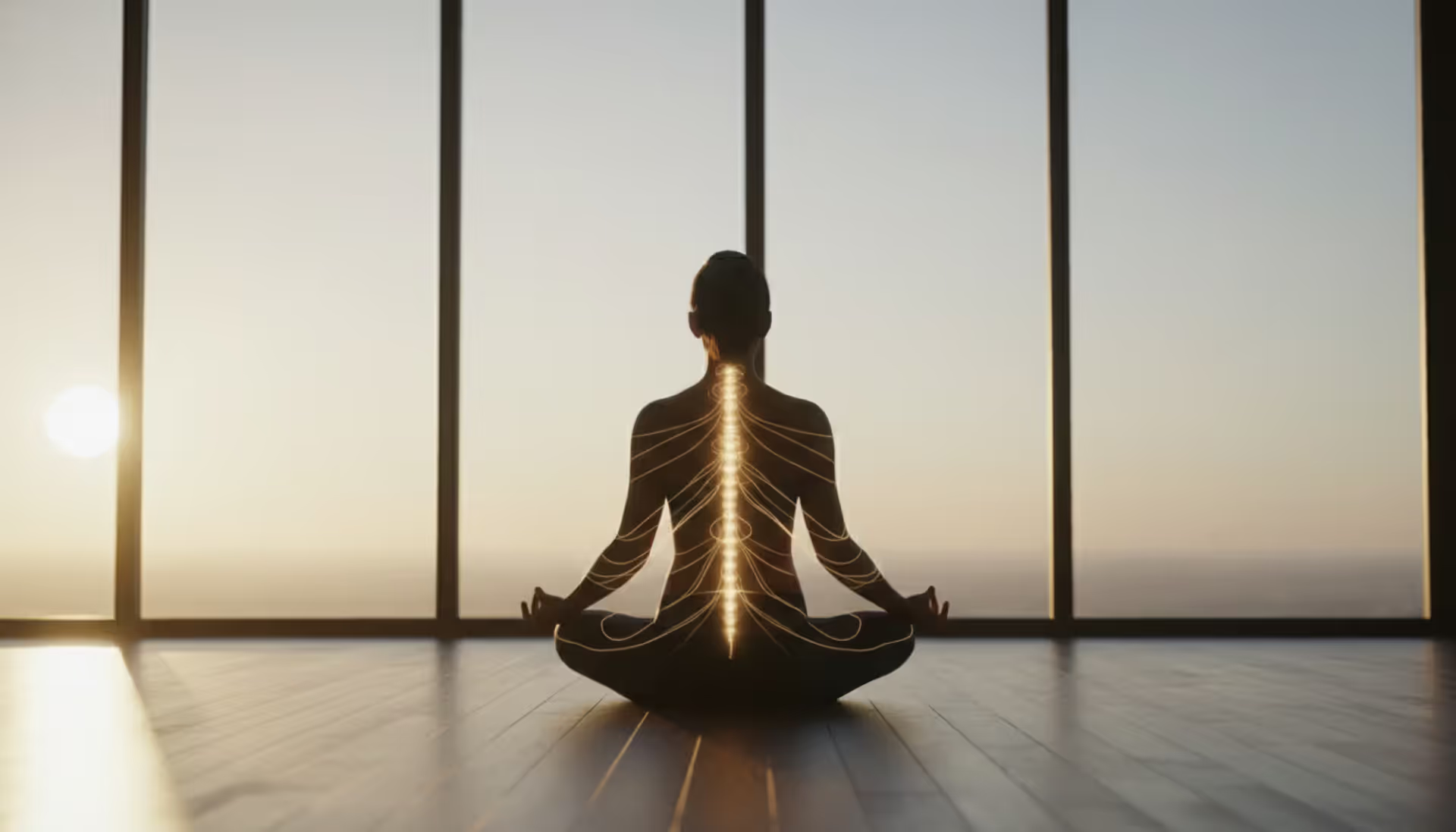
Your breath happens roughly 20,000 times each day without conscious thought. Yet the moment you decide to control it—lengthening an exhale, pausing between breaths, or breathing through one nostril—you activate a bridge between your voluntary and involuntary nervous systems. This bridge is where breathwork and meditation intersect, creating measurable shifts in brain activity, stress hormones, and even gene expression.
Understanding how these practices complement each other gives you practical tools for everything from managing workplace anxiety to exploring altered states of consciousness. Some techniques calm your system in minutes. Others, when practiced consistently, can reshape how you respond to stress at a physiological level.
What Breathwork Actually Means in Meditation Practice
Automatic breathing keeps you alive. Conscious breathing practice transforms how you live. The difference matters because most meditation traditions use breath as an anchor—something to return attention to when the mind wanders. Breathwork goes further by deliberately changing breathing patterns to produce specific mental, emotional, or physical states.
When you breathe automatically, your brainstem handles the rhythm based on carbon dioxide levels in your blood. You don't think about it during a work meeting or while scrolling your phone. Conscious breathing practice engages your prefrontal cortex, the part of your brain responsible for executive function and self-regulation. This engagement creates what researchers call "interoceptive awareness"—your ability to sense what's happening inside your body.
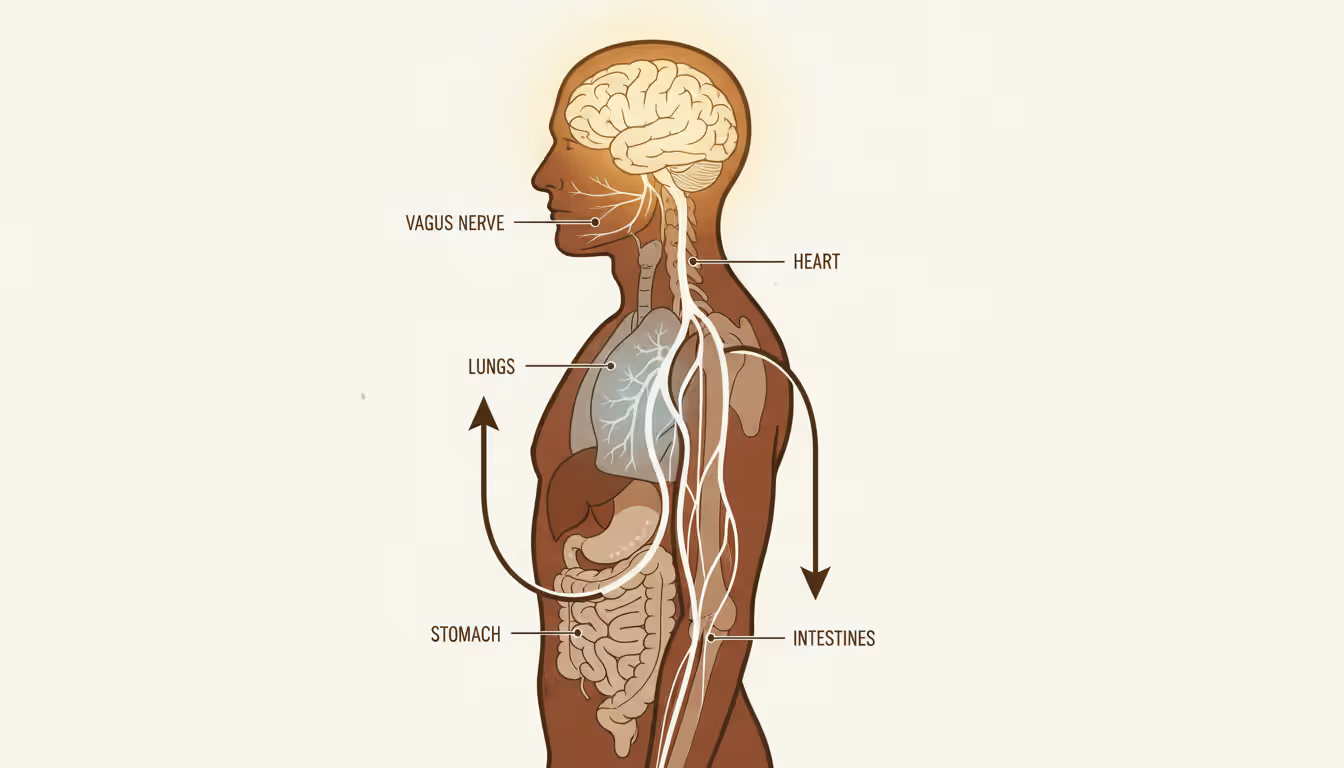
The mind-body connection through breath control operates through the vagus nerve, a communication highway running from your brainstem to your abdomen. Slow, deep breathing stimulates the vagal brake, activating your parasympathetic nervous system and reducing cortisol output. Fast, forceful breathing does the opposite, triggering sympathetic activation and adrenaline release. Unlike most automatic bodily functions, breathing responds instantly to conscious control, making it uniquely suited for self-regulation.
Author: Ethan Solberg;
Source: 5sensesspa.com
Standard meditation often uses natural breathing as a neutral observation point. You watch the breath without changing it, training attention and developing equanimity. Breathwork actively manipulates breathing patterns to achieve outcomes: energizing before a presentation, calming before sleep, or entering non-ordinary states of consciousness. Both approaches work with breath, but the intention differs fundamentally.
Traditional and Modern Breathing Techniques Explained
Different techniques evolved to solve different problems. Some come from thousand-year-old spiritual traditions. Others emerged from modern research labs or extreme athletes pushing physiological limits.
Emotional release, trauma processing, non-ordinary states
Advanced
Deep psychological work, spiritual exploration
Box Breathing
Military/Modern
Acute stress reduction, focus
Beginner
High-pressure situations, anxiety episodes
4-7-8 Breathing
Yogic-inspired/Modern
Sleep induction, anxiety relief
Beginner
Insomnia, panic attacks, bedtime routine
Pranayama Foundations from Yogic Tradition
Pranayama translates roughly to "life force extension" in Sanskrit. The yogic tradition categorizes dozens of techniques, each with specific effects. Nadi Shodhana (alternate nostril breathing) balances the left and right hemispheres of your brain by alternating airflow through each nostril. You close the right nostril, inhale through the left for four counts, close both nostrils and hold for four counts, then exhale through the right for four counts.
This pattern activates different branches of your autonomic nervous system sequentially, creating equilibrium. Research from the National Institutes of Health shows that regular pranayama practice reduces markers of oxidative stress and improves heart rate variability—a key indicator of nervous system health.
Kapalabhati (skull-shining breath) uses rapid, forceful exhales through the nose with passive inhales. Twenty to thirty quick pumps followed by a deep inhale and retention. This technique increases oxygen delivery, clears mental fog, and generates internal heat. Practitioners report feeling alert but calm afterward, making it useful before meditation sessions or creative work.
Wim Hof Method for Physical and Mental Resilience
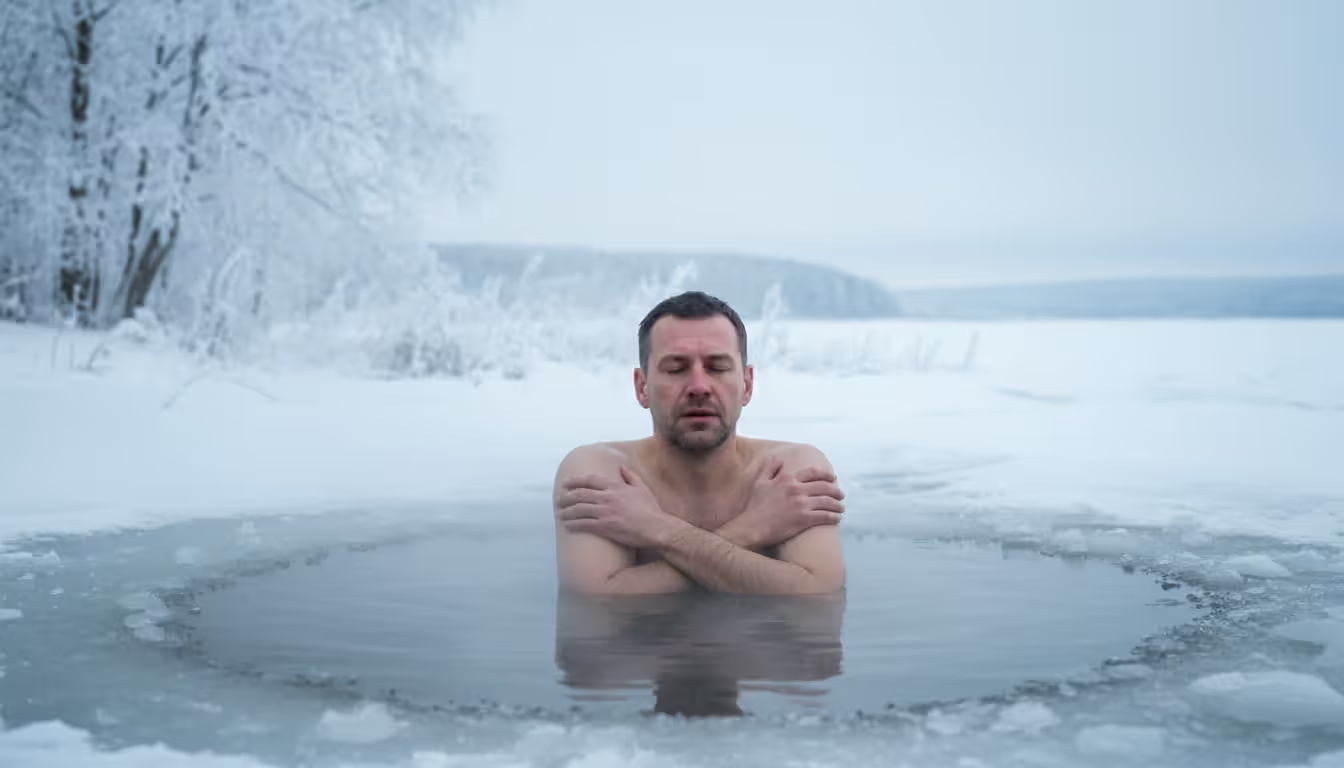
Wim Hof, a Dutch extreme athlete, developed his method by combining Tibetan tummo breathing with cold exposure and mental focus. The breathing protocol involves 30-40 deep, full breaths—inhaling fully and exhaling without force—followed by a breath hold on empty lungs. After holding as long as comfortable, you take a recovery breath and hold with full lungs for 15 seconds. This cycle repeats three to four times.
The hyperventilation phase temporarily reduces carbon dioxide levels, increasing blood pH and triggering physiological changes. Studies at Radboud University demonstrated that trained Wim Hof practitioners could voluntarily influence their autonomic nervous system and immune response—something previously considered impossible. When injected with endotoxin (a bacterial component that normally causes flu-like symptoms), trained practitioners produced fewer inflammatory markers and reported milder symptoms than controls.
The method works for mental resilience by creating controlled stress. Holding your breath on empty lungs activates your sympathetic nervous system—the fight-or-flight response—but in a safe context. You learn that uncomfortable sensations pass, building tolerance for discomfort in other areas of life. Athletes use it for performance. Others use it for managing chronic pain or autoimmune conditions, though medical supervision is advisable for serious health issues.
Author: Ethan Solberg;
Source: 5sensesspa.com
Holotropic Breathwork for Deep Psychological Work
Stanislav Grof, a psychiatrist researching non-ordinary states of consciousness, developed holotropic breathwork in the 1970s after psychedelic therapy became restricted. The technique uses continuous, deep breathing for 30 minutes to several hours, typically accompanied by evocative music and in the presence of trained facilitators.
Extended rapid breathing reduces carbon dioxide, causing respiratory alkalosis. This biochemical shift can trigger intense emotional releases, vivid imagery, physical sensations, and sometimes experiences that practitioners describe as spiritual or transpersonal. The process resembles psychedelic experiences in some ways, accessing unconscious material and potentially facilitating emotional healing.
Holotropic breathwork isn't casual experimentation. Sessions require preparation, trained support, and integration work afterward. Contraindications include cardiovascular disease, severe mental illness, pregnancy, and seizure disorders. When practiced safely, participants report processing trauma, gaining psychological insights, and experiencing profound shifts in perspective. The intensity makes it unsuitable for beginners or anyone seeking simple stress relief.
Simple Conscious Breathing for Beginners
Box breathing offers an accessible entry point. Inhale for four counts, hold for four, exhale for four, hold empty for four. Repeat for two minutes. Navy SEALs use this technique before high-stress operations because it works quickly and requires no special setting.
The 4-7-8 pattern—inhale for four counts, hold for seven, exhale for eight—emphasizes the extended exhale that activates your parasympathetic nervous system. Dr. Andrew Weil popularized this technique as a natural tranquilizer. The physiological mechanism involves stimulating baroreceptors in your lungs and major blood vessels, which signal your brain to reduce heart rate and blood pressure.
Coherent breathing maintains a rate of five breaths per minute (inhale for six seconds, exhale for six seconds). This rhythm optimizes heart rate variability and synchronizes cardiovascular, respiratory, and nervous system functions. Ten minutes of coherent breathing can shift you from a stressed state to a calm, focused state measurably different on an EEG.
How Breath Becomes a Spiritual Practice
Ancient breathing meditation methods appear across cultures that had no contact with each other, suggesting humans independently discovered breath's role in consciousness alteration. Taoist practitioners developed embryonic breathing techniques aimed at circulating qi (life energy) and achieving immortality. Buddhist monks use anapanasati (mindfulness of breathing) as a complete path to enlightenment, with detailed instructions in the Anapanasati Sutta. Yogic traditions integrated pranayama into an eight-limbed system for spiritual liberation.
These systems share common observations: breath links body and mind; controlling breath influences consciousness; sustained practice reveals layers of experience beyond ordinary awareness. The mechanisms differ by tradition—qi circulation, jhana states, kundalini awakening—but the practical starting point remains similar: sit, breathe consciously, observe what arises.
Using breathwork for spiritual awakening typically involves extended practice that moves beyond technique into direct experience. A Tibetan tummo practitioner might spend hours generating inner heat through specific breathing and visualization. A Sufi mystic might practice dhikr with rhythmic breathing while repeating sacred phrases. The breath becomes a vehicle for transcending ordinary identity and touching something larger.
When we look at the brain scans of people engaged in deep meditative or prayer states, we see decreased activity in the parietal lobe—the area that orients you in space and distinguishes self from non-self. Breathing practices that induce these states aren't just psychological; they create measurable changes in how the brain constructs reality
— Dr. Andrew Newberg
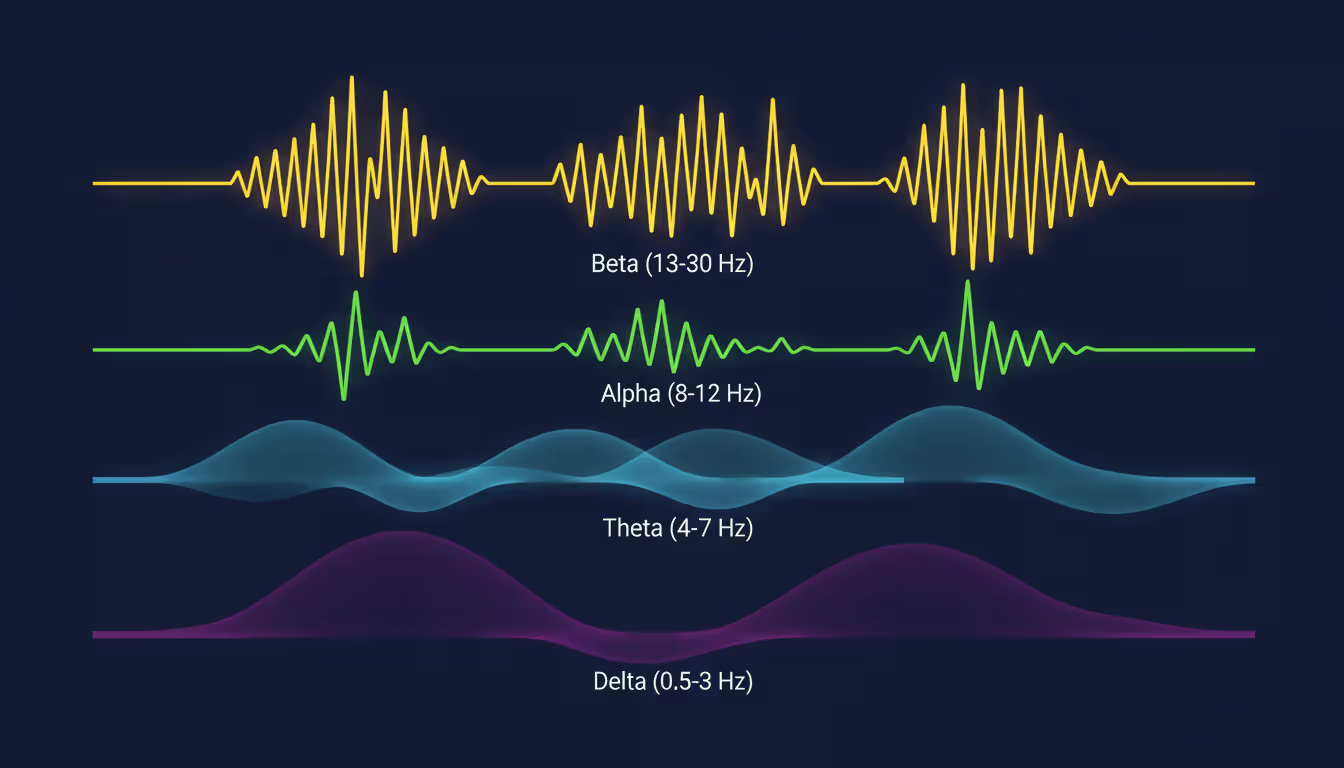
The role of breath in transcendental states relates to its effect on brain wave patterns. Normal waking consciousness operates primarily in beta waves (13-30 Hz). Slow, rhythmic breathing shifts you toward alpha waves (8-12 Hz), associated with relaxed alertness. Extended practice can access theta waves (4-7 Hz), where hypnagogic imagery, deep meditation, and spontaneous insight occur. Some advanced practitioners report accessing delta waves (0.5-3 Hz) while maintaining awareness—a state normally associated only with deep sleep.
Safety considerations for advanced techniques become critical when pursuing these experiences. Hyperventilation can cause dizziness, tingling, muscle spasms, and in extreme cases, loss of consciousness. Breath retention practiced excessively can strain the cardiovascular system. Non-ordinary states can surface difficult psychological material that requires integration support. A responsible approach involves:
Learning advanced techniques from qualified teachers, not YouTube videos
Practicing intense methods with a partner or facilitator present
Respecting contraindications (heart conditions, mental health issues, pregnancy)
Starting with shorter sessions and building gradually
Having integration practices for processing experiences
Spiritual awakening through breath isn't about achieving permanent bliss. It often involves confronting uncomfortable truths, releasing old patterns, and experiencing states that challenge your understanding of reality. The breath provides a relatively safe method for this exploration compared to other approaches, but "relatively safe" still requires respect and preparation.
Author: Ethan Solberg;
Source: 5sensesspa.com
Proven Benefits of Regular Breathwork Practice
Research on breathwork benefits for wellbeing has expanded significantly since 2020, with studies examining everything from genetic markers to clinical outcomes for mental health conditions.
Physical health improvements occur across multiple systems. Your nervous system becomes more resilient through increased vagal tone—the strength of your parasympathetic response. A 2025 meta-analysis in Psychosomatic Medicine found that eight weeks of daily controlled breathing practice increased heart rate variability by an average of 18%, indicating improved autonomic flexibility.
Cardiovascular benefits include reduced blood pressure, improved endothelial function (the health of blood vessel linings), and decreased resting heart rate. One mechanism involves nitric oxide production in the nasal passages during slow nasal breathing. Nitric oxide dilates blood vessels and has antimicrobial properties. Mouth breathing bypasses this benefit entirely.
Immune function responds to specific breathing patterns. The Wim Hof Method studies showed practitioners could voluntarily increase epinephrine levels, which then modulated inflammatory responses. While this doesn't mean breathwork cures infections, it suggests the potential for supporting immune regulation, particularly for inflammatory or autoimmune conditions.
Mental health outcomes show particular promise for anxiety and stress-related disorders. A 2024 randomized controlled trial published in JAMA Psychiatry compared breathwork to standard cognitive behavioral therapy for generalized anxiety disorder. After twelve weeks, both groups showed significant improvement, with the breathwork group reporting faster initial relief and higher practice adherence.
The mechanism for anxiety reduction involves breaking the feedback loop between anxious thoughts and physiological arousal. Anxiety triggers rapid, shallow breathing, which increases heart rate and creates physical sensations that reinforce anxious thoughts. Controlled breathing interrupts this cycle, signaling safety to your nervous system even when your thoughts suggest danger.
Focus and cognitive performance improve through several pathways. Pranayama increases oxygen delivery to the brain while promoting alpha wave activity associated with relaxed alertness—the state conducive to flow experiences. A 2023 study with knowledge workers found that brief breathwork breaks improved performance on attention tasks more effectively than caffeine or brief walks.
Author: Ethan Solberg;
Source: 5sensesspa.com
Emotional regulation and trauma processing represent emerging applications. Techniques like holotropic breathwork and transformational breath access emotional material stored somatically—in the body rather than as explicit memories. Therapists increasingly integrate breathwork into trauma treatment, though controlled studies are still limited compared to established therapies like EMDR or somatic experiencing.
The proposed mechanism involves bottom-up regulation: changing physiological state to influence emotional state, rather than using top-down cognitive strategies. For trauma survivors whose thinking brain goes offline during triggers, breath offers a tool that works through the body.
Spiritual and consciousness expansion benefits resist conventional measurement but appear consistently in practitioner reports. Advanced breathwork techniques can induce experiences described as ego dissolution, unity consciousness, or mystical experiences. Johns Hopkins researchers developed a scale for measuring these experiences and found that breathwork-induced mystical experiences share characteristics with those from psilocybin, though typically less intense.
The lasting impact comes not from the peak experience itself but from how it shifts your baseline perspective. People report reduced fear of death, increased sense of interconnection, and changed life priorities after profound breathwork experiences. Whether you interpret these as neurological phenomena or genuine spiritual insights depends on your worldview, but the psychological impact appears real and measurable.
How to Start Your Own Breathwork Meditation Practice
Choosing the right technique for your goals prevents frustration and potential harm. For stress management and better sleep, start with simple techniques: box breathing, 4-7-8 breathing, or basic coherent breathing. These work immediately, require no teacher, and carry minimal risk.
For athletic performance or cold tolerance, the Wim Hof Method offers a structured approach with extensive free resources and paid courses. The method requires consistency—practicing several times weekly for at least a month before significant adaptations occur.
For spiritual exploration or deep psychological work, seek trained facilitators for holotropic breathwork or advanced pranayama. These techniques amplify whatever exists in your psyche. Without proper container and integration support, they can overwhelm rather than heal.
For general wellbeing and meditation enhancement, traditional pranayama provides time-tested practices with clear instructions. Start with Nadi Shodhana (alternate nostril breathing) for five minutes before meditation. The technique calms mental chatter and creates a natural transition into stillness.
Creating a daily practice routine works best when anchored to existing habits. Practice breathwork:
After waking, before checking your phone (energizing techniques)
Before meals (digestive support and mindful transition)
During your commute, if you're not driving (stress management)
Before bed (calming techniques for better sleep)
Start with five minutes. Consistency matters more than duration. Five minutes daily for a month creates more benefit than occasional 30-minute sessions. Once the habit solidifies, extend duration based on your response.
Common beginner mistakes include:
Forcing the breath or creating tension (breathwork should feel smooth, not strained)
Practicing intense techniques like Wim Hof Method right before bed (they're energizing, not calming)
Holding breath competitively, pushing past genuine limits
Expecting immediate dramatic results (subtle shifts compound over time)
Practicing advanced techniques without understanding contraindications
The biggest mistake is inconsistency. Your nervous system adapts through repetition. Sporadic practice provides temporary relief but not lasting change.
When to seek trained facilitators versus self-practice depends on your goals and health status. Self-practice works well for:
Any practice if you have cardiovascular, respiratory, or mental health conditions
Processing trauma or seeking therapeutic outcomes
Exploring non-ordinary states of consciousness
A qualified facilitator has formal training from recognized schools, understands contraindications, creates safe containers for intense experiences, and provides integration support. Certifications vary by modality—look for completion of comprehensive programs, not weekend workshops.
Frequently Asked Questions About Breathwork and Meditation
Is breathwork the same as meditation?
Breathwork and meditation overlap but aren't identical. Meditation typically involves observing your natural breath without changing it, using breath as an anchor for attention while developing awareness and equanimity. Breathwork actively manipulates breathing patterns to produce specific states—calming your nervous system, energizing your body, or accessing altered consciousness. You can practice breathwork as a meditation, and many meditation traditions incorporate breathing techniques, but meditation encompasses practices beyond breath control, including body scans, visualization, and open awareness. Think of breathwork as one tool within the larger meditation toolkit.
Can breathwork be dangerous or cause side effects?
When practiced appropriately, most breathwork techniques are safe for healthy individuals. However, intense practices can cause side effects. Hyperventilation techniques may produce dizziness, tingling in extremities, muscle cramping, or lightheadedness due to reduced carbon dioxide levels. Breath retention can strain the cardiovascular system if pushed too aggressively. People with heart conditions, high blood pressure, epilepsy, severe mental illness, or who are pregnant should avoid intense techniques or practice only under medical supervision. Even healthy practitioners should avoid driving or operating machinery during or immediately after intense sessions. Start conservatively, practice advanced techniques with a partner present, and stop if you experience chest pain, severe dizziness, or loss of control.
How long should I practice breathwork each day?
For basic stress management and nervous system health, five to ten minutes daily provides measurable benefits. This duration is sustainable for most people and sufficient to influence heart rate variability and stress hormone levels. For deeper meditation preparation, 10-20 minutes of pranayama creates a noticeable shift in mental clarity and focus. Therapeutic or spiritual practices like holotropic breathwork might involve sessions of 30 minutes to three hours, but these aren't daily practices—typically weekly or monthly. The key is consistency over duration. Five minutes every morning outperforms 30 minutes once a week for building nervous system resilience. Match your practice length to your goals, and remember that even two minutes of conscious breathing during a stressful moment provides immediate regulatory benefits.
Do I need a teacher to learn holotropic breathwork or Wim Hof method?
The Wim Hof Method can be learned safely through self-study using Wim Hof's books, free videos, or structured online courses. The technique is relatively straightforward, and the online community provides support. However, an in-person workshop helps refine your technique, especially regarding breath holds and cold exposure. Holotropic breathwork absolutely requires trained facilitators. The technique deliberately induces non-ordinary states that can surface intense emotional or psychological material. Certified holotropic breathwork facilitators complete extensive training in creating safe containers, supporting participants through difficult experiences, and providing integration afterward. Attempting holotropic breathwork alone or with untrained friends risks overwhelming experiences without adequate support. The Grof Transpersonal Training program maintains standards for facilitator certification—look for practitioners who completed this comprehensive program.
What's the difference between pranayama and other breathing techniques?
Pranayama comes from the yogic tradition and encompasses dozens of specific techniques developed over thousands of years as part of a spiritual system aimed at liberation. Each pranayama practice has Sanskrit names, specific ratios, and traditional purposes—balancing energy channels, preparing for meditation, or awakening kundalini. Modern breathing techniques like the Wim Hof Method, box breathing, or 4-7-8 breathing draw from various sources including pranayama, military training, and scientific research on physiology. They're typically simpler, goal-oriented (stress reduction, performance enhancement), and divorced from spiritual context. Some modern techniques closely resemble pranayama practices but use different terminology. The practical difference matters less than finding techniques that work for your goals. Pranayama offers time-tested practices with detailed traditional instruction. Modern methods often provide clearer scientific explanations and specific applications.
Can breathwork help with anxiety and depression?
Research indicates breathwork can significantly reduce anxiety symptoms and provide relief for mild to moderate depression, though it shouldn't replace professional treatment for serious mental health conditions. For anxiety, controlled breathing directly counteracts the physiological arousal that maintains anxious states. Slow breathing activates the parasympathetic nervous system, reducing heart rate and cortisol levels while signaling safety to your brain. Studies show that regular practice reduces both trait anxiety (your general anxiety level) and state anxiety (acute anxious episodes). For depression, breathwork appears helpful but less studied. Energizing techniques like Kapalabhati may counter the lethargy and mental fog of depression, while the sense of agency from self-regulation practices can address feelings of helplessness. A 2025 review in Journal of Affective Disorders found breathwork interventions showed moderate effect sizes for depression, comparable to exercise. Use breathwork as a complementary tool alongside therapy and medication when needed, not as a replacement for professional mental health care.
Breathwork and meditation together offer a practical path for influencing your nervous system, emotional state, and potentially your consciousness itself. The breath provides immediate access to self-regulation that no other bodily function offers—you can't voluntarily slow your heart rate or adjust your blood pressure, but you can change your breathing pattern in seconds.
Starting a practice requires less than you might think. Five minutes of box breathing before stressful meetings. Alternate nostril breathing before meditation. A single round of Wim Hof breathing when you need energy. These small practices accumulate into measurable changes in how your nervous system responds to stress.
The advanced techniques—holotropic breathwork, extended pranayama, consciousness exploration—require more preparation and respect. They offer profound possibilities for psychological healing and spiritual insight, but they're not casual experiments. Build your foundation with simple practices, notice the effects, and let your experience guide whether to explore deeper.
Your breath is always available, always free, and always capable of shifting your state. The question isn't whether breathwork works—the research and millennia of contemplative traditions confirm it does. The question is whether you'll use this tool that's been with you since your first breath.
Waking at 4am without an alarm can feel unsettling at first. But what if this early waking isn't random? Many spiritual traditions view these pre-dawn hours as a sacred window when the veil between physical and spiritual realms grows thin
Meditation sits at the heart of Buddhist practice, but not for stress relief. Buddhists meditate to fundamentally transform their understanding of reality and liberate themselves from suffering. This distinction shapes everything from technique selection to measuring progress
Tantric meditation represents one of the most misunderstood spiritual practices in Western culture. Learn the authentic origins, core techniques including breathwork and kundalini energy work, and how to begin a safe, effective practice that integrates body, mind, and spirit
Spiritual meditation with God transforms the practice of quieting your mind into sacred conversation. Unlike secular mindfulness, this approach centers on opening yourself to divine communion through techniques like centering prayer, contemplative scripture reading, and silent listening meditation
The content on this website is provided for general informational and educational purposes only. It is intended to explain concepts related to meditation, mindfulness, mental health, and spiritual practices.
All information on this website, including articles, guides, and examples, is presented for general educational purposes. Meditation outcomes may vary depending on individual practices, health conditions, and guidance.
This website does not provide medical, mental health, or spiritual advice, and the information presented should not be used as a substitute for consultation with qualified professionals.
The website and its authors are not responsible for any errors or omissions, or for any outcomes resulting from decisions made based on the information provided on this website.