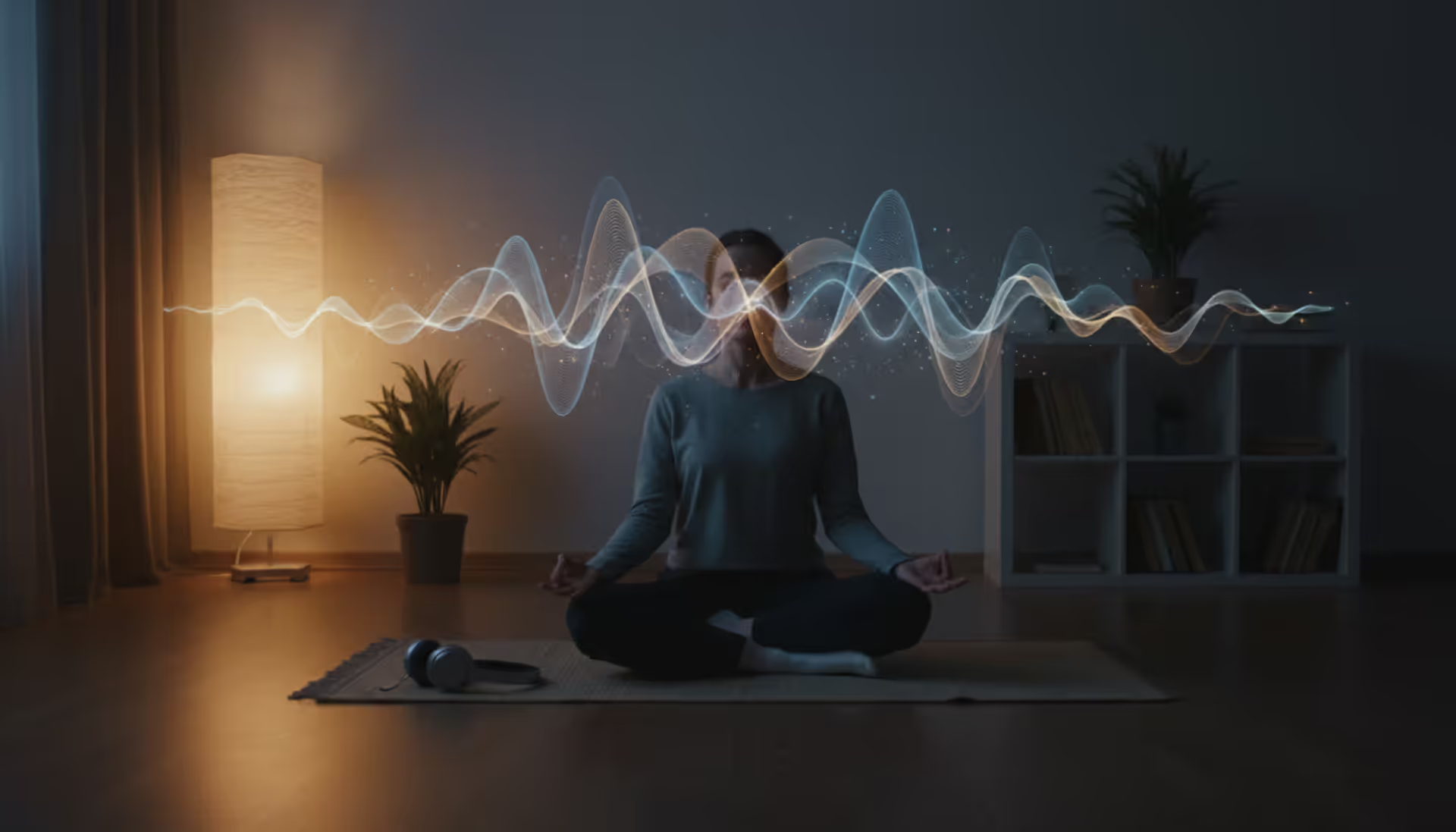
Sitting down to meditate often raises a simple question: should you add music, or is silence the only "real" way to practice? The answer depends less on tradition and more on how your brain responds to sound during focused awareness.
Music during meditation isn't a modern invention. Chanting, drumming, and instrumental accompaniment have supported contemplative practices for thousands of years across cultures. What's changed is our understanding of how specific sounds influence neural activity and whether those effects align with your meditation goals.
The short answer: yes, you can meditate with music. But the type of sound, your experience level, and what you're trying to achieve all determine whether music helps or hinders your practice.
Why Music Can Enhance Your Meditation Practice
Sound affects your nervous system whether you're consciously listening or not. When you introduce music during meditation, you're adding a layer that can either anchor attention or create interference.
Research on meditation music benefits shows that certain sounds trigger parasympathetic nervous system activation—the "rest and digest" mode that counteracts stress. A 2023 study published in Frontiers in Psychology found that participants using structured meditation music showed 34% faster entry into alpha brainwave states compared to those meditating in silence.
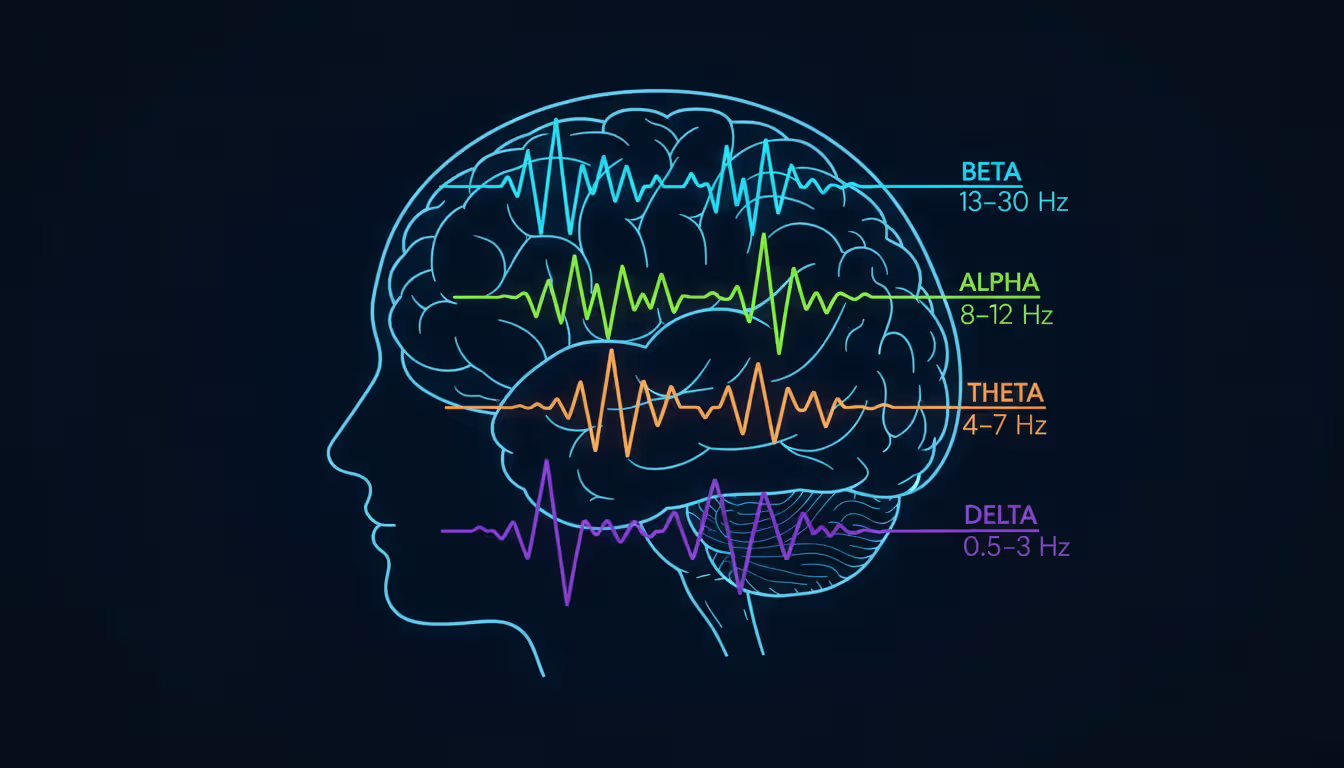
Your brain operates on electrical patterns measured in hertz. Beta waves (13-30 Hz) dominate during active thinking. Alpha waves (8-12 Hz) emerge during relaxed awareness. Theta waves (4-7 Hz) appear in deep meditation and light sleep. Delta waves (0.5-3 Hz) characterize deep sleep and advanced meditative states.
Music designed for meditation often targets these frequencies. A sustained drone at 10 Hz, for example, can encourage your brain to match that rhythm through a process called entrainment—where neural firing patterns synchronize with external stimuli.
The music and mindfulness practice connection works through several mechanisms. First, sound provides an anchor point similar to breath awareness. When your mind wanders, the music serves as a consistent reference to return to. Second, certain frequencies reduce activity in the default mode network—the brain regions responsible for self-referential thinking and mental chatter. Third, pleasant sounds trigger dopamine release, which can make sitting still feel less arduous for beginners.
But there's a trade-off. While music can ease you into practice, it also adds sensory input. Advanced practitioners often find that music becomes another object of attachment rather than a tool for releasing mental grasping.
Author: Lena Ashcroft;
Source: 5sensesspa.com
Types of Music That Support Meditation
Not all sounds serve meditation equally. Lyrics pull your language centers into narrative processing. Sudden dynamic shifts spike cortisol. Familiar songs trigger memory associations. The best music for meditation typically shares a few characteristics: minimal melodic variation, absence of lyrics, predictable structure, and frequency ranges that don't activate startle responses.
Binaural Beats and Brainwave Entrainment
Binaural beats meditation uses a specific audio illusion. When your left ear receives a tone at 200 Hz and your right ear receives 210 Hz, your brain perceives a third "phantom" tone at 10 Hz—the difference between the two. This perceived frequency can theoretically nudge your brainwaves toward desired states.
A 6 Hz binaural beat targets theta waves for deep relaxation. A 10 Hz beat aims for alpha states and light meditation. A 40 Hz beat might support focused attention through gamma wave entrainment.
The evidence is mixed but growing. A 2025 meta-analysis of 22 studies found modest but consistent effects on anxiety reduction and attention span when binaural beats were used during 20-minute sessions. The effect size was small—comparable to taking a short walk outdoors—but measurable.
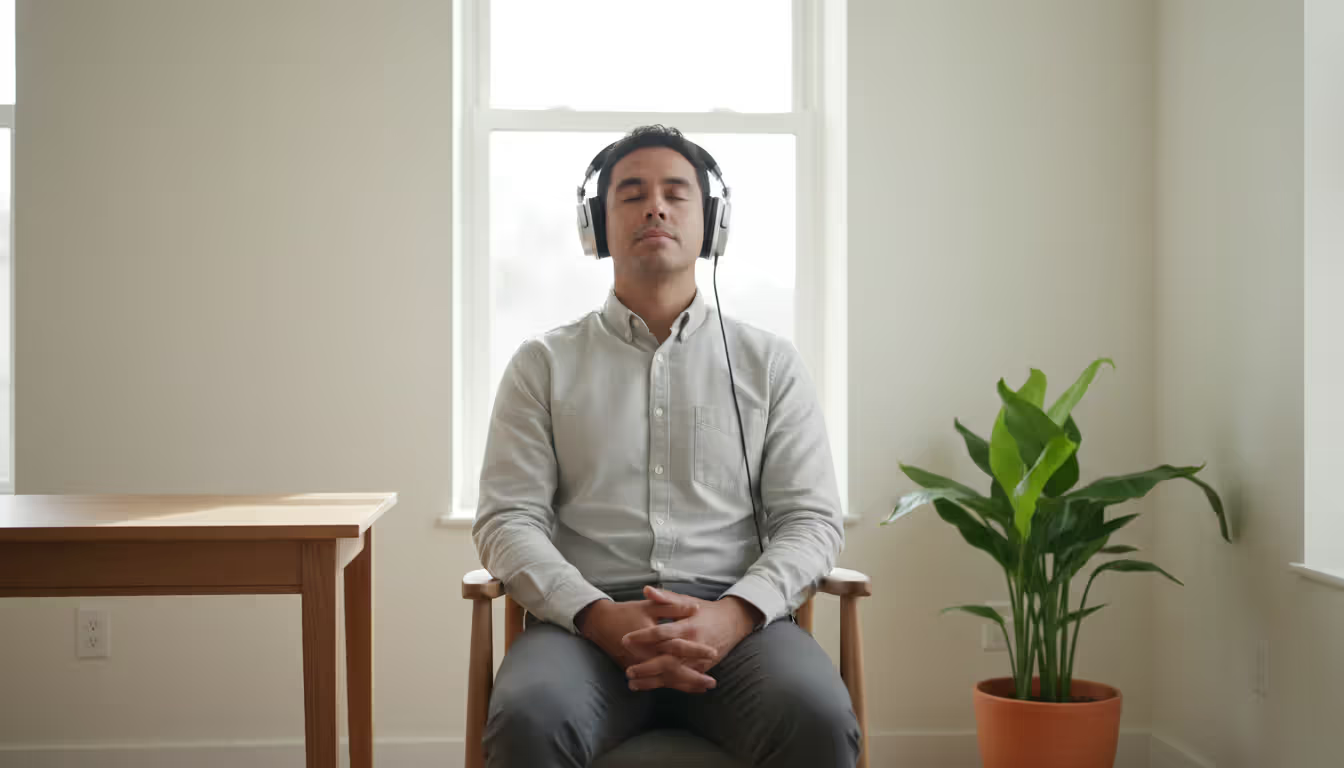
Binaural beats require stereo headphones. Speakers won't create the necessary frequency difference between ears. Sessions typically run 15-30 minutes, as longer exposure shows diminishing returns.
Nature Sounds and Ambient Recordings
Nature sounds for meditation—rainfall, ocean waves, forest ambience, flowing streams—work through familiarity and unpredictability. The human brain evolved to find these sounds non-threatening, which is why they don't trigger vigilance responses the way urban noise does.
Rain patterns are random enough to avoid monotony but consistent enough to avoid startling you. Ocean waves follow a rhythmic pattern (roughly 0.1 Hz) that matches optimal heart rate variability—the healthy variation in time between heartbeats associated with parasympathetic dominance.
Recordings that layer multiple nature elements (distant thunder, bird calls, wind through leaves) create a rich soundscape that masks intrusive external noise without becoming a focal point themselves. This makes them particularly useful for urban meditators dealing with traffic, neighbors, or HVAC systems.
One caution: avoid nature compilations with sudden animal calls or dramatic weather changes. A peaceful stream interrupted by a loud crow caw will spike your heart rate and pull you out of deeper states.
Author: Lena Ashcroft;
Source: 5sensesspa.com
Traditional Meditation Instruments
Tibetan singing bowls meditation uses metal bowls that produce complex harmonic overtones when struck or rubbed. The fundamental tone might be 256 Hz (middle C), but the bowl simultaneously produces frequencies at 512 Hz, 768 Hz, and beyond. Your brain processes these layered frequencies simultaneously, creating a rich acoustic environment.
Practitioners report that singing bowl tones seem to "penetrate" the body differently than pure electronic tones. This may relate to the physical vibrations the bowls produce—you can feel the resonance if you hold a bowl while it's sounding.
Crystal singing bowls produce cleaner tones than metal bowls, with fewer overtones. Gongs create complex, evolving soundscapes. Tingsha bells offer bright, cutting tones used to mark meditation segments.
These instruments work well for body scan meditations or practices focused on physical sensation, since the vibrations create tangible reference points.
Frequency-Based Music
Solfeggio frequencies meditation centers on specific tones believed to have healing or consciousness-altering properties: 396 Hz for releasing fear, 528 Hz for transformation, 639 Hz for connection, and others. The historical claims about these frequencies trace to medieval music theory and lack strong scientific support.
That said, any sustained tone can serve as a meditation object. Whether 528 Hz has special properties beyond 530 Hz remains unproven, but the practice of focusing on a single frequency can definitely deepen concentration.
Sound bath meditation typically involves multiple instruments played live or recorded, creating an immersive acoustic environment. A practitioner might combine singing bowls, gongs, chimes, and tuning forks in a 30-60 minute session. The variety prevents habituation while maintaining a contemplative atmosphere.
Meditation frequency music often blends these approaches—binaural beats layered with nature sounds and occasional singing bowl strikes, for instance.
When Music Helps vs. When Silence Works Better
A beginning meditator facing a silent room often encounters immediate obstacles: intrusive thoughts, physical restlessness, acute awareness of every sound in the environment. Music provides structure and covers distracting noise, making those first sessions less daunting.
If your primary goal is stress reduction or falling asleep, music almost always helps. The sound masks racing thoughts and gives your attention something to rest on besides your worries.
For concentration practices—focusing on breath, a mantra, or a visualization—music can either support or undermine your efforts. Gentle, repetitive music reinforces sustained attention. Complex or varying music splits your focus.
Insight meditation (vipassana) and practices aimed at observing thoughts without attachment typically work better in silence. Music becomes another sensory experience to watch arise and pass, which is fine, but it's not necessary. Many teachers in this tradition argue that adding music is like training for a race by running on a treadmill—you're building skills, but not quite the same skills you need.
Advanced practitioners often transition away from music. Once you can reliably enter meditative states, external supports become less necessary. Some find that music dependency develops—they can only meditate with their preferred tracks, which limits practice flexibility.
Personal preference matters enormously. Some people find silence agitating regardless of experience level. Others feel that any sound prevents them from going deep. There's no universal rule, despite what some traditions claim.
A practical test: if you can't meditate without music after six months of regular practice, you might be using sound as an avoidance mechanism rather than a tool.
Author: Lena Ashcroft;
Source: 5sensesspa.com
How to Choose the Right Meditation Music for Your Goals
Matching music to your meditation style improves outcomes. Here's a framework:
For stress relief and relaxation: Nature sounds or slow ambient music (60 beats per minute or less). Avoid anything with sudden changes. Sessions can be 10-45 minutes.
For focus and concentration: Binaural beats in the alpha range (8-12 Hz) or simple instrumental music with minimal melodic variation. Tibetan singing bowls work well. Keep sessions under 30 minutes initially.
For sleep meditation: Delta wave binaural beats (0.5-3 Hz), very slow ambient music, or gentle rain sounds. Let the music continue after you've stopped actively meditating.
For movement meditation (walking, yoga): Slightly higher tempo (70-90 BPM), more rhythmic structure. Nature sounds with some variation.
For body scan or progressive relaxation: Sustained tones, singing bowls, or layered drones that don't demand attention but provide acoustic presence.
Volume matters more than most people realize. Meditation music should sit just above the threshold of hearing—loud enough to perceive clearly, quiet enough that it doesn't dominate your awareness. If you're tempted to turn it up, you're probably using music to avoid something uncomfortable in your practice.
Instrumental music almost always outperforms lyrical tracks. Words activate language processing centers and trigger semantic associations. Even in languages you don't understand, the human voice carries emotional content that pulls your attention.
Unfamiliar music works better than favorite songs. That track you love from a movie soundtrack brings the movie with it—every emotional association, every memory of where you were when you first heard it. Novel music carries no baggage.
Test different types across multiple sessions before deciding. Your response to binaural beats versus nature sounds versus singing bowls is individual. What relaxes your colleague might irritate you.
Common Mistakes When Meditating with Music
Author: Lena Ashcroft;
Source: 5sensesspa.com
Playing music too loud defeats the purpose. Meditation involves turning attention inward. Music that demands attention keeps you externally focused. If you can't hear your own breath, it's too loud.
Using songs with lyrics creates a divided attention problem. Part of your mind tracks the words even if you're not consciously listening. This is particularly true for songs in your native language.
Switching tracks mid-session fragments your practice. Each new song requires a moment of adjustment as your brain processes the change. Create a playlist long enough to cover your session, or use a single long-form track.
Mismatching music to meditation type creates friction. Upbeat music during body relaxation meditation works against your goal. Slow, droning tones during a concentration practice might induce drowsiness rather than alertness.
Becoming dependent on music limits your practice. If you can only meditate with your specific playlist, you can't practice during travel, in nature, or in group settings with different music choices.
Ignoring headphone quality matters for binaural beats specifically. They require stereo separation, so cheap earbuds that leak sound between channels won't produce the intended effect. For other music types, comfort matters more than audio fidelity.
Using music to avoid discomfort is perhaps the subtlest mistake. Meditation often involves sitting with uncomfortable emotions or physical sensations. Music can become a distraction mechanism—something to focus on instead of facing what's present. If you notice you can't meditate without music because silence feels unbearable, that's information worth exploring.
How to Start a Music-Based Meditation Practice
The brain doesn't distinguish between 'artificial' and 'natural' meditation aids. If sound helps you achieve the neural state associated with meditative awareness—reduced default mode network activity, increased alpha wave coherence—then it's serving its purpose. The question isn't whether music is 'authentic' meditation, but whether it moves you toward your specific goals
— Dr. Andrew Newberg
Begin with a two-week experiment. Choose one type of meditation music—nature sounds are often easiest for beginners—and commit to using it for every session during week one.
Set up your space before you sit. If using headphones, have them connected and volume adjusted. If using speakers, position them to create even sound distribution. Don't fiddle with equipment once you've started.
Start with 10-minute sessions. Most meditation music tracks or playlists run 20-30 minutes, but beginning meditators rarely maintain focus that long. Better to end while still focused than to spend half your session distracted.
Week one protocol: Same music type, same time of day, same duration. This removes variables and lets you assess whether this particular sound supports your practice.
Week two: Try a different music type. If you used nature sounds in week one, try binaural beats or singing bowls in week two. Same session length, same time of day.
After two weeks, you'll have enough data to notice patterns. Does one type help you settle faster? Do you feel more refreshed after sessions with certain sounds? Does one type make you drowsy while another keeps you alert?
Equipment needs are minimal. A smartphone with decent speakers works fine for nature sounds and ambient music. Binaural beats require headphones—mid-range models ($30-60) provide adequate stereo separation. You don't need expensive studio monitors.
Transitioning between music and silence builds flexibility. Once comfortable with music-assisted meditation, try alternating sessions: music on Monday, silence on Tuesday. This prevents dependency while maintaining the benefits of sound when it's useful.
Some practitioners use music as training wheels—three months with music, then gradually reducing volume over two weeks until meditating in silence. Others permanently integrate music for specific meditation types while using silence for others.
Track your practice in a simple log: date, music type (or silence), duration, subjective quality rating (1-5). After 30 sessions, patterns become obvious.
Meditation Music Types Comparison
Music Type
Best For
Brainwave Effect
Experience Level
Example Use Cases
Binaural Beats
Focus, specific mental states
Targets alpha (8-12 Hz), theta (4-7 Hz), or delta (0.5-3 Hz) depending on frequency
Weekend deep sessions, emotional processing, group meditation
Ambient/Instrumental
General meditation, background support
Mild alpha wave encouragement
Beginner to intermediate
Daily practice, yoga, creative visualization
This perspective cuts through the debate about purity in meditation practice. Your brain responds to acoustic stimuli whether those sounds come from a Tibetan monastery, a forest stream, or a synthesizer producing binaural beats.
Frequently Asked Questions
Can beginners meditate with music?
Yes, and music often makes starting easier. New meditators face two main obstacles: intrusive thoughts and environmental distractions. Music addresses both by providing an anchor for attention and masking background noise. Nature sounds or simple ambient music work best initially. Avoid complex music or anything with lyrics. After building a basic practice (2-3 months of regular sessions), experiment with silent meditation to develop flexibility.
Does meditation music work without headphones?
Most types work fine through speakers. Nature sounds, singing bowls, ambient music, and solfeggio frequencies don't require headphones. Binaural beats are the exception—they specifically need stereo separation to create the frequency difference between ears that produces the perceived beat. If you're using speakers, position them to create even sound distribution rather than having one speaker much closer than the other.
How long should meditation music play during a session?
Match music duration to your meditation length. If you meditate for 15 minutes, use a 15-minute track or playlist. Avoid music that ends before your session—the sudden silence can be jarring. It's fine if music continues after you finish, but don't let track endings dictate when you stop meditating. Many meditation music albums offer 20, 30, and 60-minute versions of the same composition for this reason.
Can you meditate with songs that have lyrics?
It's possible but generally counterproductive. Lyrics activate language processing centers and trigger semantic associations, which works against the meditation goal of reducing mental chatter. Even in unfamiliar languages, the human voice carries emotional content that demands attention. Instrumental music, nature sounds, or tones work better. The exception: mantra meditation sometimes uses chanted words, but the repetition serves a different purpose than narrative lyrics.
Is it better to meditate with music or in silence?
Neither is universally better—it depends on your goals and experience level. Music helps beginners settle into practice, masks environmental noise, and can target specific mental states through frequency entrainment. Silence allows deeper observation of thoughts and develops meditation skills that don't depend on external conditions. Many experienced practitioners use both: music for relaxation-focused sessions, silence for insight practices. The "best" approach is the one you'll actually practice consistently.
What volume should meditation music be?
Set volume just above the threshold of clear perception—loud enough to hear distinctly, quiet enough that it doesn't dominate your awareness. A good test: you should be able to hear your own breathing over the music. If you're tempted to increase volume, you might be using music to avoid uncomfortable thoughts or sensations. Volume that's too low defeats the purpose of masking distractions; too high keeps you externally focused rather than turning attention inward.
Music and meditation intersect in ways that are both ancient and scientifically measurable. Whether you choose binaural beats, nature sounds, singing bowls, or silence, the goal remains the same: training your attention and cultivating awareness.
The most effective approach combines experimentation with honesty. Try different music types across multiple sessions. Notice what helps you settle versus what distracts you. Pay attention to whether music becomes a crutch or a tool.
Your meditation practice will evolve. Music that serves you as a beginner might become unnecessary as you develop concentration. Alternatively, you might discover that certain sounds deepen your practice even after years of experience. Both paths are valid.
Start where you are. If music makes meditation accessible when silence feels impossible, use music. If you're curious about binaural beats or singing bowls, test them. If silence already works, there's no requirement to add sound.
The question isn't whether you can meditate with music—you clearly can. The better question is whether music serves your specific goals in this particular session. That answer changes based on your needs, environment, and what you're working toward in your practice.
Waking at 4am without an alarm can feel unsettling at first. But what if this early waking isn't random? Many spiritual traditions view these pre-dawn hours as a sacred window when the veil between physical and spiritual realms grows thin
Meditation sits at the heart of Buddhist practice, but not for stress relief. Buddhists meditate to fundamentally transform their understanding of reality and liberate themselves from suffering. This distinction shapes everything from technique selection to measuring progress
Tantric meditation represents one of the most misunderstood spiritual practices in Western culture. Learn the authentic origins, core techniques including breathwork and kundalini energy work, and how to begin a safe, effective practice that integrates body, mind, and spirit
Spiritual meditation with God transforms the practice of quieting your mind into sacred conversation. Unlike secular mindfulness, this approach centers on opening yourself to divine communion through techniques like centering prayer, contemplative scripture reading, and silent listening meditation
The content on this website is provided for general informational and educational purposes only. It is intended to explain concepts related to meditation, mindfulness, mental health, and spiritual practices.
All information on this website, including articles, guides, and examples, is presented for general educational purposes. Meditation outcomes may vary depending on individual practices, health conditions, and guidance.
This website does not provide medical, mental health, or spiritual advice, and the information presented should not be used as a substitute for consultation with qualified professionals.
The website and its authors are not responsible for any errors or omissions, or for any outcomes resulting from decisions made based on the information provided on this website.