A few minutes of guided meditation can flip your morning from frantic to focused. Podcasts make this easier than you'd think—no app subscriptions, no special cushions, no extensive training required.
Making breakfast? Stuck in traffic? Still under the covers hitting snooze? Audio meditation works in all these scenarios. You're not tied to a screen or a specific location.
Video classes and in-person sessions demand setup time you probably don't have at 6:30 AM. Podcasts adapt to the morning you're actually having, not some idealized version where you wake at dawn and sit peacefully for an hour. Your earbuds and five available minutes are enough.
Why Listen to a Morning Meditation Podcast
How you start your morning ripples through your entire day. Meditation before coffee, emails, or traffic gives you a chance to set your own emotional baseline rather than letting external chaos set it for you.
Daily meditation audio works like a shock absorber between sleep and stress. You're building in a pause before reacting to your inbox, your commute, or whatever unexpected mess awaits.
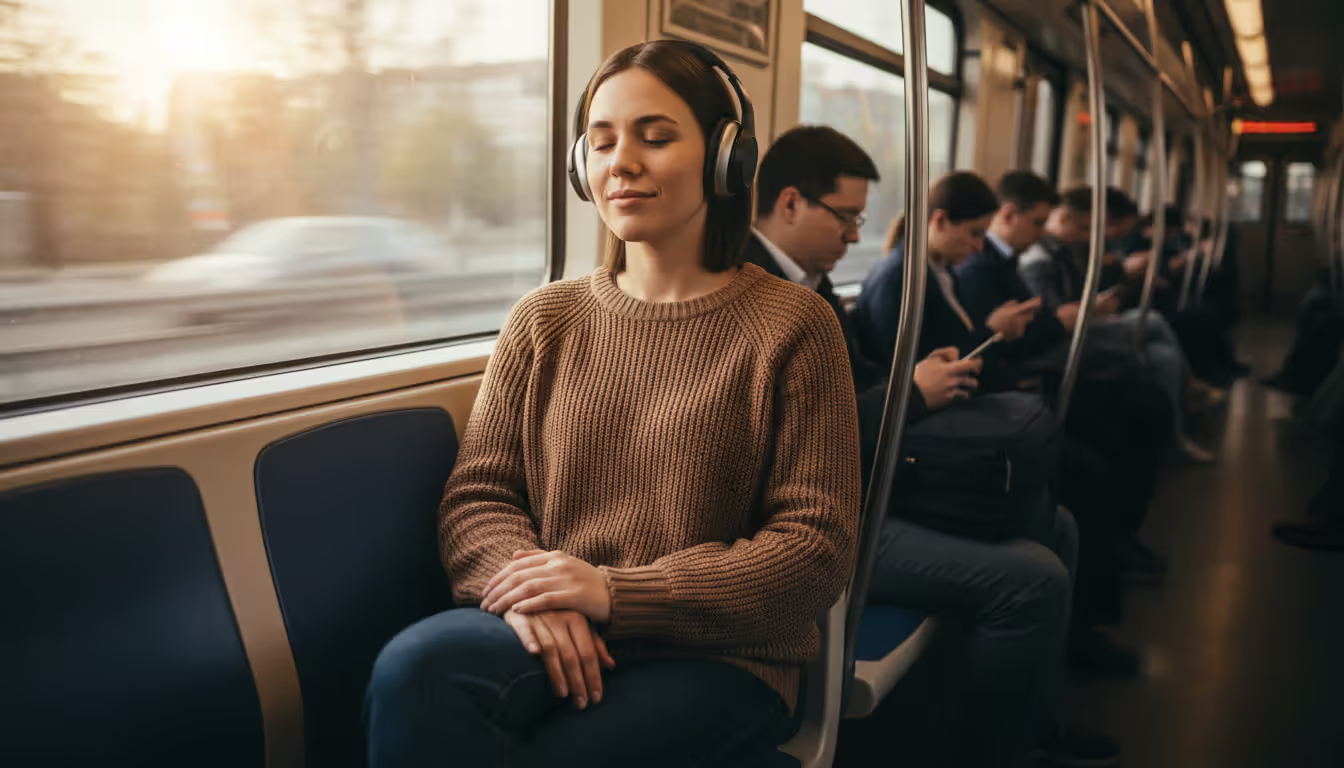
Commuters gain the most obvious advantage. Your 25-minute train ride or drive already exists—why not use it for something beyond mindless scrolling or aggressive honking? Meditation for commuting focuses on awareness practices that don't require closed eyes. You notice your breathing pattern, register sounds around you, or scan body sensations while remaining alert.
Podcasts eliminate decision paralysis, too. Subscribe once, and episodes appear automatically in your feed. No hunting through meditation libraries at 6 AM wondering which session fits your mood. Your trusted host shows up consistently with a new practice.
The American Mindfulness Research Association found that morning meditators showed 34% better emotional regulation throughout their day compared to people who only practiced at night. Your cortisol peaks naturally within 30 minutes of waking—meditation intercepts this stress hormone before it hijacks your nervous system.
Author: Lena Ashcroft;
Source: 5sensesspa.com
What Makes a Good Guided Meditation Podcast
Quality varies wildly across meditation content. Here's what separates helpful shows from irritating ones.
Episode length needs to match reality, not aspiration. A 45-minute session sounds wonderful until you realize you'll skip it every single day because you don't actually have 45 morning minutes. Look for shows offering multiple durations—maybe 5 minutes on hectic Mondays, 20 minutes on leisurely Sundays.
Instructor style is completely subjective. Some voices soothe you; others make you want to throw your phone. One person's "warm and nurturing" is another person's "condescending baby talk." Sample at least three episodes before judging. If the host annoys you, find someone else—meditation shouldn't require gritting your teeth.
Production quality matters more than you'd expect. Background music can enhance focus or utterly wreck it. Watch for jarring volume shifts, ads interrupting the middle of a session, or distracting production choices. Free meditation audio resources should still sound professional.
Release frequency affects habit formation. Daily releases provide fresh variety and prevent boredom. Weekly shows work fine if you're comfortable repeating favorites several times. Some excellent guided meditation podcasts drop content seasonally or in thematic batches rather than maintaining rigid schedules.
Accessibility features include transcripts and clear verbal cues for any physical movements. The best meditation channels acknowledge diverse bodies and circumstances instead of assuming everyone can sit cross-legged on a floor.
Top Free Meditation Podcasts to Try in the Morning
The meditation podcast world has exploded in recent years. Here's how popular free options stack up:
Podcast Name
Episode Length
Release Schedule
Ideal Listener
Where to Find It
The Daily Meditation Podcast
10-12 minutes
Every day
People craving routine
Apple Podcasts, Spotify, Google Podcasts
Meditation Minis
5-10 minutes
Three times weekly
Perpetually busy humans
Spotify, Apple Podcasts, Google Podcasts
Ten Percent Happier
10-20 minutes
Daily releases
Skeptics wanting science
All major podcast platforms
The Mindful Movement
15-30 minutes
Four days per week
Body awareness seekers
YouTube, Spotify, Apple Podcasts
Tara Brach Guided Meditations
15-45 minutes
Weekly
Deep practitioners
Apple Podcasts, Spotify, her website
Secular Buddhism
20-30 minutes
Once weekly
Philosophy lovers
Available everywhere
One-Moment Meditation
1-10 minutes
Twice per week
Total newbies
Apple Podcasts, Spotify
Podcasts for Complete Beginners
One-Moment Meditation ditches all the mystical language and spiritual baggage. Martin Boroson treats meditation like learning to ride a bike—a practical skill you build through tiny increments. He explains the reasoning behind each technique instead of just issuing instructions. First-timers intimidated by Buddhism or New Age terminology should begin here.
Meditation Minis by Chel Hamilton tackles specific situations: calming pre-meeting jitters, boosting morning energy, or handling difficult colleagues. Episodes run so short you can finish one before your coffee finishes brewing. The brevity removes every excuse for procrastination.
The Daily Meditation Podcast delivers exactly what its name promises—no surprises. Mary Meckley guides you through visualizations and breathing work without assuming prior experience. Each episode stands independently, so missing a few days won't leave you lost.
Podcasts for Daily Practice
Ten Percent Happier mixes meditation instruction with teacher interviews across various traditions. Dan Harris, a news anchor who panicked on live television, asks the skeptical questions many beginners wonder about but feel embarrassed voicing. His guided sessions stay practical and grounded.
Tara Brach Guided Meditations offers deeper practices rooted in Buddhist psychology. While not morning-specific, her work on compassion, anxiety, and self-acceptance sets a powerful tone for the day ahead. Episodes run longer, making them better suited for weekends or mornings when your schedule allows flexibility.
The Mindful Movement pairs meditation with gentle stretching and body awareness. If sitting motionless feels uncomfortable or you wake up carrying tension, these sessions help you actually inhabit your body before inhabiting your desk chair.
You don't have to be good at meditation to benefit from it. The practice is in the returning—noticing your mind wandered and gently bringing it back. That's the entire point, not achieving some blissed-out state
— Sharon Salzberg
How to Build a Morning Meditation Routine with Audio
Good intentions don't create habits. You need a system that works with your actual behavior, including your tendency to hit snooze and your morning brain fog.
Link meditation to something you already do. "I'll meditate in the morning" is too vague. "I'll meditate immediately after silencing my alarm" or "I'll meditate while my coffee brews" gives your brain a concrete trigger it can recognize and act on.
Set up the night before. Queue tomorrow's episode before you go to sleep. Put your earbuds on your nightstand. Morning you is tired and distractible—don't trust that person to search through meditation audio resources and resist the siren call of email notifications.
Commit to something laughably small. Two minutes, not twenty. You can always exceed your minimum, but setting an achievable floor prevents the perfectionist thinking that kills new habits. After maintaining two-minute daily sessions for two weeks, bump up to five.
Leverage podcast app features. Most apps support playback speed adjustment. If a 10-minute meditation drags, try 1.1x speed. Build a dedicated morning playlist so you're not scrolling through your entire library before sunrise.
Track your consistency. Mark completed days on a calendar or use a habit app. The visual representation of your streak provides surprising motivation. When you're tempted to skip, seeing that unbroken chain of X's often tips you toward showing up anyway.
Forgive yourself instantly. You'll skip days. You'll doze off mid-session. You'll get irritated and quit early. None of this indicates failure or unsuitability for meditation. The practice involves returning after wandering—returning your attention to breath during a session, or returning to the habit after breaking your streak.
Author: Lena Ashcroft;
Source: 5sensesspa.com
Meditation Podcasts vs. Meditation Apps
Both deliver guided meditation, but they solve different problems.
Cost structure: Podcasts offer unlimited free access, sometimes with voluntary donation options. Apps like Calm or Headspace run $70-100 yearly after trial periods end. If money's tight, meditation audio resources in podcast form provide indefinite access without payment gates.
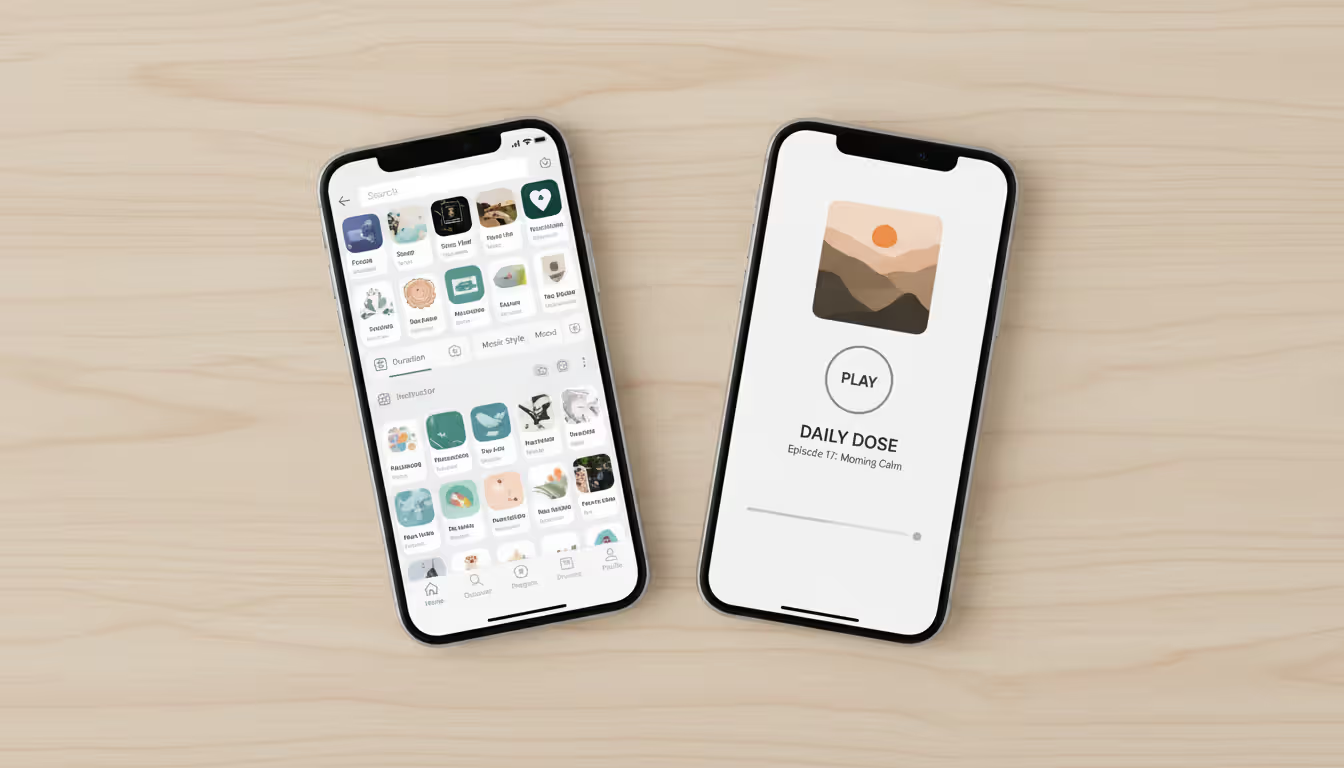
Customization: Apps let you filter by duration, instructor, technique, and emotional state. You get personalized programs and detailed progress analytics. Podcasts give you whatever the host releases when they release it—less control, less choice.
Discovery and variety: Apps catalog thousands of sessions. Sounds perfect until you're paralyzed at 6:30 AM by 47 different "morning meditation" options. Podcasts limit your choices, which paradoxically makes consistent use easier. You trust your host to curate the journey instead of agonizing over daily decisions.
Offline access: Both allow downloads, though some meditation apps restrict offline listening to paid tiers. Podcast apps assume offline use as default functionality.
Community and accountability: Apps frequently include forums, group challenges, and social features. Podcasts build community through listener reviews and occasional live events, but the connection feels more distant and optional.
Author: Lena Ashcroft;
Source: 5sensesspa.com
Most beginners should start with podcasts. Once meditation becomes non-negotiable—something you'd no more skip than brushing your teeth—you might add an app for specific needs like sleep meditations, advanced techniques, or variety during travel.
Common Mistakes When Starting a Meditation Podcast Habit
Picking episodes that exceed your attention span. Ambition feels virtuous, but a 30-minute session you skip accomplishes less than a 5-minute session you complete. Beginners consistently overestimate their tolerance for sitting still. Choose the shortest option available, even if it seems almost pointlessly brief.
Attempting to multitask during practice. You cannot genuinely meditate while composing emails or mentally drafting your grocery list. Mindfulness podcasts for beginners emphasize single-pointed attention. Walking or commuting while listening works fine—the movement integrates into the practice. But trying to meditate while actively working defeats the entire purpose.
Podcast-hopping constantly. The first few episodes with any host feel awkward while you adjust to their voice, pacing, and style. Sample at least five episodes before deciding a show doesn't work for you. Endless searching for the "perfect" meditation podcast is just procrastination dressed in spiritual clothing.
Expecting immediate life transformation. Meditation isn't a magic pill that delivers instant enlightenment. Some mornings you'll feel noticeably calmer. Other mornings you'll spend ten minutes obsessing over how itchy your nose feels and resenting the host's breathing instructions. Both count as meditation. Benefits compound slowly, like interest accruing in a savings account you can't touch.
Only meditating when you already feel peaceful. The practice proves most valuable when you're anxious, rushed, or irritated—exactly when you least want to do it. If you only meditate on tranquil Saturday mornings, you're not actually building a skill that helps during real stress.
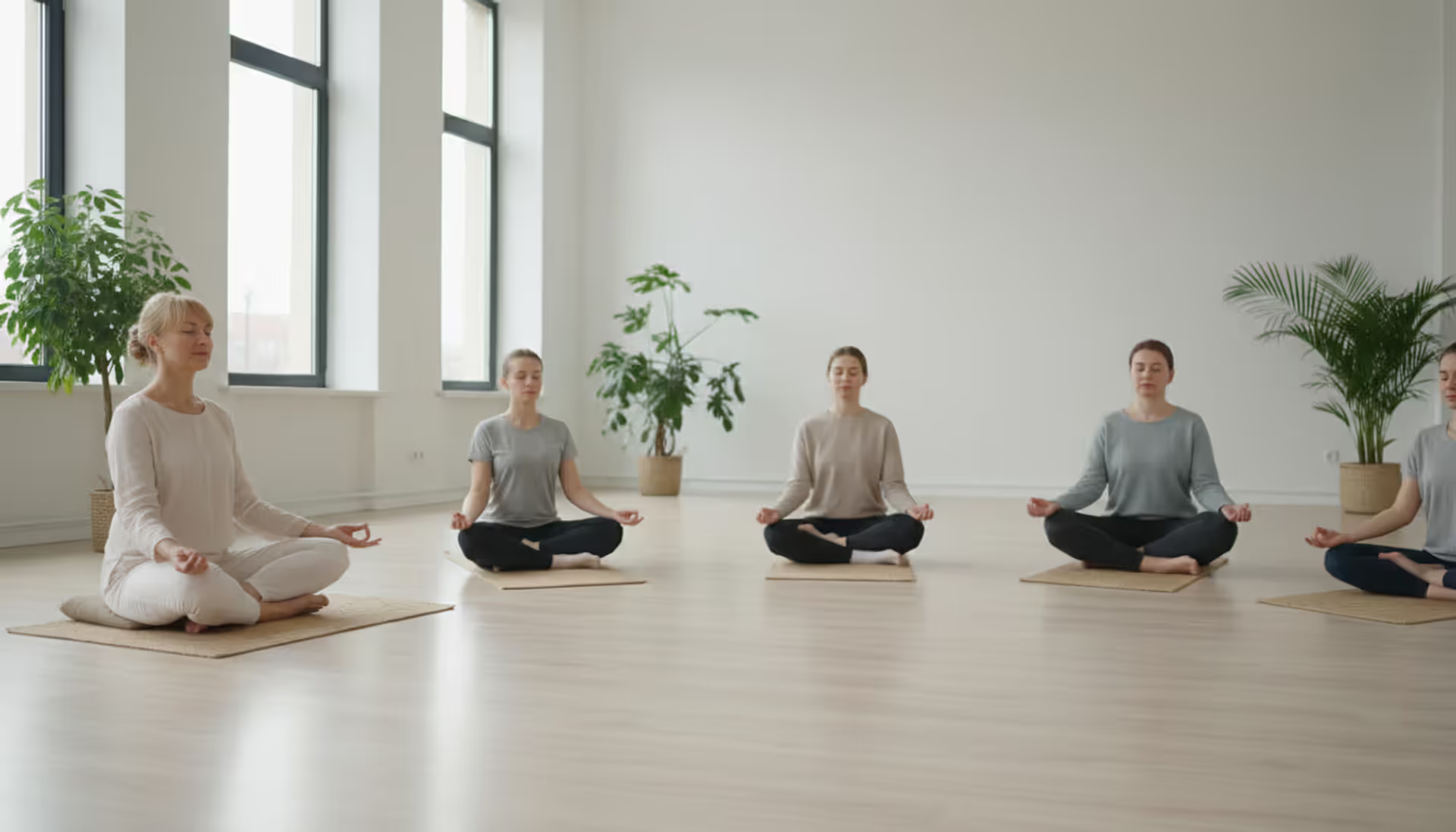
Tolerating physical pain unnecessarily. You don't need to sit cross-legged on a hard floor. Meditation works equally well in a chair, lying down, or standing. If your back aches or your legs go numb, adjust your position. Enduring discomfort isn't virtuous or spiritually advanced—it just distracts you from the actual practice.
Author: Lena Ashcroft;
Source: 5sensesspa.com
Frequently Asked Questions
Do I need experience to start a morning meditation podcast?
Absolutely not. The best meditation podcasts for beginners assume you've never meditated before and know nothing about mindfulness. Hosts explain basic concepts like "observing your breath" or "body scanning" in plain language without jargon. Your first few sessions might feel weird or awkward—that's completely normal and doesn't mean you're bad at this. Experience comes from repetition, not from studying theory beforehand.
How long should a morning meditation session be?
Begin with 5 minutes. University of Massachusetts Medical School research demonstrates that even brief daily practice produces measurable changes in brain regions controlling attention and emotional regulation. Once 5 minutes feels comfortable, extend to 10. Most people find 10-20 minutes sustainable long-term. Longer sessions aren't automatically superior—consistency beats duration every time.
Can I meditate while commuting or driving?
Yes, with crucial safety caveats. If you're behind the wheel, select meditations that keep your eyes open and emphasize breath awareness or sound rather than body scans that might induce drowsiness. Never close your eyes or attempt visualizations requiring inward focus while driving. On buses, trains, or subways, any meditation style works beautifully—public transit time is perfect for daily meditation audio since it's already carved out of your schedule.
Are free meditation podcasts as good as paid apps?
Quality doesn't correlate with price. Many exceptional teachers distribute free podcasts because they genuinely care about accessibility. Paid apps deliver more features—progress tracking, varied content libraries, synchronized offline downloads—but the core meditation instruction in free podcasts often matches or exceeds paid alternatives. Start with podcasts; only upgrade to an app if you're actually missing specific features.
How often should I listen to stay consistent?
Daily practice builds habits fastest, but four to five sessions weekly still generates substantial benefits. Regularity matters more than perfection. If daily feels overwhelming, commit to weekdays only. You're training your brain to recognize meditation as part of your morning sequence, which requires repetition. Missing an occasional day won't destroy your progress, but frequent skipping prevents the pattern from forming.
What's the best time of morning to meditate?
Right after waking, before touching your phone, works best for most people. Your mind hasn't yet absorbed the day's stress, and you're less likely to get sidetracked by urgent tasks. However, the "best" time is whenever you'll actually follow through. If you can't function until after coffee, meditate with your second cup. If mornings explode with kid chaos, try your commute instead. Consistency at a suboptimal time beats inconsistency at the theoretically perfect moment.
Morning meditation podcasts eliminate the obstacles that prevent most people from developing a practice. You don't need money, equipment, or expertise—just earbuds and a few available minutes. The format adapts to the messy reality of actual mornings instead of demanding you create perfect conditions first.
Pick one podcast from the recommendations above. Listen to the same episode three mornings consecutively to move past the novelty factor and assess how it actually integrates into your routine. Set your bar low enough that failure becomes nearly impossible—two minutes absolutely counts as success.
The meditation itself might feel boring, pointless, or frustrating initially. This doesn't indicate you're doing anything wrong. You're training attention like strengthening a muscle, and muscles fatigue before they grow stronger. The transformation doesn't happen in any single session but accumulates through repeatedly showing up, letting a calm voice guide you back to the present moment before the day's chaos sweeps you away.
Scientific investigation into mindfulness has accelerated dramatically, with thousands of studies examining brain changes, clinical outcomes, and therapeutic applications. Evidence strongly supports meditation for chronic pain, stress reduction, and depression relapse prevention, while other applications show mixed results
Discover practical meditation techniques you can use at your desk to boost work performance. Learn how successful entrepreneurs integrate mindfulness into their workday, improve decision-making, and build sustainable practices without disrupting workflow
Becoming a meditation teacher requires structured training in pedagogy, ethics, and techniques. With hundreds of programs available in 2026, choosing the right meditation teacher training determines your professional credibility and earning potential. Learn how to evaluate programs, avoid common mistakes, and launch your teaching career
Most people abandon meditation within three weeks. The difference between those who quit and those who maintain a practice for years comes down to how they structure their approach. Discover realistic strategies for building meditation routines that survive contact with busy schedules
The content on this website is provided for general informational and educational purposes only. It is intended to explain concepts related to meditation, mindfulness, mental health, and spiritual practices.
All information on this website, including articles, guides, and examples, is presented for general educational purposes. Meditation outcomes may vary depending on individual practices, health conditions, and guidance.
This website does not provide medical, mental health, or spiritual advice, and the information presented should not be used as a substitute for consultation with qualified professionals.
The website and its authors are not responsible for any errors or omissions, or for any outcomes resulting from decisions made based on the information provided on this website.