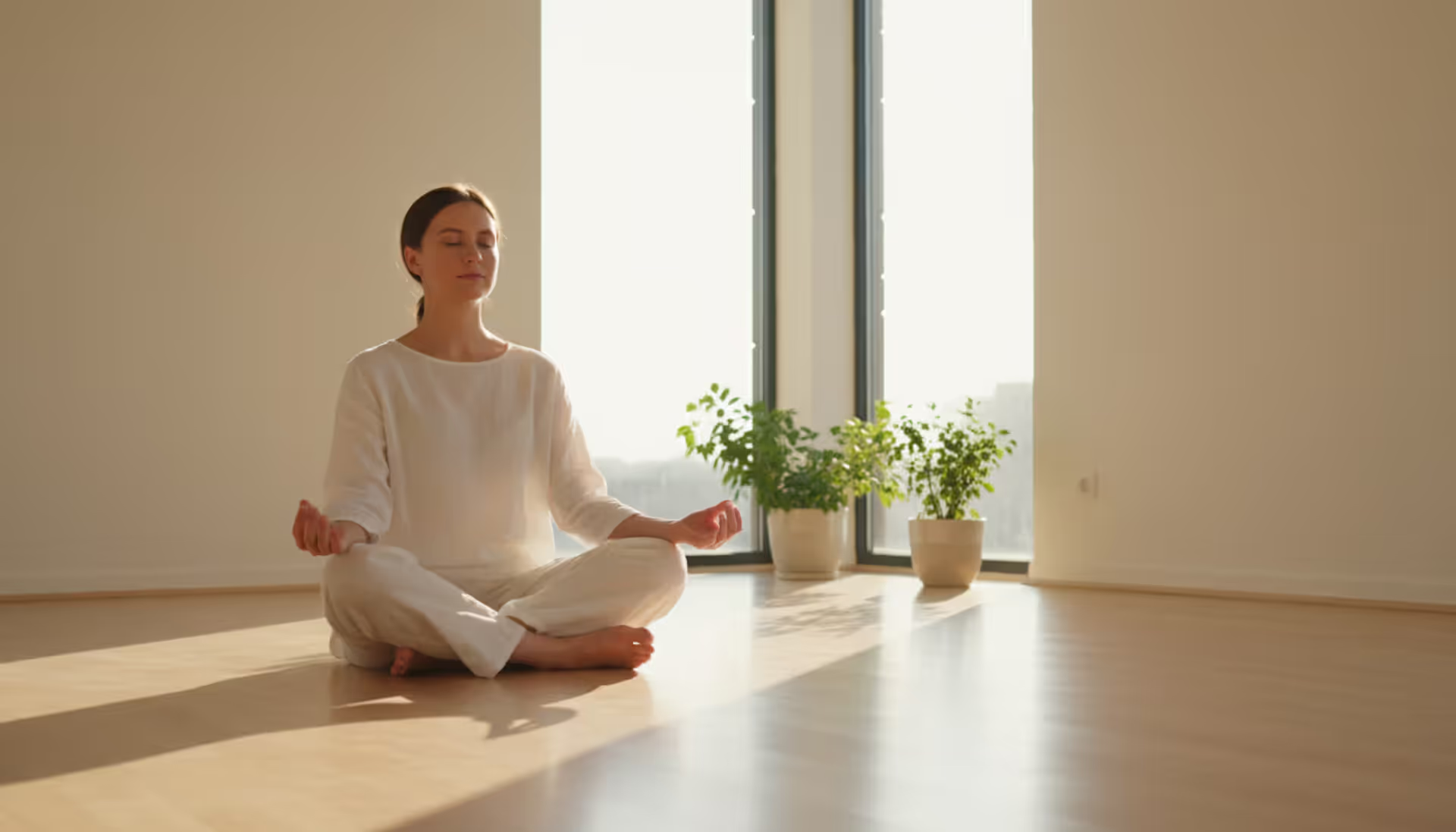
A person sitting cross-legged in a calm meditation pose on the floor of a bright minimalist room with soft morning sunlight coming through a large window
Starting a meditation practice feels exciting until the third morning when your alarm goes off and you'd rather sleep another ten minutes. Most people download an app, meditate for three days straight, then abandon the practice entirely. The difference between those who quit and those who maintain a practice for years comes down to how they structure their approach from day one.
Why Most People Struggle to Maintain Meditation Routines
The average person abandons their meditation practice within three weeks. This happens because they misunderstand what makes meditation sustainable.
Time constraints rank as the most cited reason people quit. Between work obligations, family responsibilities, and basic life maintenance, carving out 20 minutes feels impossible. But the real issue isn't time—it's the belief that meditation requires substantial blocks of uninterrupted silence.
Unrealistic expectations create another major obstacle. Many beginners expect immediate stress relief, enhanced focus, or spiritual insights after their first session. When these benefits don't materialize instantly, disappointment sets in. Research from meditation centers across the country shows that practitioners who expect gradual progress maintain their practice 73% longer than those seeking quick transformations.
Lack of structure sabotages even motivated beginners. Without a clear plan for when, where, and how long to meditate, the practice becomes optional—something you'll do "when you have time." Optional activities rarely survive contact with busy schedules.
Motivation issues compound these challenges. Unlike exercise, meditation doesn't produce visible results. You can't see your "meditation muscles" growing. The benefits accumulate quietly in the background: slightly better emotional regulation, marginally improved sleep quality, fractionally more patience with your coworker's annoying habits. These subtle improvements don't generate the motivation spike that comes from losing five pounds or running a faster mile.
Author: Lena Ashcroft;
Source: 5sensesspa.com
Core Elements of a Sustainable Meditation Practice
Building a daily meditation practice requires understanding what actually matters versus what meditation culture tells you matters.
Consistency beats duration every single time. Five minutes daily outperforms 30 minutes twice weekly. Your brain responds to repetition, not heroic effort. When you meditate at roughly the same time each day, your nervous system begins anticipating the practice. This anticipation creates a neurological groove that makes starting easier.
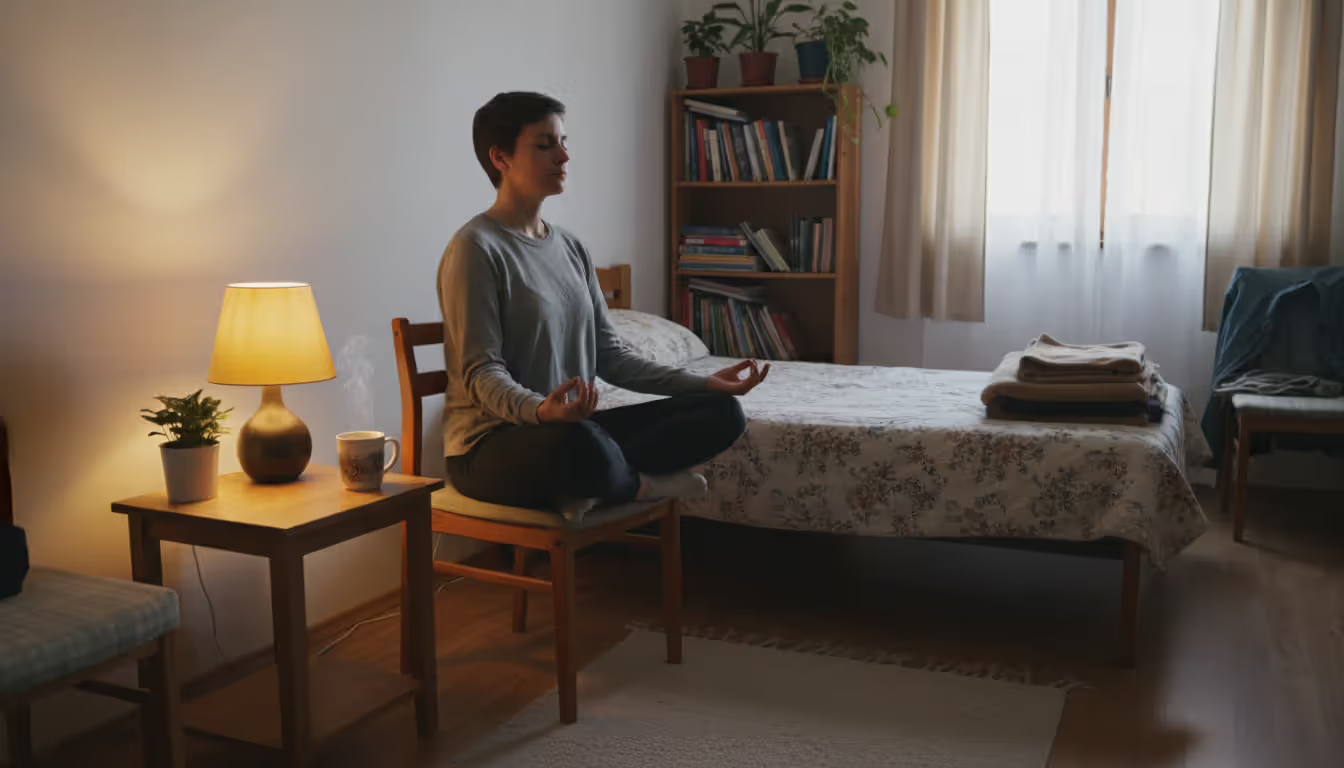
Environment setup doesn't require a dedicated meditation room with Tibetan singing bowls. You need a spot where you won't be interrupted for a few minutes. One corner of your bedroom works. A parked car before you walk into the office works. The bathroom with the door locked works if you have toddlers. Consistency of location matters more than aesthetic perfection.
Time of day selection depends entirely on your natural rhythms and existing schedule. Morning meditation works beautifully for early risers who enjoy quiet before the household wakes. Evening meditation suits night owls who need help transitioning from work mode to rest mode. Lunch break meditation serves people who need a midday reset. The "best" time is whichever time you'll actually do it.
Flexibility prevents abandonment. Your sustainable meditation practice needs enough structure to happen regularly but enough flexibility to survive disrupted schedules. A rigid "I must meditate at 6:00 AM for exactly 15 minutes" approach collapses the first time you have an early meeting or sleep poorly.
Choosing Your Meditation Duration and Frequency
Start with five minutes daily rather than 20 minutes three times weekly. Daily practice builds habit pathways faster than longer but sporadic sessions. Five minutes feels manageable even on chaotic days, which means you're more likely to maintain consistency.
After two weeks of successful daily five-minute sessions, consider extending to seven or ten minutes. Notice that recommendation says "consider," not "must." Some practitioners maintain five-minute sessions for months before extending duration. This gradual approach prevents the overcommitment that kills meditation routines.
Frequency matters more than most people realize. Seven five-minute sessions weekly create stronger habit formation than three 20-minute sessions weekly, even though the total time is roughly equivalent. Daily repetition trains your brain to expect and prepare for meditation.
Finding the Right Time and Space
Your meditation time should anchor to an existing daily routine. Immediately after your morning coffee creates a natural transition. Right before your lunch break establishes a midday reset. After changing into comfortable clothes when you get home from work marks the shift from professional to personal time.
The space requires minimal criteria: reasonably quiet, temperature-controlled, and free from interruptions. A dedicated meditation cushion isn't necessary, though some people find that having one signals their brain that meditation time has arrived. A regular chair works perfectly. Sitting on your bed works if you can stay alert (though many people find beds too associated with sleep).
Test different times for one week each. Track how you feel during and after meditation at various times. Morning meditation might leave you calm but sleepy. Evening meditation might feel rushed if you're thinking about dinner. Midday meditation might provide the exact energy reset you need. Your body will tell you what works if you pay attention.
How to Create a Meditation Routine That Fits Your Life
Author: Lena Ashcroft;
Source: 5sensesspa.com
Creating a meditation routine requires honest assessment rather than aspirational planning.
First, examine your actual schedule for one week. Don't plan an ideal schedule—document what actually happens. What time do you wake up? When do you eat meals? What activities happen at consistent times? These existing anchors provide attachment points for meditation.
Second, identify your smallest viable commitment. What duration could you maintain even on your worst days? If you're thinking "I could definitely do ten minutes," cut that in half. Start with five. You can always extend a session that's going well. You can't recover momentum after repeatedly failing to meet an overambitious commitment.
Third, attach meditation to an existing habit. James Clear's habit stacking research demonstrates that new behaviors stick better when linked to established routines. "After I pour my coffee, I'll meditate for five minutes" works better than "I'll meditate sometime in the morning."
Fourth, build gradually over months, not weeks. Add one minute every two weeks if you want longer sessions. Add a second daily session only after maintaining one daily session for at least a month. Slow expansion feels boring but produces lasting results.
Sample Weekly Meditation Schedules for Different Lifestyles
Lifestyle
Best Time Slot
Duration
Meditation Type
Key Consideration
Busy Professionals
6:30 AM or lunch break
5-10 minutes
Breath awareness, body scan
Before checking email; use calendar blocks
Parents (young children)
Before kids wake or during nap time
5-7 minutes
Guided meditation via headphones
Flexibility for disrupted schedules
College Students
Between classes or before bed
7-12 minutes
Focus meditation, stress relief
Avoid late night if it interferes with sleep
Shift Workers
Same time relative to wake-up (not clock time)
5-10 minutes
Energy-appropriate (calming or alerting)
Maintain routine despite changing shifts
Retirees
Mid-morning after breakfast
10-20 minutes
Varied practices, longer sessions
Opportunity for exploration and depth
Meditation Routine Strategies for Beginners
Beginners need different strategies than experienced practitioners. What works for someone with 500 hours of meditation experience will frustrate someone on day three.
Start with five minutes, maximum. Your mind will wander. You'll feel restless. You'll wonder if you're doing it right. Five minutes makes these uncomfortable experiences manageable. Fifteen minutes turns them into reasons to quit.
Guided meditation works better than unguided practice for most beginners. A calm voice providing instructions prevents the "am I doing this right?" spiral that derails new practitioners. Apps like Insight Timer, Calm, and Headspace offer thousands of guided options. The free versions provide more than enough content for developing a meditation habit.
Unguided practice becomes appealing after you've established consistency. Some practitioners never move to unguided meditation, and that's fine. The goal is consistent practice, not achieving some advanced meditation state.
Track your practice with simple checkmarks on a calendar. Don't track quality or experience—just whether you meditated. This removes judgment and focuses on the only thing that matters early on: showing up. Consecutive days of checkmarks create visual motivation to maintain your streak.
Manage expectations by understanding that meditation benefits accumulate slowly. You're not broken if you don't feel dramatically different after one week. Most practitioners notice subtle changes around the three-week mark: slightly less reactive to annoyances, marginally better sleep, fractionally more aware of their thought patterns.
Proven Techniques for Meditation Habit Formation
Habit stacking transforms meditation from an isolated new behavior into part of your existing routine. Attach meditation to something you already do daily. "After I brush my teeth, I'll meditate for five minutes" leverages an established habit's momentum. Your brain already expects teeth brushing, so adding meditation afterward requires less willpower than creating an entirely new routine.
Implementation intentions strengthen commitment through specific planning. Instead of "I'll meditate tomorrow," use "Tomorrow at 7:00 AM, after I pour my coffee, I'll sit in the kitchen chair and meditate for five minutes." Research shows this specific planning increases follow-through by approximately 40%.
Accountability methods range from simple to social. Tell one person about your meditation commitment and text them daily confirmations. Join an online meditation group that shares daily check-ins. Use an app with streak tracking that you'd hate to break. External accountability compensates for limited internal motivation during the habit formation phase.
Reward systems work if you choose appropriate rewards. Treating yourself to an expensive dinner after one week of meditation creates mismatched incentives. Better rewards: allowing yourself to read for pleasure after meditating, enjoying your favorite tea during meditation, or placing a dollar in a jar each day you practice and spending the accumulated amount on something meaningful after 30 days.
Dealing with missed sessions determines whether your practice survives or dies. You will miss days. When this happens, don't attempt to "make up" missed sessions by doing longer sessions the next day. Simply resume your normal practice. One missed day means nothing. Three consecutive missed days signals you need to reassess your commitment or timing. Seven consecutive missed days means your current approach isn't working and requires adjustment.
Author: Lena Ashcroft;
Source: 5sensesspa.com
How to Stick to Your Meditation Practice Long-Term
Long-term meditation practice requires different strategies than starting one.
Plateaus happen to everyone. After the initial novelty wears off and before the deep benefits become obvious, you'll hit a period where meditation feels pointless. This typically occurs between weeks four and eight. Expect this plateau. When it arrives, remind yourself that showing up during the boring middle builds the habit that eventually becomes effortless.
Refreshing your routine prevents stagnation. If you've been doing the same five-minute breath awareness practice for three months and it feels stale, try a body scan meditation. Switch from guided to unguided practice or vice versa. Change your meditation location. Small variations maintain engagement without abandoning your established routine.
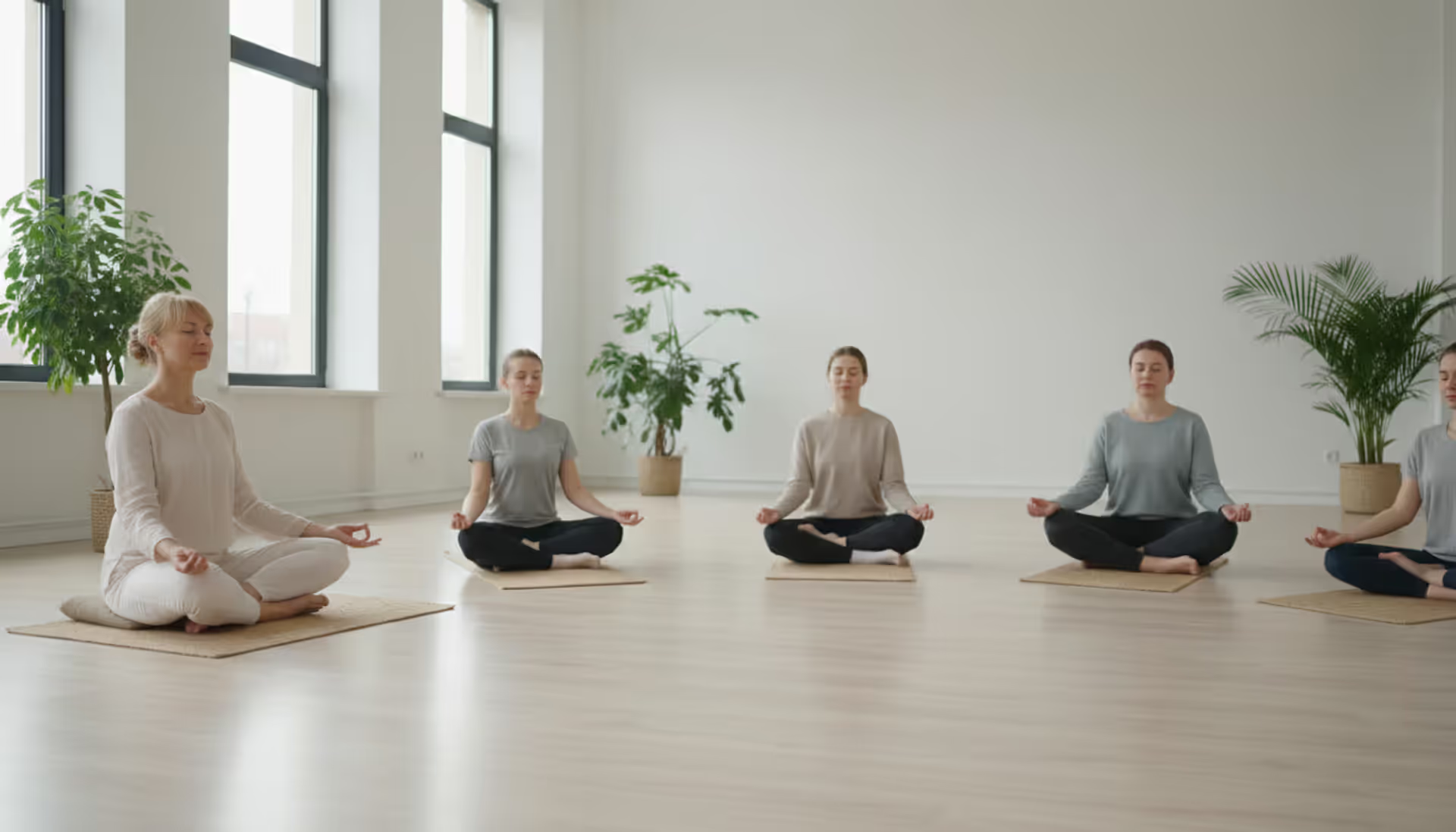
Community support sustains practice when personal motivation flags. Local meditation groups, online forums, or even one friend who also meditates provides connection and accountability. Discussing challenges and experiences normalizes the difficulties everyone faces.
Measuring non-obvious benefits requires attention to subtle changes. You probably won't notice that you're sleeping better, but your sleep tracking app might. You might not realize you're less reactive to stress, but your partner might mention you seem calmer lately. Keep informal notes about mood, sleep quality, stress levels, and focus. After three months, review these notes to see patterns you didn't notice day-to-day.
The most important aspect of meditation practice isn't the quality of any individual session—it's whether you show up tomorrow. People who maintain meditation for years don't have perfect practice. They have consistent practice, even when it feels awkward, boring, or pointless. The transformation happens in the accumulation, not the individual moments
— Dr. Sarah Mitchell
Common Mistakes When Structuring Your Meditation Practice
Overcommitting early destroys more meditation practices than any other mistake. Starting with 30 minutes daily feels ambitious and dedicated. It also sets you up for failure. When you inevitably miss that 30-minute target, you'll feel like you've failed, which erodes motivation. Start absurdly small. You can always increase duration later.
Rigid scheduling creates fragility. "I must meditate at 6:00 AM every day" works until you have an early meeting, sleep poorly, or travel to a different time zone. Build flexibility into your structure: "I'll meditate each morning before checking my phone, ideally around 6:00 AM but adjusted as needed."
Perfectionism kills meditation practices. Thoughts will wander during meditation. You'll feel restless. You'll wonder if you're doing it correctly. None of this means you're failing. Meditation isn't about achieving a perfect mental state—it's about practicing awareness regardless of what your mind does.
Comparing to others creates unnecessary discouragement. Someone else's 60-minute daily practice has nothing to do with your five-minute practice. Their experience meditating for ten years doesn't invalidate your experience as a beginner. Your practice serves your life, not some external standard.
Ignoring personal preferences leads to abandoning practices that don't suit your temperament. If guided meditation annoys you, don't force it because some expert said beginners need guidance. If morning meditation makes you sleepy, don't insist on it because morning is supposedly "optimal." Your sustainable meditation practice accommodates your actual preferences, not theoretical ideals.
Frequently Asked Questions
How long does it take to form a meditation habit?
Research on habit formation suggests 21 to 66 days for behaviors to become automatic, with an average around 30 days. For meditation specifically, most practitioners report that daily practice starts feeling natural rather than effortful after four to six weeks. The key factor is consistency—meditating daily for 30 days builds a stronger habit than meditating sporadically for three months.
What's the best time of day to meditate?
The best time is whenever you'll actually do it consistently. Morning meditation works well for people who want to set their day's tone before distractions accumulate. Midday meditation provides an effective reset for people who experience afternoon energy crashes. Evening meditation helps people who need assistance transitioning from work mode to rest mode. Test different times for one week each and notice which feels most sustainable.
How long should beginners meditate each day?
Beginners should start with five minutes daily. This duration is short enough to feel manageable even on busy days, which increases the likelihood of maintaining consistency. After two weeks of successful five-minute sessions, consider extending to seven or ten minutes. Duration matters less than frequency for habit formation—seven five-minute sessions weekly builds a stronger foundation than three 15-minute sessions weekly.
What should I do if I miss a day of meditation?
Simply resume your normal practice the next day without attempting to compensate. Don't meditate longer to "make up" for the missed session, and don't spiral into self-criticism. One missed day has minimal impact on habit formation. If you miss three consecutive days, examine whether your current schedule or duration needs adjustment. Seven consecutive missed days indicates your approach requires significant revision.
Do I need special equipment to start a meditation routine?
No. You need a place to sit where you won't be interrupted for a few minutes. A regular chair works perfectly. Some people enjoy using a meditation cushion or bench, but these aren't necessary. Comfortable clothing helps, but you don't need special meditation attire. If you choose guided meditation, you'll need a smartphone or computer to access meditation apps or recordings, but many excellent free options exist.
Can I meditate at different times each day?
You can, but consistent timing strengthens habit formation. Meditating at roughly the same time daily creates neurological patterns that make starting easier. If your schedule varies significantly (shift work, irregular freelance hours), aim for consistency relative to your wake-up time rather than clock time—for example, "within 30 minutes of waking" rather than "at 7:00 AM." Some consistency helps more than no consistency.
Building effective meditation routines depends on realistic planning rather than ambitious intentions. The practitioners who maintain their practice for years start small, attach meditation to existing habits, and build flexibility into their structure. They expect plateaus, forgive missed sessions, and measure success by consistency rather than perfect execution.
Your meditation routine should fit your actual life, not some idealized version of your life. Five minutes daily beats 30 minutes sporadically. Morning meditation works if you're a morning person; evening meditation works if you're not. Guided meditation serves people who want instruction; unguided practice suits people who prefer silence.
Start today with five minutes. Choose a time that anchors to something you already do daily. Sit somewhere you won't be interrupted. Use a guided meditation if you want support or simply focus on your breath if you prefer simplicity. Tomorrow, do it again. The transformation happens in the repetition, not the individual moments.
Transform your mornings with guided meditation podcasts. This comprehensive guide covers the best free options, how to build a sustainable routine, and what makes quality meditation audio. Compare popular podcasts and learn practical tips for fitting mindfulness into busy schedules and commutes
Scientific investigation into mindfulness has accelerated dramatically, with thousands of studies examining brain changes, clinical outcomes, and therapeutic applications. Evidence strongly supports meditation for chronic pain, stress reduction, and depression relapse prevention, while other applications show mixed results
Discover practical meditation techniques you can use at your desk to boost work performance. Learn how successful entrepreneurs integrate mindfulness into their workday, improve decision-making, and build sustainable practices without disrupting workflow
Becoming a meditation teacher requires structured training in pedagogy, ethics, and techniques. With hundreds of programs available in 2026, choosing the right meditation teacher training determines your professional credibility and earning potential. Learn how to evaluate programs, avoid common mistakes, and launch your teaching career
The content on this website is provided for general informational and educational purposes only. It is intended to explain concepts related to meditation, mindfulness, mental health, and spiritual practices.
All information on this website, including articles, guides, and examples, is presented for general educational purposes. Meditation outcomes may vary depending on individual practices, health conditions, and guidance.
This website does not provide medical, mental health, or spiritual advice, and the information presented should not be used as a substitute for consultation with qualified professionals.
The website and its authors are not responsible for any errors or omissions, or for any outcomes resulting from decisions made based on the information provided on this website.