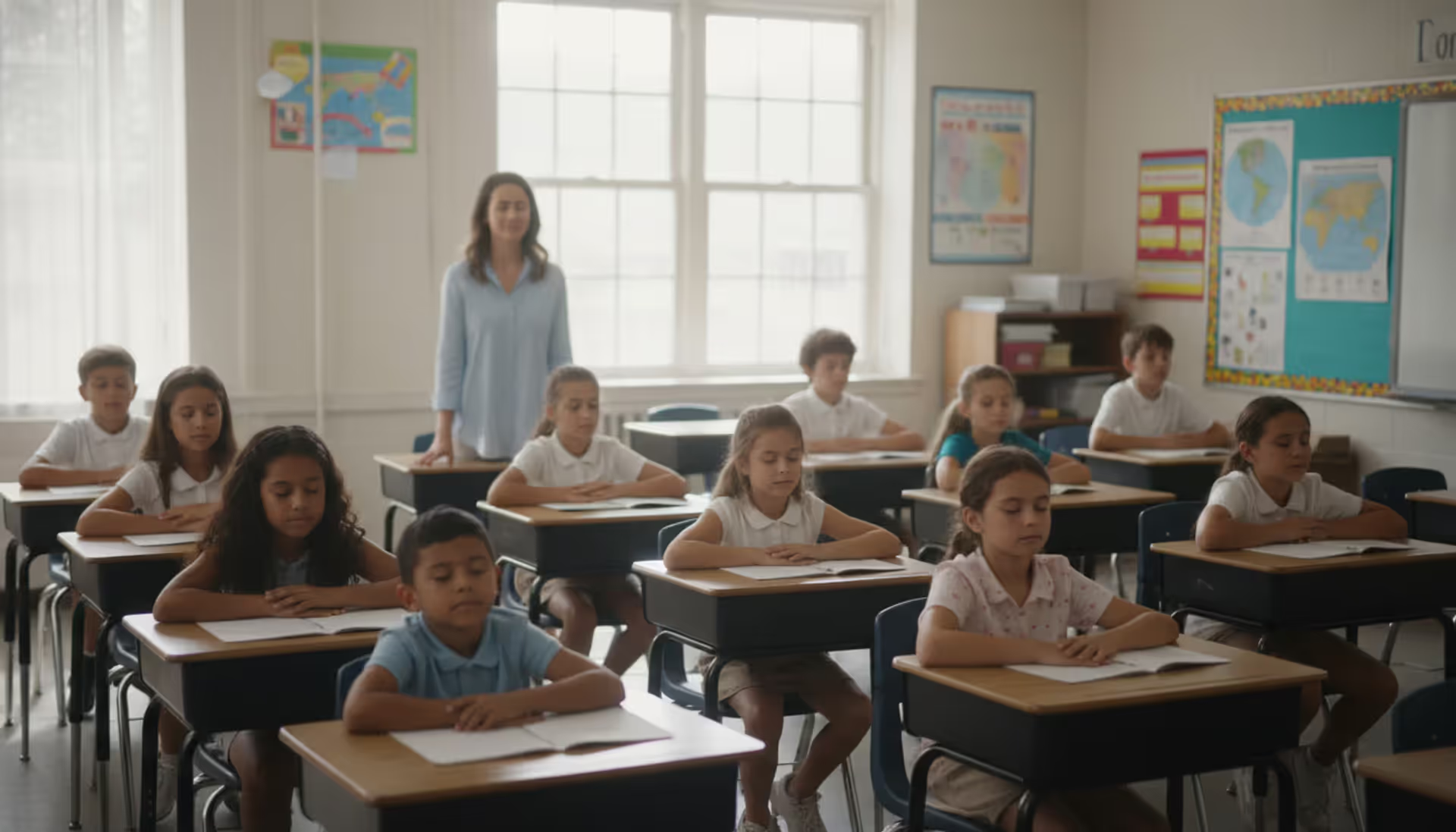
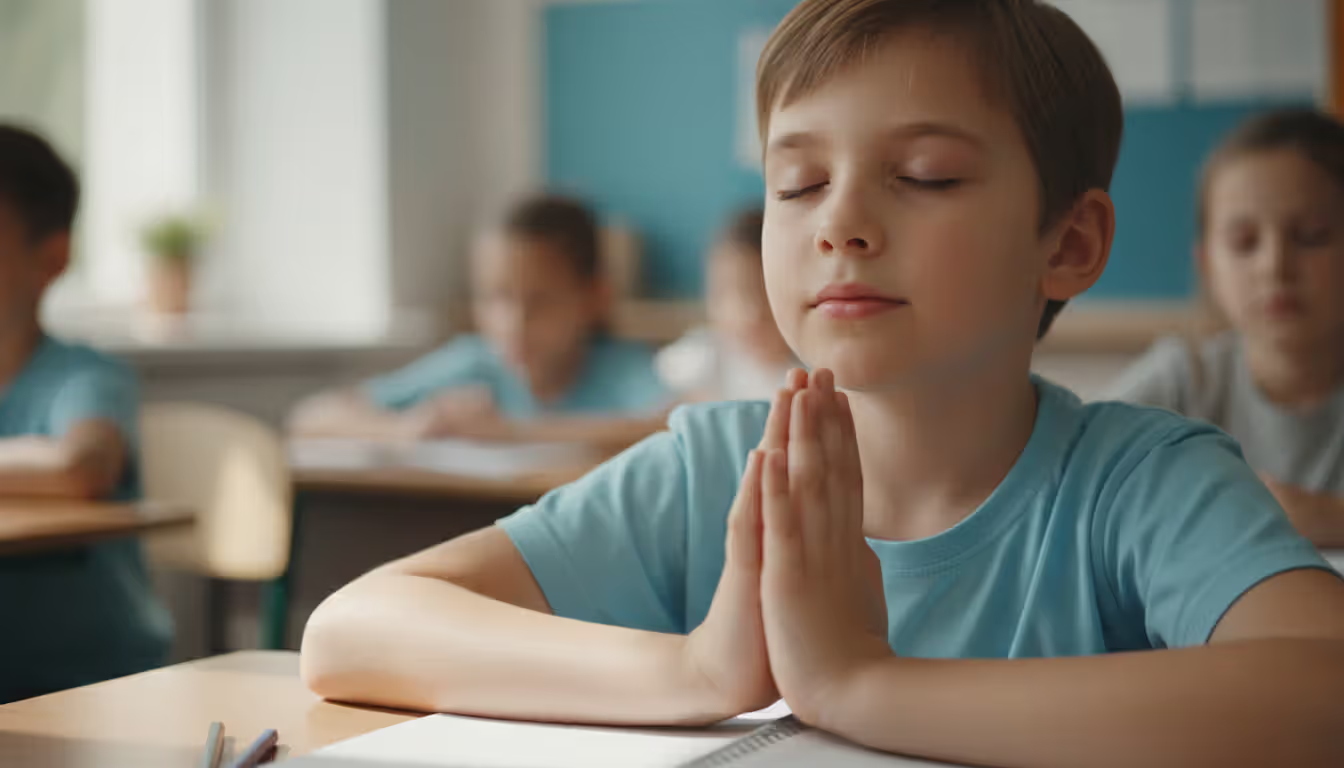
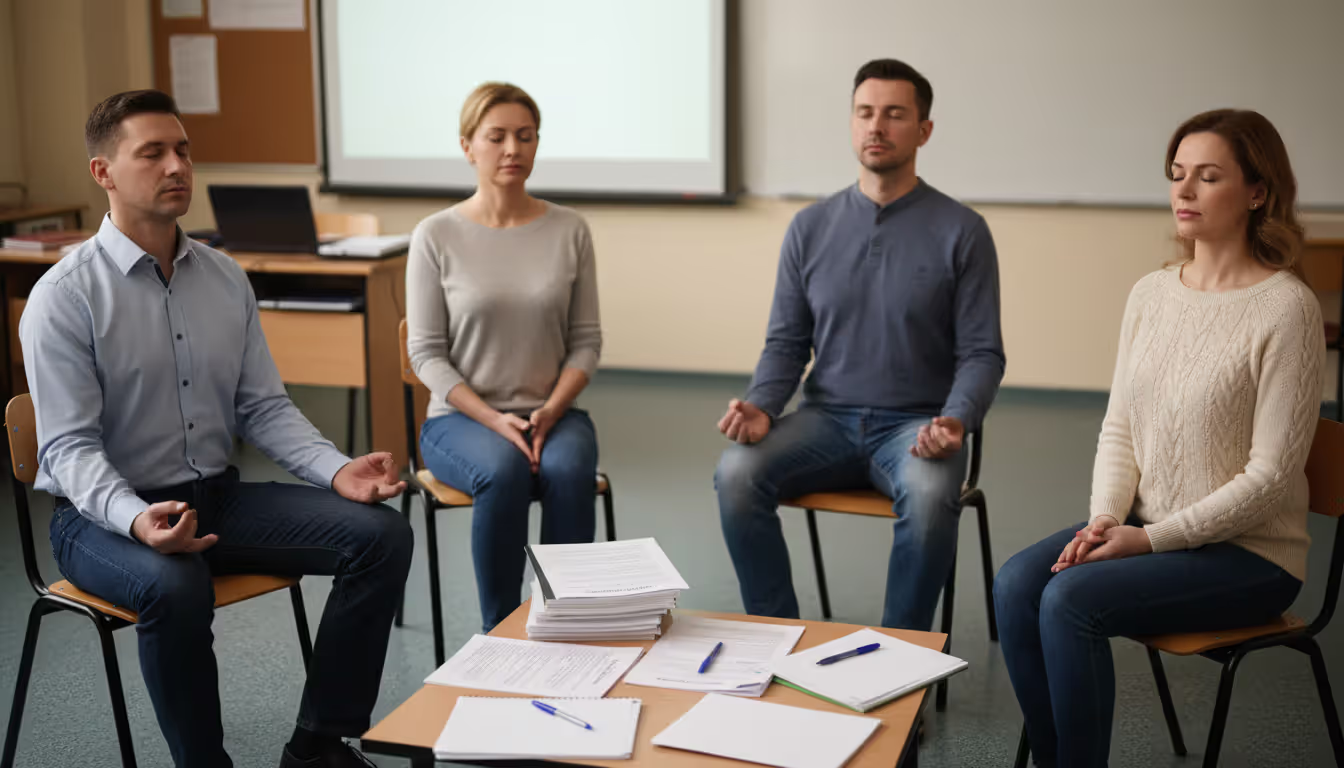
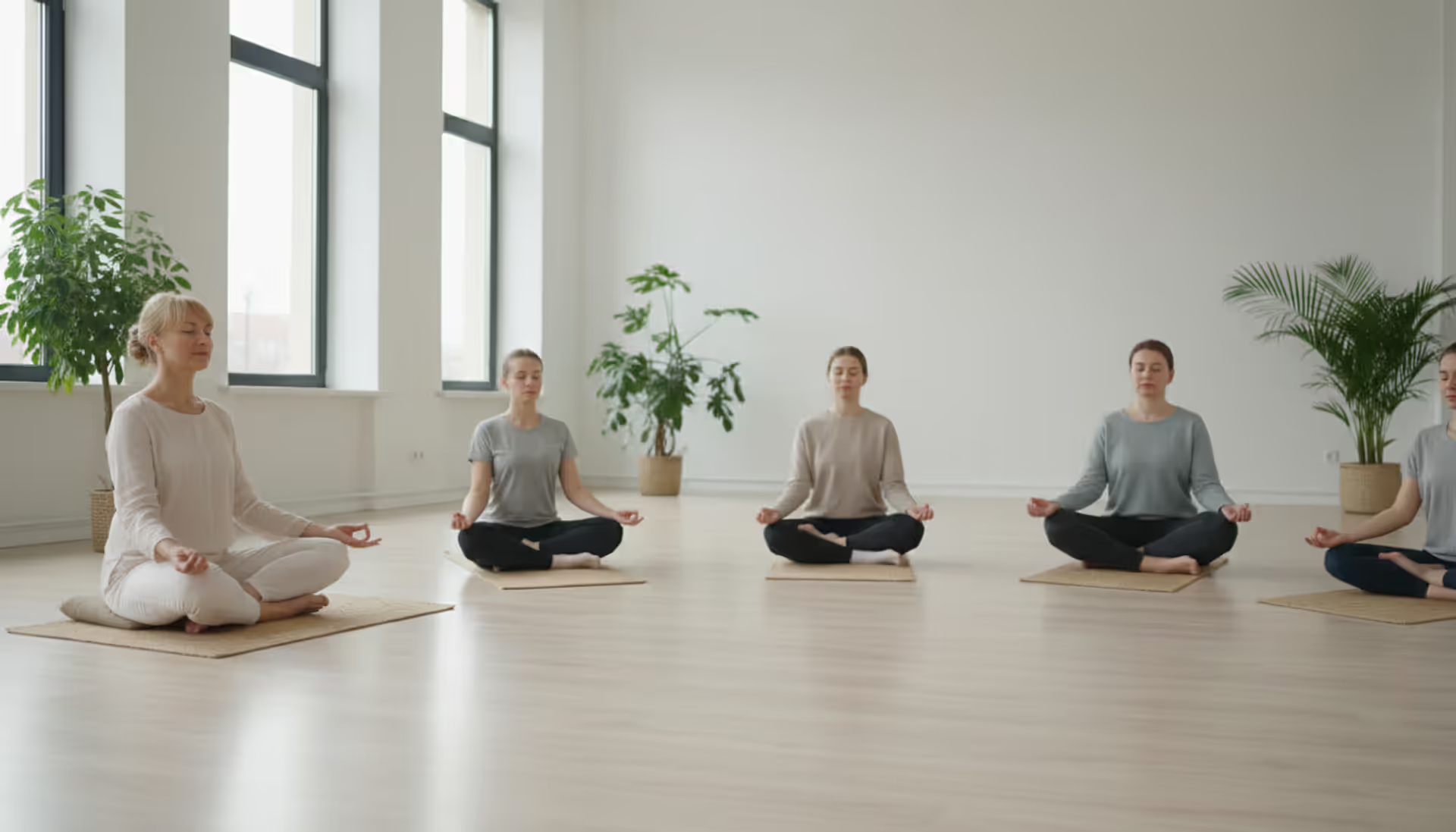
A diverse group of school students sitting at desks with closed eyes practicing mindfulness meditation in a bright classroom while a female teacher guides the session
The bell rings at Jefferson Middle School in Portland, Oregon, but instead of rushing to their next class, students settle into their seats for three minutes of guided breathing. This daily practice has become as routine as morning announcements, and teachers report fewer disciplinary incidents during the periods that follow. Across the country, similar scenes unfold as educators recognize that academic success requires more than textbooks and test prep—it demands attention to students' mental and emotional well-being.
Schools face mounting pressure to address student stress, anxiety, and attention difficulties while maintaining academic standards. Meditation and mindfulness practices offer a practical response that fits within existing schedules and requires minimal resources. Understanding how these programs work, what benefits they deliver, and how to implement them effectively helps parents and educators make informed decisions about bringing contemplative practices into educational settings.
Why Schools Are Adopting Meditation Programs
Student mental health has reached crisis levels. Emergency room visits for anxiety and depression among school-age children have climbed steadily since the early 2020s, with adolescents particularly affected. Traditional counseling services cannot keep pace with demand—most school districts employ one counselor for every 400-500 students, far exceeding recommended ratios.
A school mindfulness program provides a preventive approach rather than reactive intervention. When students learn self-regulation techniques early, they develop coping mechanisms before problems escalate. Teachers notice the difference: students who practice brief meditation exercises demonstrate better impulse control, fewer emotional outbursts, and improved conflict resolution skills.
Academic performance benefits extend beyond behavior management. Research tracking students in schools with established meditation programs shows improvements in working memory, sustained attention, and cognitive flexibility—skills that directly impact learning across all subjects. A fifth-grader who can refocus after distractions completes assignments more efficiently. A high school junior who manages test anxiety performs closer to their actual ability level.
Schools also adopt these programs because they address attention challenges without medication. While clinical ADHD requires professional treatment, many students struggle with garden-variety distraction caused by overstimulation, insufficient sleep, or stress. Regular mindfulness practice strengthens attention networks in the brain, giving students tools to notice when their mind wanders and bring it back to the task at hand.
Author: Ethan Solberg;
Source: 5sensesspa.com
The cost-effectiveness matters too. Unlike many interventions requiring expensive materials or ongoing specialist fees, children and meditation programs primarily need trained teachers and time. Many districts repurpose existing advisory periods or homeroom minutes, avoiding schedule disruption.
How Meditation Benefits Students by Age Group
Different developmental stages call for different approaches. A practice that engages a second-grader will bore a high school senior, while techniques appropriate for teenagers may frustrate younger children who lack the necessary abstract thinking skills.
Elementary School Children (Ages 5–10)
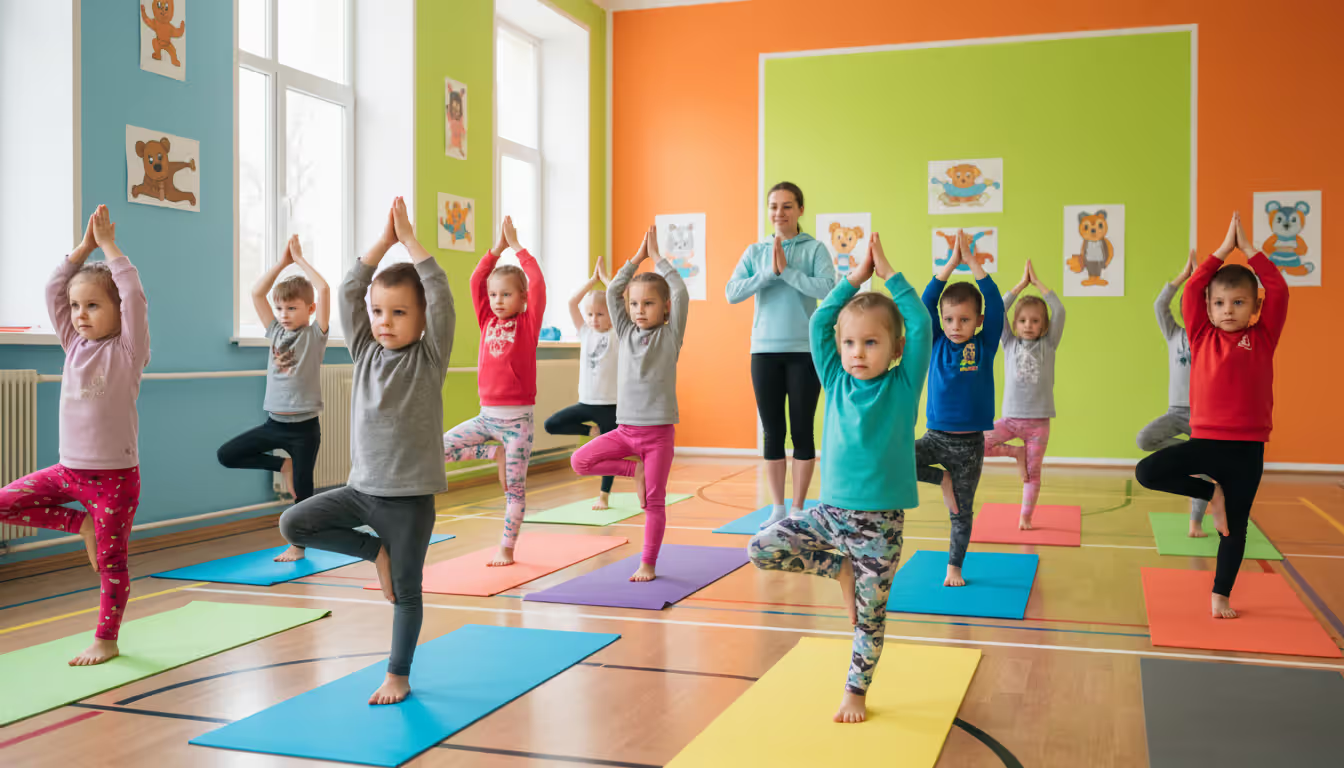
Young children respond best to concrete, playful approaches to mindfulness for children. Their natural capacity for imagination makes visualization exercises particularly effective. A teacher might guide students to imagine their thoughts as clouds drifting across the sky or their breath as waves rolling onto a beach.
Movement-based practices work well for this age group, which struggles with prolonged stillness. "Mindful walking" around the classroom perimeter, where children notice each footstep, channels their physical energy while building awareness. Simple yoga poses combined with breathing create similar benefits.
Elementary students develop emotional vocabulary through meditation. When a teacher guides a body scan, asking children to notice sensations in their belly, chest, and shoulders, they begin connecting physical feelings with emotional states. A child who recognizes that tight shoulders mean they feel worried gains crucial self-awareness.
Sessions should last five to ten minutes maximum. Attention spans at this age cannot sustain longer practices, and pushing beyond natural limits creates resistance. Many elementary teachers use meditation as a transition tool—three minutes of breathing after recess helps students shift from playground energy to learning mode.
Author: Ethan Solberg;
Source: 5sensesspa.com
Middle School Students (Ages 11–13)
The middle school years bring intense social pressures, physical changes, and increased academic demands. Mindfulness activities for middle schoolers address these specific stressors while accommodating their growing cognitive abilities and skepticism toward anything that seems "babyish."
This age group benefits from understanding the science behind meditation. When students learn that breathing exercises activate the parasympathetic nervous system, reducing stress hormones, they engage more seriously. They appreciate knowing why a practice works, not just being told to do it.
Peer relationships dominate middle school life, making group-based practices valuable. Partner breathing exercises, where students synchronize their breath, build connection. Gratitude practices that involve sharing appreciations with classmates strengthen classroom community while developing positive thinking patterns.
Middle schoolers need permission to struggle with meditation. A teacher who acknowledges that minds wander constantly and that noticing the wandering is the practice removes the pressure to "do it perfectly." This age group tends toward harsh self-judgment, so normalizing difficulty prevents discouragement.
Sessions can extend to ten to fifteen minutes, with variation to maintain engagement. Alternating between breath focus, body scans, and guided visualizations across the week prevents monotony. Some middle schools offer optional extended sessions during lunch for students who want deeper practice.
High School Teenagers (Ages 14–18)
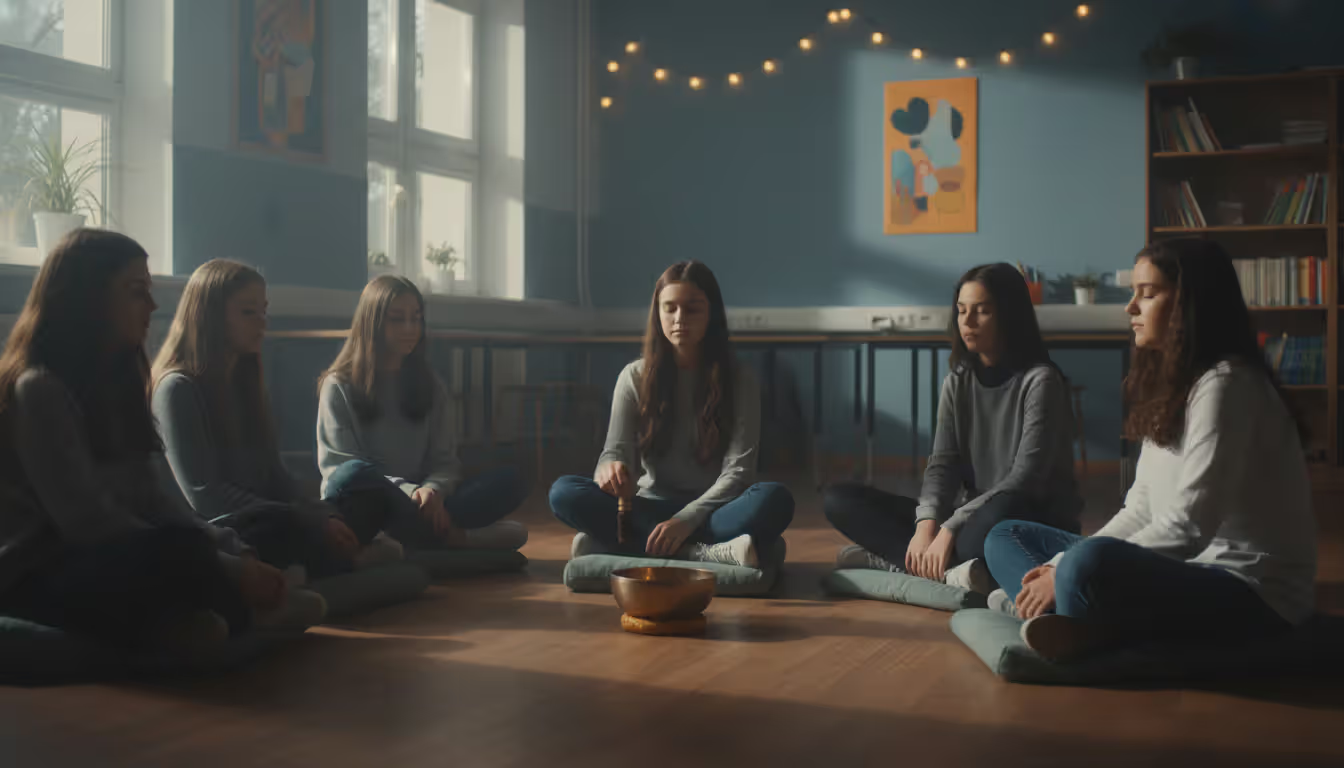
Meditation for teenagers works best when students understand its relevance to their lives. High schoolers juggle academic pressure, college preparation, part-time jobs, extracurriculars, and social dynamics. When they see meditation as a performance tool—like athletes use visualization or musicians use breath control—they invest more authentically.
Teenage mindfulness activities can include more sophisticated practices. Loving-kindness meditation, where students direct goodwill toward themselves and others, addresses the social comparison and self-criticism common in adolescence. Noting practice, where students mentally label thoughts and sensations without judgment, develops metacognitive awareness useful for academic work.
Many high schools integrate mindfulness exercises for teenagers into existing courses rather than creating standalone programs. An English teacher might begin class with two minutes of breathing before a writing exercise. A science teacher could use mindful observation before a lab, asking students to notice details without interpretation. This integration demonstrates meditation's practical applications.
Teenagers appreciate choice and autonomy. Offering several techniques and letting students select what works for them increases buy-in. Some prefer breath focus, others respond better to body scans, and some find walking meditation most accessible. Respecting these preferences acknowledges their developing independence.
Sessions can range from five to twenty minutes depending on context. A brief practice before a test differs from a longer session during a wellness seminar. Flexibility matters more than rigid scheduling at this age.
Types of Mindfulness Practices Used in Schools
Schools draw from various contemplative traditions, adapting practices to suit educational settings and remain secular. The most common approaches share a focus on present-moment awareness and non-judgmental observation.
Breathing exercises form the foundation of most programs. The simplest version involves counting breaths—inhale for four counts, hold for four, exhale for four, hold for four. This "box breathing" activates the relaxation response quickly, making it ideal for pre-test anxiety or post-conflict de-escalation. Teachers often pair breathing with hand movements: hands rise on the inhale, fall on the exhale, giving kinesthetic learners a physical anchor.
Body scans systematically direct attention through different body parts, noticing sensations without trying to change them. A teacher might guide students to notice their feet on the floor, then legs on the chair, then hands resting, moving upward to shoulders, neck, and face. This practice grounds students in physical experience, pulling attention away from rumination. It works particularly well after lunch or during afternoon energy slumps.
Guided visualization takes students on imaginary journeys that promote relaxation and positive emotional states. A teacher might describe a peaceful natural setting, asking students to imagine details using all five senses. These practices leverage adolescents' strong imaginative capacities while providing a mental break from academic demands. Some teachers create visualizations tied to curriculum—imagining the water cycle or historical events—combining mindfulness with content reinforcement.
Movement-based practices include gentle stretching, yoga poses, or mindful walking. These approaches serve students who find stillness challenging or triggering. Walking meditation, where students notice each component of stepping, can happen in a classroom aisle or hallway. Simple stretches with breath coordination provide similar benefits to seated meditation while accommodating different comfort levels.
Journaling extends mindfulness practice into reflection. Prompts like "What am I grateful for today?" or "What emotion am I feeling right now?" help students process experiences and develop emotional awareness. This works especially well for introverted students who prefer internal processing to group sharing.
Author: Ethan Solberg;
Source: 5sensesspa.com
Sound-based practices use bells, chimes, or singing bowls. Students listen until they can no longer hear the vibration, training sustained attention. This concrete task gives restless minds something specific to focus on, making it accessible to beginners.
How Teachers Introduce Meditation to Students
Teaching kids to meditate requires more than learning techniques—it demands classroom management skills, sensitivity to student resistance, and patience with the learning curve. Successful implementation follows a progression that builds comfort and competence gradually.
The introduction matters enormously. Teachers who present meditation as punishment ("You're being too loud, so we're doing breathing exercises") create negative associations. Instead, framing it as a tool students can use whenever they need it—before a difficult test, after a disagreement, when feeling overwhelmed—positions meditation as empowering rather than controlling.
Starting with very brief practices prevents overwhelm. A teacher might begin with just sixty seconds of breathing, gradually extending duration as students build capacity. Expecting middle schoolers to sit silently for fifteen minutes on day one guarantees failure and resistance.
Creating a safe space includes both physical and emotional elements. Dimming lights, closing blinds, and minimizing visual distractions help. More importantly, establishing that students can keep eyes open if closed eyes feel uncomfortable, that they can shift position if needed, and that there's no "wrong way" to meditate reduces anxiety. Some students have trauma histories that make certain practices triggering; offering alternatives respects their needs.
Modeling the practice yourself demonstrates authenticity. When a teacher participates rather than simply monitoring, students recognize genuine belief in the practice. A teacher who checks their phone during meditation sends a clear message about its value.
Addressing resistance directly works better than ignoring it. When a student says meditation is "stupid" or "boring," asking what specifically bothers them often reveals addressable concerns. Maybe they find sitting still uncomfortable—movement-based practices solve that. Maybe they think it's religious—explaining the secular, scientific basis addresses that misconception. Sometimes resistance masks fear of appearing different; normalizing varied responses helps.
Connecting practices to students' lives increases relevance. After teaching box breathing, a teacher might say, "Try this tonight if you're nervous about tomorrow's game" or "This works when your little brother is annoying you." Concrete applications demonstrate utility beyond the classroom.
Consistency builds habits. Schools with successful programs practice daily, even if briefly, rather than doing longer sessions sporadically. Three minutes every morning creates stronger effects than twenty minutes once a week. The brain responds to repetition, strengthening neural pathways associated with attention and emotional regulation through regular practice.
Celebrating small wins maintains motivation. When a student mentions using breathing during a stressful moment, acknowledging that success reinforces the behavior. Creating opportunities for students to share experiences—without pressure—lets them learn from each other.
Starting a School Mindfulness Program
Author: Ethan Solberg;
Source: 5sensesspa.com
Launching a school mindfulness program involves multiple stakeholders and careful planning. Programs that succeed long-term build strong foundations through the implementation process.
Administrative buy-in comes first. Principals and district leaders need to understand both the benefits and the resource requirements. Presenting research data helps, but local success stories resonate more powerfully. If a neighboring district reports reduced suspensions or improved test scores, administrators pay attention. Addressing concerns proactively—about time, cost, and potential controversy—demonstrates thorough planning.
Teacher training determines program quality. A weekend workshop provides basic competency, but teachers need ongoing support and personal practice to teach effectively. Many successful programs require teachers to maintain their own meditation practice, recognizing that you cannot teach what you don't embody. Some districts partner with mindfulness organizations offering structured curricula and teacher certification.
Curriculum integration varies by school level and structure. Elementary schools often designate specific times—after morning announcements or before dismissal. Middle and high schools might embed practices in advisory periods, health classes, or physical education. Some schools train all staff in basic techniques, encouraging individual teachers to incorporate brief practices as they see fit.
Measuring outcomes provides accountability and program refinement data. Schools track various metrics: disciplinary referrals, attendance rates, counseling requests, academic performance, and student self-reports of stress and well-being. Comparing data before and after implementation reveals program impact. Anonymous student surveys about their experience inform adjustments.
Parent communication prevents misunderstanding and builds support. An informational meeting explaining the program's secular nature, research foundation, and specific practices addresses concerns before they become conflicts. Sharing simple techniques parents can use at home extends benefits beyond school hours. Some programs offer family meditation workshops, creating shared language and practice.
Starting small allows for refinement before scaling. A pilot program with willing teachers and interested students tests approaches and identifies challenges without committing the entire school. Success with a pilot group creates advocates who share their experience, building organic support for expansion.
Budget considerations include teacher training costs, any curriculum materials or apps, and potentially dedicated space for extended practices. However, many effective programs operate on minimal budgets, using free resources and existing spaces. The primary investment is time—for training, practice, and integration into daily schedules.
Sustainability planning addresses the long term. What happens when the enthusiastic teacher who championed the program leaves? Building institutional knowledge across multiple staff members, documenting procedures, and creating ongoing training for new teachers prevents programs from disappearing when key people move on.
Common Challenges and Solutions
When teachers create a calm, focused classroom environment through mindfulness practices, they're not just reducing stress—they're optimizing conditions for learning. Our research shows that students in classrooms with regular mindfulness practice demonstrate improved emotional regulation and academic engagement, with effects persisting beyond the immediate practice session
— Dr. Patricia Jennings
Even well-designed programs encounter obstacles. Anticipating common challenges and having response strategies ready increases success likelihood.
Time constraints top most teachers' concern lists. Adding anything to packed schedules feels impossible. The solution involves reframing meditation not as another requirement but as a tool that makes other teaching more effective. When students arrive focused and calm, instruction proceeds more efficiently. Positioning brief practices as time investments that pay dividends in reduced disruption and improved attention helps. Some teachers reclaim time by replacing less effective activities—lengthy verbal redirections for behavior, for instance—with quick centering exercises.
Student skepticism, especially among teenagers, challenges program implementation. Adolescents detect insincerity instantly and resist anything seeming forced or artificial. Addressing this requires honesty about what meditation can and cannot do. It's not magic, it won't solve all problems, and it requires practice to see benefits. Sharing research about how athletes, musicians, and successful professionals use these techniques frames meditation as performance enhancement rather than remediation. Giving students autonomy—letting them choose techniques or decide when to use them—reduces resistance.
Religious concerns arise in some communities despite meditation's secular presentation in schools. Parents worry about Buddhist or Hindu influences, conflating meditation with religious practice. Clear communication about the scientific, health-based approach helps. Explaining that focusing on breath is no more religious than focusing on a math problem addresses most concerns. Using terms like "mindfulness" or "focused attention practice" instead of "meditation" sometimes reduces anxiety, though the practices remain identical. Offering opt-out options respects family values while allowing interested students to participate.
Maintaining consistency proves difficult when schedules change, testing periods arrive, or enthusiasm wanes. Building meditation into non-negotiable routines—like attendance or announcements—helps. Creating accountability structures, such as teacher teams that practice together or student leaders who help facilitate, distributes responsibility beyond one person. Tracking practice frequency and outcomes provides motivation when results become visible.
Adapting for special needs requires flexibility and creativity. Students with ADHD may need movement-based practices rather than seated meditation. Students with trauma histories may find closed-eye practices triggering and need eyes-open alternatives. Students on the autism spectrum might prefer concrete, structured approaches with clear instructions. Effective programs offer multiple entry points, recognizing that one-size-fits-all approaches fail diverse student populations.
Teacher burnout threatens program sustainability. When meditation becomes another task on an overwhelming to-do list, teachers abandon it. Supporting teacher well-being through their own practice, providing dedicated planning time, and celebrating successes prevents burnout. Programs that benefit teachers' stress levels as much as students' create natural sustainability.
Inconsistent implementation across classrooms creates equity issues. When some students receive daily practice and others none, benefits distribute unevenly. Whole-school approaches, where all students experience consistent programming, address this challenge. Clear expectations and administrative support for universal implementation help.
Age-Appropriate Meditation Techniques Comparison
Age Group
Recommended Practices
Typical Session Length
Primary Focus Areas
Elementary (5-10)
Breathing exercises with counting, guided visualization, mindful movement, simple body scans
This observation highlights meditation's role not as a supplementary add-on but as a foundational element of effective learning environments. The benefits compound over time, creating classroom cultures where attention, respect, and self-awareness become norms rather than aspirations.
FAQ About School Meditation Programs
Is meditation in schools religious?
School-based meditation programs use secular, science-based approaches focused on attention training and stress reduction. These practices draw from contemplative traditions but are taught without religious content, rituals, or spiritual beliefs. Schools present meditation as a health and wellness tool, similar to physical exercise, rather than a religious practice. Teachers avoid religious language, imagery, or concepts, focusing instead on breath awareness, body sensations, and present-moment attention. Most programs use terms like "mindfulness" or "focused attention" to emphasize their educational rather than spiritual purpose.
How much time does school meditation take?
Most school programs dedicate five to fifteen minutes daily to meditation practice. Elementary schools typically practice five to ten minutes, middle schools ten to fifteen minutes, and high schools vary from five to twenty minutes depending on context. Many schools integrate brief practices into existing schedules—during morning meetings, advisory periods, or at class transitions—rather than creating separate time blocks. The cumulative effect of daily brief practices produces better results than occasional longer sessions. Some schools offer optional extended practices during lunch or after school for interested students.
What age is appropriate to start meditation?
Children can begin simple mindfulness practices as young as four or five years old, though approaches must match developmental stages. Preschool and early elementary students benefit from very brief, playful practices involving breathing, movement, and imagination. As children develop greater attention capacity and abstract thinking skills through middle and high school, practices can become longer and more sophisticated. The key is matching technique complexity and duration to developmental readiness rather than adhering to a specific age threshold. Even very young children can learn to notice their breath for thirty seconds or imagine peaceful images.
Do meditation programs improve test scores?
Research shows meditation programs improve cognitive functions that support academic performance—working memory, sustained attention, cognitive flexibility, and stress management—which can translate to better test performance. However, meditation is not a direct academic intervention like tutoring. Students who manage test anxiety effectively, maintain focus during exams, and retain information better often see score improvements, but results vary individually. Schools should implement meditation primarily for well-being and learning optimization rather than as a test-prep strategy. The academic benefits emerge as secondary effects of improved attention and reduced stress.
How much does a school mindfulness program cost?
Program costs vary widely based on scope and approach. Basic implementation using free resources and brief teacher training can cost under $1,000 for a small school. Comprehensive programs with extensive teacher training, curriculum materials, and ongoing support range from $5,000 to $25,000 annually depending on school size. Many schools start with low-cost pilots using free online resources and interested teachers before investing in formal programs. The primary cost is teacher training time rather than materials. Some districts partner with nonprofit mindfulness organizations offering subsidized or free programming. Grant funding and wellness budgets often cover implementation costs.
What if my child doesn't want to participate?
Most schools allow students to opt out of meditation practices, though policies vary by district. Parents concerned about participation can request alternative activities during meditation time, such as quiet reading or homework. However, many students initially resistant become willing participants once they understand the practice and see peers engaging without pressure. Teachers trained in mindful instruction create low-pressure environments where students can participate at their comfort level—keeping eyes open, choosing their focus point, or simply sitting quietly. Forcing participation undermines meditation's benefits, so respectful opt-out options serve everyone better. Many programs report that opt-out rates decline as students experience benefits firsthand.
Schools that successfully integrate meditation practices create environments where students develop skills that serve them far beyond test scores and grade point averages. The ability to focus attention, manage difficult emotions, and respond rather than react to challenges provides lifelong value in an increasingly demanding world.
Parents considering whether to support meditation programs at their child's school can look for key quality indicators: trained teachers with personal practice experience, age-appropriate techniques, secular presentation, voluntary participation, and measured outcomes. Programs meeting these criteria offer genuine benefits with minimal risks.
Educators exploring implementation should start with personal practice, connect with experienced programs for guidance, and begin small with willing participants. A single classroom practicing three minutes daily demonstrates feasibility and builds momentum for broader adoption.
The evidence supporting mindfulness in education continues growing, but the most compelling testimony comes from students themselves. When a high school junior reports using breathing techniques to manage college application stress, or a middle schooler resolves a peer conflict using skills learned through meditation, the program's value becomes clear. These practices equip young people with internal resources they can access anywhere, anytime—a form of education that extends well beyond any classroom wall.
Transform your mornings with guided meditation podcasts. This comprehensive guide covers the best free options, how to build a sustainable routine, and what makes quality meditation audio. Compare popular podcasts and learn practical tips for fitting mindfulness into busy schedules and commutes
Scientific investigation into mindfulness has accelerated dramatically, with thousands of studies examining brain changes, clinical outcomes, and therapeutic applications. Evidence strongly supports meditation for chronic pain, stress reduction, and depression relapse prevention, while other applications show mixed results
Discover practical meditation techniques you can use at your desk to boost work performance. Learn how successful entrepreneurs integrate mindfulness into their workday, improve decision-making, and build sustainable practices without disrupting workflow
Becoming a meditation teacher requires structured training in pedagogy, ethics, and techniques. With hundreds of programs available in 2026, choosing the right meditation teacher training determines your professional credibility and earning potential. Learn how to evaluate programs, avoid common mistakes, and launch your teaching career
The content on this website is provided for general informational and educational purposes only. It is intended to explain concepts related to meditation, mindfulness, mental health, and spiritual practices.
All information on this website, including articles, guides, and examples, is presented for general educational purposes. Meditation outcomes may vary depending on individual practices, health conditions, and guidance.
This website does not provide medical, mental health, or spiritual advice, and the information presented should not be used as a substitute for consultation with qualified professionals.
The website and its authors are not responsible for any errors or omissions, or for any outcomes resulting from decisions made based on the information provided on this website.