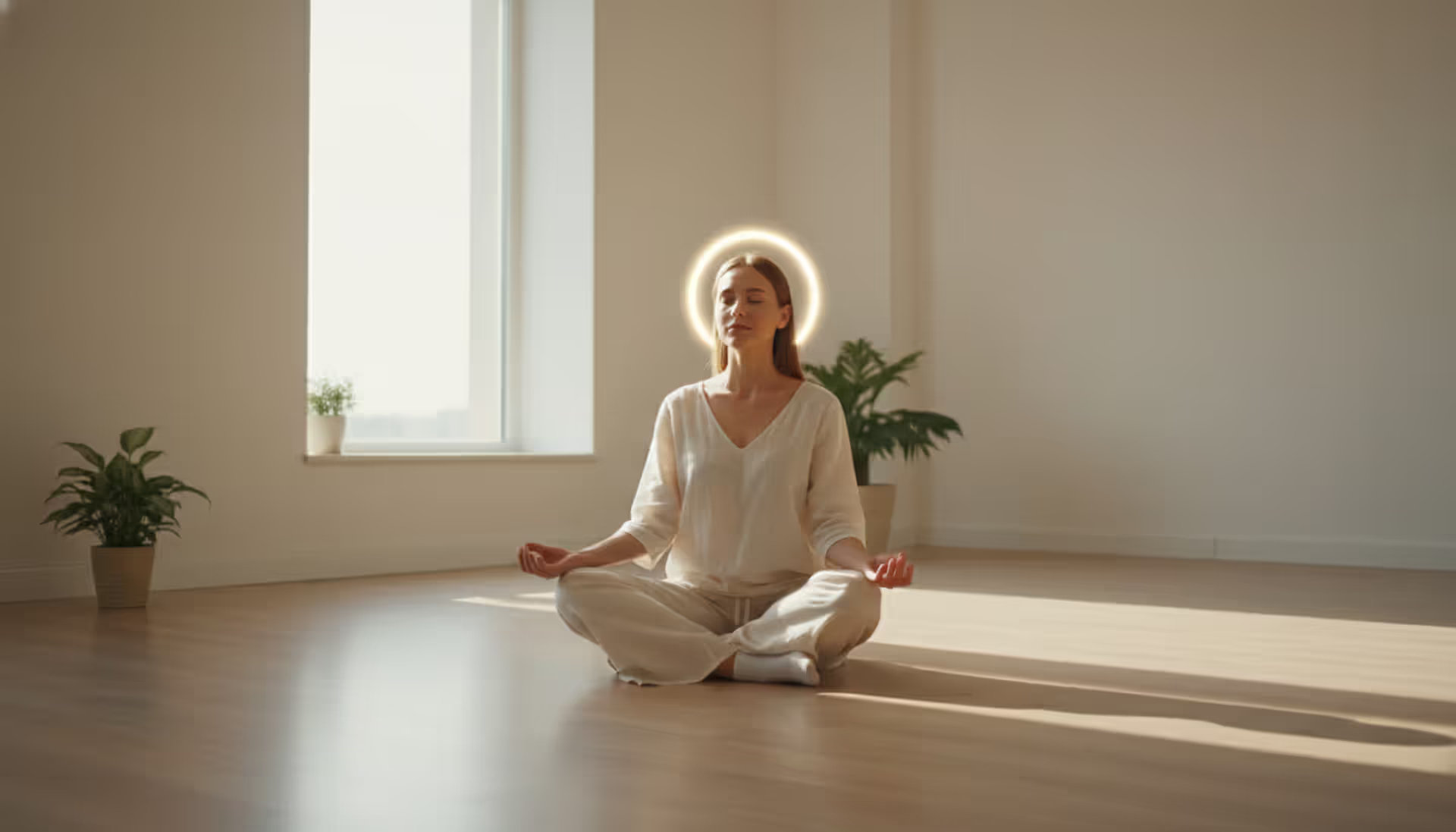
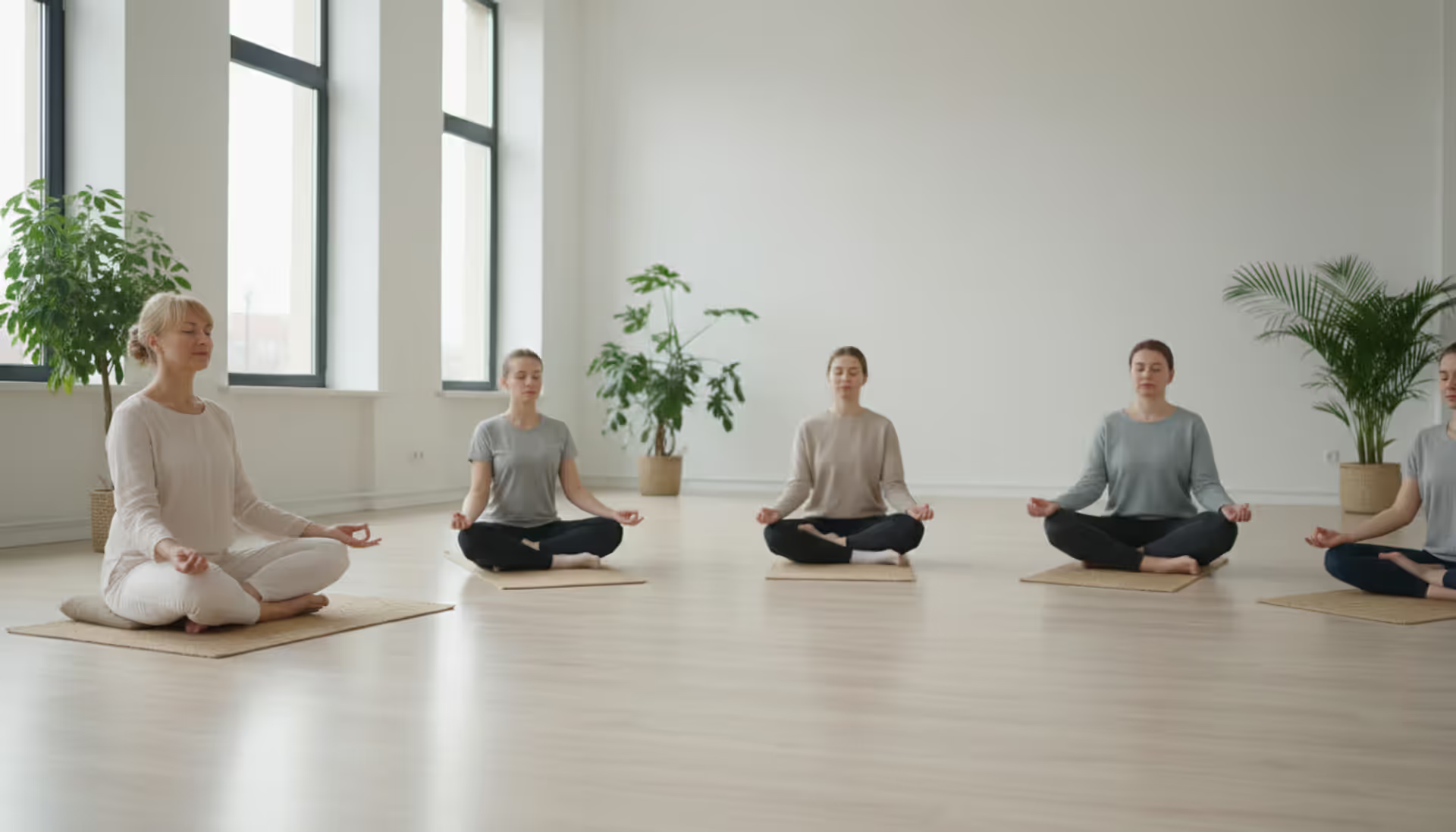
Young woman meditating in lotus pose in a bright minimalist room with soft morning light streaming through a large window, peaceful expression, warm tones
The voice in your head that whispers you're not good enough doesn't have to run the show. Meditation for self esteem offers a practical way to change your relationship with that inner critic and build genuine confidence from the inside out.
Unlike temporary fixes that rely on external validation, mindfulness practices rewire how you perceive yourself at a fundamental level. The techniques don't require special equipment, years of training, or a complete personality overhaul. What they do require is consistency and a willingness to sit with uncomfortable thoughts without immediately believing them.
What Self Esteem Is and Why Meditation Helps
Self-esteem, self-confidence, and self-worth often get used interchangeably, but they're distinct concepts. Self-esteem is your overall sense of personal value—how much you appreciate and like yourself. Self-confidence refers to trust in your abilities to handle specific situations or tasks. Self-worth is the deeper belief that you deserve happiness and respect simply because you exist, not because of what you accomplish.
Someone might have high confidence in their professional skills but low self-esteem in social settings. Another person might struggle with confidence in new situations yet maintain solid self-worth that keeps them trying.
Mindfulness and self esteem connect through a deceptively simple mechanism: awareness without judgment. Most people with low self-esteem run an automatic background program of self-criticism. You make a minor mistake, and within seconds, your mind has escalated it into evidence that you're fundamentally flawed.
Meditation interrupts this pattern. When you practice observing thoughts without immediately accepting them as truth, you create space between the thought "I'm not good enough" and the belief that this thought is accurate. That gap is where change happens.
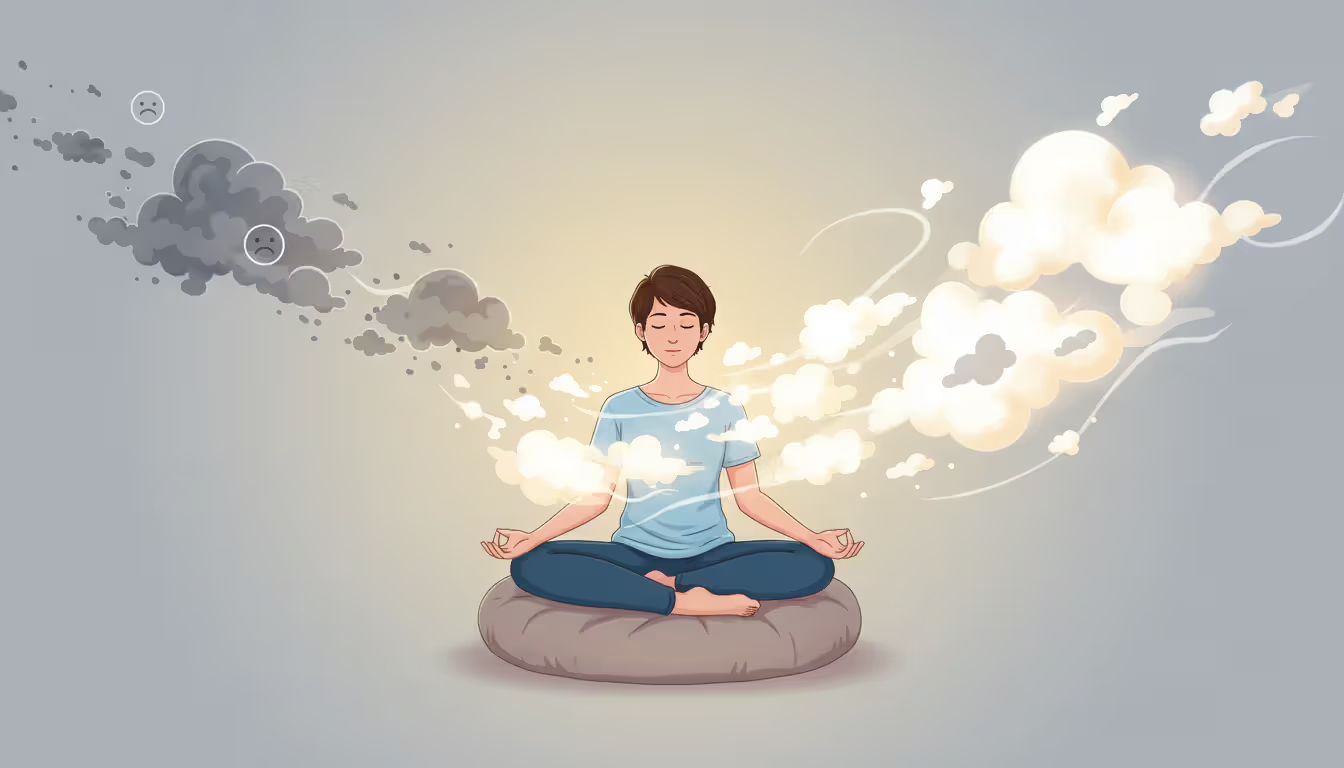
The psychological link runs deeper than just noticing thoughts. Meditation for self worth helps you recognize that you are not your thoughts. Your mind produces thousands of thoughts daily, many of them repetitive and negative. Learning to watch them like clouds passing through the sky reduces their power to define your identity.
Research from multiple universities has shown that regular mindfulness practice decreases activity in brain regions associated with self-referential thinking—the constant "me, me, me" narrative that fuels insecurity. When you're less caught up in stories about yourself, you're less vulnerable to the harsh ones.
Author: Sophie Ellington;
Source: 5sensesspa.com
How Meditation for Self Esteem Works in the Brain
Your brain has a default mode network (DMN) that activates when you're not focused on external tasks. This network handles self-referential processing—thinking about yourself, your past, your future, and your place in the world. In people with low self-esteem, the DMN tends to generate negative self-narratives on repeat.
How meditation builds confidence involves quieting this overactive network. Brain imaging studies show that experienced meditators have reduced DMN activity during both meditation and rest. This means they spend less time trapped in rumination about their perceived flaws and failures.
Neuroplasticity—the brain's ability to form new neural connections—is the mechanism behind lasting change. Each time you practice meditation, you strengthen neural pathways associated with present-moment awareness and weaken those tied to automatic negative thinking. Think of it like wearing a new path through a forest. The first few times are difficult, but with repetition, the new route becomes the easier one to follow.
The prefrontal cortex, responsible for rational thinking and emotional regulation, shows increased thickness in regular meditators. Meanwhile, the amygdala—your brain's alarm system for perceived threats—actually shrinks with consistent practice. This physical restructuring means you become less reactive to criticism (internal or external) and better able to respond thoughtfully rather than defensively.
One study tracking participants over eight weeks found measurable changes in brain structure after just 27 minutes of daily meditation. The participants reported feeling more capable of handling stress and less defined by negative self-judgments. The brain changes preceded the subjective improvements, suggesting that neuroplasticity drives the psychological benefits rather than vice versa.
Five Meditation Techniques for Building Self Confidence
Different meditation approaches target self-esteem from different angles. Some work better for specific challenges, and most people benefit from rotating through several techniques rather than sticking to just one.
Loving-Kindness Meditation for Self Compassion
This practice directly counters the harsh self-judgment that erodes self-esteem. Mindfulness and self compassion merge as you deliberately cultivate warm feelings toward yourself.
Start by sitting comfortably and bringing to mind someone who loves you unconditionally—a grandparent, close friend, or even a pet. Notice the warmth that arises when you think of their affection for you. Now direct that same quality of kindness toward yourself.
Silently repeat phrases like: "May I be safe. May I be healthy. May I be at peace. May I accept myself as I am." The exact words matter less than the intention behind them. You're training your mind to offer yourself the same compassion you'd give a good friend.
When self-critical thoughts arise—and they will—acknowledge them without fighting. "There's a judgmental thought" is enough. Then return to the phrases.
Practice this for 10-15 minutes daily. It feels awkward at first, especially if you're accustomed to self-criticism. That awkwardness is normal and fades with repetition. Use this technique particularly when you've made a mistake or feel vulnerable.
Body Scan Meditation for Self Acceptance
Many people with low self-esteem carry tension and judgment about their physical selves. Meditation for self acceptance through body scanning builds a neutral, appreciative relationship with your body.
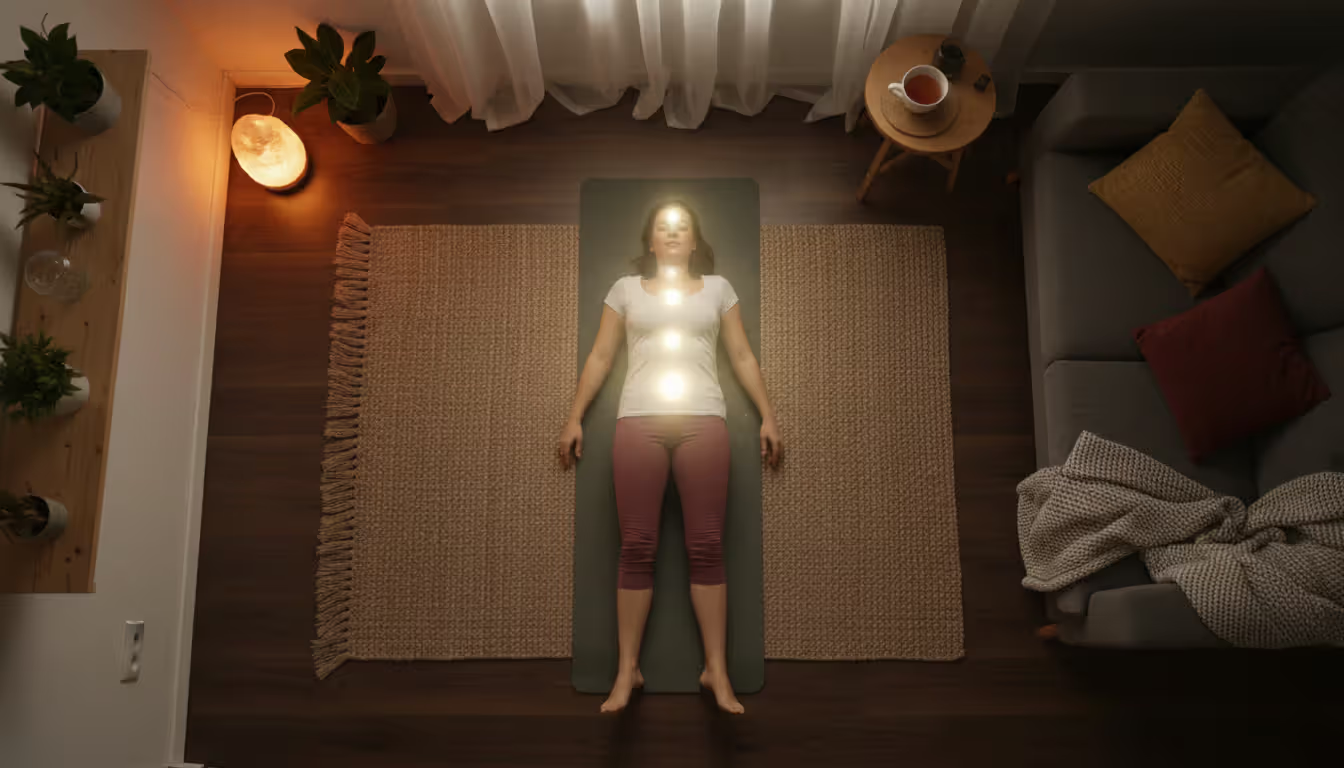
Lie down or sit comfortably. Bring attention to your left foot. Notice any sensations—warmth, coolness, tingling, pressure—without labeling them as good or bad. Spend 30-60 seconds observing, then move to your left ankle, calf, knee, and so on, systematically scanning your entire body.
The goal isn't relaxation, though that often happens. You're practicing experiencing your body without the constant commentary of like and dislike. Your stomach doesn't need to be flatter. Your shoulders don't need to be less tense. They simply are what they are in this moment.
When you notice judgment arising—"my thighs are too big"—treat it like any other thought. Notice it, let it be, return to direct sensation. Over time, this builds a foundation of acceptance that extends beyond physical appearance to your whole sense of self.
This technique works well before bed or first thing in the morning. Twenty minutes provides a thorough scan, but even five minutes on key areas (face, shoulders, hands, belly) offers benefits.
Author: Sophie Ellington;
Source: 5sensesspa.com
Mindful Breathing to Quiet the Inner Critic
Meditation for inner critic management doesn't mean silencing that voice permanently—an impossible task. Instead, you learn to recognize it as one voice among many, not the ultimate authority on your worth.
Sit comfortably and bring attention to your breath. Notice the sensation of air entering and leaving your nostrils, or your belly rising and falling. When thoughts arise, mentally note "thinking" and return to the breath.
Your inner critic will show up. "You're doing this wrong. This is stupid. You're not cut out for meditation." Rather than arguing with these thoughts or trying to replace them with positive ones, simply label them: "criticizing" or "judging." Then return to the breath.
This practice builds a crucial skill: recognizing that thoughts are events in your mind, not facts about reality. The inner critic loses power when you stop treating it as an accurate narrator.
Start with five minutes. The brevity matters less than daily consistency. Use this technique when you notice the inner critic becoming particularly loud—after social interactions, work presentations, or any situation that typically triggers self-doubt.
Positive Affirmation Meditation for Self Worth
Unlike empty positive thinking, this approach combines affirmations with the grounded awareness of meditation. You're not trying to convince yourself of something false. You're reinforcing truths that your negative bias typically ignores.
Choose 3-5 affirmations that resonate with your specific challenges. "I am worthy of respect" works better than generic statements if respect is your core issue. "I trust my ability to learn" targets confidence in new situations. "My worth isn't determined by others' opinions" addresses people-pleasing.
Sit quietly and repeat each affirmation slowly, pausing between repetitions to notice any physical sensations, emotions, or resistance that arises. If your mind immediately argues—"No, you're not worthy"—observe that reaction with curiosity rather than getting hooked by it.
The meditation aspect comes from staying present with the experience rather than mechanically reciting words. Notice where you feel the affirmation in your body. Does "I am enough" create warmth in your chest or tightness in your throat? Both responses offer information.
Practice this for 10 minutes, 3-4 times weekly. It pairs well with journaling afterward to process any insights or resistance that surfaced.
Visualization Meditation for a Positive Self Image
Positive self image meditation uses your brain's inability to fully distinguish between vivid imagination and reality. Athletes have used visualization for decades because mental rehearsal activates similar neural pathways as physical practice.
Sit comfortably and close your eyes. Bring to mind a situation where you typically feel insecure—a social gathering, work meeting, or difficult conversation. Now visualize yourself moving through that situation with confidence.
See yourself making eye contact, speaking clearly, handling questions calmly. Notice details: what you're wearing, your posture, the expression on your face. Make the visualization as specific and sensory-rich as possible.
When doubt creeps in—"This would never happen"—acknowledge it and return to the visualization. You're not predicting the future. You're training your brain to access confident states, making them more available when you need them.
End by imagining yourself after the situation, feeling satisfied with how you handled it. Notice that feeling in your body.
Use this technique before challenging situations or as regular practice (10 minutes, 2-3 times weekly) to build a library of confident self-images your brain can reference.
Common Mistakes When Starting Meditation for Self Love
Expecting meditation to feel good immediately sets you up for disappointment. Meditation for self love often brings uncomfortable emotions to the surface. When you stop distracting yourself, you notice the pain you've been avoiding. That's not a sign you're doing it wrong—it's often evidence you're doing it right.
Inconsistent practice is the most common obstacle. Meditating for 30 minutes once a week produces fewer benefits than 5 minutes daily. Your brain needs regular exposure to build new patterns. Sporadic practice is like learning a language by studying intensively once a month—you spend most of your time relearning basics rather than progressing.
Comparing your meditation experience to others' creates unnecessary suffering. Someone else's peaceful breakthrough moment has nothing to do with your journey. Your mind might be busier, your emotions more turbulent, your progress less linear. None of this means you're failing.
Treating meditation as another item on your self-improvement to-do list misses the point. If you approach it with the same harsh, achievement-oriented mindset that damaged your self-esteem in the first place, you'll just create a new arena for self-criticism. The practice itself is the point, not some future version of yourself it might create.
Skipping guidance when you're struggling wastes time. If you've been practicing for months without any shift in self-perception, a teacher, app, or structured program can help you identify what's missing. Self-directed practice works for many people, but not everyone, and there's no virtue in struggling alone.
Ignoring emotional discomfort that becomes overwhelming is dangerous. Meditation can surface trauma or serious mental health issues. If you experience panic, dissociation, or worsening depression, pause the practice and consult a mental health professional. Meditation supports psychological health but doesn't replace therapy when therapy is needed.
Author: Sophie Ellington;
Source: 5sensesspa.com
How Long Before Meditation Improves Self Esteem
Most people notice subtle shifts within 2-3 weeks of consistent practice. You might catch yourself questioning a negative thought rather than automatically believing it, or feel slightly less rattled by criticism. These small changes are easy to miss if you're expecting dramatic transformation.
More substantial improvements typically emerge around the 6-8 week mark. This aligns with research showing measurable brain changes after two months of regular practice. You'll likely notice reduced reactivity to triggers, more frequent moments of self-acceptance, and a general sense of being less harsh with yourself.
Several factors influence how quickly meditation builds confidence. People with trauma histories often progress more slowly because they're working with deeper patterns. Those who combine meditation with therapy typically see faster results. Your starting point matters—someone with moderately low self-esteem will notice changes sooner than someone with severe, long-standing self-worth issues.
The type and duration of practice also affect outcomes:
Practice Frequency
Expected Timeline
Key Benefits Noticed
Daily (10 min)
3-4 weeks
Less automatic negative self-talk; catching critical thoughts more often
Daily (20+ min)
2-3 weeks
Noticeable reduction in self-judgment; improved emotional regulation; more self-compassion
3-4x/week
6-8 weeks
Gradual decrease in reactivity to criticism; occasional moments of self-acceptance
1-2x/week
3-4 months
Minimal changes; may notice slight improvements in stress management but limited self-esteem impact
Consistency matters more than duration per session. Twenty minutes daily outperforms hour-long sessions twice a week. Your brain needs regular reinforcement to establish new patterns.
Progress isn't linear. You might feel significantly better after three weeks, then hit a plateau or even regress when life stress increases. This doesn't mean the practice stopped working. Self-esteem fluctuates, and meditation helps you ride those fluctuations without being destroyed by the lows.
The research shows that self-compassion meditation practices can significantly reduce self-criticism and increase self-worth in as little as three weeks of daily practice, with effects strengthening over time as the practice becomes more established
— Dr. Kristin Neff
Building a Daily Meditation Practice for Lasting Confidence
Start smaller than you think necessary. Five minutes feels manageable even on chaotic days. You can always sit longer when you have time, but committing to a duration you can't sustain leads to the guilt-skip-quit cycle that reinforces low self-esteem.
Morning practice, before your inner critic fully wakes up, works well for many people. Your mind is quieter, you haven't accumulated the day's stresses, and you set a tone of self-care from the start. Others prefer evening meditation to process the day and prevent rumination from disrupting sleep. Experiment to find what you'll actually do consistently.
Tracking progress helps maintain motivation during plateaus. A simple checkmark on a calendar provides visual proof of consistency. Some people journal briefly after meditating, noting thoughts or emotions that arose. This creates a record you can review to spot gradual changes you might otherwise miss.
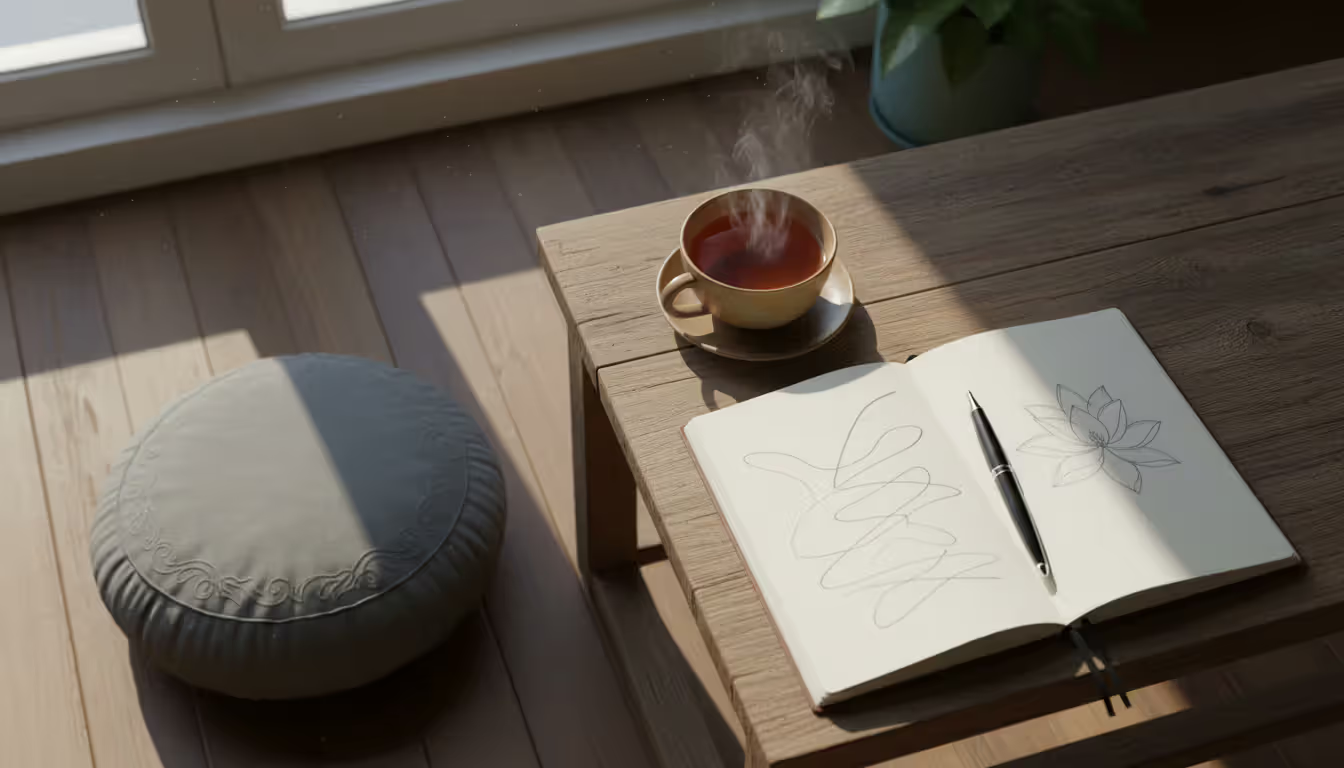
Meditation for self confidence pairs powerfully with journaling. After practice, spend 5-10 minutes writing about self-critical thoughts that surfaced, moments of self-compassion you experienced, or situations where you responded differently than usual. The combination of meditation and reflective writing accelerates insight.
Author: Sophie Ellington;
Source: 5sensesspa.com
Don't meditate in isolation from other self-care. Poor sleep, inadequate nutrition, lack of exercise, and toxic relationships all undermine self-esteem. Meditation helps you respond more skillfully to challenges, but it's not a substitute for addressing practical problems in your life.
Seek additional support when needed. If meditation brings up trauma, if you're not seeing any improvement after three months of consistent practice, or if low self-esteem is significantly impacting your functioning, a therapist—particularly one trained in mindfulness-based approaches—can help. Meditation is powerful, but it's one tool among many.
Consider guided meditations initially. Apps and online resources provide structure that prevents you from spending your meditation time wondering if you're doing it right. As you become more comfortable, you can transition to unguided practice if you prefer.
Join a meditation group or class if you're motivated by community. Practicing with others provides accountability and normalizes the challenges everyone faces. Hearing that experienced meditators still struggle with restless minds and self-doubt can be surprisingly reassuring.
Frequently Asked Questions About Meditation and Self Esteem
Can meditation really improve low self-esteem?
Yes, but it's not magic. Research consistently shows that regular meditation reduces self-criticism and increases self-compassion. The practice works by changing your relationship with negative thoughts rather than eliminating them. You learn to observe self-critical thoughts without automatically believing them, which reduces their power to damage your self-esteem. However, meditation works best as part of a broader approach that might include therapy, lifestyle changes, and addressing practical problems in your life.
How often should I meditate to build self-confidence?
Daily practice produces the best results. Even 5-10 minutes every day outperforms longer, less frequent sessions. Your brain needs regular reinforcement to establish new neural patterns. If daily feels impossible, aim for at least 4-5 times weekly. Below that frequency, you'll likely see minimal changes in self-esteem, though you might still experience stress reduction and other benefits.
What type of meditation is best for self-worth?
Loving-kindness meditation specifically targets self-compassion and has the strongest research support for improving self-worth. However, different approaches work for different people. Some find body scan meditation more accessible, while others prefer the simplicity of breath-focused practice. Try several techniques for at least two weeks each before deciding. Many people rotate through different types rather than sticking to just one.
Is mindfulness better than traditional meditation for self-esteem?
Mindfulness meditation—paying attention to present-moment experience without judgment—is particularly effective for self-esteem because it directly addresses the judgmental thinking that damages self-worth. "Traditional" meditation encompasses many practices, some focused on concentration, others on insight. For self-esteem specifically, mindfulness-based approaches and loving-kindness meditation show the strongest evidence. The best practice is the one you'll actually do consistently.
Can meditation help with negative self-talk?
Absolutely. Meditation doesn't stop negative self-talk—that's not a realistic goal—but it changes your response to it. You learn to recognize self-critical thoughts as mental events rather than facts. This creates space between the thought "I'm not good enough" and the belief that this thought is true. Over time, negative self-talk loses its power to define your self-image, even though the thoughts themselves may still arise occasionally.
Do I need a teacher to practice meditation for self-love?
Not necessarily. Many people build effective practices using apps, books, or online resources. However, a teacher can help you navigate challenges, correct misunderstandings, and personalize practices to your specific needs. If you're not seeing results after consistent self-directed practice, or if meditation brings up difficult emotions you're unsure how to handle, guidance from an experienced teacher or therapist trained in mindfulness can be valuable. Start on your own if you prefer, but don't hesitate to seek support if you need it.
Meditation for self esteem isn't about becoming a different person. It's about changing your relationship with the person you already are. The inner critic doesn't disappear, but it becomes one voice among many rather than the only narrator of your life story.
The techniques outlined here work, but only if you actually practice them. Reading about meditation produces zero brain changes. Five minutes of actual practice, even imperfect practice, beats an hour of reading about it.
Start with one technique that resonates with you. Commit to two weeks of daily practice before deciding whether it's working. Notice small shifts—moments when you question a negative thought, times when you treat yourself slightly more kindly, situations where you feel a bit less defensive.
Those small shifts accumulate. The brain you have today isn't the brain you'll have after two months of consistent practice. Neuroplasticity means change is always possible, regardless of how long you've struggled with low self-esteem.
Your worth isn't something you need to earn through achievement, appearance, or others' approval. Meditation helps you recognize what was always true: you're worthy of compassion and respect simply because you exist. That recognition, practiced daily, builds the kind of confidence that doesn't crumble when life gets difficult.
Transform your mornings with guided meditation podcasts. This comprehensive guide covers the best free options, how to build a sustainable routine, and what makes quality meditation audio. Compare popular podcasts and learn practical tips for fitting mindfulness into busy schedules and commutes
Scientific investigation into mindfulness has accelerated dramatically, with thousands of studies examining brain changes, clinical outcomes, and therapeutic applications. Evidence strongly supports meditation for chronic pain, stress reduction, and depression relapse prevention, while other applications show mixed results
Discover practical meditation techniques you can use at your desk to boost work performance. Learn how successful entrepreneurs integrate mindfulness into their workday, improve decision-making, and build sustainable practices without disrupting workflow
Becoming a meditation teacher requires structured training in pedagogy, ethics, and techniques. With hundreds of programs available in 2026, choosing the right meditation teacher training determines your professional credibility and earning potential. Learn how to evaluate programs, avoid common mistakes, and launch your teaching career
The content on this website is provided for general informational and educational purposes only. It is intended to explain concepts related to meditation, mindfulness, mental health, and spiritual practices.
All information on this website, including articles, guides, and examples, is presented for general educational purposes. Meditation outcomes may vary depending on individual practices, health conditions, and guidance.
This website does not provide medical, mental health, or spiritual advice, and the information presented should not be used as a substitute for consultation with qualified professionals.
The website and its authors are not responsible for any errors or omissions, or for any outcomes resulting from decisions made based on the information provided on this website.