You don't need a $200 annual subscription to start meditating. Some of the best teachers in the world have put their content online for free, and a basic notebook can track your progress better than most premium apps. I've used both paid and free resources for years—the difference in results comes down to showing up consistently, not how much you spend.
Where to Find Free Guided Meditation Resources
Here's what actually works when you're looking for quality meditation content that costs nothing.
Insight Timer gives you access to 130,000+ guided sessions without charging a dime. Teachers like Sarah Blondin, Davidji, and Mark Williams host their libraries there. You'll find everything from three-minute breathing exercises to 90-minute yoga nidra sessions. The premium tier exists, but I've never needed it—the free version has more content than I could use in ten lifetimes.
UCLA's Mindful Awareness Research Center posts downloadable meditations in English, Spanish, and Mandarin. Their 12-minute body scan has helped me through more anxious nights than I can count. All their content comes from their research program, so you're getting evidence-based practices, not just someone's YouTube side hustle.
Tara Brach uploads a new talk with guided meditation every Wednesday—she's been doing this since 2001. Her archive contains over 600 sessions now. Her RAIN technique (Recognize, Allow, Investigate, Nurture) has become my default when difficult emotions show up.
For podcast listeners, Spotify hosts dozens of meditation shows. I rotate between "Meditative Story" for narrative-based practice and "Ten Percent Happier" for straight-up guided sessions. Apple Podcasts has similar offerings. You can download episodes for offline access, which beats streaming when you're traveling.
Feelings come and go like clouds in a windy sky. Conscious breathing is my anchor
— Thich Nhat Hanh
The Plum Village App carries teachings from Thich Nhat Hanh's monastery. Their walking meditation guidance transformed my lunch breaks—I used to scroll Twitter, now I actually walk mindfully for 15 minutes. The app includes meditation bells that chime randomly throughout the day as mindfulness reminders.
When you're evaluating new resources, check the teacher's credentials. Look for MBSR certification, psychology backgrounds, or training through established Buddhist centers. Production quality matters less than you'd think—some of my favorite teachers record in less-than-perfect conditions, but their guidance is solid.
Skip anything requiring your email before you can sample content. The best free resources let you dive in immediately. If a "free" app shows you a paywall after one session, that's not really free—that's a trial.
How to Build a Home Mindfulness Practice
I've tried and abandoned meditation probably five times before something finally stuck. The difference was making it stupidly simple and protecting it fiercely.
Author: Caleb Montrose;
Source: 5sensesspa.com
Setting Up Your Meditation Space
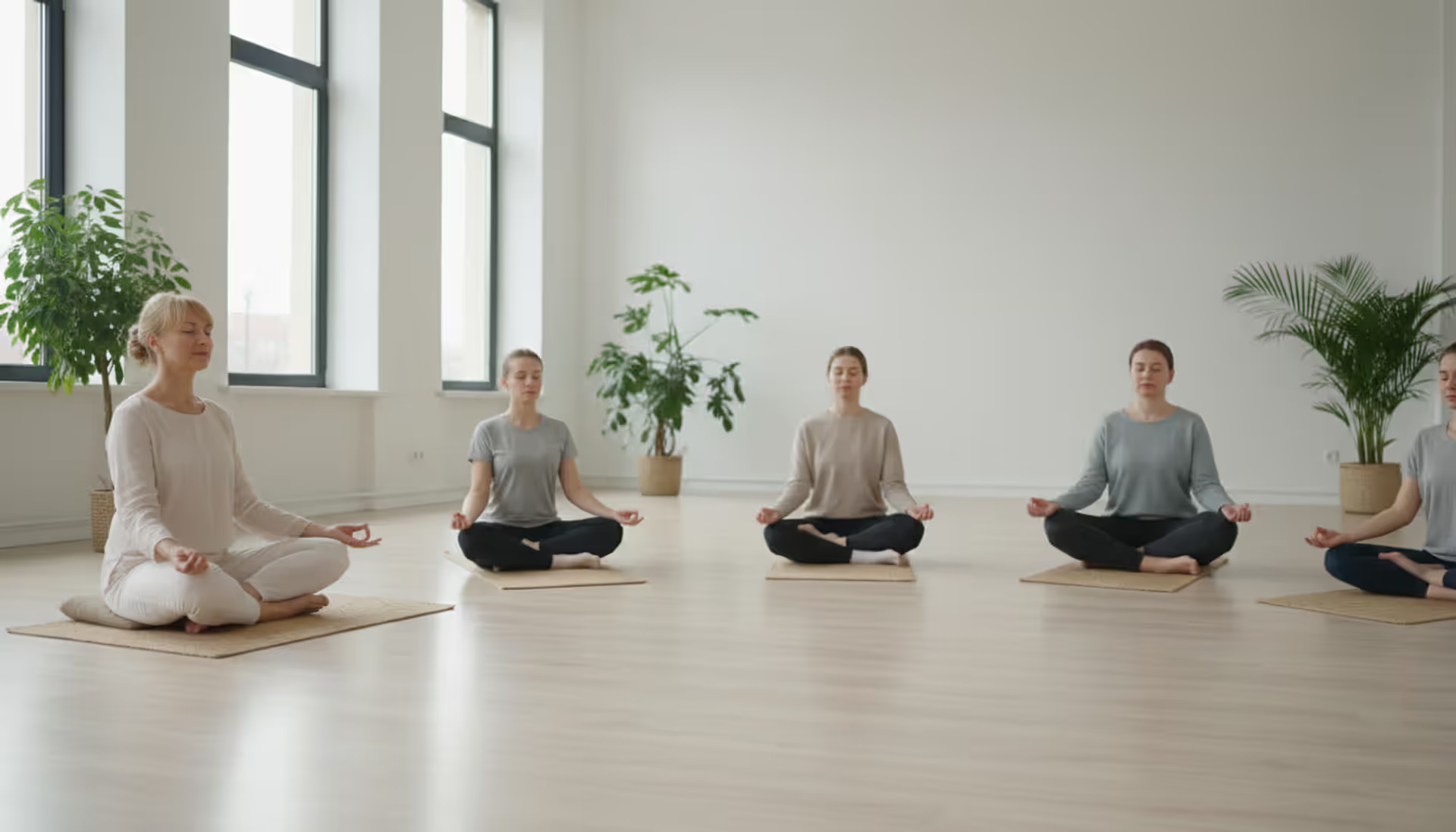
Pick one spot and stick with it. Your brain will start associating that location with practice, which makes settling in faster. Mine's a corner of my bedroom with a floor cushion and nothing else. My friend uses a specific chair in her living room. Another person I know meditates in their parked car before heading inside after work.
You don't need candles, incense, or a Buddha statue unless those genuinely help you. I tried the whole altar setup—became just another thing to dust. What actually matters: temperature (slightly cool prevents drowsiness) and lighting (natural light for morning, dim for evening).
If you live with others, communicate your schedule clearly. My partner knows 6:45-7:00 AM is off-limits for conversation unless something's on fire. A closed door or even a simple sign ("Meditating—back in 10 minutes") prevents interruptions that derail your practice.
Creating a Sustainable Daily Routine
Attach meditation to something you already do every single day. I meditate right after brushing my teeth in the morning—the toothbrush going back in the holder triggers me to walk to my cushion. This habit-stacking approach (James Clear talks about it extensively) removes the decision-making that kills new habits.
Start with five minutes. Not 20, not even 10. Five minutes feels manageable on your worst days, and you can always sit longer when you're feeling it. I use the Insight Timer app's basic timer—gentle bell at the start and end, no jarring alarms.
Jon Kabat-Zinn, who founded the Mindfulness-Based Stress Reduction program, puts it this way: the ocean's waves never stop coming, but you can definitely learn to ride them instead of getting pummeled. That reframe helped me stop expecting my mind to go silent.
Mark every session on a calendar, regardless of whether it felt "good." Distracted meditation still counts. Restless meditation still counts. You're building the habit of showing up, not auditioning for enlightenment. I've got an X-chain going back 347 days now—I really don't want to break it.
Expect your motivation to crater around day four, week three, and month two. These dips are predictable, not personal failures. I keep a backup "emergency meditation"—two minutes of breath counting—for days when five minutes feels impossible.
Using a Meditation Journal to Track Your Progress
Writing after meditation does two things tracking apps can't: it captures patterns you wouldn't notice session-to-session, and it processes insights before they evaporate.
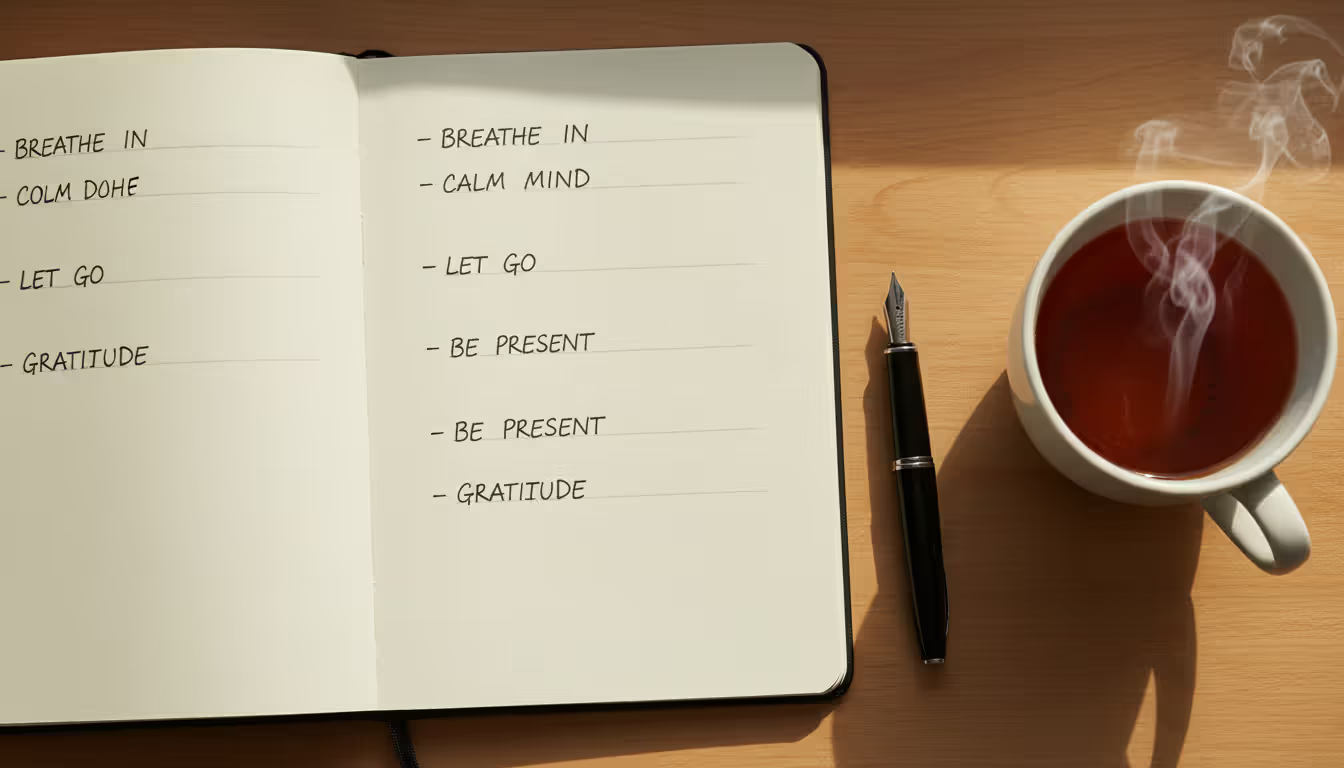
I split my journal into tracking data and reflection space. Tracking is pure facts: "6:50 AM, 7 minutes, body scan, started tense, ended calmer." That's it. Over weeks, I noticed Sunday evenings always feel easiest (makes sense—I'm relaxed) while Thursday mornings are consistently hard (work stress peaks mid-week).
Author: Caleb Montrose;
Source: 5sensesspa.com
Reflection goes deeper but stays brief. When I had that session where unexpected grief about my dad surfaced, I wrote maybe four sentences exploring what triggered it and how sitting with it felt different than my usual habit of immediately distracting myself.
Most meditation journals on Amazon are over-designed. Elaborate prompts and tracking systems look appealing but create homework. I use a $3 composition notebook with dated entries. It's survived longer than the fancy journals that lasted maybe ten days before I abandoned them.
Write immediately after practice, while you still remember specifics. I keep my notebook next to my meditation cushion so there's zero friction. Waiting until evening turns "noticed tension in my jaw released during breath awareness" into vague "it was fine."
Meditation Journal Prompts and Techniques
Blank pages paralyze me, so I rotate through specific prompts instead of free-writing.
Gratitude Journaling After Meditation
Your mind's already quiet after sitting—perfect conditions for noticing small good things that usually get ignored. I write three specific items, not generic categories. "The way morning light hit my coffee mug" beats "grateful for coffee." Specificity trains the same detailed attention meditation develops.
I vary the categories: one physical comfort, one interaction with another person, one tiny beauty I almost missed. Some days this flows easily. Other days, when I'm genuinely struggling, I write "can't find gratitude today" instead of forcing fake appreciation—that honesty matters more than manufactured positivity.
I don't do this every session. Gratitude journaling happens after Monday, Wednesday, and Friday sits. Tuesday and Thursday get open reflection. Alternating prevents any single approach from becoming stale routine.
Daily Reflection Prompts
I match prompts to how the session felt:
When practice was difficult: "What made settling harder today? What am I learning about my resistance patterns?" This normalizes struggle instead of treating difficult sessions as failures.
When practice felt easy: "What conditions supported today's calm? Can I recreate any of them?" I discovered I meditate better after showering, something I never would've noticed without tracking.
Weekly review (Sunday evenings): "What patterns showed up this week? What surprised me?" Stepping back from individual sessions reveals larger movements—like noticing my practice deepened significantly after I stopped trying so hard.
For processing emotions: "What am I avoiding feeling right now? What does this tension in my shoulders want to tell me? If my best friend described this exact situation, what would I tell them?" That last question helps when I'm being harsh with myself.
Integration check: "How did today's practice show up later? Where did I notice mindfulness outside formal meditation?" Yesterday I caught myself about to snap at a slow cashier, paused, and responded kindly instead—directly traceable to morning practice.
Three sentences often covers it. You're building consistent reflection, not writing a memoir.
Comparison Table: Best Free Meditation Resources Online
Platform Name
Session Lengths
Meditation Types Offered
Has Journaling Feature
Beginner-Friendly Rating
Offline Access
Insight Timer
3 min – 2+ hours
Guided meditations, music tracks, dharma talks, multi-day courses spanning all major traditions
Yes (session notes plus milestone tracking)
9/10
Yes (any downloaded session)
UCLA Mindful App
3 – 19 min
Body scans, breath awareness, loving-kindness meditation
No
10/10
Yes (entire library)
Plum Village
5 – 45 min
Walking meditation, breathing practices, deep relaxation, mindfulness bells
No
8/10
Limited selection
YouTube (Tara Brach channel)
10 – 60+ min
RAIN technique, body scans, compassion meditations, weekly dharma talks
Common Mistakes When Starting a Meditation Diary Practice
Perfectionism destroys more journals than laziness ever could. People design color-coded mood trackers, rating systems across six dimensions, detailed analysis frameworks. This lasts maybe a week before the system's complexity exceeds its value and the journal gets abandoned.
I started with absurd simplicity: date, duration, one sentence. That's it for the first month. My current system has grown slightly more detailed, but only because those additions emerged naturally, not because I imposed them at the start.
When you skip journaling for three days, just resume with today. Don't try catching up or write guilty notes about missing days. I wasted so much energy on "I should have written this down" before learning to just... let it go and start fresh.
Judging your practice through journal entries completely misses the point. "Mind wandered constantly, terrible session" and "noticed mind wandering frequently" contain identical information, but one creates shame while the other stays neutral. Reframing observations as data instead of performance reviews changed everything for me.
The journal's real value comes from reviewing patterns, but most people never look back. I spend ten minutes monthly reading the past month's entries, highlighting recurring themes. This transformed scattered notes into actionable understanding—like realizing breath-focused meditation works better for anxiety while body scans help with insomnia.
Some practitioners treat journaling as pure emotional release, never revisiting entries. That's fine for processing, but you lose the tracking benefits. Even quarterly reviews provide perspective on how your practice has evolved.
Recording only difficult sessions creates skewed data. Sessions that felt unremarkable often represent exactly the steady, consistent practice you're building. I now note ordinary sessions too: "regular practice, nothing unusual"—because meditation doesn't require fireworks to be working.
Author: Caleb Montrose;
Source: 5sensesspa.com
FAQ
Are free mindfulness meditations as effective as paid programs?
Benefits come from consistent practice, not premium features. A 2025 study published in Mindfulness journal found zero significant outcome differences between people using free versus paid apps when practice frequency matched. Paid programs offer structure and accountability tools that help some people stay consistent, but the meditation itself works identically either way. If free resources keep you practicing regularly, they're just as effective. I've used both—my practice is stronger now with free resources than it was when I paid $120/year for Headspace.
How long should I meditate each day as a beginner?
Five minutes daily beats 30 minutes twice weekly, every single time. You're establishing a habit first, extending duration second. I recommend five minutes for two weeks straight. If that feels sustainable, try eight or ten. Some people naturally settle around 10-15 minutes long-term. Others eventually prefer 20-30 minutes. Your practice length should challenge you slightly without making you dread it on busy days. Consistency matters infinitely more than duration.
What should I write in my meditation journal?
Start with basics: date, time, how long you sat, what technique you used. Add one or two observations about what you noticed—mind state, physical sensations, emotions present. When something significant surfaces, explore it briefly. I aim for three to five sentences maximum. You're tracking patterns over time, not writing comprehensive session reports. The journal serves your practice, not the other way around. Keep it simple enough that you'll actually do it.
How do I know if my meditation practice is working?
Look at your daily life, not your meditation sessions. Are you catching yourself before reacting? Recognizing thought spirals faster? Recovering from stress more quickly? Physical signs include better sleep, less muscle tension, fewer stress headaches. Your journal helps spot these shifts—compare how you describe challenges now versus two months ago. My practice "worked" long before my meditation sessions felt consistently calm. I just noticed I stopped yelling in traffic and started sleeping through the night. That's progress.
Can I combine gratitude journaling with meditation?
Absolutely, and the combination works better than either practice alone. Meditation creates mental space that makes gratitude feel authentic instead of obligatory. I write gratitude entries immediately after sitting, while my mind's still settled. This pairing reinforces both habits—meditation makes gratitude easier to access, gratitude provides positive reinforcement for maintaining meditation. Some people alternate days. Others make it permanent. Experiment to find what feels sustainable rather than like another chore.
Which free meditation app is best for tracking progress?
Insight Timer offers the most detailed free tracking: streak days, total minutes, session notes you can review later. Smiling Mind provides mood check-ins before and after each practice, showing emotional shifts over time. Healthy Minds Program includes practice logging tied to their structured curriculum. If tracking matters to you, those three excel. Honestly though, I've found a simple calendar X-mark or basic notebook entry more sustainable than elaborate app features that eventually feel like homework. Use whatever you'll actually maintain.
Free meditation resources provide everything needed for authentic practice. The challenge isn't access—it's using resources consistently and learning from your experience over time.
Start with one resource and one simple tracking method. Maybe Insight Timer plus a basic notebook with dated entries. Meditate five minutes daily for two solid weeks before changing anything. Let your journal show you what's actually working instead of constantly optimizing based on what you think should work.
Your practice will shift and evolve. The body scan helping you now might bore you in six months. The detailed journaling feeling perfect today might need simplification later. Build flexibility into your system from the start—use adaptable tools instead of rigid structures requiring complete overhauls when your needs change.
Meditation works through patient repetition, not dramatic revelations. Most sessions will feel ordinary. Your journal will contain more mundane entries than profound insights. That's not just okay—that's exactly right. You're building a skill through repeated practice, and free resources support that journey completely.
The meditation that changes your life probably won't feel special while it's happening. It'll feel like showing up again on a random Tuesday, sitting for your usual seven minutes, writing a quick note afterward, then going about your day. Do that enough times, and one day you'll realize you're responding to life completely differently. That's when you know it's working.
Transform your mornings with guided meditation podcasts. This comprehensive guide covers the best free options, how to build a sustainable routine, and what makes quality meditation audio. Compare popular podcasts and learn practical tips for fitting mindfulness into busy schedules and commutes
Scientific investigation into mindfulness has accelerated dramatically, with thousands of studies examining brain changes, clinical outcomes, and therapeutic applications. Evidence strongly supports meditation for chronic pain, stress reduction, and depression relapse prevention, while other applications show mixed results
Discover practical meditation techniques you can use at your desk to boost work performance. Learn how successful entrepreneurs integrate mindfulness into their workday, improve decision-making, and build sustainable practices without disrupting workflow
Becoming a meditation teacher requires structured training in pedagogy, ethics, and techniques. With hundreds of programs available in 2026, choosing the right meditation teacher training determines your professional credibility and earning potential. Learn how to evaluate programs, avoid common mistakes, and launch your teaching career
The content on this website is provided for general informational and educational purposes only. It is intended to explain concepts related to meditation, mindfulness, mental health, and spiritual practices.
All information on this website, including articles, guides, and examples, is presented for general educational purposes. Meditation outcomes may vary depending on individual practices, health conditions, and guidance.
This website does not provide medical, mental health, or spiritual advice, and the information presented should not be used as a substitute for consultation with qualified professionals.
The website and its authors are not responsible for any errors or omissions, or for any outcomes resulting from decisions made based on the information provided on this website.