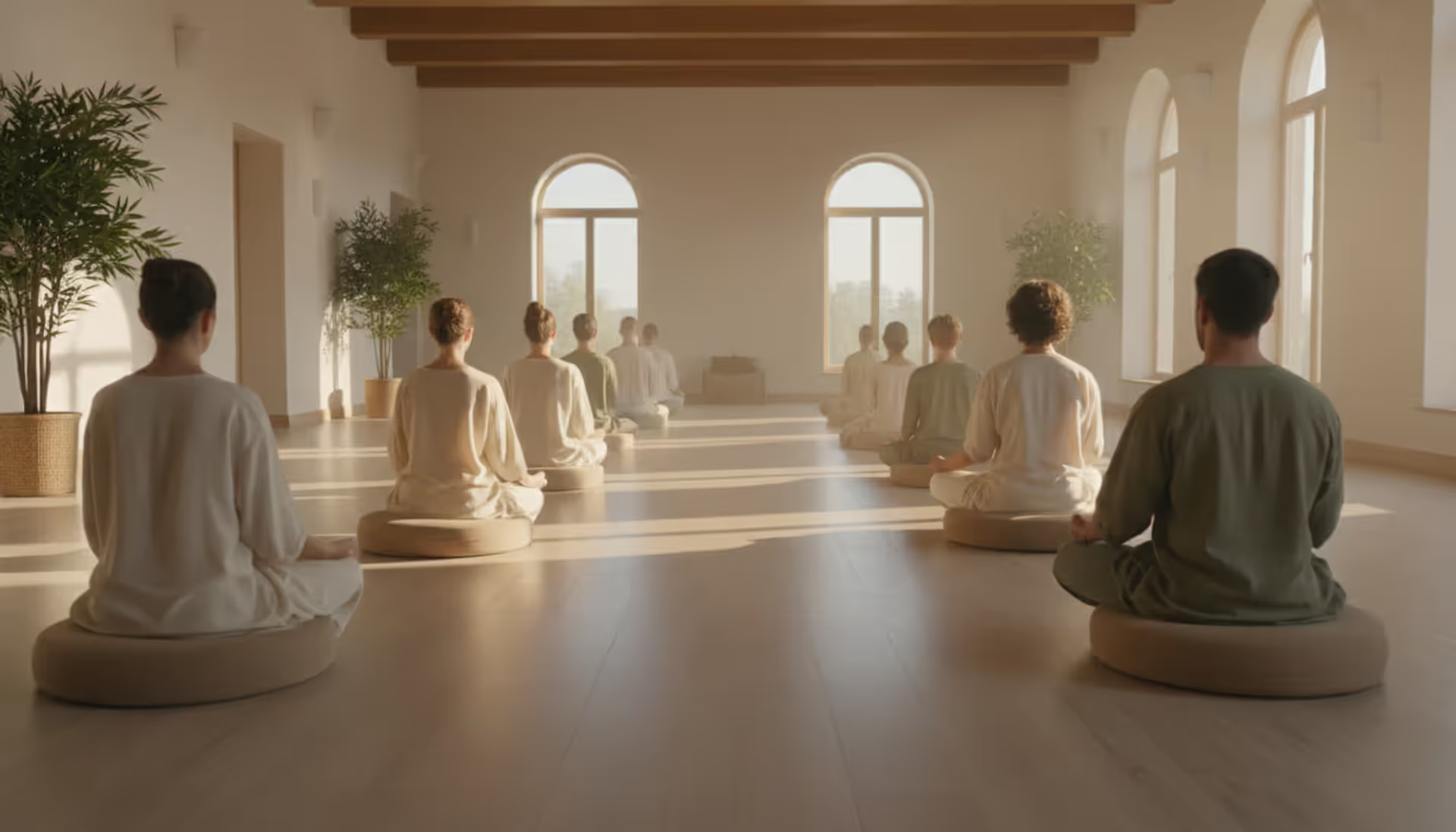
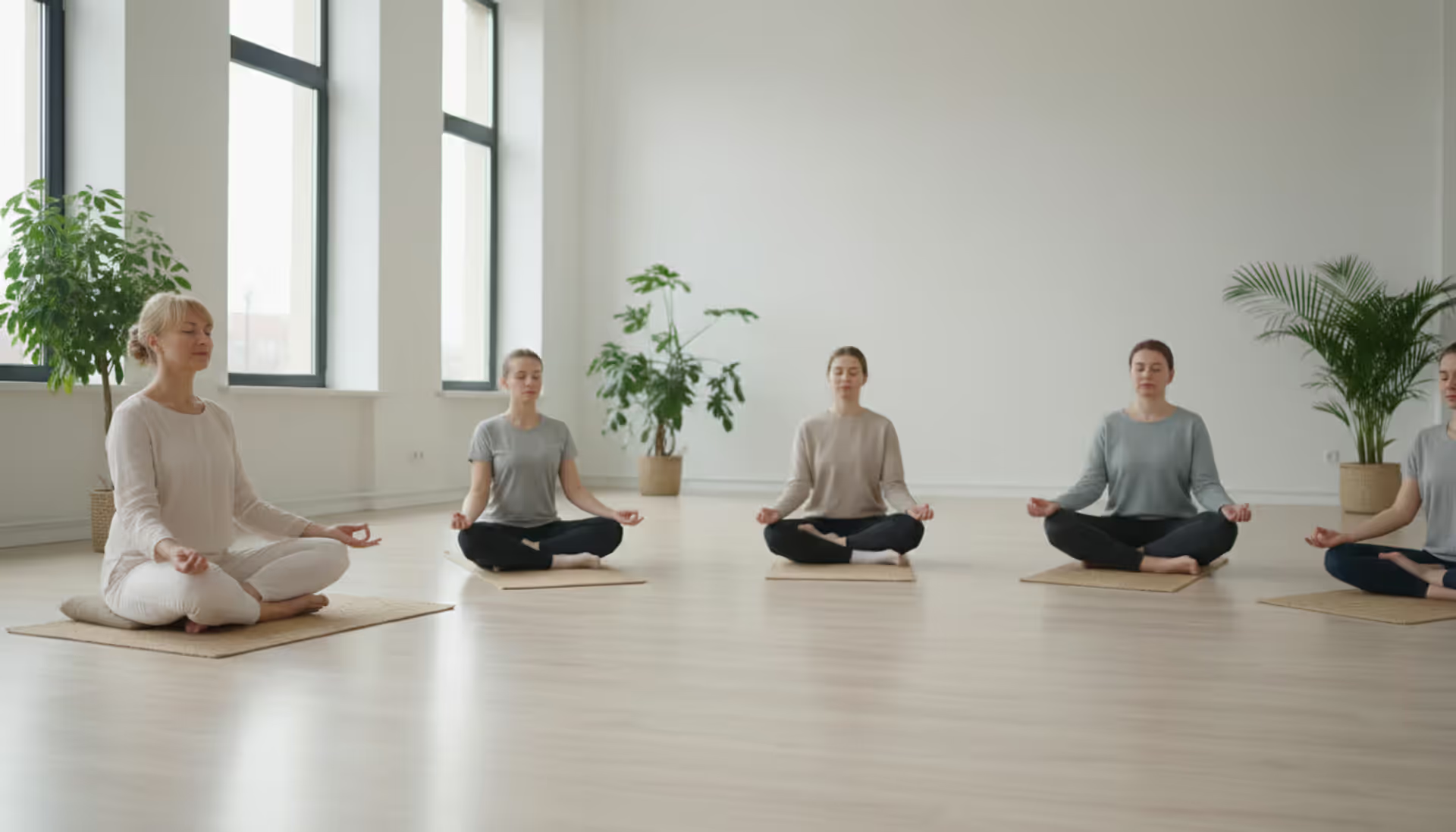
Spacious meditation hall at sunrise with rows of cushions on wooden floor and people sitting in meditation seen from behind, soft morning light through tall windows
Ever notice how your home meditation practice keeps getting interrupted by phone notifications, family members, or that mental to-do list? Retreats solve this problem by removing you from normal life entirely. You'll spend days (or weeks) doing nothing but sitting, walking, eating, and sleeping—all with focused awareness. It sounds simple, maybe even boring. But ask anyone who's completed a retreat, and they'll tell you: it's anything but.
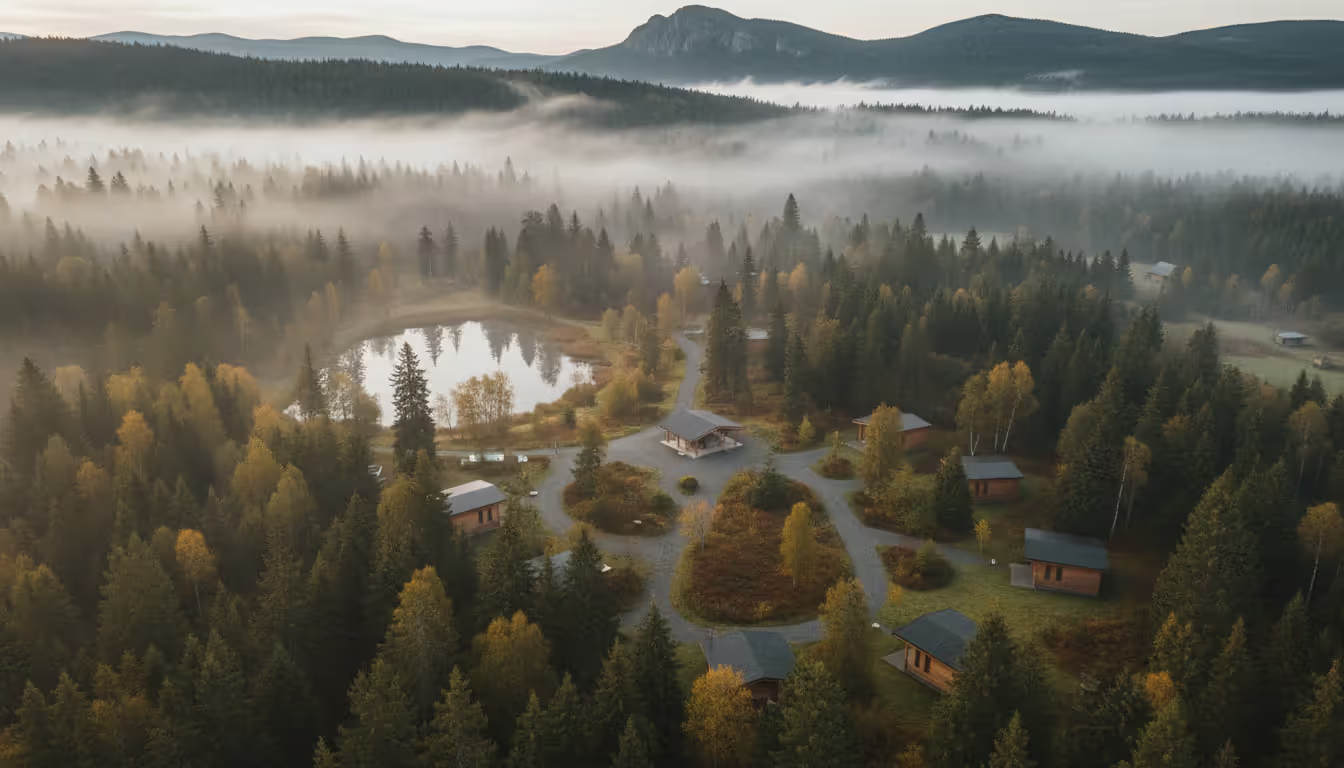
The US now hosts dozens of retreat centers spanning Buddhist monasteries in Massachusetts to mountain facilities in Colorado. Some charge nothing. Others cost $200 daily. Some require ten days of noble silence. Others let you talk during meals and run just 48 hours. Which one fits your schedule, experience level, and goals? Let's figure that out.
What Happens at a Meditation Retreat
That bell rings at 5:30 AM. Maybe earlier at some places. You're groggy, definitely wishing for coffee, but everyone else is already shuffling toward the meditation hall in the dark.
You'll sit for the first session before sunrise—anywhere from 45 to 90 minutes depending on the center. Your back hurts. Your mind races. Someone near you keeps shifting positions. This is normal.
Breakfast comes next, usually around 7 AM. Oatmeal, fruit, maybe toast. You eat slowly, chewing each bite with attention, noticing when your mind drifts to planning the rest of your day (even though there's nothing to plan). At silent retreats, you can't make eye contact or pass someone the salt with a smile. Just eating. Just you and your bowl.
The day unfolds in blocks: sitting meditation, walking meditation (slower than you'd think possible—like one step every 30 seconds slow), dharma talks where teachers explain concepts or answer questions, and designated rest periods. You might sit four times. You might sit eight times. Longer retreats typically include more sessions.
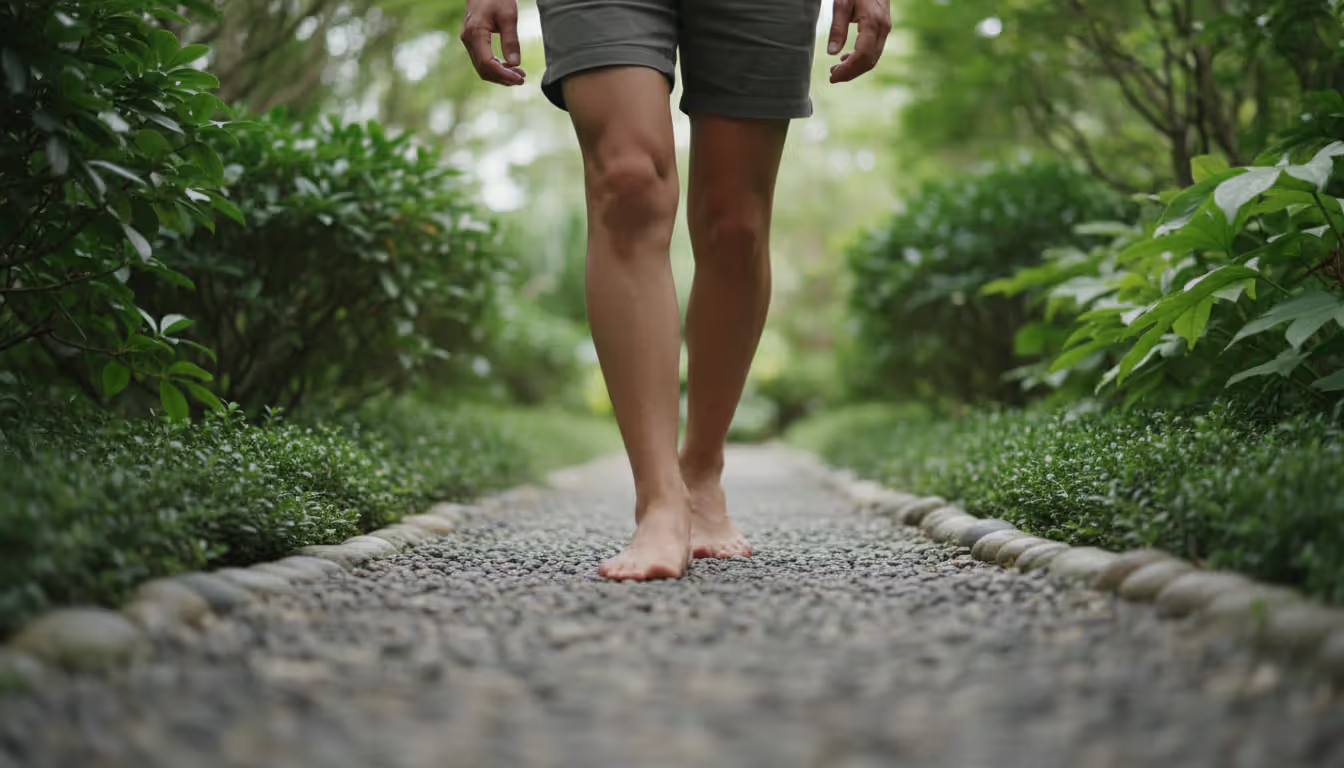
Walking meditation happens indoors in hallways or outside on paths. You're not strolling casually. You're lifting your foot, moving it forward, placing it down, and noticing every sensation involved. Some people find this easier than sitting. Others hate it more.
Author: Lena Ashcroft;
Source: 5sensesspa.com
Most centers serve vegetarian meals. Lunch is your biggest, often the last full meal of the day. Dinner might be soup and bread, fruit, or just tea. You're not burning many calories sitting still all day anyway. Some places assign work practice—20 minutes folding laundry, chopping vegetables, sweeping floors. It's called karma yoga, which sounds fancier than it is. You're basically doing chores mindfully.
Teachers vary by tradition. Some hold daily group sessions where you can ask questions. Others meet with you one-on-one every three or four days for 15-minute check-ins. During silence, you'll write questions on paper and drop them in a box, or wait until your scheduled appointment. Don't expect casual hallway conversations about your breakthrough insight.
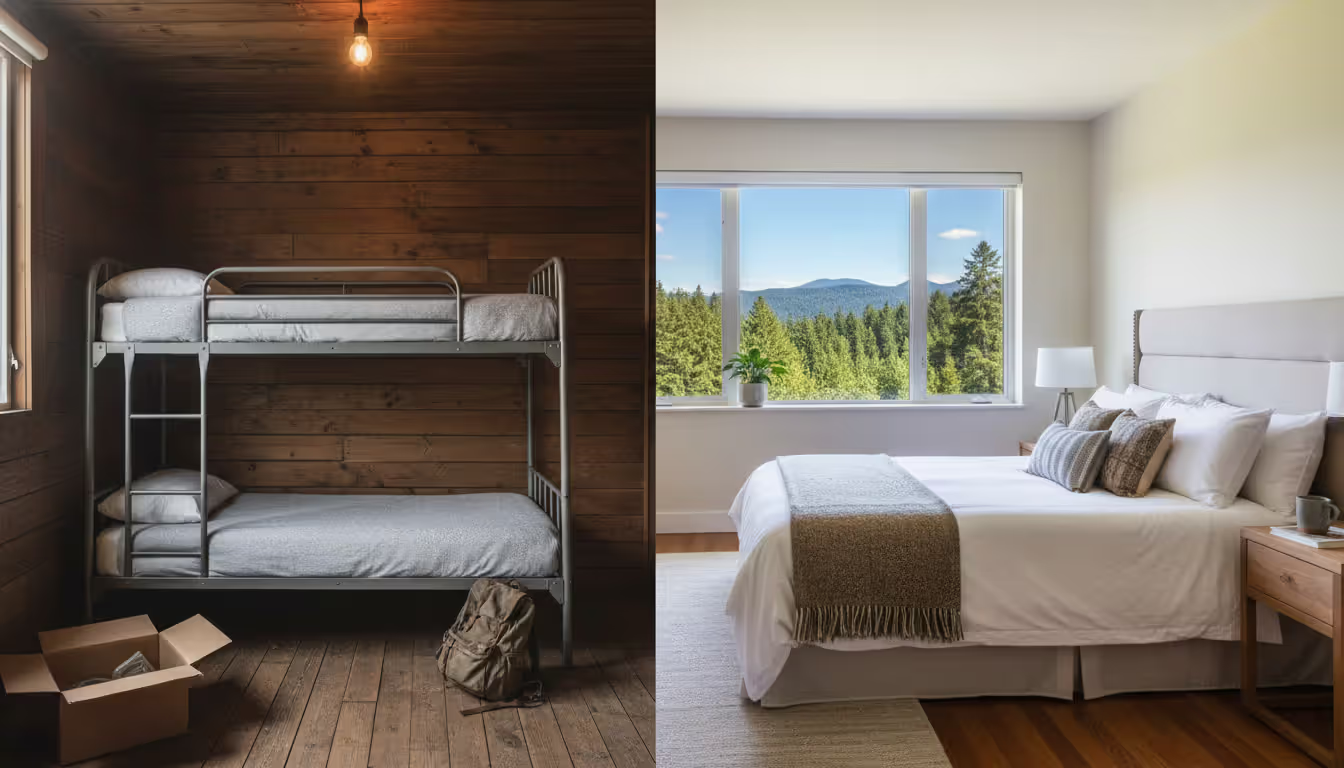
Accommodations? Think summer camp, not hotel. Shared rooms with bunk beds are common. Private rooms cost extra—sometimes double the base rate. Bathrooms are usually shared. There's no TV, no reading material in your room, no decorations beyond maybe a simple flower arrangement. The plainness is intentional. Fewer distractions.
Evening sessions run until 9 or 10 PM. Final sit, then bed. You'll be exhausted despite barely moving all day. The mental work is harder than it looks.
Types of Meditation Retreats Worth Considering
Silent Meditation Retreats
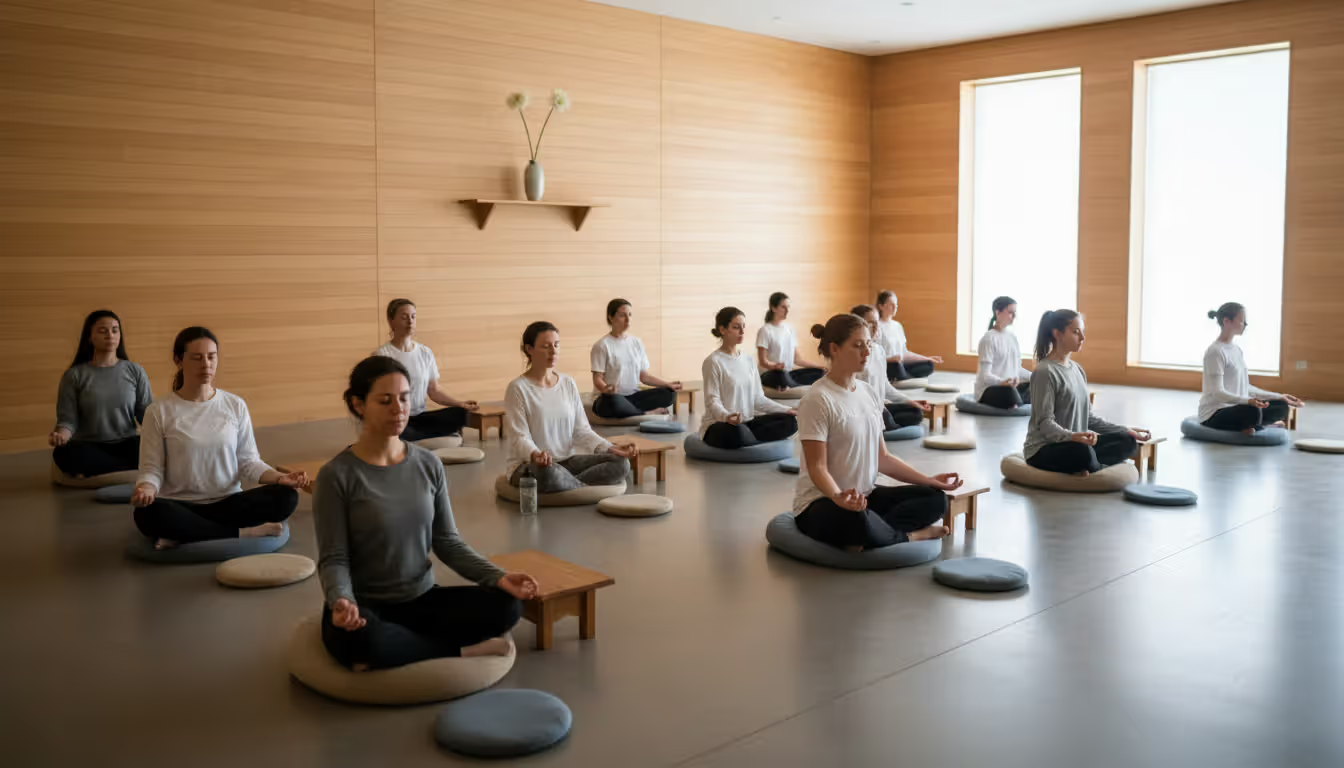
Complete silence means exactly that. No talking. No eye contact. No gestures or notes passed to your roommate. No reading (even during breaks). Some retreats even ask you to avoid humming in the shower.
Why eliminate everything? Because your usual coping mechanisms—chitchat, jokes, complaining together about the uncomfortable cushions—all vanish. You're alone with your mind, and there's nowhere to hide when anxiety or boredom hits.
Silence typically starts after the opening orientation and runs until a closing circle on the final afternoon. You'll hear teachers speak during dharma talks. You'll receive meditation instructions. But you won't discuss last night's sitting with the person next to you at breakfast.
First-timers underestimate how loud their internal dialogue becomes without external conversation. That voice in your head that normally runs in the background? It becomes the main show. Three days of this can feel longer than a week of vacation in Cancun.
Author: Lena Ashcroft;
Source: 5sensesspa.com
If you've never meditated before, jumping straight into silence is like running a marathon without training. Possible? Sure. Wise? Probably not. Build a daily practice first—even just 20 minutes—so you're familiar with what your mind does when you try to watch it.
Vipassana Programs
Vipassana means "insight" in Pali, and these retreats follow a specific technique rooted in Theravada Buddhism. The most widespread version in the US comes from S.N. Goenka's lineage, which offers 10-day courses at centers nationwide.
Here's the deal: ten days, zero cost upfront (you donate afterward if you choose), roughly 10 hours of meditation daily, complete noble silence, no reading, no writing, no exercise beyond slow walking. You follow five ethical precepts: no killing (including bugs), no stealing, no sexual activity, no lying, no intoxicants.
The technique progresses systematically. Days 1-3 focus on breath awareness at your nostrils—just the natural breath coming in and out. Days 4-9 expand to body scanning, noticing sensations from head to toe without reacting. Day 10 reintroduces talking and teaches metta (loving-kindness).
Each evening you watch a recorded discourse where Goenka explains the philosophy, often with slightly corny jokes. (His videos were filmed in the 1990s and it shows.) The teaching is Buddhist but presented as universal mental training.
You cannot leave mid-course except for emergencies. You cannot switch to a different technique partway through. You cannot skip sessions because your knee hurts. The rigidity produces powerful results for some people—profound insights, emotional releases, clarity they've never experienced. It also overwhelms people who aren't ready. Some courses lose 10-15% of participants who leave early.
Weekend vs. Extended Stays
Weekend retreats run Friday evening through Sunday lunch. You arrive after work, sit three or four times Saturday, three times Sunday, then drive home. Total: maybe 10 hours of meditation.
The advantage? You dip your toe in without requesting time off work or explaining to your boss why you need 10 days unreachable. Weekend formats usually include more teaching and less sitting than longer retreats. Teachers assume beginners might attend, so they explain posture, breath awareness, how to work with sleepiness.
The disadvantage? Just as your nervous system starts settling down—around day two or three for most people—the retreat ends. You don't reach the deeper states that emerge after your mind exhausts its initial resistance.
Week-long retreats (7-10 days) give you time to move through the predictable arc: initial excitement, then restlessness and doubt (days 2-4), then settling as something shifts and meditation becomes easier (days 5-7), then deeper insights or simply sustained calm.
Most experienced teachers say the real work begins around day five. That's when your mental chatter quiets enough to notice subtler patterns. Weekend retreats can't get you there.
Extended retreats demand planning. You need to arrange coverage for work, pets, kids, mail, bills. But ask anyone who's done both a weekend and a week-long retreat—the longer experience isn't just quantitatively different. It's qualitatively different.
Online Meditation Retreats
2020 forced retreat centers to experiment with virtual formats, and many discovered these work better than expected. You stay home but follow a structured schedule with live-streamed sessions or videos released at specific times.
Set up a dedicated space—a corner of your bedroom, a basement area, wherever you won't be interrupted. Stock up on simple food (you're not cooking elaborate meals mid-retreat). Tell household members you'll be unavailable. Turn off notifications. Some programs mail you a lockbox for your phone.
You join video sessions at scheduled times, meditate with others on Zoom (cameras usually off or showing just the teacher), and maintain silence within your home. Between sessions, you're on your own to resist checking email or wandering to the fridge.
The obvious limitation: you're practicing solo in a space filled with distractions. Your bed is right there when sitting gets uncomfortable. The fridge beckons. That pile of laundry stares at you during walking meditation.
But online retreats cost $50-150 instead of $500-900. They require no travel. You can test different teachers and styles before committing to an in-person retreat. And some people—those with caregiving responsibilities, mobility issues, or tight budgets—find online formats make retreats accessible when they otherwise wouldn't be.
Meditation Retreat Benefits You Can Expect
Scientists actually measure this stuff now. A 2025 study tracked 60 retreat participants for three months post-retreat, finding sustained reductions in cortisol (the stress hormone) and improvements in heart rate variability (a marker of nervous system health). The benefits didn't fade after two weeks back at work—they persisted for at least 10 weeks.
Compare home practice to retreats this way: meditating 20 minutes daily is like doing pushups. Retreating is like training for a triathlon. The intensity accelerates progress. Patterns that might take months to notice at home become obvious within days when you're meditating six or eight hours daily.
Your monkey mind reveals itself completely. You'll watch how your brain manufactures stories about why your knee pain means you should quit, or why that person across the hall is definitely judging you (even though you've never made eye contact). You'll notice thoughts arising out of nowhere—"Did I lock the back door?" when you're six days into silence—and see them dissolve just as mysteriously.
Sleep improves, often dramatically. The combination of physical stillness, zero screen time, simplified schedule, and reduced mental stimulation resets your circadian rhythm. Some people sleep 10 hours a night during retreats. Others wake up naturally after 7 hours feeling more rested than they have in years.
Author: Lena Ashcroft;
Source: 5sensesspa.com
That "I'm alone in this" feeling? It shifts even during silent retreats. You sit alongside 30 or 50 or 100 other people, all struggling with the same restlessness and doubt. Nobody speaks, but the collective commitment creates something supportive. You're not white-knuckling through this solo.
Post-retreat, many people join local meditation groups (called sanghas). They stay in touch with retreat friends through occasional emails or annual gatherings. That sense of community—finding others who value this practice—often matters as much as the meditation itself.
Long-term changes show up gradually. You might cut your social media usage in half without consciously deciding to. That news addiction? Less interesting. You might establish a daily meditation practice that actually sticks, or reassess your career based on values you'd been ignoring. Clarity has consequences.
A retreat is not a vacation from life but rather a time to investigate it more deeply. The silence and structure create conditions for insights that simply don't arise amid our usual distractions
— Jack Kornfield
How to Prepare for a Meditation Retreat
Start sitting longer at home about three weeks out. Currently doing 15 minutes daily? Bump it to 30, then 40. Your body needs conditioning. Nobody runs a marathon without training, and sitting still for an hour straight is its own athletic event.
If you normally meditate in a chair, try sitting cross-legged on a cushion for a week before leaving. Hate it? No problem—confirm your retreat center provides chairs and stick with what works. Some centers offer benches, cushions, chairs, whatever supports your body.
Hip stretches help. Simple yoga poses like pigeon, butterfly, or child's pose can reduce the knee and lower back pain that plagues new retreatants. Five minutes of stretching before bed makes a difference.
Packing lists vary by center, but you'll generally need:
Loose pants (yoga pants, sweatpants—anything without a tight waistband)
Layers (meditation halls run cold; you'll want a sweater even in summer)
A shawl or blanket for wrapping around your shoulders during sits
Shower stuff and toothbrush
Any prescription medications plus basic pain relievers
A water bottle
Indoor slippers (outdoor shoes stay at the door)
Earplugs if shared rooms make you nervous
Leave behind books, journals, phones, tablets, laptops, smartwatches. Most centers provide locked storage or ask you to keep devices in your car. You won't need them. That's the point.
Mental preparation matters more than physical readiness. Lower your expectations. Retreats often feel harder than you imagined—more boring, more uncomfortable, more confronting. Days two and three especially tend to suck. This is normal, not evidence you're failing.
Author: Lena Ashcroft;
Source: 5sensesspa.com
If you're not meditating at all currently, start now. Even 10 minutes each morning for two weeks before your retreat helps. You'll arrive with some familiarity with basic technique and with the restlessness that arises when you try sitting still.
Handle logistics thoroughly. Arrange pet care, work coverage, bill payments, anything time-sensitive. Set an out-of-office message explaining you're unreachable until [date]. The more completely you tie up loose ends, the more fully you can let go once you arrive.
Setting intentions provides direction. Why are you doing this? To deepen your practice? Address anxiety? Take a break from your normal chaos? Explore a spiritual tradition? Get some perspective on a major life decision? Write down your intentions, then let them go. Clinging to specific outcomes ("I'm going to achieve enlightenment!") creates suffering when reality unfolds differently.
Top-Rated Meditation Retreat Centers in the US
Center Name
Location
Tradition
Price Range
Accommodations
Spirit Rock Meditation Center
Woodacre, CA
Insight/Vipassana
$450-850/week
Shared rooms up to private cottages
Insight Meditation Society
Barre, MA
Vipassana
$500-950/week
Dormitory bunks up to single rooms
Shambhala Mountain Center
Red Feather Lakes, CO
Tibetan Buddhist
$400-800/week
Shared cabins up to private rooms
Southern Dharma Retreat Center
Hot Springs, NC
Non-sectarian
$350-600/week
Rustic shared or private cabins
Dhamma Dhara
Shelburne Falls, MA
Goenka Vipassana
Donation-based
Dormitory setup
Garrison Institute
Garrison, NY
Multi-tradition
$600-1200/week
Historic monastery with private room options
Spirit Rock sits on 411 acres of rolling California hills north of San Francisco. They run programs from single-day workshops to month-long retreats, primarily teaching Insight meditation (Vipassana in the Theravada tradition). Teachers include Jack Kornfield, Sylvia Boorstein, and other well-known American Buddhist voices. Accommodations range from shared platform tents to standalone cottages.
Insight Meditation Society in rural Massachusetts has operated since 1975, making it one of the oldest retreat centers in the US. Their three-month retreat is legendary—a serious commitment that experienced practitioners consider a defining experience. The facility maintains a scholarly atmosphere with an extensive library. Teachers rotate but often include Joseph Goldstein, Sharon Salzberg, and other IMS founders.
Shambhala Mountain Center combines Tibetan Buddhist teachings with contemplative arts in the Rocky Mountains at 8,000 feet elevation. Programs blend meditation with calligraphy, ikebana (flower arranging), photography, or movement practices. The setting is stunning—mountain views, high-altitude clarity, and frequent wildlife sightings.
Southern Dharma welcomes multiple traditions rather than committing to one lineage. Located in the Blue Ridge Mountains of North Carolina, it maintains a smaller, more intimate feel than the larger centers. They offer organized retreats but also self-retreat options where you design your own schedule within the silent container.
Dhamma Dhara is one of roughly a dozen US centers offering 10-day Vipassana courses in Goenka's tradition at zero upfront cost. (You can donate after completing the course.) The donation model makes intensive practice accessible to anyone regardless of income. Courses fill fast—register months ahead for popular dates.
Garrison Institute occupies a former Capuchin monastery overlooking the Hudson River, about 90 minutes north of New York City. They host retreats from various traditions and emphasize applying contemplative practice to social issues, professional life, and leadership. The proximity to NYC makes it accessible for urban practitioners.
Choosing the Right Retreat for Your Experience Level
Never meditated before? Don't start with 10 days of Vipassana. Start with a weekend program explicitly labeled "introductory" or "beginner-friendly." These typically include more instruction, shorter sitting periods (30-45 minutes instead of 60-90), and teachers who expect questions about basic posture and technique.
"Gentle retreat" or "meditation and yoga" programs offer less intensity than traditional silent sits. Some combine meditation with hiking, journaling, or group discussions. These hybrid formats ease you into retreat practice without throwing you into the deep end.
Non-silent retreats let you ask questions freely and process experiences verbally. You'll still maintain periods of silence—often morning through lunch—but can speak during meals or evening sessions. For first-timers, this safety valve matters.
If you've been meditating daily for at least six months, you can probably handle a week-long silent retreat. You've encountered the restlessness, doubt, and physical discomfort that arises during practice. It won't completely blindside you. You know your knee always hurts after 40 minutes, and you've learned to shift position without completely breaking concentration.
Advanced practitioners—those with years of daily practice or multiple retreats already completed—often seek longer formats (10 days minimum, sometimes 30 or 90 days), intensive Zen sesshin programs, or teacher training. At this stage you're refining subtle aspects of practice, not learning basics.
Match the tradition to your background. If you practice Zen at home, a Vipassana retreat will feel different—not bad, just different enough to be disorienting. If you've never encountered Buddhist concepts, a retreat heavy on dharma talks about the Three Marks of Existence might feel alienating. Research the lineage. Read books by teachers from that tradition. Listen to their dharma talks online (most centers post these free).
Budget matters. Goenka centers charge nothing upfront, making intensive retreats accessible to everyone. Mid-range centers ($60-90 daily) offer quality instruction in simple facilities. High-end centers ($150-200 daily) provide private rooms, gourmet vegetarian meals, and spa-like amenities. Cheaper doesn't mean lower quality—many donation-based centers maintain rigorous programs through volunteer labor and community support.
Author: Lena Ashcroft;
Source: 5sensesspa.com
Location involves trade-offs. Distant centers require expensive flights and rental cars but remove you completely from normal life. You won't run into your neighbor. Nearby centers cost less to reach and let you attend more frequently, but you might see familiar faces or feel less separated from routine concerns.
Frequently Asked Questions About Meditation Retreats
What will this cost me financially?
Goenka Vipassana centers operate entirely on donations—you pay nothing upfront, contribute afterward if you choose. Most established centers charge $60-120 daily, covering accommodation, meals, and instruction. A seven-day retreat typically runs $400-900 depending on room type and facility. High-end centers can hit $150-200 per day. Many places offer work-exchange programs (you help with cooking or maintenance in exchange for reduced fees) or financial aid. Don't forget travel costs, time away from work, and gear purchases. Online retreats cost substantially less—often $50-200 for an entire weekend program.
Can someone new to meditation attend a silent retreat?
Yes, but choose carefully. Some silent retreats specifically welcome beginners and provide extra instruction on posture, technique, and working with common difficulties. Others assume prior experience and offer minimal guidance. Look for programs labeled "introductory," "beginner," or "all levels." Contact the center directly to ask if the format suits first-timers. Consider starting with a 3-day silent retreat instead of jumping into 10 days. Building a home practice for at least a few weeks beforehand helps tremendously—you'll arrive familiar with what your mind does when you try to watch it.
What items should I bring for my first experience?
Pack comfortable loose clothing you can layer (meditation halls often run cold), toiletries, medications, a reusable water bottle, and soft indoor footwear. Most centers provide bedding, cushions, benches, and meals. Leave phones, laptops, books, journals, and other distractions either at home or in locked storage provided by the center. Check your specific center's recommendations—some have laundry, others don't; some provide towels, others request you bring your own. A small flashlight helps if you're walking to bathrooms at 5:30 AM. Earplugs can be lifesavers in shared rooms with snorers.
Do these programs require religious beliefs or conversion?
Most US meditation retreats teach techniques derived from Buddhism but don't require you to adopt Buddhist beliefs or convert. Centers vary in approach: some incorporate bowing, chanting, or shrine offerings; others present meditation as secular mental training with no religious elements. Read program descriptions thoroughly. Vipassana centers typically include Buddhist ethical frameworks (the five precepts) but explicitly welcome practitioners of any faith or no faith. If religious components concern you, seek programs described as "secular" or "non-denominational," or simply contact centers to ask about their philosophy.
How long should I commit to for my first retreat?
Three to five days works well for most beginners. This provides enough time to settle into the routine and experience some benefits without overwhelming you. Weekend retreats (2-3 days) offer a gentle introduction but may end just as things get interesting. Week-long retreats deliver deeper results but demand more resilience and time investment. Avoid jumping straight into 10-day Vipassana unless you already maintain a solid daily practice and handle intensity well. You can always attend longer retreats later after you know what you're getting into.
What happens if the silence becomes unbearable?
Nearly everyone finds silence uncomfortable initially—that's part of the practice, not evidence you should leave. Most centers let you speak with teachers about difficulties during scheduled meetings. If silence truly becomes overwhelming, you can usually leave early (though Goenka centers strongly encourage completing the full 10 days). The urge to flee often peaks around day two or three, then naturally subsides. Days four and five typically feel easier. Set realistic expectations: anticipate boredom, restlessness, and resistance as normal parts of the process. The impulse to quit doesn't mean you're failing—it means your mind is doing what minds do when forced to slow down.
Meditation retreats compress years of gradual progress into days of intensive practice. The combination of extended sitting, minimal distractions, expert guidance, and community support creates conditions you simply cannot replicate at home between work meetings and family dinners.
Your first retreat will probably feel harder than you expect. More boring. More physically uncomfortable. Less immediately transformative. That's okay—actually, that's normal. The benefits often emerge subtly over weeks and months following the retreat rather than hitting you with sudden enlightenment on day five.
Start conservatively. Choose a weekend or short retreat before committing to 10 days. Pick a format that matches your current practice level (or slightly exceeds it). Prepare logistically and mentally. Then show up and stay present with whatever unfolds—the boredom, the insights, the restlessness, the unexpected moments of calm.
The best meditation retreat isn't the longest or the most prestigious or the one your friend raved about. It's the one that matches your current needs, that you'll actually attend, and that challenges you just enough without completely overwhelming you. Start there. The rest will follow.
Transform your mornings with guided meditation podcasts. This comprehensive guide covers the best free options, how to build a sustainable routine, and what makes quality meditation audio. Compare popular podcasts and learn practical tips for fitting mindfulness into busy schedules and commutes
Scientific investigation into mindfulness has accelerated dramatically, with thousands of studies examining brain changes, clinical outcomes, and therapeutic applications. Evidence strongly supports meditation for chronic pain, stress reduction, and depression relapse prevention, while other applications show mixed results
Discover practical meditation techniques you can use at your desk to boost work performance. Learn how successful entrepreneurs integrate mindfulness into their workday, improve decision-making, and build sustainable practices without disrupting workflow
Becoming a meditation teacher requires structured training in pedagogy, ethics, and techniques. With hundreds of programs available in 2026, choosing the right meditation teacher training determines your professional credibility and earning potential. Learn how to evaluate programs, avoid common mistakes, and launch your teaching career
The content on this website is provided for general informational and educational purposes only. It is intended to explain concepts related to meditation, mindfulness, mental health, and spiritual practices.
All information on this website, including articles, guides, and examples, is presented for general educational purposes. Meditation outcomes may vary depending on individual practices, health conditions, and guidance.
This website does not provide medical, mental health, or spiritual advice, and the information presented should not be used as a substitute for consultation with qualified professionals.
The website and its authors are not responsible for any errors or omissions, or for any outcomes resulting from decisions made based on the information provided on this website.