Mindfulness has shifted from a niche contemplative practice to a mainstream tool backed by neuroscience and adopted by hospitals, Fortune 500 companies, and schools across the United States. The transformation reflects a growing body of evidence showing measurable changes in brain structure, stress hormones, and daily functioning. Whether you're managing chronic pain, seeking sharper focus at work, or simply looking to reduce the mental noise of modern life, understanding what mindfulness actually delivers—and what it doesn't—helps you decide if it's worth your time.
What Is Mindfulness and Why Does It Matter?
Mindfulness means paying attention to present-moment experience without judgment. You notice thoughts, sensations, and emotions as they arise, then let them pass rather than getting tangled in them. Unlike zoning out or relaxation, mindfulness keeps you alert and aware.
The practice originated in Buddhist meditation traditions but was secularized in the late 1970s when Jon Kabat-Zinn developed Mindfulness-Based Stress Reduction (MBSR) at the University of Massachusetts Medical School. MBSR stripped away religious elements and focused on teachable techniques: body scans, breath awareness, and mindful movement.
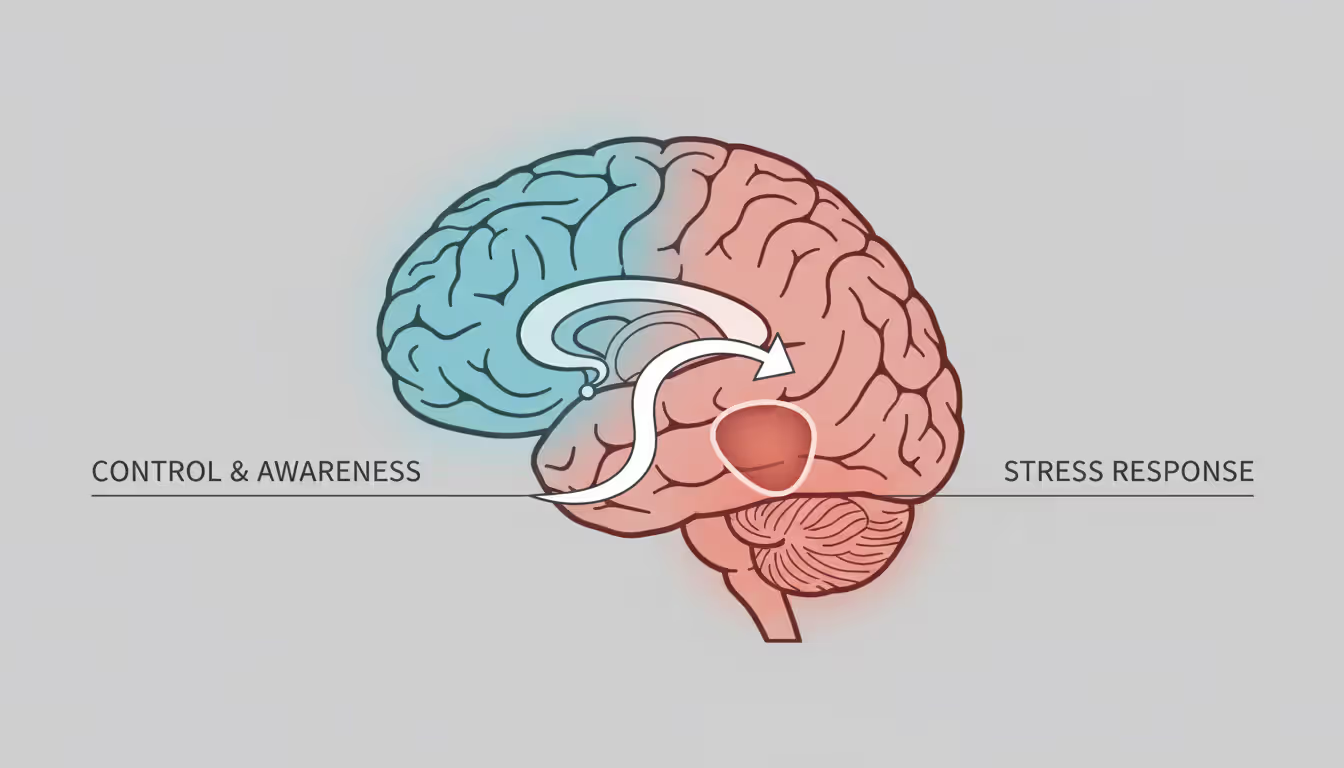
Why mindfulness is important comes down to how our brains evolved. The human mind defaults to rumination—replaying past mistakes or rehearsing future disasters. This served our ancestors well when scanning for predators, but in 2026, it fuels anxiety, burnout, and insomnia. Mindfulness interrupts that loop. Regular practice strengthens the prefrontal cortex, which governs executive function, while quieting the amygdala, the brain's alarm system.
Healthcare systems now prescribe mindfulness for conditions ranging from chronic pain to depression. The Veterans Health Administration offers MBSR to combat PTSD. Kaiser Permanente integrates mindfulness into pain management programs. Employers from Google to General Mills provide on-site meditation rooms and guided sessions. This widespread adoption reflects a shift from viewing mindfulness as "soft" wellness to recognizing it as a practical intervention with measurable outcomes.
Author: Ethan Solberg;
Source: 5sensesspa.com
How Mindfulness Reduces Stress and Anxiety
When you perceive a threat, your hypothalamus triggers the release of cortisol and adrenaline. Your heart rate spikes, digestion slows, and blood rushes to muscles. This response saves your life in genuine emergencies but wears you down when activated by traffic jams, emails, or financial worries.
Mindfulness benefits for stress emerge from breaking this cycle. A 2023 meta-analysis in JAMA Psychiatry examined 47 randomized controlled trials involving over 3,500 participants. Researchers found that eight-week mindfulness programs reduced cortisol levels by an average of 14% and decreased self-reported anxiety symptoms by 22%. The effect size was comparable to first-line medications for generalized anxiety disorder, though individual responses varied widely.
The mechanism works through attention regulation. When you notice anxious thoughts without engaging them, you activate the ventromedial prefrontal cortex, which dampens amygdala reactivity. Over time, this rewires default stress responses. Brain imaging studies show that after eight weeks of daily 20-minute practice, participants exhibit reduced amygdala volume and increased gray matter density in regions associated with emotional regulation.
Practical stress relief techniques include the three-minute breathing space: one minute noticing current experience, one minute focusing on breath, one minute expanding awareness to the whole body. This interrupts rumination spirals before they build momentum. Another approach is labeling emotions—silently noting "anxiety," "frustration," or "impatience" when they arise. Labeling activates the prefrontal cortex and reduces limbic system arousal, a phenomenon confirmed through fMRI studies.
One common mistake is expecting mindfulness to eliminate stress. It doesn't make difficult emotions vanish. Instead, it changes your relationship to them. You learn to observe anxiety without believing every catastrophic prediction it generates.
Mindfulness Benefits in the Workplace
The benefits of mindfulness in the workplace extend beyond feel-good perks. Companies invest in these programs because they impact the bottom line through reduced absenteeism, lower healthcare costs, and improved decision-making.
Aetna's mindfulness program, launched in 2010 and refined through 2025, tracked 3,000 employees over five years. Participants gained an average of 62 minutes per week of productivity, valued at $3,000 per employee annually. Healthcare costs for program participants dropped by $2,000 per year compared to non-participants. The company also saw a 28% reduction in stress levels and a 20% improvement in sleep quality.
Mindfulness sharpens focus by training the brain to resist distraction. The anterior cingulate cortex, which detects conflicts between competing stimuli, strengthens with practice. A 2022 study at the University of California, Santa Barbara, found that employees who completed a two-week mindfulness training reduced mind-wandering during complex tasks by 37% and improved reading comprehension scores by 16%.
Burnout—characterized by exhaustion, cynicism, and reduced efficacy—costs U.S. employers an estimated $190 billion annually in healthcare spending. Mindfulness addresses all three dimensions. It restores energy by improving sleep quality, counters cynicism by fostering compassion, and rebuilds efficacy by enhancing cognitive function.
Author: Ethan Solberg;
Source: 5sensesspa.com
How Companies Implement Mindfulness Programs
Successful workplace programs blend accessibility with structure. SAP offers a nine-week "Search Inside Yourself" curriculum developed at Google, combining neuroscience education with guided practice. Intel provides drop-in meditation sessions and "mindful meeting" guidelines that start gatherings with 60 seconds of silence.
The most effective programs avoid forcing participation. Optional lunch-and-learn sessions, app subscriptions (Headspace for Work, Calm Business), and quiet rooms respect individual preferences. Some companies train internal instructors rather than hiring external consultants, which builds long-term capacity and cultural buy-in.
Measuring Workplace Impact
Quantifying results requires tracking more than self-reported satisfaction. Robust programs measure absenteeism rates, healthcare claims, performance reviews, and employee retention. Wearable devices that monitor heart rate variability—a physiological marker of stress resilience—provide objective data.
General Mills found that 83% of executives who completed mindfulness training reported improved decision-making. The company tracks this through 360-degree reviews and meeting outcome assessments. Qualitative interviews reveal that mindfulness helps leaders pause before reacting to setbacks, reducing impulsive decisions that later require damage control.
Physical and Mental Health Improvements
Mindfulness and wellbeing connect through multiple pathways. Sleep quality improves because mindfulness reduces the cognitive arousal that keeps you awake—the mental replay of conversations or tomorrow's to-do list. A 2023 study in Sleep Medicine Reviews found that six-week mindfulness interventions reduced time to fall asleep by 12 minutes and increased total sleep duration by 35 minutes per night.
Immune function benefits from stress reduction. Chronic stress suppresses lymphocyte production and increases inflammation markers like interleukin-6. A 2025 study at UCLA measured immune response in 140 adults before and after an eight-week MBSR program. Participants showed a 23% increase in antibody response to influenza vaccine compared to controls, suggesting enhanced immune surveillance.
Pain management represents one of mindfulness's most validated applications. Chronic pain involves both sensory input and emotional interpretation. Mindfulness doesn't eliminate the sensation but reduces the suffering layered on top. Patients learn to observe pain without catastrophizing or tensing against it. A 2024 meta-analysis of 38 studies found that mindfulness-based interventions reduced chronic pain intensity by an average of 14% and pain-related distress by 30%.
Depression responds to mindfulness through several mechanisms. Rumination—repetitive negative thinking—fuels depressive episodes. Mindfulness-Based Cognitive Therapy (MBCT) teaches patients to recognize rumination as a mental event rather than truth. A landmark 2023 trial published in The Lancet compared MBCT to maintenance antidepressants in 424 patients with recurrent depression. Relapse rates were nearly identical (44% for MBCT, 47% for medication), but MBCT carried no side effects.
Cardiovascular benefits emerge from reduced blood pressure and improved heart rate variability. A 2025 study in Hypertension tracked 300 adults with prehypertension who practiced 15 minutes of daily mindfulness meditation. After six months, systolic blood pressure dropped by an average of 4.8 mm Hg—enough to reduce stroke risk by 14% and heart disease risk by 9%.
Here are 10 benefits of mindfulness supported by research:
Lower cortisol levels and stress reactivity
Reduced symptoms of anxiety and depression
Improved sleep quality and duration
Enhanced immune function
Decreased chronic pain intensity
Better cardiovascular health
Sharper focus and working memory
Increased emotional regulation
Greater resilience to burnout
Improved interpersonal relationships
Author: Ethan Solberg;
Source: 5sensesspa.com
Long-Term Benefits of Regular Mindfulness Practice
The long term benefits of mindfulness compound over months and years. While beginners notice calmer reactions to stress within weeks, structural brain changes require sustained practice.
A 2024 longitudinal study at Harvard Medical School used MRI to track brain changes in 96 adults who practiced mindfulness for 30 minutes daily over two years. Researchers observed:
5% increase in gray matter density in the hippocampus, which governs learning and memory
8% reduction in amygdala volume, corresponding to lower stress reactivity
Thickening of the prefrontal cortex, associated with improved executive function
These changes correlated with measurable improvements in cognitive tests and self-reported emotional stability.
Sustained emotional regulation becomes the new baseline. Early practitioners notice they're slightly less reactive during arguments or traffic. After a year, the shift feels automatic—you still experience anger or frustration, but there's space between feeling and action. This gap allows choice.
Mindfulness may slow cognitive decline. A 2025 study followed 2,400 adults over age 60 for eight years. Those who maintained regular mindfulness practice showed 32% lower rates of mild cognitive impairment compared to matched controls. The protective effect was strongest in participants who practiced at least five times per week.
Mindfulness and quality of life improve through accumulated small wins. You sleep better, so you have more energy. Better focus means you finish work faster and have time for hobbies. Reduced reactivity improves relationships. These effects snowball. A 2023 quality-of-life survey of 1,800 long-term practitioners (five-plus years of daily practice) found that 76% reported significant improvements in life satisfaction, 68% in relationship quality, and 71% in sense of purpose.
The trade-off is time. Thirty minutes daily is a significant commitment. Some practitioners wake earlier, others meditate during lunch, and many split practice into shorter sessions. The key is consistency over duration—ten minutes daily beats an hour once weekly.
Evidence-Based Research on Mindfulness
Mindfulness benefits research has exploded over the past two decades. PubMed lists over 6,000 peer-reviewed studies published since 2020 alone. This growth brings both clarity and noise—not all studies are equally rigorous.
Gold-standard evidence comes from randomized controlled trials with active control groups. Early mindfulness research often compared meditation to no intervention, which couldn't distinguish specific effects from placebo or general attention. Stronger designs compare mindfulness to other active treatments like cognitive behavioral therapy, exercise programs, or health education classes.
A 2024 meta-analysis in Nature Reviews Neuroscience synthesized results from 142 randomized controlled trials involving 12,000 participants. Key findings:
Mindfulness showed moderate to large effects (Cohen's d = 0.55) for reducing anxiety and depression
Small to moderate effects (d = 0.38) for improving attention and working memory
Small effects (d = 0.22) for reducing physical pain intensity
Effects persisted at six-month follow-up in 68% of studies that measured long-term outcomes
Limitations exist. Publication bias favors positive results, so negative findings often go unreported. Many studies rely on self-report measures, which can't distinguish actual change from placebo effects or demand characteristics (reporting improvement because you think you should). Neuroimaging studies often have small sample sizes—30 to 50 participants—which limits generalizability.
Ongoing research explores optimal "dosing." Is 10 minutes as effective as 30? Does daily practice beat three times weekly? A 2025 dose-response study found that benefits plateau around 20 minutes daily for most outcomes, with diminishing returns beyond 45 minutes. However, individual variation is high—some people respond strongly to brief practice, while others need longer sessions.
Mechanism research investigates how mindfulness works. Leading theories include:
Attention regulation: Training the ability to sustain focus and redirect wandering attention
Body awareness: Improved interoception helps detect stress signals earlier
Emotion regulation: Enhanced ability to observe emotions without suppression or rumination
Self-perspective change: Reduced identification with the narrative self ("I am anxious" becomes "anxiety is present")
We can now say with confidence that mindfulness meditation produces measurable changes in brain function and structure. These changes correspond to improvements in attention, emotional regulation, and resilience that persist beyond the meditation session itself. The brain remains plastic throughout life, and mental training is as valid as physical training
— Dr. Richard Davidson
How to Start a Mindfulness Practice
Starting requires less than you think—no special equipment, cushions, or apps, though those can help. The barrier is usually conceptual: believing you need to "clear your mind" or achieve a special state.
Beginner techniques:
Breath awareness: Sit comfortably and notice the sensation of breathing. When your mind wanders (it will, constantly), gently return attention to breath. Start with five minutes. The practice isn't maintaining focus—it's noticing when you've lost it and coming back.
Body scan: Lie down and systematically move attention through body parts—feet, calves, thighs, abdomen, chest, arms, neck, head. Notice sensations without trying to change them. This builds interoceptive awareness and often induces relaxation as a side effect.
Mindful walking: Walk slowly, noticing the sensation of each footfall. Feel your heel strike the ground, weight shift forward, toes push off. This works well for people who find sitting meditation agitating.
Time commitments scale to your schedule. Research shows benefits from as little as 10 minutes daily. The MBSR standard is 30 minutes, but that's not mandatory. Consistency matters more than duration—seven days of 10 minutes beats one 70-minute session.
Apps and resources include Headspace, Calm, Insight Timer (free), and Ten Percent Happier. The UCLA Mindful Awareness Research Center offers free guided meditations. Books like Wherever You Go, There You Are by Jon Kabat-Zinn or The Mind Illuminated by Culadasa provide structured guidance.
Common obstacles:
"My mind won't stop thinking": That's not failure—noticing thoughts is the practice. You're building the muscle of awareness, which strengthens each time you catch mind-wandering.
Physical discomfort: You don't need to sit cross-legged on the floor. A chair works fine. The goal is alert but relaxed—upright enough to stay awake, comfortable enough to sustain the posture.
Boredom: Mindfulness isn't entertainment. The restlessness you feel is worth observing—it reveals how accustomed your brain is to constant stimulation.
Inconsistency: Link practice to an existing habit. Meditate right after brushing your teeth or before your morning coffee. Environmental cues trigger behavior more reliably than motivation.
Building consistency takes about eight weeks for most people. Early on, you'll need willpower. After two months of daily practice, it starts feeling like part of your routine, like showering. Missing a day feels off.
One rule of thumb: if you're too busy to meditate for 10 minutes, you probably need 20. The times when practice feels impossible are often when you'd benefit most.
Author: Ethan Solberg;
Source: 5sensesspa.com
Frequently Asked Questions About Mindfulness Benefits
How long does it take to see benefits from mindfulness?
Most people notice subtle changes within two to three weeks of daily practice—slightly better sleep, fewer moments of reactive anger, or improved ability to focus during meetings. Measurable physiological changes like reduced cortisol levels typically appear after six to eight weeks. Structural brain changes require three to six months of consistent practice. Long-term benefits accumulate over years, but you don't need to wait months to experience value.
Can mindfulness replace therapy or medication?
Mindfulness is a powerful tool, not a cure-all. For mild to moderate depression or anxiety, research shows it can be as effective as medication or cognitive behavioral therapy. However, severe mental health conditions often require professional treatment. Mindfulness works well as a complement to therapy and medication, not necessarily a replacement. If you're currently on medication, consult your prescriber before making changes. Mindfulness-Based Cognitive Therapy, which combines mindfulness with therapeutic techniques, is specifically designed to prevent depressive relapse and requires trained facilitators.
Do I need to meditate for hours to get benefits?
No. Studies show meaningful benefits from 10 to 20 minutes of daily practice. While intensive retreats (full days of meditation) can accelerate progress, they're not required. The key is regularity. Ten minutes every day produces better outcomes than sporadic hour-long sessions. Some research suggests that benefits plateau around 30 minutes for most people, with diminishing returns beyond that point. Quality of attention matters more than quantity of time.
Is mindfulness the same as meditation?
Mindfulness is a quality of attention—present-moment awareness without judgment. Meditation is a formal practice that cultivates mindfulness. You can be mindful while washing dishes, walking, or listening to a friend. Meditation is dedicated time to train that capacity. Think of meditation as strength training and mindfulness as the strength you use throughout the day. Formal meditation practice makes informal mindfulness easier, but they're not identical.
What are the most scientifically proven benefits of mindfulness?
The strongest evidence supports mindfulness for reducing stress, anxiety, and depression; improving attention and working memory; decreasing chronic pain intensity; enhancing sleep quality; and lowering blood pressure. These benefits are backed by multiple randomized controlled trials and meta-analyses. Moderate evidence supports immune function improvements, reduced inflammation, and slower cognitive decline. Weaker but promising evidence exists for conditions like PTSD, substance use disorders, and irritable bowel syndrome. Individual responses vary—what works dramatically for one person may produce subtle effects for another.
Can mindfulness help with focus and concentration?
Yes, and this is one of the most robust findings. Mindfulness benefits for focus emerge from training the brain's attention networks. Each time you notice your mind has wandered and return to the breath, you strengthen the same neural circuits used for sustained attention at work or school. Studies show improvements in working memory, reduced mind-wandering, and better performance on tasks requiring sustained concentration. Benefits appear after about four weeks of regular practice. The effect is particularly strong for people who struggle with distractibility—mindfulness doesn't just help you focus longer, it helps you notice sooner when you've lost focus.
The benefits of mindfulness practice extend across mental health, physical wellbeing, workplace performance, and long-term quality of life. Research confirms what millions of practitioners have experienced: regular mindfulness training rewires stress responses, sharpens cognitive function, and builds resilience against burnout and anxiety.
The practice isn't mystical or complicated. It's systematic attention training that produces measurable brain changes and behavioral improvements. You don't need special equipment, hours of free time, or a naturally calm temperament. You need consistency, realistic expectations, and willingness to notice your experience without immediately trying to fix it.
Starting small—10 minutes daily for eight weeks—gives you enough data to assess whether mindfulness works for you. Track specific outcomes: sleep quality, reactivity during conflicts, ability to focus during challenging tasks, or frequency of anxious thoughts. Subjective feelings matter, but concrete changes in daily functioning matter more.
Mindfulness won't solve every problem. It won't eliminate difficult emotions, cure serious illness, or compensate for structural issues like toxic work environments or inadequate sleep. What it offers is a different relationship to your experience—one where you have more choice about how to respond to stress, pain, and uncertainty. That shift, sustained over time, changes the trajectory of your mental and physical health in ways that compound year after year.
Transform your mornings with guided meditation podcasts. This comprehensive guide covers the best free options, how to build a sustainable routine, and what makes quality meditation audio. Compare popular podcasts and learn practical tips for fitting mindfulness into busy schedules and commutes
Scientific investigation into mindfulness has accelerated dramatically, with thousands of studies examining brain changes, clinical outcomes, and therapeutic applications. Evidence strongly supports meditation for chronic pain, stress reduction, and depression relapse prevention, while other applications show mixed results
Discover practical meditation techniques you can use at your desk to boost work performance. Learn how successful entrepreneurs integrate mindfulness into their workday, improve decision-making, and build sustainable practices without disrupting workflow
Becoming a meditation teacher requires structured training in pedagogy, ethics, and techniques. With hundreds of programs available in 2026, choosing the right meditation teacher training determines your professional credibility and earning potential. Learn how to evaluate programs, avoid common mistakes, and launch your teaching career
The content on this website is provided for general informational and educational purposes only. It is intended to explain concepts related to meditation, mindfulness, mental health, and spiritual practices.
All information on this website, including articles, guides, and examples, is presented for general educational purposes. Meditation outcomes may vary depending on individual practices, health conditions, and guidance.
This website does not provide medical, mental health, or spiritual advice, and the information presented should not be used as a substitute for consultation with qualified professionals.
The website and its authors are not responsible for any errors or omissions, or for any outcomes resulting from decisions made based on the information provided on this website.