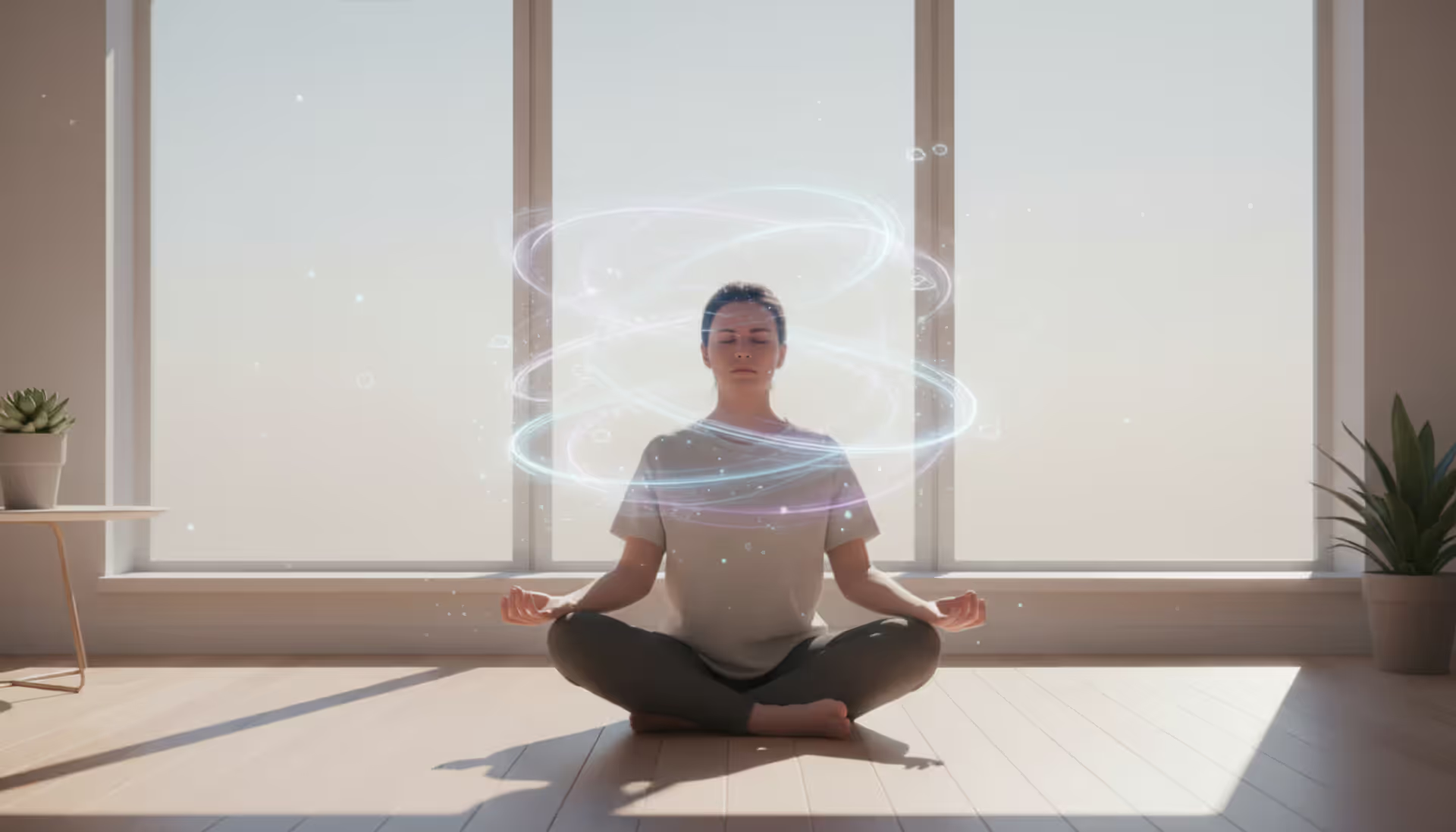
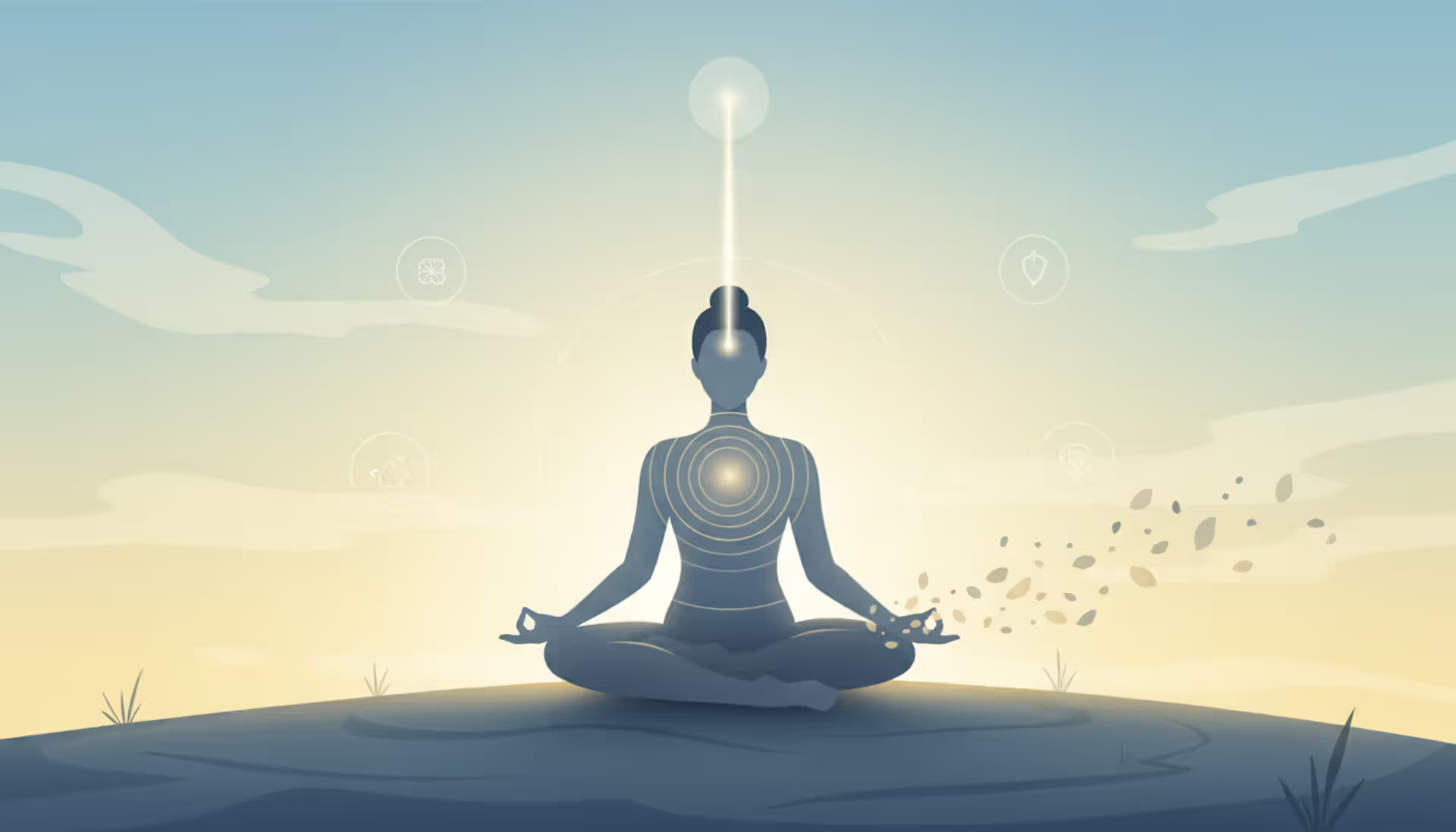
Meditation isn't a one-size-fits-all experience. Some people report floating sensations, others feel grounded heaviness, and many beginners wonder if they're doing anything at all. Understanding what meditation actually feels like—physically, mentally, and emotionally—helps demystify the practice and sets realistic expectations, especially if you're approaching your first session with uncertainty.
The experience varies dramatically from person to person and even from session to session. Your meditation today might feel entirely different from tomorrow's practice. That variability isn't a flaw in your technique; it's the nature of working with your mind and body in their constantly shifting states.
What Does Meditation Feel Like?
The honest answer: meditation feels different for everyone, and there's no single "correct" sensation you should chase. Some practitioners describe a sense of spaciousness in their mind, as though thoughts have more room to move without colliding. Others notice their breathing becomes the most interesting thing in the world for brief moments. Many people feel absolutely nothing remarkable during their practice and only notice subtle changes in their daily life afterward.
Physical sensations during meditation range from pleasant warmth spreading through your limbs to uncomfortable itching that tests your patience. You might experience tingling in your hands, a feeling of your body dissolving at the edges, or hyperawareness of your heartbeat. Some sessions bring deep relaxation where your muscles release tension you didn't know you were holding. Other times, you'll feel restless, fidgety, and convinced you'd rather be anywhere else.
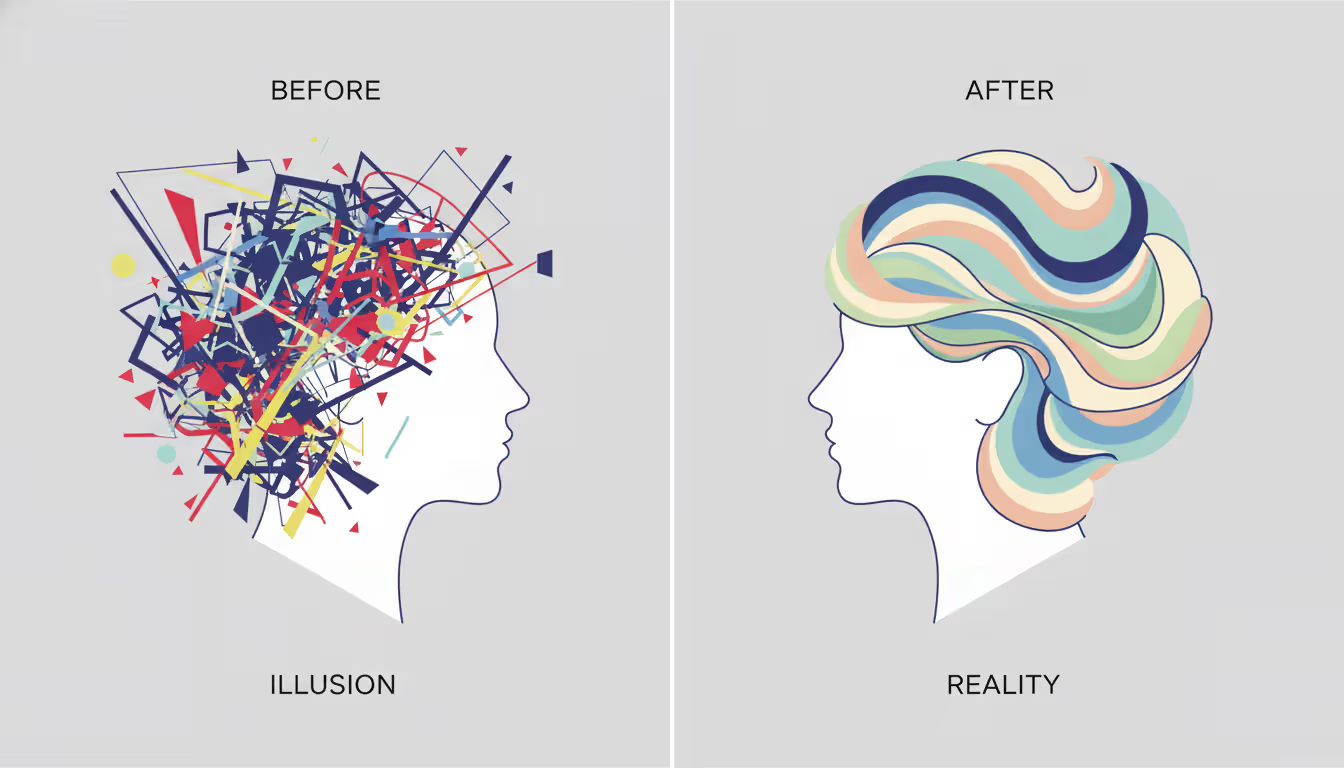
Mentally, meditation often surprises beginners. Instead of the blank, peaceful mind they expect, most people encounter a tornado of thoughts. Your brain might replay conversations from three years ago, compose grocery lists, or suddenly solve problems you weren't trying to figure out. This mental chatter isn't meditation failure—it's the baseline noise you're finally noticing because you stopped distracting yourself from it.
Emotionally, meditation can uncover feelings you've been suppressing. Sadness might bubble up without obvious cause. Irritation at small sounds becomes magnified. Occasionally, unexpected joy or gratitude appears. These emotional waves don't mean you're meditating incorrectly; they indicate you're creating space for your inner experience to surface.
The key insight: meditation feels like whatever it feels like for you in that specific moment. Comparing your experience to someone else's Instagram caption about "blissful transcendence" creates unnecessary frustration.
Physical Sensations You May Notice During Meditation
Your body becomes remarkably talkative when you finally pay attention to it. Tingling in your fingers and toes often appears within the first few minutes of sitting still. This sensation results from increased awareness of normal nerve activity you typically ignore, combined with subtle changes in blood flow as you settle into stillness.
Heaviness is another common physical sensation, particularly in your limbs. Your arms might feel like they're made of lead, or your head could seem impossibly weighted. This sensation often accompanies deep relaxation as your muscles release their habitual tension. Conversely, some people experience lightness—a floating quality or the sensation that their body boundaries have become less defined.
Temperature shifts happen frequently during meditation. Warmth spreading through your chest or abdomen typically indicates relaxation of your nervous system. Some practitioners report feeling cold, especially in their extremities, which can result from decreased movement and the body's shift into a more restful state.
Breathing changes are nearly universal. You might notice your breath becoming slower and deeper without conscious effort. Some people experience brief moments where breathing seems to pause naturally between inhales and exhales. Others become hyperaware of every breath and temporarily breathe in an awkward, manual way until they relax back into automatic breathing.
Muscle twitches and small movements often occur as tension releases. Your shoulder might suddenly jerk, or your eyelid could flutter. These micro-movements represent your nervous system recalibrating as you transition from active to restful states.
Pressure sensations—particularly in the forehead, crown of the head, or between the eyebrows—frequently appear during focused meditation. These aren't mystical experiences; they're typically the result of subtle facial muscle tension or increased awareness of normal sensations you usually filter out.
Discomfort is worth mentioning explicitly. Your knee might ache, your back could protest, or you might develop an itch that demands scratching. These sensations test your ability to observe discomfort without immediately reacting. However, sharp pain or numbness that suggests circulation problems should prompt you to adjust your position—meditation isn't an endurance contest.
Author: Sophie Ellington;
Source: 5sensesspa.com
Mental and Emotional Experiences While Meditating
Your thought patterns during meditation often shock beginners who expected mental silence. Instead of quieting down, your mind might seem louder than ever. This happens because you're finally observing your thoughts rather than being swept along by them. It's like noticing how much noise your refrigerator makes only when you're trying to hear something subtle.
Mind wandering is the default mode, not a meditation failure. You'll set an intention to focus on your breath, and within seconds find yourself planning dinner, replaying an argument, or wondering why you can't stop thinking. This cycle—focus, wander, notice, return—is the actual practice. The "noticing" part is where the real work happens.
Moments of clarity occasionally puncture the mental chatter. For a few seconds, your mind might feel genuinely quiet, or you'll experience a sudden insight about a problem you've been wrestling with. These moments feel significant, but chasing them creates frustration. They arrive on their own schedule.
The observer mindset develops gradually. You begin to notice a subtle shift where you're watching your thoughts rather than being your thoughts. A worry about work arises, but instead of spiraling into anxiety, you notice: "There's a thought about work." This detachment doesn't mean you don't care; it means you're not controlled by every mental event.
Emotional releases happen more often than many people expect. You might suddenly feel like crying without knowing why. Anger could surface about something you thought you'd processed years ago. Anxiety might intensify before it dissipates. Meditation creates space for suppressed emotions to surface, which can feel uncomfortable but often leads to relief afterward.
Boredom is an underrated meditation experience. Sitting still with nothing to do and nowhere to go can feel excruciating. Your mind will generate increasingly creative reasons why you should stop meditating right now. Learning to sit with boredom without immediately seeking stimulation is valuable training for modern life.
Some sessions bring unexpected contentment—a simple satisfaction with being alive and breathing. These moments don't arrive because you earned them or meditated correctly; they're part of the unpredictable landscape of inner experience.
What Happens During Meditation: The Inner Process
Neurologically, meditation triggers measurable changes in brain activity. Research using EEG and fMRI scans shows shifts in brainwave patterns during meditation. Beta waves, associated with active thinking and problem-solving, often decrease. Alpha waves, linked to relaxed alertness, typically increase. With deeper practice, theta waves—associated with deep relaxation and creativity—can appear even while you remain awake.
The default mode network, your brain's "wandering mind" system that activates when you're not focused on external tasks, shows altered activity during meditation. This network, which includes the medial prefrontal cortex and posterior cingulate cortex, typically quiets down during focused meditation practices. This change correlates with decreased self-referential thinking—the constant mental narration about "me" and "my problems."
Your stress response system undergoes significant shifts during meditation. The amygdala, your brain's alarm system for detecting threats, shows reduced activation during and after regular meditation practice. Meanwhile, the prefrontal cortex—responsible for rational thinking and emotional regulation—demonstrates increased activity and strengthened connections to emotional centers.
Cortisol levels, your body's primary stress hormone, typically decrease during meditation sessions. Heart rate variability—a measure of your nervous system's flexibility and resilience—often improves, indicating a shift from fight-or-flight mode to rest-and-digest mode.
Awareness development is the core psychological process occurring during meditation. You're training your attention like a muscle, strengthening your ability to notice where your mind goes and redirect it intentionally. This capacity transfers beyond meditation sessions into daily life, helping you catch unhelpful thought patterns before they spiral.
The psychological shift from "doing" to "being" mode represents another fundamental change. Most of your waking life operates in achievement mode—solving problems, completing tasks, reaching goals. Meditation practices a different mode where you're not trying to get anywhere or accomplish anything. This shift can feel strange and uncomfortable initially because it contradicts cultural conditioning about productivity.
You can't stop the waves, but you can learn to surf
— Jon Kabat-Zinn
This quote captures the essence of what happens during meditation: you're not eliminating thoughts, emotions, or sensations, but developing a different relationship with them.
First Time Meditation: What Beginners Should Expect
Your first meditation experience will likely feel awkward. You'll probably wonder if you're doing it right, whether you should be feeling something specific, and why sitting still is harder than it looks. These concerns are universal among beginners.
Expect your mind to wander constantly. Within seconds of starting, you'll find yourself thinking about unrelated topics. This doesn't indicate failure or lack of meditation aptitude. Professional meditators with decades of practice still experience mind wandering; they've just developed more skill at noticing and returning to focus.
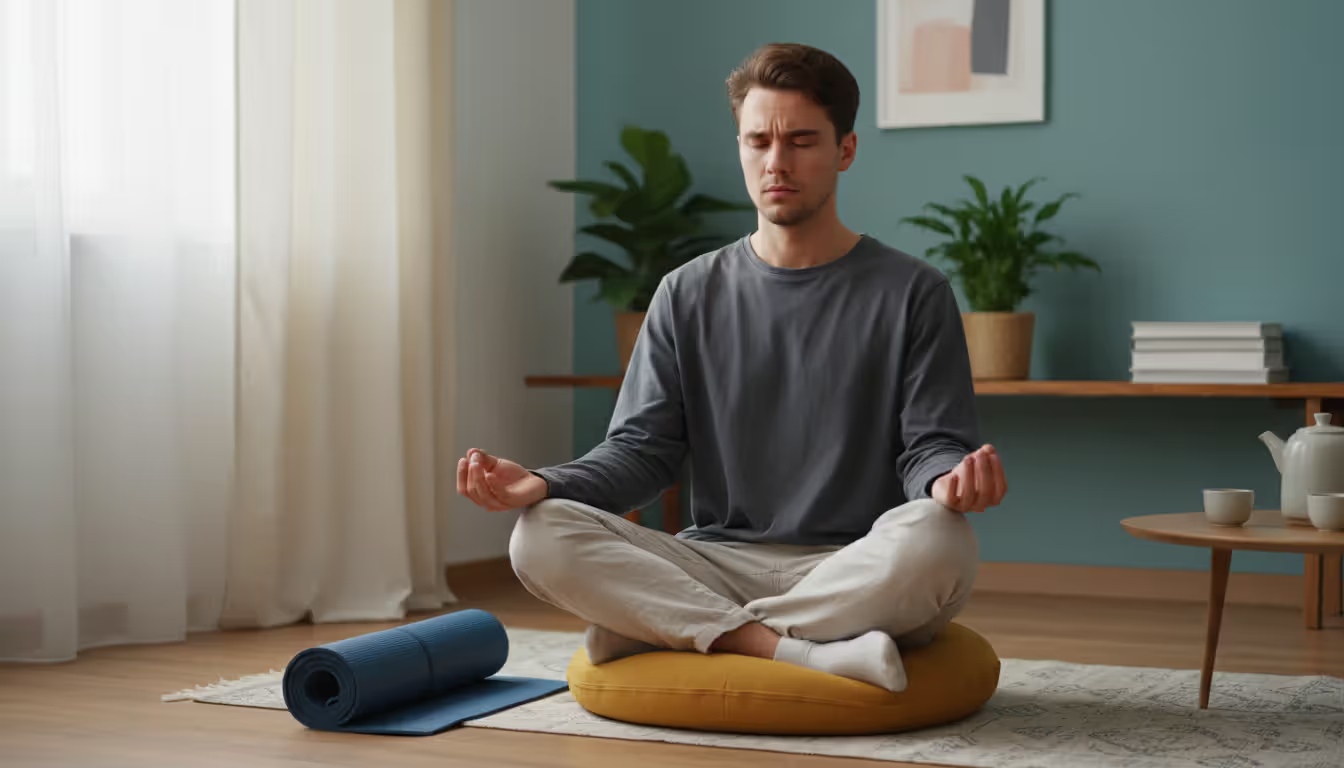
Physical discomfort often dominates first sessions. Your back might ache from unfamiliar posture. Your legs could fall asleep. An itch will appear that seems unbearable. These sensations test your patience, but they also provide opportunities to practice observing discomfort without immediately reacting.
Time distortion is common. Five minutes might feel like twenty, or fifteen minutes could pass in what seems like moments. Your perception of time becomes unreliable when you're not filling every second with stimulation or activity.
You probably won't feel dramatically different after your first session. Beginners often expect a profound transformation—instant calm, clarity, or bliss. More realistically, you might feel slightly more relaxed, possibly frustrated, or completely uncertain whether anything happened at all. Subtle benefits typically accumulate over time rather than arriving in a single session.
The "am I doing this wrong?" question will dominate your first experiences. The truth: if you're sitting with an intention to meditate and noticing when your mind wanders, you're doing it correctly. There's no secret technique you're missing or special feeling you should achieve.
Beginners often quit after a few sessions because meditation doesn't match their expectations. Setting realistic goals helps: aim to simply show up and practice, not to achieve specific mental states or immediate life changes.
Author: Sophie Ellington;
Source: 5sensesspa.com
How Meditation Experience Changes Over Time
Early meditation sessions often feel like wrestling with your mind. You're learning to sit still, discovering how restless your thoughts are, and building basic concentration skills. Frustration and doubt are common companions during this phase.
After several weeks of consistent practice, you'll likely notice subtle changes. You might catch yourself pausing before reacting to frustration. Stressful situations could feel slightly more manageable. These shifts are easy to miss because they're gradual rather than dramatic.
With months of practice, meditation itself often becomes easier. Your mind still wanders, but you notice more quickly and return to focus with less effort. The physical discomfort of sitting might decrease as you find sustainable postures. Sessions that once felt interminable might start feeling too short.
Experienced practitioners report different quality to their awareness. Instead of constantly narrating and judging their experience, they notice more direct contact with sensations, thoughts, and emotions. The gap between experiencing something and creating a story about it widens.
However, progression isn't linear. You'll have profound sessions followed by weeks of seemingly regressing to beginner frustration. Meditation practice includes cycles of deepening and plateaus, insights and dry spells. This variability is normal, not evidence you've lost your ability.
Long-term meditators often describe their practice becoming simpler rather than more complex. Instead of seeking special states or experiences, they settle into basic awareness with less agenda. The practice becomes less about achieving something and more about showing up consistently.
Avoid creating pressure around "advancement" in meditation. While experience does change your practice, treating meditation like a ladder you must climb creates the same achievement-oriented mindset meditation is meant to balance.
Author: Sophie Ellington;
Source: 5sensesspa.com
Common Meditation Myths vs. Reality
Myth: Meditation means clearing your mind completely.
Reality: Your mind generates thoughts constantly—that's its function. Meditation involves noticing thoughts without getting lost in them, not achieving a thought-free state. Even advanced practitioners experience mental chatter.
Myth: If you're thinking during meditation, you're failing.
Reality: Noticing that you're thinking is the practice. The moment you realize your mind wandered is actually a moment of successful awareness, not failure.
Myth: Meditation should always feel peaceful and relaxing.
Reality: Meditation can feel boring, frustrating, emotional, or uncomfortable. These experiences are valid parts of practice. Chasing only pleasant states creates attachment and disappointment.
Myth: You need to meditate for hours to get benefits.
Reality: Research shows measurable benefits from sessions as short as ten minutes. Consistency matters more than duration. Daily ten-minute practice typically produces more results than occasional hour-long sessions.
Myth: Meditation is about escaping reality or avoiding problems.
Reality: Meditation increases your capacity to face reality clearly rather than through distorted mental filters. It's about developing healthier relationships with your thoughts and emotions, not avoiding them.
Myth: There's one correct way to meditate.
Reality: Hundreds of meditation techniques exist across different traditions. What works for one person might not suit another. Finding an approach that fits your temperament and lifestyle matters more than following a supposedly "best" method.
Myth: Meditation will solve all your problems.
Reality: Meditation is a tool that can support mental health, stress management, and self-awareness. It's not a cure-all or replacement for therapy, medical treatment, or addressing practical life circumstances.
Myth: You should feel immediate results.
Reality: Some people notice subtle shifts after their first session, but most benefits accumulate gradually over weeks and months. Expecting instant transformation sets you up for disappointment.
Author: Sophie Ellington;
Source: 5sensesspa.com
Meditation Sensations: What They Mean
Physical Sensation
What It Indicates
Is It Normal?
Tingling in hands/feet
Increased body awareness; subtle changes in circulation or nerve sensitivity
Yes, very common
Heaviness in limbs
Deep muscle relaxation; nervous system shifting to rest mode
Yes, indicates relaxation
Floating or lightness
Decreased awareness of body boundaries; deep relaxation
Yes, though less common
Warmth in chest/abdomen
Activation of parasympathetic nervous system; relaxation response
Yes, positive sign
Pressure in forehead/head
Subtle facial tension; increased awareness of normal sensations
Yes, usually harmless
Muscle twitches
Tension release; nervous system recalibration
Yes, temporary and normal
Emotional release (tears, sadness)
Processing suppressed emotions; stress release
Yes, can be therapeutic
Restlessness or fidgeting
Difficulty transitioning to stillness; excess energy
Yes, especially for beginners
Racing heart awareness
Heightened body awareness; sometimes anxiety
Normal if heart rate isn't actually elevated
Numbness in legs
Circulation restriction from posture
Common but should prompt position adjustment
Frequently Asked Questions
Is it normal to feel nothing during meditation?
Absolutely. Many sessions feel completely ordinary with no special sensations, insights, or experiences. This doesn't mean meditation isn't working. Benefits often accumulate below your conscious awareness and show up in how you handle daily situations rather than during the meditation itself. Feeling "nothing" can actually indicate you're not forcing or manufacturing experiences, which is a sign of mature practice.
Why do I feel tingling or numbness when I meditate?
Tingling typically results from increased awareness of normal nerve activity you usually ignore, combined with subtle circulation changes as you sit still. It's generally harmless and common. Numbness, particularly in legs and feet, usually indicates circulation restriction from your sitting position. If you experience numbness, adjust your posture—meditation shouldn't cause pain or circulation problems. Try sitting in a chair, using more cushions, or stretching your legs periodically.
How long does it take to feel the benefits of meditation?
This varies significantly between individuals. Some people notice subtle shifts in stress response or emotional regulation within a few weeks of daily practice. Research suggests measurable changes in brain structure and function can occur after eight weeks of consistent practice. However, benefits accumulate gradually rather than arriving in a dramatic moment. You might not notice changes yourself, but others may comment that you seem calmer or more present.
Should meditation always feel relaxing?
No. While meditation often produces relaxation, it can also feel boring, frustrating, emotional, or uncomfortable. Meditation increases awareness of whatever is present in your mind and body—sometimes that's peace, sometimes it's agitation. Sessions that feel difficult are still valuable practice. The goal isn't to feel a particular way but to develop a different relationship with all your experiences.
What if my mind won't stop racing during meditation?
A racing mind is extremely common and doesn't mean you're meditating incorrectly. The practice isn't stopping your thoughts but noticing them without getting completely swept away. When you realize your mind is racing, that awareness itself is successful meditation. Simply acknowledge the mental activity and gently return attention to your breath or chosen focus point. This might happen hundreds of times in a single session—that's normal and expected.
Can meditation feel uncomfortable or emotional?
Yes, and this can actually indicate the practice is working. Meditation creates space for suppressed emotions and unprocessed experiences to surface. You might feel sadness, anger, anxiety, or other difficult emotions without obvious triggers. This emotional release can be therapeutic, though intense emotions might warrant support from a therapist. Physical discomfort from posture is also common but shouldn't involve sharp pain. Adjust your position as needed—meditation isn't meant to be physically punishing.
Understanding what meditation actually feels like removes the mystery and pressure from practice. Your experience won't match anyone else's exactly, and it will vary from session to session. Physical sensations, mental chatter, emotional releases, and moments of clarity are all normal parts of the meditation landscape.
The most valuable insight: meditation isn't about achieving a particular state or feeling a specific way. It's about developing awareness of your present experience, whatever that happens to be. Some sessions will feel profound, others completely ordinary, and many will seem frustrating or boring. All of these experiences contribute to building your capacity for awareness and presence.
Start with realistic expectations. Your mind will wander constantly—that's not failure. You probably won't feel dramatically different after your first sessions. Benefits accumulate gradually through consistent practice, not dramatic single-session breakthroughs.
What matters most is showing up regularly and practicing with patience toward yourself. The meditation experience you have today is exactly the one you needed, even if it doesn't match what you hoped for or expected.
Meditation produces measurable changes in brain structure, nervous system function, and emotional regulation. Learn what meditation actually does, common reasons people start practicing, and science-backed benefits for mental and physical health that explain why millions now meditate regularly
Meditation has a reputation for being simple: sit down, close your eyes, breathe. Yet anyone who's tried it knows the reality feels nothing like that tidy description. Your legs ache, your mind races through grocery lists and old arguments, and the promised calm seems reserved for people who aren't you
Meditation didn't emerge from a single moment of invention. Archaeological evidence places the earliest practices at roughly 5,000 to 7,000 years ago, with wall art from the Indus Valley showing figures in meditative postures. The practice developed across multiple civilizations independently
Meditation falls into three research-backed categories: focused attention, open monitoring, and self-transcending. Understanding this framework helps you choose from 12 common techniques based on your goals, experience level, and lifestyle rather than getting lost in endless options
The content on this website is provided for general informational and educational purposes only. It is intended to explain concepts related to meditation, mindfulness, mental health, and spiritual practices.
All information on this website, including articles, guides, and examples, is presented for general educational purposes. Meditation outcomes may vary depending on individual practices, health conditions, and guidance.
This website does not provide medical, mental health, or spiritual advice, and the information presented should not be used as a substitute for consultation with qualified professionals.
The website and its authors are not responsible for any errors or omissions, or for any outcomes resulting from decisions made based on the information provided on this website.