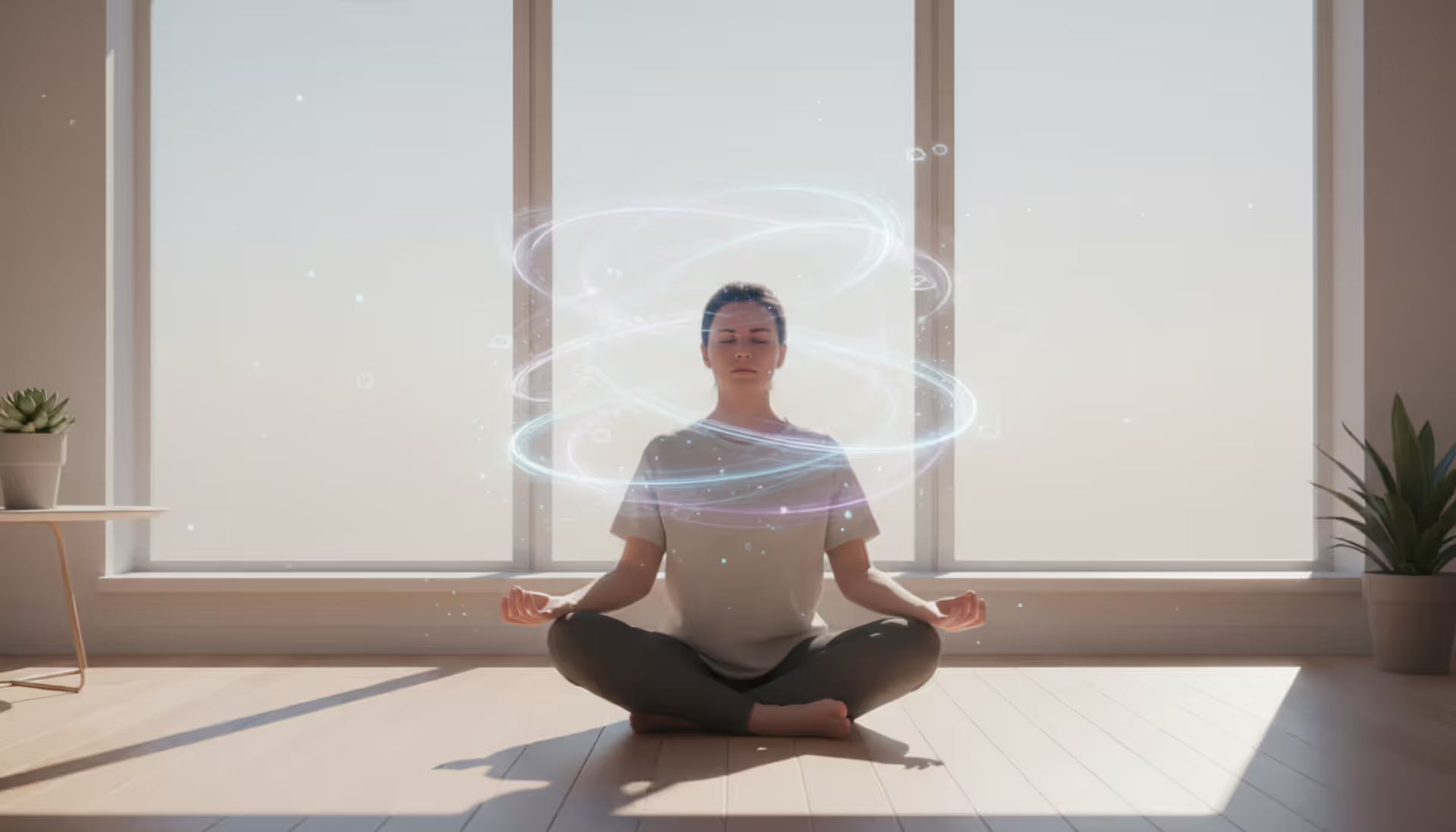
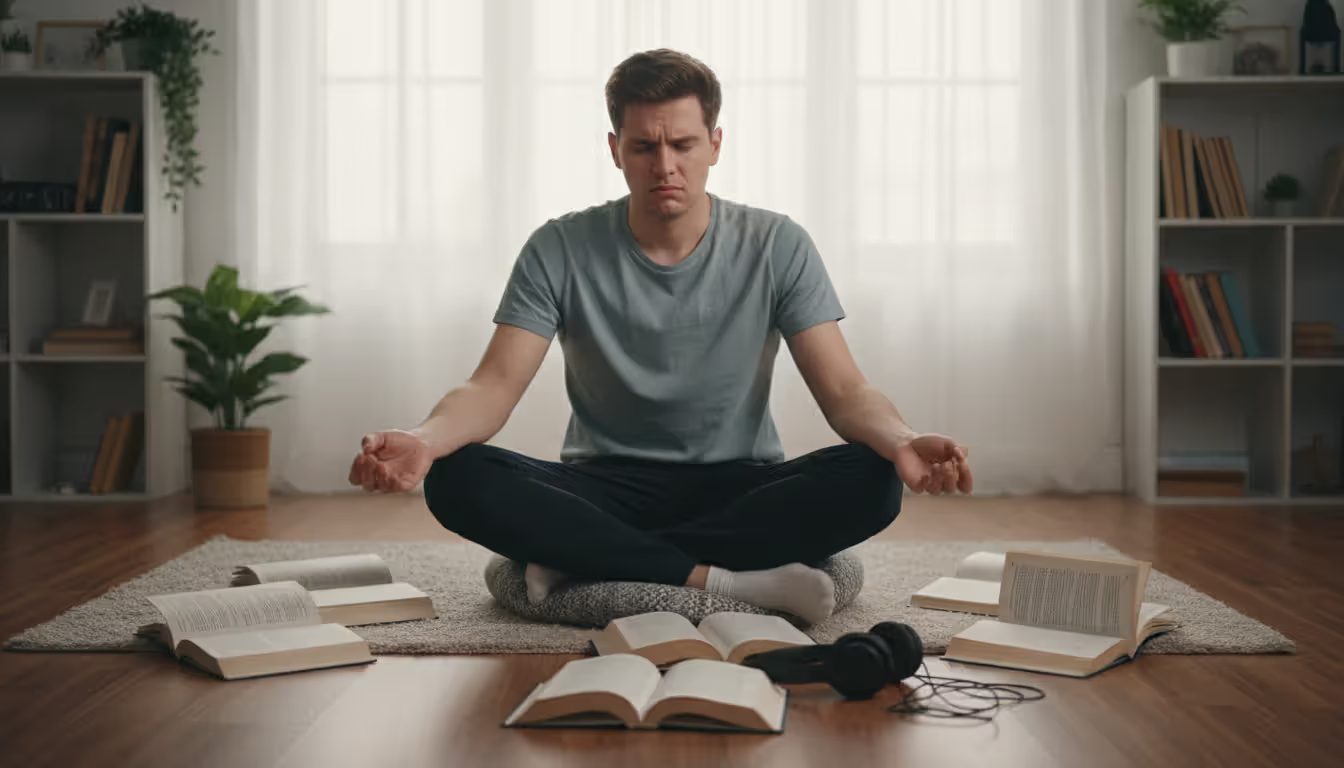
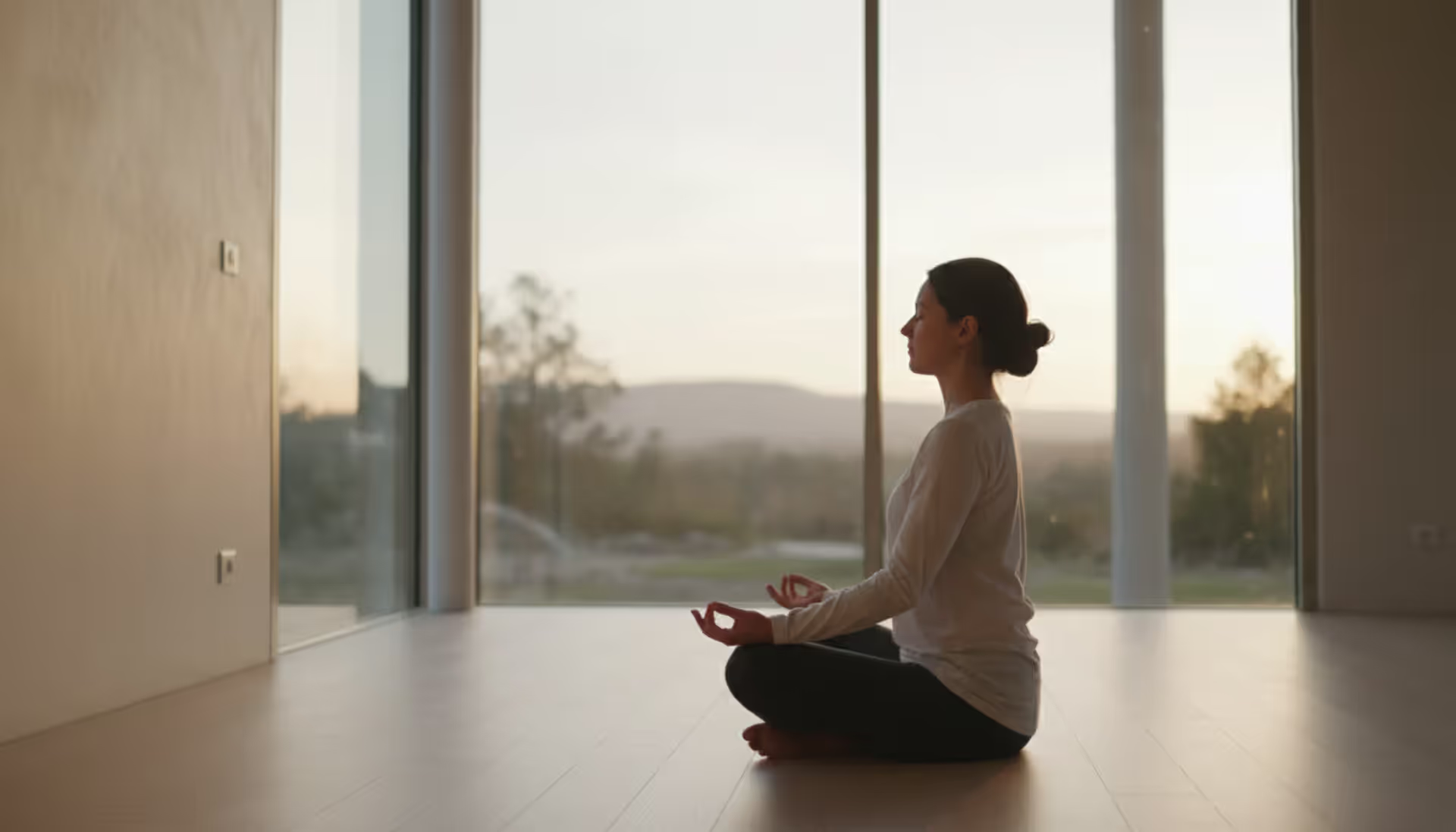
Meditation has a reputation for being simple: sit down, close your eyes, breathe. Yet anyone who's tried it knows the reality feels nothing like that tidy description. Your legs ache, your mind races through grocery lists and old arguments, and the promised calm seems reserved for people who aren't you. This frustration isn't a personal failing—it's a predictable collision between ancient practice and modern brain wiring.
What Makes Meditation Feel Difficult
Your brain evolved for survival, not stillness. The neural networks that kept our ancestors alert to predators now scan for emails, unfinished tasks, and social threats. When you sit to meditate, you're essentially asking a system designed for constant vigilance to power down voluntarily.
Neuroscientists have identified the default mode network (DMN), a brain circuit that activates during rest and generates that familiar mental chatter—planning, remembering, self-referential thinking. This network doesn't malfunction during meditation; it's doing exactly what evolution trained it to do. Meditation challenges you to observe this activity without engaging, which feels unnatural because it is unnatural from an evolutionary standpoint.
The psychological difficulty stems partly from meditation misconceptions. Many people expect their first session to deliver instant serenity, imagining a blank mind and blissful detachment. When reality delivers fidgeting and mental noise instead, they assume they're doing it wrong. This expectation gap creates a secondary layer of frustration on top of the primary challenge of managing attention.
Our culture compounds the problem. We're trained to optimize, achieve, and measure progress. Meditation asks you to sit without improving anything, without reaching a destination. That purposelessness triggers discomfort in people accustomed to productivity metrics and visible results.
Common Meditation Struggles Beginners Face
New meditators encounter a surprisingly consistent set of obstacles. These aren't signs of inability—they're standard features of learning any attention-based skill.
Physical discomfort ranks high. Your back protests unfamiliar postures. Your knees ache. An itch on your nose becomes urgent. These sensations aren't meditation-specific; you just never noticed them before because distraction kept them below conscious awareness.
Boredom arrives quickly. Without external stimulation, many people feel understimulated to the point of anxiety. The mind craves input, and sitting quietly feels like sensory deprivation.
Impatience follows close behind. After three sessions without transformation, people wonder when the benefits kick in. The gap between effort invested and results perceived feels disproportionate compared to other skills where practice yields obvious improvement.
Technique confusion creates paralysis. Should you count breaths? Follow sensations? Use a mantra? Each tradition offers different instructions, and beginners often freeze, unsure if they're following the "right" method.
Author: Caleb Montrose;
Source: 5sensesspa.com
Mind Wandering and Loss of Focus
Your attention drifts within seconds. You start focused on breathing, then suddenly you're replaying a conversation from Tuesday, planning dinner, or composing an email. This happens not occasionally but dozens of times per session.
Mind wandering during meditation isn't a bug—it's the feature you're training to recognize. The practice isn't maintaining perfect focus; it's noticing when focus breaks and gently returning. That noticing-and-returning cycle is the meditation, not a failure interrupting "real" meditation.
Research from 2025 found that experienced meditators don't eliminate mind wandering; they simply catch it faster and with less self-judgment. Beginners spend an average of 47 seconds lost in thought before noticing. After six months of practice, that drops to around 12 seconds. The wandering continues; the awareness sharpens.
Physical Restlessness and Discomfort
Dealing with restlessness in meditation reveals how rarely we sit completely still. Your body has learned that discomfort signals action—scratch the itch, shift position, eliminate the irritant. Meditation asks you to observe discomfort without automatic reaction.
This restlessness often intensifies before it improves. As you quiet external distractions, physical sensations grow louder by contrast. A slight tension in your shoulders becomes a screaming knot. The urge to move can feel overwhelming.
Many beginners interpret this as their body rejecting meditation, when it's actually their nervous system adjusting to unfamiliar stillness. The restlessness often carries stored tension or unexpressed energy seeking release.
Emotional Resistance and Avoidance
Sitting quietly removes the buffer of distraction that usually keeps uncomfortable emotions at bay. Anxiety you've been outrunning catches up. Sadness you've been postponing surfaces. Anger you've been redirecting demands attention.
This emotional emergence explains why some people feel worse after meditation initially. They're not doing it wrong—they're experiencing what happens when you stop avoiding your inner landscape. The practice doesn't create these emotions; it reveals what was already there.
Many people unconsciously resist meditation because some part of them knows it will bring them face-to-face with what they'd rather not feel. That resistance manifests as "forgetting" to practice, suddenly getting busy, or deciding meditation "isn't for me."
Author: Caleb Montrose;
Source: 5sensesspa.com
Why Your Mind Keeps Wandering During Practice
The default mode network activates within seconds of closing your eyes. This isn't personal weakness—it's universal brain architecture. The DMN generates self-referential thought, mental time travel, and social cognition. It's the neural substrate of daydreaming, planning, and rumination.
When you focus on breath or body sensations, you engage different networks—the executive attention network and salience network. These systems can sustain focus, but they fatigue quickly, especially in untrained brains. After 10-30 seconds, the DMN reasserts control, and your mind wanders.
Overcoming distractions in meditation means understanding this isn't a battle to win but a pattern to work with. Each time you notice wandering and return to your anchor (breath, body, sound), you strengthen the neural pathways supporting voluntary attention control. Brain imaging studies from 2025 show measurable thickening in attention-related cortical regions after just eight weeks of practice.
The wandering also serves a purpose. Your brain uses unfocused time to process information, solve problems, and consolidate memories. Fighting this natural function creates tension. Accepting it as normal—then gently redirecting—works better than forcing rigid focus.
Environmental factors matter too. Hunger, caffeine, stress, and poor sleep all increase mind wandering. A brain running on four hours of sleep and two espressos will wander more than a well-rested, stable one.
Troubleshooting Your Meditation Practice
What to do when meditation is difficult depends on identifying the specific obstacle. Generic advice helps less than targeted solutions matched to your actual experience.
What to Do When You Can't Sit Still
Start shorter. Five focused minutes beats twenty fidgety ones. Your attention is a muscle; you wouldn't start weightlifting with your maximum load.
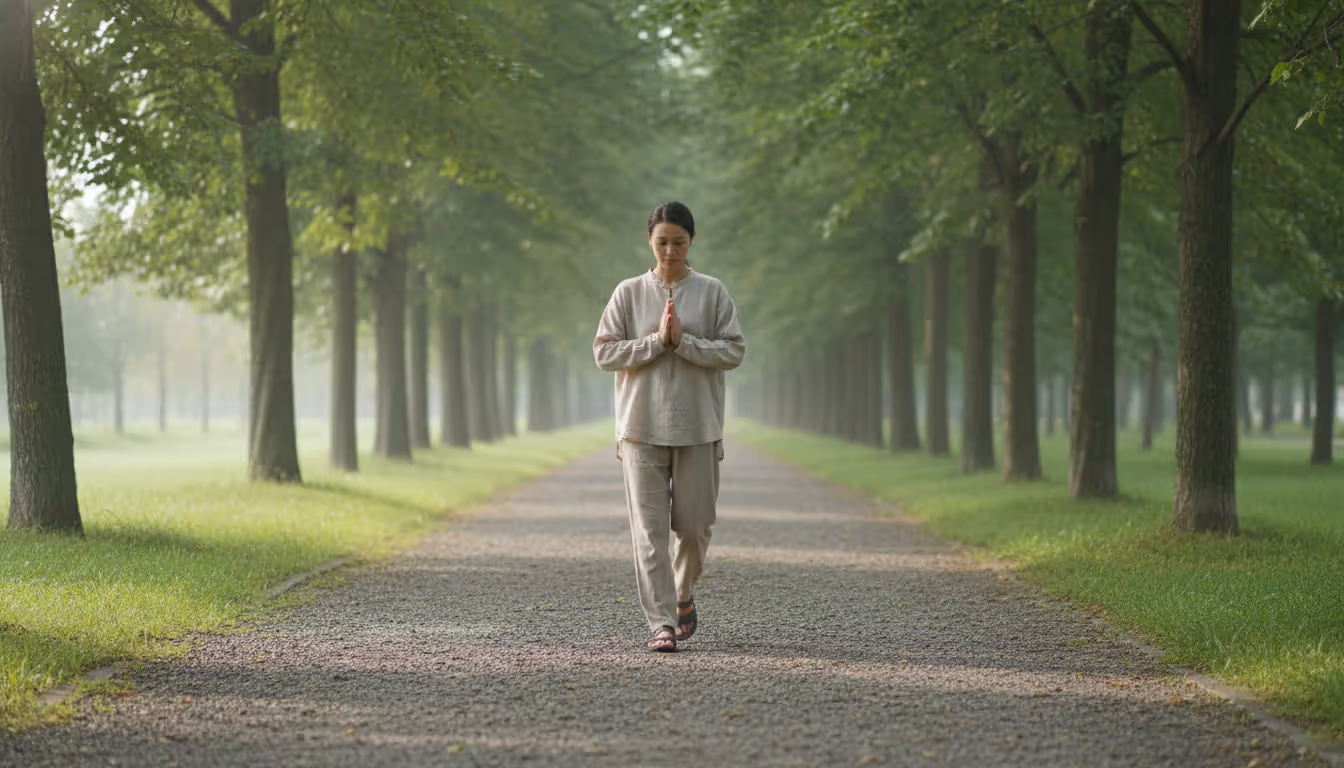
Try movement-based practices first. Walking meditation, yoga, or tai chi satisfy the body's need for activity while training attention. Once movement practices feel manageable, stillness becomes easier.
Adjust your posture. You don't need to sit cross-legged on the floor. Chairs work fine. Lying down works (though drowsiness becomes more likely). The goal is alert comfort, not postural purity.
Author: Caleb Montrose;
Source: 5sensesspa.com
Address physical needs before sitting. Use the bathroom. Adjust room temperature. Wear comfortable clothes. Eliminate obvious discomfort sources so you're not fighting your body and your mind simultaneously.
How to Handle Racing Thoughts
Label thoughts generically: "planning," "remembering," "worrying." This creates slight distance without engaging content. You acknowledge the thought without following its storyline.
Use a more engaging anchor. Breath is subtle; some minds need something stronger. Try counting breaths up to ten, then restarting. Or use body scanning, moving attention systematically through physical sensations.
Write down persistent thoughts before meditating. If your mind keeps returning to your to-do list, spend two minutes listing tasks first. This often satisfies the brain's need to capture information.
Accept that some days are just noisy. Meditation during stress, hormonal fluctuations, or life transitions will feel different than meditation during calm periods. The practice is working with whatever arises, not achieving a particular state.
Adjusting Your Expectations
Troubleshooting meditation practice often means troubleshooting your assumptions. If you expect mental silence, every thought feels like failure. If you expect bliss, normal experience disappoints.
Reframe success as showing up, not achieving a specific state. You meditated successfully if you sat for your intended time, regardless of how it felt.
Track consistency, not quality. Did you practice five days this week? That's measurable progress. "Good" and "bad" sessions are subjective and fluctuating.
Understand that benefits accumulate gradually and often appear outside meditation first. You might notice you're less reactive in traffic or recover from stress faster before your sitting practice feels dramatically different.
Meditation Myths That Make Practice Harder
Myth: You should clear your mind completely. Reality: Thoughts are normal. Meditation teaches you to change your relationship with thoughts, not eliminate them. Even experienced practitioners have mental activity; they just don't grab onto every thought that passes.
Myth: If you're uncomfortable, you're doing it wrong. Reality: Some discomfort is inherent in learning to sit still and face your mind. The question is whether discomfort is harmful (sharp pain, numbness) or just unfamiliar (restlessness, boredom). The latter is part of the process.
Myth: Meditation should feel relaxing. Reality: Meditation sometimes relaxes you, but that's not its primary purpose. It builds awareness and attention skills. Some sessions feel agitating, especially when you're processing stress or facing avoided emotions.
Myth: You need perfect silence and ideal conditions. Reality: Waiting for perfect conditions means rarely practicing. Meditating with background noise, interruptions, or less-than-ideal circumstances builds resilience. Monks meditate in monasteries, but also in airports and hospitals.
Myth: There's one correct technique. Reality: Dozens of valid approaches exist—mindfulness, concentration, loving-kindness, body scan, mantra. What works depends on your temperament, goals, and current life circumstances. Challenges when starting meditation often stem from technique mismatch rather than inability.
Myth: Struggling means you're not cut out for meditation. Reality: Struggle is the practice.
The most important moment in meditation is the moment you notice your mind has wandered. That's the bicep curl of meditation
— Sharon Salzberg
Practical Strategies for Overcoming Meditation Challenges
Start with two minutes. Seriously. Two minutes daily builds the habit without triggering resistance. Once two minutes feels easy, expand to five, then ten. Consistency matters more than duration.
Choose a technique that matches your personality. If you're analytical, try noting practice (labeling experiences). If you're kinesthetic, try body-based methods. If you're emotional, try loving-kindness meditation. Forcing yourself into an incompatible style creates unnecessary friction.
Create environmental support. Meditate in the same place and time daily. Your brain loves routines; they reduce decision fatigue. A consistent cue (same cushion, same corner) signals your nervous system that it's meditation time.
Use guided meditations initially. A voice providing structure prevents your mind from wandering as far and gives you something to return to. Apps and recordings serve as training wheels until you internalize the process.
Author: Caleb Montrose;
Source: 5sensesspa.com
Track practice, not experience. Note whether you meditated, not how it felt. A simple calendar with checkmarks builds momentum without judgment.
Find community. Meditating with others—in person or online—provides accountability and normalization. Hearing that others struggle with the same issues reduces the sense of personal failure.
Experiment with timing. Morning works for some people; evening for others. Some find meditation easier after exercise when physical restlessness is lower. Test different times to find what fits your energy patterns.
Pair meditation with an existing habit. Meditate right after coffee, or before dinner, or after brushing your teeth. Habit stacking makes new practices stick faster.
Mind craves stimulation; expectations of quick results
Reframe boredom as useful data; focus on consistency over quality; use more engaging anchors
Confusion about technique
Too many options; perfectionism
Pick one method for 30 days; accept "good enough" over perfect; use guided sessions
FAQ
Is it normal for meditation to feel uncomfortable?
Yes, completely normal. Physical discomfort from unfamiliar postures, mental discomfort from facing your thoughts, and emotional discomfort from encountering avoided feelings are all standard parts of learning meditation. The key is distinguishing between uncomfortable-but-safe and actually harmful sensations. Restlessness and boredom are normal; sharp pain or numbness indicate you need to adjust position.
How long does it take to get better at meditation?
Most people notice subtle shifts in daily life—slightly better stress recovery, moments of clearer awareness—within 2-4 weeks of consistent practice. Measurable changes in brain structure appear around 8 weeks in research studies. But "better" is tricky; meditation isn't like running where you clearly get faster. Progress often means noticing mind wandering sooner or judging yourself less harshly, not achieving a particular state.
Should I stop meditating if my mind keeps wandering?
No. Mind wandering is not a problem to fix—it's the core of the practice. The meditation happens when you notice wandering and return to your anchor. That noticing-and-returning cycle is what trains your attention. Stopping because your mind wanders is like stopping weightlifting because the weights feel heavy.
What's the easiest meditation style for beginners?
Guided body scan meditations work well for many beginners because they provide structure and a concrete focus (physical sensations). Breath counting also helps because it gives the mind a task. Loving-kindness meditation suits people who find focusing on themselves difficult. Experiment with different styles for a week each to find what feels most workable, not necessarily most comfortable.
Can meditation be too hard for some people?
Certain mental health conditions (active psychosis, severe PTSD, acute depression) can make meditation destabilizing without professional support. But for most people, "too hard" actually means "using an incompatible technique" or "expecting the wrong thing." Adjusting the approach—shorter sessions, different style, lower expectations—usually resolves the difficulty. If meditation consistently increases distress after trying modifications, working with a teacher or therapist can help.
How do I know if I'm doing meditation wrong?
You're probably not doing it wrong if you're sitting with intention to practice, noticing when your mind wanders, and gently returning attention to your chosen anchor. You might be doing it in a way that doesn't suit you (wrong technique, wrong duration, wrong time of day), but that's different from wrong. Red flags for actual problems: forcing yourself to sit in pain, using meditation to avoid necessary action, becoming more judgmental of yourself or others, or feeling consistently worse over weeks of practice.
Meditation feels hard because it is hard—not impossibly hard, but genuinely challenging in ways our culture rarely prepares us for. You're training attention in an attention-economy designed to fracture it. You're cultivating stillness in a system optimized for constant motion. You're facing your mind directly instead of keeping it perpetually distracted.
The difficulty isn't evidence of your inadequacy. It's evidence that you're working against powerful evolutionary and cultural currents. Every time you sit despite restlessness, return attention despite wandering, or practice despite seeing no immediate results, you're building capacity that extends far beyond the meditation cushion.
Progress in meditation looks less like steady improvement and more like gradually increasing your tolerance for difficulty. You don't eliminate mind wandering; you get less bothered by it. You don't achieve permanent calm; you recover from disturbance faster. You don't master your mind; you stop needing to.
Start smaller than feels meaningful. Practice more consistently than feels convenient. Expect less transformation than you'd prefer. These aren't compromises—they're the actual path forward. The meditation that changes you is the one you actually do, not the ideal practice you keep postponing until conditions improve.
Your mind will wander. Your body will fidget. Your expectations will exceed your experience. All of this is normal, workable, and temporary. The question isn't whether meditation is hard—it is—but whether you're willing to work with that hardness instead of against it.
Meditation produces measurable changes in brain structure, nervous system function, and emotional regulation. Learn what meditation actually does, common reasons people start practicing, and science-backed benefits for mental and physical health that explain why millions now meditate regularly
Meditation didn't emerge from a single moment of invention. Archaeological evidence places the earliest practices at roughly 5,000 to 7,000 years ago, with wall art from the Indus Valley showing figures in meditative postures. The practice developed across multiple civilizations independently
Meditation falls into three research-backed categories: focused attention, open monitoring, and self-transcending. Understanding this framework helps you choose from 12 common techniques based on your goals, experience level, and lifestyle rather than getting lost in endless options
Meditation isn't one-size-fits-all. Learn which techniques work best for beginners, how to match methods to your goals, and step-by-step instructions for breath awareness, body scans, mindfulness, and more. Includes comparison table and expert guidance for building a sustainable practice
The content on this website is provided for general informational and educational purposes only. It is intended to explain concepts related to meditation, mindfulness, mental health, and spiritual practices.
All information on this website, including articles, guides, and examples, is presented for general educational purposes. Meditation outcomes may vary depending on individual practices, health conditions, and guidance.
This website does not provide medical, mental health, or spiritual advice, and the information presented should not be used as a substitute for consultation with qualified professionals.
The website and its authors are not responsible for any errors or omissions, or for any outcomes resulting from decisions made based on the information provided on this website.