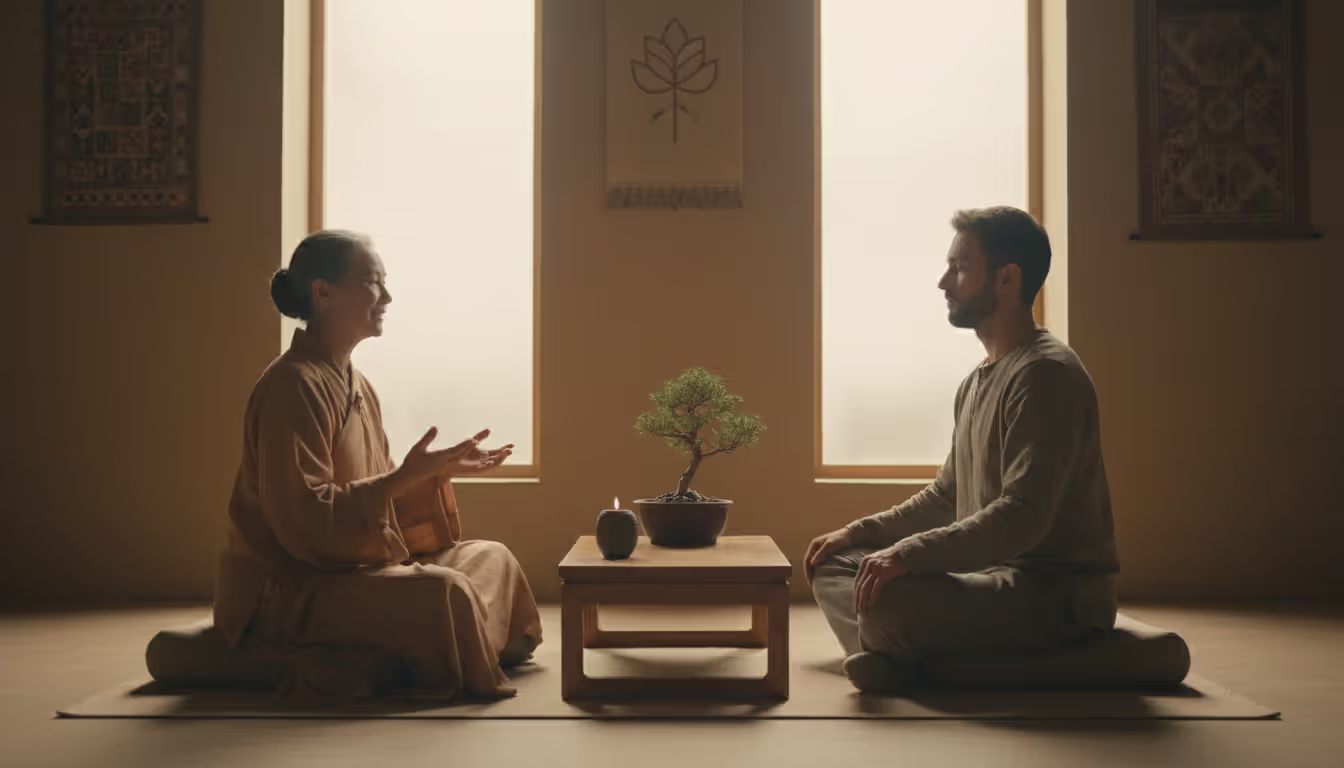
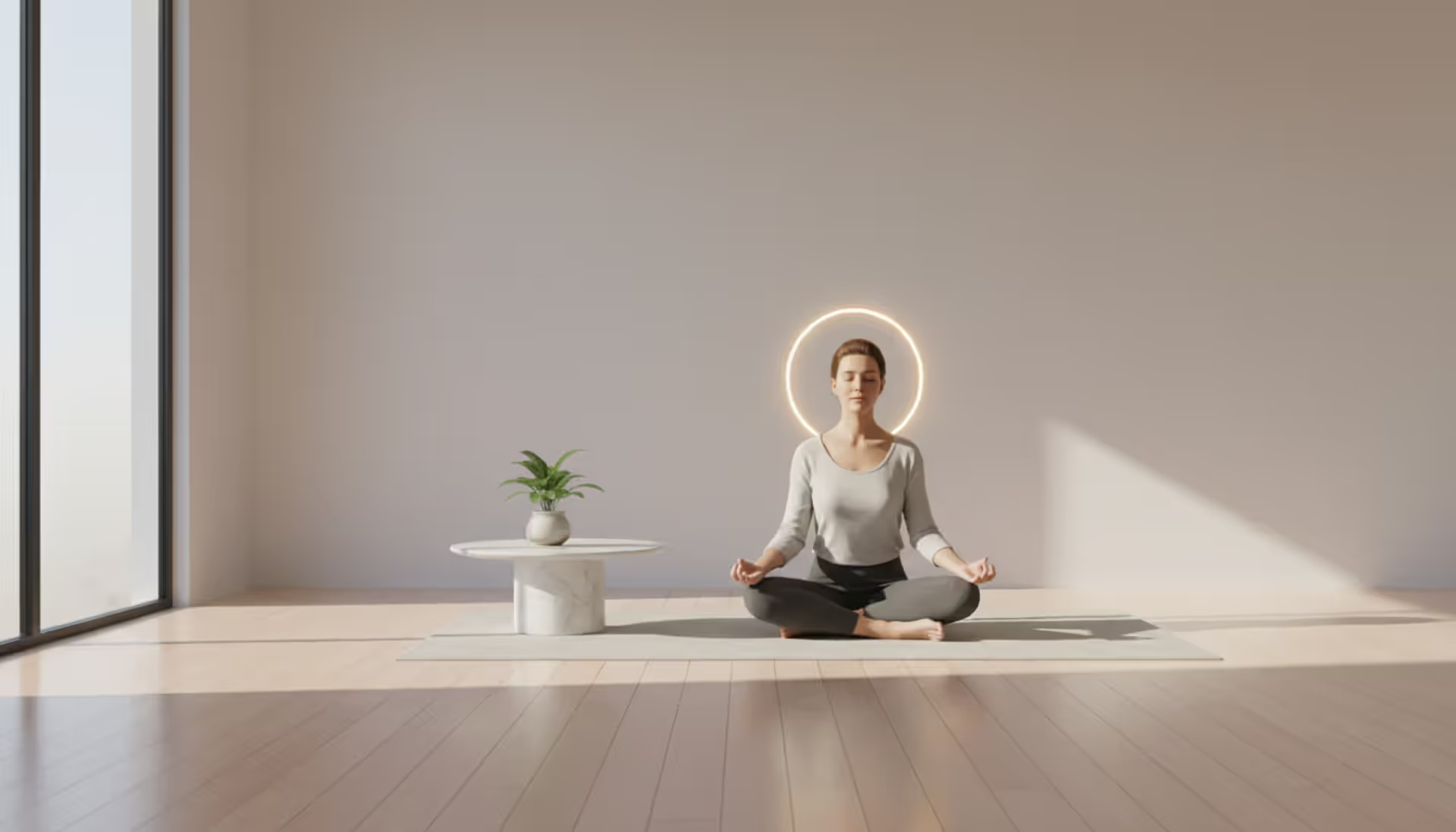
A person sitting with closed eyes in a comfortable armchair in a bright minimalist room during early morning with soft golden light coming through the window
Thousands of Americans now practice Vedic meditation—a technique that's been around for millennia but remains surprisingly misunderstood. Here's what actually happens: you sit in a regular chair twice a day for twenty minutes, eyes closed, silently using a specific sound called a mantra. That's it. No special posture required, no breathing exercises, no apps tracking your “mindfulness score.”
The mantra itself carries no meaning in English or any other language. It's just a sound vibration. You're not trying to concentrate hard or push thoughts away. Most people find their minds wandering constantly during sessions, especially at first. That's completely normal. The technique works through what teachers call effortless transcending—your nervous system naturally releasing built-up stress as mental activity gradually settles on its own.
You won't need to change your diet, join a community, or adopt new beliefs. Atheists practice this alongside religious folks. Wall Street traders use the same technique as yoga instructors. The morning session (usually before breakfast) sets you up for the day ahead. The evening round (typically before dinner) helps you decompress from whatever chaos you've dealt with. Between these two twenty-minute bookends, most practitioners notice they're less reactive to annoyances and recover faster from setbacks.
What Is Vedic Meditation?
Picture this: you're sitting on your couch at 6:30 AM with a cup of coffee nearby. You close your eyes and silently introduce your mantra—a specific sound your teacher gave you during training. For the next twenty minutes, your job is remarkably simple. Use the mantra easily, without force. When you notice you've drifted into planning your day or replaying yesterday's argument, gently return to the mantra. No self-criticism, no frustration.
The mantra comes from the Vedic tradition, which stretches back over 5,000 years in India. Teachers today maintain an unbroken chain of transmission, learning how to properly instruct others through formal training lasting several months. They don't just hand you a sound and wish you luck. During your initial course, they'll show you exactly how to use the mantra so it functions as intended.
Author: Caleb Montrose;
Source: 5sensesspa.com
What makes this different from mindfulness apps or guided meditations? First, there's no guidance during your actual practice sessions. You meditate alone, in silence, using only the mantra. Second, you're not trying to stay present or observe your thoughts without judgment. The mantra naturally draws your attention to subtler levels of mental activity until sometimes it disappears entirely, leaving brief moments of pure awareness.
Research using fMRI and EEG shows something unique happening during these sessions. Your brain exhibits coherence patterns different from sleep, different from relaxation, different from focused concentration. Oxygen consumption drops significantly—sometimes lower than during deep sleep—while you remain fully conscious. This combination allows your nervous system to release stress deposits that regular rest doesn't touch.
The Vedic tradition designed this practice specifically for householders—people with jobs, families, bills to pay. You won't find requirements to meditate for hours, retreat from society, or master complicated philosophies. Twenty minutes, twice daily, using a mantra. That simplicity explains why emergency room physicians, single parents, and college students all maintain regular practices despite wildly different schedules.
Origins and History of the Vedic Tradition
The Vedas—humanity's oldest surviving spiritual texts—contain references to meditation techniques dating back more than five millennia. Ancient Sanskrit verses describe methods for accessing transcendent states of awareness, though the actual practices were transmitted orally from teacher to student rather than written in instruction manuals.
This oral tradition nearly died out during India's colonial period. By the early 1900s, only a handful of teachers still knew the authentic methods. Swami Brahmananda Saraswati, who served as Shankaracharya of Jyotir Math from 1941 to 1953, was one of these rare masters. His student, Maharishi Mahesh Yogi, brought the technique to the West in 1959.
Author: Caleb Montrose;
Source: 5sensesspa.com
Maharishi initially called his offering Transcendental Meditation. Throughout the 1960s and 70s, he trained hundreds of instructors and established teaching centers worldwide. The Beatles famously studied with him in 1968, generating massive publicity. But beyond the celebrity associations, something more significant was happening—scientists began studying the practice's effects using modern research tools.
By the late 1970s, several of Maharishi's trained teachers had left his organization. Some disagreed with institutional policies. Others wanted more teaching autonomy. These independent instructors continued teaching the same core technique but stopped using the trademarked term "Transcendental Meditation." Instead, they described what they taught as Vedic meditation, emphasizing the ancient tradition rather than organizational affiliation.
This split created two parallel streams that exist today. The official TM organization operates as a centralized global entity with standardized protocols and trademarked terms. Independent Vedic meditation teachers work alone or in small groups, maintaining the technique's authenticity while adapting course structures to contemporary needs.
Both streams trace their lineage through Maharishi back to Brahmananda Saraswati. Both preserve the fundamental mechanics—how mantras are selected, how they're introduced during the first session, how students learn to use them properly. The organizational wrapper differs, but the meditation itself remains essentially identical.
How the Vedic Meditation Technique Works
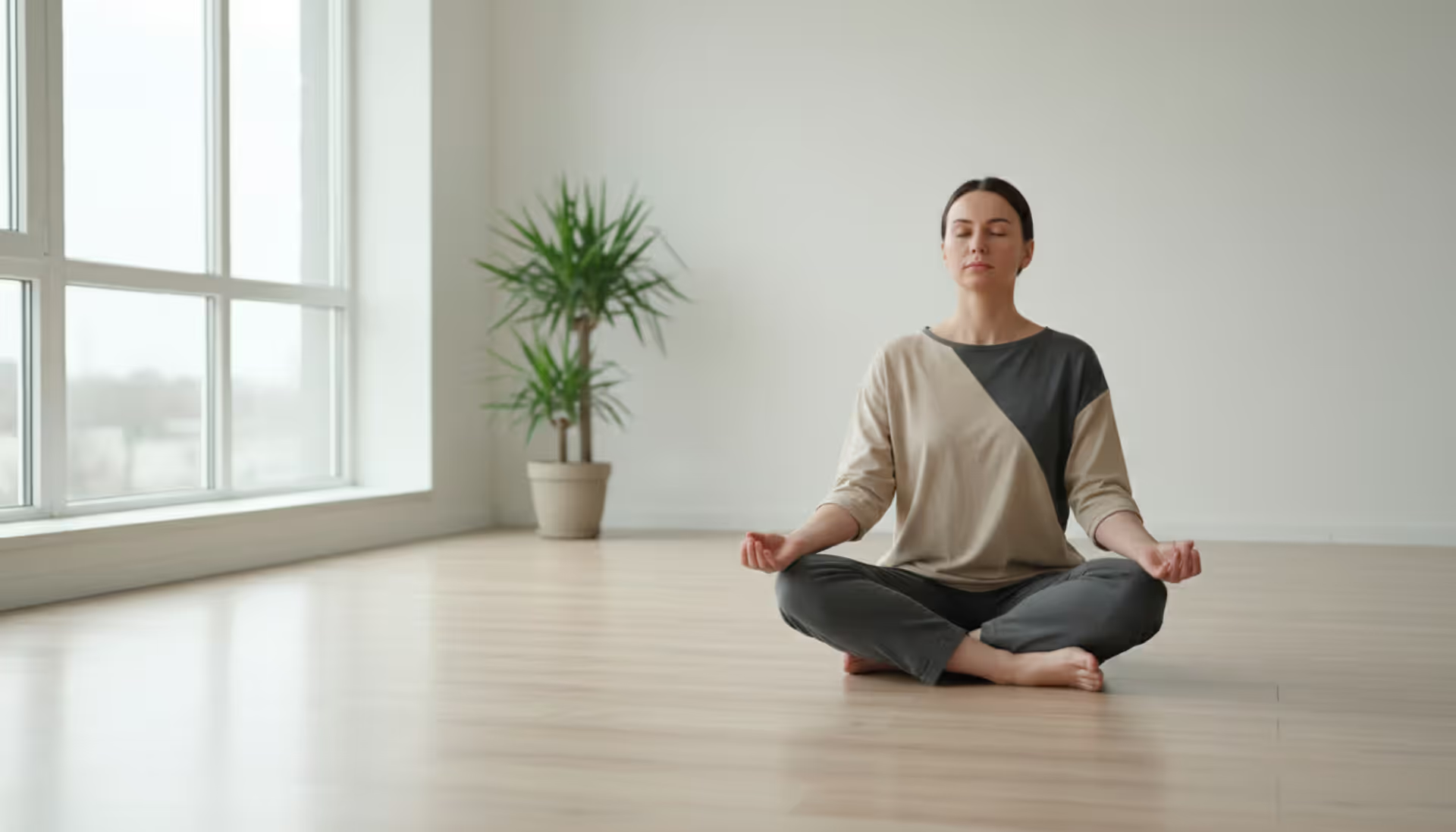
You'll need a chair or couch where you can sit upright comfortably. Lying down usually leads to sleep, which isn't the goal. Find somewhere reasonably quiet—not silent, just quiet enough that you won't be interrupted. Close your eyes and wait about thirty seconds. Then silently introduce your mantra.
Notice I said "introduce," not "concentrate on." You're thinking the mantra easily, the way you might notice a song playing in the background. It doesn't need to be crisp or loud in your mind. Sometimes it's faint. Sometimes it morphs into something else. Sometimes it vanishes completely for stretches. All of that is fine.
Your mind will wander—guaranteed. You'll think about work emails, what to cook for dinner, that weird thing your friend said last Tuesday. People often worry this means they're "doing it wrong." Actually, these thoughts often signal stress releasing. When you notice you've drifted (which might be five seconds later or five minutes later), you gently return to the mantra. No frustration, no judgment. Just easy return.
This cycle repeats throughout the session: mantra, thoughts, back to mantra, more thoughts, back to mantra again. Some days feel deeply peaceful with long quiet stretches. Other days your mind races non-stop. Both types of sessions work. The technique operates at a physiological level regardless of subjective experience.
After twenty minutes, you stop using the mantra but keep your eyes closed for another two or three minutes. This transition matters. Your metabolism and brain activity have shifted significantly during the session. Opening your eyes immediately can leave you groggy or disoriented. Those few extra minutes let your system normalize before you stand up and rejoin your day.
The Role of Mantras in Practice
Your mantra isn't a word you can look up in Sanskrit dictionaries. It's a specific sound vibration selected for its effect on your nervous system, not its meaning. Teachers choose from a set of traditional sounds, matching them to students through criteria they assess during initial instruction.
These sounds have zero conceptual content. If your mantra meant "peace" or "love" or anything else, your thinking mind would engage with that concept instead of using the sound to settle inward. The meaninglessness is essential to the mechanics.
Teachers give mantras privately during your first session, creating a one-on-one transmission between you and the practice. You won't find your mantra on Google or in books. Some teaching schools use about a dozen different mantras, assigning them based on age ranges. Others maintain that proper selection requires more nuanced assessment of individual characteristics.
Regardless of how your specific mantra was selected, it becomes your permanent tool. It doesn't change over time or require updates. You never share it with others or say it aloud. This isn't mystical secrecy—speaking the mantra or discussing it with others causes it to accumulate associations and meanings that interfere with its function.
What Happens During a Session
The first few minutes typically involve active thinking. Your mind processes recent experiences, plans upcoming tasks, or simply wanders randomly. This is your nervous system dealing with surface-level stress. As the session continues, thoughts often become dreamlike—abstract images, disconnected memories, or strange narratives that don't quite make sense.
Physical sensations frequently arise. Your body might feel heavy, like you're sinking into the chair. Or light, almost floating. Some people experience tingling in their hands or feet. Others have small involuntary movements—a twitch, a shift in posture. These sensations indicate the body releasing accumulated tension.
You might occasionally fall asleep, especially during the first few weeks if you're chronically sleep-deprived. This isn't ideal because meditation provides a type of rest that's distinct from sleep, but it's not catastrophic either. If your body desperately needs sleep, it'll take it. With regular practice and adequate nighttime rest, falling asleep during meditation becomes rare.
Some sessions leave you feeling incredibly refreshed afterward. Others leave you feeling nothing special or even slightly groggy. Both outcomes are normal. Judging sessions as "good" or "bad" based on how they felt misses what's actually happening—the technique is working at a deeper level than subjective experience can detect.
Vedic Meditation vs Transcendental Meditation
New students constantly ask about the difference between these two. Short answer: they're the same fundamental practice taught through different organizational structures.
Aspect
Vedic Meditation
Transcendental Meditation
Lineage/Origin
Independent teachers trained in Maharishi's tradition
Official organization established by Maharishi Mahesh Yogi in 1959
Organizational Structure
Individual instructors or small independent schools
Global organization with headquarters and standardized procedures
Teacher Certification
Training duration varies; typically several months
Standardized 5-month residential training program
Typical Course Cost
$800–$1,800 depending on teacher and location
$980–$1,600 with some income-based pricing available
Technique Differences
Same mantra-based approach, twenty minutes twice daily
Same mantra-based approach, twenty minutes twice daily
Trademark Status
Generic term describing the ancient practice
"Transcendental Meditation" and "TM" are legally protected trademarks
Both approaches teach identical mechanics: use the mantra effortlessly, meditate twenty minutes twice daily, learn through personal instruction rather than books or videos. Both assign mantras through similar processes, though the specific sounds and selection methods may vary between individual teachers.
The organizational split happened when certain instructors trained by Maharishi chose to teach independently during the 1970s and 80s. Their reasons varied—some objected to cost structures, others wanted more flexibility in how they structured courses, still others simply preferred working outside institutional hierarchies. These teachers adopted "Vedic meditation" as their descriptor to avoid trademark issues while honoring the ancient tradition.
The TM organization maintains tighter control over teacher training, course delivery, and brand consistency. They've built extensive infrastructure including research facilities, educational institutions, and treatment centers. Independent Vedic meditation teachers typically operate smaller-scale practices, often teaching from home studios or rented spaces.
For students, the practical differences are minimal. You're learning the same technique either way. Your decision might come down to which teacher is available in your area, whether you prefer organizational structure or independent instruction, and how the course cost fits your budget.
Whether someone learns this technique as TM or Vedic meditation makes little difference physiologically. The practice produces distinctive markers—decreased cortisol levels, enhanced brain wave coherence, measurable cardiovascular improvements—that set it apart from other meditation approaches. What matters is learning the technique properly and practicing it consistently
— Dr. Norman Rosenthal
Science-Backed Benefits of Vedic Meditation
Research on this style of mantra meditation has produced some compelling findings. A 2023 meta-analysis published in the Journal of Clinical Psychology reviewed 87 different studies and found significant improvements in anxiety symptoms (effect size 0.70), depression (0.48), and PTSD symptoms (0.61) compared to control groups who didn't meditate.
Stress hormones change measurably. Researchers at UC San Diego tracked 96 people over three months in 2022. Those who meditated regularly showed cortisol levels 23% lower in afternoon measurements compared to the control group. Lower cortisol means reduced inflammation throughout your body, better immune function, and decreased risk for stress-related diseases like diabetes and heart disease.
The cardiovascular benefits look particularly promising. The American Heart Association's 2025 scientific statement on meditation acknowledged mantra-based practices as a potential complementary treatment for high blood pressure. Several clinical trials have documented blood pressure drops of 4-8 mmHg systolic among regular practitioners—reductions comparable to some first-line medications. Even more striking: a 2021 study published in Circulation followed patients with coronary artery disease for five years. Those practicing mantra meditation experienced 48% fewer heart attacks, strokes, and cardiovascular deaths compared to patients who received standard health education instead.
Author: Caleb Montrose;
Source: 5sensesspa.com
Sleep improves through multiple pathways. The deep rest during meditation helps clear accumulated sleep debt. A 2024 study using polysomnography (the gold-standard sleep measurement) found practitioners spending 18% more time in slow-wave sleep—the restorative phase crucial for physical recovery. They also fell asleep faster and woke up less frequently during the night.
Cognitive performance gets a boost too. Brain imaging reveals increased gray matter density in the prefrontal cortex and hippocampus after just eight weeks of regular practice. A 2023 study with college students showed practitioners scoring 12% higher on standardized attention tests. They also reported better grades and improved ability to focus during lectures.
Perhaps most valuable: emotional resilience. This doesn't mean suppressing difficult feelings or becoming detached. Rather, practitioners describe recovering their equilibrium faster after stressful events. A bad work meeting doesn't ruin your whole afternoon. An argument with your partner doesn't spiral into days of resentment. You still feel the emotions, but they don't derail you as easily or for as long.
How to Learn Vedic Meditation Properly
Here's what you cannot do: learn this technique from a book, YouTube video, meditation app, or article like this one. The mantra selection process, the proper way to introduce it during your first session, and the subtle mechanics all require personal instruction from a qualified teacher.
Books and articles can explain the theory, describe the benefits, and prepare you for what to expect. But the actual practice must be transmitted one-on-one. Think of it like learning to swim—you can read about stroke techniques all day, but eventually you need someone to watch you in the pool and make corrections.
The standard course runs four consecutive days. Day one involves a private session lasting 60 to 90 minutes. The teacher performs a brief ceremony, gives you your personal mantra, and guides you through your first meditation. This private instruction ensures you understand the basics before joining group sessions.
Author: Caleb Montrose;
Source: 5sensesspa.com
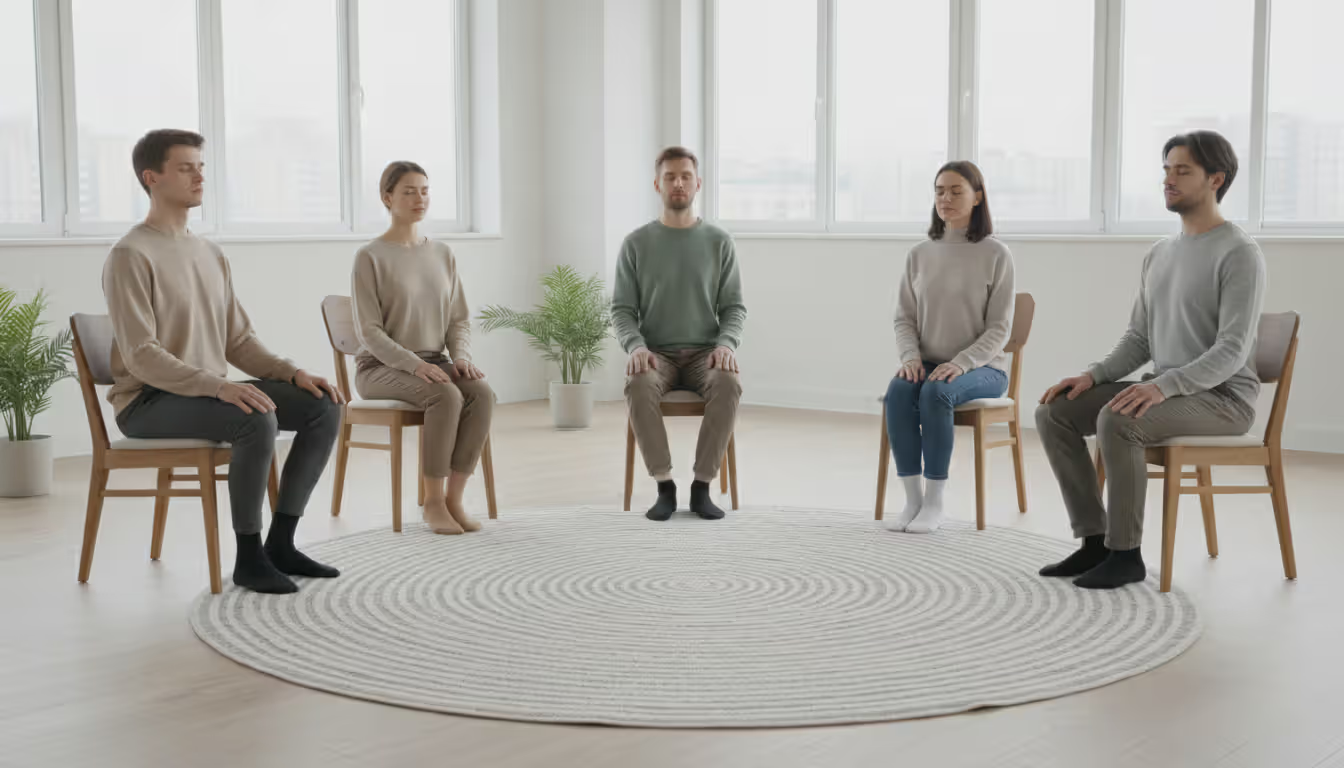
Days two through four include group meetings lasting 90 to 120 minutes each. You'll meditate together, learn the underlying theory, and discuss common experiences. The teacher answers questions and corrects misunderstandings before they become ingrained habits. By day four, you're meditating independently and troubleshooting your own practice.
Expect to invest $800 to $1,800 for this initial course, depending on your teacher's location and whether they offer sliding-scale pricing. Some instructors reduce fees for students, veterans, or people facing financial constraints. The cost includes all four days, your personalized mantra, and lifetime follow-up support—most teachers let you check in whenever you have questions or want to attend group meditations.
Finding a qualified instructor requires some homework. Look for teachers who completed formal training programs (usually several months of intensive study), actively maintain their teaching practice, and clearly describe their background. Personal referrals work well—if you know someone who meditates, ask about their teacher. Most instructors offer free introductory presentations where you can meet them, hear about their approach, and decide if it feels like a good fit.
After completing your course, you practice independently at home. The ideal schedule places one session in the morning (typically before breakfast) and another in the evening (usually before dinner). The exact timing doesn't need to be rigid, but consistency helps establish the habit. You can meditate anywhere reasonably quiet—your bedroom, a parked car during lunch break, a hotel room while traveling, even a bathroom stall in an emergency (though obviously not ideal).
Common mistakes include practicing at wildly different times each day, skipping sessions when your schedule gets hectic, or trying to meditate lying in bed (which almost always leads to sleep). Teachers emphasize treating the practice like brushing your teeth—something you do regardless of how busy you are or how you feel about it.
Most instructors offer ongoing support through periodic check-ins, group meditation sessions, or refresher courses. None of this is mandatory, but it helps troubleshoot issues and deepen your understanding. Some people check in monthly during the first year, then less frequently as the practice becomes automatic.
Common Questions About Starting Your Practice
Can I learn Vedic meditation from a book or app?
No, and here's why that matters. First, mantras must be given through a specific process that teachers learn during their training. You can't just pick a sound from a list. Second, the way you use the mantra—effortlessly, without concentration—is nearly impossible to grasp from written descriptions alone. Most people who try learning from books end up concentrating hard on the mantra, which creates tension instead of releasing it. Third, the teacher-student relationship provides crucial troubleshooting during those first weeks when you're establishing the practice. Books can supplement your understanding after you've learned properly, but they can't replace that initial personal instruction.
How long does it take to learn the technique?
The initial four-day course gives you everything you need to meditate independently. By day five, you're on your own. But truly integrating the practice into your life and experiencing the full range of benefits takes longer—usually several months. The first ninety days are critical. You're establishing the habit, working through initial challenges, and accumulating enough positive experiences to stay motivated. Teachers often say you need a full year of consistent practice to really appreciate what the technique can do for you.
Do I need to be spiritual or religious to practice?
Not even slightly. Plenty of skeptics and atheists maintain regular practices. They meditate for stress reduction, better sleep, improved focus—completely secular goals. The technique comes from a spiritual tradition, sure, but practicing it doesn't require adopting Hindu philosophy, believing in chakras, or changing anything about your worldview. You can be a hardcore materialist who thinks consciousness is just brain activity and still get the full benefits. The practice works mechanically, regardless of what you believe about why it works.
What if I can't stop my thoughts during meditation?
This question comes up constantly, and it reveals a fundamental misunderstanding. You're not supposed to stop thinking. Many meditation teachers poorly explain this, leading people to believe they've failed if thoughts occur. In reality, thoughts during your session are completely normal. They often indicate stress releasing from your nervous system. The busiest, most thought-filled sessions can be the most beneficial physiologically, even though they feel "unsuccessful." Your only job is gently returning to the mantra when you notice you've drifted. That's it. The cycle of mantra-thoughts-mantra-thoughts repeats throughout the session, and each gentle return helps your nervous system settle a bit deeper.
How much does a Vedic meditation course typically cost?
Budget between $800 and $1,800 for the standard four-day course. This covers your private instruction session, the three group meetings, your personal mantra, and ongoing support from your teacher. Some instructors offer payment plans spreading the cost over several months. Others provide income-based sliding scales. Yes, it's a significant upfront investment. But consider what you're getting: a lifetime skill with no subscription fees, no ongoing costs, no equipment required. Many practitioners compare it favorably to years of therapy at $150 per session or ongoing medication costs. The return on investment compounds over time as the benefits accumulate.
Can children or seniors practice Vedic meditation?
The standard technique works for people aged twelve and up. Younger children can learn modified versions with shorter sessions—five to ten minutes instead of twenty. There's no upper age limit whatsoever. People in their eighties and nineties practice successfully. The technique demands no physical flexibility beyond being able to sit in a regular chair. You don't need perfect cognitive function, but you should be able to follow simple instructions and remember to practice twice daily. Dementia patients in early stages have learned successfully with some additional support from family members.
Vedic meditation delivers practical stress management without requiring you to overhaul your lifestyle or adopt new belief systems. The technique itself is remarkably simple—twenty minutes twice daily with a silent mantra—making it accessible to anyone with a chair and some quiet time.
The initial course requires investment of both time and money. But once learned, the practice becomes a self-maintaining tool that compounds benefits over months and years. You're not dependent on apps, recordings, or continuing classes. The technique is yours permanently.
Consistency matters more than perfection. Missing the occasional session won't destroy your progress, but establishing a regular rhythm allows your nervous system to actually reset its baseline stress response. Finding a qualified teacher who can guide you properly through those initial weeks and provide backup support makes the difference between a practice that sticks and one that fades after three months.
Whether stress relief, better focus, improved health, or simple curiosity draws you to this practice, the results show up measurably when you apply the technique correctly. The ancient Vedic tradition preserved this specific methodology across thousands of years precisely because it works—not through placebo or belief, but through systematic effects on your nervous system that modern research continues documenting.
Loving kindness meditation cultivates unconditional goodwill toward yourself and others through specific phrases and mental imagery. Originating from Buddhist metta practices, this technique systematically expands compassion from self to all beings, offering measurable mental and physical health benefits
Transcendental Meditation requires formal instruction through a standardized course. This guide explains the four-session training structure, personalized mantra assignment, costs, and why TM can't be self-taught from books or apps
Discover how mindfulness walking meditation transforms ordinary steps into a powerful practice for calming the mind and grounding the body. This comprehensive guide covers techniques, benefits, different styles, and practical tips for beginners and experienced practitioners alike
Discover practical meditation techniques that interrupt anxiety's grip on your nervous system. From box breathing for immediate calm to body scan meditation for physical tension, learn evidence-based methods with step-by-step instructions that work when you need them most
The content on this website is provided for general informational and educational purposes only. It is intended to explain concepts related to meditation, mindfulness, mental health, and spiritual practices.
All information on this website, including articles, guides, and examples, is presented for general educational purposes. Meditation outcomes may vary depending on individual practices, health conditions, and guidance.
This website does not provide medical, mental health, or spiritual advice, and the information presented should not be used as a substitute for consultation with qualified professionals.
The website and its authors are not responsible for any errors or omissions, or for any outcomes resulting from decisions made based on the information provided on this website.