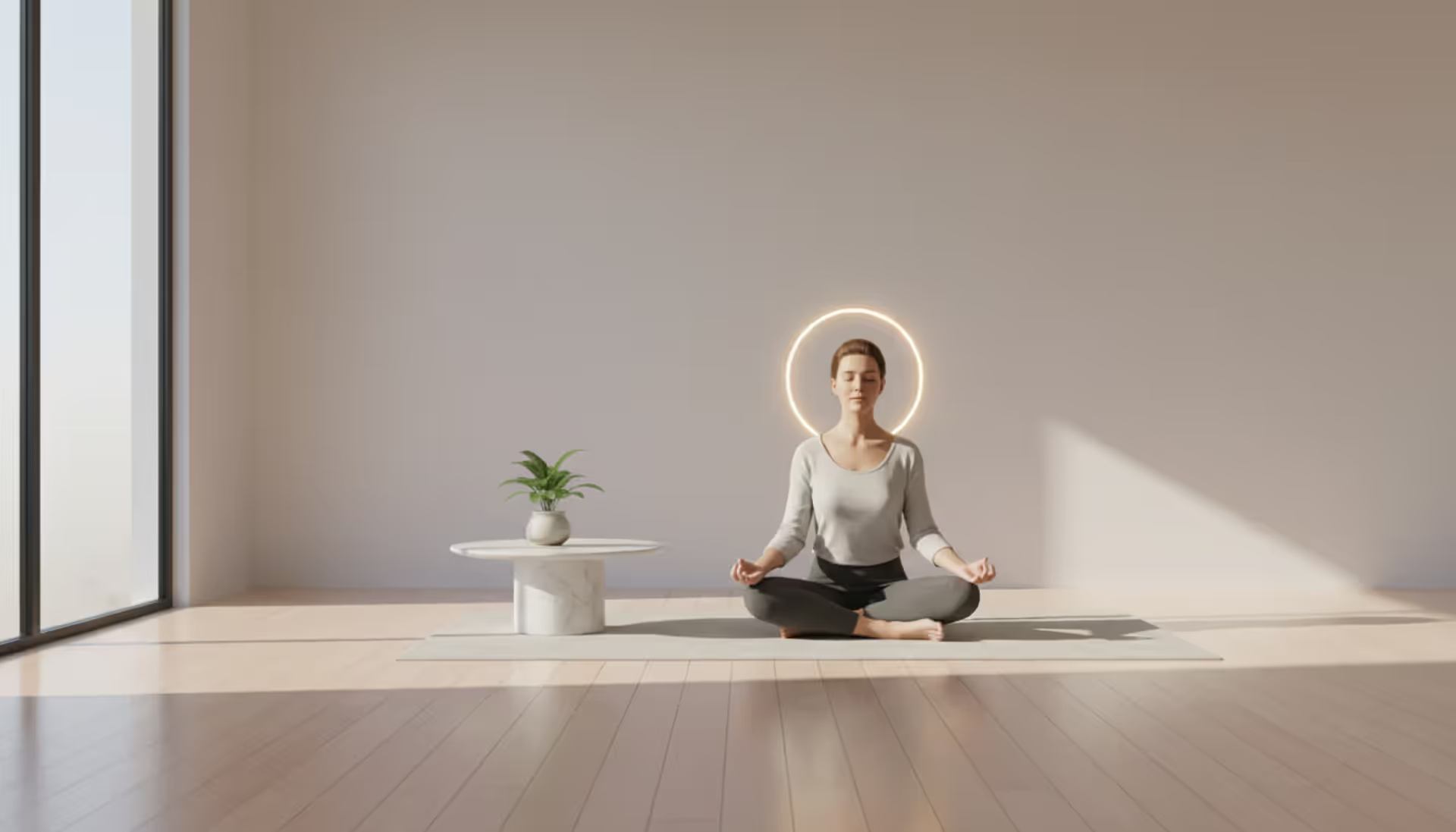
Person sitting cross-legged on the floor meditating in a bright minimalist room with soft morning light and a gentle glow around their head symbolizing calm
Picture this: you're lying in bed at 2 a.m., heart pounding so hard you can hear it. Or you're sitting in a conference room, chest constricting like someone's tightening a belt around your ribs. In these moments, being told to "just relax" is about as helpful as being told to “just fly.”
Here's what actually helps: meditation techniques for anxiety that target your body's panic machinery directly. We're not talking about floating on clouds of inner peace. We're talking about concrete methods that literally change which parts of your nervous system are running the show.
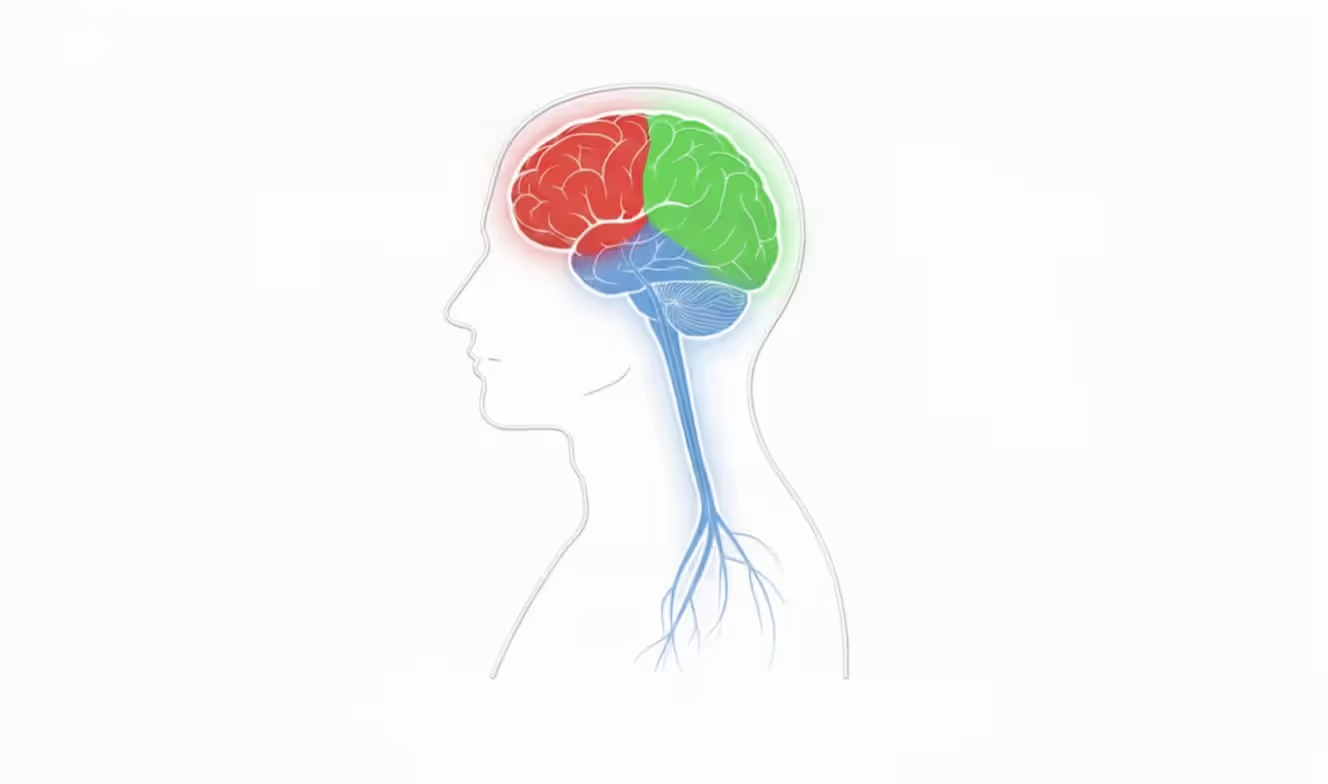
The brain science here is straightforward. Your amygdala—think of it as an overprotective security guard—screams danger signals. With regular practice, this structure quiets down measurably. Brain imaging studies show decreased amygdala activation in people who meditate consistently, even when viewing stressful images. Simultaneously, your prefrontal cortex builds stronger connections. That's the part of your brain that can say "this email isn't actually a five-alarm fire."
What determines if checking your bank balance triggers mild curiosity or a three-hour spiral of catastrophic thinking? These neural pathways. And you can reshape them.
Why Meditation Helps Reduce Anxiety Symptoms
Your autonomic nervous system works like a switch between two modes. Sympathetic mode floods you with cortisol and adrenaline—your heart hammers, breathing gets shallow, muscles tense up. Parasympathetic mode does the opposite, releasing acetylcholine that slows your heart and deepens your breathing.
Anxiety jamming you into sympathetic overdrive creates a vicious cycle. Shallow breathing makes your brain think you're in danger, which triggers more shallow breathing, which convinces your brain the danger is real.
Meditation techniques break this loop through two main routes. One: specific breathing patterns stimulate your vagus nerve, which physically runs from your brainstem down through your chest and into your abdomen. Stimulating this nerve is like hitting the emergency brake on your stress response. Two: mindfulness practices for panic attacks train a different relationship with scary thoughts. Instead of "I'm having a heart attack" immediately triggering more panic, you build the capacity to notice "my mind just produced the thought that I'm having a heart attack."
A 2025 review that pooled data from 47 separate studies (total of over 3,400 participants) found something remarkable: eight weeks of daily practice dropped anxiety symptoms by 38% on average. That's comparable to what SSRIs achieve, but without the sexual dysfunction, weight gain, or withdrawal issues.
The difference between meditation and lying on your couch hoping anxiety evaporates? Intention and technique. You're actively engaging specific neural circuits, not passively waiting to feel better.
Author: Sophie Ellington;
Source: 5sensesspa.com
How to Practice Box Breathing for Immediate Calm
Box breathing—sometimes called square breathing or four-square breathing—gives your scattered attention a concrete task while simultaneously shifting your physiology. Navy SEALs practice this anxiety breathing technique meditation before diving into combat zones because within 90 seconds, it produces measurable changes in heart rate variability.
Here's exactly how it works:
Step 1: Push all the air out through your mouth until your lungs feel empty. You're creating a neutral starting position.
Step 2: Pull air in through your nose for a slow count of four. Your belly should expand outward, not just your upper chest.
Step 3: Pause with full lungs for four counts. Keep your throat and chest relaxed—no clenching or bearing down.
Step 4: Release the air through your mouth across four counts, emptying completely.
Step 5: Pause with empty lungs for four counts before starting the next round.
Do four to eight complete cycles. Since each cycle runs 16 seconds, four minutes gives you 15 cycles—enough to measurably drop your heart rate and shift your heart rate variability toward parasympathetic dominance.
When it works best: This box breathing technique shines for anticipatory anxiety. Got a presentation in 10 minutes? A difficult phone call to make? A dentist appointment? Two to five minutes of box breathing beforehand takes the edge off. During a full-blown panic attack, you'll probably need grounding techniques first—your breathing might be too erratic to follow the pattern.
The mistake everyone makes: Speeding up when you're anxious. If four-second intervals feel impossible, drop to three. The equal rhythm matters more than hitting exactly four seconds. Try counting "one-Mississippi, two-Mississippi" if you tend to rush unconsciously.
How long to practice: Two minutes will calm you noticeably. Five minutes creates substantial physiological shifts. You can do this anywhere—parked in your car, locked in a bathroom stall, sitting at your desk with your eyes open, even on a video call while muted.
Body Scan Meditation to Release Physical Tension
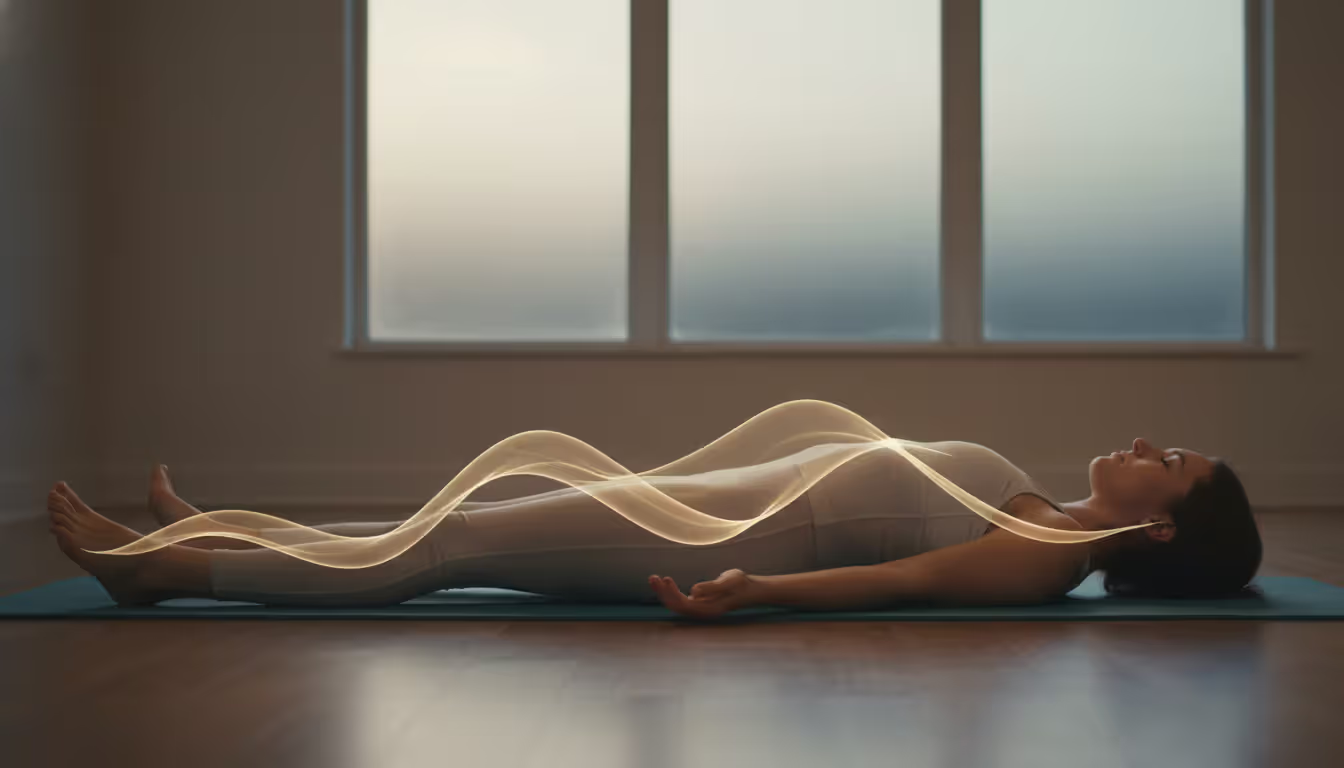
Your jaw is clenched right now, isn't it? Or your shoulders are riding up toward your ears? Anxiety doesn't just occupy mental real estate—it sets up camp in your muscles. Body scan for anxiety systematically releases this physical grip, which then sends a signal back to your brain that the threat has passed.
Plan for 10 to 20 minutes. Lying down works best, though you can modify it for sitting.
Here's the complete process:
Lie on your back, arms resting alongside your body with palms up. Take three full inhales and exhales, letting each exhale be slightly longer than the inhale.
Point all your attention at your feet. What do you notice? Temperature differences between your toes? Tingling? Pressure where your heels contact the floor? Maybe nothing at all—just a sense of blankness? Whatever you find, you're not trying to change it or evaluate whether it's "good" or "bad." You're collecting data.
Spend 30 to 60 seconds just noticing. Then imagine breathing into your feet—yes, you know lungs don't actually extend that far, but the mental image genuinely increases blood flow to the area.
Move your focus up to your calves. Some people carry anxiety here as chronic tension they've stopped noticing. Then knees, thighs, hips. Hip flexors often store massive amounts of anxiety, especially if you sit at a desk all day.
Scan across your lower back and through your abdomen. Anxiety frequently creates digestive tension—that clenched, queasy feeling even when nothing's physically wrong with your stomach.
Continue to your chest. Notice your heartbeat without trying to slow or control it. Then shoulders—most people discover chronic tension here they'd completely habituated to. Move down each arm separately, all the way to your fingertips.
Shift to your neck, your jaw (unclenching it if needed), all the tiny muscles around your eyes and forehead, and finally the crown of your head.
Finish by sensing your entire body as one unified whole, breathing naturally for about a minute.
Common mistakes that undermine the practice:
Rushing past areas that feel neutral or comfortable. You're building awareness, not hunting for problems. Breezing quickly through your legs because they "feel fine" trains your attention to only notice distress.
Trying to force tension to release. If your shoulders stay rigid despite five minutes of focused attention, that's information, not failure. Acceptance actually reduces the secondary anxiety of "I'm even doing meditation wrong."
Practicing right before bed when you're new to this. About 30% of people find increased body awareness initially stimulating rather than relaxing. Try morning or mid-afternoon for your first two weeks.
Progressive muscle relaxation variation: If passive observation feels too subtle, add active engagement. Tense each area deliberately for five seconds—make a hard fist, scrunch your face, squeeze your glutes—then release completely. The sharp contrast makes relaxation more obvious and gives your mind a clearer job.
Author: Sophie Ellington;
Source: 5sensesspa.com
Grounding Techniques When Anxiety Feels Overwhelming
When anxiety hits hard enough that even thinking about breathing patterns feels impossible, grounding meditation for anxiety yanks you back into the present moment through your senses. These techniques work because panic lives in the future—what terrible thing might happen next—while sensory input exists only right now.
The 5-4-3-2-1 Sensory Method
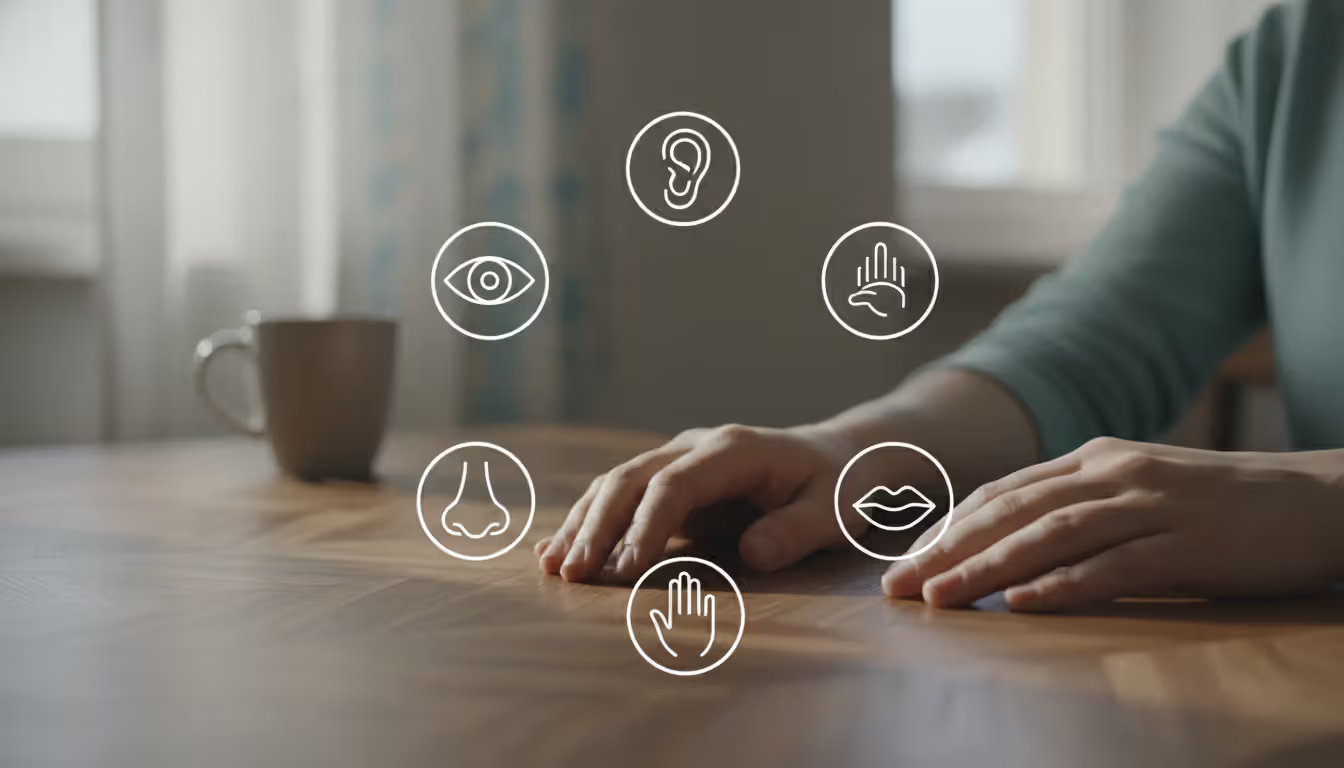
The 5-4-3-2-1 grounding technique requires zero preparation and works anywhere—stuck in traffic, sitting in a waiting room, standing in line at the grocery store. It's particularly effective when rumination has you spiraling or when you feel a panic attack building.
Name 5 things you see right now. Say them out loud if possible, silently if not: "gray laptop, coffee stain on the desk, my thumbnail, the light switch, a wrinkle in the curtain." Details matter more than categories. Not "books" but "a blue hardcover with a torn dust jacket."
Name 4 things you physically feel this second. The fabric of your shirt against your shoulder. Your phone's weight in your hand. Air moving across your face. The chair supporting your thighs. Press your feet down hard into the floor—that pressure amplifies the grounding effect.
Name 3 sounds you can hear. A car passing outside. The HVAC system humming. Someone's muffled voice through the wall. Your own breathing. Include background sounds your brain usually filters out.
Name 2 things you smell. If nothing's obvious, smell your sleeve, your hands, walk closer to something. Some people carry a small vial of peppermint or lavender oil specifically for this step.
Name 1 thing you taste. Lingering coffee? Toothpaste from an hour ago? The neutral taste of your own saliva? You can keep mints or gum handy to make this step easier.
The whole process runs two to four minutes. You're not trying to achieve total calm—you're interrupting the panic spiral and reconnecting with physical reality. Most people feel their heart rate dropping by the time they hit the smell stage.
When it falls short: If you're so dissociated that sensory information feels distant or dreamlike, add physical movement first. Stand up. Walk to a window. Splash genuinely cold water on your face and neck. Then try the five-part sequence.
Author: Sophie Ellington;
Source: 5sensesspa.com
Progressive Muscle Relaxation Steps
Progressive muscle relaxation meditation merges body awareness with active movement. It works especially well when anxiety creates jittery, restless energy that makes lying still feel unbearable.
Sit comfortably or lie down. You'll move through major muscle groups, tensing each one hard for 5 to 7 seconds, then releasing completely for 20 to 30 seconds while you notice the contrast.
Hands and forearms: Make the tightest fists possible. Hold. Release and notice warmth or tingling.
Upper arms: Bend elbows and flex your biceps like you're showing off. Hold. Drop your arms and notice them getting heavy.
Shoulders: Pull them up toward your ears as high as they'll go. Hold. Let them drop suddenly.
Face: Scrunch everything—eyes squeezed shut, nose wrinkled, lips pursed—toward the center. Hold. Release and feel your expression go slack.
Chest and back: Inhale deeply and hold the breath while arching your back slightly. Exhale completely and let your back settle.
Stomach: Pull your belly button toward your spine as hard as possible. Hold. Release and breathe naturally.
Hips and buttocks: Clench like you're trying to crack a walnut. Hold. Release completely.
Thighs: Straighten your legs and tense every muscle. Hold. Let them go limp.
Calves: Point your toes hard toward your head (not away—that can cause cramps). Hold. Release.
Feet: Curl all your toes downward. Hold. Uncurl and wiggle them.
The complete sequence takes 10 to 15 minutes. The exertion actually burns off some of that anxious, jittery energy, while the systematic progression gives your scattered mind a structure to follow.
Trade-off worth considering: Progressive muscle relaxation delivers faster physical relief than passive body scanning. But it builds less interoceptive awareness over time—your ability to detect subtle internal sensations before they escalate. Rotate between both approaches depending on whether you need immediate relief or long-term skill-building.
Focused Attention Meditation for Racing Thoughts
When your mind ricochets from worry to worry—Did I send that email? What if my headache is a brain tumor? Why did I say that stupid thing in 2013?—focused attention meditation for anxiety provides a single point to return to. This practice isn't about achieving a thought-free mind, which is both impossible and not the goal. You're training your attention to return to a chosen anchor.
Author: Sophie Ellington;
Source: 5sensesspa.com
Picking your anchor:
Your breath is most accessible. Focus on cool air entering your nostrils and warmer air leaving. Or notice your belly rising and falling. Pick one location and stick with it across sessions—switching reduces the training effect.
A physical object works better for visual processors. A candle flame's flicker. A spot on the wall. Your own hand resting on your knee. Keep your gaze soft, not straining.
A repeated word or phrase suits verbal thinkers. "Calm" or "ease" or even neutral words like "one" or "here." Avoid emotionally loaded phrases that might trigger new thought spirals.
A consistent sound can serve as your anchor. A meditation timer app that rings every few minutes. Ambient music without lyrics. The whir of a fan. Steadiness matters more than the specific sound.
How to actually practice:
Set a timer for 5 to 20 minutes. Start shorter than you think you need—finishing five minutes successfully beats abandoning 20 minutes halfway through. Sit with your spine relatively upright. Not military-rigid, but not slouching into sleepiness either.
Put all your attention on your chosen anchor. Within seconds—literally, within seconds—you'll notice your mind has wandered to your grocery list or a conversation from yesterday. The instant you notice the wandering, bring your attention back to the anchor. That's one repetition.
Here's the part most people miss: the wandering isn't failure. The noticing and returning is the actual practice. A session where you catch yourself drifting 100 times is more valuable than one where you spaced out for 20 minutes without noticing.
What to do about distractions:
Anxious thoughts often arrive dressed up as urgency: "I NEED to remember to call the insurance company" or "What if I left the stove on?" Keep paper and pen within reach. When a thought insists on attention, write three words—"call insurance Tuesday"—then return to your anchor. Externalizing it releases the mental grip.
Physical discomfort—an itch, restless legs, a stiff neck—is another frequent distraction. Before automatically scratching or shifting, just observe the sensation for 10 seconds. About half the time, it fades on its own. If it intensifies, make one slow, deliberate adjustment, then return to breathing.
How long to practice:
Five minutes daily beats 30 minutes on Sundays only. Your brain responds to repetition and consistency, not marathon sessions. Practice five minutes daily for two weeks. When that becomes manageable—not easy, not blissful, just something you can do—increase to 10 minutes.
Most studies showing anxiety reduction used 20-minute daily sessions, but that's an average of what worked across thousands of people. You might see benefits from 10 minutes. You might need 30. Experiment within the range you'll actually maintain.
Quick guideline: If you consistently finish sessions feeling more wound up than when you started, you're probably pushing too long. Cut your session length in half for a week before building back up.
What to Do When Meditation Feels Difficult
We're not trying to make anxiety disappear. We're changing the relationship with it. When you stop fighting anxious thoughts and get curious about them instead—'oh, that's interesting, my brain is doing the catastrophizing thing again'—you break the reinforcement loop that keeps the anxiety cycle spinning. That shift in perspective often brings more relief than waiting for the thought content itself to change
— Dr. Judson Brewer
The meditation steps for anxiety relief look clean and simple when you're reading them. Actually practicing often feels messy, frustrating, or even panic-inducing. These obstacles don't signal that meditation "isn't for you"—they're the normal friction everyone encounters.
"My thoughts won't stop"
Right. And your heart won't stop beating. Thought production is what minds do. The practice isn't achieving a blank mental slate—it's changing how you relate to the thoughts appearing. When you notice the racing thoughts, you've actually succeeded at the core skill: awareness. Try mentally labeling them—"worrying," "planning," "remembering," "judging"—then returning to your breath. The label creates useful distance without trying to suppress anything.
"Sitting still makes me more anxious"
Stillness removes all the usual distractions masking underlying anxiety. You're not creating new anxiety; you're becoming aware of what was already operating in the background. For some people, this initial awareness feels worse than the previous obliviousness.
Try this modification: start with movement meditation. Walk slowly and deliberately, feeling each foot contact the ground. Or practice mindful dishwashing, noticing temperature and texture. After two weeks building awareness through movement, try sitting still for just two minutes and gradually extend from there.
"I fall asleep every single time"
If you're running on six hours of sleep a night, your body will hijack meditation sessions for what it actually needs: rest. That's data, not failure. Practice at a different time—not lying down before bed, but sitting upright mid-morning. Keep your eyes half-open with a soft downward gaze rather than fully closed.
"I don't have time"
You don't find time; you deliberately choose it. Three minutes of box breathing while waiting for your coffee to brew counts as practice. Two minutes of body scanning before getting out of bed counts. The perfectionist trap says meditation requires a dedicated room, a special cushion, incense, and 30 uninterrupted minutes. Reality: consistent 5-minute sessions beat occasional perfect conditions.
"This isn't working for me"
Define what "working" means. Expecting meditation to eliminate anxiety completely sets you up for disappointment. It's a management tool, not a magic cure. More realistic markers: you notice anxious thoughts starting earlier in the spiral, you recover from anxiety spikes 10 minutes faster than before, you experience slightly longer gaps between worry episodes, or you simply have a technique to turn to instead of feeling helpless.
Most people notice subtle shifts around week three. More obvious benefits typically appear around week eight. If you've practiced genuinely consistently—not perfectly, but consistently—for three full months without any detectable change, working with a meditation teacher or therapist can help identify what's blocking progress.
When you need professional support:
Meditation complements treatment but doesn't replace it. If anxiety interferes with your job performance, damages relationships, prevents you from leaving your house, or if you're having panic attacks multiple times per week, consult a psychiatrist or therapist. Meditation works best as one tool in a broader toolkit that might include cognitive behavioral therapy, medication, exercise, or all of the above.
Meditation Technique Comparison
Technique Name
Best For
Time Needed
Difficulty Level
When to Use
Box Breathing
Acute stress spikes, pre-event jitters
2-5 minutes
Beginner-friendly
Right before stressful situations, during anxiety surges
Body Scan
Releasing muscle tension, preparing for sleep
10-20 minutes
Beginner to Intermediate
Evening routine, after particularly stressful days
5-4-3-2-1 Grounding
Panic attacks, feeling dissociated or unreal
2-4 minutes
Beginner-friendly
During acute panic or when spiraling into catastrophic thinking
Progressive Muscle Relaxation
Jittery restlessness, difficulty staying still
10-15 minutes
Beginner-friendly
When anxiety creates physical agitation that makes stillness unbearable
Focused Attention
Racing thoughts, rumination loops
5-20 minutes
Intermediate
Daily practice for building long-term anxiety resilience
Walking Meditation
Inability to tolerate stillness
10-30 minutes
Beginner to Intermediate
When sitting meditation consistently increases anxiety
FAQ About Meditation for Anxiety
How long should I meditate to reduce anxiety?
Start with five minutes every single day rather than aiming for ambitious durations you'll abandon by Thursday. Studies show measurable benefits from just 10 minutes daily, with optimal results appearing around 20 to 30 minutes. But here's what matters most: consistency trumps duration. Five minutes every morning for a month will change your brain more than 30 minutes twice a week. Build gradually—five minutes for two weeks, then bump to 10, then 15. Most people find their sustainable rhythm somewhere between 10 and 20 minutes once the habit solidifies.
Can meditation stop a panic attack?
Meditation can reduce panic attack intensity and duration, but rarely stops one instantly once it's fully rolling. Your best window is catching it early—using grounding techniques like 5-4-3-2-1 at the first flutter of panic, before your heart rate spikes and your breathing goes shallow. During a full-blown panic attack, focus on grounding and basic breathing rather than trying to meditate "properly." The bigger impact comes from regular practice between attacks, which reduces baseline anxiety and makes attacks less frequent and less severe over weeks and months.
What's the easiest meditation technique for beginners with anxiety?
Box breathing offers the gentlest entry point: it's quick (2-5 minutes), extremely structured (counting gives your scattered mind clear instructions), and produces noticeable physical effects fast. The 5-4-3-2-1 grounding technique runs a close second for simplicity and effectiveness during acute anxiety spikes. Both work in public places—your car, a bathroom stall, your office—and require zero equipment. Skip open awareness meditation initially; it can feel overwhelming when you're already anxious and need concrete structure.
How quickly does meditation work for anxiety?
You'll feel immediate physiological shifts—slower heartbeat, deeper breathing—within minutes of practicing breathing-based techniques. Psychological relief—feeling less hijacked by anxious thoughts—typically shows up after one to two weeks of daily practice. Substantial drops in overall anxiety levels usually emerge around week eight, which aligns with the timeframes most research studies used. Some people have dramatic shifts earlier; others need three months of consistent practice. Feeling calmer during the meditation session itself doesn't always translate immediately to feeling calmer throughout your day.
Should I meditate in the morning or evening for anxiety?
Morning meditation establishes a calmer baseline before your day starts and helps with anticipatory anxiety about upcoming events. Evening meditation processes the day's accumulated stress and typically improves sleep quality. The honest answer: whichever time you'll actually practice consistently wins. Morning suits people whose anxiety peaks early or who lose motivation by evening due to decision fatigue. Evening works better if you're using meditation to wind down or if your mornings feel too rushed. Some people split it: five minutes of box breathing after waking and 15 minutes of body scan before bed.
Is it normal for anxiety to increase during meditation?
Absolutely, especially in weeks one and two. Meditation removes the usual distractions—scrolling your phone, watching TV, staying busy—that mask underlying anxiety. This makes you more aware of what was already humming in the background. The increased awareness can feel like increased anxiety, even though you're just noticing what was previously operating outside your conscious attention. This typically peaks somewhere between day 3 and day 7, then gradually decreases. If anxiety consistently spikes during practice after three weeks, try shorter sessions—you might be pushing too long too fast. Some people also need movement-based practices before they can tolerate sitting still.
Meditation for anxiety isn't a silver bullet or a substitute for therapy when your anxiety is severe enough to disrupt your daily functioning. Think of it more like learning guitar or Spanish—a skill that develops through repetition, feels clumsy initially, and gradually becomes more natural.
Pick one technique rather than ping-ponging between all of them. Box breathing or 5-4-3-2-1 grounding offer the easiest starting points. Practice every single day for two weeks, even on days when it feels pointless or uncomfortable. Track your practice somewhere visible—just checkmarks on a wall calendar work fine—to build momentum.
Watch for small shifts instead of waiting for dramatic transformation. Recovering from an anxious episode five minutes faster than usual? That's progress. Catching yourself in a worry spiral on the third repetition instead of the thirtieth? Progress. These incremental changes compound over weeks and months into substantial improvements in how you experience and manage anxiety.
Your anxiety developed across years of neural patterning. Rewiring those patterns takes patience and consistency. But unlike medications or therapy appointments, meditation becomes a tool you carry everywhere—no prescription refills, no scheduling, no special equipment. Just you, your breath, and the choice to practice right now.
Loving kindness meditation cultivates unconditional goodwill toward yourself and others through specific phrases and mental imagery. Originating from Buddhist metta practices, this technique systematically expands compassion from self to all beings, offering measurable mental and physical health benefits
Vedic meditation is a mantra-based practice from ancient India that uses silent sound vibrations to help the mind settle naturally. Practitioners sit comfortably for twenty minutes twice daily, silently repeating a personalized mantra. The technique requires no belief system or lifestyle changes
Transcendental Meditation requires formal instruction through a standardized course. This guide explains the four-session training structure, personalized mantra assignment, costs, and why TM can't be self-taught from books or apps
Discover how mindfulness walking meditation transforms ordinary steps into a powerful practice for calming the mind and grounding the body. This comprehensive guide covers techniques, benefits, different styles, and practical tips for beginners and experienced practitioners alike
The content on this website is provided for general informational and educational purposes only. It is intended to explain concepts related to meditation, mindfulness, mental health, and spiritual practices.
All information on this website, including articles, guides, and examples, is presented for general educational purposes. Meditation outcomes may vary depending on individual practices, health conditions, and guidance.
This website does not provide medical, mental health, or spiritual advice, and the information presented should not be used as a substitute for consultation with qualified professionals.
The website and its authors are not responsible for any errors or omissions, or for any outcomes resulting from decisions made based on the information provided on this website.