For thousands of years, meditation teachers have handed down a surprisingly simple trick: repeat a sound, and your scattered brain starts to settle. Sounds too easy, right?
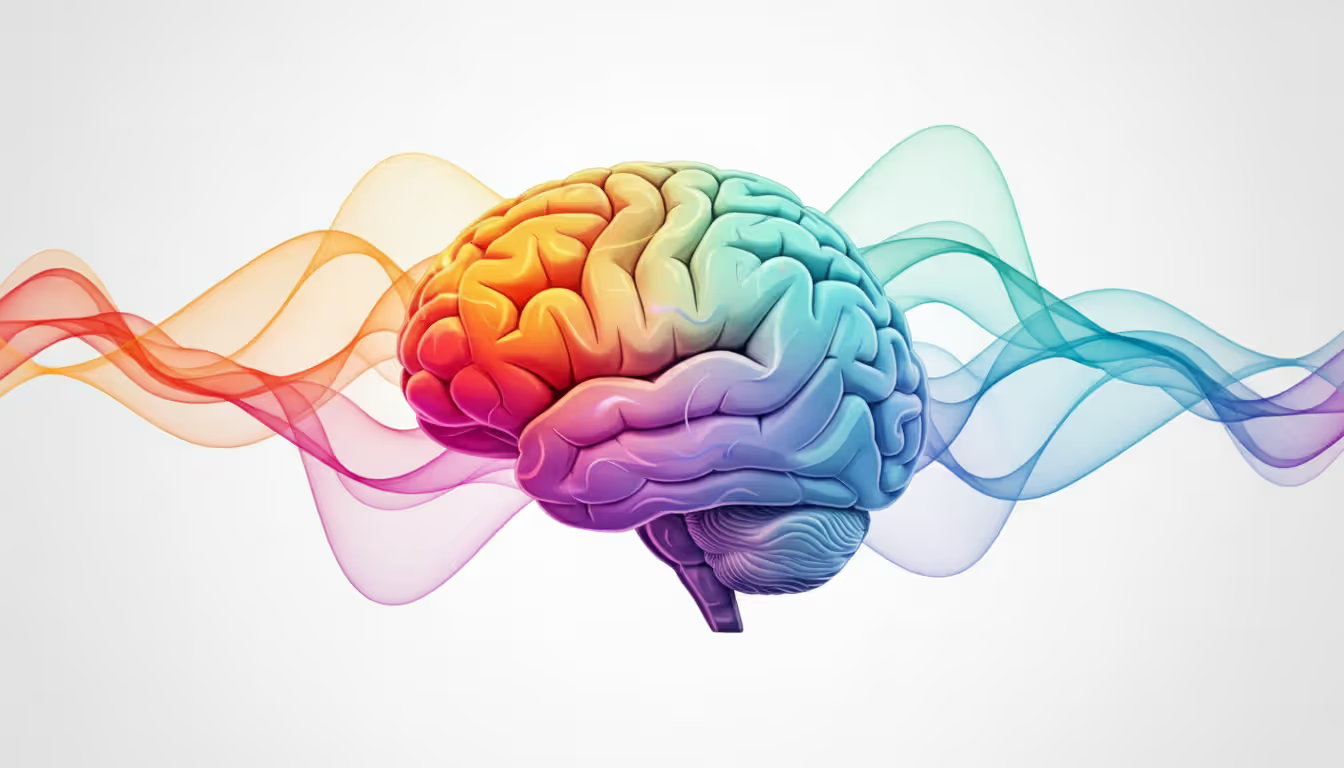
But here's the thing—modern brain imaging backs this up. When you give your mind a single syllable to focus on, specific regions light up while others (particularly the ones responsible for anxiety and mental rabbit holes) quiet down. That's not spiritual bypassing. It's measurable physiology.
If you've tried meditation and felt like you were just sitting there wrestling with your thoughts, mantras offer something tangible to work with. This guide breaks down what these tools actually are, why they function the way they do, and how to pick one that works for your specific situation.
What Is a Mantra?
Think of a mantra as a word or sound you repeat to anchor your attention during meditation. Could be one syllable. Could be a short phrase. The whole point is giving your brain something specific to land on instead of bouncing between your grocery list and that embarrassing thing you said in 2015.
The word itself comes from ancient Sanskrit. "Man" refers to the mind, while "tra" means something like a tool or vehicle. Put them together and you get roughly "mind vehicle" or "thought tool." Some scholars translate it as "mind protection"—the idea being that repetition protects you from mental chaos.
These sounds first appeared in India's Vedic period, probably around 1500 BCE. The Rigveda (one of humanity's oldest texts) contains thousands of them. Early practitioners noticed something curious: certain sounds seemed to affect consciousness in consistent ways. They weren't just thinking about the meaning—they were working with the vibration itself.
You'll find mantras across multiple traditions, each with their own flavor:
Hindu practices often use sounds connected to specific deities or cosmic energies. "Ram" for courage, "Lakshmi" for abundance, that kind of thing.
Buddhist mantras usually point to core teachings. "Om Mani Padme Hum" (probably the most famous one) relates to the path of compassion.
Jain traditions emphasize purification mantras, often quite short and rhythmic.
Modern secular versions? People use whatever works. "I am calm." "Let go." Sometimes just "one" or "here."
Traditional teachers categorize mantras into three types:
Bija mantras are single-syllable seeds—"Om," "Aim," "Hrim." Think of them as fundamental frequencies that don't need translation.
Saguna mantras invoke specific qualities or forces. "Om Namah Shivaya" calls on the energy of transformation associated with Shiva. "Om Gam Ganapataye Namaha" invokes Ganesha's obstacle-clearing properties.
Nirguna mantras point toward formless reality. "So Hum" (I am that) or "Sat Chit Ananda" (existence-consciousness-bliss) fall into this category.
Nothing stops you from creating your own. Plenty of people use affirmations in English or their native language. "Peace." "This passes." Even neutral words like "ocean" can function as mantras if they help you focus.
Author: Caleb Montrose;
Source: 5sensesspa.com
How Mantras Work in Meditation
Your brain churns out somewhere between 50,000 and 70,000 thoughts daily. Most of them? Reruns. The same worries, plans, and mental scripts looping endlessly.
Mantras interrupt that cycle by giving your attention a single target. When you repeat a sound, you're essentially telling the parts of your brain that generate all that chatter: "Thanks, but I'm busy right now."
Brain scans reveal what happens during this process. The prefrontal cortex (your focus center) shows increased activity. Meanwhile, the amygdala—your brain's alarm system—calms down. A 2023 study in Brain and Cognition tracked people who practiced mantra meditation for eight weeks. Results showed actual structural changes: increased gray matter in regions handling attention and emotional regulation.
The vibrational component isn't mystical woo-woo either. When you repeat sounds (out loud or mentally), you create rhythmic patterns. These patterns influence your brainwave states. Normal waking consciousness produces beta waves. Mantra repetition can shift you into alpha waves (relaxed but alert), then sometimes into theta waves (deep meditation territory).
Repetition serves multiple functions simultaneously. First, it occupies the language centers of your brain, leaving less bandwidth for your internal narrator. Second, it establishes rhythm—and rhythm tends to sync with breathing and heart rate, creating what researchers call physiological coherence. Third, classical conditioning kicks in: after enough practice, simply starting your mantra can trigger the relaxation response. Your nervous system learns the pattern.
Different traditions emphasize different aspects. Some insist the meaning matters most—you're reshaping thought patterns through deliberate content. Others say the sound vibration is everything, regardless of whether you understand the words. Both approaches produce results, just through different mechanisms.
Mantra Meditation Benefits
Research on mantra-based practices has exploded over the past decade. The findings go well beyond subjective "I feel calmer" reports.
Stress reduction shows up consistently across studies. A 2025 meta-analysis looked at 18 randomized controlled trials and found mantra meditation dropped cortisol levels (your primary stress hormone) significantly. The anxiety reduction matched cognitive behavioral therapy outcomes for mild to moderate cases—which is remarkable considering CBT requires working with a trained therapist while you can practice mantras on your couch.
Blood pressure changes happen with regular practice. Research on Transcendental Meditation specifically showed an average drop of 4.7/3.2 mm Hg in people with hypertension. That might not sound dramatic, but it translates to roughly 15% lower stroke risk and 11% reduction in heart disease risk.
Cognitive improvements appear after consistent practice. A 2024 University of California study had participants practice mantra meditation for 12 weeks. Compared to control groups, they showed better working memory and faster information processing. The effect was strongest in people over 55, suggesting some protection against normal age-related decline.
Sleep quality improves as your nervous system learns to downshift. Practitioners report falling asleep about 35% faster and waking up less during the night. Makes sense—the repetitive nature of mantras interrupts the rumination that keeps most people staring at the ceiling at 2 AM.
Emotional stability increases over time. Regular practitioners describe feeling less reactive to stressors, more space between something happening and their response. Brain imaging explains this: decreased amygdala activation plus stronger prefrontal control equals better emotional regulation.
Spiritual experiences vary wildly between individuals but often include feeling more connected, finding greater meaning, experiencing inner peace. These subjective shifts are harder to quantify than blood pressure, but they show up consistently in quality of life measurements.
Author: Caleb Montrose;
Source: 5sensesspa.com
One important caveat: you need consistency. A single session might help you relax, but the real benefits—structural brain changes, lasting psychological shifts—typically require daily practice for at least two to three months. Think of it like strength training for your attention muscles.
Common Mantra Meditation Techniques
Different traditions developed distinct methods over the centuries. Understanding these variations helps you match technique to your goals and personality.
Technique Name
Mantra Type
Method
Best For
Time Commitment
Transcendental Meditation
Assigned Sanskrit sound
Silent repetition in mind, practiced twice daily
Reducing stress, evidence-based approach
40 minutes total per day
Mantra Chanting
Traditional Sanskrit or chosen phrases
Vocal repetition, often done in groups
Building community, devotional practice
15-60 minutes per session
Silent Repetition
Any selected word or phrase
Mental repetition, usually synced with breathing
Flexible practice anywhere, secular approach
10-30 minutes per session
Japa Meditation
Sacred names or traditional phrases
Counted repetition using 108-bead mala
Structured routine, spiritual depth
20-45 minutes per session
Kirtan
Call-and-response devotional music
Musical mantra repetition with instruments
Emotional expression, joy cultivation
30-90 minutes per session
Transcendental Meditation Approach
Transcendental Meditation (TM) has more research behind it than probably any other meditation technique. Maharishi Mahesh Yogi developed the formalized approach in the 1950s, and it hit Western mainstream when the Beatles got involved in the 1960s.
TM uses personalized mantras—specific Sanskrit sounds assigned by certified instructors. The assignment process considers factors like your age and sometimes gender, following traditional protocols.
Here's the basic technique:
Sit somewhere comfortable, close your eyes
Start mentally repeating your assigned mantra
Don't force anything—let the repetition be effortless
When thoughts intrude (they will), gently return to the mantra
Continue for exactly 20 minutes
Sit quietly for 2-3 minutes before opening your eyes
The crucial element? That "effortless" part. You're not trying to concentrate intensely or fight off distractions. The mantra sometimes gets very quiet, almost fading into silence, then naturally re-emerges. That's all normal.
The downside: TM requires formal training from certified teachers. Costs money (sometimes significant amounts) and you need to find an instructor in your area. The upside: you get personalized instruction and a support structure that helps many people stick with practice.
Mantra Chanting Meditation
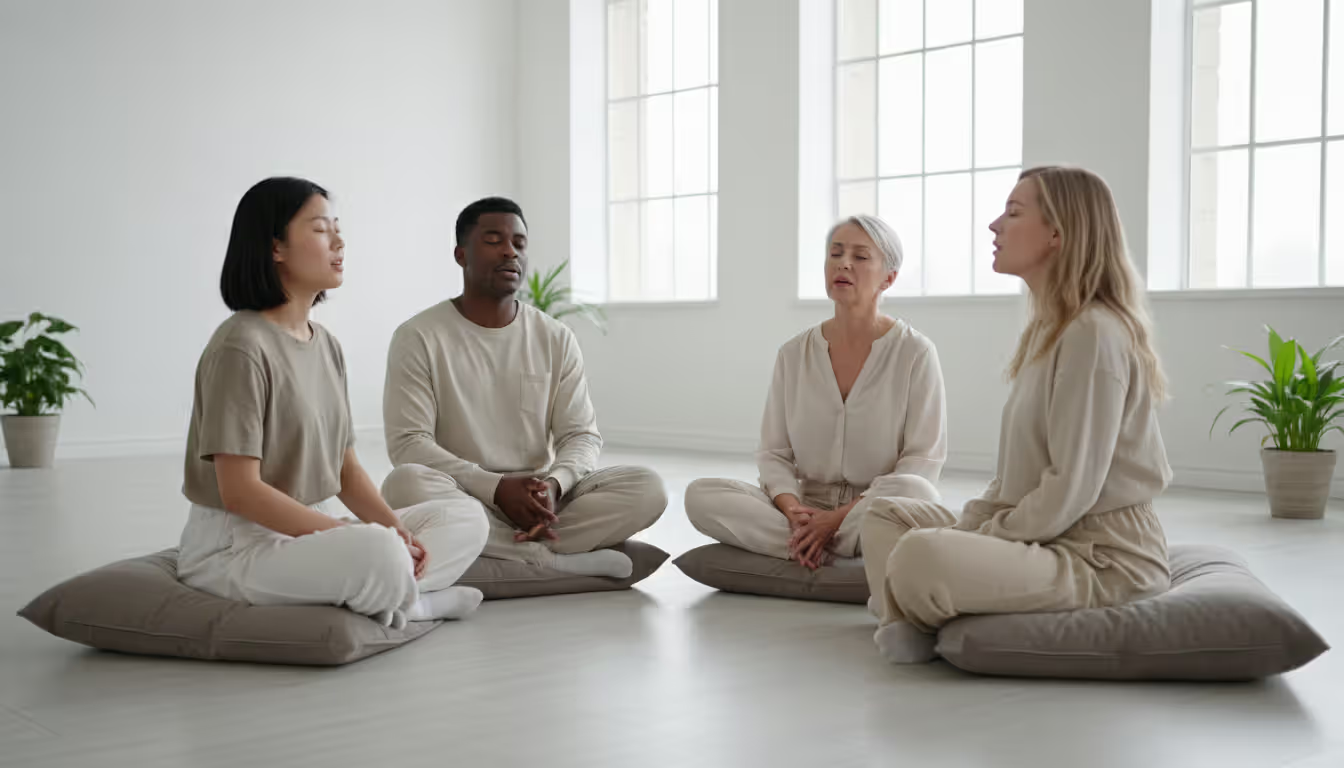
Chanting means saying your mantra out loud instead of silently. The audible sound gives you something more tangible to focus on, which many beginners find easier than trying to "hear" a mental repetition.
Basic approach:
Pick a mantra (could be traditional Sanskrit or something personal)
Get comfortable sitting or standing
Start saying the mantra aloud at whatever volume and pace feels natural
Notice the vibration in your chest and throat
Keep going for your chosen duration (10-30 minutes is typical)
Finish with a minute or two of silence
When you vocalize sounds, you stimulate the vagus nerve—the main highway of your parasympathetic (rest-and-digest) nervous system. This creates a faster relaxation response than silent methods for many people.
Group chanting (called kirtan in some traditions) adds another dimension. The call-and-response format means you don't have to remember anything or perform perfectly. Everyone's voices synchronize rhythmically, creating collective energy that individual practice doesn't provide. Many people find chanting releases emotions more effectively than silent sitting.
The obvious limitation: you need privacy or a dedicated space. Not exactly practical on public transportation or in an office setting.
Author: Caleb Montrose;
Source: 5sensesspa.com
Silent Mantra Repetition
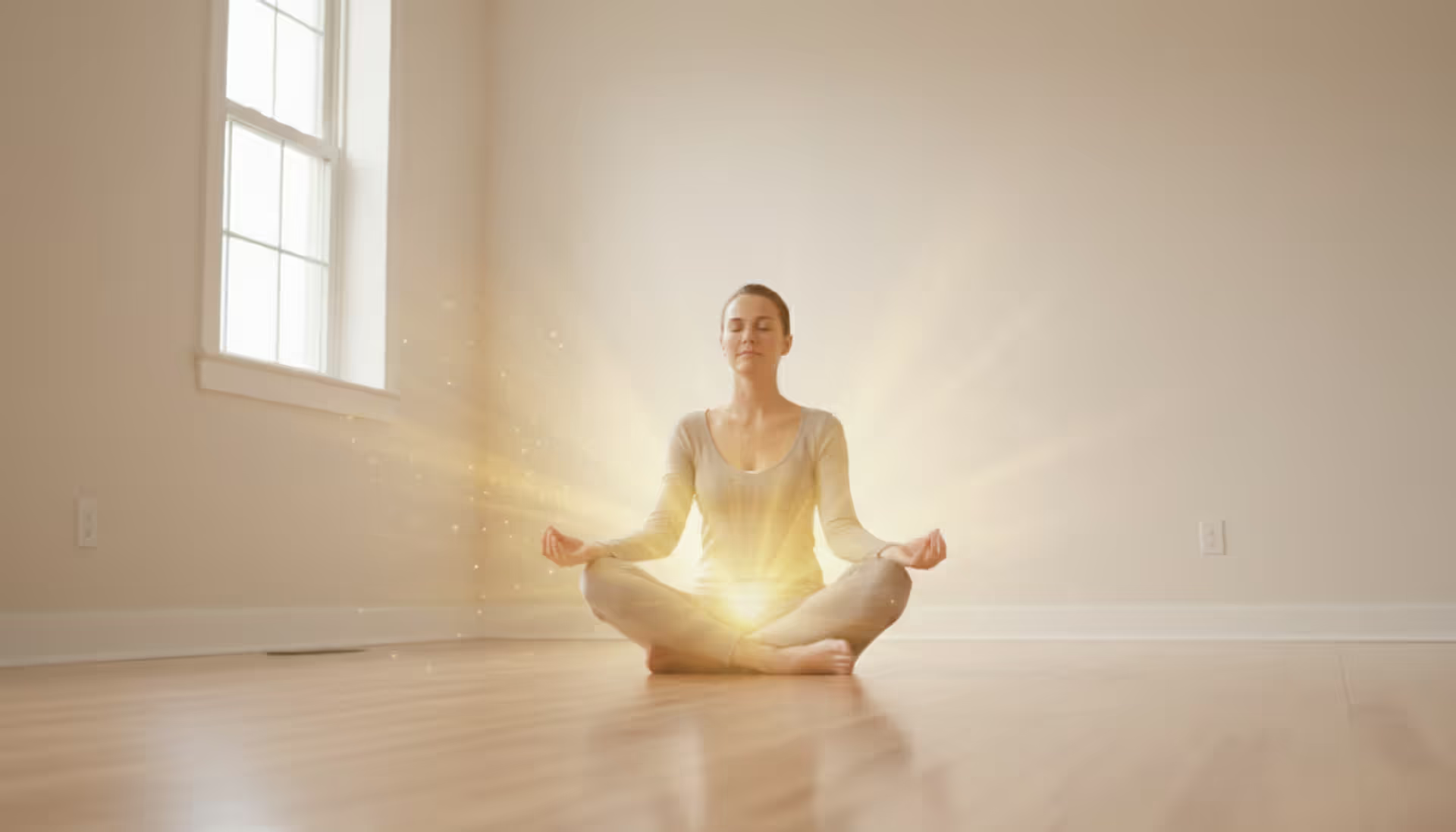
This is the most flexible approach. Repeat your chosen mantra mentally, often timing it with your breath.
Simple version:
Choose a short mantra
Get comfortable (sitting, lying down, even walking works)
Close your eyes and take a few deep breaths
Begin mentally repeating your mantra
If you want, sync it with breathing—maybe mantra on the inhale, pause on exhale
Notice when your mind wanders, then return to the mantra without judgment
Practice for 10-20 minutes
You can do this anywhere. Waiting room, airplane, lying in bed before sleep, walking around your neighborhood. Match the mantra to your footsteps if you're moving.
The challenge? Without sound, your attention drifts more easily. The mantra can become background noise rather than a genuine focus point. Combat this by occasionally "listening" to it as if hearing it fresh, or by varying the mental volume and clarity.
How to Find Your Personal Mantra
Choosing a mantra depends on whether you're working within a specific tradition and what you're trying to accomplish.
For traditional Transcendental Meditation, you don't choose anything—a certified instructor assigns your mantra based on their training protocols. Removes decision paralysis but requires finding and paying for formal instruction.
For traditional spiritual practices (Hindu, Buddhist, Jain, or others), work with a qualified teacher. These paths have specific mantras tied to particular intentions and practices. Using them appropriately requires understanding context and proper pronunciation.
For self-guided practice, consider these factors:
Sound quality: Pick something that feels pleasant when you repeat it. Harsh, awkward sounds create resistance. Test candidates by saying them 20-30 times and noticing your response.
Length matters: Shorter works better when you're starting out. Single syllables or two-word combinations maintain focus more easily than lengthy phrases. "Om," "peace," "so hum," or "let go" offer simplicity.
Meaning versus pure sound: Meaningful mantras can target specific issues—"I am enough" addresses self-worth struggles; "this will pass" builds acceptance. Abstract sounds like "om" or "aham" bypass analytical thinking entirely, potentially allowing deeper states.
Personal resonance: Your mantra should feel neutral to positive, never forced or uncomfortable. Some people respond to Sanskrit sounds they don't intellectually understand. Others need meaning in their native language.
Testing process:
Select 3-5 possibilities
Practice with each for 5-10 minutes across several days
Notice which feels most natural and sustainable
Observe which produces the calmest state
Commit to one for at least 30 days before switching
Common mistakes people make: changing mantras every few days (prevents depth from developing), choosing ones that are too long (creates mental strain), picking sounds they find irritating (obviously counterproductive), or using words with negative personal associations.
Not sure where to start? Try "so hum" (pronounced exactly how it looks). It's simple, comes from traditional practices, coordinates naturally with breathing (so on inhale, hum on exhale), and doesn't carry heavy cultural baggage for Western practitioners.
Popular Mantras and Their Meanings
Author: Caleb Montrose;
Source: 5sensesspa.com
Understanding common mantras helps you make informed choices and appreciate their traditional contexts.
Om (or Aum): The granddaddy of all mantras. Hindu and Buddhist traditions consider it the primordial vibration of existence itself. When pronounced fully—"A-U-M"—it's said to represent waking, dreaming, and deep sleep states, plus a fourth transcendent state beyond the three. Many practitioners open and close meditation sessions with three Oms. Works standalone or as a prefix to other mantras.
So Hum: Sanskrit phrase pointing to the unity between individual and universal consciousness. Usually translated as "I am that." The sound naturally mirrors breathing—"so" as you inhale, "hum" as you exhale. This built-in rhythm makes it excellent for breath-synchronized practice.
Om Mani Padme Hum: Six syllables associated with Avalokiteshvara, the bodhisattva of compassion in Tibetan Buddhism. Surface translation is something like "the jewel in the lotus," but practitioners say the full meaning runs much deeper than English can capture. People chant it to develop compassion and purify negative patterns.
Lokah Samastah Sukhino Bhavantu: A longer Sanskrit phrase meaning "May all beings everywhere be happy and free." Used for cultivating loving-kindness toward all life. Better suited to chanting practice than silent repetition given its length.
Om Namah Shivaya: Five syllables that honor Shiva, representing the principle of transformation and consciousness in Hindu traditions. The phrase acknowledges Shiva's energy or one's own inner divine nature. Popular in yoga practices focused on spiritual awakening.
Sat Nam: From Kundalini yoga tradition, meaning "truth is my identity" or "truth is my name." Short, rhythmic, coordinates well with breathing.
Ham-Sa: Similar to So Hum but reversed—"ham" on exhale, "sa" on inhale. Also translates to "I am that." The word "hamsa" means swan, which carries symbolic meaning about the soul's journey.
Secular alternatives: Modern practitioners use "peace," "calm," "one," "let go," "be here now," "I am enough," or neutral words like "ocean" or "mountain." These skip traditional spiritual frameworks but function perfectly well as attention anchors.
Quick note on pronunciation: For Sanskrit mantras, getting close is fine for meditation purposes. Your intention and focus matter far more than perfect accent. That said, if you're adopting traditional mantras as part of spiritual practice, learning correct pronunciation from a teacher shows respect and might deepen your connection to the lineage.
The mantra is like a seed planted in the soil of consciousness. You don't need to dig it up every few minutes to check if it's growing. Simply plant it, water it with regular practice, and trust the process. The transformation happens beneath the surface long before you see results
— Dr. Roger Walsh
Frequently Asked Questions About Mantra Meditation
Can I use any word as a mantra?
Technically, yes—but some words work dramatically better than others. Effective mantras usually have neutral to positive associations, pleasant sound when repeated, and appropriate length. One to four syllables hits the sweet spot. Avoid words with strong negative baggage or ones that kick your analytical brain into gear. "Refrigerator" would be terrible—awkward to repeat and mentally distracting. "Peace" or "calm" work well. Traditional Sanskrit mantras benefit from thousands of years of refinement for vibrational qualities, but English words function fine for secular practice. Choose based on what helps you focus, not what sounds most "spiritual."
How long should I repeat a mantra during meditation?
Start with 10-15 minutes if meditation is new to you. As it gets easier, extend to 20-30 minutes. Transcendental Meditation specifically prescribes exactly 20 minutes twice per day. Japa meditation using mala beads involves 108 repetitions, usually taking 15-25 minutes. Honestly, consistency beats duration every time. Ten minutes daily produces better results than 30 minutes sporadically. Your pace should feel natural—not rushed, not dragging. Most people land around 30-60 repetitions per minute, but let your rhythm develop organically rather than counting.
Do I say mantras out loud or silently?
Both work, serving different purposes. Vocal chanting provides stronger sensory feedback, making focus easier initially. The vibration directly activates your vagus nerve, triggering faster relaxation. Silent mental repetition offers flexibility—practice anywhere without disturbing others or attracting weird looks. It also allows subtler states as the mantra gets progressively quieter in your awareness. Many practitioners chant when feeling scattered and switch to silent repetition when already calm. Try both and see which serves you better in different contexts. No wrong answer here.
Can mantras work if I don't understand their meaning?
Absolutely. Traditional teachings claim Sanskrit mantras function through sound vibration regardless of comprehension. Modern neuroscience supports this—the repetitive pattern itself affects brain activity and nervous system regulation whether you grasp the words or not. That said, knowing meaning can deepen practice by engaging intention alongside vibration. Using "Om Namah Shivaya" without knowing it honors transformative consciousness? You still get the focus and rhythm benefits. Understanding adds another layer but isn't required for the technique to work.
How is mantra meditation different from mindfulness meditation?
Mindfulness cultivates open awareness of whatever's happening right now—you observe thoughts, sensations, and emotions without trying to change them. No single focus object; just broad, accepting awareness. Mantra meditation uses concentrated attention on a specific sound, actively replacing scattered thoughts with intentional repetition. Mindfulness is receptive; mantra practice is directive. Both reduce stress and sharpen focus, just through different mechanisms. Some people find mantra meditation easier starting out because it provides a concrete anchor, while mindfulness requires sitting with mental chaos without trying to fix it. Neither approach is superior—they're complementary tools for different situations.
What should I do if my mind wanders during mantra meditation?
Mind-wandering isn't failure—it's completely normal. When you notice you've drifted into planning dinner or replaying conversations, just return to the mantra without beating yourself up. That moment of noticing and redirecting? That's actually the practice. Each time you catch distraction and come back, you strengthen attention capacity. Don't try forcing out thoughts or maintaining perfect concentration. In Transcendental Meditation, the explicit instruction is favoring the mantra "easily and effortlessly," allowing thoughts to come and go freely. If you're constantly lost in mental tangents, try vocalizing the mantra temporarily to strengthen focus, then return to silent repetition. Some days your mind will be quieter than others—accept this variability instead of judging your performance.
Mantras transform meditation from vague concept into something concrete you can actually do. Give your mind a specific sound to focus on, and you interrupt the habitual thought loops that normally run your mental show. You access calmer, more focused states.
The science backs what contemplative traditions figured out millennia ago—repetitive sound patterns measurably change brain function, drop stress hormones, and strengthen attention networks.
Your mantra doesn't need exotic credentials to work. Traditional Sanskrit sound like Om? Great. Personally meaningful phrase in English? Also great. Neutral word that just feels right? Also works. What matters is showing up regularly with genuine engagement, not which specific sound you choose.
Start with 10 minutes daily. Pick a mantra that feels natural rather than forced. Give it at least 30 days before evaluating results.
The technique itself is simple. That doesn't mean it's easy. Your mind will wander constantly. Some sessions will feel like fighting with yourself. You'll wonder if anything is actually happening. All of that is normal.
Benefits accumulate gradually through consistent practice, not through dramatic breakthrough moments. Plant the seed. Water it daily. Trust the process happening beneath conscious awareness—even when you can't see it yet.
Loving kindness meditation cultivates unconditional goodwill toward yourself and others through specific phrases and mental imagery. Originating from Buddhist metta practices, this technique systematically expands compassion from self to all beings, offering measurable mental and physical health benefits
Vedic meditation is a mantra-based practice from ancient India that uses silent sound vibrations to help the mind settle naturally. Practitioners sit comfortably for twenty minutes twice daily, silently repeating a personalized mantra. The technique requires no belief system or lifestyle changes
Transcendental Meditation requires formal instruction through a standardized course. This guide explains the four-session training structure, personalized mantra assignment, costs, and why TM can't be self-taught from books or apps
Discover how mindfulness walking meditation transforms ordinary steps into a powerful practice for calming the mind and grounding the body. This comprehensive guide covers techniques, benefits, different styles, and practical tips for beginners and experienced practitioners alike
The content on this website is provided for general informational and educational purposes only. It is intended to explain concepts related to meditation, mindfulness, mental health, and spiritual practices.
All information on this website, including articles, guides, and examples, is presented for general educational purposes. Meditation outcomes may vary depending on individual practices, health conditions, and guidance.
This website does not provide medical, mental health, or spiritual advice, and the information presented should not be used as a substitute for consultation with qualified professionals.
The website and its authors are not responsible for any errors or omissions, or for any outcomes resulting from decisions made based on the information provided on this website.