At 2 a.m., staring at your ceiling while tomorrow's presentation loops through your mind—this scene plays out in bedrooms across America every single night. What many insomniacs don't realize is that the answer isn't in their medicine cabinet but in something they're already doing: breathing.
Breathing meditation for sleep taps into your body's natural relaxation system. Unlike pharmaceutical solutions or expensive gadgets, these methods work with your nervous system's existing pathways. Everything you need already exists within you—no special equipment, no doctor's appointment, just intentional breath control and a willingness to practice.
Why Breathing Meditation Helps You Fall Asleep
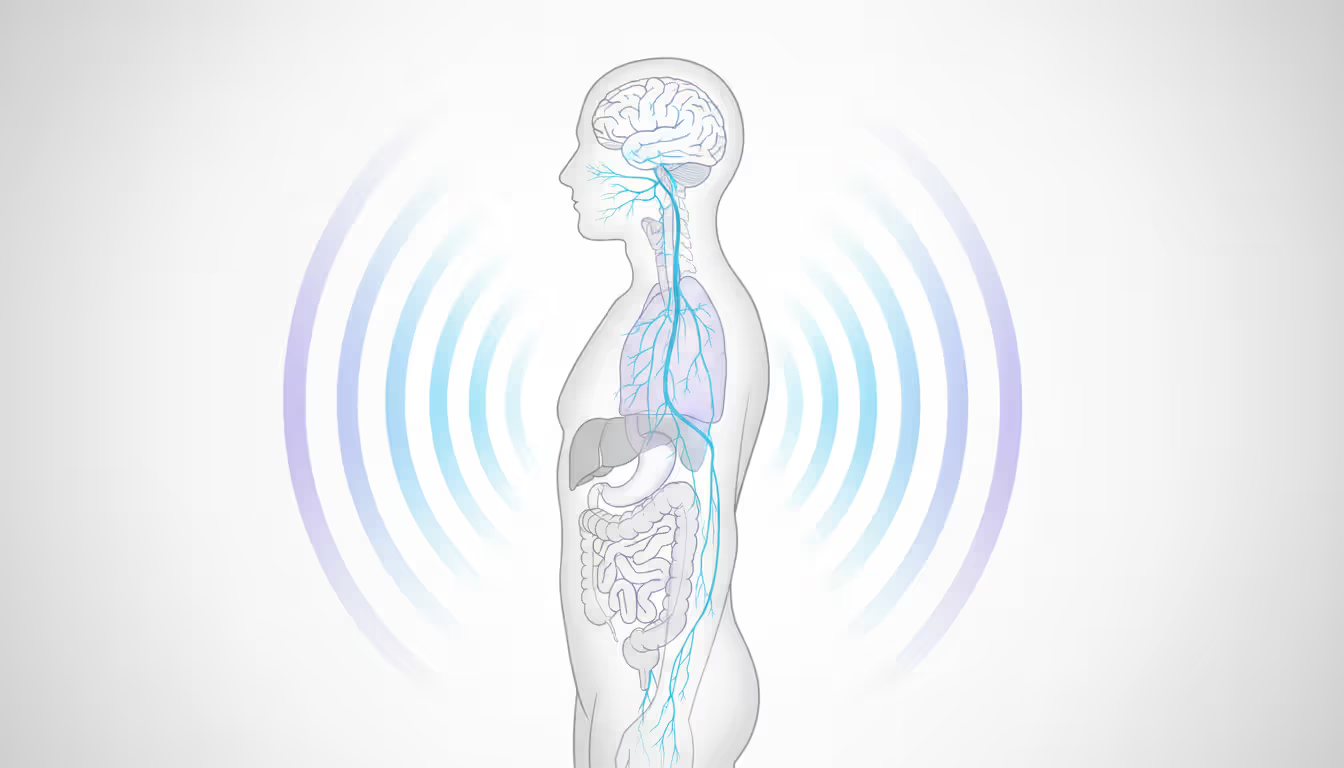
The rhythm of your breath determines which operating system runs your body. Rapid, chest-centered breathing signals danger to your brain, keeping your sympathetic nervous system—your body's alarm system—switched on. Deliberate, slow breathing patterns tell your parasympathetic nervous system to take over, initiating your body's rest-and-repair mode.
Deep breathing meditation creates measurable biological changes. Each long, controlled exhale massages the vagus nerve that connects your brain to your digestive organs. This physical stimulation releases acetylcholine, a chemical messenger that decreases heart rate and reduces blood pressure. Most people feel their jaw relax and shoulders drop within 60-90 seconds of intentional breathing.
The science shows remarkable consistency. Heart rate variability monitors reveal that breathing exercises for relaxation increase the time intervals between heartbeats—a reliable indicator that your parasympathetic system has activated. Your core temperature decreases slightly, digestion improves, and your brain starts generating the alpha waves that appear just before sleep arrives.
Mental stress dissolves through attention mechanics. Counting breaths or maintaining specific rhythms occupies the prefrontal cortex regions that would otherwise generate anxious narratives. You're not pushing worries away—you're redirecting mental resources toward a structured task. Your brain struggles to simultaneously track breathing patterns while catastrophizing about work deadlines.
Author: Sophie Ellington;
Source: 5sensesspa.com
The calming sensation typically emerges within three to five complete breath cycles. Full sleep-promoting effects usually manifest after 10-15 minutes, though certain techniques accelerate this timeline significantly.
What Is Breath Awareness Meditation
Breath awareness meditation means watching your breathing unfold naturally without intervention. You observe coolness at your nostrils during inhalation, notice your ribcage expanding, feel the brief suspension between breaths. Nothing fancy—just pure attention to respiratory sensations.
This approach differs fundamentally from other meditation styles. Concentration practices focus on repeated phrases or mantras. Visualization methods involve creating mental imagery. Breath awareness simply uses your ongoing respiration as a attention anchor. When thoughts about your checking account balance arise, you notice the drift and gently redirect focus to breathing sensations.
For sleep preparation, breath awareness meditation offers dual benefits. It strengthens your ability to control attention, making thought redirection easier when lying awake. Additionally, it builds an automatic association linking focused breathing with physical relaxation. After practicing for seven days, merely directing attention to your breath can activate a conditioned calm response.
The simplicity masks genuine difficulty. Mental wandering happens constantly—that's completely normal and expected. Beginners typically sustain breath focus for just 10-15 seconds before thoughts intrude. With continued practice, focus duration extends to several minutes. The actual skill being developed isn't thought prevention—it's noticing when attention has drifted and returning to breath sensations without self-judgment.
Mindful breathing meditation expands this foundation by incorporating intentional observation of breath characteristics like depth, speed, and texture. You might discover that stress creates shallow breathing or that specific worries make you unconsciously hold your breath. This higher-level awareness helps identify early tension signals and address them before anxiety fully develops.
Breathing Techniques That Improve Sleep Quality
Different breathwork meditation techniques address different needs. Some deliver rapid results for immediate stress, while others create cumulative benefits through weeks of practice. Here's how to execute the most effective sleep-promoting methods.
4-7-8 Breathing Method
Dr. Andrew Weil developed this technique combining breath suspension with prolonged exhales. The counting sequence works as follows: breathe in through your nostrils counting to four, suspend breathing counting to seven, then breathe out through your mouth counting to eight.
Throughout each cycle, rest your tongue tip where your upper teeth meet your gum tissue. This tongue position matters considerably—it generates mild resistance during exhalation, which amplifies vagus nerve activation.
Begin with just four complete cycles. Feeling lightheaded signals you should decrease the counts to a 2-3.5-4 ratio while preserving the same proportions. The prolonged exhale drives the technique's effectiveness, not the specific count duration.
Most people experience effects from this 4-7-8 breathing meditation within 2-3 minutes. Apply it when awakening mid-night without falling back to sleep, or as your bedtime routine's final component. The breath suspension element makes this more potent than basic deep breathing, though comfort requires practice.
Belly Breathing Technique
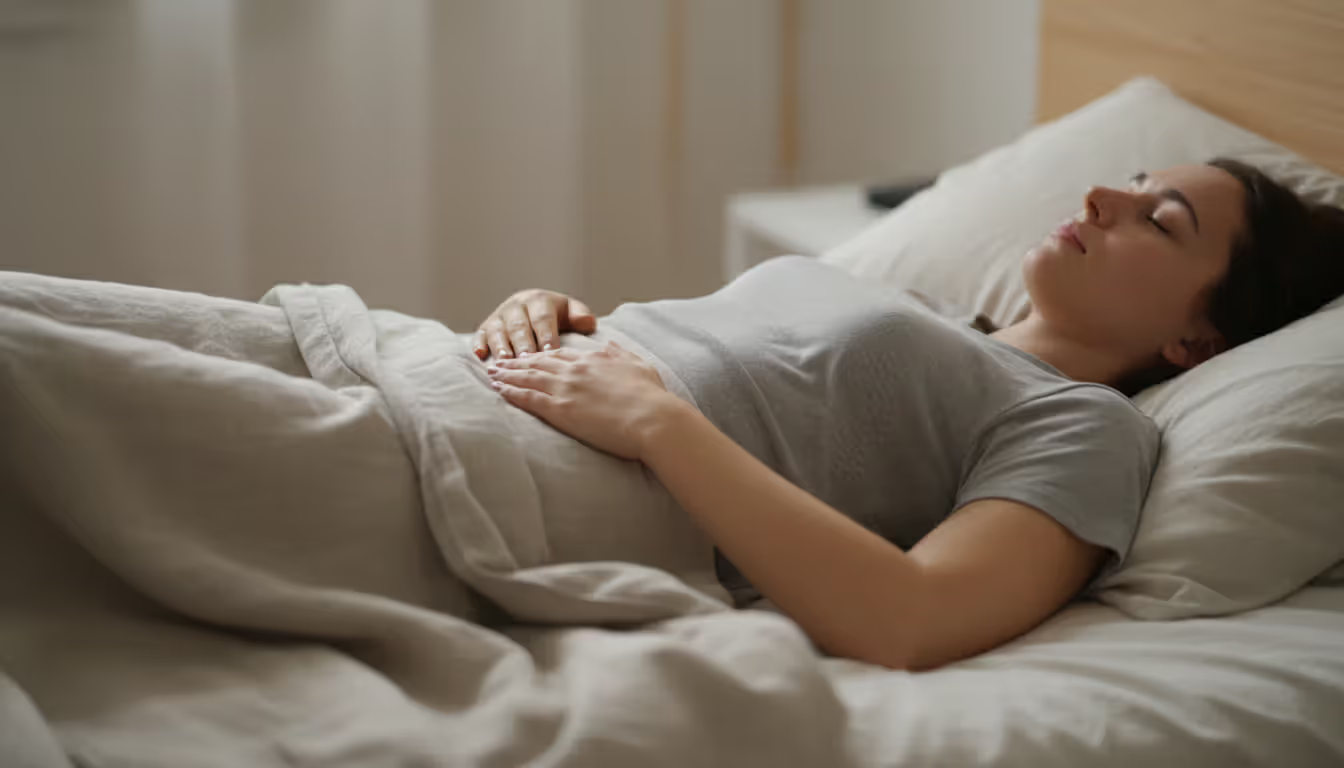
This diaphragmatic approach emphasizes engaging your diaphragm muscle rather than chest muscles. Rest one palm on your upper chest, the other on your abdomen. During nasal inhalation, your stomach-positioned hand should lift noticeably while your chest hand stays relatively motionless.
Release air slowly through lips formed in a small "O" shape, watching your belly hand descend. The lip positioning creates gentle back-pressure that extends airway openness and improves oxygen exchange efficiency.
Belly breathing meditation automatically reduces your breathing frequency from the typical 12-16 breaths per minute down to 6-10 breaths per minute. This decreased rate optimizes heart rate variability and maximizes parasympathetic engagement.
Continue this pattern for 5-10 minutes when preparing for sleep. Unlike the 4-7-8 method, you can maintain belly breathing while drifting toward unconsciousness—no counting maintenance required. Many practitioners find this technique easier to sustain when already fatigued.
Pranayama for Sleep
The pranayama breathing tradition encompasses numerous yogic respiratory practices. For sleep purposes, Nadi Shodhana (nostril alternation breathing) demonstrates the strongest effectiveness.
Find a comfortable seated position, then use your right thumb to seal your right nostril closed. Draw breath inward through your open left nostril for a count of four. Now seal your left nostril using your ring finger, release your right nostril, and let air flow out the right side for four counts. Draw air back in through the right side, then switch nostrils and release through the left. You've completed one full cycle.
Complete 5-10 cycles while maintaining smooth, consistent airflow. The alternating pattern creates balance between your brain's left and right hemispheres while establishing a meditative rhythm that silences mental chatter.
This method demands more coordination than simpler techniques, making it poorly suited when you're already drowsy. Practice this 30-60 minutes before bedtime as part of your transition routine rather than after getting into bed.
Technique
Duration
Difficulty Level
Best For
Key Benefits
4-7-8 Method
2-3 minutes
Moderate
Sudden wakefulness, midnight alertness
Quick nervous system transition, powerful vagus activation
Diaphragmatic Breathing
5-10 minutes
Beginner-friendly
Standard sleep prep, worry reduction
Maintainable while drowsy, naturally slows breathing rate
Nostril Alternation (Pranayama)
5-10 minutes
Intermediate-Advanced
Evening transition period, mental racing
Balances brain hemispheres, creates deep meditative state
Step-by-Step Breathing Meditation Script for Bedtime
This breathing meditation script merges breath awareness with systematic relaxation. Reserve 10-15 minutes for the full sequence.
Setup phase: Lie in bed on your back with lighting reduced. If lower back discomfort appears, slide a small pillow beneath your knees. Let your arms rest alongside your body, palms turned upward.
Minutes 1-2: Lower your eyelids and take three deeper-than-normal breaths without forcing any specific pattern. Identify where breath sensations register most clearly: nostrils, throat, chest wall, or abdomen. Select that zone as your attention anchor.
Minutes 3-5: Allow breathing to resume its natural pattern. Count only your exhalations: "one" after the first outbreath, "two" after the second, continuing to ten before restarting at one. Losing count is fine—simply begin again at one. Missing your count actually indicates increasing relaxation.
Minutes 6-8: Switch to diaphragmatic breathing. Position one hand on your stomach. Draw air in through your nose for four counts, feeling your hand lift. Release air through pursed lips for six counts, feeling your hand lower. The outbreath should flow smoothly and steadily, never forced or strained.
Minutes 9-11: Move into the 4-7-8 pattern. Inhale nasally for four, suspend breathing for seven, exhale through your mouth for eight. Complete four full cycles. If dizziness appears, return to belly breathing for several cycles before attempting again.
Minutes 12-15: Release all breath manipulation. Let your respiratory system find its own rhythm. Mentally scan from your toes upward to your scalp, simply noticing areas of relaxation. Where you detect tension, imagine breathing into that region without forcing anything—just observe.
Managing mental drift: Your mind will wander repeatedly—this happens to everyone. The instant you catch yourself thinking about tomorrow's meeting, mentally note "thinking" and redirect to your breath count or pattern. Each successful redirect strengthens the attention skill.
Handling restlessness: Physical restlessness often peaks around the 5-7 minute mark before subsiding naturally. If it becomes unbearable, briefly open your eyes, take three fuller breaths, then resume. Some nights demand more patience than others.
Completion: No formal ending exists. As the final body scan finishes, simply allow sleep to arrive. Many people lose consciousness during minutes 12-15. If you remain awake, continue the belly breathing rhythm with closed eyes until sleep comes.
Author: Sophie Ellington;
Source: 5sensesspa.com
Common Mistakes When Practicing Breathing Meditation
Breathing too forcefully: Deep breathing meditation doesn't require maximum lung inflation. Filling your lungs to 70-80% capacity feels sustainable and comfortable. Aggressive breathing actually triggers stress responses instead of dissolving them. Your breath should feel nourishing and effortless, never strained.
Wrong timing: Beginning your breathing practice the instant you lie down frequently backfires. Your body needs transition time. Start practicing while sitting at your bedside or in a nearby chair, then shift to lying down after 3-5 minutes. This prevents the counterproductive "trying too hard" mentality that maintains alertness.
Uncomfortable positions: Back-lying works for many people but not everyone. Side sleepers often create tension attempting to maintain an unfamiliar posture. Practice in whatever position you'll actually use for sleeping. The breathing patterns function effectively regardless of body orientation.
Unrealistic expectations: Breathing meditation for sleep doesn't function like a light switch. During initial sessions, you're developing a skill rather than immediately sleeping better. Some individuals respond within 2-3 attempts; others require two weeks of sustained practice. The technique builds cumulatively—each practice session enhances the next one's effectiveness.
Counting obsession: Losing count during breath awareness makes some people restart with frustration, creating a tension cycle. The counting simply occupies your analytical mind. Lost count indicates deepening relaxation. Return to "one" with neutral curiosity rather than self-criticism.
Ignoring discomfort signals: Breath suspension in the 4-7-8 technique should feel mildly challenging, not desperate. If you're gasping when the hold ends, shorten the count. Mindful breathing meditation includes recognizing when a particular technique isn't appropriate for that specific night.
Author: Sophie Ellington;
Source: 5sensesspa.com
How to Build a Nightly Breathing Meditation Routine
Consistency outweighs duration significantly. Ten minutes nightly produces superior results compared to 30 minutes three times weekly. Your nervous system learns through pattern repetition—identical timing, location, and sequence creates a powerful sleep signal.
Best time to practice: Begin your routine 15-30 minutes before your target sleep time. This allows parasympathetic activation to build progressively. Practicing immediately upon getting into bed works for some individuals but leaves others feeling alert from the mental engagement required.
Duration recommendations: During week one, practice 5 minutes nightly using exclusively belly breathing. Week two, extend to 8 minutes and introduce breath counting. Week three, incorporate the complete 10-15 minute script. This gradual escalation prevents overwhelm while building genuine proficiency.
Author: Sophie Ellington;
Source: 5sensesspa.com
Combining with other sleep hygiene practices: Link your breathing exercises for relaxation with established habits. After completing your dental hygiene, reduce lighting and practice 5 minutes of pranayama breathing while seated on your bed's edge. This creates a behavioral sequence that signals sleep readiness to your brain.
Eliminate screen exposure for 30 minutes before practice. Blue light wavelengths suppress melatonin production, but mental stimulation from email or social media creates greater problems. Your breathwork meditation technique cannot override stress activation from reading work correspondence.
Maintain bedroom temperature between 65-68 degrees Fahrenheit. Dropping temperature signals sleep onset naturally, and breathing meditation works synergistically with this biological process.
Tracking progress: Maintain a simple three-column journal: date, technique practiced, and sleep quality rated 1-10. After two weeks, patterns become visible. You might discover that 4-7-8 breathing performs better on high-stress days while belly breathing suffices on calmer evenings.
Some practitioners monitor heart rate variability through wearable technology, watching metrics improve across weeks of consistent practice. This objective feedback reinforces the physiological transformations you're creating, which sustains motivation during the initial learning phase.
Building the habit: Create a physical cue for your practice. Place a distinctive stone or other small object on your nightstand that you touch before starting. This tangible trigger assists on nights when skipping practice feels tempting.
Anticipate resistance around days 10-14. Novelty has faded while benefits haven't fully materialized. This represents the critical window where most people abandon the practice. Push through two complete weeks, and the practice typically becomes self-sustaining as sleep quality measurably improves.
The breath is the bridge between the conscious and unconscious mind. When patients learn to consciously slow their breathing before sleep, they're essentially teaching their autonomic nervous system a new default setting. After three to four weeks of consistent practice, many report falling asleep faster even on nights when they don't formally practice the techniques—the nervous system has learned a new pattern
— Dr. Sarah Chen
FAQ
How long should I practice breathing meditation before bed?
Begin with 5 minutes and progressively extend to 10-15 minutes as comfort with the practice develops. Newcomers frequently experience results from just 5 minutes of diaphragmatic breathing, while more structured techniques like the 4-7-8 method deliver effectiveness within 2-3 minutes. Consistency drives results—nightly 5-minute practice outperforms 20-minute sessions twice weekly. When fatigue runs high, even 2-3 minutes of concentrated breathing provides measurable benefit. Pay attention to your body's signals and modify duration based on energy levels and your typical sleep onset speed.
Can breathing meditation replace sleep medication?
Breathing meditation can decrease or eliminate sleep medication necessity for certain individuals, but never stop prescribed medications without physician consultation. Research demonstrates breathing techniques effectively resolve sleep onset insomnia stemming from stress and worry. However, sleep disorders with underlying physiological causes—including sleep apnea or restless leg syndrome—demand medical intervention. Many physicians recommend initially combining breathing practices with existing medication, then progressively reducing pharmaceutical doses under medical supervision as sleep quality improves. Breathing meditation shows strongest effectiveness for situational insomnia and chronic stress-related sleep difficulties.
What if I fall asleep during the practice?
Falling asleep mid-practice represents success, not failure. Sleep is the objective, and if your practice achieves that goal in minute five rather than minute fifteen, you've succeeded efficiently. Many practitioners never finish the complete script because drowsiness overtakes them midway—this outcome is actually ideal. If you consistently lose consciousness during a specific phase, you can eliminate earlier steps and begin where drowsiness reliably appears. Some people drift off during breath counting, others during the 4-7-8 cycles. Your personal pattern will crystallize after one week of practice.
Is breathing meditation safe for everyone?
Breathing meditation carries safety for most individuals, but certain medical conditions require technique modifications. Pregnant women should skip breath retention methods like 4-7-8 breathing, staying with gentle diaphragmatic breathing instead. People managing respiratory conditions including COPD or severe asthma should consult their pulmonologist before attempting pranayama breathing, as certain techniques may provoke symptoms. Those with anxiety disorders might initially experience heightened anxiety during breath retention—begin with simple breath awareness instead. If dizziness, chest discomfort, or severe breathlessness occurs during practice, stop immediately and seek healthcare guidance.
How quickly will I see results?
Response timing varies substantially between individuals. Approximately 30% of practitioners notice easier sleep onset within their first three sessions. Another 40% observe improvement after one to two weeks of regular practice. The remaining 30% need three to four weeks before significant changes manifest. Variables affecting response speed include baseline stress levels, prior meditation experience, and practice consistency. People experiencing high sympathetic nervous system activation (chronic stress, anxiety conditions) frequently require extended time to retrain their nervous system responses. Maintain a sleep journal to capture subtle improvements you might otherwise overlook—falling asleep 10 minutes faster feels insignificant nightly but represents over an hour of additional sleep weekly.
Should I practice breathing meditation if I have sleep apnea?
If you carry a sleep apnea diagnosis, breathing meditation can complement but never substitute for CPAP therapy or other medically prescribed treatments. Breath awareness and gentle belly breathing generally carry safety and may facilitate relaxation before sleep. However, skip breath retention techniques like 4-7-8 breathing without sleep specialist consultation, as breath-holding may worsen oxygen desaturation. Some research indicates diaphragmatic breathing practiced during daytime hours may strengthen respiratory musculature and potentially reduce mild sleep apnea severity, but this requires medical oversight. Always maintain your prescribed sleep apnea treatment and discuss adding breathing exercises with your healthcare team.
Breathing meditation for sleep succeeds because it targets the fundamental cause behind most contemporary insomnia: an overactive nervous system unable to downshift into rest mode. The techniques throughout this guide—from straightforward belly breathing to systematic 4-7-8 patterns—provide multiple approaches for varying situations.
Select one technique to try tonight. Choose diaphragmatic breathing if simplicity appeals to you, or experiment with 4-7-8 breathing if you need faster results. Practice for just 5 minutes before bed. Observe what unfolds without evaluating the outcome.
Week one develops the skill foundation. Week two establishes the habit. By week three, your nervous system begins responding to breathing cues automatically, and sleep arrives more readily even during stressful periods. You're not adding another obligation to your schedule—you're installing a biological switch you'll utilize for the rest of your life.
Your breath remains constantly with you, perpetually available, completely free. Mastering its effective use for sleep might represent the most valuable 10 minutes you invest in your wellbeing this year.
Loving kindness meditation cultivates unconditional goodwill toward yourself and others through specific phrases and mental imagery. Originating from Buddhist metta practices, this technique systematically expands compassion from self to all beings, offering measurable mental and physical health benefits
Vedic meditation is a mantra-based practice from ancient India that uses silent sound vibrations to help the mind settle naturally. Practitioners sit comfortably for twenty minutes twice daily, silently repeating a personalized mantra. The technique requires no belief system or lifestyle changes
Transcendental Meditation requires formal instruction through a standardized course. This guide explains the four-session training structure, personalized mantra assignment, costs, and why TM can't be self-taught from books or apps
Discover how mindfulness walking meditation transforms ordinary steps into a powerful practice for calming the mind and grounding the body. This comprehensive guide covers techniques, benefits, different styles, and practical tips for beginners and experienced practitioners alike
The content on this website is provided for general informational and educational purposes only. It is intended to explain concepts related to meditation, mindfulness, mental health, and spiritual practices.
All information on this website, including articles, guides, and examples, is presented for general educational purposes. Meditation outcomes may vary depending on individual practices, health conditions, and guidance.
This website does not provide medical, mental health, or spiritual advice, and the information presented should not be used as a substitute for consultation with qualified professionals.
The website and its authors are not responsible for any errors or omissions, or for any outcomes resulting from decisions made based on the information provided on this website.