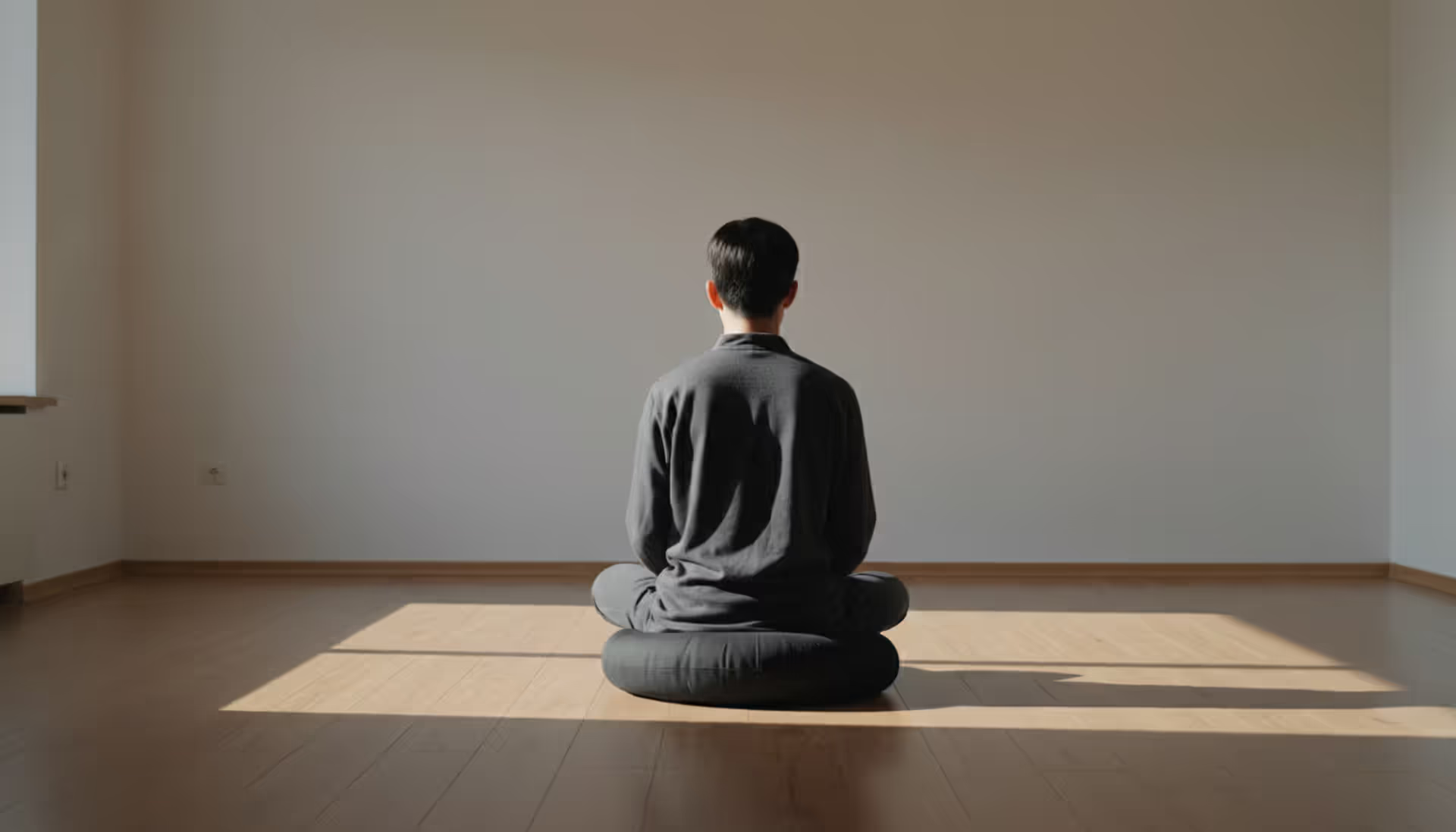
Want a meditation practice that cuts through the noise? Zazen—the seated meditation at Zen Buddhism's core—strips away the guided imagery, soothing voices, and complexity that characterizes modern meditation apps. You sit. You breathe. You watch your mind do its thing. That's it. Simple? Yes. Easy? Not remotely. But this straightforward approach has kept practitioners coming back to their cushions since the 12th century.
What Is Zen Meditation?
Zazen literally means "seated meditation" in Japanese, though this translation barely scratches the surface. Picture this: no mantras to repeat, no visualizations to conjure, no specific breathing rhythms to master. You're not trying to achieve a blissed-out state or empty your mind completely (good luck with that anyway). Instead, you're sitting still and paying attention to what's actually happening right now.
This japanese meditation practice traveled from India to China (where it became Chan Buddhism), then landed in Japan around 1191, brought by monks who'd studied on the mainland. The Japanese refined it, formalized it, and built entire monastic traditions around it. Today, you'll find Zen centers in cities worldwide, though the practice itself hasn't changed much in 800 years.
Here's what makes zazen different from other meditation approaches: there's nothing between you and your direct experience. Mindfulness meditation might have you focus on body sensations—the feeling of your feet on the floor, tension in your shoulders, that sort of thing. Transcendental Meditation gives you a mantra. Loving-kindness meditation asks you to generate specific emotions toward yourself and others. Zazen hands you nothing. You're experiencing consciousness itself, unfiltered.
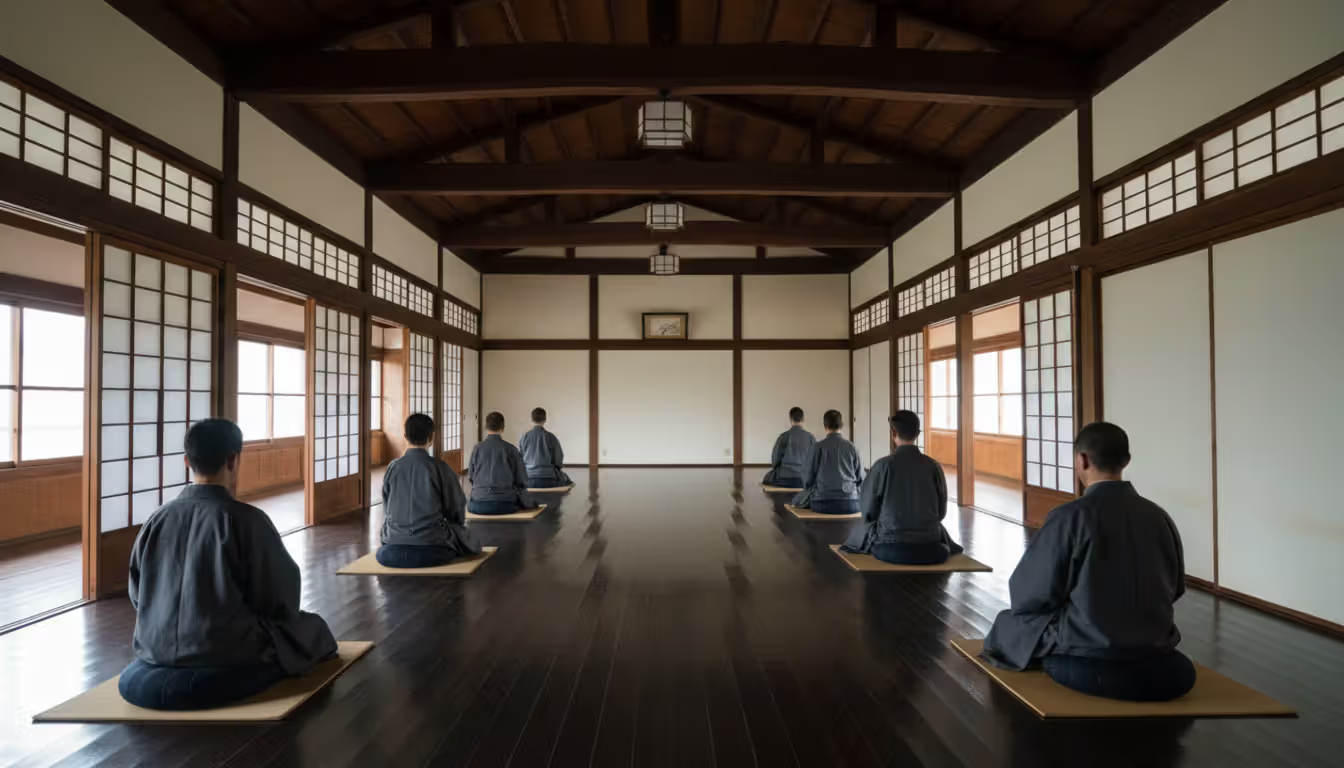
Traditional training happens in monasteries under a roshi (Zen teacher), where practitioners might sit zazen for hours daily. Don't let that intimidate you. The technique itself is accessible to anyone with a cushion and ten minutes. You won't get the intensive guidance a monastery provides, but you'll get the essential practice.
Author: Ethan Solberg;
Source: 5sensesspa.com
Core Principles of Zazen Meditation
Understanding what you're actually doing (and not doing) during zazen meditation prevents the frustration that makes beginners quit after a week. Let's clear up the misconceptions.
Thoughts aren't the enemy. During zazen, your brain will generate thoughts. Lots of them. Sometimes it's a gentle stream—"I should call Mom later" followed by "my knee itches" followed by "what's for dinner?" Other times it's a raging torrent of worries, plans, memories, and random song lyrics. Neither scenario means you're failing. The practice isn't stopping thoughts (your brain is literally designed to think). The practice is noticing when you've been mentally replaying an argument from three weeks ago, then coming back to the present without beating yourself up about it.
Think of it this way: you're sitting by train tracks. Thoughts are trains passing by. You don't jump on the trains. You don't try to derail them. You watch them pass.
Shikantaza—"just sitting"—is where zazen gets interesting. After you've developed some stability through breath counting, you eventually drop even that anchor. You're sitting with complete awareness but not focusing on anything particular. This sounds passive, maybe boring. It's actually exhausting in the best way. You're awake to everything—sounds, sensations, thoughts—without grabbing onto any of it. Most beginners need months of practice before attempting this.
In zazen, leave your front door and your back door open. Let thoughts come and go. Just don't serve them tea
— Shunryu Suzuki
Your posture does serious work here. Slouch and you'll drift toward sleep. Lock yourself rigid and you'll be too tense to observe anything clearly. The traditional upright position—pelvis tilted forward, spine naturally curved, head balanced on top—creates alertness without strain. Your body becomes a real-time feedback system. Notice yourself leaning? Your attention probably drifted. Shoulders creeping up toward your ears? You're forcing something. This zen mindfulness practice uses physical awareness as a doorway to mental awareness.
Breathing happens on its own. You're not controlling or improving your breath. You're watching it the way you'd watch clouds drift across the sky. Is it shallow? Fine. Deep? Also fine. Irregular? That's normal too. Beginners often use breath as an anchor—something to return to when they realize they've been planning their grocery list for five minutes. The breath isn't the point; it's just reliable and always available.
Zazen Posture and Method
Getting your body set up correctly isn't just about comfort (you won't be comfortable, especially at first). The zazen posture and method create specific conditions that support sustained attention. Shortcuts here usually backfire.
Proper Sitting Positions
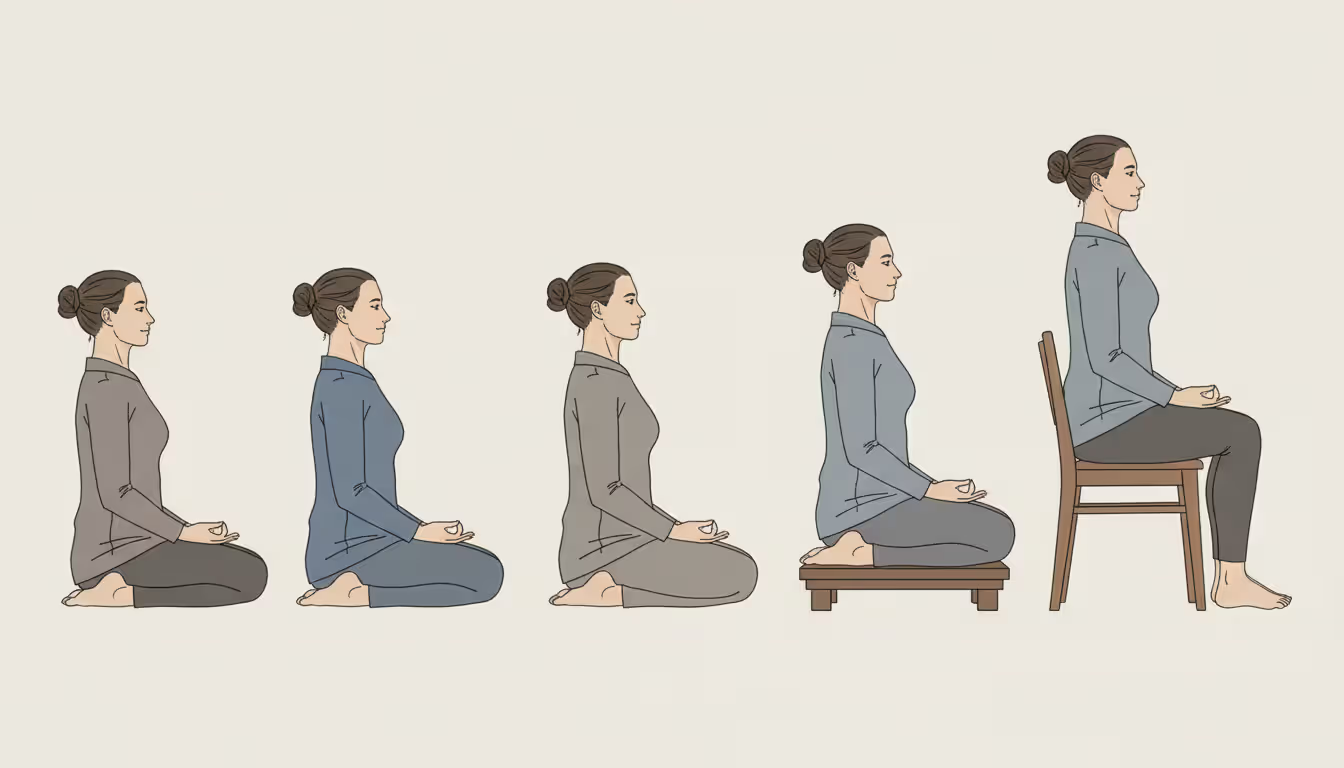
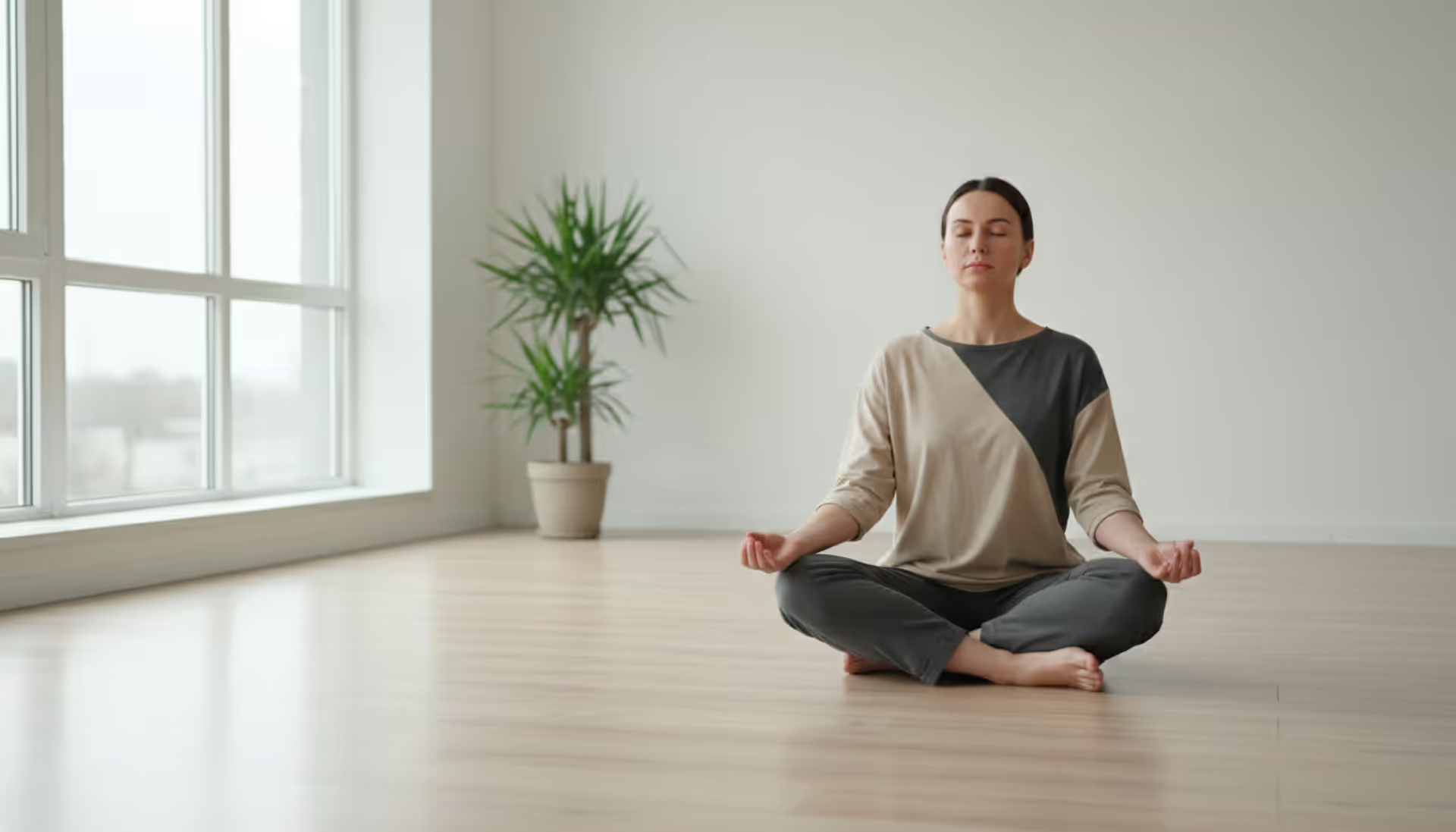
You need three points of contact with the ground: your seat and both knees, or your seat and both feet. This tripod creates stability so your spine can rise naturally without muscular effort—you're not holding yourself up through tension.
Position
Difficulty
Primary Benefits
Best For
Full Lotus
Very challenging
Rock-solid stability, traditional form
Long-time practitioners with very flexible hips
Half Lotus
Moderately challenging
Strong stability, more achievable
People with some hip flexibility willing to work at it
Burmese
Accessible
Comfortable enough for 20+ minute sessions
Most beginners, anyone with tight hips
Seiza (kneeling)
Easy to start
Creates upright spine naturally
Those with flexible knees, using a proper bench
Chair
Very accessible
Works for almost anyone
Older adults, people with injuries or physical limitations
Full lotus locks both feet onto opposite thighs. Unless you've been doing yoga for years or grew up sitting cross-legged, don't force this. You'll wreck your knees.
Half lotus puts one foot on the opposite thigh while the other tucks under the opposite leg. This gives you many benefits of full lotus without requiring circus-performer flexibility. Many experienced practitioners use half lotus their entire lives.
Burmese position brings both feet to the floor, one in front of the other, neither resting on thighs. Your knees should touch or nearly touch the ground. If they're floating in the air, you need more height under your sit bones—add another cushion.
Seiza means kneeling with a bench or thick cushion supporting your seat between your calves. Your shins and tops of your feet take some pressure. This naturally tilts your pelvis forward and straightens your spine, but extended sessions can make your feet go numb or strain your ankles.
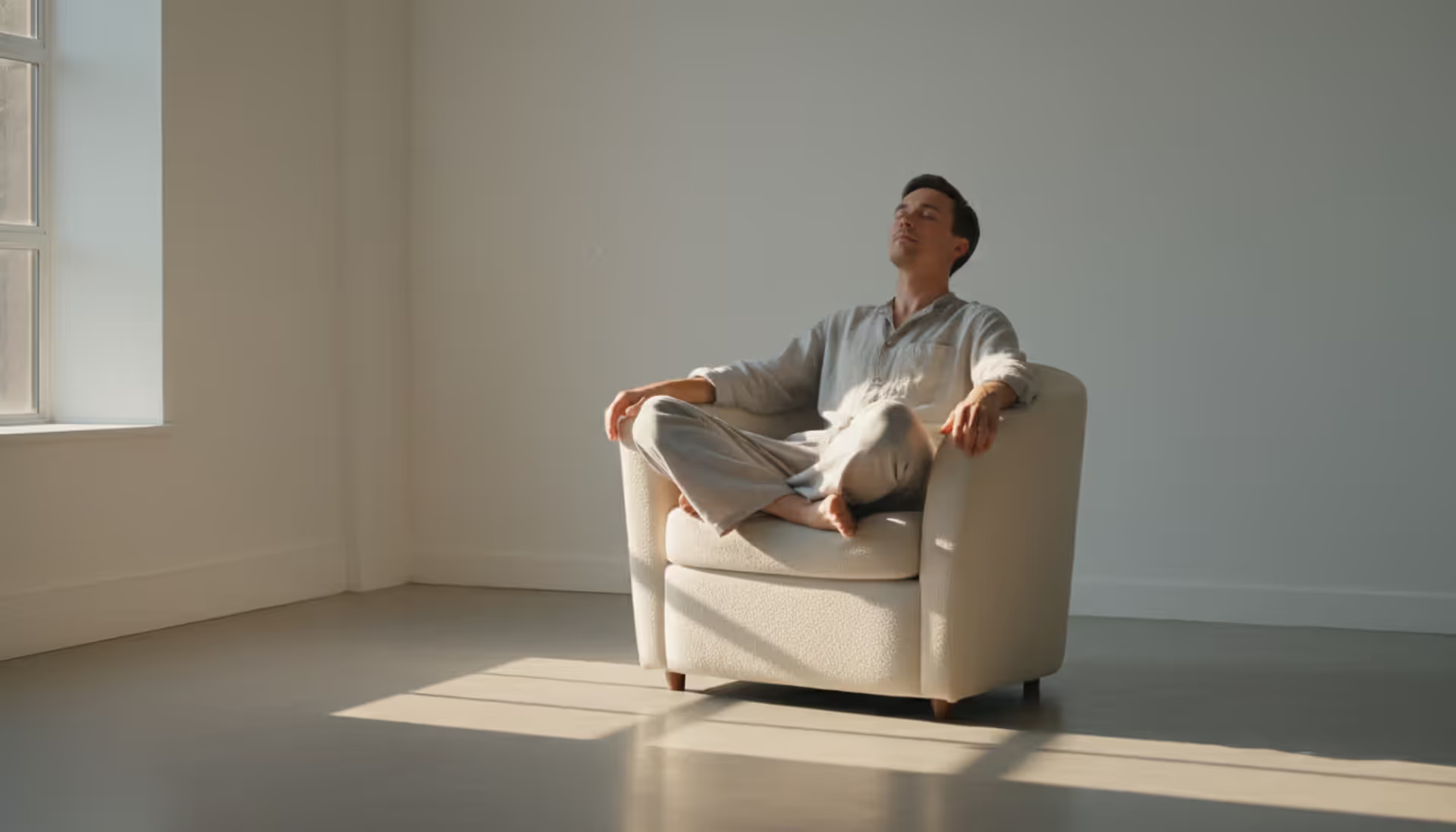
Chair sitting requires sitting forward on the chair (don't lean back), feet flat on floor, hips slightly higher than knees. Use a cushion under your sit bones if needed. This isn't a lesser option—it's the smart choice if other positions cause pain.
Whatever position you choose, your pelvis should tilt forward slightly, creating your spine's natural S-curve. Imagine someone's pulling a string attached to the crown of your head straight up. Your chin tucks a bit—not so much you're staring at your lap, but enough to lengthen the back of your neck.
Author: Ethan Solberg;
Source: 5sensesspa.com
Hand Placement and Mudra
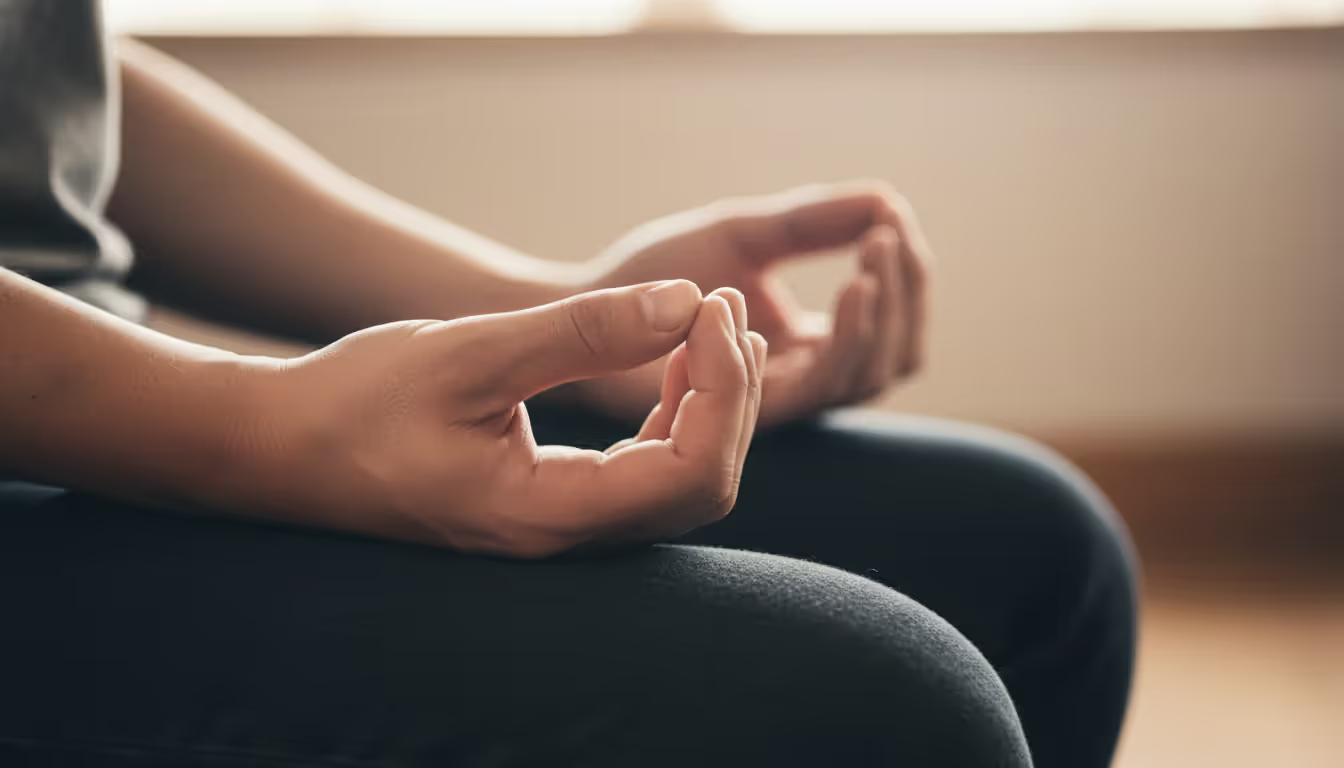
The cosmic mudra (hokkai-join in Japanese) is standard in Soto Zen circles. Your right hand goes palm-up in your lap. Left hand rests palm-up on top of it. Thumbs touch lightly, making an oval or egg shape. The edges of your little fingers rest against your lower belly, and the whole hand arrangement sits close to your body.
Why bother with this specific hand position? Your thumbs act as a monitoring system. When your attention wanders, your thumbs either collapse (forming a valley) or press together too hard (forming a mountain). The ideal is a flat horizon—thumbs barely touching. It's surprisingly accurate feedback about your mental state.
Some Zen schools rest hands on knees instead. Others use different mudras. Pick one approach and stick with it—consistency matters more than which specific form you use.
Breathing Technique
Breathe through your nose. Let the breath settle into your belly rather than puffing up your chest. Don't force anything—your body knows how to breathe. You're observing, not optimizing.
Many beginners start by counting breaths to build concentration. Count each exhale: one, two, three, up to ten. Then start over at one. When you lose count (you will, probably before reaching ten), go back to one. No judgment, no frustration—just return to one and continue. After some weeks or months of this zen meditation technique, you might drop the counting and just follow the sensation of breath. Eventually, even following the breath becomes too focused, and you open into shikantaza.
Common mistakes? Breathing too deliberately, creating an artificial rhythm. Holding tension in your shoulders or chest. Trying to breathe "correctly" or "perfectly." Your breath should feel effortless even while paying attention to it requires effort. Yeah, that's a paradox. You'll figure it out.
How to Start Zen Meditation for Beginners
Starting zen meditation for beginners means managing your expectations ruthlessly. Your first sessions won't feel peaceful. You won't experience profound insights. Mostly, you'll notice how uncomfortable sitting still is and how relentlessly your mind chatters.
Ten minutes daily beats longer sessions done inconsistently. Can you sit for thirty minutes? Maybe. Will you still be doing it in two weeks? Probably not. Start small. Ten minutes is short enough that you won't dread it but long enough to get past the initial settling-in period. You can always sit longer once the habit is locked in.
Pick a time you'll actually use. Early morning works well—your mind is relatively quiet, and you haven't yet filled your head with the day's concerns. Right after waking, before checking your phone or starting coffee. But if you're not a morning person, don't set yourself up to fail. Evening meditation helps some people decompress. The best time is whichever time you'll defend against other demands.
Create a simple dedicated spot. You don't need a shrine or a special room. A corner works fine. Face a blank wall if possible—visual clutter pulls your attention outward. Keep the area clean and uncluttered. Your brain will start associating that spot with practice, making it easier to settle when you sit down.
Physical discomfort is guaranteed. Your legs will fall asleep. Your back will ache. Your knees will protest. You'll want to shift position every thirty seconds. This is completely normal and temporary. Over weeks, your body adapts. The discomfort also teaches you something valuable: you can observe unpleasant sensations without immediately reacting to them. That skill transfers to emotional discomfort too—anxiety, frustration, impatience.
You'll spend most of early sessions lost in thought. This is the practice. You drift off into planning, remembering, fantasizing, or worrying. Eventually you notice—"Oh, I've been thinking about that email for five minutes"—and you return to your breath or posture. That moment of noticing? That's the win. Each return strengthens awareness. Getting distracted isn't failure. Staying distracted without noticing is.
Don't chase good meditation sessions. Some days you'll feel calm. Other days your mind will race like a caffeinated squirrel. Both are fine. You're not meditating to feel a certain way. Getting attached to pleasant meditation experiences just sets you up for disappointment and completely misses the point of how to practice zen.
Author: Ethan Solberg;
Source: 5sensesspa.com
After several weeks of consistent ten-minute sessions, extend to fifteen minutes. Then twenty. Most people eventually settle into 20-30 minute daily sessions, though some prefer longer periods or multiple sessions daily.
Benefits of Regular Zen Meditation Practice
The zen meditation benefits don't arrive immediately like a pizza delivery. They accumulate gradually through consistent practice, like compound interest on an investment you're making in your attention and well-being.
Your ability to focus strengthens noticeably. A 2018 study in Mindfulness journal tracked people who'd practiced zazen daily for six months. They showed measurably better sustained attention compared to non-meditators, and the effect persisted even outside meditation sessions. You're essentially training your brain to return to the task at hand, which turns out to be incredibly useful when you're trying to work, read, or have an actual conversation without mentally drifting.
Stress doesn't hit as hard. Regular practice lowers your baseline cortisol levels and speeds up recovery time after stressful events. More importantly, zazen changes how you relate to stress. You still feel the tight chest and racing heart, but you're less likely to spin catastrophic stories around those sensations. The gap between feeling stressed and being consumed by stress widens significantly.
Emotional reactions become less automatic. That pause between something happening and you reacting? It gets longer. You still feel anger when someone cuts you off in traffic, but you're less likely to tailgate them for three miles while inventing creative insults. The emotions still arrive; you're just less likely to be hijacked by them.
The mental loop-de-loops decrease. If you're prone to replaying conversations, worrying about worst-case scenarios, or mentally rehashing the past, zazen helps interrupt those patterns. You learn to notice when you're doing it and simply stop feeding the thought spiral. This proves particularly helpful for managing anxiety and mild depression, though meditation shouldn't replace therapy or medication for serious mental health conditions.
Physical health markers improve measurably. Blood pressure drops in regular practitioners. Immune function gets more robust. People with chronic pain often report it becoming more manageable—not gone, but less consuming. The relaxation response meditation triggers provides concrete physiological benefits that researchers can measure.
Sleep quality often improves. Many practitioners fall asleep faster and sleep more deeply, probably because they've got less mental chatter interfering at bedtime and lower overall stress levels. That skill you're developing—observing thoughts without engaging them—works great when you're lying in bed and your brain wants to discuss your entire to-do list.
You understand yourself better. Spending time observing your mental patterns reveals things. You start recognizing your go-to thoughts, what triggers specific emotions, behavioral patterns that usually run below conscious awareness. It's like turning on lights in a room you've only navigated in the dark.
These benefits compound. Six months of practice yields more than twice what three months delivers. A year of practice? Even better.
Author: Ethan Solberg;
Source: 5sensesspa.com
Building a Sustainable Daily Practice
Establishing daily zen meditation requires planning for the obstacles that will definitely show up. Motivation evaporates. Discipline keeps you on the cushion through rough patches.
Start ridiculously small. If ten minutes feels hard, do five. If five minutes feels hard, do three. The goal is establishing the routine, not impressing anyone with your duration. You can extend time later once the habit is solid. One missed day breaks momentum. Sitting for three minutes maintains it.
Attach meditation to something you already do daily. Sit right after brushing your teeth in the morning. Or immediately after your first coffee. Or just before bed. Connecting the new habit to an established routine makes it stick better—you're using existing behaviors as triggers for the new one.
Track it somehow. Mark a calendar with an X. Use a meditation app. Whatever method you choose, seeing a visual record of your consistency provides motivation and helps you spot patterns in when you practice and when you skip.
Find other people doing this. A sangha (meditation community) provides accountability and guidance that solitary practice lacks. Many Zen centers offer beginner instruction and weekly zazen sessions. Can't find one nearby? Virtual sanghas work fine. The structure of regular group sitting helps tremendously.
Plan for the common excuses. Too tired? Sit anyway—you'll either wake up or learn something useful about your relationship with fatigue. Too busy? Everyone has ten minutes. You're choosing other priorities, which is fine, but be honest about it. Practice feels pointless? Expecting constant progress is just another form of attachment.
Extend duration slowly. After three months of consistent practice at one length, add five minutes. Your capacity for sustained sitting grows gradually. Rush this and you risk injury or burnout.
Bring awareness into daily activities. Zazen isn't the only opportunity to practice. Washing dishes? Notice the warm water, the smooth plates, the sound of running water. Walking? Feel your feet contact the ground. Waiting in line? Watch your impatience arise and pass rather than checking your phone. This integration strengthens formal practice and makes zen mindfulness practice a lifestyle rather than a 20-minute daily activity.
Expect your practice to feel uneven. Some weeks feel strong. Other weeks feel like you've forgotten everything you learned. This is completely normal. You're not making linear progress toward some destination—you're showing up regardless of how it feels today.
Try intensive practice occasionally. A half-day or full-day sitting retreat (sesshin in Japanese) several times yearly deepens practice in ways daily sitting can't match. Extended periods reveal mental patterns that don't surface in shorter sessions. Most Zen centers offer monthly or quarterly sesshins.
The goal isn't becoming perfect at meditation. The goal is maintaining imperfect consistency across months and years.
Frequently Asked Questions About Zen Meditation
How long should I meditate as a beginner?
Ten minutes daily is the sweet spot for starting out. Short enough that you won't dread it, long enough to move past the initial fidgeting and mental chatter. After 4-6 weeks of hitting that target consistently, bump it to 15 minutes. Then 20. Most people eventually land somewhere between 20-30 minutes per session, though some go longer. Remember: ten minutes every single day delivers more benefit than an hour-long session once a week. Consistency wins.
Do I need special equipment for zazen?
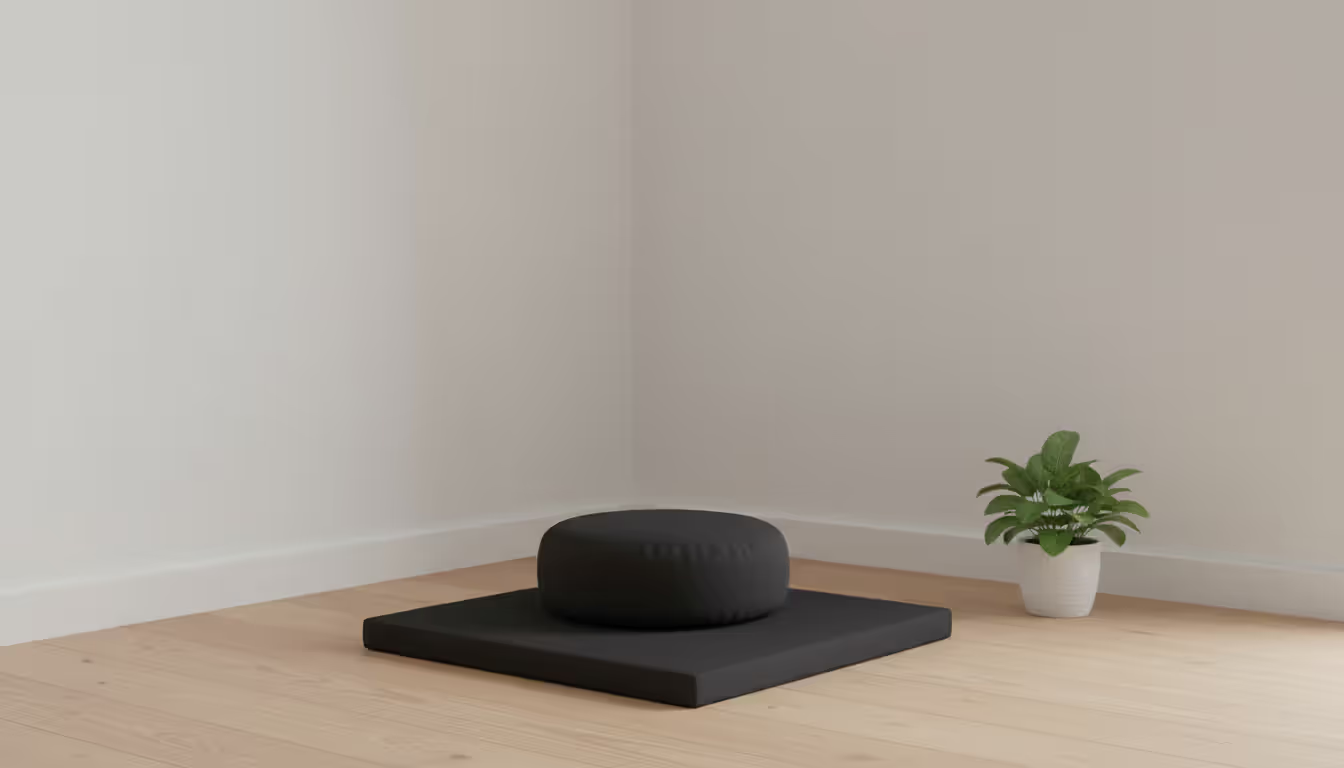
A zafu (round cushion) and zabuton (square mat) help, but you can start with a firm couch cushion or folded blanket to get your hips higher than your knees. A meditation bench works great for seiza position. Using a chair? You need exactly nothing beyond the chair itself. Loose, comfortable clothing matters more than specialized gear. Once you've been practicing consistently for a month or two and you're sure this will stick, invest in proper cushions. Before that, work with what you have.
What's the difference between zen and mindfulness meditation?
Both develop present-moment awareness, but they take different routes. Mindfulness meditation typically focuses on specific objects—breath sensations, body awareness, sounds in your environment. It's often taught as a secular stress-reduction technique. Zazen, especially shikantaza, involves open awareness without zeroing in on particular objects. Zen also emphasizes precise posture more rigorously and usually happens within a Buddhist framework (though religious belief isn't required). Mindfulness asks "What am I experiencing?" Zazen asks "What is experience itself?"
Can I practice zen meditation lying down?
Traditional zazen requires sitting upright because lying down basically guarantees you'll fall asleep. The alert-yet-relaxed state zazen cultivates is really difficult to maintain horizontally. If physical issues prevent sitting, try a reclined position with back support at 45-60 degrees rather than flat. But seriously explore all sitting options—including chair sitting—before abandoning the upright posture. The position itself contributes to the practice in ways you can't replicate lying down.
How do I handle intrusive thoughts during zazen?
Intrusive thoughts are completely normal. Everyone gets them. When you notice you're thinking (which might be 30 seconds or five minutes later), return attention to your breath or posture. Don't try suppressing thoughts—that creates tension and makes it worse. Don't engage with them either—that feeds them and you'll end up mentally redecorating your living room for ten minutes. Treat thoughts like background noise at a coffee shop. You hear them, you acknowledge they're happening, but you don't join the conversation at the next table. Some days your mind will be relatively quiet. Other days it'll be absolute chaos. Both are fine.
When is the best time to practice daily zen meditation?
Early morning works for most people. Your mind is clearer before the day's chaos begins, and you're less likely to skip practice because you're too tired or something came up. Twenty minutes after waking, before you check your phone—that's the sweet spot many practitioners find. But the optimal time is whenever you'll actually sit consistently. Some people prefer evening sessions to decompress after work. Try different times for a week each, then commit to whichever one you'll actually defend against other demands.
Daily zen meditation stops being something you do and becomes infrastructure supporting everything else. The practice won't eliminate stress, difficult emotions, or life's inevitable challenges. It changes your relationship with these guaranteed experiences. Through regular zazen, you develop capacity to face whatever shows up with more clarity and less reactivity.
This path demands patience. Benefits emerge through months and years, not days or weeks. Some sessions will feel profound. Many will feel ordinary or frustrating. Sit anyway. The cushion doesn't grade your performance.
Start today. Ten minutes. Sit upright, watch your breath, notice when you're thinking, come back. Tomorrow, repeat. Day after that, repeat again. These simple sessions accumulate into something far greater than any single meditation achieves.
What you build here won't match anyone else's practice, which is exactly right. The tradition provides structure and guidance, but you walk the path yourself. The cushion is waiting
Loving kindness meditation cultivates unconditional goodwill toward yourself and others through specific phrases and mental imagery. Originating from Buddhist metta practices, this technique systematically expands compassion from self to all beings, offering measurable mental and physical health benefits
Vedic meditation is a mantra-based practice from ancient India that uses silent sound vibrations to help the mind settle naturally. Practitioners sit comfortably for twenty minutes twice daily, silently repeating a personalized mantra. The technique requires no belief system or lifestyle changes
Transcendental Meditation requires formal instruction through a standardized course. This guide explains the four-session training structure, personalized mantra assignment, costs, and why TM can't be self-taught from books or apps
Discover how mindfulness walking meditation transforms ordinary steps into a powerful practice for calming the mind and grounding the body. This comprehensive guide covers techniques, benefits, different styles, and practical tips for beginners and experienced practitioners alike
The content on this website is provided for general informational and educational purposes only. It is intended to explain concepts related to meditation, mindfulness, mental health, and spiritual practices.
All information on this website, including articles, guides, and examples, is presented for general educational purposes. Meditation outcomes may vary depending on individual practices, health conditions, and guidance.
This website does not provide medical, mental health, or spiritual advice, and the information presented should not be used as a substitute for consultation with qualified professionals.
The website and its authors are not responsible for any errors or omissions, or for any outcomes resulting from decisions made based on the information provided on this website.