A consistent meditation practice doesn't require hour-long sessions or a monastery retreat. Fifteen minutes of focused mindfulness each day can reshape how you respond to stress, relate to your thoughts, and navigate daily challenges. This guide provides everything you need to establish a sustainable practice that fits into even the busiest schedule.
What Is Mindfulness Meditation
Mindfulness meditation is the practice of deliberately paying attention to present-moment experiences without judgment. Rather than trying to empty your mind or achieve a particular state, you simply observe thoughts, sensations, and emotions as they arise and pass.
The core principle centers on awareness itself. You notice when your mind wanders to tomorrow's meeting or yesterday's argument, then gently redirect attention back to an anchor—typically your breath, body sensations, or sounds. This redirection isn't failure; it's the actual practice.
Unlike concentration meditation, which focuses intensely on a single object to the exclusion of everything else, mindfulness welcomes whatever enters your awareness. Transcendental meditation uses mantras; loving-kindness meditation cultivates specific emotions. Mindfulness simply asks you to witness your experience as it unfolds, moment by moment.
The practice originated in Buddhist traditions but has been adapted into secular formats widely used in clinical psychology, workplace wellness programs, and education. Jon Kabat-Zinn's Mindfulness-Based Stress Reduction (MBSR) program, developed in the late 1970s, brought these techniques into mainstream medicine.
Benefits of a 15 Minute Daily Practice
Research consistently demonstrates that brief daily meditation produces measurable changes in brain structure and function. A 2025 meta-analysis published in JAMA Psychiatry found that participants practicing 10-20 minutes daily for eight weeks showed increased gray matter density in the hippocampus (associated with learning and memory) and decreased density in the amygdala (linked to stress response).
Fifteen minutes represents a sweet spot for most people. It's long enough to move past initial mental chatter and settle into deeper awareness, yet short enough to maintain consistently. Studies show adherence rates drop significantly when sessions exceed 20 minutes for beginners.
Physical benefits include reduced blood pressure, improved immune function, and better sleep quality. A 2024 Stanford study tracking 600 participants found those practicing 15-minute sessions experienced 23% improvement in sleep onset time and 31% reduction in nighttime awakeening compared to controls.
Mental and emotional shifts often appear within two to three weeks. You might notice a slight pause before reacting to frustration, or catch yourself mid-worry spiral. These small gaps create space for choice. Over months, many practitioners report decreased anxiety, improved focus, and greater emotional resilience.
The regularity matters more than duration. Fifteen minutes daily outperforms sporadic 45-minute sessions. Your brain responds to consistent training, building new neural pathways through repetition.
Author: Ethan Solberg;
Source: 5sensesspa.com
How to Prepare for Your Meditation Session
Environment shapes experience more than most beginners realize. Choose a space where interruptions are unlikely—not impossible, but unlikely. A bedroom corner works better than a living room couch if family members frequently pass through. Temperature matters; slightly cool beats too warm, which can induce drowsiness.
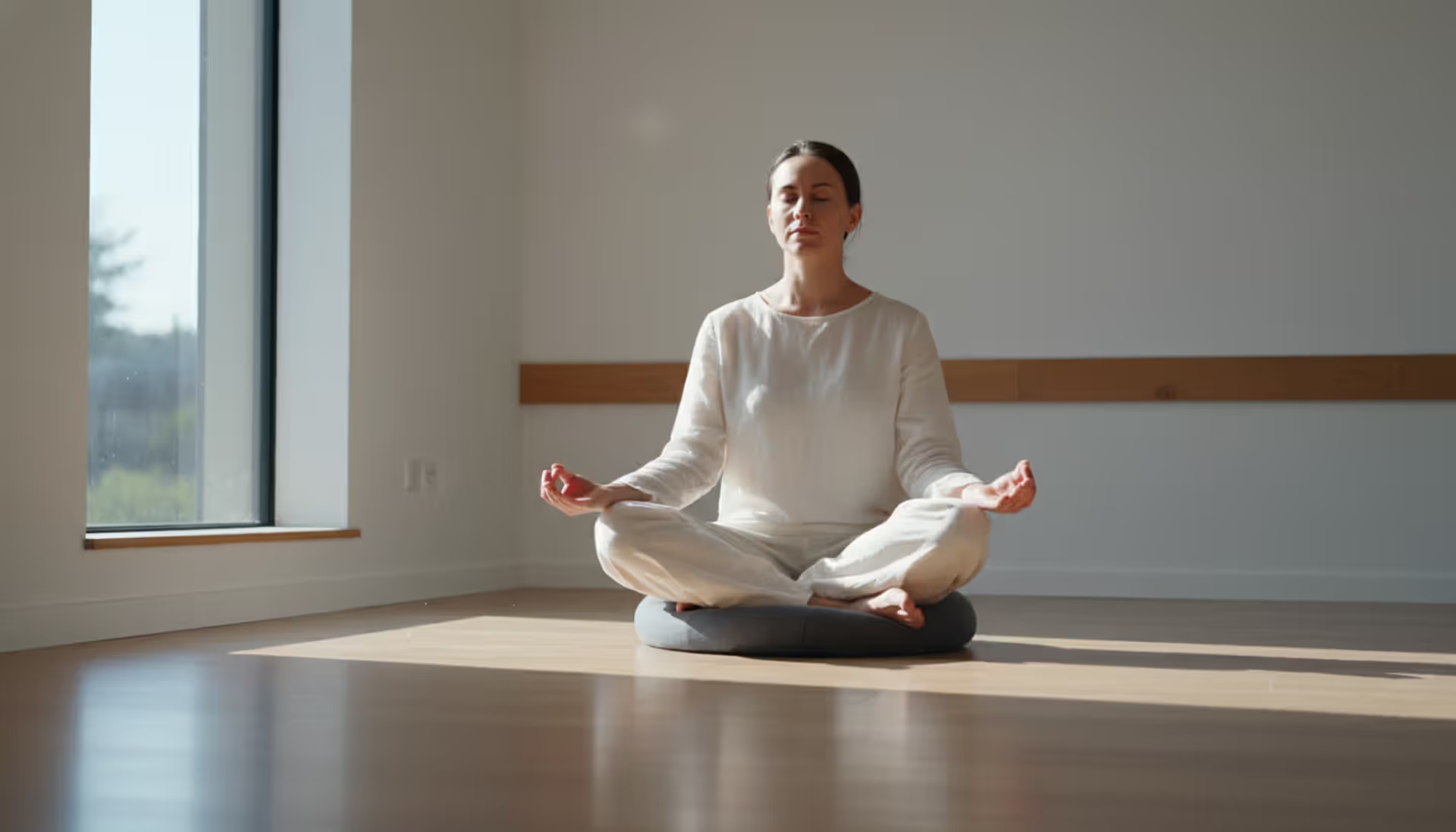
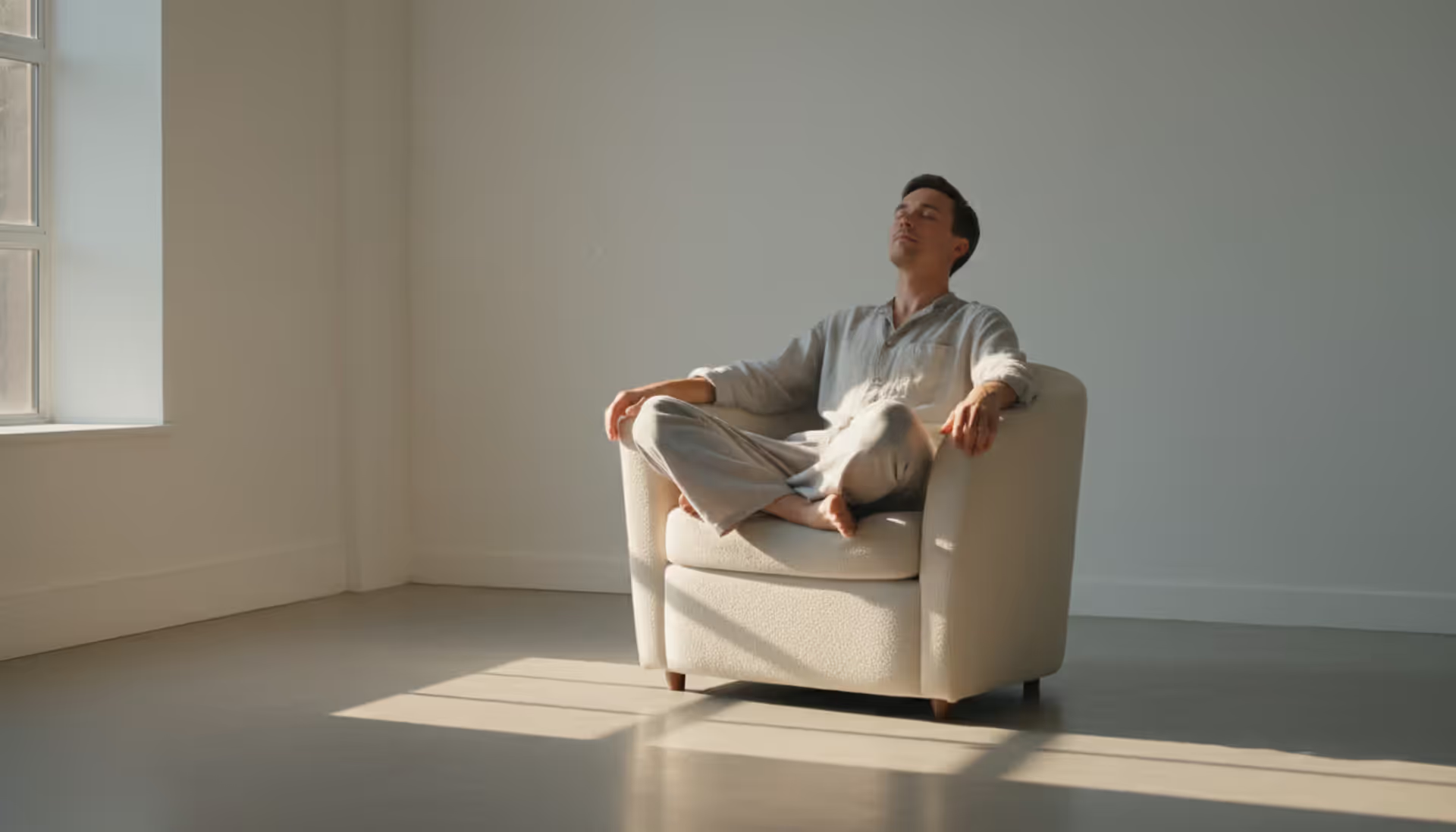
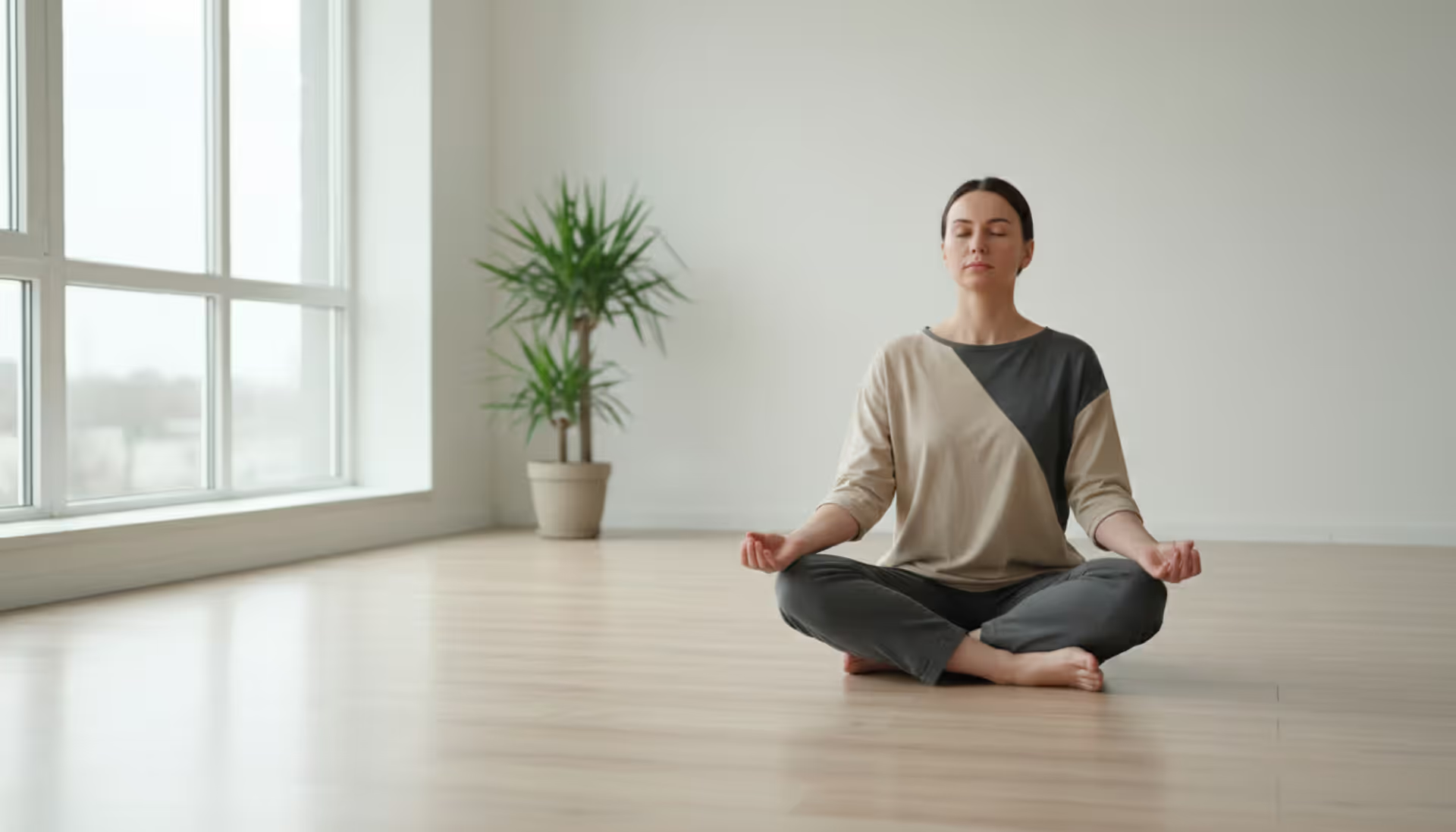
Posture balances alertness with comfort. Sit on a chair with feet flat on the floor, or cross-legged on a cushion that elevates your hips above your knees. Your spine should be upright but not rigid—imagine a string gently pulling the crown of your head toward the ceiling. Rest your hands on your thighs or in your lap.
Lying down is fine for body scans or sleep-focused practice, but sitting helps maintain alertness for general mindfulness meditation training. If back pain makes sitting difficult, lean against a wall or use a meditation bench.
Timing creates momentum. Morning sessions, before the day's demands pile up, often feel clearer. Evening practice can help process the day's events, though some people find it energizing rather than calming. Experiment to find what works, then stick with it. Your brain will begin to anticipate and prepare for the routine.
Wear comfortable, non-restrictive clothing. Remove watches, belts, or anything that might press or pinch. Silence your phone and place it across the room. Tell household members you need fifteen uninterrupted minutes.
Some practitioners use a timer with a gentle bell or chime. This removes the temptation to check the clock. Set it for 15 minutes and commit to staying seated until it sounds, regardless of discomfort or boredom.
Step-by-Step 15 Minute Meditation Guide
This structure provides a framework you can adapt as your practice develops. The times are approximate—don't worry about precision.
Minutes 1–5: Body Scan and Breathing
Begin by closing your eyes or lowering your gaze to a spot on the floor a few feet ahead. Take three deliberate breaths, slightly deeper than normal, then allow your breathing to return to its natural rhythm.
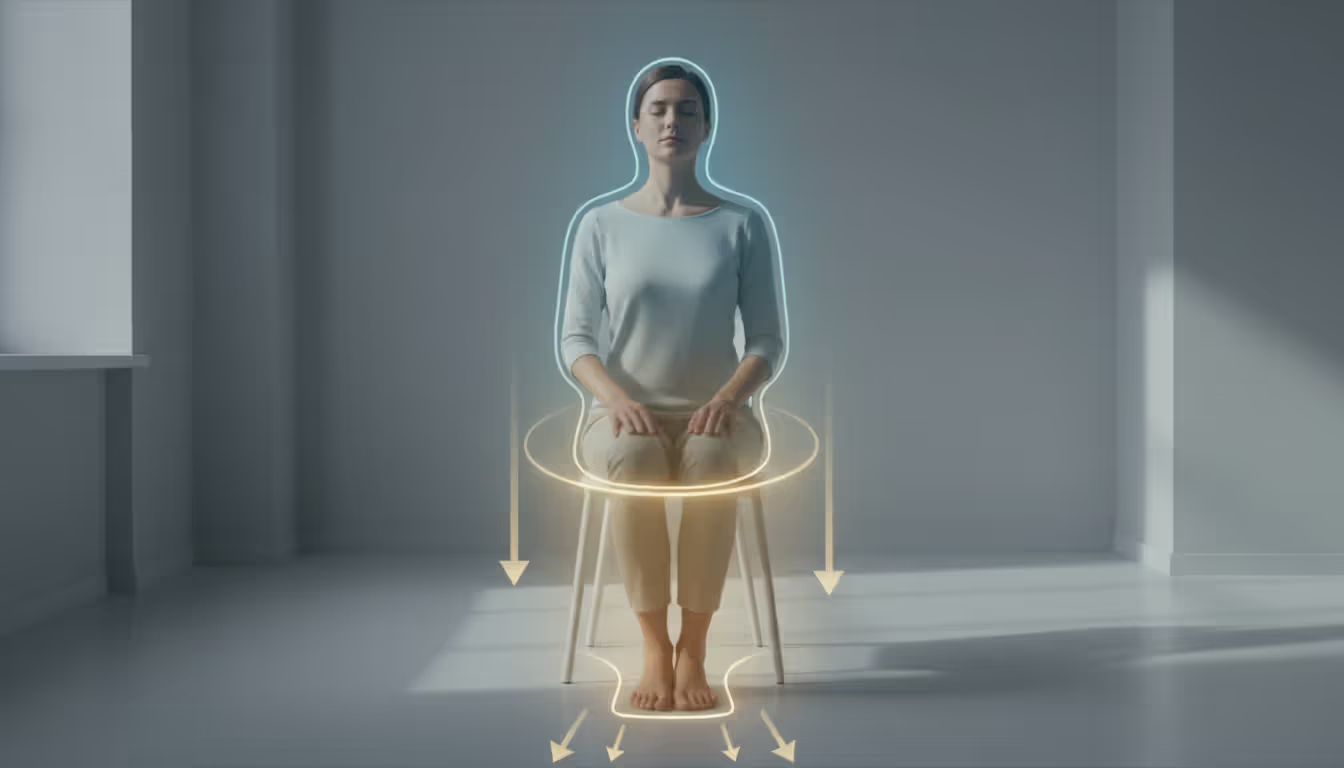
Bring attention to physical sensations. Notice where your body contacts the chair or cushion. Feel the weight of your hands resting on your legs. Scan from the top of your head down through your face, neck, shoulders, arms, torso, and legs. You're not trying to relax these areas (though they might relax)—just noticing them.
When you reach your feet, shift focus to your breath. Don't change it; simply observe. Notice where you feel it most clearly: the cool air at your nostrils, your chest rising and falling, your belly expanding and contracting. Choose one location as your primary anchor.
Your mind will wander within seconds. When you notice you've drifted into planning or remembering, silently note "thinking" and return to the breath. This will happen dozens of times. Each return is a successful repetition, strengthening your attention muscle.
Author: Ethan Solberg;
Source: 5sensesspa.com
Minutes 6–10: Present Moment Awareness
After establishing some stability with breath awareness, expand your attention to include sounds. Don't label them or create stories ("that's my neighbor's dog—they really should train it better"). Just hear sounds as pure sensation: pitch, volume, duration.
Include body sensations alongside sounds. Maybe you notice tension in your jaw, an itch on your arm, or warmth in your hands. Let these sensations exist without immediately reacting. The itch doesn't require scratching; you can simply observe the sensation itself.
Thoughts and emotions will continue arising. Rather than following their content, notice their presence. "There's worry about that deadline." "There's planning happening." "There's irritation at this process." You're cultivating the observer perspective—the part of you that can witness your mental activity without being swept away by it.
If you encounter strong emotion or physical discomfort, you can briefly return to the breath as a stabilizing anchor, then re-expand your awareness when ready.
Minutes 11–15: Closing and Transition
In the final segment, maintain open awareness while gradually preparing to end the session. Some practitioners find it helpful to return to breath as the primary focus, creating a bookend to the opening minutes.
Acknowledge whatever arose during the practice without judgment. Busy mind? That's what minds do. Peaceful moments? They'll pass too. Boredom, frustration, insight, calm—all are acceptable experiences.
Before opening your eyes, set a brief intention for carrying this awareness into the next part of your day. Not a grand commitment, just a simple reminder: "I'll notice when I'm rushing" or "I'll take one conscious breath before checking email."
Open your eyes slowly. Stand up gradually, especially if you've been sitting for a while. Notice if you can maintain a thread of awareness as you transition into activity.
Guided Script for Beginners
This guided mindfulness meditation script can be read slowly aloud, recorded in your own voice, or simply followed silently. Ellipses (...) indicate pauses of 3-5 seconds.
"Find a comfortable seated position with your spine upright and your body relaxed... Close your eyes or soften your gaze downward... Take a full breath in through your nose... and release it slowly through your mouth... Do this two more times... breathing in... and out...
Now allow your breath to return to its natural rhythm... Notice where you feel the breath most clearly in your body... Perhaps at the nostrils... the chest... or the belly... Rest your attention there...
When your mind wanders, and it will, simply notice where it went... and gently guide your attention back to the breath... There's no need to judge yourself... Wandering is natural... Returning is the practice...
(Pause 30 seconds)
Expand your awareness now to include your entire body... Notice any areas of tension or tightness... You don't need to change anything... just observe... Feel the weight of your body supported by the chair or cushion beneath you...
(Pause 30 seconds)
Include sounds in your awareness now... Near sounds... distant sounds... Let them come and go without labeling or analyzing... Just pure sound...
(Pause 30 seconds)
Notice any thoughts passing through your mind... like clouds moving across the sky... You don't need to engage with them or push them away... Simply acknowledge their presence... and return to the breath and body...
(Pause 30 seconds)
If you notice emotions arising—perhaps frustration, boredom, or calm—acknowledge them without judgment... All experiences are welcome here... This is your time to simply be present...
(Pause 30 seconds)
For these final moments, rest in open awareness... noticing whatever arises in your experience... breath... sensations... sounds... thoughts... all of it held in gentle attention...
(Pause 30 seconds)
Begin to deepen your breath slightly... Wiggle your fingers and toes... When you're ready, slowly open your eyes... Take a moment before standing... Notice how you feel... and carry this awareness with you into the rest of your day."
Common Mistakes and How to Avoid Them
Author: Ethan Solberg;
Source: 5sensesspa.com
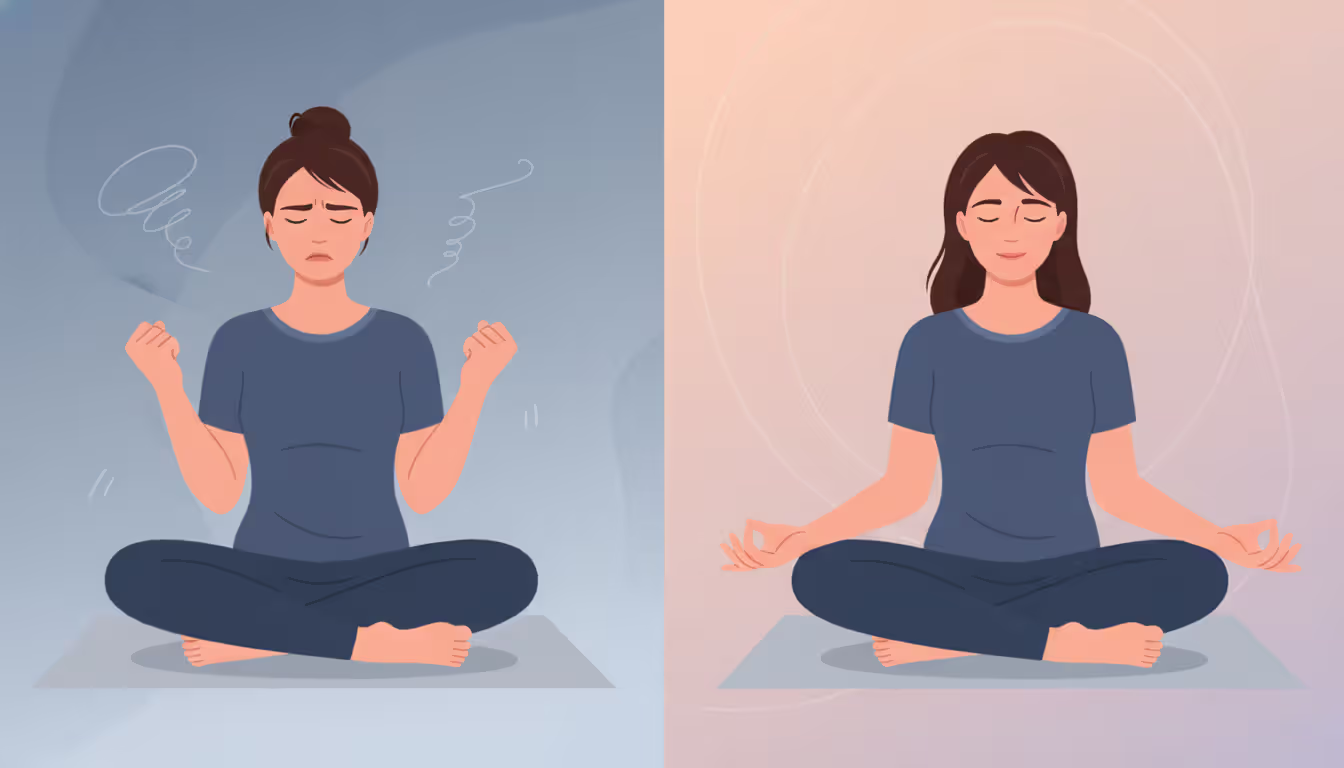
Many beginners expect meditation to immediately quiet their minds. When thoughts keep racing, they conclude they're "bad at meditation" and quit. The mind generates thoughts—that's its function. Meditation isn't about stopping thoughts but changing your relationship with them. Success is measured by how many times you notice you've wandered and return, not by achieving mental silence.
Forcing concentration creates tension that undermines the practice. Mindfulness meditation for beginners should feel like gentle attention, not clenched focus. If you notice you're gritting your teeth or holding your breath, relax your effort. Think of attention as a spotlight you're learning to aim, not a vice grip you're tightening.
Inconsistent practice prevents momentum from building. Three sessions one week and none the next won't create lasting changes. Even on hectic days, five minutes maintains the habit. Your brain needs regular exposure to form new patterns.
Posture problems cause unnecessary discomfort. Slumping compresses your diaphragm and invites drowsiness. Sitting rigidly creates muscle fatigue. Find the middle path: upright but relaxed, alert but comfortable. Use cushions, chairs, or wall support as needed. Physical pain that intensifies during a session signals you need to adjust.
Some practitioners turn meditation into another achievement project, tracking sessions and getting frustrated when "progress" stalls. Mindfulness meditation training isn't linear. Some sessions feel clear and focused; others feel scattered and difficult. Both types are valuable. The practice is showing up, not reaching a destination.
Adapting Your Practice for Different Needs
You can't stop the waves, but you can learn to surf. Even a few minutes a day of formal practice can make a profound difference in your life
— Jon Kabat-Zinn
Life won't always accommodate fifteen minutes. On particularly compressed days, a five minute mindfulness meditation maintains continuity. Focus exclusively on breath awareness—no body scan, no expansion to sounds. Just five minutes of returning attention to breathing. This abbreviated version prevents the all-or-nothing thinking that derails many practices.
For mindfulness meditation for sleep, practice lying down in bed with lights off. Use the body scan technique, moving slowly from head to toes, releasing tension as you go. If you finish the scan and remain awake, begin again. The goal isn't to meditate but to create conditions for sleep by calming the nervous system.
When addressing anxiety specifically, focus on grounding techniques within your meditation. Notice five things you can hear, four things you can feel (pressure, temperature, texture), three things you can see (if eyes are open), two things you can smell, and one thing you can taste. This sensory inventory interrupts anxious thought loops by anchoring you in present-moment physical reality.
As your practice stabilizes, you might extend to 20 or 30 minutes. Add time gradually—five minutes every few weeks. Longer sessions allow you to move through initial restlessness into deeper states of awareness, but they're not necessary for meaningful benefits.
Improved focus, emotional regulation, anxiety reduction, physical health benefits
Most practitioners, sustainable daily practice
Moderate
Moderate
Daily
30 minutes
Deep relaxation, significant stress reduction, enhanced self-awareness, stronger neural changes
Experienced meditators, those with specific therapeutic goals
High
Challenging
4-5 times weekly
Frequently Asked Questions
Can I practice mindfulness meditation lying down?
You can, but sitting is generally better for maintaining alertness. Lying down works well for body scans or sleep-focused practice, but many people drift off during general meditation sessions when horizontal. If physical limitations require lying down, try keeping your eyes open or placing a pillow under your knees to prevent complete relaxation into sleep.
What if my mind keeps wandering during meditation?
Mind wandering is not a problem to solve—it's the actual practice opportunity. The moment you notice you've wandered, you're already back in awareness. That noticing and returning strengthens attention more than sitting in perfect focus would. Expect to redirect your attention hundreds of times per session, especially early on. Each redirection is a successful repetition.
Do I need special equipment or apps?
No special equipment is required. A timer, cushion, or chair helps, but you can practice anywhere with nothing. Apps provide structure and guided sessions that benefit some people, particularly beginners who find silence uncomfortable. However, they're not necessary. The most important equipment is your commitment to regular practice.
How long before I notice benefits?
Most people report subtle shifts within two to three weeks: slightly better sleep, a moment of pause before reacting, or reduced rumination. Measurable changes in brain structure appear around eight weeks in research studies. Significant transformation in how you relate to stress and emotion typically unfolds over months. Benefits accumulate gradually, not dramatically.
Is 15 minutes enough for real results?
Research confirms that 15 minutes daily produces meaningful benefits. A 2025 study from UC Berkeley found no significant difference in anxiety reduction between participants practicing 15 minutes versus 45 minutes daily over eight weeks. Consistency matters more than duration. Fifteen minutes you'll actually maintain beats 45 minutes you'll abandon after two weeks.
Can mindfulness meditation replace therapy for anxiety?
Meditation is a powerful tool for managing anxiety but shouldn't replace professional treatment for clinical anxiety disorders. Many therapists incorporate mindfulness into treatment plans, and meditation can enhance therapy's effectiveness. If anxiety significantly impairs your daily functioning, consult a mental health professional. Meditation works best as part of a comprehensive approach to mental health, not as a sole intervention.
Establishing a 15-minute mindfulness meditation practice requires no special abilities, expensive equipment, or dramatic life changes. It asks only for a quiet space, a commitment to consistency, and the willingness to observe your experience without judgment.
The practice itself is simple: sit down, pay attention to your breath and body, notice when your mind wanders, and gently return. The simplicity doesn't mean it's easy—your mind will resist, schedules will interfere, and doubt will arise. These obstacles are normal, not signs of failure.
Start tomorrow morning. Set your timer for 15 minutes and begin. Don't wait for the perfect moment, the right cushion, or a calmer state of mind. The practice meets you wherever you are, transforming ordinary moments into opportunities for awareness and growth.
Loving kindness meditation cultivates unconditional goodwill toward yourself and others through specific phrases and mental imagery. Originating from Buddhist metta practices, this technique systematically expands compassion from self to all beings, offering measurable mental and physical health benefits
Vedic meditation is a mantra-based practice from ancient India that uses silent sound vibrations to help the mind settle naturally. Practitioners sit comfortably for twenty minutes twice daily, silently repeating a personalized mantra. The technique requires no belief system or lifestyle changes
Transcendental Meditation requires formal instruction through a standardized course. This guide explains the four-session training structure, personalized mantra assignment, costs, and why TM can't be self-taught from books or apps
Discover how mindfulness walking meditation transforms ordinary steps into a powerful practice for calming the mind and grounding the body. This comprehensive guide covers techniques, benefits, different styles, and practical tips for beginners and experienced practitioners alike
The content on this website is provided for general informational and educational purposes only. It is intended to explain concepts related to meditation, mindfulness, mental health, and spiritual practices.
All information on this website, including articles, guides, and examples, is presented for general educational purposes. Meditation outcomes may vary depending on individual practices, health conditions, and guidance.
This website does not provide medical, mental health, or spiritual advice, and the information presented should not be used as a substitute for consultation with qualified professionals.
The website and its authors are not responsible for any errors or omissions, or for any outcomes resulting from decisions made based on the information provided on this website.