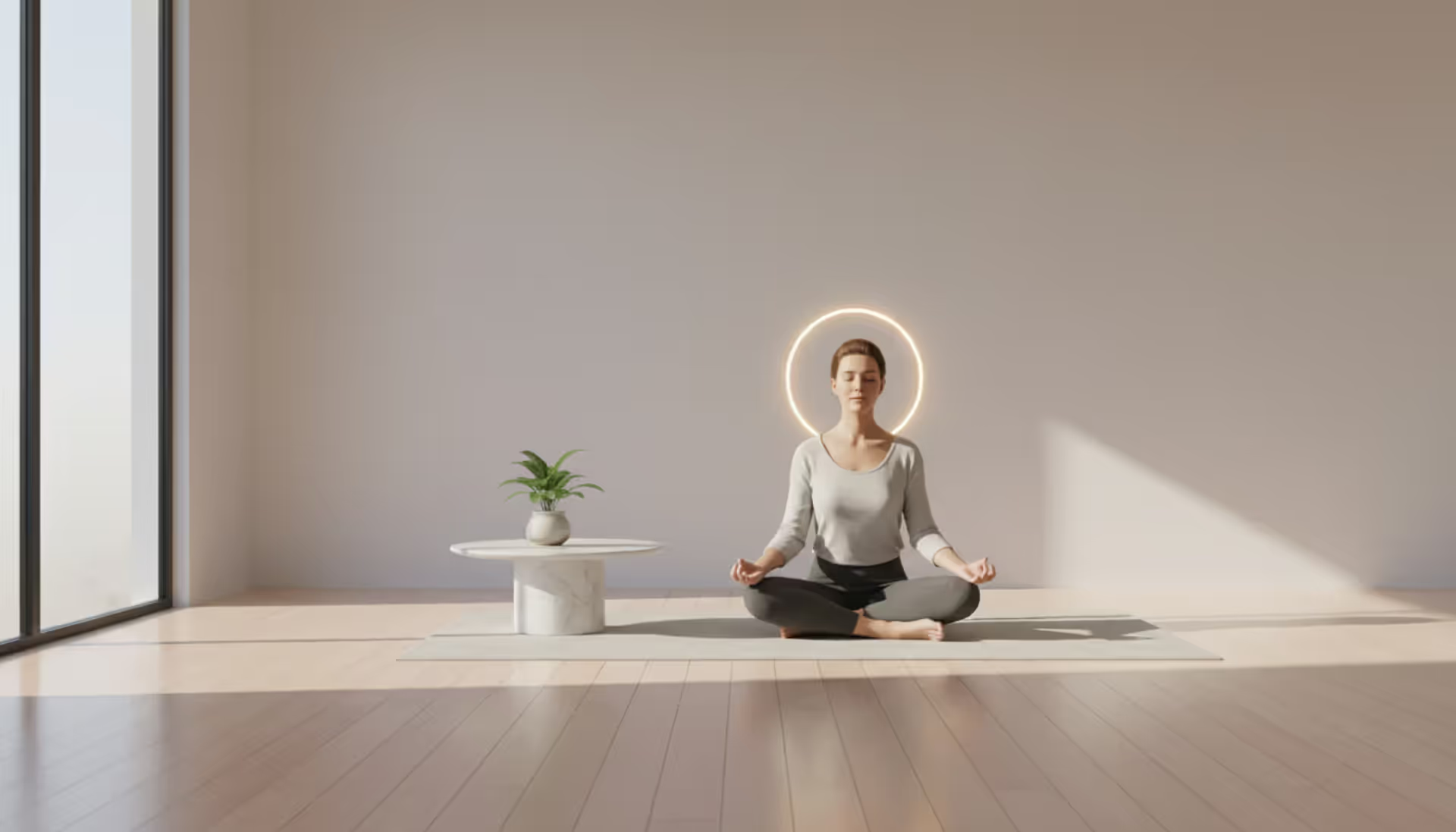
Most people assume meditation demands sitting cross-legged on a cushion, but your daily steps can become gateways to present-moment awareness. Mindfulness walking meditation converts routine movement into a practice that settles mental chatter, connects you with physical sensations, and heightens awareness of your immediate surroundings.
What Is Mindfulness Walking Meditation
Mindfulness walking meditation is a structured contemplative practice where you move at a reduced pace while maintaining complete awareness of bodily sensations, physical movements, and environmental elements present in each footfall. Unlike everyday walking—where thoughts typically drift toward destinations, obligations, or mental narratives—this approach transforms the walking process itself into your meditation anchor.
The mindfulness element involves directing non-evaluative attention to your unfolding experience. You observe how your heel lifts, how weight redistributes, how your foot contacts the surface, how pressure moves across your sole. When thoughts arise (which happens constantly), you acknowledge them and redirect focus to these physical sensations without self-criticism.
This movement meditation practice traces back through Buddhist contemplative traditions, particularly within Theravada and Zen lineages. Monastic communities have incorporated walking meditation for millennia, using it both to balance seated sessions and to sustain awareness during necessary transitions between formal practice periods. Historical accounts describe the Buddha himself establishing a designated meditation path where he walked in contemplation.
What separates this from simply "being mindful during a walk" is the deliberate framework and focused intention. You're not moving toward a destination or appreciating landscape, though these may occur naturally. The walking experience becomes your meditation subject, functioning like breath does during seated practice.
Benefits of Walking Meditation
Walking meditation delivers a distinctive blend of advantages addressing mental and physical dimensions simultaneously. Studies from contemplative neuroscience research have demonstrated that movement-integrated meditation practices engage neural networks differently than stationary meditation, potentially increasing accessibility for individuals who find stillness challenging.
The practice proves effective because it provides concrete, continuously shifting focal points. Your feet deliver unmistakable sensory information—compression, warmth, surface texture, equilibrium adjustments—that can be simpler to track than subtle respiratory patterns. This physical clarity makes walking meditation especially beneficial for individuals experiencing anxiety, thought spirals, or agitation.
Relative to seated meditation, walking practice minimizes drowsiness risk and provides inherent solutions for physical strain. You avoid numbness in extremities or postural discomfort from extended sitting. Many meditators find that alternating between stationary and walking meditation during longer sessions creates sustainable momentum that enriches both modalities.
Mental Health Benefits
Consistent walking meditation practice produces observable effects on psychological functioning. A 2025 research study appearing in the Journal of Contemplative Studies revealed that participants completing 20-minute walking meditation sessions five times weekly demonstrated marked decreases in repetitive negative thinking and anxious symptoms following eight weeks.
The practice disrupts the default mode network—your brain's inclination toward self-focused rumination and temporal mind-wandering. By securing attention within bodily sensation, you establish distance between triggering events and reactive responses, cultivating what researchers term "metacognitive awareness." You begin recognizing thought patterns as mental phenomena rather than objective truths demanding immediate action.
Individuals navigating depression frequently discover walking meditation more accessible than seated approaches because gentle motion can feel less overwhelming than remaining still with challenging emotions. The practice also develops concentration incrementally; even a wandering mind typically can follow foot-to-ground sensations for several steps before drifting.
Walking meditation builds patience and non-resistance in real-time. You cannot accelerate the practice without undermining its foundation, training your nervous system that deceleration is safe. This capacity transfers into everyday situations as enhanced emotional balance and decreased impulsivity.
Author: Ethan Solberg;
Source: 5sensesspa.com
Physical Wellness Benefits
Beyond psychological advantages, walking meditation provides concrete physiological benefits. The deliberate, measured pace strengthens balance capacity and proprioception—your spatial awareness of body positioning. Rehabilitation specialists now integrate mindful walking approaches into treatment protocols for older adults facing fall risks.
The practice amplifies somatic awareness, enabling you to identify tension patterns, habitual postures, and movement irregularities that typically escape notice. Numerous practitioners describe diminished chronic discomfort after developing this refined body attunement, not through pain elimination but through transformed pain relationships.
Unlike vigorous physical activity, walking meditation stimulates the parasympathetic nervous system, encouraging the "rest and restore" physiological state. Heart rate stays moderate, respiration naturally deepens, and cortisol levels decline. This makes it exceptional for managing sustained stress or recovering from exhaustion.
The measured movement additionally supports digestive function and blood circulation without activating the sympathetic arousal that intense workouts can trigger. Some practitioners incorporate short walking meditation intervals following meals to facilitate digestive processes while continuing mindfulness development.
Walking Meditation Technique for Beginners
Initiating a walking meditation practice demands less setup than you might anticipate, though several foundational choices will optimize your experience. The methodology itself is accessible, while refinement develops through patience and consistent repetition.
Choosing Your Walking Path
Your practice area should accommodate 15-30 steps in a linear direction or a comparable circular route. Beginners typically benefit from a clearly marked course—moving back and forth between two markers—because reversing direction creates natural moments to refresh attention.
Indoor locations function excellently. A corridor, family room, or bedroom provides adequate space. Indoor practice removes weather unpredictability and environmental interruptions, simplifying focus on sensations. The primary limitation is restricted distance, necessitating more frequent direction changes.
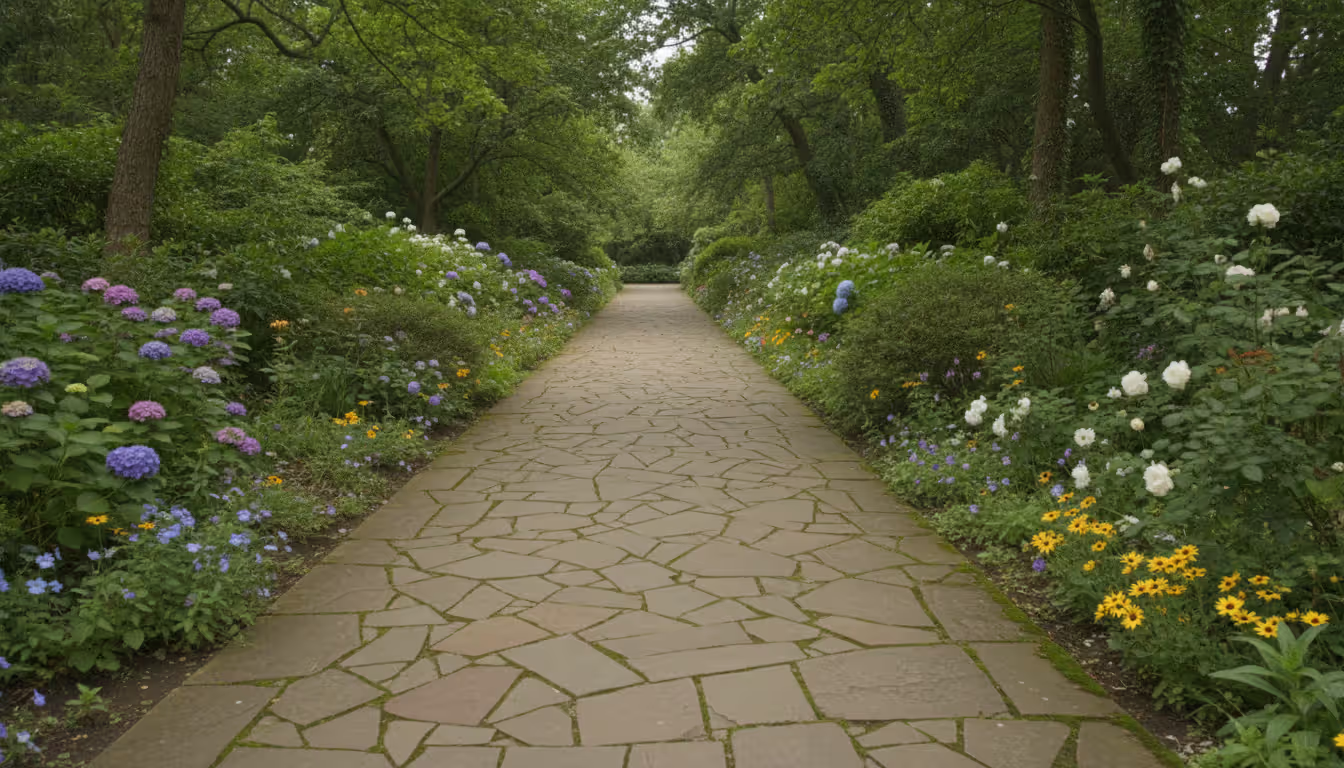
Outdoor environments deliver enhanced sensory richness—variations in terrain texture, thermal fluctuations, ambient nature sounds. A secluded garden walkway, vacant parking area, or isolated trail segment works effectively. Avoid crowded sidewalks or locations requiring obstacle navigation; external demands fracture sustained attention.
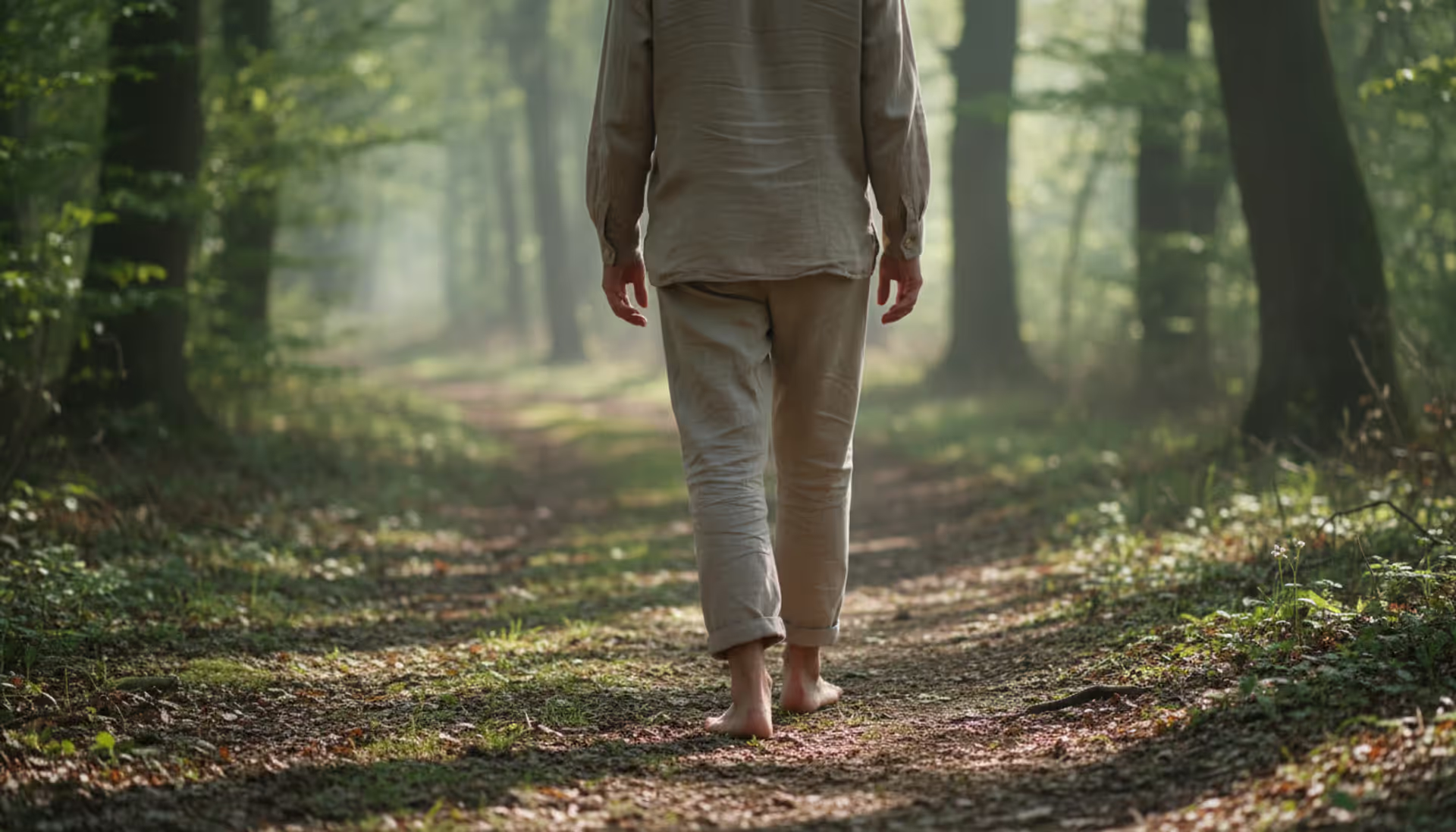
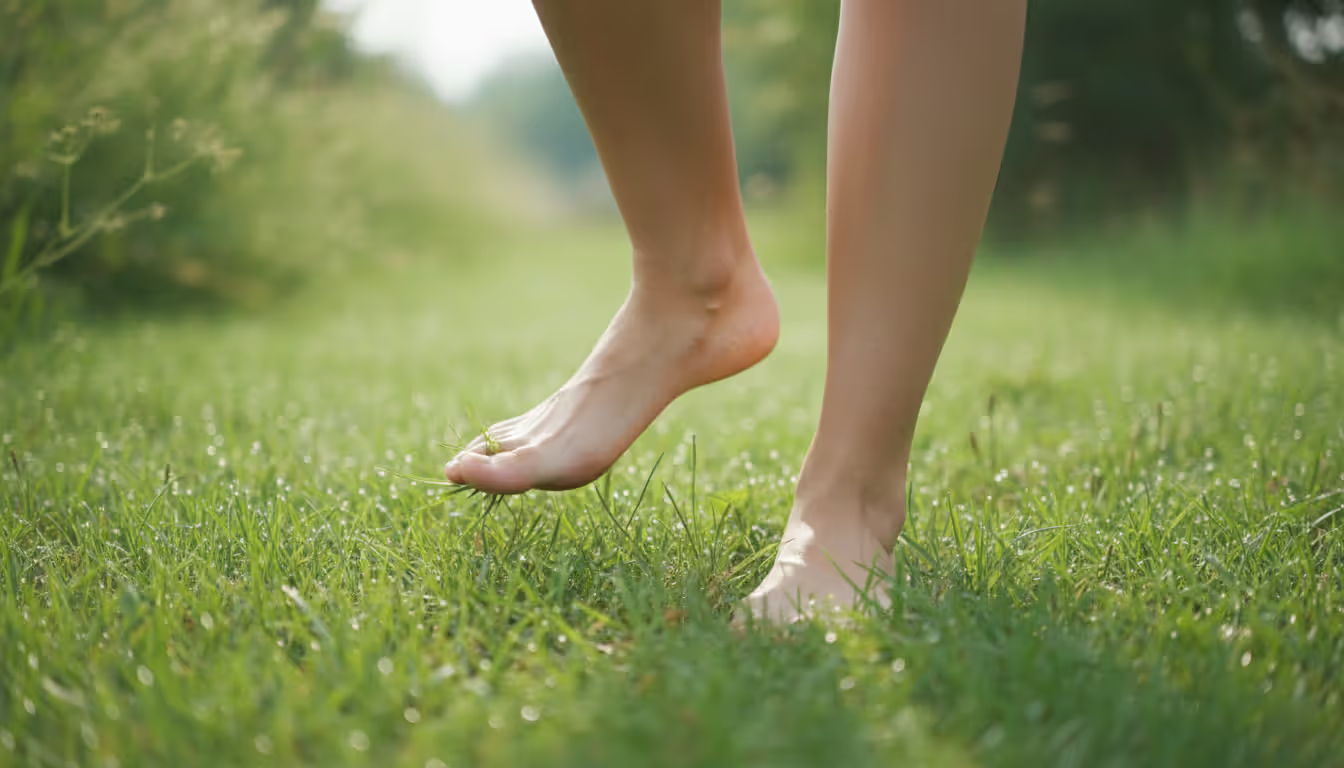
Surface characteristics influence practice more than initially apparent. Natural materials like grass, soil, or sand supply greater tactile information than concrete or hardwood. Various teachers suggest barefoot practice when circumstances permit, since unmediated ground contact intensifies sensation and strengthens present-moment grounding.
Author: Ethan Solberg;
Source: 5sensesspa.com
Basic Step-by-Step Instructions
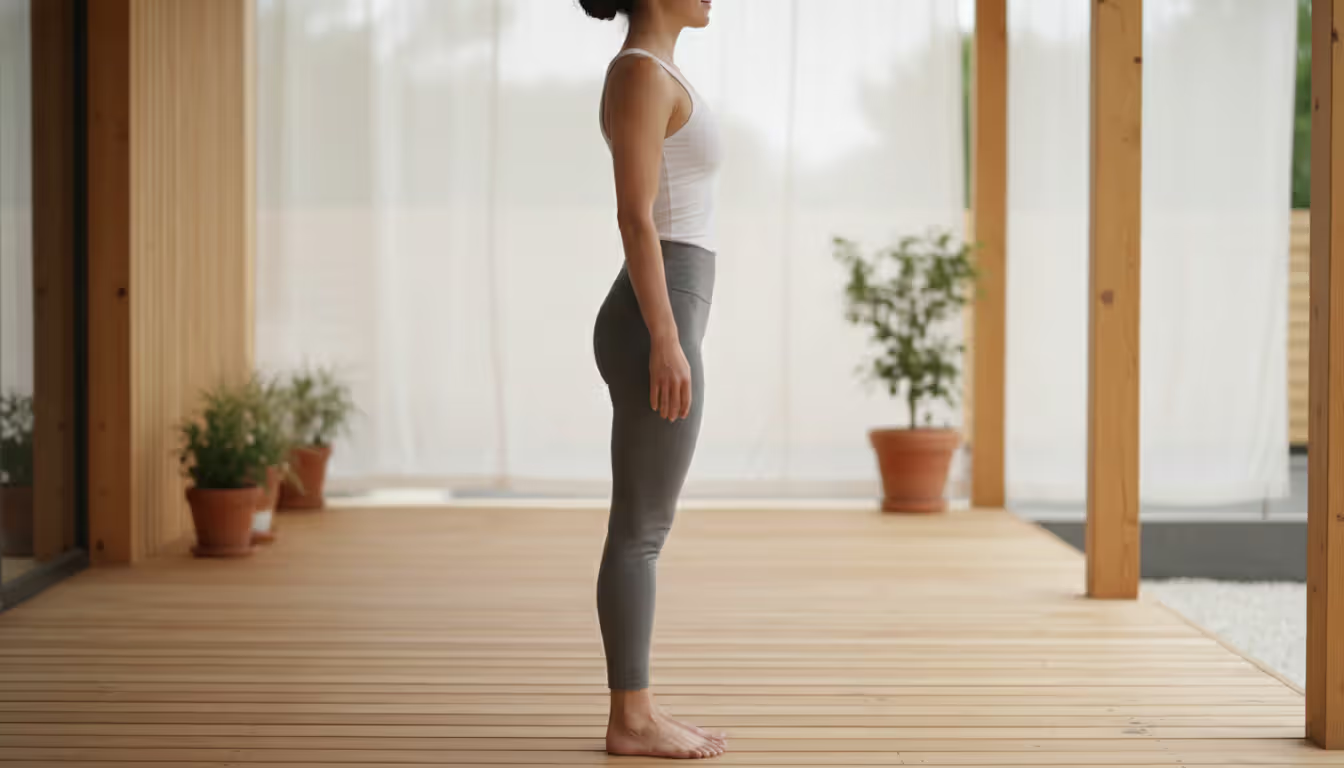
Position yourself motionless at your path's starting point. Take several unhurried breaths, allowing your body to stabilize. Sense both feet contacting the surface beneath you, observing how weight distributes between right and left sides, between rear and front portions of each foot. This brief standing awareness moment establishes your attentional baseline.
Initiate movement at roughly half your typical walking velocity. You're not attempting extreme slow motion (which may develop later if desired), but noticeably more deliberate than everyday ambulation. Allow your arms to rest in whatever position feels most effortless—hanging beside your torso or hands loosely joined before or behind your body.
Channel attention toward sensations throughout your feet and lower legs. Observe your heel releasing upward, your leg swinging forward, your foot descending, your weight transitioning. You might silently name phases like "lift, swing, place" or simply notice without verbal labels. Neither method is inherently superior; test both to discover what sustains your presence most effectively.
Upon reaching your path's terminus, pause entirely. Remain still through one complete breathing cycle, then pivot slowly and intentionally. This transitional pause frequently reveals whether mental attention has drifted. Use it as a reset opportunity to renew focus before resuming.
Typical beginner errors include slowing excessively too early (creating muscular tension and mental resistance), attempting to regulate breathing (allow it to remain spontaneous), and harsh self-judgment when attention wanders. Your mind will drift countless times during a 10-minute session. That's not inadequacy—recognizing the drift and redirecting attention constitutes the actual practice.
Another common misstep is staring downward at your feet. Maintain a relaxed, downward gaze focused roughly six feet forward. This prevents neck strain and supports better equilibrium while still facilitating inward awareness.
Author: Ethan Solberg;
Source: 5sensesspa.com
Different Types of Walking Meditation
Various contemplative traditions have cultivated distinctive walking meditation approaches, each emphasizing particular elements and serving specific functions.
Zen kinhin represents the structured walking meditation performed between zazen (seated meditation) rounds in Zen training centers. Participants move in single file at an exceptionally measured tempo, hands positioned in shashu mudra—one hand closed at the sternum, the other encompassing it. The velocity is extremely gradual, occasionally requiring 30 seconds per individual step, with respiration coordinated to motion. This style requires substantial concentration and suits practitioners already established in seated Zen disciplines.
Theravada walking meditation, prevalent in Vipassana meditation retreats, generally involves movement at moderate to reduced speeds along a predetermined route. Practitioners frequently employ verbal noting—"raising, advancing, lowering"—to sustain attention on each step component. The focus centers on cultivating precise awareness of physical phenomena and the transient quality of each experienced moment. This structured approach serves analytical minds that thrive with clear frameworks.
Informal mindful walking carries less rigid structure and adapts to any environment—walking toward your vehicle, navigating your residence, or wandering through a park. The tempo approximates normal walking speed, and while you maintain awareness of movement sensations, you might additionally incorporate auditory stimuli, visual input, and broader sensory experiences. This variation integrates most seamlessly into daily routines but demands stronger foundational mindfulness to prevent automatic pilot mode.
Nature-based walking meditation, occasionally called forest bathing meditation, deliberately weaves the outdoor meditation walk environment into the practice fabric. You might shift between concentrating on footfalls and expanding awareness to embrace bird vocalizations, wind currents, filtered sunlight. This approach resonates beautifully with individuals who experience nature as inherently restorative and can sustain awareness amid sensory abundance.
Select kinhin when you need to balance extended sitting periods or desire to develop concentrated focus. Choose Theravada methodology when establishing fundamentals or studying with instructors in that lineage. Employ informal mindful walking when weaving meditation into demanding schedules. Embrace nature-based practice when seeking emotional renewal or feeling alienated from physical embodiment.
Comparison of Walking Meditation Styles
Style
Pace
Setting
Focus Point
Difficulty Level
Best For
Zen Kinhin
Extremely deliberate (30+ sec per step)
Indoor formal space
Coordinating breath with motion, postural precision
Advanced practitioners
Retreat immersion, cultivating laser focus
Theravada Walking
Slow to moderately slow
Designated pathway, indoor or outdoor
Granular foot sensation awareness, verbal noting
Beginning to intermediate
Establishing foundational skills, precision development
Informal Mindful Walking
Near-normal to slightly reduced
Any location
Overall embodiment awareness, staying present
Beginning level
Everyday life application, maximum flexibility
Nature-Based Practice
Moderate tempo
Natural outdoor environments
Physical sensations plus ecological surroundings
Intermediate level
Emotional nourishment, sensory engagement
Sample Walking Meditation Script
This guided framework supports a 10-15 minute walking meditation session. Modify the tempo and focal points to align with your setting and skill level.
Position yourself at your walking route's beginning. Experience the stability of both feet supporting you. Register the connection zones—your heels making contact, the front pads of your feet, your individual toes. Sense the micro-adjustments happening continuously to keep you upright.
Complete three intentional breath cycles, experiencing your abdomen expanding outward and releasing inward. Release any holding in your shoulder region. Allow tension to dissolve from your jaw muscles and the area surrounding your eyes.
Once settled, transfer more weight onto your left side. Register how your right foot becomes increasingly lighter against the surface. Gradually raise your right heel, feeling calf muscles engaging. Elevate the complete foot, tracking the sensation traveling through ankle and knee joints.
Advance your right foot forward through space. Experience it traveling without ground contact. Register the subtle equilibrium compensation occurring in your planted left leg as it holds your entire body.
Lower your right heel to make initial contact, then smoothly roll forward across the foot's arch until weight fully transfers. Your left foot now carries minimal weight.
Maintain this rhythm—lifting, traveling, lowering—at whatever tempo enables you to sustain lucid awareness of each distinct phase. There's no destination. Every single step exists as a complete experience.
If you discover your attention has shifted to thoughts concerning past events or future scenarios, simply recognize where it traveled without harsh judgment. You might quietly note "planning" or "remembering." Then guide attention back to the physical experience of your current step.
As you continue moving, ambient sounds may enter your awareness—street traffic, wildlife calls, appliance hums. Allow these auditory elements to exist in the background without hijacking your primary focus from walking sensations. They're environmental features, like clouds drifting past.
Arriving at your route's endpoint, come to complete stillness. Remain motionless for one full inhalation and exhalation. Experience your entire body occupying space, both feet grounded. Then rotate slowly, tracking the weight redistribution, the torso's rotation, the foot repositioning.
Resume walking in the reversed direction, refreshing your attentional quality with this initial step. The physical sensations continuously renew themselves, never precisely replicating the prior step, despite the pattern's familiarity.
Proceed for your designated timeframe, walking and reversing, maintaining direct contact with movement experience. If focus becomes scattered, you can narrow attention exclusively to your soles contacting the surface—a simpler anchor point.
When concluding your practice session, complete your current length and stand motionless once more. Compare how your physical experience feels presently against when you initiated practice. Take three final conscious breaths, honoring the time you've dedicated to this awareness cultivation.
Tips for Building a Regular Practice
Author: Ethan Solberg;
Source: 5sensesspa.com
Regularity outweighs duration when developing a walking meditation routine. Begin with 5-10 minutes daily instead of attempting sporadic 30-minute sessions. Your nervous system integrates learning through pattern repetition, and compact daily practice forges stronger neural connections than infrequent extended sessions.
Optimal frequency spans 5-7 days weekly, though three weekly sessions still generate substantial benefits. Morning practice establishes a mindful framework for approaching your day, while evening sessions facilitate transitions from professional to personal modes. Some individuals practice twice—a brief morning session plus a longer evening one.
Duration guidelines shift with experience progression. Beginners should target 5-10 minutes until the foundational technique feels intuitive, typically within 2-3 weeks. Intermediate practitioners gain from 15-20 minute sessions. Advanced meditators might practice for 45 minutes or alternate between walking and sitting meditation in continuous hour-long blocks.
Weave walking meditation into established routines by transforming one habitual walk into mindful practice. Rather than checking your phone while retrieving mail, convert that journey into meditation. Transform the pathway from your parked vehicle to your workplace entrance into daily practice territory. These compact practices accumulate meaningful awareness across time.
Progress tracking supports sustained motivation, but resist measurement-obsessed thinking. A straightforward journal recording practice days, session length, and one concise observation ("recognized shoulder tightness," "thoughts particularly active today," "experienced groundedness") provides adequate structure without converting practice into performance evaluation. Some individuals utilize habit-tracking applications, marking completed sessions without elaborate assessment.
Typical challenges include monotony, awkwardness about moving slowly in public view, and the recurring conviction that you're "practicing incorrectly." Address monotony by remembering the objective isn't stimulation—you're developing attention capacity, which sometimes feels mundane. Select private locations if public self-consciousness emerges. Release perfectionism by understanding distraction is universal; the practice involves returning attention, not eliminating wandering.
Weather patterns can interrupt outdoor sessions. Establish an indoor alternative route so inclement conditions never justify skipping practice. Physical strain during walking typically indicates excessive effort—either moving too gradually, creating unnecessary tension, or forcing awkward gait patterns. Return to a more organic pace and allow the practice greater ease.
Walk as if you are kissing the Earth with your feet
— Thich Nhat Hanh
Frequently Asked Questions
How long should a walking meditation session last?
Beginners benefit from 5-10 minute sessions to absorb the technique without exhaustion or discouragement. As your familiarity grows, 15-20 minutes permits deeper attentional stability. Seasoned practitioners might walk for 45 minutes to an hour or longer. The essential factor is selecting a sustainable duration you can maintain regularly rather than occasionally extending sessions ambitiously. Attention quality supersedes time quantity.
Can I practice walking meditation indoors?
Definitely. Indoor practice delivers a regulated environment with minimized distractions and zero weather dependencies. A hallway, spacious room, or compact bedroom supplies adequate space. You'll reverse direction more frequently than outdoor practice, but this presents advantages—each turn becomes an attentional renewal opportunity. Numerous meditation facilities utilize indoor walking meditation exclusively throughout intensive training periods.
What's the difference between walking meditation and mindful walking?
Walking meditation constitutes a formal practice featuring specific methodology, allocated time, and the explicit intention of cultivating awareness. Mindful walking means applying present-moment attention to any walking activity—commuting, completing errands, moving between rooms. Consider walking meditation as structured training and mindful walking as deploying that training throughout daily activities. Both hold value, fulfilling distinct purposes within comprehensive practice.
Do I need special equipment or clothing?
No specialized gear is necessary. Dress in comfortable garments that permit unrestricted movement. Footwear should feature flat soles and flexibility, though practicing barefoot indoors or on secure outdoor terrain intensifies sensation and can enrich practice depth. Eliminate headphones, step-counting devices, or anything directing attention toward external performance metrics. The simplicity reflects the practice's fundamental accessibility.
Is walking meditation suitable for people with mobility issues?
Yes, through appropriate adaptations. If you possess any walking capacity, even with supportive devices, you can engage walking meditation. Tempo can adjust as slowly as necessary, and the pathway can contract to merely a few steps. Individuals using walkers or canes can concentrate on accessible sensations—hand pressure, the cadence of assisted motion. Those unable to walk might investigate wheelchair meditation, applying identical attention quality to the experience of spatial movement.
How is walking meditation different from regular exercise?
Walking meditation doesn't function as cardiovascular conditioning. The tempo remains too measured to significantly elevate heart rate, and the intention is contemplative rather than fitness-oriented. You're developing attention and awareness capacities, not expending calories or building cardiovascular endurance. That acknowledged, the practice does enhance balance, proprioceptive awareness, and parasympathetic nervous system regulation. View it as complementary to, not substituting for, conventional exercise routines.
Mindfulness walking meditation provides an accessible gateway into contemplative practice for individuals who find stillness challenging, and serves as a valuable companion for established meditators. By directing complete awareness to the fundamental act of walking, you strengthen concentration, diminish stress responses, and develop a more embodied relationship with your physical self and immediate experience.
The technique itself is straightforward—move deliberately and slowly while sustaining attention on bodily sensations—yet the practice reveals increasing subtlety over time as you encounter nuanced layers of experience within each footfall. Begin with merely five minutes in a quiet location, utilizing the tangible feedback from your feet as an anchor when mental attention drifts.
Whether you select the formal structure of Zen kinhin, the detailed awareness of Theravada walking meditation, or the practical flexibility of informal mindful walking, you're engaging a time-tested practice that maintains profound contemporary relevance. Your feet have accompanied you throughout your entire life; now they transform into instructors, reminding you with each step that the present moment remains the sole location where experience actually unfolds.
Loving kindness meditation cultivates unconditional goodwill toward yourself and others through specific phrases and mental imagery. Originating from Buddhist metta practices, this technique systematically expands compassion from self to all beings, offering measurable mental and physical health benefits
Vedic meditation is a mantra-based practice from ancient India that uses silent sound vibrations to help the mind settle naturally. Practitioners sit comfortably for twenty minutes twice daily, silently repeating a personalized mantra. The technique requires no belief system or lifestyle changes
Transcendental Meditation requires formal instruction through a standardized course. This guide explains the four-session training structure, personalized mantra assignment, costs, and why TM can't be self-taught from books or apps
Discover practical meditation techniques that interrupt anxiety's grip on your nervous system. From box breathing for immediate calm to body scan meditation for physical tension, learn evidence-based methods with step-by-step instructions that work when you need them most
The content on this website is provided for general informational and educational purposes only. It is intended to explain concepts related to meditation, mindfulness, mental health, and spiritual practices.
All information on this website, including articles, guides, and examples, is presented for general educational purposes. Meditation outcomes may vary depending on individual practices, health conditions, and guidance.
This website does not provide medical, mental health, or spiritual advice, and the information presented should not be used as a substitute for consultation with qualified professionals.
The website and its authors are not responsible for any errors or omissions, or for any outcomes resulting from decisions made based on the information provided on this website.