Want to quiet racing thoughts while tuning into what your body's actually telling you? Body scan mindfulness practice does exactly that—it walks your attention systematically from head to toe (or toe to head), letting you notice tension, relaxation, tingling, numbness, and everything your body experiences moment to moment.
What Is Body Scan Meditation?
Think of body scan meditation as taking inventory of physical sensations without trying to fix anything. You're mentally visiting each region—feet, legs, torso, arms, head—and simply observing what you find there.
Jon Kabat-Zinn introduced this therapeutic approach back in 1979 when he founded the Mindfulness-Based Stress Reduction (MBSR) program at UMass Medical School. He wasn't inventing something new—he was adapting ancient Buddhist practices, especially teachings from the Satipatthana Sutta, which lists body awareness as one of four essential mindfulness foundations. What Kabat-Zinn did was strip away religious elements and create a clinical protocol that hospital patients could use for chronic pain and stress.
Here's what makes the mindful body scan method different from other meditation styles: you're not concentrating on your breath's rhythm like in traditional sitting meditation. You're not generating loving feelings toward yourself or others. You're definitely not visualizing tropical beaches or healing white light.
You're doing something much simpler—noticing what already exists. Maybe your left shoulder feels tight. Maybe your right foot tingles. Maybe your stomach feels completely neutral, almost like you can't sense it at all. All of those experiences count equally.
Why does this matter? Many people get frustrated with meditation because focusing on abstract concepts feels impossible. But almost everyone can detect whether their hand feels warm or cold. The body scan meditation technique builds on that concrete, accessible reality. You're becoming a reporter of physical facts rather than chasing particular mental states.
How to Do Body Scan Meditation Step-by-Step
Learning how to do body scan meditation works best when you understand both the environment you'll need and the basic movement pattern through your body.
Setting Up Your Space and Position
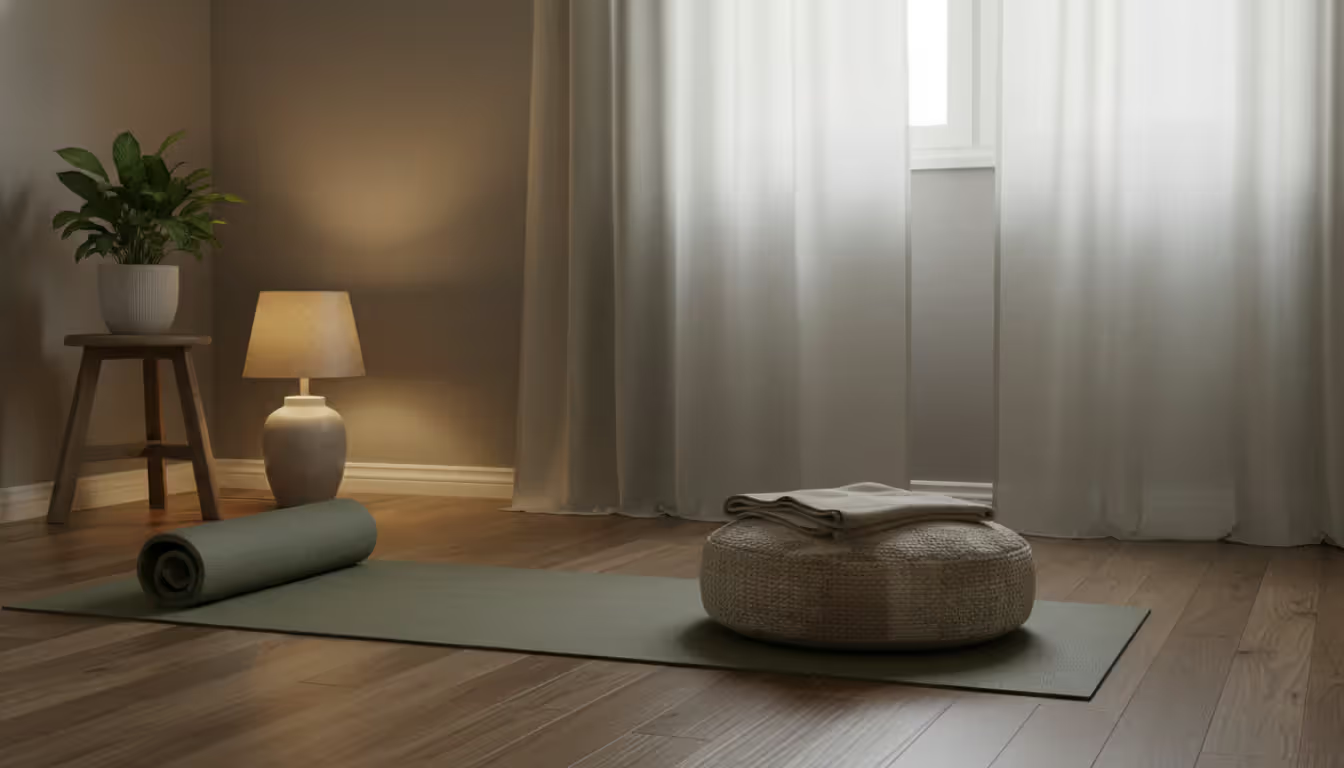
Find somewhere quiet where you won't be disturbed for 15-20 minutes minimum. Turn off notifications on all devices—better yet, put them in a different room entirely so you're not tempted to check them.
Lighting should be soft. You don't need darkness, but harsh overhead lights work against relaxation. Many people practice in bedrooms with curtains partially drawn or in living rooms with one dim lamp.
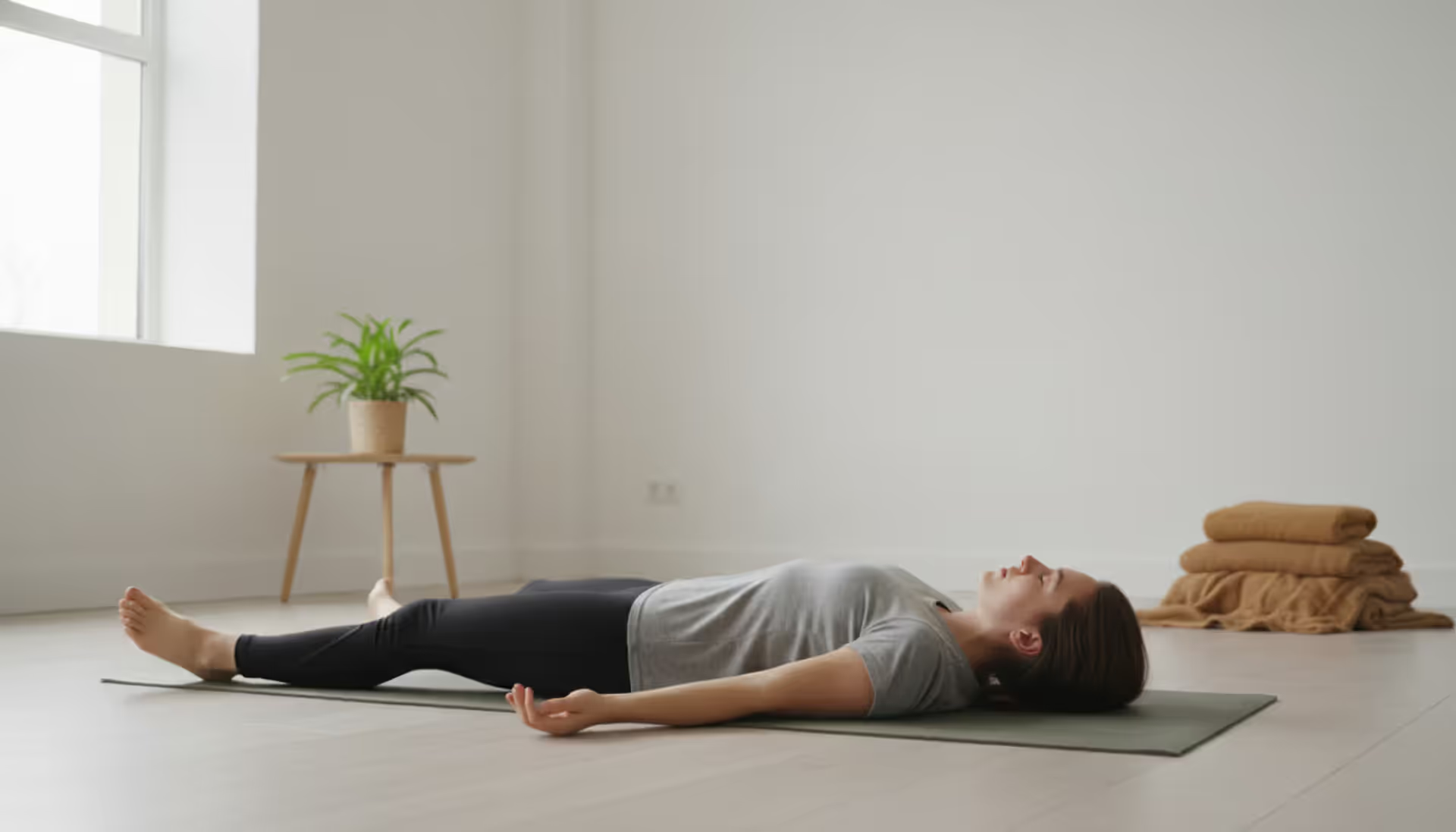
Most practitioners lie flat on their backs. A yoga mat on the floor works great. So does a bed, though beds sometimes trigger automatic sleep responses. Position a small cushion or folded towel under your knees if your lower back tends to arch uncomfortably. Let your arms fall naturally to your sides—palms can face up, down, or whatever feels right. Don't cross your ankles or fold your hands; this creates unnecessary contact points that become distracting.
Author: Caleb Montrose;
Source: 5sensesspa.com
Room temperature deserves attention. If you're even slightly chilly, your body won't relax fully—you'll be unconsciously tensing against the cold. Too warm, and you'll drift off within five minutes. Keep a lightweight blanket within reach.
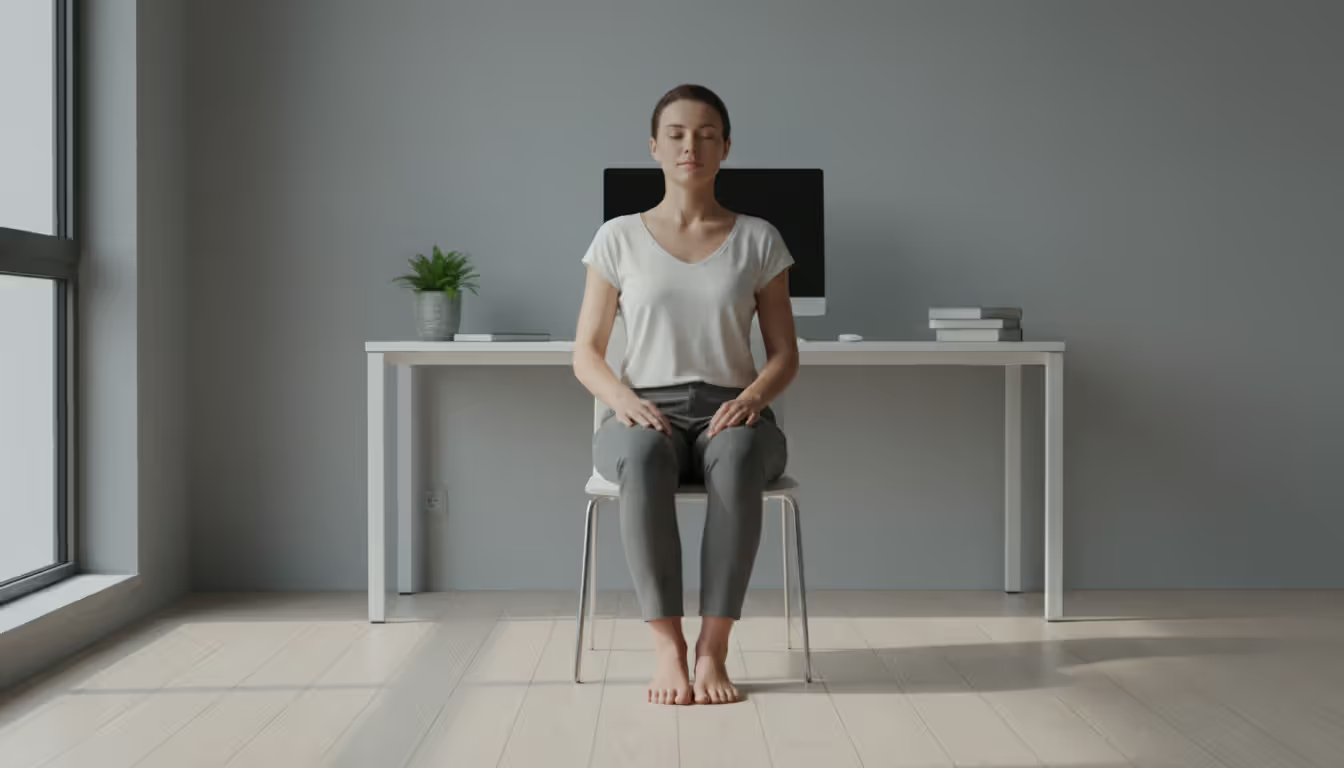
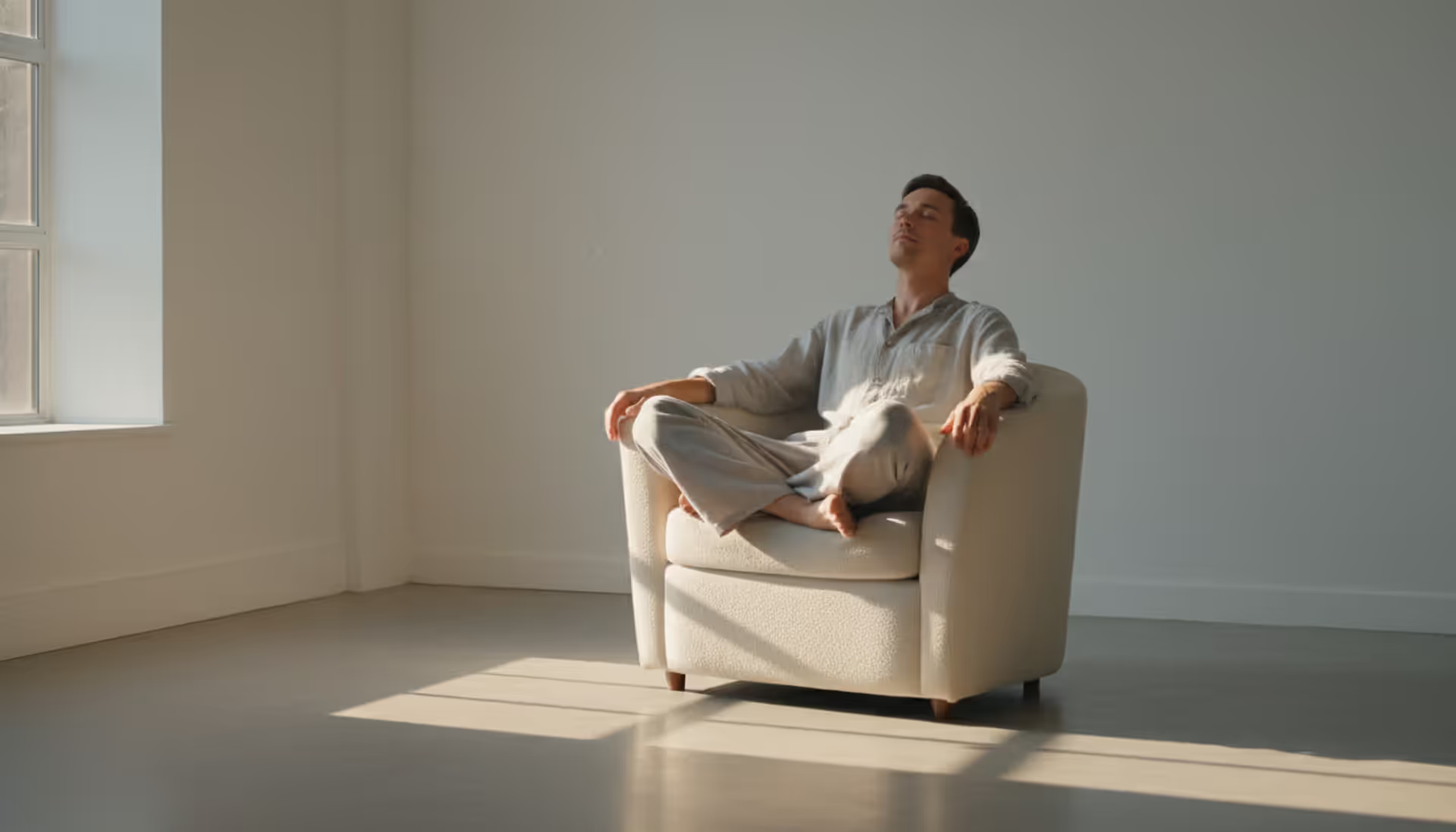
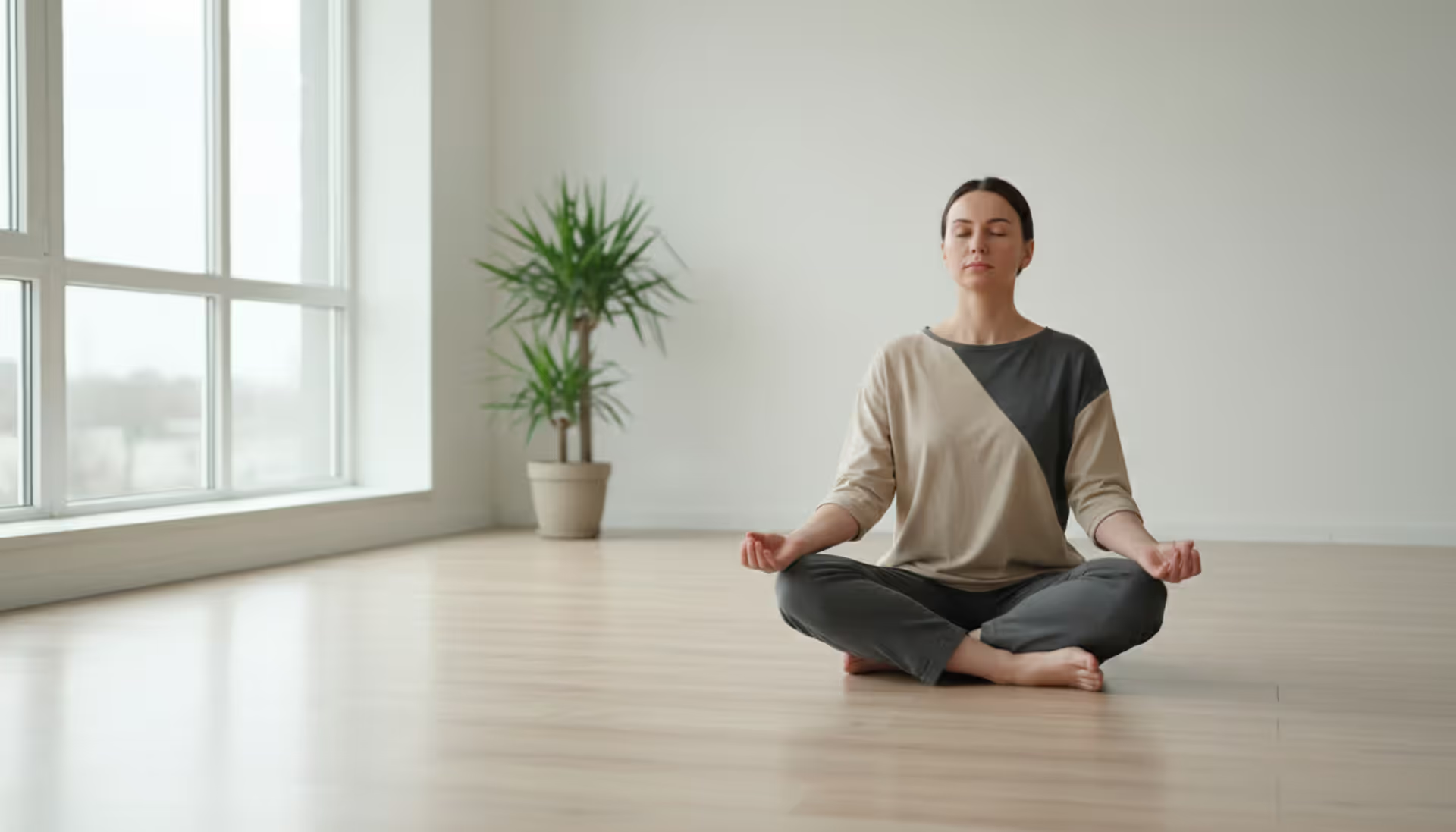
Falling asleep every single time? Switch to sitting. Use a chair with good back support, feet flat on the ground, hands resting comfortably on your thighs. This position maintains enough alertness to complete the practice while still allowing your body to soften.
The Basic Body Scan Technique
The body scan meditation technique follows a predictable path through your body. Some people start at the crown of the head and work down. Others begin at the feet and travel upward. Neither is "correct"—though starting at your feet and finishing at your head can feel slightly energizing, which some prefer.
Take three slow breaths before beginning. Make your exhales noticeably longer than your inhales—this activates your parasympathetic nervous system, essentially telling your body, "We're safe, we can relax."
Now direct your full attention to the first body region. Let's say you're starting with your left foot. What do you actually feel there? Temperature—warmer than you expected, or cool? Do you sense the floor or mat pressing against your heel? Any buzzing, pulsing, heaviness, or lightness? Spend 20-30 seconds genuinely investigating.
Your mind will absolutely wander. You'll be noticing your ankle when suddenly you're thinking about tomorrow's meeting or replaying a conversation from yesterday. That's not failure—that's normal human brain behavior. When you catch yourself thinking, acknowledge it without frustration ("Ah, thinking"), then guide attention back to wherever you were. This returning is the actual practice, not some annoying interruption of "real" meditation.
Progress methodically: individual toes, sole, top of foot, ankle, calf, shin, knee, thigh. Then repeat everything on the other leg. Continue through pelvis, lower back, abdomen, chest, upper back, shoulders, each arm, both hands, neck, face, and scalp.
Don't rush. If you discover your jaw is clenched tight, you can linger there an extra 30 seconds. But resist the urge to forcefully relax it—just observe the clenching with curiosity. Often awareness alone begins to shift things.
Complete Body Scan Mindfulness Script
Here's a body scan mindfulness script you can record in your own voice, ask someone to read aloud, or use as a practice guide. It runs approximately 18-20 minutes. Ellipses (...) indicate natural pauses.
Find a comfortable position lying on your back. Let your legs extend naturally, arms resting by your sides. Close your eyes if that feels comfortable. Draw a deep breath in through your nose... release it slowly through your mouth. Breathe in fully once more... let it pour out. One final deep breath... and empty your lungs completely.
Turn your attention now to your left foot. Feel where your heel makes contact with the surface below. Notice the weight there. What sensations exist in the sole... the arch... the ball of your foot? Move awareness to each toe individually—big toe first, then each one moving toward the smallest. Just notice whatever's present... temperature, tingling, pressure, or maybe almost nothing at all.
Shift focus to the top of your left foot... your ankle joint... your lower left leg. Notice your calf muscle, your shin bone. You're not changing anything, just observing what's there. Bring attention to your left knee... the front of it... the space behind it. Move up into your left thigh, noticing the front surface... the back... the inner and outer edges.
Now bring awareness to your right foot, beginning again with the heel. Feel where it touches the ground. Notice your sole... your arch... each individual toe, taking your time. Move to the top of the right foot... the ankle... the lower right leg, observing calf and shin. Your right knee... and traveling up through the right thigh, front to back.
Draw attention to your pelvis and hip region. Notice where your sitting bones meet the floor. Bring awareness into your lower abdomen... your belly moving with each breath. Move to your lower back, the natural curve of your spine. Just observe any feelings of contact, weight, or temperature.
Shift focus to your middle abdomen, upper abdomen. Notice breath moving through this area. Bring attention to your chest, your ribcage expanding and contracting. Move to your middle back... your upper back behind your shoulders. Notice the weight of your entire torso.
Bring awareness to your left shoulder... traveling down your left upper arm... your elbow... your forearm. Notice your left wrist... your left palm... the back of that hand... each finger from thumb to pinky. Observe any pulsing, warmth, or tingling.
Move to your right shoulder... down your right upper arm... your elbow... your forearm. Your right wrist... the palm... the back of the hand... each finger individually. Take whatever time feels right with each area.
Bring attention to your neck, front and back. Notice your throat... the sides of your neck. Move to your jaw—many people hold tension here. You don't need to relax it forcefully, just notice what's happening. Your lips... your cheeks... your nose... the area around your eyes. Your forehead... your temples... your ears. The back of your head where it rests on the surface. The very crown of your head.
Now expand awareness to include your whole body at once. Notice the complete physical form, from crown to toes. Observe your body breathing on its own. Rest here in this full-body awareness for a few moments.
When you feel ready to return, start deepening your breath. Gently wiggle fingers and toes. Rotate your ankles and wrists slowly. Stretch arms overhead if that appeals to you. Roll onto one side and pause there briefly before slowly pressing yourself up to sitting. Let your eyes open when that feels natural.
Body Scan Meditation Benefits Backed by Research
Author: Caleb Montrose;
Source: 5sensesspa.com
The body scan meditation benefits span physical, psychological, and neurological domains, backed by 40+ years of clinical studies.
Anxiety and stress reduction: A 2023 meta-analysis in JAMA Psychiatry reviewed 47 studies involving body scan practices. Results showed meaningful reductions in anxiety symptoms—effects comparable to what researchers see with first-line anti-anxiety medications for generalized anxiety disorder. The body scan for anxiety relief interrupts rumination loops and activates your parasympathetic ("rest and digest") nervous system.
Better sleep quality: Researchers at Stanford Sleep Medicine Center (2025) found that participants practicing body scan before bed fell asleep 43% faster on average and woke up less during the night. The practice seems to reduce cognitive arousal—that mental chatter that keeps you staring at the ceiling at 2 AM.
Chronic pain management: Studies from the University of Washington Pain Research Center demonstrate something fascinating: regular body scan practice changes how people relate to pain. Instead of fighting painful sensations or spiraling into fear about them, practitioners develop what scientists call "pain acceptance." This doesn't make pain disappear, but it reduces suffering substantially even when pain intensity stays the same.
Stronger interoceptive awareness: Neuroscience research using fMRI brain scans shows that consistent body scan practice strengthens the insula—the brain region responsible for sensing what's happening inside your body. This improved awareness helps people recognize stress signals earlier (tight shoulders, shallow breathing, clenched jaw) and respond before stress escalates.
Better emotional regulation: A 2024 study published in Emotion journal tracked participants through eight weeks of daily body scan practice. Those who practiced regularly improved their ability to identify and accurately name emotions—a skill strongly linked to better mental health outcomes.
The body scan has proven to be an extremely powerful and healing form of meditation. It forms the core of the lying down practices that people train in MBSR. It involves systematically sweeping through the body with the mind, bringing an affectionate, openhearted, interested attention to its various regions
— Jon Kabat-Zinn
Body Scan Variations for Different Needs
You can adapt the progressive body scan to fit different schedules, physical limitations, and specific goals.
Quick 5-minute version: Short on time? Divide your body into just five zones: both legs together, torso, both arms together, neck and shoulders, and head and face. Spend roughly 45 seconds on each zone, plus brief opening and closing. This abbreviated approach works during lunch breaks or before stressful meetings.
Progressive muscle relaxation hybrid: Add active tension and release to each body part. As you bring attention to your left calf, deliberately tense those muscles for 5 seconds, then release completely while observing the contrast between tension and relaxation. This progressive body scan with muscle engagement provides a more tangible experience for people who struggle with purely observational methods.
Seated variation: Office workers and people with mobility limitations can practice while sitting upright. The technique stays the same—you'll just notice different contact points (feet on floor, thighs on chair seat, back against backrest). Some practitioners actually prefer seated versions because they maintain alertness better.
Targeted anxiety relief: During acute anxiety, focus extra attention on wherever you physically feel the anxiety—typically chest, throat, or stomach. Spend 2-3 minutes with these specific regions, breathing into them without trying to make sensations disappear. This targeted approach acknowledges distress rather than avoiding it.
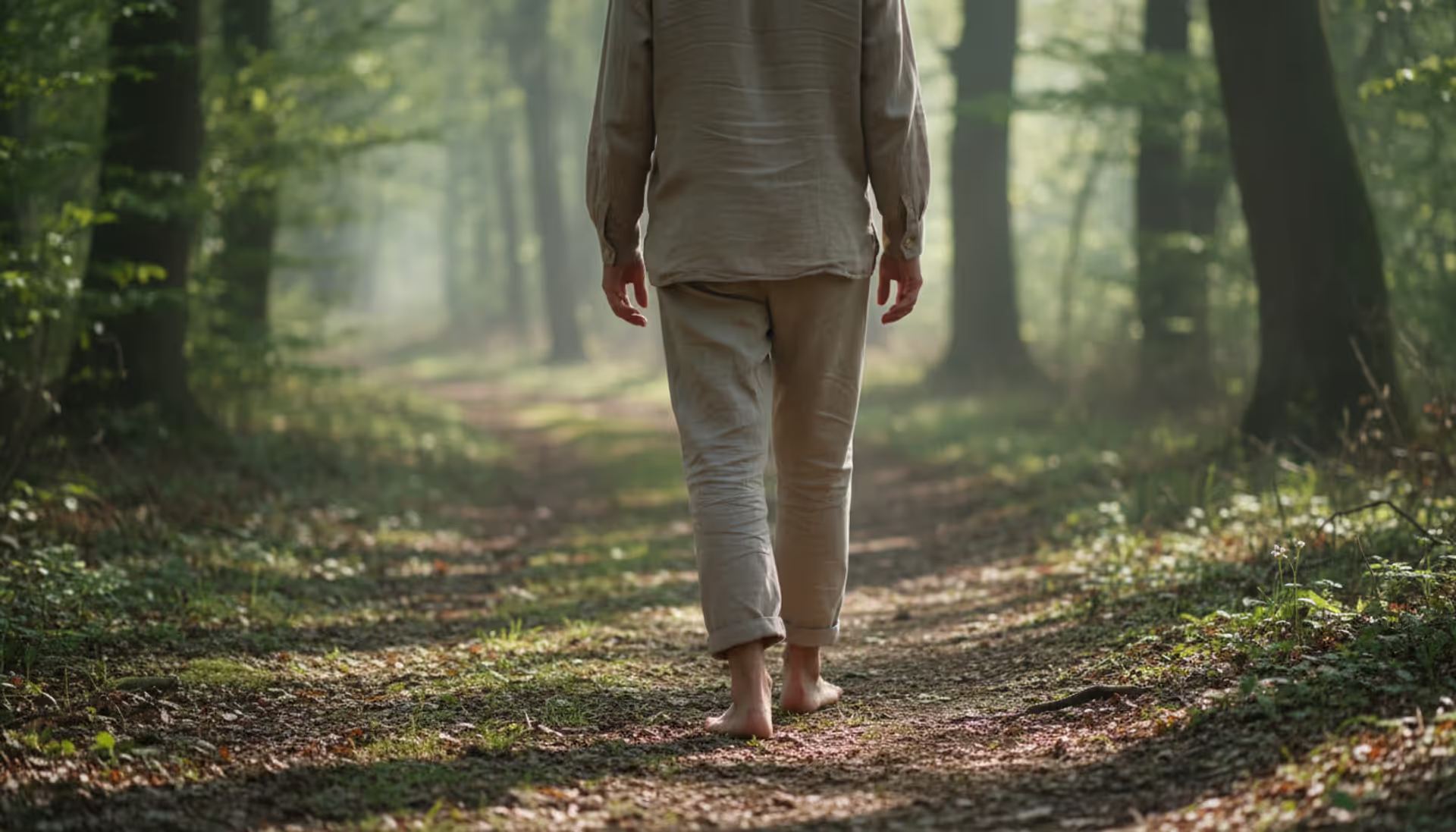
Walking body scan: Advanced practitioners can try a slow-motion walking version, bringing awareness to the complex sensations of each step: weight shifting from heel to toe, muscle engagement through the leg, balance adjustments, contact with ground. This moving meditation bridges formal practice and everyday activity.
Reverse direction: Occasionally starting at your head and moving toward feet provides variety and prevents the practice from becoming mechanical autopilot. Some people report feeling more grounded when ending at the feet.
Author: Caleb Montrose;
Source: 5sensesspa.com
Common Mistakes and How to Avoid Them
Even experienced practitioners encounter these challenges in their body scan mindfulness practice.
Falling asleep every time: Occasional drowsiness is normal, especially when learning. But if you sleep through every single session, something needs adjusting. Practice earlier in the day when you're more alert. Switch to sitting position instead of lying down. Keep your eyes barely open with a soft downward gaze. And if you're genuinely sleep-deprived—honor that need. Meditation shouldn't replace adequate rest.
Racing through sections: Notice yourself speeding up to "finish"? That defeats the entire purpose. When you catch yourself rushing, pause completely and take three deliberate breaths before continuing. Quality of attention matters infinitely more than covering every body part.
Labeling sensations as good or bad: Your inner critic might judge tension as "wrong" or pleasant sensations as "right." The practice is about neutral observation without evaluation. When judgment arises, simply note it—"Okay, I'm judging this"—then return to neutral noticing.
Avoiding uncomfortable areas: People unconsciously skip body regions associated with pain, injury, or trauma. This avoidance makes sense but limits the practice's therapeutic potential. Approach sensitive areas with extra gentleness, and remember you can always move on if something feels overwhelming. You're in control.
Expecting instant relaxation: Body scan meditation isn't technically a relaxation technique, though relaxation often happens as a byproduct. The actual goal is awareness, not achieving particular states. Some sessions feel deeply peaceful. Others surface agitation or discomfort. Both experiences are valuable data.
Unconscious breath-holding: Beginners sometimes hold their breath while concentrating on body parts. Periodically check that breathing continues naturally and easily throughout.
Session comparison: Each practice session is unique. Yesterday's profound experience doesn't mean today's distracted session is a failure. The practice is consistent showing up, not achieving specific outcomes each time.
Frequently Asked Questions About Body Scan Meditation
How long should a body scan meditation take?
Traditional sessions last 20-45 minutes, with 20-30 minutes being the sweet spot for most people. That said, even 5-10 minute abbreviated versions deliver benefits. Consistency beats duration every time—a daily 10-minute practice produces better results than sporadic 45-minute sessions. Start with whatever duration feels doable and gradually extend as the practice becomes habitual.
Is it normal to fall asleep during body scan meditation?
Completely normal, especially when lying down or practicing before bed. Falling asleep means your body needed rest, not that you're failing at meditation. If sleep becomes the consistent pattern and you want to stay awake, try sitting upright, practicing earlier when you're more alert, or keeping eyes slightly open. Many people intentionally use body scans as a sleep aid, which is a perfectly legitimate application.
Can I do body scan meditation sitting up?
Absolutely. Seated body scan meditation works beautifully for people who consistently fall asleep lying down, those with physical limitations that make lying uncomfortable, or anyone practicing in an office or public space. The technique stays identical—you'll simply notice different contact points and sensations. Many experienced practitioners actually prefer seated scans for maintaining alert awareness.
How often should I practice body scan meditation?
Daily practice produces the most dramatic benefits, particularly for anxiety reduction and improved body awareness. Most research studies showing measurable changes used protocols of 20-30 minutes daily for eight weeks. However, three to four times weekly still provides real value. The key is regularity rather than perfection—missing occasional days won't erase your progress.
What's the difference between body scan and progressive muscle relaxation?
Body scan meditation involves passive observation of sensations that already exist without trying to change them. Progressive muscle relaxation (PMR) actively tenses and releases muscle groups to produce physical relaxation. PMR is goal-oriented (achieving relaxation), while body scan is awareness-oriented (noticing what is). Some practitioners combine both approaches, using the tension-release of PMR within a body scan framework.
Can body scan meditation help with chronic pain?
Research suggests body scan meditation can transform the relationship with chronic pain, though it typically doesn't eliminate pain entirely. Studies show regular practice reduces pain-related distress and improves daily function even when pain intensity remains constant. The mechanism appears to involve decreased catastrophizing about pain and increased acceptance. Anyone with chronic pain should discuss meditation practices with their healthcare provider as part of comprehensive treatment.
This body scan mindfulness script offers a practical entry point to greater physical awareness and mental calm. Unlike many wellness practices requiring special equipment, extensive training, or massive time investments, this technique asks only for your attention and a few quiet minutes.
Starting a body scan meditation practice doesn't demand perfection. Your mind will wander constantly. You'll fall asleep sometimes. Some sessions will feel scattered and frustrating. These experiences are part of learning, not obstacles preventing it. The practice builds gradually—most people notice subtle shifts in body awareness within two weeks and more substantial changes in stress response after six to eight weeks of consistent practice.
Consider beginning with just five minutes daily, perhaps using the abbreviated version described earlier. As the practice becomes familiar, duration naturally extends. Many practitioners find morning sessions establish a mindful foundation for the entire day, while evening scans facilitate smoother transitions into sleep.
The body scan meditation technique offers something increasingly rare in modern life: a structured opportunity to simply be with yourself, without fixing, improving, or optimizing anything. In a culture demanding constant productivity, this radical act of non-doing attention can prove surprisingly transformative.
Loving kindness meditation cultivates unconditional goodwill toward yourself and others through specific phrases and mental imagery. Originating from Buddhist metta practices, this technique systematically expands compassion from self to all beings, offering measurable mental and physical health benefits
Vedic meditation is a mantra-based practice from ancient India that uses silent sound vibrations to help the mind settle naturally. Practitioners sit comfortably for twenty minutes twice daily, silently repeating a personalized mantra. The technique requires no belief system or lifestyle changes
Transcendental Meditation requires formal instruction through a standardized course. This guide explains the four-session training structure, personalized mantra assignment, costs, and why TM can't be self-taught from books or apps
Discover how mindfulness walking meditation transforms ordinary steps into a powerful practice for calming the mind and grounding the body. This comprehensive guide covers techniques, benefits, different styles, and practical tips for beginners and experienced practitioners alike
The content on this website is provided for general informational and educational purposes only. It is intended to explain concepts related to meditation, mindfulness, mental health, and spiritual practices.
All information on this website, including articles, guides, and examples, is presented for general educational purposes. Meditation outcomes may vary depending on individual practices, health conditions, and guidance.
This website does not provide medical, mental health, or spiritual advice, and the information presented should not be used as a substitute for consultation with qualified professionals.
The website and its authors are not responsible for any errors or omissions, or for any outcomes resulting from decisions made based on the information provided on this website.