Guided meditation has become one of the most accessible entry points into mindfulness and contemplative practice. Unlike traditional silent meditation, which can feel intimidating or directionless for newcomers, guided sessions provide a voice, structure, and clear path through the practice. Whether you're managing chronic pain, processing difficult emotions, or simply looking for mental clarity, guided meditation offers a framework that meets you where you are.
The explosion of digital platforms, YouTube channels, and specialized apps has made quality meditation instruction available to anyone with a smartphone. But this abundance also creates confusion: which resources actually deliver results? How do you match a meditation style to your specific needs? And what separates a genuinely helpful guided session from background noise?
This guide cuts through the noise to help you find effective guided meditation resources, understand how the practice works, and avoid common pitfalls that derail beginners.
What Is Guided Meditation and How Does It Work
Guided meditation is a practice where an instructor—either live or recorded—leads you through a meditation session using verbal cues. The guide might direct your attention to your breath, lead you through a body scan, offer visualizations, or provide prompts for reflection. Sessions range from three minutes to over an hour, with formats adapted for stress relief, sleep, pain management, or spiritual exploration.
The core mechanism is simple: the instructor's voice acts as a continuous anchor for your attention. When your mind wanders (which it will), the next instruction naturally brings you back without requiring the self-discipline that silent meditation demands. This external structure compensates for the lack of internal focus that most beginners struggle with.
Neurologically, guided meditation activates similar brain regions as unguided practice—the prefrontal cortex for attention regulation, the insula for interoceptive awareness, and areas associated with emotional processing. The difference lies in cognitive load. Following verbal instructions requires less executive control than maintaining self-directed focus, making guided sessions less mentally taxing for newcomers.
Author: Lena Ashcroft;
Source: 5sensesspa.com
Unguided meditation requires you to notice when attention has drifted and consciously redirect it. Guided meditation outsources part of that monitoring function to the instructor. Think of it as training wheels: the guide prevents you from veering too far off course while you develop the balance to eventually ride solo.
The practice works through repetition and association. Over weeks of consistent practice, your nervous system begins to associate the instructor's voice, opening music, or specific phrases with a relaxation response. This conditioning effect means sessions often become more effective over time, even if the content remains identical.
Guided meditation provides scaffolding for attention. The instructor's voice serves as an anchor, repeatedly bringing wandering minds back to the present moment—a function that's especially valuable when you're building the mental muscles of focus and awareness
— Dr. Amishi Jha
Why Guided Meditation Works for Beginners
Starting a meditation practice without guidance often leads to frustration. You sit down, close your eyes, and immediately face a barrage of thoughts with no clear strategy for handling them. Within minutes, you're wondering if you're "doing it right" or whether meditation just isn't for you.
Guided meditation for beginners removes this paralysis by providing clear, moment-to-moment instructions. The guide tells you where to place your attention, how to work with distractions, and what to expect. This structure eliminates the second-guessing that sabotages early practice.
The lower barrier to entry matters enormously. Traditional meditation instruction often assumes you can sit comfortably for extended periods and have some baseline ability to sustain focus. Guided sessions meet you at your actual starting point—restless, distracted, possibly skeptical—and build from there.
Beginners benefit from the pacing control that guided sessions provide. A skilled instructor knows when to pause, when to offer a new focus object, and how to prevent the boredom or frustration that arises from instructions that are too sparse or too dense. This calibrated pacing keeps you engaged without overwhelming your attention capacity.
The variety of guided meditation formats also helps beginners discover what resonates. You might find that body scan meditations feel more tangible than breath focus, or that loving-kindness practices engage you more than visualization. Sampling different styles through guided sessions lets you identify your preferences without committing to a single approach.
Accountability plays a subtle but important role. When you press play on a 20-minute session, you've made a small commitment to see it through. The instructor's presence—even recorded—creates a sense of accompaniment that makes it harder to quit halfway through than it would be in silent practice.
Top Free Guided Meditation Platforms and YouTube Channels
The best free guided meditation resources balance quality instruction, variety, and accessibility. Here's how leading platforms compare:
Platform/Channel
Cost
Session Lengths
Focus Areas
User Base
Insight Timer
Free (premium optional)
1–90 min
Sleep, anxiety, healing, MBSR
25M+ users
UCLA Mindful App
Free
3–19 min
Breath, body scan, loving-kindness
Research-backed
The Honest Guys (YouTube)
Free
10–60 min
Sleep, healing, nature soundscapes
3M+ subscribers
Michael Sealey (YouTube)
Free
20–90 min
Sleep hypnosis, pain relief, confidence
2M+ subscribers
Great Meditation (YouTube)
Free
5–30 min
Quick relief, chakra work, morning practice
1.5M+ subscribers
Plum Village App
Free
5–45 min
Thich Nhat Hanh teachings, walking meditation
Zen tradition focus
Insight Timer stands out for sheer volume—over 100,000 free guided meditations covering nearly every conceivable style and tradition. The search and filter functions let you narrow by duration, teacher, background music preference, and specific goals. The quality varies since anyone can upload content, but user ratings help surface the most effective sessions.
UCLA Mindful Awareness Research Center's free app offers scientifically-grounded meditations developed by researchers who study contemplative neuroscience. The sessions are straightforward, secular, and based on MBSR (Mindfulness-Based Stress Reduction) protocols. If you want evidence-based practice without spiritual elements, this is your starting point.
For YouTube channels, The Honest Guys excel at longer-form sessions with high-quality nature soundscapes and gentle British-accented guidance. Their healing meditations incorporate guided imagery and are particularly effective for evening wind-down or managing chronic conditions.
Michael Sealey specializes in hypnotic-style meditations for sleep and subconscious work. His voice has a distinctly soporific quality, and sessions often run 60–90 minutes with the explicit goal of helping you fall asleep partway through. These aren't traditional mindfulness meditations but work exceptionally well for insomnia.
Great Meditation offers shorter, more energizing sessions suited for morning practice or midday resets. The production quality is high, with carefully chosen background music and clear, unpretentious instruction.
Free resources have trade-offs. You'll encounter ads on YouTube (unless you pay for Premium), and free app tiers may limit features like offline downloads or advanced search. But for building a consistent practice, these platforms provide more than enough quality content.
Guided Meditation Options by Goal and Duration
Healing and Physical Wellness
Guided meditation for healing illness typically combines body awareness with visualization and sometimes affirmations. These sessions direct attention to areas of pain or disease, often incorporating imagery of warmth, light, or healing energy flowing to affected regions.
Jon Kabat-Zinn's body scan meditation, widely available on free platforms, remains the gold standard for pain management. The 45-minute practice systematically moves attention through each body region, cultivating awareness without judgment. Research shows this approach can reduce pain intensity and improve function in chronic pain conditions.
Author: Lena Ashcroft;
Source: 5sensesspa.com
For autoimmune conditions or cancer support, look for meditations that emphasize self-compassion and acceptance rather than "fighting" the illness. Tara Brach's RAIN technique (Recognize, Allow, Investigate, Nurture) adapted for physical symptoms helps you relate to pain without the secondary suffering that resistance creates.
Healing-focused sessions work best when practiced consistently over weeks. The benefits accumulate through neuroplastic changes—your nervous system literally rewires to process pain signals differently. Expecting immediate relief from a single session sets you up for disappointment.
Letting Go and Emotional Release
Guided meditation for letting go addresses the human tendency to grip experiences, relationships, or identities that no longer serve us. These sessions use metaphors—releasing balloons, watching leaves float downstream, opening clenched fists—to create psychological distance from what you're holding.
The most effective letting-go meditations acknowledge that release isn't a one-time event. You might need to symbolically "let go" of the same resentment or regret dozens of times before it loosens its grip. The practice builds the mental habit of non-attachment rather than forcing a sudden breakthrough.
Emotional release meditations sometimes incorporate breathwork—extended exhales, sighing, or even guided crying. These somatic elements help discharge stored emotional tension that purely cognitive approaches miss. Sarah Blondin's "Live Awake" series on Insight Timer exemplifies this body-inclusive approach.
Timing matters with emotional work. Practicing late at night can stir up feelings that interfere with sleep. Mid-morning or early afternoon sessions give you time to process whatever arises without it bleeding into your evening.
30-Minute Sessions for Deeper Practice
A 30-minute guided meditation provides enough time to move through initial restlessness into genuine absorption. The first ten minutes typically settle the body and mind, the middle section explores the core practice, and the final minutes integrate the experience.
This duration works well for weekend mornings or dedicated practice days when you can afford the time investment. Longer sessions reveal patterns that shorter meditations don't expose—the cyclical nature of attention, the subtle shift from effortful focus to effortless presence, the emergence of insights that require space to surface.
Look for 30-minute sessions that vary the focus object or technique partway through. A session might begin with breath awareness, transition to loving-kindness phrases, and conclude with open awareness. This variety maintains engagement while building multiple skills.
The challenge with longer sessions is physical discomfort. Even experienced meditators encounter restlessness around the 20-minute mark. Quality 30-minute guides acknowledge this and offer permission to adjust posture or incorporate gentle movement without abandoning the practice.
How to Use a Guided Imagery Meditation Script
A guided imagery meditation script is a written narrative designed to evoke specific mental images, sensations, or emotional states. Scripts provide the template for guided sessions—either read aloud by an instructor or used for self-guided practice.
Reading from a script yourself creates a different experience than listening to a recording. You control the pacing, can pause to dwell on particularly resonant images, and might even ad-lib based on what you're experiencing. This active participation can deepen engagement, though it also requires more cognitive effort than passive listening.
Author: Lena Ashcroft;
Source: 5sensesspa.com
Common script structures include the healing journey (imagining travel to a restorative place), the inner sanctuary (building a detailed mental refuge), future self-visualization (meeting a wiser version of yourself), and elemental meditations (connecting with earth, water, fire, air).
When following a script, read through it once beforehand to familiarize yourself with the arc. During practice, read slowly—much slower than conversational pace. Pause at natural breaks (ellipses or paragraph endings) to let images develop. The goal isn't to rush through the content but to create space for your imagination to fill in details.
Customizing scripts makes them more personally meaningful. If a beach visualization doesn't resonate because you prefer mountains, change the setting. If certain phrases feel awkward or inauthentic, rework them. The script is scaffolding, not scripture.
Scripts work particularly well for specific intentions—preparing for surgery, processing grief, building confidence before a challenge. The narrative structure helps your mind accept and rehearse new possibilities in ways that abstract meditation instructions don't.
Common Mistakes When Starting Guided Meditation
Expecting immediate transformation tops the list of beginner errors. You listen to one 15-minute session and feel slightly calmer, then wonder why your anxiety hasn't vanished. Meditation produces benefits through accumulation—small, repeated doses over weeks and months. One session plants a seed; consistent practice grows the garden.
Choosing the wrong environment undermines even the best guided meditation. Practicing in bed signals sleep to your nervous system, making it hard to maintain alert awareness. Meditating in a high-traffic area invites interruptions. Find a spot that's reasonably quiet, comfortable but not soporific, and consistently available.
Skipping consistency in favor of intensity rarely works. Five daily 10-minute sessions will rewire your nervous system more effectively than an occasional hour-long marathon. Your brain responds to regular, predictable practice patterns. Sporadic effort, no matter how enthusiastic, doesn't create lasting change.
Author: Lena Ashcroft;
Source: 5sensesspa.com
Switching styles too frequently prevents you from developing depth. Sampling is valuable initially, but once you find an approach that resonates, stick with it long enough to experience its full effects. Constantly chasing the "perfect" meditation is just another form of distraction.
Fighting distractions instead of working with them creates unnecessary struggle. Your mind will wander—that's not failure, it's normal brain function. The practice is noticing when attention has drifted and gently returning to the guide's instructions. Each return strengthens your focus muscle more than maintaining unbroken attention would.
Ignoring physical discomfort until it becomes pain turns meditation into an endurance test. If your knee hurts, adjust your position. If your back aches, use a cushion or chair. Meditation should challenge your attention, not your pain tolerance.
FAQ
How long should a beginner meditate?
Start with 5–10 minutes daily. This duration is short enough to feel manageable but long enough to experience the basic cycle of settling, wandering, and returning. After two weeks of consistent practice at this length, gradually extend to 15–20 minutes. The key is building the habit before worrying about duration.
Can guided meditation help with anxiety?
Yes, particularly meditations that emphasize body awareness and breath regulation. These practices activate the parasympathetic nervous system, countering the fight-or-flight response that drives anxiety. Research shows that 8 weeks of regular practice can reduce anxiety symptoms as effectively as medication for mild to moderate cases. However, meditation complements rather than replaces professional treatment for severe anxiety disorders.
Do I need special equipment?
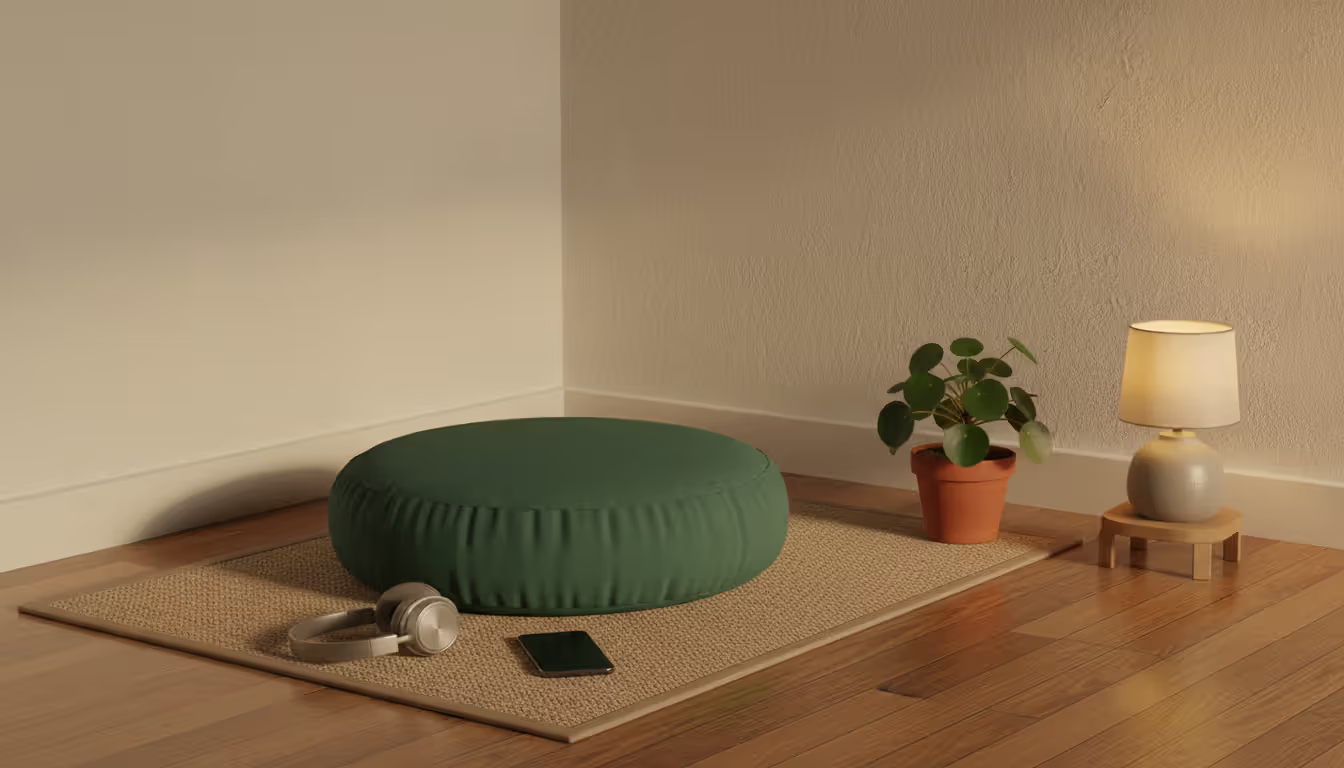
No. You can practice guided meditation anywhere you can listen to audio—smartphone earbuds work fine. Optional items that enhance comfort include a cushion or meditation bench, a blanket for warmth, and a timer if you're using scripts rather than recordings. Avoid thinking you need perfect conditions before starting; that's just procrastination dressed up as preparation.
How often should I practice guided meditation?
Daily practice produces the most reliable results. Even five minutes each day outperforms longer but sporadic sessions. Your nervous system responds to consistent signals. If daily feels impossible, aim for five days per week as a minimum threshold for building momentum. Weekend-only practice rarely creates lasting change.
Is guided meditation effective for sleep?
Extremely effective for many people. Sleep-specific meditations use slower pacing, soporific voice tones, and content designed to quiet mental activity. The key difference from regular meditation: you're trying to lose consciousness rather than maintain awareness. Practice these lying down, with the explicit intention of falling asleep before the session ends. Many people never hear the final minutes.
What's the difference between guided meditation and mindfulness?
Mindfulness is a quality of attention—present-moment awareness without judgment. Guided meditation is a method for cultivating that quality (among others). You can practice mindfulness without meditation through activities like mindful eating or walking. Guided meditation might teach mindfulness, but it can also develop concentration, compassion, or visualization skills. Think of mindfulness as a destination and guided meditation as one vehicle for getting there.
Finding the best guided meditation resources comes down to matching format, duration, and focus area to your actual needs rather than idealized intentions. The YouTube channel that helps your coworker sleep might leave you wide awake; the app your friend swears by might feature a voice that grates on you. Effective practice requires experimentation.
Start with free platforms to identify what resonates—voice quality, pacing, secular versus spiritual language, background sounds. Once you've found two or three teachers or styles that work, commit to them for at least a month before evaluating results. Meditation benefits emerge gradually, like physical fitness. You wouldn't judge a workout program after one session.
The most sophisticated guided meditation in the world won't help if you don't press play. Build the habit first, optimize the content second. Five minutes of imperfect practice beats zero minutes of perfect planning. Your attention is trainable, your nervous system is adaptable, and the resources to support both are more accessible now than at any point in human history.
Loving kindness meditation cultivates unconditional goodwill toward yourself and others through specific phrases and mental imagery. Originating from Buddhist metta practices, this technique systematically expands compassion from self to all beings, offering measurable mental and physical health benefits
Vedic meditation is a mantra-based practice from ancient India that uses silent sound vibrations to help the mind settle naturally. Practitioners sit comfortably for twenty minutes twice daily, silently repeating a personalized mantra. The technique requires no belief system or lifestyle changes
Transcendental Meditation requires formal instruction through a standardized course. This guide explains the four-session training structure, personalized mantra assignment, costs, and why TM can't be self-taught from books or apps
Discover how mindfulness walking meditation transforms ordinary steps into a powerful practice for calming the mind and grounding the body. This comprehensive guide covers techniques, benefits, different styles, and practical tips for beginners and experienced practitioners alike
The content on this website is provided for general informational and educational purposes only. It is intended to explain concepts related to meditation, mindfulness, mental health, and spiritual practices.
All information on this website, including articles, guides, and examples, is presented for general educational purposes. Meditation outcomes may vary depending on individual practices, health conditions, and guidance.
This website does not provide medical, mental health, or spiritual advice, and the information presented should not be used as a substitute for consultation with qualified professionals.
The website and its authors are not responsible for any errors or omissions, or for any outcomes resulting from decisions made based on the information provided on this website.