Over the past decade, meditation has shifted from a niche spiritual practice to a mainstream wellness tool backed by neuroscience. Millions of Americans now meditate regularly, not because of tradition or belief, but because it produces measurable changes in how they think, feel, and function.
Understanding what meditation actually does—and why it works—helps you decide whether it's worth your time. This isn't about mysticism or empty promises. It's about recognizing a tool that alters your brain structure, regulates your nervous system, and gives you practical advantages in daily life.
What Meditation Actually Does to Your Brain and Body
When you meditate, you're not just relaxing. You're actively rewiring neural pathways and shifting your body's baseline stress response.
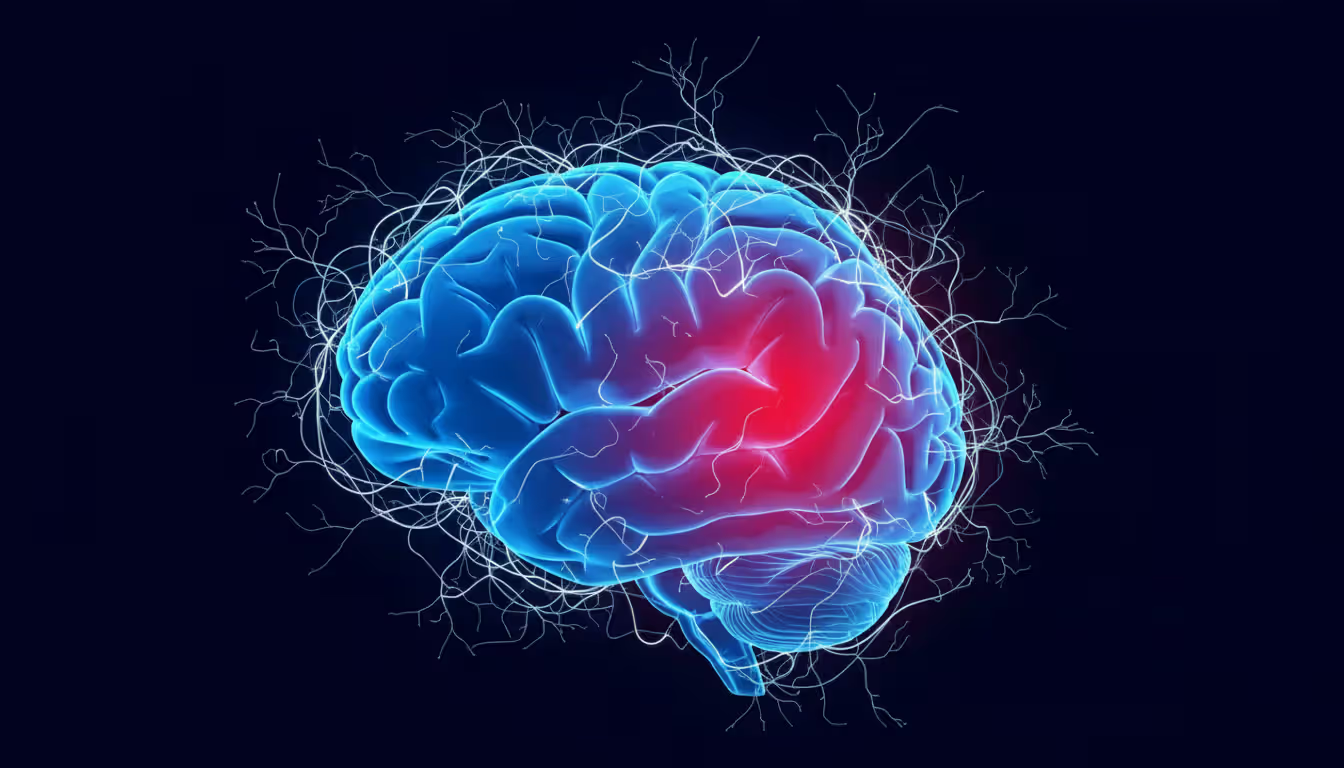
Brain imaging studies show that regular meditation thickens the prefrontal cortex—the region responsible for decision-making, attention, and self-control. At the same time, it shrinks the amygdala, your brain's alarm system that triggers fear and anxiety. These aren't temporary states. After eight weeks of consistent practice, structural changes become visible on MRI scans.
The Default Mode Network (DMN), which activates during mind-wandering and self-referential thinking, becomes less dominant. This network is associated with rumination, anxiety, and the mental chatter that keeps you awake at night. Meditation trains your brain to spend less time in this mode, which explains why practitioners report feeling less stuck in negative thought loops.
On a physiological level, meditation activates your parasympathetic nervous system—the "rest and digest" mode that counteracts chronic stress. Your heart rate variability improves, indicating better cardiovascular resilience. Cortisol levels drop. Inflammation markers decrease. Blood pressure normalizes in people with hypertension.
What does meditation do for you on a cellular level? Research from 2025 found that meditation influences gene expression related to inflammation and stress response. Genes that promote inflammatory processes become less active, while genes supporting immune function become more active. This happens within weeks, not years.
Your breath rate slows naturally during meditation, which signals safety to your brainstem. This cascades into reduced production of stress hormones and increased production of neurotransmitters like GABA and serotonin. The effect persists beyond your practice session, creating a lower baseline anxiety level throughout your day.
Author: Sophie Ellington;
Source: 5sensesspa.com
Common Reasons People Start Meditating
People come to meditation through different doors, rarely for purely philosophical reasons.
Stress and overwhelm top the list. When your mind races at 3 a.m. or you feel constantly on edge, meditation offers a non-pharmaceutical intervention. Unlike distraction-based coping (scrolling, drinking, binge-watching), it addresses the root mechanism of stress reactivity.
Sleep problems drive many beginners to try meditation. Insomnia often stems from an overactive mind that won't downshift. Meditation teaches you to observe thoughts without engaging them—a skill that translates directly to falling asleep faster.
Focus and productivity motivate another large group. Knowledge workers struggling with attention fragmentation discover that meditation strengthens their ability to sustain concentration. It's cognitive training, not relaxation.
Emotional regulation becomes a priority after relationship conflicts, anger issues, or recognizing patterns of reactivity. Meditation creates space between stimulus and response. You still feel emotions, but you're less likely to be hijacked by them.
Chronic pain management brings people to meditation when medications provide incomplete relief. Mindfulness-based interventions don't eliminate pain but change your relationship to it, reducing suffering even when sensation persists.
Spiritual seeking remains a reason, though often framed differently than in previous generations. People want connection, meaning, or transcendence—but they approach it through secular frameworks and scientific validation.
Performance enhancement attracts athletes, executives, and creatives who view meditation as a competitive advantage. They're not seeking peace; they want sharper reflexes, better decision-making under pressure, and access to flow states.
Why do people meditate despite busy schedules? Because the return on investment becomes obvious. Fifteen minutes of practice can prevent hours of anxiety spiraling or distracted work.
Science-Backed Benefits of Regular Meditation Practice
Research on meditation has exploded over the past fifteen years, moving from small pilot studies to large-scale trials with control groups and long-term follow-up.
Mental Health Benefits
Anxiety reduction shows up consistently across studies. A 2025 meta-analysis of 47 trials found that mindfulness meditation produces anxiety reduction comparable to first-line pharmaceutical interventions, without side effects. The effect size increases with practice duration.
Depression prevention works through multiple mechanisms. Meditation reduces rumination, increases positive affect, and helps people disengage from negative thought patterns. For people with recurrent depression, Mindfulness-Based Cognitive Therapy (MBCT) reduces relapse rates by 40-50%.
Attention and focus improve measurably. Sustained attention tasks show performance gains after just four days of meditation training. Long-term meditators demonstrate superior selective attention and cognitive flexibility compared to matched controls.
Emotional resilience develops as you practice observing difficult emotions without reacting. Brain scans show that meditators recover faster from negative stimuli and show less amygdala activation when viewing disturbing images.
Working memory capacity expands with regular practice. This translates to better problem-solving, multitasking, and information retention—practical advantages in any professional setting.
We found differences in brain volume after eight weeks in five different regions in the brains of the two groups. In the group that learned meditation, we found thickening in four regions associated with cognition and emotional regulation
— Dr. Sara Lazar
Physical Health Benefits
Blood pressure reduction occurs in people with hypertension who practice meditation regularly. The effect is significant enough that the American Heart Association recommends meditation as a complementary approach to blood pressure management.
Immune function improves, with studies showing increased antibody production after meditation training. Meditators take fewer sick days and recover faster from respiratory infections.
Chronic pain becomes more manageable. Pain perception involves both sensory and emotional components. Meditation reduces the emotional suffering associated with pain, and in some cases, alters pain intensity perception through changes in brain regions that process pain signals.
Inflammation markers decrease with consistent practice. C-reactive protein, interleukin-6, and other inflammatory biomarkers drop in regular meditators, which has implications for cardiovascular disease, autoimmune conditions, and aging.
Sleep quality improves through multiple pathways: reduced rumination, lower cortisol, and better emotional regulation. Meditation doesn't just help you fall asleep—it increases deep sleep duration and reduces nighttime awakenings.
How Meditation Serves Different Purposes for Different People
The purpose of meditation isn't universal. It adapts to individual needs in ways that few other practices can.
For trauma survivors, meditation offers a way to develop interoceptive awareness—the ability to sense internal body states—which trauma often disrupts. Trauma-sensitive meditation approaches help people rebuild the connection between mind and body without triggering overwhelming responses.
For athletes and performers, meditation enhances the ability to enter flow states, manage pre-performance anxiety, and maintain focus during high-pressure moments. Olympic athletes, professional musicians, and surgeons use meditation to sharpen mental precision.
For creative professionals, meditation clears mental clutter and allows novel connections to emerge. The relaxed awareness cultivated in meditation mirrors the brain state associated with creative insight. Writers, designers, and entrepreneurs report breakthrough ideas emerging during or after practice.
For relationship health, meditation develops empathy, reduces reactivity, and improves communication. Partners who meditate show better conflict resolution skills and report higher relationship satisfaction. The practice makes you less defensive and more able to listen without immediately formulating responses.
For aging adults, meditation preserves cognitive function and may slow age-related brain atrophy. Studies show that long-term meditators have brain structures resembling those of people years younger.
Author: Sophie Ellington;
Source: 5sensesspa.com
What is the point of meditation for someone managing ADHD? It strengthens the exact neural networks that ADHD affects—attention regulation, impulse control, and executive function. While it doesn't replace medication for everyone, many people reduce dosages or improve symptom management through consistent practice.
Why Meditation Works When Other Stress Solutions Don't
Exercise, therapy, medication, and meditation all address stress, but through different mechanisms. Understanding why meditation succeeds where other approaches fall short reveals its unique value.
Exercise reduces stress primarily through biochemical changes—endorphin release, cortisol reduction, improved sleep. But it doesn't directly train your mind to respond differently to stressors. You can be fit and still anxious.
Therapy provides insight, behavioral strategies, and emotional processing. It's invaluable for many conditions. But between sessions, you're left with the same reactive patterns unless you develop a practice that rewires automatic responses.
Medication can be life-saving for severe mental health conditions. But it treats symptoms rather than developing skills. When you stop medication, symptoms often return unless you've built alternative coping mechanisms.
Meditation works at the level of automatic response patterns. It doesn't just make you feel better temporarily—it changes how your brain processes experience. You develop meta-awareness: the ability to observe your thoughts and emotions rather than being consumed by them.
Why practice meditation instead of just doing breathing exercises? Meditation includes breath work but goes further. It trains sustained attention, equanimity, and insight. Breathing exercises calm your nervous system; meditation restructures your relationship to your internal experience.
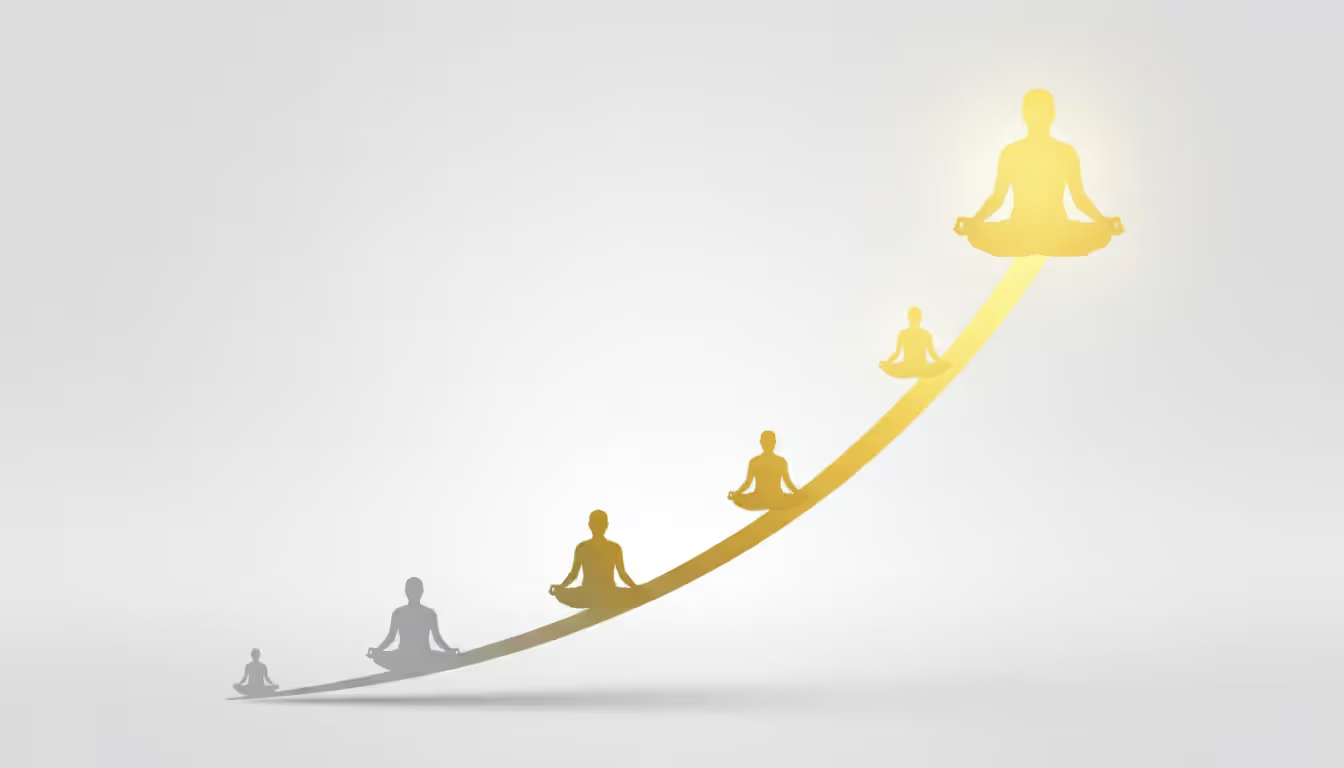
The compound effect matters. Meditation benefits accumulate. Your stress baseline drops, your emotional regulation improves, and your attention strengthens—changes that persist and deepen over time. A workout makes you feel good today; meditation changes who you are next year.
Author: Sophie Ellington;
Source: 5sensesspa.com
Meditation also addresses the root of many stress-related problems: the mind's tendency to amplify threats, ruminate on the past, and catastrophize about the future. By training present-moment awareness, you interrupt these patterns at their source.
Getting Started: What to Expect in Your First 30 Days
Realistic expectations prevent the disappointment that causes people to quit prematurely.
Week 1: Meditation will likely feel awkward and difficult. Your mind will wander constantly—this is normal, not failure. You might feel restless, bored, or doubt whether you're "doing it right." The main benefit this week is simply establishing the habit. Aim for 5-10 minutes daily rather than occasional longer sessions.
Week 2: You'll notice moments of calm, though they'll be brief and unpredictable. You might sleep slightly better or catch yourself pausing before reacting in a frustrating situation. Your mind still wanders extensively. Consistency matters more than perfect execution.
Author: Sophie Ellington;
Source: 5sensesspa.com
Week 3: The practice starts feeling less foreign. You'll have sessions that feel "good" and others that feel chaotic—both are valuable. You might notice reduced anxiety in specific situations or improved ability to focus on tasks. Physical tension in your jaw, shoulders, or chest might release during practice.
Week 4: Benefits become more consistent. You'll likely sleep better, feel less reactive, and notice improved focus. You might handle a stressful situation differently than you would have a month ago. The practice itself becomes easier—you settle into meditation faster and maintain attention for longer stretches.
Common mistakes during this period: expecting constant bliss, judging yourself for mind-wandering, practicing only when stressed (rather than daily), or switching techniques too frequently. Meditation is skill-building, not mood management. Some days feel productive; others don't. Both build the neural pathways that create long-term change.
Comparison of Meditation Benefits: Short-Term vs. Long-Term Practice
Benefit Category
After 1–4 Weeks
After 3–6 Months
After 1+ Year
Stress Response
Slight reduction in reactivity; occasional calm moments
Noticeably lower baseline anxiety; faster recovery from stress
Deep insight into mind-body connection; meta-awareness
Frequently Asked Questions About Why People Meditate
Do I need to meditate every day to see benefits?
Daily practice produces faster and more stable results, but you'll still see benefits from 4-5 sessions per week. Consistency matters more than duration—ten minutes daily beats one hour weekly. The brain changes that meditation produces require repetition. Think of it like strength training: sporadic workouts help, but regular practice transforms your baseline capacity.
How long does it take before meditation actually works?
You'll notice subtle changes within the first week—slightly better sleep, brief moments of calm, or catching yourself before reacting. Measurable brain changes appear after 8-12 weeks of consistent practice. Significant life impact typically emerges around the 3-6 month mark. But "working" depends on your goal. Immediate nervous system calming happens during practice; structural brain changes take months.
Can meditation replace therapy or medication?
For mild to moderate anxiety and stress, meditation can be as effective as medication without side effects. But for clinical depression, severe anxiety disorders, trauma, or other mental health conditions, meditation works best as a complement to professional treatment, not a replacement. Meditation develops skills that enhance therapy outcomes. It can reduce medication needs for some people, but always consult your healthcare provider before changing treatment.
What if I can't stop my thoughts during meditation?
You're not supposed to stop thoughts—that's a common misconception. Meditation trains you to notice thoughts without following them. Your mind will wander hundreds of times in a single session. Each time you notice and return attention to your breath or chosen focus, you're doing meditation correctly. The wandering isn't failure; the noticing and returning is the practice. Even experienced meditators have busy minds.
Is meditation religious or spiritual?
Meditation originated in religious traditions, but modern secular meditation focuses on the psychological and neurological mechanisms without requiring any spiritual beliefs. Mindfulness-Based Stress Reduction (MBSR), Transcendental Meditation (TM), and many apps offer entirely non-religious approaches. You can meditate as a purely practical tool for mental health and performance. Some people find spiritual dimensions; others don't. Both approaches work.
Why do some people quit meditation after starting?
Most people quit because they expect immediate dramatic results or think they're "bad at it" when their mind wanders. Others quit when initial enthusiasm fades and practice feels boring. Some stop because they practice inconsistently and don't build momentum. The solution: start with very short sessions (5 minutes), focus on consistency over intensity, expect gradual rather than dramatic changes, and remember that mind-wandering is normal, not failure.
Meditation matters because it addresses problems that modern life creates but few other tools effectively solve: attention fragmentation, chronic stress, emotional reactivity, and disconnection from present experience.
The reasons to meditate are both practical and profound. You'll sleep better, think more clearly, and react less impulsively. Your relationships improve. Your health markers shift in positive directions. Your brain literally changes structure in ways that support well-being.
What does meditation do that makes it worth your time? It gives you agency over your internal experience. You can't control external circumstances, but you can train how you respond to them. That capacity—developed through consistent practice—compounds into significant life changes.
Starting doesn't require special equipment, expensive classes, or hours of free time. Ten minutes daily, using free apps or simple breath-focused attention, produces measurable results within weeks. The practice adapts to your needs, whether you're managing anxiety, improving performance, or simply seeking more peace in daily life.
The question isn't whether meditation works—the evidence is overwhelming. The question is whether you'll give it the consistent practice required to experience the benefits yourself. Thirty days of genuine effort provides enough data to decide if this tool serves you. Most people who reach that milestone continue, not from discipline, but because the benefits become self-evident.
Meditation has a reputation for being simple: sit down, close your eyes, breathe. Yet anyone who's tried it knows the reality feels nothing like that tidy description. Your legs ache, your mind races through grocery lists and old arguments, and the promised calm seems reserved for people who aren't you
Meditation didn't emerge from a single moment of invention. Archaeological evidence places the earliest practices at roughly 5,000 to 7,000 years ago, with wall art from the Indus Valley showing figures in meditative postures. The practice developed across multiple civilizations independently
Meditation falls into three research-backed categories: focused attention, open monitoring, and self-transcending. Understanding this framework helps you choose from 12 common techniques based on your goals, experience level, and lifestyle rather than getting lost in endless options
Meditation isn't one-size-fits-all. Learn which techniques work best for beginners, how to match methods to your goals, and step-by-step instructions for breath awareness, body scans, mindfulness, and more. Includes comparison table and expert guidance for building a sustainable practice
The content on this website is provided for general informational and educational purposes only. It is intended to explain concepts related to meditation, mindfulness, mental health, and spiritual practices.
All information on this website, including articles, guides, and examples, is presented for general educational purposes. Meditation outcomes may vary depending on individual practices, health conditions, and guidance.
This website does not provide medical, mental health, or spiritual advice, and the information presented should not be used as a substitute for consultation with qualified professionals.
The website and its authors are not responsible for any errors or omissions, or for any outcomes resulting from decisions made based on the information provided on this website.