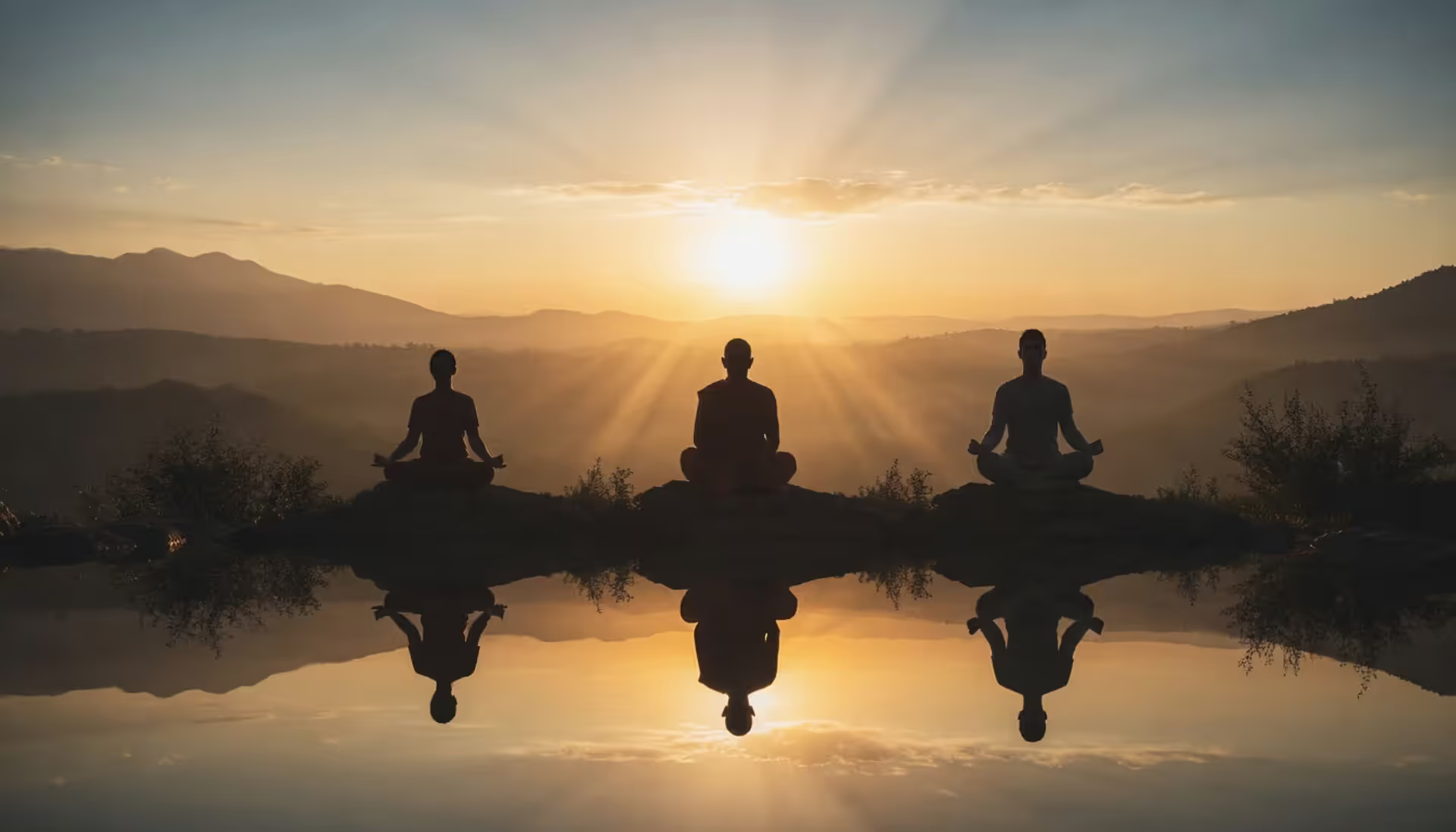
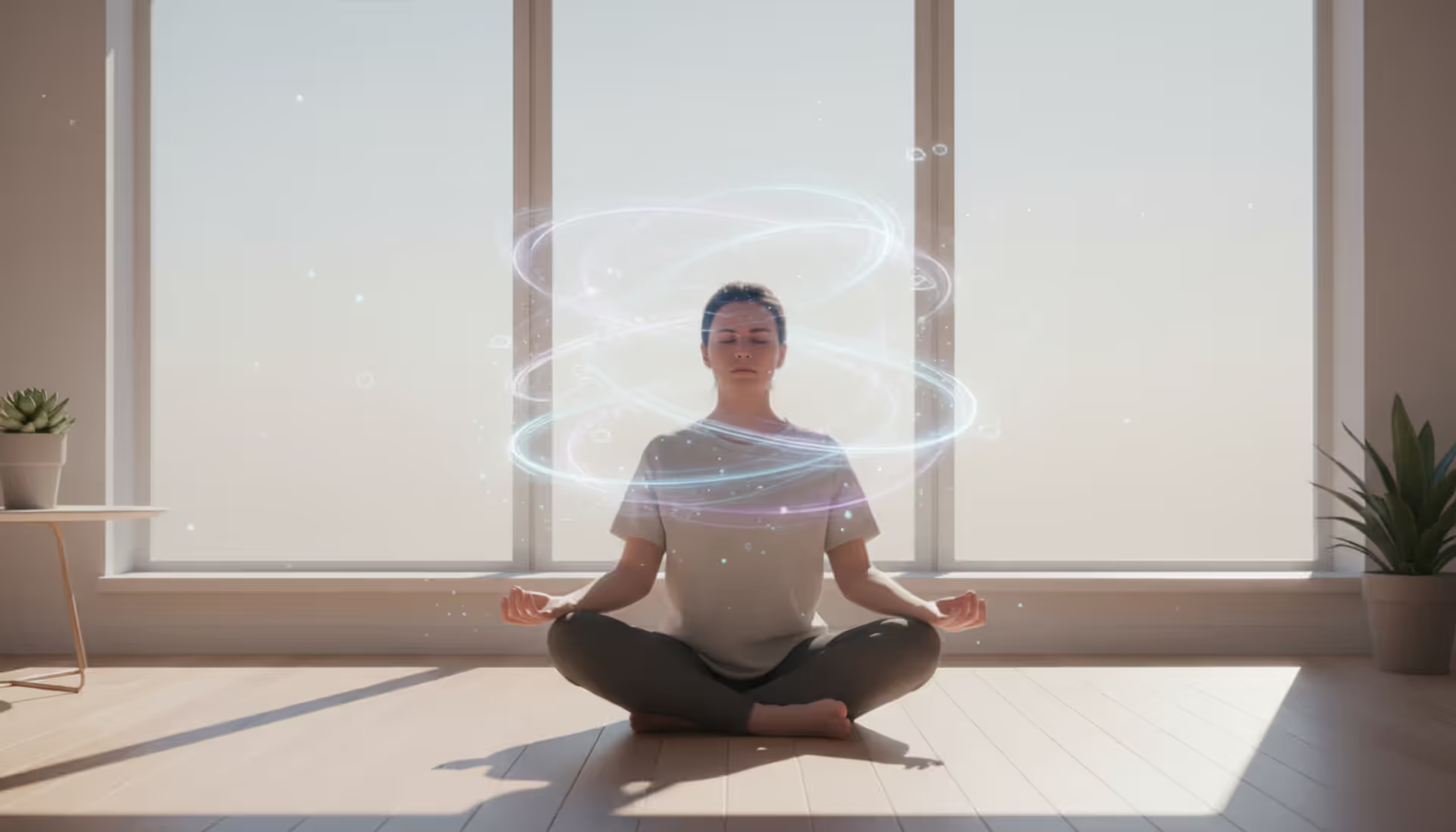
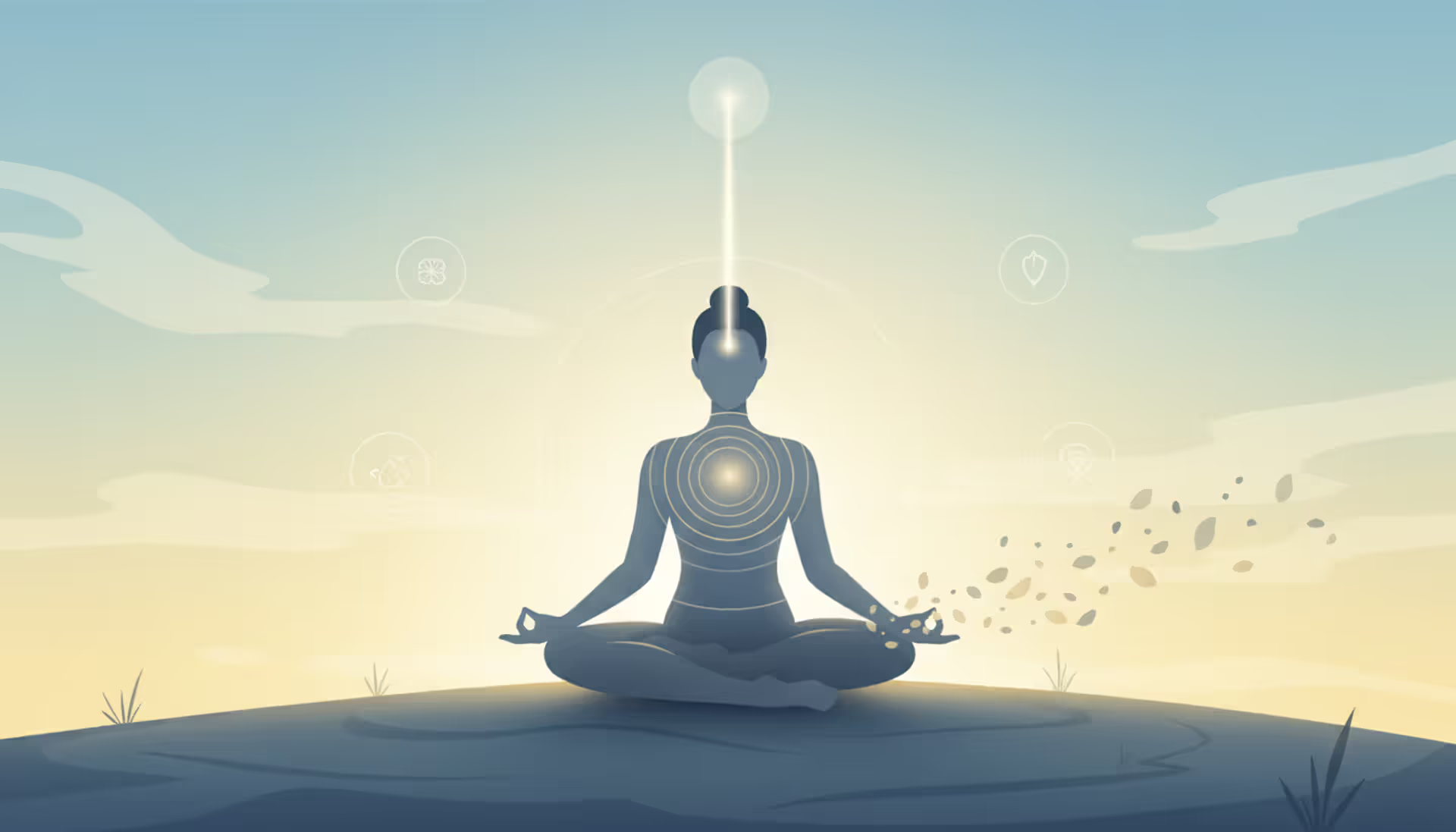
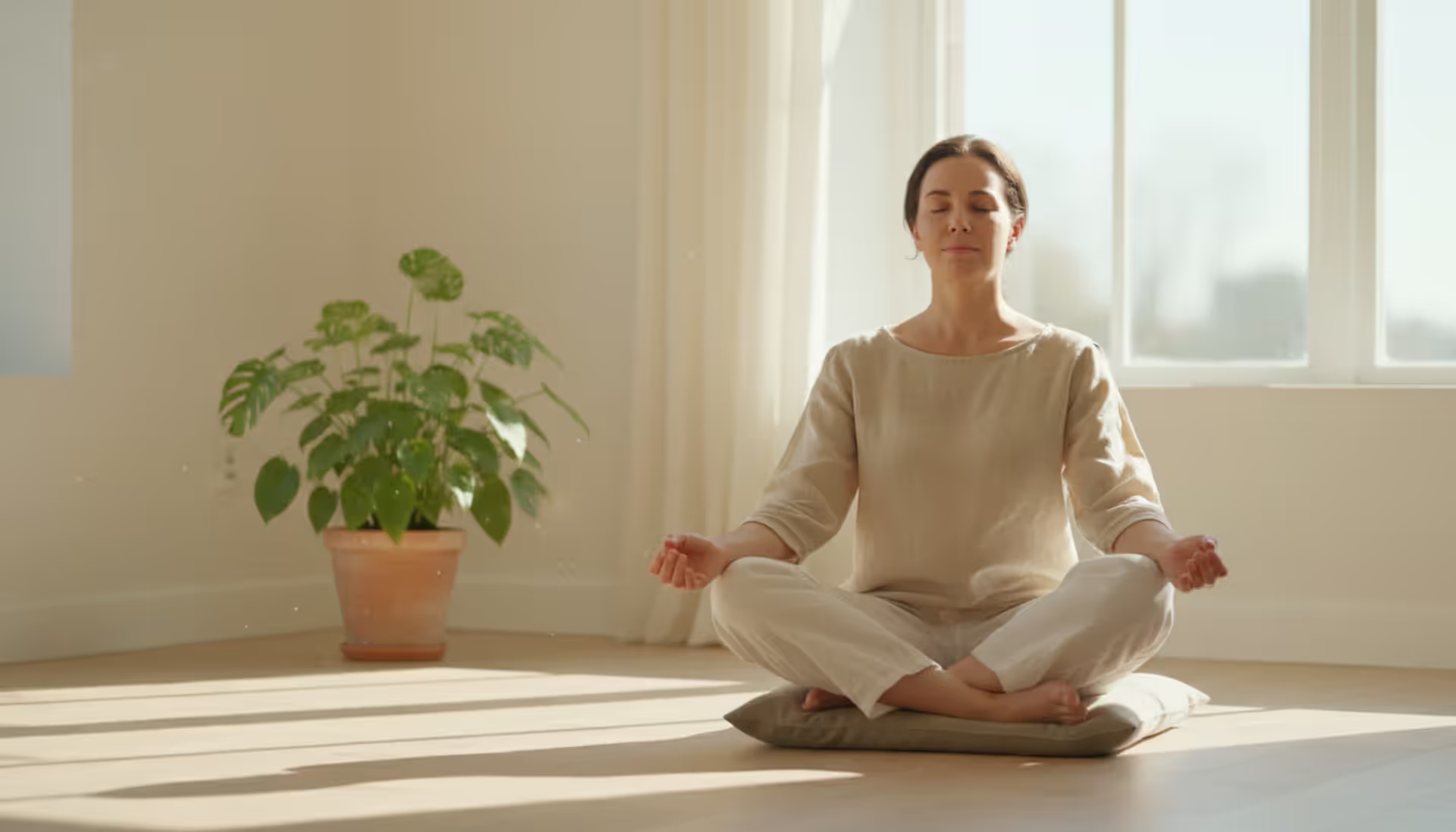
Silhouettes of people meditating in different poses against a warm golden sunrise sky, representing ancient and modern meditation traditions across cultures
Meditation didn't emerge from a single moment of invention. Instead, it developed across millennia in multiple civilizations, each contributing unique techniques and philosophies. The practice we recognize today represents thousands of years of human exploration into consciousness, awareness, and the nature of mind itself.
The Ancient Roots of Meditation Practice
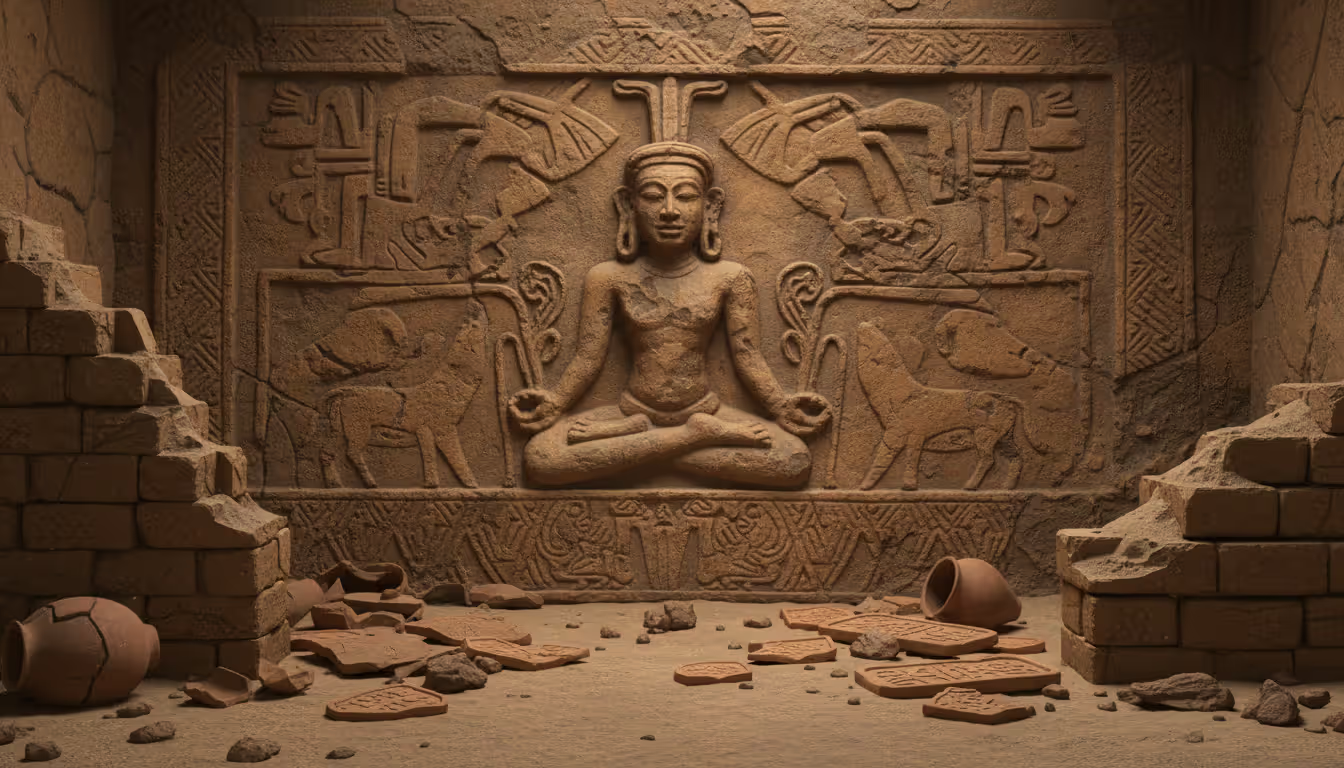
Archaeological evidence places the earliest meditation practices at roughly 5,000 to 7,000 years ago. Wall art discovered in the Indus Valley—dating to approximately 5,000 BCE—depicts figures seated in recognizable meditative postures with half-closed eyes. These images predate written records, suggesting meditation existed before formal religious systems codified it.
When did meditation start? The honest answer is we don't know precisely. What we do know is that contemplative practices appear in humanity's oldest spiritual traditions. The Vedas, ancient Sanskrit texts from India, contain references to meditative techniques that scholars date to at least 1500 BCE, though oral traditions likely carried these practices for centuries before scribes recorded them.
Textual evidence from ancient India provides the clearest early documentation. The Upanishads, philosophical texts composed between 800 and 400 BCE, describe detailed meditation methods including breath observation, mantra repetition, and focused concentration. These weren't casual mentions—the texts offered systematic instructions, suggesting centuries of refinement before anyone wrote them down.
How old is meditation? Conservative estimates place organized meditation practice at 3,000 years minimum, with strong evidence pushing that timeline to 5,000 years or more. Some researchers argue that contemplative practices may have emerged alongside early human consciousness itself, making meditation potentially as old as symbolic thought.
The history of meditation practice reveals a pattern: humans across geography and time independently discovered that sustained attention and inner observation produced profound psychological effects. This wasn't religious dogma imposed from above but experiential knowledge passed through generations of practitioners.
Meditation in Ancient India and Early Hindu Traditions
Meditation in ancient India developed within the Vedic tradition, where rishis (sages) explored consciousness through direct experience. The Rigveda, composed around 1500 BCE, mentions practices that resemble meditation, though it uses different terminology. The word "dhyana"—meaning meditative absorption—appears later in the Upanishads.
The Upanishads mark a turning point in meditation ancient history. These texts shift focus from external ritual to internal experience. The Chandogya Upanishad describes a practice of withdrawing the senses inward, while the Brihadaranyaka Upanishad explores the nature of self-awareness through contemplation. Sages taught that meditation revealed the atman (true self) and its relationship to Brahman (universal consciousness).
Yoga emerged as a structured system around 400 CE when Patanjali compiled the Yoga Sutras. This text systematized meditation into an eight-limbed path, with dhyana (meditation) as the seventh limb. Patanjali didn't invent these practices—he organized existing knowledge into a coherent framework. His work describes meditation as sustained concentration that eventually dissolves the boundary between observer and observed.
The origin of meditation in India wasn't monolithic. Different schools developed distinct approaches: Vedanta emphasized self-inquiry, Tantra used visualization and energy work, and Bhakti traditions practiced devotional meditation. Each method addressed different temperaments and goals, creating a rich ecosystem of contemplative techniques.
One crucial development was the integration of meditation with physical practices. Unlike purely mental exercises, Indian traditions recognized that body and mind influenced each other. Asana (physical postures) and pranayama (breath control) prepared practitioners for deeper meditation, a holistic approach that distinguished Indian methods from some other traditions.
Author: Lena Ashcroft;
Source: 5sensesspa.com
Buddhist Meditation History and Its Spread Across Asia
Siddhartha Gautama—the Buddha—didn't invent meditation. He learned established techniques from Hindu teachers before developing his own approach. What made Buddhist meditation history distinctive was its systematic focus on insight and the precise mapping of mental states.
The Buddha taught two primary meditation categories: samatha (calm-abiding) and vipassana (insight). Samatha practices developed concentration through focused attention on breath, visual objects, or mental concepts. Vipassana used that concentrated mind to investigate the nature of experience itself—observing impermanence, suffering, and non-self directly.
Buddhist meditation spread from India to Sri Lanka around 250 BCE, where monks preserved the Theravada tradition. The Visuddhimagga, a 5th-century CE manual by Buddhaghosa, provided exhaustive meditation instructions that practitioners still follow today. This text categorized forty meditation objects and described jhanas (absorption states) with clinical precision.
As Buddhism moved into Tibet during the 7th century CE, it absorbed local Bon practices and developed unique methods. Tibetan Buddhism emphasized visualization, mantra recitation, and practices designed to work directly with subtle energy. The tradition produced detailed maps of consciousness and meditation techniques tailored to different personality types.
China received Buddhism around the 1st century CE. Chinese practitioners blended Buddhist meditation with existing Taoist contemplative practices, creating Chan Buddhism. This synthesis emphasized direct experience over textual study, using paradoxical koans and sudden insight methods. When Chan reached Japan in the 12th century, it became Zen, which stripped meditation to its essentials: just sitting (zazen) without goal or expectation.
Each culture adapted meditation to its philosophical framework. Theravada preserved original techniques with minimal modification. Mahayana traditions in China and Japan emphasized emptiness and Buddha-nature. Tibetan Vajrayana developed elaborate visualization practices. Yet all maintained the core insight: sustained attention transforms consciousness.
Meditation Across Cultures Beyond India
Meditation didn't develop exclusively in India. Contemplative practices emerged independently across civilizations, each discovering similar principles through different cultural lenses.
Meditation in Ancient China and Taoism
Taoist meditation predates Buddhism's arrival in China. The Zhuangzi, written around 300 BCE, describes practices of "sitting and forgetting" and "fasting of the mind"—methods for quieting mental activity and aligning with the Tao. Taoist practitioners developed qigong, combining movement, breath, and visualization to cultivate qi (life energy).
Unlike Buddhist meditation's focus on insight, Taoist practices emphasized harmony with natural rhythms. Inner alchemy techniques visualized energy circulation through the body's meridians. These weren't purely mental exercises—practitioners reported tangible physical sensations and health benefits. The tradition recognized meditation as both spiritual practice and practical health maintenance.
Author: Lena Ashcroft;
Source: 5sensesspa.com
Contemplative Practices in Early Christianity
Christian contemplative prayer developed in the Egyptian desert during the 3rd and 4th centuries CE. Desert Fathers and Mothers practiced hesychasm—inner stillness achieved through repetitive prayer and breath awareness. The Jesus Prayer, repeating "Lord Jesus Christ, have mercy on me," functioned similarly to mantra meditation in Eastern traditions.
The Cloud of Unknowing, a 14th-century English text, described centering prayer: releasing thoughts and resting in God's presence beyond concepts. Teresa of Avila and John of the Cross mapped contemplative states with precision comparable to Buddhist jhana descriptions. Christian meditation emphasized union with the divine rather than self-realization, but the techniques—sustained attention, thought release, inner silence—paralleled Eastern methods.
Sufi mystics in Islam developed dhikr (remembrance) practices involving rhythmic chanting, breath control, and whirling movements. The Mevlevi Order's spinning meditation induced altered states through physical repetition. Sufis described stages of spiritual development remarkably similar to Buddhist path descriptions, suggesting universal patterns in contemplative experience.
Indigenous cultures worldwide developed meditation-like practices. Australian Aboriginal walkabout combined solitude, fasting, and focused awareness. Native American vision quests used similar elements. Shamanic traditions employed drumming, chanting, and trance states to access non-ordinary consciousness. While not always called "meditation," these practices shared core elements: sustained attention, altered awareness, and insight into reality's nature.
Who Invented Meditation and Can We Name a Single Founder
Nobody invented meditation. The question itself misunderstands how contemplative practices develop. Meditation emerged from countless individuals across cultures discovering that certain mental activities produced specific effects. These discoveries accumulated into traditions, but no single person designed meditation from scratch.
The origin of meditation resembles language development more than technological invention. Languages evolve through collective use over generations; no individual invents grammar. Similarly, meditation techniques evolved through experiential refinement. A practitioner would discover that watching the breath calmed the mind, teach others, who would refine the technique and pass it forward.
Certain historical figures systematized existing practices. Patanjali organized yoga philosophy. The Buddha mapped meditation states with unprecedented precision. Bodhidharma brought Chan Buddhism to China. These teachers were curators and innovators, not inventors. They inherited established practices, experimented, and contributed new understanding.
The myth of a single meditation founder reflects our desire for simple origin stories. Reality is messier: meditation developed simultaneously in multiple locations, cross-pollinated through trade routes, adapted to local philosophies, and continuously evolved. The practice you learn today contains elements from dozens of cultures and thousands of practitioners.
Some traditions claim divine origin—meditation revealed by gods or discovered by legendary sages. These stories serve spiritual purposes but don't represent historical fact. The archaeological and textual record shows gradual development, not sudden revelation. Meditation emerged from human curiosity about consciousness, tested through millennia of practice.
The Buddha did not invent meditation any more than Einstein invented mathematics. What he did was to use it in a particular way, as a tool for a particular kind of understanding
— Dr. Richard Gombrich
How Meditation Evolved Into Modern Practice
Meditation remained largely confined to religious contexts until the 19th century. Western colonialism in Asia created the first significant cross-cultural exchange. British scholars translated Sanskrit and Pali texts, introducing educated Westerners to meditation philosophy. The Theosophical Society, founded in 1875, promoted Eastern spirituality, though often with questionable accuracy.
The 1893 World Parliament of Religions in Chicago marked a turning point. Swami Vivekananda presented yoga and meditation to American audiences, emphasizing universal spiritual principles over sectarian doctrine. His lectures sparked interest among intellectuals and spiritual seekers, planting seeds for later developments.
Serious Western meditation practice began in the mid-20th century. Zen teachers like D.T. Suzuki and later Shunryu Suzuki established practice centers in the United States during the 1950s and 1960s. Theravada teachers including Mahasi Sayadaw and S.N. Goenka trained Western students in vipassana techniques. Tibetan lamas fled Chinese occupation in 1959, bringing Vajrayana practices to Europe and America.
The 1960s counterculture embraced meditation as consciousness exploration. The Beatles' association with Maharishi Mahesh Yogi brought Transcendental Meditation into mainstream awareness. While some practitioners approached meditation superficially, others committed to serious practice, creating the first generation of Western meditation teachers.
Author: Lena Ashcroft;
Source: 5sensesspa.com
Scientific research transformed meditation's cultural position. In 1967, Herbert Benson studied Transcendental Meditation practitioners, documenting physiological changes he termed "the relaxation response." This research legitimized meditation for secular audiences by demonstrating measurable health benefits.
Jon Kabat-Zinn's development of Mindfulness-Based Stress Reduction (MBSR) in 1979 proved pivotal. By extracting meditation techniques from religious context and presenting them as clinical interventions, Kabat-Zinn made meditation acceptable in medical settings. Hospitals, corporations, and schools adopted mindfulness programs throughout the 1990s and 2000s.
Neuroimaging technology accelerated research after 2000. Studies showed meditation altered brain structure, increased cortical thickness, and changed neural activation patterns. By 2026, thousands of peer-reviewed studies document meditation's effects on attention, emotion regulation, stress reduction, and cognitive function. This scientific validation has driven widespread adoption.
The mindfulness movement of the 2010s and 2020s brought meditation into mainstream culture. Smartphone apps like Headspace and Calm introduced millions to basic techniques. Corporations including Google, Apple, and Goldman Sachs offered employee meditation programs. Public schools integrated mindfulness into curricula. What was once exotic became ordinary.
This popularization created trade-offs. Meditation became more accessible but sometimes lost depth. Ten-minute app sessions differ substantially from intensive retreat practice. Secularization made meditation palatable to broader audiences but sometimes stripped away philosophical frameworks that gave practices context and meaning.
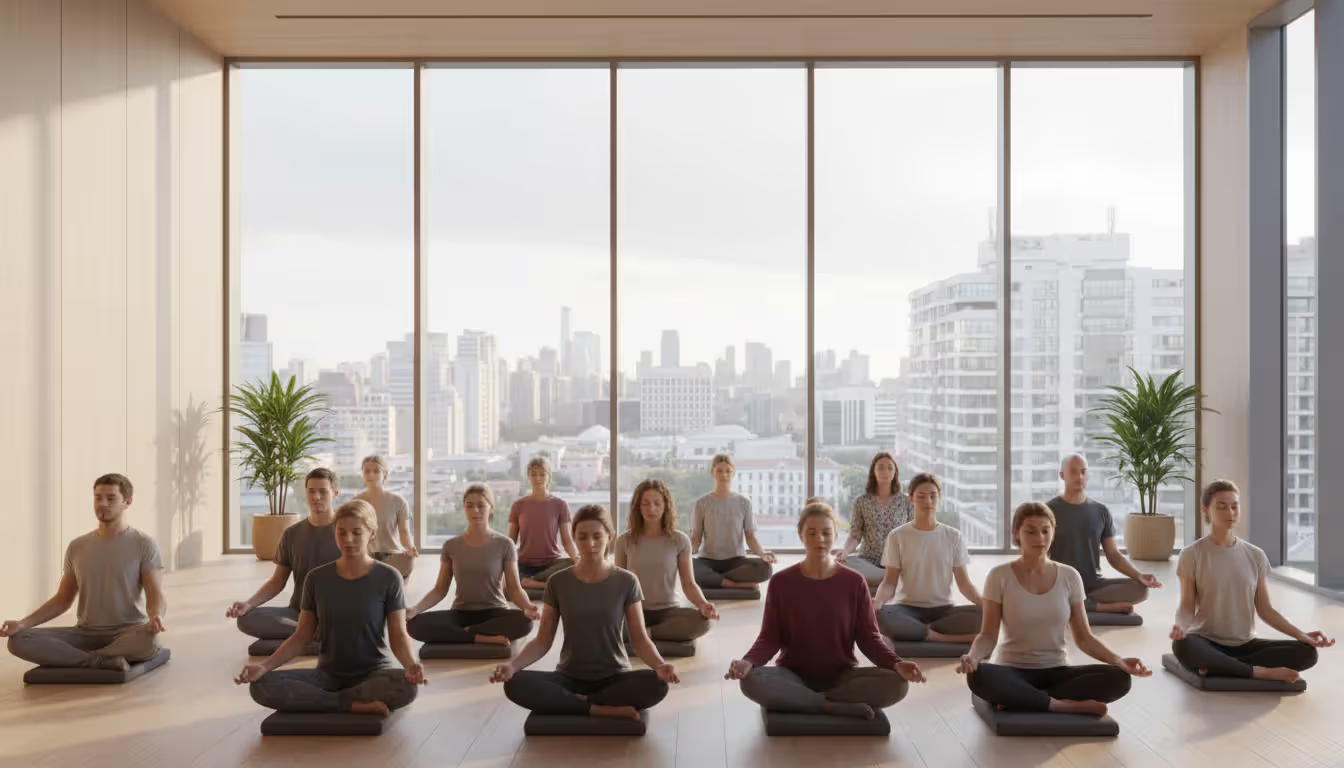
Contemporary meditation exists on a spectrum. Some practitioners maintain traditional religious approaches, studying with lineage teachers and following established paths. Others practice purely secular meditation for stress management or performance enhancement. Most fall somewhere between, drawing from multiple traditions while adapting practices to modern life.
Culture/Region
Time Period
Primary Practice Type
Key Texts/Sources
Distinctive Features
Hindu (India)
1500 BCE–present
Dhyana, mantra, self-inquiry
Vedas, Upanishads, Yoga Sutras
Integration with yoga; focus on atman/Brahman; diverse schools
Buddhist (Asia-wide)
500 BCE–present
Vipassana, samatha, zazen
Pali Canon, Visuddhimagga, Platform Sutra
Systematic insight practices; detailed mental state mapping; non-theistic
Taoist (China)
300 BCE–present
Zuowang, inner alchemy, qigong
Zhuangzi, Daodejing, Secret of the Golden Flower
Energy cultivation; harmony with nature; movement integration
Christian (Mediterranean/Europe)
300 CE–present
Centering prayer, hesychasm, lectio divina
Philokalia, Cloud of Unknowing, Teresa of Avila's writings
Theistic focus; union with God; contemplative prayer
Sufi (Middle East/Central Asia)
800 CE–present
Dhikr, muraqaba, whirling
Rumi's poetry, Al-Ghazali's works, Sufi manuals
Rhythmic movement; devotional love; ecstatic states
Indigenous (Global)
Prehistoric–present
Vision quest, shamanic journey, walkabout
Oral traditions, ceremonial practices
Nature connection; community ritual; altered states for healing
Frequently Asked Questions About Meditation's Origins
Is meditation really 5,000 years old?
Archaeological evidence supports meditation practices dating back at least 5,000 years. Wall art from the Indus Valley civilization (circa 5,000 BCE) shows figures in meditative postures. Written records from the Vedas confirm organized practices by 1500 BCE. However, informal contemplative practices likely existed much earlier—humans have probably explored consciousness for as long as we've had self-awareness. The 5,000-year figure represents documented evidence, not the absolute beginning.
Did meditation start in India or somewhere else?
India provides the earliest clear documentation and most developed early systems, but meditation-like practices emerged independently across cultures. Taoist meditation in China, shamanic practices in indigenous cultures, and contemplative traditions in various civilizations developed without Indian influence. India's contribution was systematizing meditation into detailed philosophical frameworks and preserving extensive written records. The practice itself appears to be a universal human discovery.
What is the oldest form of meditation still practiced today?
Vipassana meditation, as taught in the Theravada Buddhist tradition, claims direct lineage to the Buddha's original instructions from 2,500 years ago. Hindu practices from the Upanishads, including self-inquiry and mantra meditation, date back 2,500-3,000 years and continue in traditional forms. Taoist practices like zuowang (sitting and forgetting) have been practiced for over 2,000 years. While all traditions have evolved, these maintain core elements from their ancient origins.
Did the Buddha invent meditation?
No. The Buddha learned meditation from Hindu teachers before his enlightenment. What he contributed was a unique application: using meditation specifically to investigate suffering and realize non-self. He systematized practices into a clear path and mapped meditation states with unprecedented precision. The Buddha was an innovator who refined existing techniques for specific purposes, not an inventor creating something from nothing.
When did meditation come to the United States?
Transcendentalists like Emerson and Thoreau encountered meditation philosophy in the 1840s through translated texts, but didn't practice systematically. Asian immigrants brought meditation traditions in the late 1800s, though these remained within ethnic communities. Serious Western practice began in the 1950s-1960s when Asian teachers like Shunryu Suzuki and Mahasi Sayadaw established centers and trained American students. The practice gained mainstream traction in the 1970s and exploded in popularity during the 2000s-2010s mindfulness movement.
Is meditation tied to religion or can it be secular?
Both. Meditation developed within religious contexts—Hinduism, Buddhism, Taoism, Christianity, Islam—and retains deep connections to those traditions. However, the core techniques (focused attention, open awareness, breath observation) are mental training methods that work regardless of belief system. Since the 1970s, secular meditation has emerged, particularly through mindfulness-based programs in medical and educational settings. Some practitioners view meditation as purely psychological training; others maintain traditional spiritual frameworks. The technique itself is neutral; the context and intention determine whether practice is religious or secular.
Meditation's journey from ancient spiritual practice to contemporary wellness tool spans thousands of years and crosses every continent. No single culture owns meditation, and no individual invented it. Instead, the practice represents humanity's collective exploration of consciousness—a testament to our enduring curiosity about the mind's nature.
The earliest practitioners in the Indus Valley, Vedic sages in ancient India, the Buddha and his followers, Taoist hermits in Chinese mountains, Christian desert mystics, Sufi poets, and indigenous shamans all discovered similar truths through direct experience. Sustained attention changes consciousness. Inner observation reveals patterns. Mental training produces tangible results.
Modern meditation inherits this rich legacy while adapting to contemporary needs. Scientific research validates what ancient practitioners knew experientially. Secular applications make techniques accessible to people outside religious traditions. Technology spreads practices that once required years of searching to find.
Understanding where meditation came from enriches practice. When you sit to meditate, you participate in a lineage extending back millennia. The breath you observe, the thoughts you notice, the awareness you cultivate—countless practitioners before you explored these same territories. Their accumulated wisdom, preserved through texts and teacher-student transmission, informs the instructions you follow today.
Meditation continues evolving. New research reveals mechanisms. Teachers adapt traditional methods for modern contexts. Practitioners discover personal variations. The practice that reaches the next generation will differ from what we know now, just as our meditation differs from what the Buddha taught or Vedic rishis practiced. Yet the core will remain: humans exploring consciousness, one breath at a time.
Meditation produces measurable changes in brain structure, nervous system function, and emotional regulation. Learn what meditation actually does, common reasons people start practicing, and science-backed benefits for mental and physical health that explain why millions now meditate regularly
Meditation has a reputation for being simple: sit down, close your eyes, breathe. Yet anyone who's tried it knows the reality feels nothing like that tidy description. Your legs ache, your mind races through grocery lists and old arguments, and the promised calm seems reserved for people who aren't you
Meditation falls into three research-backed categories: focused attention, open monitoring, and self-transcending. Understanding this framework helps you choose from 12 common techniques based on your goals, experience level, and lifestyle rather than getting lost in endless options
Meditation isn't one-size-fits-all. Learn which techniques work best for beginners, how to match methods to your goals, and step-by-step instructions for breath awareness, body scans, mindfulness, and more. Includes comparison table and expert guidance for building a sustainable practice
The content on this website is provided for general informational and educational purposes only. It is intended to explain concepts related to meditation, mindfulness, mental health, and spiritual practices.
All information on this website, including articles, guides, and examples, is presented for general educational purposes. Meditation outcomes may vary depending on individual practices, health conditions, and guidance.
This website does not provide medical, mental health, or spiritual advice, and the information presented should not be used as a substitute for consultation with qualified professionals.
The website and its authors are not responsible for any errors or omissions, or for any outcomes resulting from decisions made based on the information provided on this website.