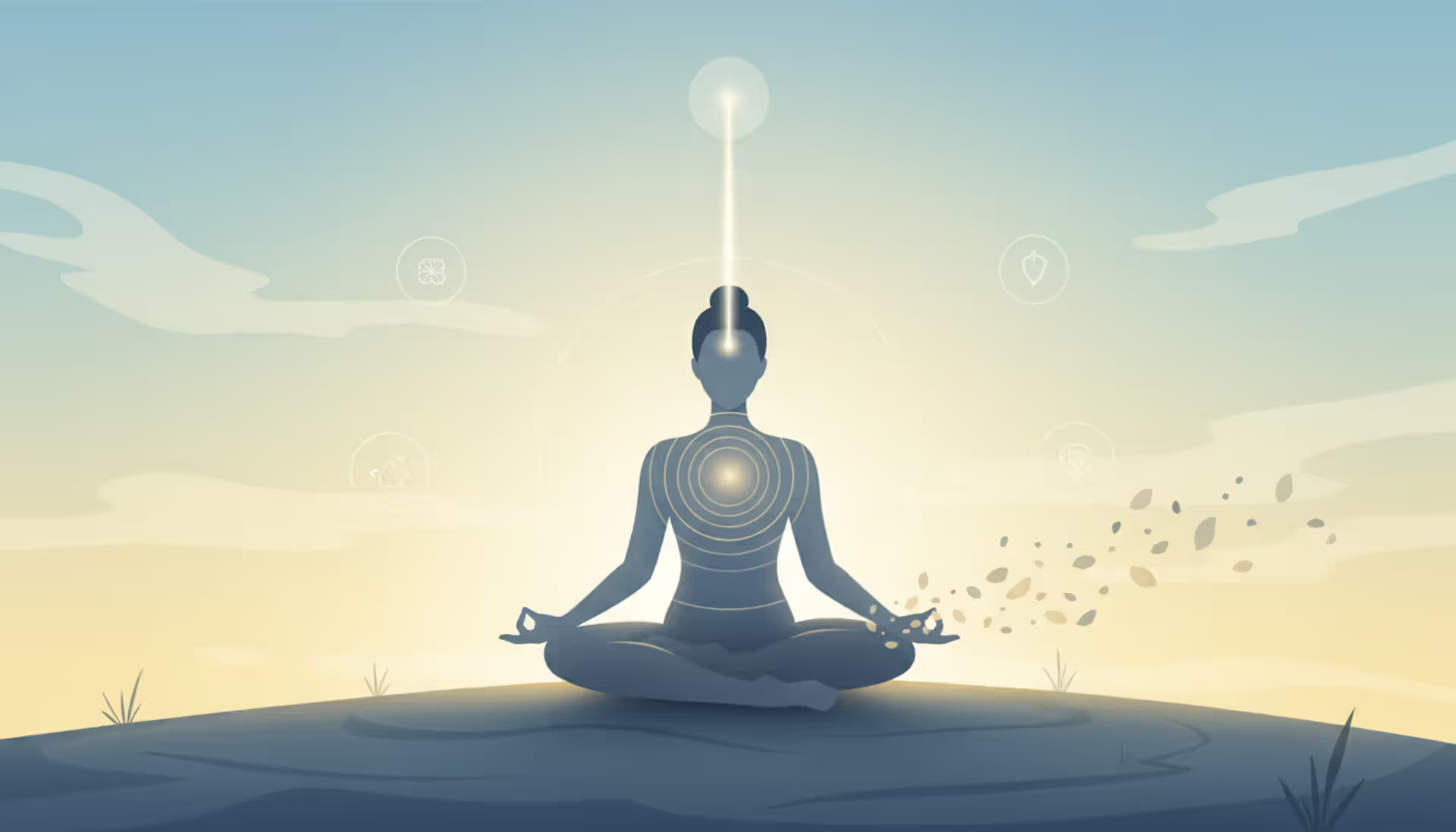
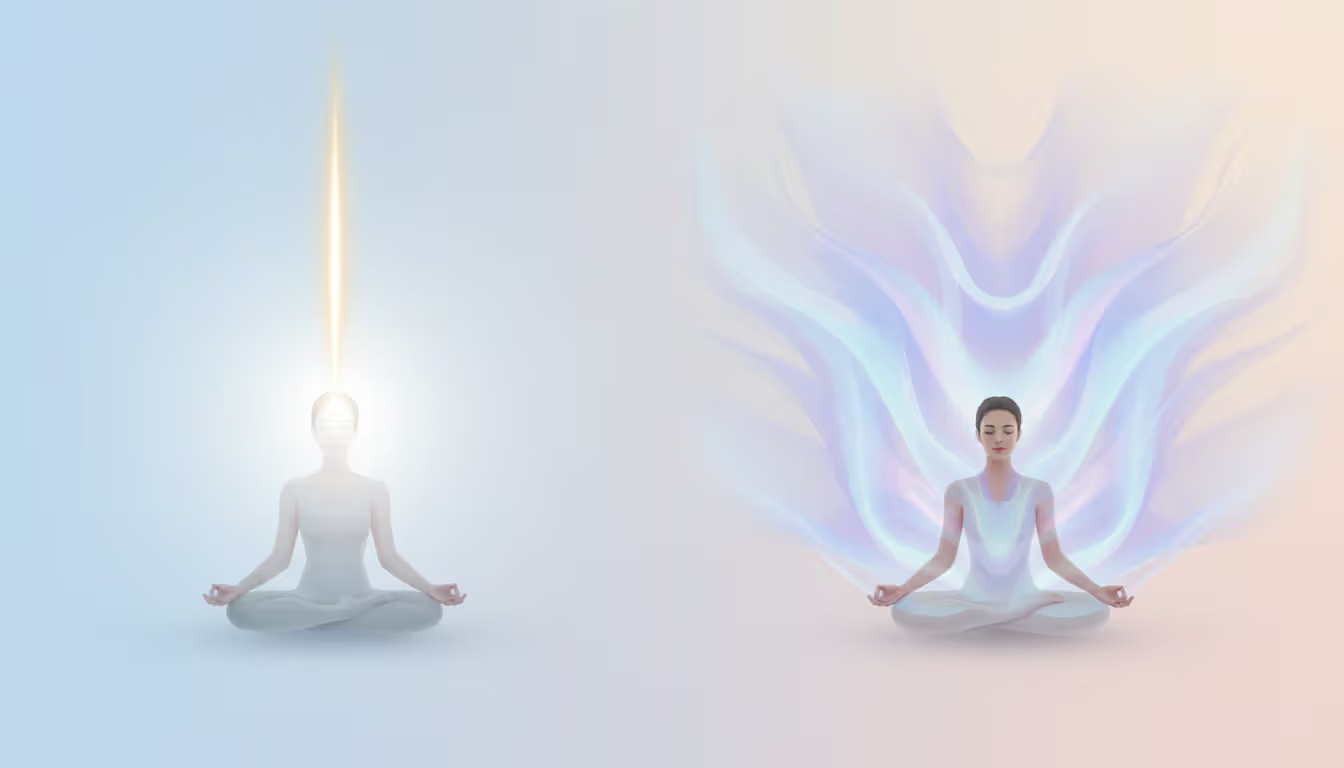
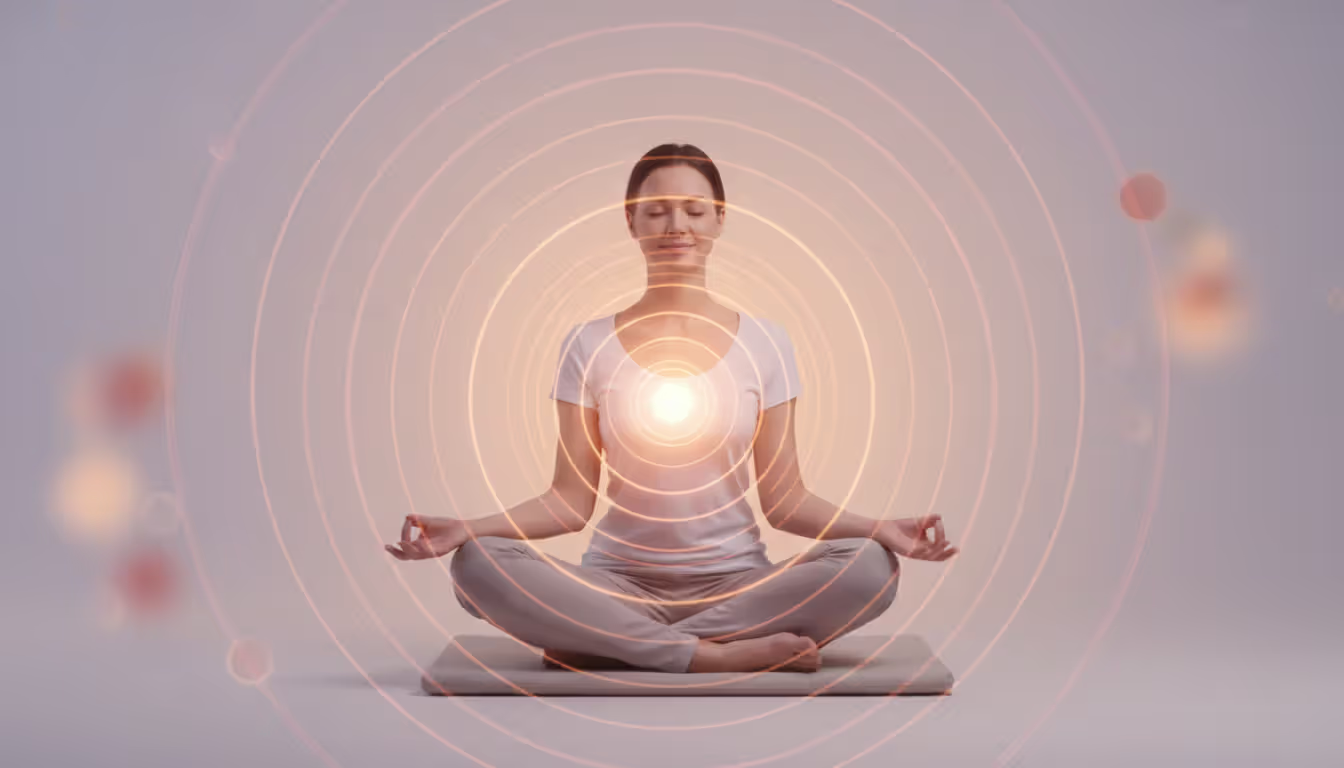
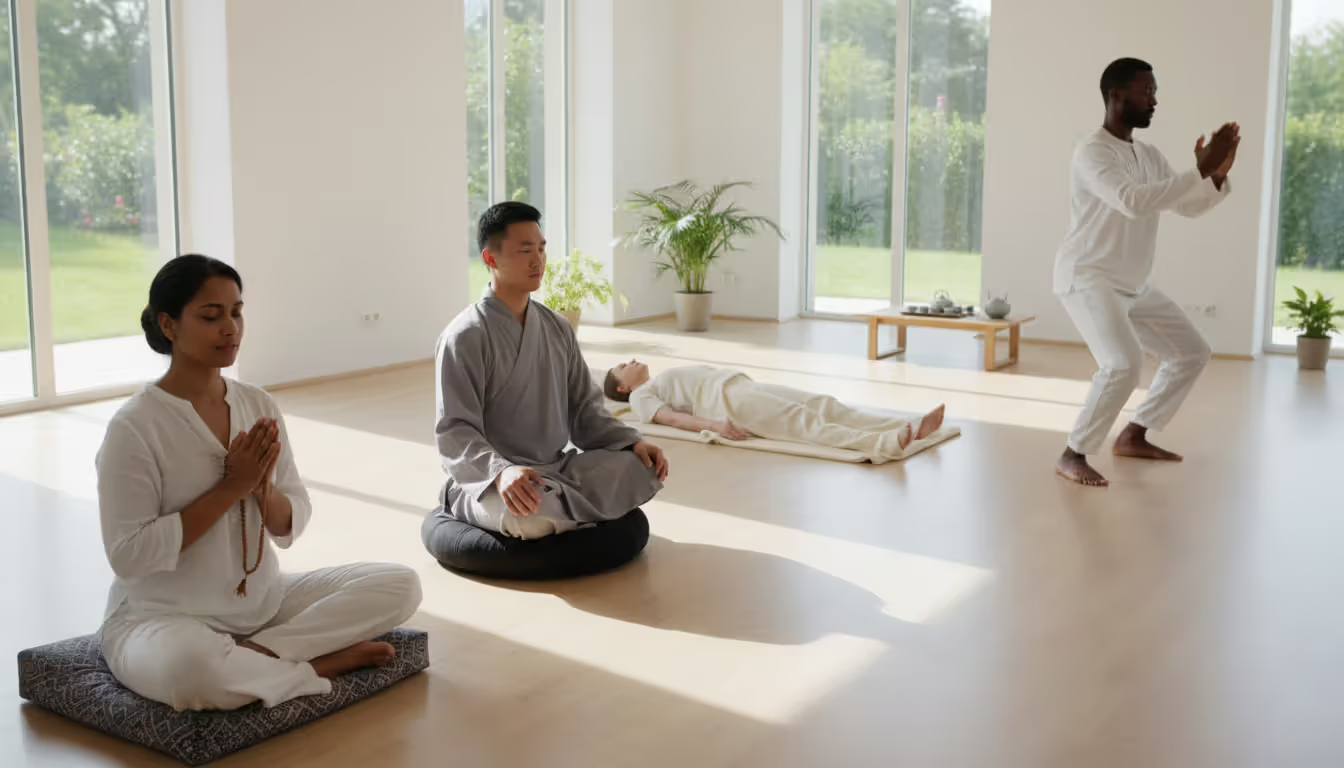
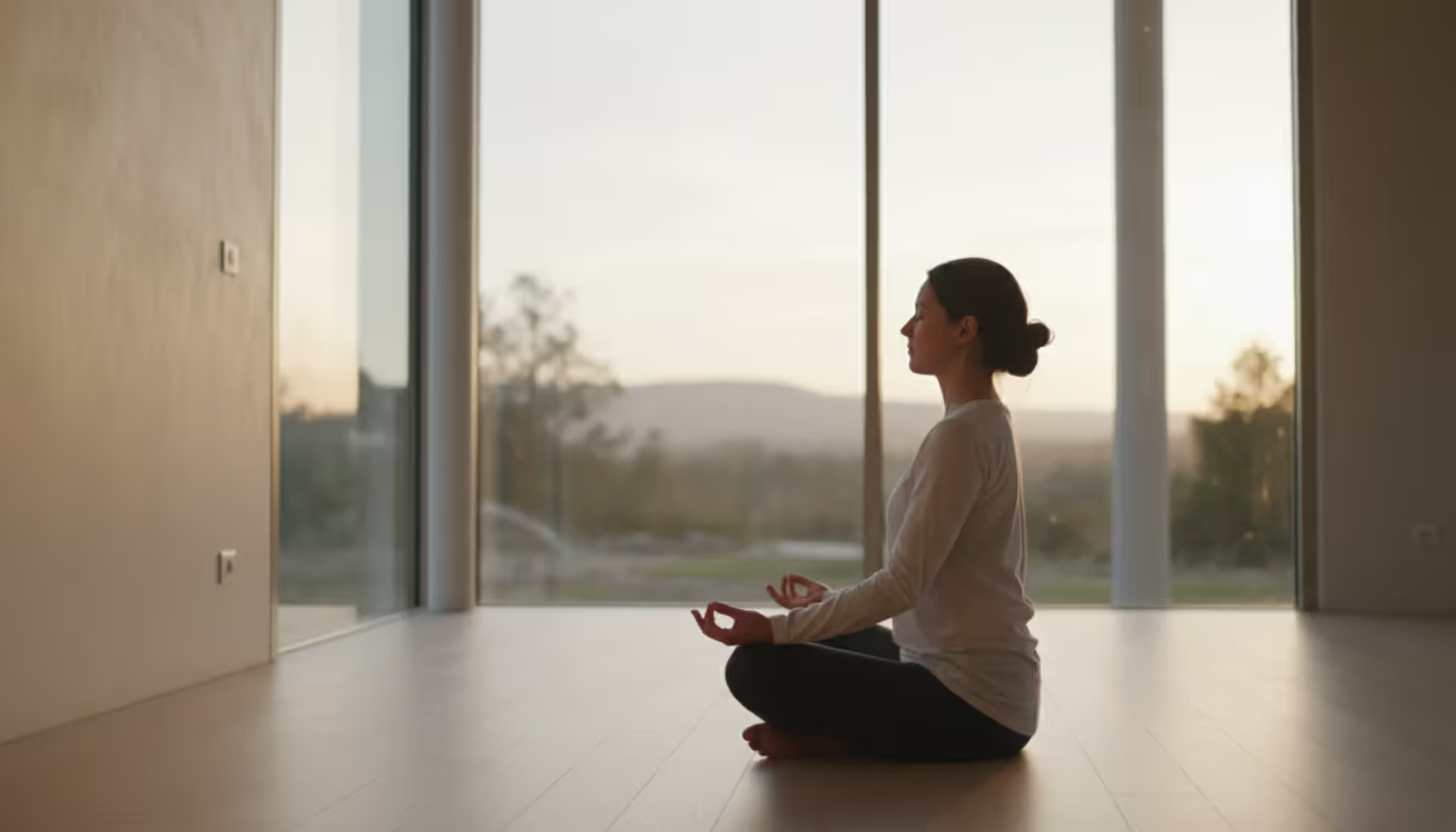
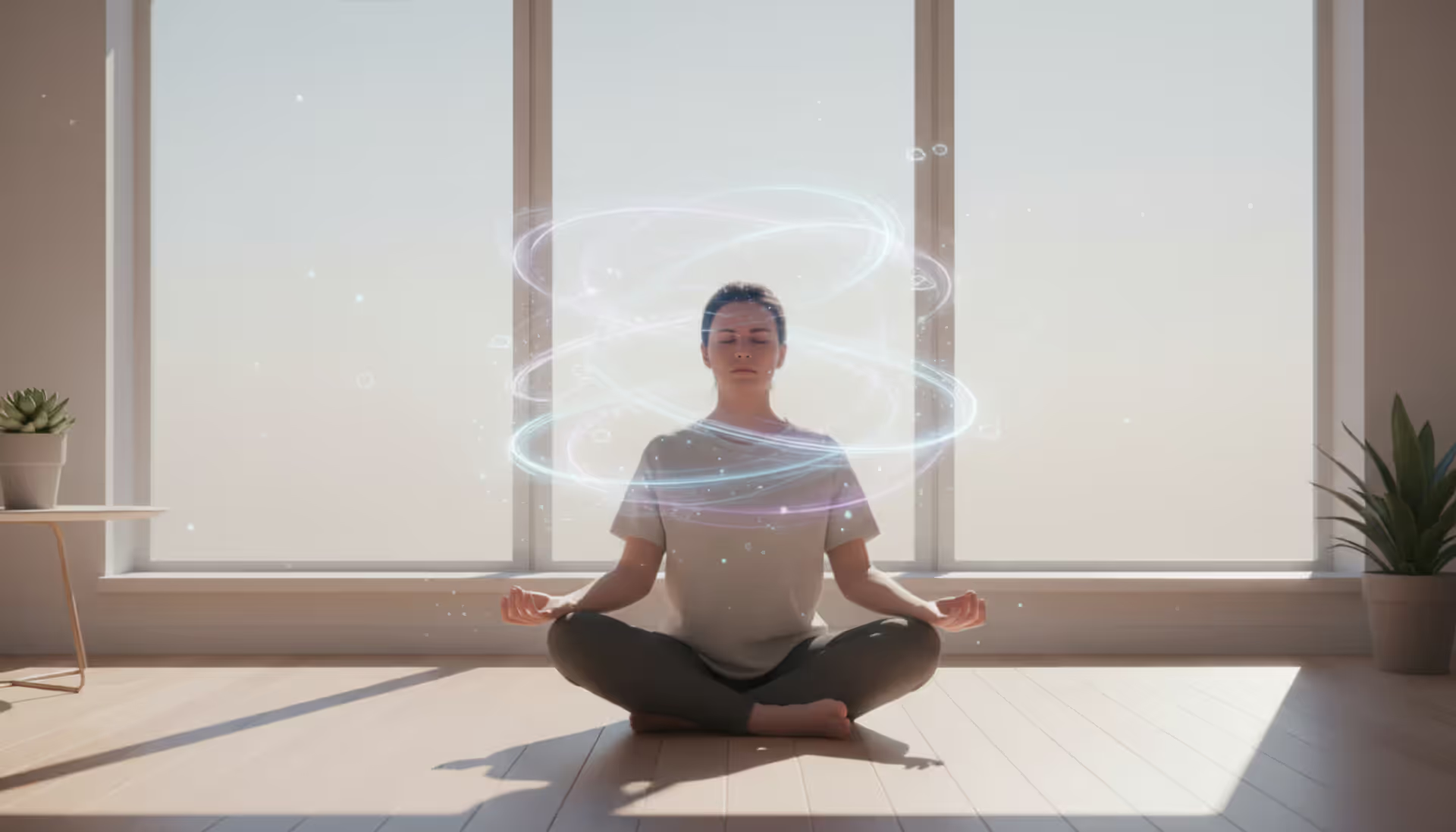
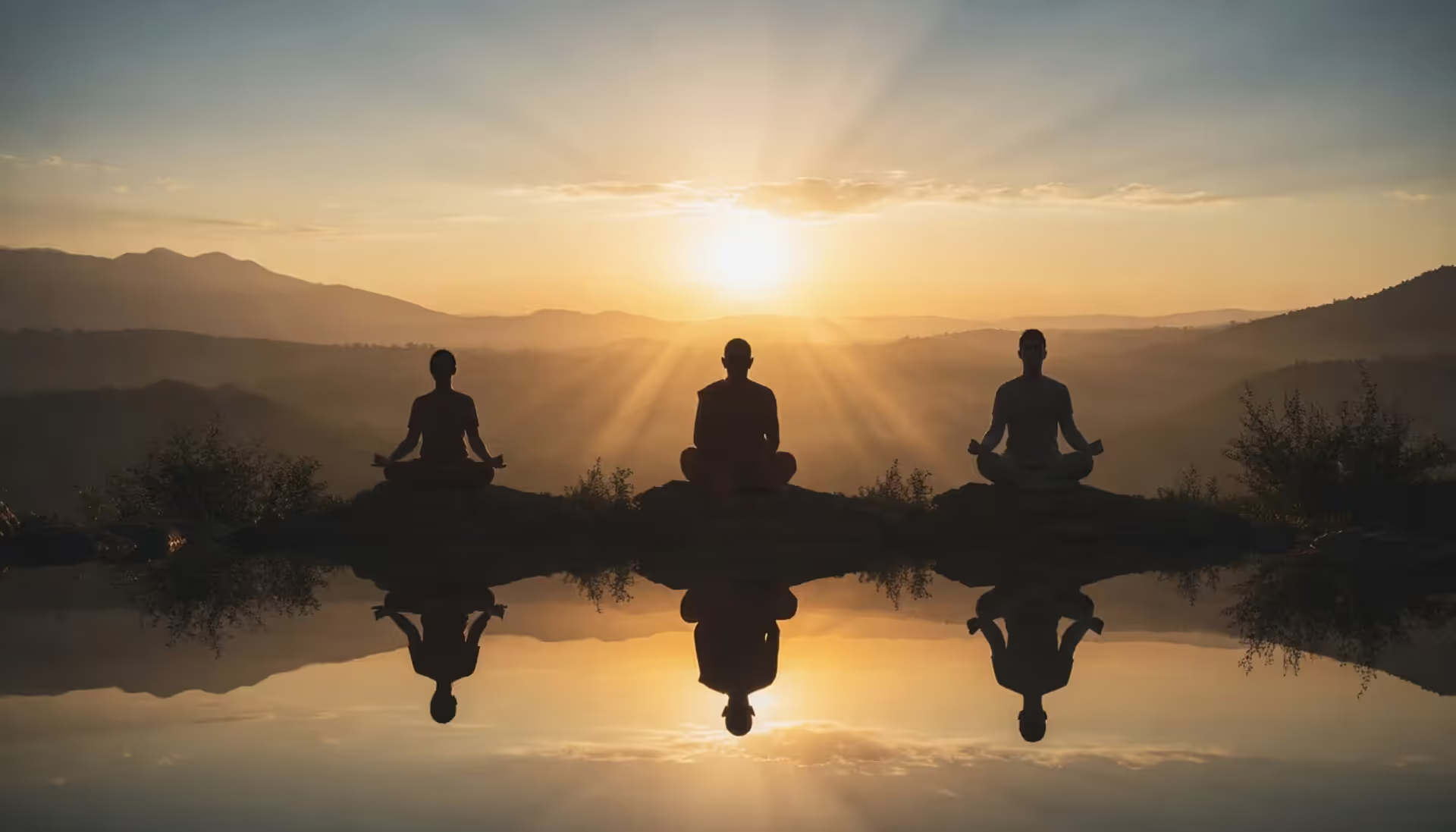
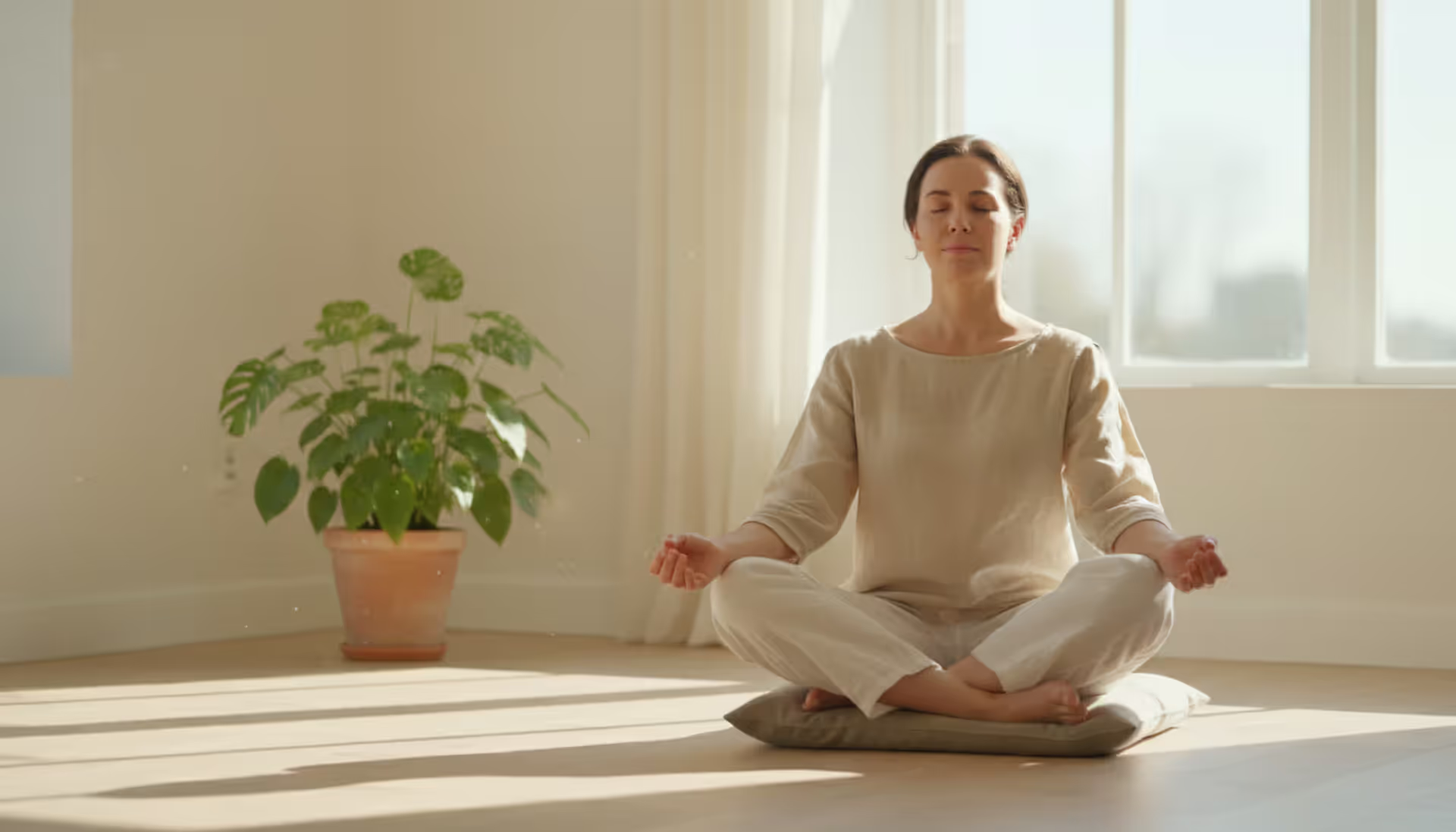
A person meditating outdoors at sunrise with soft golden-blue sky, subtle visual symbols of focus, openness, and transcendence around them, minimalist atmospheric style
Meditation isn't a single practice—it's an umbrella term for dozens of techniques that train your mind in fundamentally different ways. While you'll find countless meditation styles marketed online, research shows they fall into three distinct categories based on how they direct your attention. Understanding this framework helps you cut through the noise and find a method that matches your brain, schedule, and goals.
The 3 Main Categories of Meditation Explained
Neuroscientists and meditation researchers have identified three major meditation categories based on how practitioners use attention during practice. Each category produces different brain activity patterns and serves different purposes.
Focused Attention Meditation trains you to concentrate on a single object—your breath, a mantra, a candle flame, or a body sensation. When your mind wanders (and it will), you gently redirect it back to the chosen anchor. This category strengthens concentration circuits in your prefrontal cortex, similar to how weightlifting builds muscle. Beginners often start here because the instructions are straightforward: pick something, focus on it, return when distracted.
Open Monitoring Meditation takes the opposite approach. Instead of narrowing your focus, you expand awareness to observe whatever arises—thoughts, emotions, sounds, physical sensations—without getting caught up in any of it. You're not trying to concentrate; you're cultivating a panoramic awareness that notices everything without judgment. This forms of meditation develops meta-awareness, the ability to recognize mental events as temporary phenomena rather than facts.
Self-Transcending Meditation uses a specific technique (usually a mantra) to settle the mind beyond active thinking. Unlike focused attention, you're not concentrating hard on the mantra. You think it effortlessly, allowing it to become quieter and more abstract until thinking subsides altogether. Practitioners report experiencing pure consciousness—awareness without an object. This category includes specific trademarked methods with precise instructions passed down through lineages.
Author: Ethan Solberg;
Source: 5sensesspa.com
The boundaries between categories can blur. A session might start with focused attention to settle down, then shift to open monitoring. Some teachers combine elements from multiple categories. But understanding the core distinctions helps you recognize what you're actually doing when you meditate.
12 Common Meditation Techniques Within the 3 Categories
Each major category contains multiple specific methods. Here's a meditation techniques list organized by how they direct attention.
Focused Attention Meditation Styles
Breath Awareness Meditation anchors attention on the physical sensations of breathing—the coolness of air entering your nostrils, the rise and fall of your chest, the pause between inhale and exhale. You're not controlling the breath, just observing it. When thoughts intrude, you acknowledge them and return to the breath. This is the most accessible starting point for most people.
Mantra Meditation involves silently repeating a word or phrase (like "peace," "om," or a personalized sound). The repetition occupies your verbal mind, creating a rhythm that crowds out random thoughts. Unlike self-transcending approaches, you actively maintain focus on the mantra throughout the session.
Visualization Meditation uses mental imagery as the focus object. You might picture a healing light moving through your body, imagine yourself in a peaceful forest, or visualize a deity or spiritual figure. The vividness of the image holds your attention.
Loving-Kindness Meditation (Metta) directs attention to phrases of goodwill: "May I be happy, may I be healthy, may I be safe." You start with yourself, then extend these wishes to loved ones, neutral people, difficult people, and eventually all beings. The phrases and associated feelings become your concentration anchor.
Author: Ethan Solberg;
Source: 5sensesspa.com
Open Monitoring Meditation Styles
Mindfulness Meditation asks you to observe present-moment experience without preference. You notice when you're thinking about the past or future, label it ("planning," "remembering"), and return to now. Rather than focusing on one thing, you remain open to whatever's most prominent—a sound, an itch, an emotion, a thought. This is the foundation of most secular meditation programs.
Vipassana(insight meditation) systematically scans body sensations from head to toe, observing them with equanimity. You notice pleasant sensations without clinging, unpleasant ones without aversion. The practice reveals how everything changes moment to moment, which traditionally leads to insight about impermanence.
Choiceless Awareness represents pure open monitoring. You don't direct attention anywhere specific or label experiences. You simply rest as awareness itself, letting the contents of consciousness come and go like clouds passing through sky. This requires significant practice to maintain without drifting into daydreaming.
Zen Meditation (Zazen) often combines elements. In some schools, you count breaths (focused attention), then drop the counting and just sit with open awareness. Shikantaza, or "just sitting," is pure open monitoring—you sit with upright posture and alert presence, not doing anything with your mind.
Self-Transcending Meditation Styles
Transcendental Meditation (TM) uses personalized mantras given by certified teachers. You think the mantra effortlessly, without concentration, allowing it to settle into quieter levels of mental activity. The technique is standardized—twenty minutes twice daily, specific instructions for handling thoughts. TM is the most researched method in this category.
Primordial Sound Meditation shares similarities with TM but uses mantras based on your birth time and location. The approach emphasizes effortlessness—you're not trying to focus or clear your mind, just allowing the mantra to take you beyond active thinking.
Yoga Nidra guides you into a state between waking and sleeping where consciousness remains aware while the body deeply relaxes. A teacher's voice leads you through body awareness and visualizations that induce a trance-like state. Some consider it guided self-transcendence.
Qigong Meditation combines gentle movement, breath regulation, and mental focus to cultivate "qi" (life energy). While moving Qigong involves physical forms, sitting Qigong meditation uses breath and intention to circulate energy, often transcending ordinary thought processes.
These different meditation styles aren't competing approaches—they're tools for different jobs. A carpenter uses both a saw and a hammer; a meditator might use focused attention to build concentration, then apply that skill to open monitoring practice.
How Different Meditation Styles Compare
Choosing between meditation methods becomes easier when you understand their practical differences. Here's how popular techniques stack up:
Meditation Type
Category
Difficulty Level
Time Needed
Best For
Breath Awareness
Focused Attention
Beginner
5-20 min
Building concentration, anxiety relief
Mantra Meditation
Focused Attention
Beginner
10-20 min
Quieting mental chatter, stress reduction
Loving-Kindness
Focused Attention
Beginner-Intermediate
10-20 min
Emotional healing, compassion development
Mindfulness
Open Monitoring
Beginner-Intermediate
10-30 min
Present-moment awareness, general well-being
Vipassana
Open Monitoring
Intermediate
45-60 min
Deep insight, emotional regulation
Zazen
Open Monitoring
Intermediate-Advanced
20-40 min
Spiritual development, mental clarity
Choiceless Awareness
Open Monitoring
Advanced
20-40 min
Non-dual awareness, advanced practice
Transcendental Meditation
Self-Transcending
Beginner-Intermediate
20 min (2x daily)
Deep rest, creativity, requires teacher
Yoga Nidra
Self-Transcending
Beginner
20-45 min
Deep relaxation, sleep improvement
Qigong Meditation
Self-Transcending
Intermediate
20-30 min
Energy cultivation, mind-body integration
When comparing meditation styles, consider effort versus effortlessness. Focused attention requires active work—you're repeatedly redirecting your wandering mind. Open monitoring demands less doing but more skill in maintaining awareness without drifting. Self-transcending methods emphasize letting go of effort entirely, though they often require proper instruction to learn correctly.
Time commitment varies. You can benefit from five minutes of breath awareness, but Vipassana traditionally requires hour-long sessions or multi-day retreats. TM practitioners commit to twenty minutes twice daily. Consistency matters more than duration—ten minutes every morning beats an hour once a week.
Skill requirements differ too. Breath awareness gives you immediate feedback: you're either noticing your breath or you're not. Choiceless awareness offers fewer guardrails; beginners often confuse spacing out with meditating. Self-transcending methods need qualified instruction because the technique is counterintuitive—you're not trying to concentrate or clear your mind.
Different meditation practices engage different neural networks. Focused attention strengthens executive control networks, compassion practices activate circuits involved in empathy and emotion regulation, and open monitoring appears to enhance present-moment awareness. There's no single 'best' meditation—the question is which mental qualities you want to develop
— Dr. Richard Davidson
Which Meditation Method Works Best for Beginners
If you're new to meditation, breath awareness offers the gentlest entry point. The breath is always available, requires no belief system, and provides clear feedback. When you notice you've been thinking about dinner for three minutes, you haven't failed—you've just had a successful moment of awareness. Return to the breath and continue.
Start with five minutes. Seriously. Beginners often set ambitious goals (thirty minutes daily!), struggle with the discomfort of sitting still with their thoughts, and quit within a week. Five minutes builds the habit. You can always extend sessions once the routine sticks.
Match the technique to your personality. If you're highly analytical and get frustrated by vague instructions, focused attention methods with clear objects (breath, mantra) work better than open-ended practices. If you're drawn to spiritual traditions, exploring Zen, Vipassana, or TM within their cultural contexts might resonate more than secular mindfulness apps.
Author: Ethan Solberg;
Source: 5sensesspa.com
Consider your primary goal: - Stress reduction and relaxation: Self-transcending methods like TM or Yoga Nidra produce measurable physiological changes quickly. - Improved focus and productivity: Focused attention practices directly train concentration circuits. - Emotional regulation and self-awareness: Open monitoring techniques help you observe emotions without being controlled by them. - Better relationships: Loving-kindness meditation specifically cultivates compassion and empathy. - Spiritual growth: Traditional practices embedded in lineages (Zen, Vipassana, TM) offer philosophical frameworks beyond technique.
Common beginner mistakes include expecting immediate results, judging themselves for having thoughts, and trying to force the mind quiet. Meditation isn't about achieving a blank mind—that's a myth. You're training a new relationship with your thoughts, not eliminating them.
The meditation style that's "best" is the one you'll actually do. An imperfect practice maintained over months beats the theoretically perfect technique you abandon after two weeks. Try different approaches for at least two weeks each before deciding.
How to Start Your Meditation Practice
Choose one technique. Sampling different meditation styles every few days prevents you from going deep enough to experience benefits. Pick a single method and commit to it for at least a month. Breath awareness or a guided mindfulness app works for most beginners.
Set up a dedicated space. You don't need a meditation room, but a consistent spot signals to your brain that it's practice time. A corner of your bedroom, a specific chair, even your parked car before work. The location matters less than the consistency.
Start ridiculously small. Five minutes daily beats twenty minutes three times a week. Set a timer so you're not checking the clock. If five minutes feels too long, start with two. The goal is establishing the habit, not achieving enlightenment.
Anchor to an existing habit. Meditate right after brushing your teeth, before your morning coffee, or during your lunch break. Habit stacking—attaching a new behavior to an established routine—dramatically increases follow-through.
Author: Ethan Solberg;
Source: 5sensesspa.com
Use apps strategically. Guided meditations from apps like Headspace, Calm, or Insight Timer help beginners understand what they're supposed to be doing. But don't become dependent on guidance. After a few weeks, try unguided sessions where you simply practice the technique you've learned.
Track your practice. Mark an X on a calendar for each day you meditate. The visual chain of X's creates momentum—you won't want to break the streak. Note how you feel before and after sessions in a simple log. You might not notice changes day-to-day, but reviewing a month of entries reveals patterns.
Adjust your posture. You don't need to sit cross-legged on the floor. A chair with your feet flat, back straight but not rigid, hands resting in your lap works fine. The key is alert but relaxed—upright enough to stay awake, comfortable enough to sit still.
Handle discomfort intelligently. Your legs will fall asleep. Your nose will itch. Your back will hurt. This is normal. The practice is noticing the discomfort, observing your urge to move, then deciding consciously whether to adjust or stay still. You're not torturing yourself; you're learning to distinguish between actual pain and mere discomfort.
Join a group or class. Meditating with others creates accountability and lets you ask questions. Many cities have free meditation groups. Online communities like r/Meditation offer support. If you're interested in TM or other teacher-dependent methods, find a certified instructor.
Expect your mind to wander constantly. This is not a problem to solve—it's the practice. Noticing you've wandered and returning to your object of focus is like doing a mental bicep curl. Each return strengthens awareness. You'll have thousands of wandering-and-returning moments. That's meditation working.
Common Questions About Meditation Types
How many types of meditation are there in total?
Exact counts vary depending on how you categorize techniques. Researchers have documented over 50 distinct meditation methods across different traditions, but many share core mechanics. The three main categories—focused attention, open monitoring, and self-transcending—encompass most practices you'll encounter. Within those categories, variations arise from different traditions (Buddhist, Hindu, Taoist, secular), objects of focus (breath, mantra, body sensations), and cultural contexts. Rather than trying to master every type, understand the category framework and explore a few specific techniques deeply.
Can you combine different meditation styles?
Yes, and many practitioners do. You might use breath awareness to settle your mind for five minutes, then shift to open monitoring for the remainder of your session. Some traditions explicitly combine approaches—Zen students might practice focused breath counting before transitioning to open awareness. However, if you're a beginner, stick with one method for at least a month before mixing techniques. Jumping between styles too quickly prevents you from developing proficiency in any of them. Once you're comfortable with a primary practice, experimenting with complementary methods can deepen your overall meditation experience.
How long does it take to see results from meditation?
Measurable changes appear faster than most people expect. Studies show that eight weeks of daily practice (20-30 minutes) produces detectable changes in brain structure and stress hormone levels. But subjective benefits often emerge sooner—many people notice improved sleep or reduced anxiety within two weeks. The catch: results depend on consistency more than duration. Five minutes daily for a month outperforms sporadic hour-long sessions. Long-term practitioners report the most profound changes accumulating over years, not weeks. Think of meditation like exercise—you'll feel better after a single session, but the real transformation requires sustained practice.
Is one meditation category better than the others?
No category is objectively superior; they develop different mental capacities. Focused attention builds concentration and executive control. Open monitoring enhances present-moment awareness and emotional regulation. Self-transcending methods provide deep rest and may access states of consciousness unavailable through other approaches. Your "best" category depends on your goals, personality, and life circumstances. Someone with severe anxiety might benefit most from self-transcending techniques that reduce physiological arousal. A person struggling with distraction might need focused attention training. Many experienced practitioners eventually incorporate elements from multiple categories into their practice.
Do I need a teacher to learn meditation?
It depends on the technique. Breath awareness, basic mindfulness, and loving-kindness meditation can be learned effectively from books, apps, or online videos. The instructions are straightforward enough for self-guided practice. However, self-transcending methods like Transcendental Meditation require certified teachers—the technique involves subtle elements that can't be conveyed through written instructions. Traditional practices like Zen or Vipassana benefit significantly from teacher guidance, especially as you progress beyond basics. Even for self-teachable methods, occasional check-ins with an experienced practitioner help you avoid developing bad habits and answer questions that arise as your practice deepens.
What's the difference between mindfulness and transcendental meditation?
Mindfulness is an open monitoring practice where you observe present-moment experience with non-judgmental awareness. You notice thoughts, sensations, and emotions as they arise, label them, and let them pass. The practice keeps you engaged with the contents of consciousness. Transcendental Meditation is a self-transcending technique using a personalized mantra. You don't focus hard on the mantra or observe your thoughts—you think the mantra effortlessly, allowing your mind to settle beyond active thinking into a state of restful alertness. Mindfulness emphasizes present-moment awareness; TM aims to transcend mental activity entirely. Both reduce stress, but through different mechanisms and with different subjective experiences during practice.
Meditation works best when it fits your life rather than forcing your life to accommodate meditation. The three categories—focused attention, open monitoring, and self-transcending—offer distinct paths to mental training. Start with a simple technique from the category that matches your goals. Practice for five minutes daily. Adjust based on what you learn about your own mind. The meditation method that transforms your life isn't the most exotic or ancient—it's the one you'll still be doing six months from now.
Meditation produces measurable changes in brain structure, nervous system function, and emotional regulation. Learn what meditation actually does, common reasons people start practicing, and science-backed benefits for mental and physical health that explain why millions now meditate regularly
Meditation has a reputation for being simple: sit down, close your eyes, breathe. Yet anyone who's tried it knows the reality feels nothing like that tidy description. Your legs ache, your mind races through grocery lists and old arguments, and the promised calm seems reserved for people who aren't you
Meditation didn't emerge from a single moment of invention. Archaeological evidence places the earliest practices at roughly 5,000 to 7,000 years ago, with wall art from the Indus Valley showing figures in meditative postures. The practice developed across multiple civilizations independently
Meditation isn't one-size-fits-all. Learn which techniques work best for beginners, how to match methods to your goals, and step-by-step instructions for breath awareness, body scans, mindfulness, and more. Includes comparison table and expert guidance for building a sustainable practice
The content on this website is provided for general informational and educational purposes only. It is intended to explain concepts related to meditation, mindfulness, mental health, and spiritual practices.
All information on this website, including articles, guides, and examples, is presented for general educational purposes. Meditation outcomes may vary depending on individual practices, health conditions, and guidance.
This website does not provide medical, mental health, or spiritual advice, and the information presented should not be used as a substitute for consultation with qualified professionals.
The website and its authors are not responsible for any errors or omissions, or for any outcomes resulting from decisions made based on the information provided on this website.