Different meditation approaches work for different people. What clicks for your stressed-out coworker might bore you to tears within three minutes. Getting familiar with various styles—how they function and what makes each one tick—means you can craft something that actually fits your schedule, personality, and what you're hoping to achieve.
How Meditation Works and Why Technique Matters
Here's what happens when you meditate: you're essentially doing mental push-ups with your attention span. Pick a focus point—could be your breathing, ambient sounds, how your body feels, or pictures in your mind—and practice noticing when you've drifted off into planning dinner or rehashing that awkward conversation. Then you bring yourself back. Do this enough times, and you're literally rewiring your brain, calming down your stress response, and sharpening your thinking.
Now, different meditation styles work on different mental muscles. Some approaches (concentration techniques) hammer away at your ability to focus by bringing your attention back to one thing over and over. Others (open-awareness methods) teach you to watch your thoughts float by without grabbing onto them. Then there are compassion practices that actually change how you feel by deliberately generating specific emotions.
The style you pick determines what improves. Twenty minutes daily watching your breath? You're building laser focus. Same time spent on loving-kindness meditation? You're rewiring how you respond emotionally to yourself and others. Your brain adapts to whatever workout you give it—there's no generic "meditation benefit" that applies regardless of technique.
Lots of beginners think any meditation delivers the same results, then bail when things don't pan out. Someone battling anxiety might struggle with certain open-monitoring approaches that initially amplify awareness of worried thoughts. That same person could thrive with a body scan that anchors attention in physical sensation instead of mental chatter. Pairing the right technique with your goal isn't some nice-to-have detail—it's what separates actual progress from spinning your wheels.
Author: Sophie Ellington;
Source: 5sensesspa.com
Simple Meditation Methods for Beginners
Breath Awareness Meditation
You're paying attention to how breathing feels physically, without trying to breathe any particular way.
How to do it:
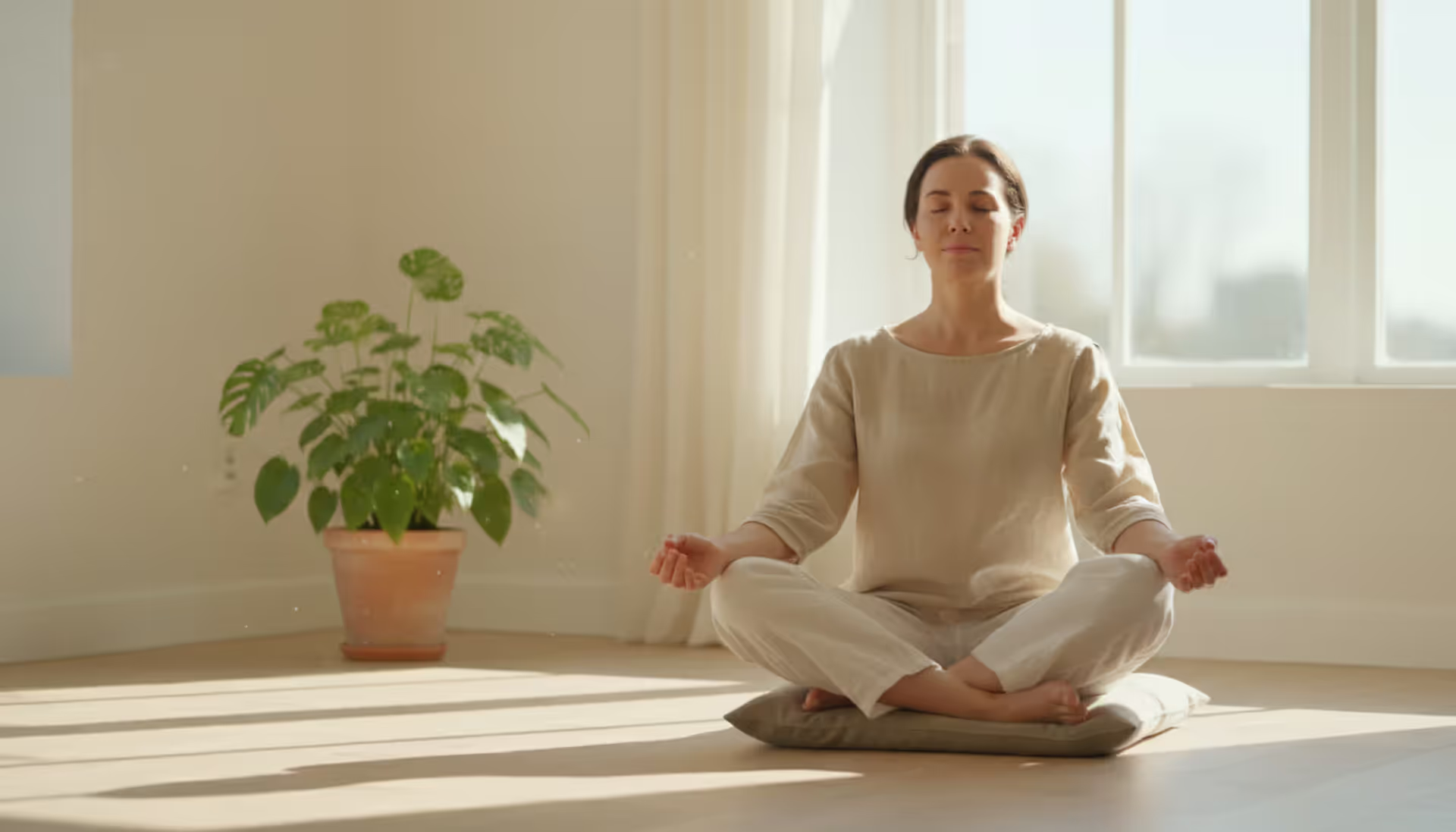
Get comfortable sitting—spine fairly straight but don't be rigid about it
Eyes closed or looking down softly works
Find where you feel breath clearest (nose, chest, or belly)
Rest your attention there and follow the natural breathing rhythm
Your mind will wander—guaranteed. Notice it happened, skip the self-criticism, come back to breath
Try 5-10 minutes at first, then stretch it out as you get comfortable
Difficulty: Easy Time commitment: 5-20 minutes Watch out for: Trying to breathe "the right way" instead of just observing what's already happening
Body Scan Meditation
You're moving attention through your body piece by piece—usually starting at your toes and working up—just noticing whatever sensations show up without trying to fix anything.
How to do it:
Lie down or recline comfortably
Zero in on your left toes. Temperature? Tingling? Pressure? Nothing at all? Just notice
After 20-30 seconds, move to left foot, then ankle, then calf, then knee
Work through each body part systematically
Tension somewhere? Observe it instead of forcing it to relax
Full circuit usually takes 15-30 minutes
Difficulty: Easy to moderate Time commitment: 15-45 minutes Real talk: Falling asleep during body scans is common—means you're relaxed, but it's not the actual point. If this keeps happening, try sitting upright or practicing earlier in the day.
Guided Meditation
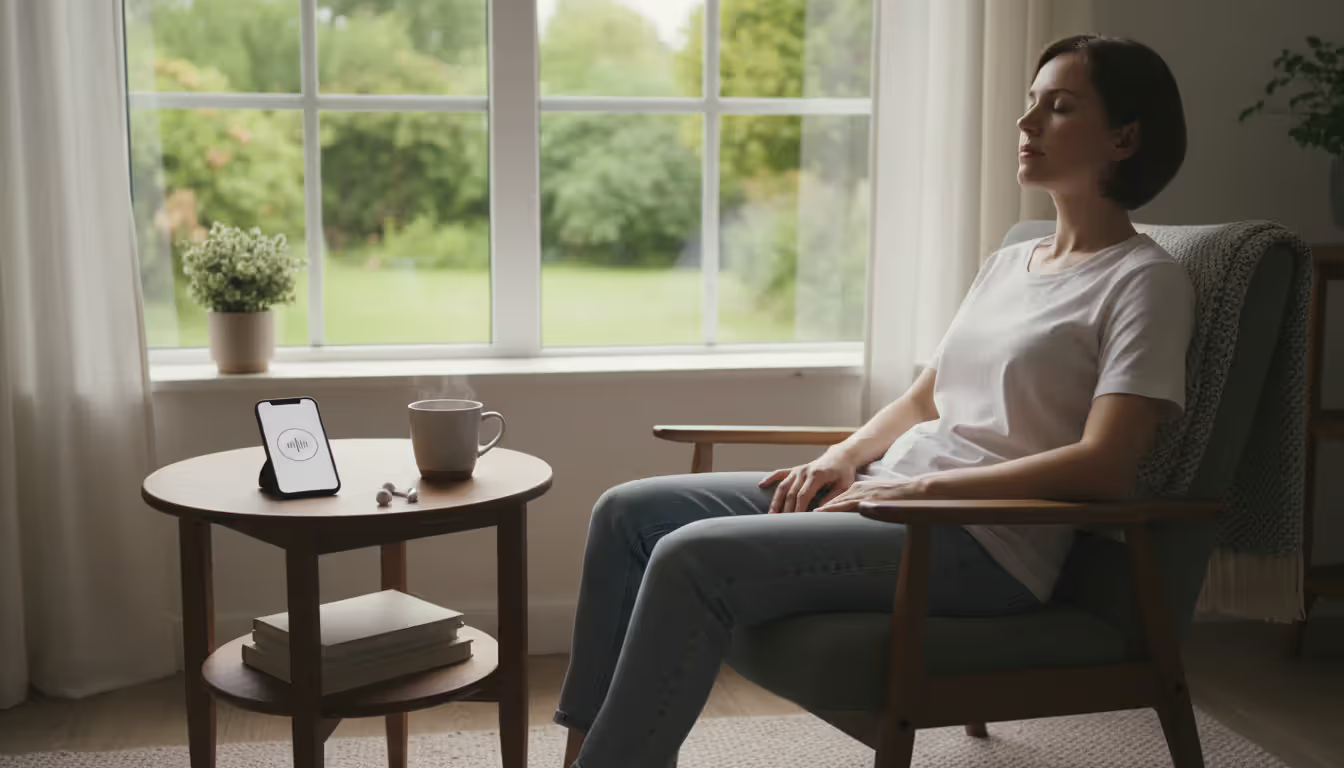
Someone else (recording or live) walks you through the whole thing with verbal instructions and sometimes imagery.
How to do it:
Pick a guided session that matches your available time and what you need (stress relief, better sleep, concentration boost)
Find somewhere reasonably quiet and get comfortable
Hit play and follow along with what they say
If the visualization doesn't match exactly in your head, don't sweat it—close enough counts
Voice or style grating on you? Switch to a different instructor
Difficulty: Very easy Time commitment: 3-60 minutes depending on what you choose Why beginners love it: Having someone else lead removes that nagging "wait, am I doing this correctly?" worry that stops a lot of people.
Popular Meditation Techniques by Purpose
Meditation Style
Works Best For
How Hard Is It
How Long It Takes
What You Get
Breath Awareness
Sharpening focus, general stress management
Easy start
5-20 minutes
Better concentration, baseline calmness
Body Scan
Physical tightness, can't sleep, pain issues
Easy start
15-45 minutes
Serious relaxation, body connection
Loving-Kindness
Emotional wounds, harsh self-talk, building compassion
Easy to moderate
10-30 minutes
More empathy, less self-beating
Mindfulness
Anxious thoughts, rumination loops, being present
Moderate
10-45 minutes
Emotional steadiness, less knee-jerk reactions
Transcendental (TM)
Deep relaxation, stress relief, mental sharpness
Easy once taught*
20 minutes twice daily
Lower anxiety, heart health benefits
Visualization
Reaching goals, confidence building, healing
Easy start
10-20 minutes
Stronger motivation, better outlook
Zen (Zazen)
Spiritual depth, mental discipline, clarity
Challenging
20-40 minutes
Deep peace, philosophical insights
Vipassana
Understanding yourself deeply, changing patterns
Challenging
45+ minutes
Major behavior shifts, emotional stability
*You need formal training, but actually doing it is straightforward
Meditation Techniques for Stress Relief
When your cortisol's through the roof and you're stuck in that fight-or-flight zone, some techniques cut through stress faster.
Breath awareness hits your physiology directly. Slow belly breathing flips on your parasympathetic nervous system—the one that calms you down—sometimes within just a few minutes. Plus, focusing on breath interrupts those spiral-thinking patterns that keep stress going.
Body scan meditation releases the physical tension you're probably holding without realizing it. A lot of us carry stress in our shoulders, jaw, or stomach and have zero conscious awareness until we actually check. Paying systematic attention to these spots often triggers them to let go on their own.
Loving-kindness meditation tackles stress that comes from beating yourself up or conflict with other people. You silently repeat phrases like "may I be safe, may I be peaceful" while actually trying to feel warmth toward yourself, then eventually extending it outward to others. Studies show this actually reduces inflammation markers tied to chronic stress.
Progressive muscle relaxation—where you tense then release muscle groups—pairs really well with meditation for acute stress moments. The contrast between tension and release helps you recognize what relaxation actually feels like physically.
Author: Sophie Ellington;
Source: 5sensesspa.com
Methods for Improving Focus and Clarity
Scattered attention kills productivity, decision quality, and mental stamina. Concentration-building techniques offer direct fixes.
Breath counting adds a layer to basic breath awareness: count each out-breath from one to ten, then start over. Lose count (you will)? Back to one, no drama. This tiny addition cranks up the difficulty while seriously sharpening focus.
Candle gazing (trataka) uses your eyes. Sit about two feet from a candle at eye level, stare at the flame without blinking until your eyes water, then close them and hold onto that afterimage. Trains sustained visual attention and quiets mental noise.
Mantra meditation means repeating a word or phrase—out loud or silently—to occupy your verbal brain. "Om," "peace," or anything meaningful to you works. The repetition creates a mental channel that crowds out distracting thoughts.
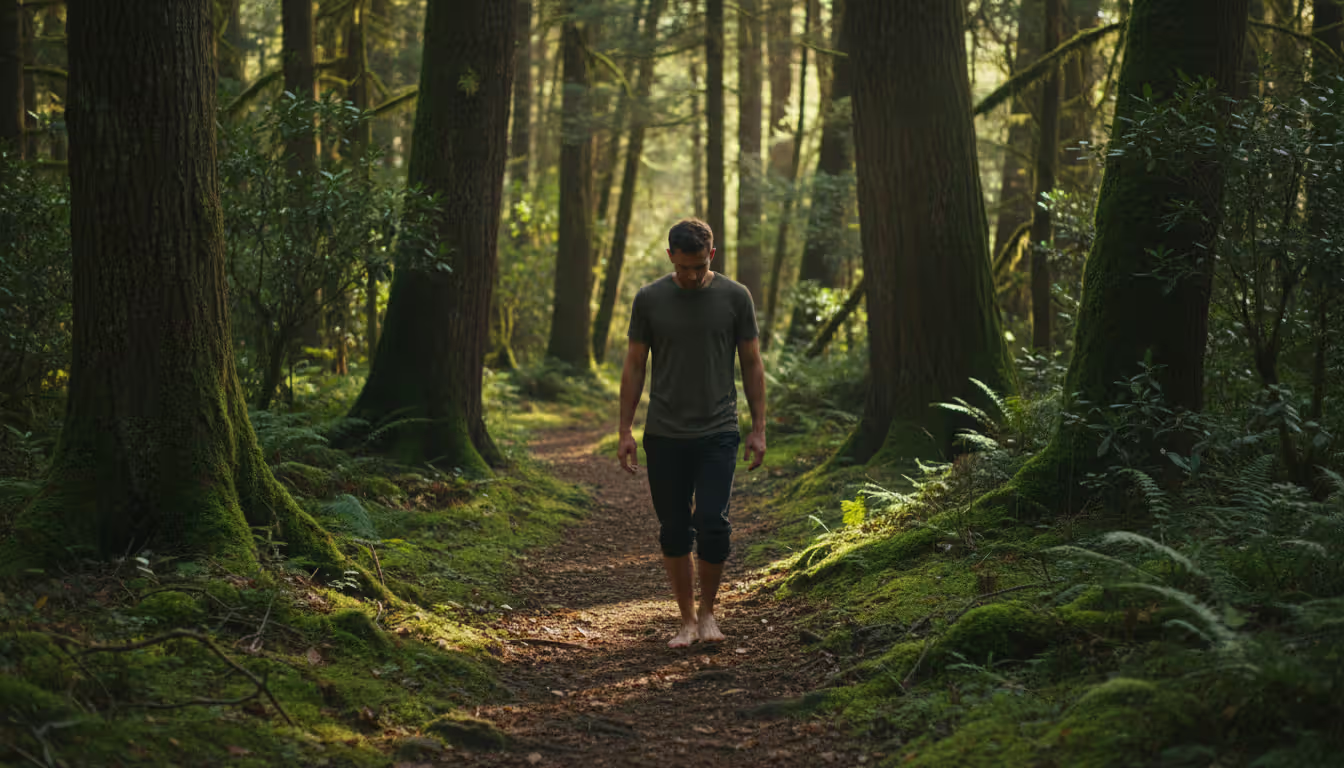
Walking meditation suits people who can't sit still without going nuts. Walk slowly, noticing the feeling of each foot lifting, moving forward, touching down. Builds focus while giving restless energy somewhere to go.
Author: Sophie Ellington;
Source: 5sensesspa.com
Traditional and Advanced Meditation Practices
Mindfulness meditation comes from Buddhist Vipassana traditions but got secularized for Western audiences. You're observing thoughts, emotions, and sensations as they pop up, maybe labeling them neutrally ("thinking," "feeling," "hearing") without diving in. The whole point is developing meta-awareness—watching your mind from the outside instead of getting lost inside it.
Core idea: Everything changes and can be observed. By repeatedly noticing thoughts appear and disappear without fusing with them, you reduce their power to make you react automatically.
Transcendental Meditation (TM) involves personalized mantras given by certified instructors through formal training. You sit comfortably, eyes closed, silently repeating your assigned mantra for twenty minutes, twice daily. Unlike concentration approaches, TM emphasizes effortless repetition—mind wandering? Just ease back to the mantra without forcing it.
What sets it apart: Those specific mantras and standardized teaching method, plus tons of research backing cardiovascular and cognitive improvements. The catch? Formal instruction typically costs over $1,000, creating a barrier for many people.
Loving-Kindness Meditation (Metta) systematically builds compassion. Start directing goodwill toward yourself, then toward someone who's helped you, then someone neutral, then someone difficult, and finally all beings everywhere. You use phrases like "may you be happy, may you be healthy" while genuinely trying to feel warmth.
Unique element: You're actively generating an emotional state instead of passively watching what shows up. Brain imaging shows increased activity in empathy-related areas after regular practice.
Zen meditation (Zazen) emphasizes exact postures (full lotus, half lotus, or Burmese position) with precise attention to form. Some Zen schools focus on breathing, others work with koans—those paradoxical questions like "what's the sound of one hand clapping?" The whole aesthetic is stripped down—no music, no comfort props, just sitting.
What makes it different: The combination of formal structure, physical discipline, and philosophical investigation. Zen treats meditation as inseparable from regular life instead of a separate "practice time."
Vipassana involves intense silent retreats (usually 10 days minimum) with serious practice schedules—sometimes 10 hours daily. The technique involves scanning body sensations with extreme precision, training complete equanimity toward whatever you experience.
What sets it apart: The sheer intensity and depth. Beginners can learn fundamentals, but real benefits come from sustained, rigorous practice. This isn't casual stress management—it's comprehensive mental rewiring.
How to Find Your Best Meditation Method
Your personality affects which techniques feel intuitive versus maddening. Analytical types often prefer structured approaches like breath counting or body scans with clear steps. Creative folks might lean toward visualization or guided sessions with storytelling elements. If you learn through physical experience, walking meditation or yoga-based practices might click better.
Lifestyle realities matter practically. Parenting young kids? You need techniques that work in 5-10 minute chunks, not 45-minute sessions. Commuting? Guided meditations during transit might work. Dealing with chronic pain? Body scan practices can transform how you relate to physical discomfort.
Available time determines whether you'll actually keep going. Committing to 20-minute sessions twice daily when realistically you've got 10 minutes once daily sets you up to fail. Begin with what you can genuinely maintain—five minutes of actual daily practice beats random 30-minute sessions that happen whenever.
What you're trying to accomplish should guide your starting point. Battling anxiety? Grounding techniques like breath awareness or body scans make sense. Looking for spiritual growth? Check out traditional practices like Zen or Vipassana. Want better focus? Try concentration techniques like mantras or breath counting.
Trial and error works best here: commit to one technique for 2-3 weeks before deciding anything. Initial awkwardness doesn't mean it's wrong for you—most meditation feels weird at first. Look for subtle shifts instead: sleeping slightly better, snapping at people marginally less, random moments of unexpected calm.
Track things concretely. Write down meditation duration, time of day, and one sentence about how it went. After two weeks, you'll spot patterns: "Morning sessions feel clearer," "Body scan knocks me out fast," "Loving-kindness lifts my mood on rough days." Real data beats vague feelings for making adjustments.
Expect your approach to shift as you develop skill. Lots of people start with guided meditations, move to breath awareness once they've got confidence, then explore specialized techniques for particular goals. Your meditation approach should evolve as your abilities and needs change.
Author: Sophie Ellington;
Source: 5sensesspa.com
Common Mistakes When Starting a Meditation Practice
Waiting for instant transformation creates disappointment. Meditation produces gradual, accumulating effects instead of lightning-bolt revelations. Maybe you notice you didn't blow up at your partner during a tense moment—small win that signals real progress. Holding out for enlightenment experiences causes most beginners to quit.
Bouncing between techniques constantly prevents developing any actual skill. Testing five different styles in two weeks means never getting past the awkward beginner stage with any of them. Stick with one long enough to evaluate fairly—at least 15-20 actual sessions.
Waiting for the "perfect" setup becomes an excuse not to start. You don't need a dedicated meditation room, special cushions, or total silence. A reasonably quiet spot and a chair work fine. Waiting for ideal conditions means never beginning.
Extreme posture choices cause problems both directions. Lying down usually leads to sleep instead of meditation. Forcing uncomfortable lotus positions creates pain that dominates your attention. Find sustainable middle ground: seated with spine upright but not tense, comfortable enough to forget about your body.
Unrealistic time goals guarantee you'll quit. Deciding on 45 minutes daily when you've never stuck with a 5-minute practice is pure fantasy. Start with something that feels almost too easy—even three minutes counts—then build gradually. Showing up consistently beats duration every time.
Rating session quality creates unnecessary frustration. Some sessions feel peaceful and focused; others are restless and scattered. Both count as meditation. The actual practice is bringing attention back when it wanders, which happens whether the session feels "good" or not. Labeling experiences as wins or losses misses the entire point.
Only meditating during crises treats it like emergency medicine instead of maintenance. Benefits accumulate through regular practice during normal times. Trying to start meditation mid-panic-attack rarely works—you need established skills to access during emergencies.
The difference between meditation as concept and meditation as lived experience is the difference between reading a menu and eating a meal. You have to actually practice to receive the benefits, and the right technique is simply the one you'll actually do
— As Sharon Salzberg
Frequently Asked Questions About Meditation Techniques
What is the easiest meditation technique for complete beginners?
Guided meditation removes most guesswork and provides external structure that stops the "wait, is this right?" spiral. Apps like Insight Timer or Calm have thousands of free options covering everything. For unguided practice, basic breath awareness works well—just notice breathing without controlling it. Begin with five minutes and prioritize building the habit over perfecting technique.
How long should I meditate each day as a beginner?
Begin with 5-10 minutes daily instead of attempting occasional longer sessions. Brain research shows that consistent short practice creates stronger neural changes than sporadic extended ones. After maintaining this for 2-3 weeks, gradually add 2-3 minutes weekly if you want. Plenty of experienced meditators stick with 10-20 minutes daily and still get major benefits.
Can I combine different meditation techniques?
Sure, but get decent at one method first. Mixing techniques while learning prevents developing real competence with anything. After practicing one technique consistently for 4-6 weeks, experiment with combinations—maybe breath awareness to settle in, then loving-kindness for emotional work. Some advanced practitioners rotate techniques based on current needs while keeping a primary practice.
Which meditation technique is most effective for anxiety?
Breath awareness and body scan meditation have the strongest research backing for anxiety reduction. Both anchor attention in present-moment physical experience, cutting off that future-focused worry driving anxiety. Mindfulness meditation also helps by changing your relationship with anxious thoughts—you observe them instead of believing them. Skip open-awareness techniques initially, since they can temporarily amp up anxiety by making you more aware of worried thoughts without giving you an anchor.
Do I need special equipment to start meditating?
Nope. Whatever chair or cushion you already have works perfectly. Some people like a timer to avoid checking the clock constantly, but your phone handles that. Meditation apps provide structure and variety but aren't required—free resources exist everywhere online. Specialized cushions, benches, or props might improve comfort after you've got an established practice, but they're extras, not essentials. The barrier to starting is mental, not material.
How long does it take to see results from meditation?
Most people notice subtle shifts within 2-3 weeks of consistent practice: falling asleep a bit faster, bouncing back from annoyance more quickly, or catching brief moments of unexpected peace. Research demonstrates measurable brain changes at 8 weeks with regular practice. Major life improvements—substantially lower anxiety, big shifts in emotional reactivity—typically show up after 3-6 months of daily practice. Timeline varies based on technique, consistency, session length, and individual factors.
Discovering what works in meditation means matching method to personality, goals, and real-life constraints instead of forcing yourself into practices that feel unnatural or unsustainable. Breath awareness, body scans, and guided sessions provide accessible starting points for newcomers. As your practice matures, you might investigate traditional approaches like mindfulness, loving-kindness, or concentration techniques designed for specific outcomes.
The best meditation technique is whichever one you'll practice regularly. Begin with straightforward methods, stick with 2-3 weeks of daily practice before making judgments, and adjust based on what actually happens rather than what you expected. Notice subtle changes, sidestep common beginner traps like technique-hopping or unrealistic time commitments, and remember that meditation skills develop incrementally through consistent practice.
Your meditation path doesn't require perfection—just showing up. Pick one basic technique, set a timer for five minutes, and start. What you need to learn will emerge through the practice itself.
Meditation produces measurable changes in brain structure, nervous system function, and emotional regulation. Learn what meditation actually does, common reasons people start practicing, and science-backed benefits for mental and physical health that explain why millions now meditate regularly
Meditation has a reputation for being simple: sit down, close your eyes, breathe. Yet anyone who's tried it knows the reality feels nothing like that tidy description. Your legs ache, your mind races through grocery lists and old arguments, and the promised calm seems reserved for people who aren't you
Meditation didn't emerge from a single moment of invention. Archaeological evidence places the earliest practices at roughly 5,000 to 7,000 years ago, with wall art from the Indus Valley showing figures in meditative postures. The practice developed across multiple civilizations independently
Meditation falls into three research-backed categories: focused attention, open monitoring, and self-transcending. Understanding this framework helps you choose from 12 common techniques based on your goals, experience level, and lifestyle rather than getting lost in endless options
The content on this website is provided for general informational and educational purposes only. It is intended to explain concepts related to meditation, mindfulness, mental health, and spiritual practices.
All information on this website, including articles, guides, and examples, is presented for general educational purposes. Meditation outcomes may vary depending on individual practices, health conditions, and guidance.
This website does not provide medical, mental health, or spiritual advice, and the information presented should not be used as a substitute for consultation with qualified professionals.
The website and its authors are not responsible for any errors or omissions, or for any outcomes resulting from decisions made based on the information provided on this website.