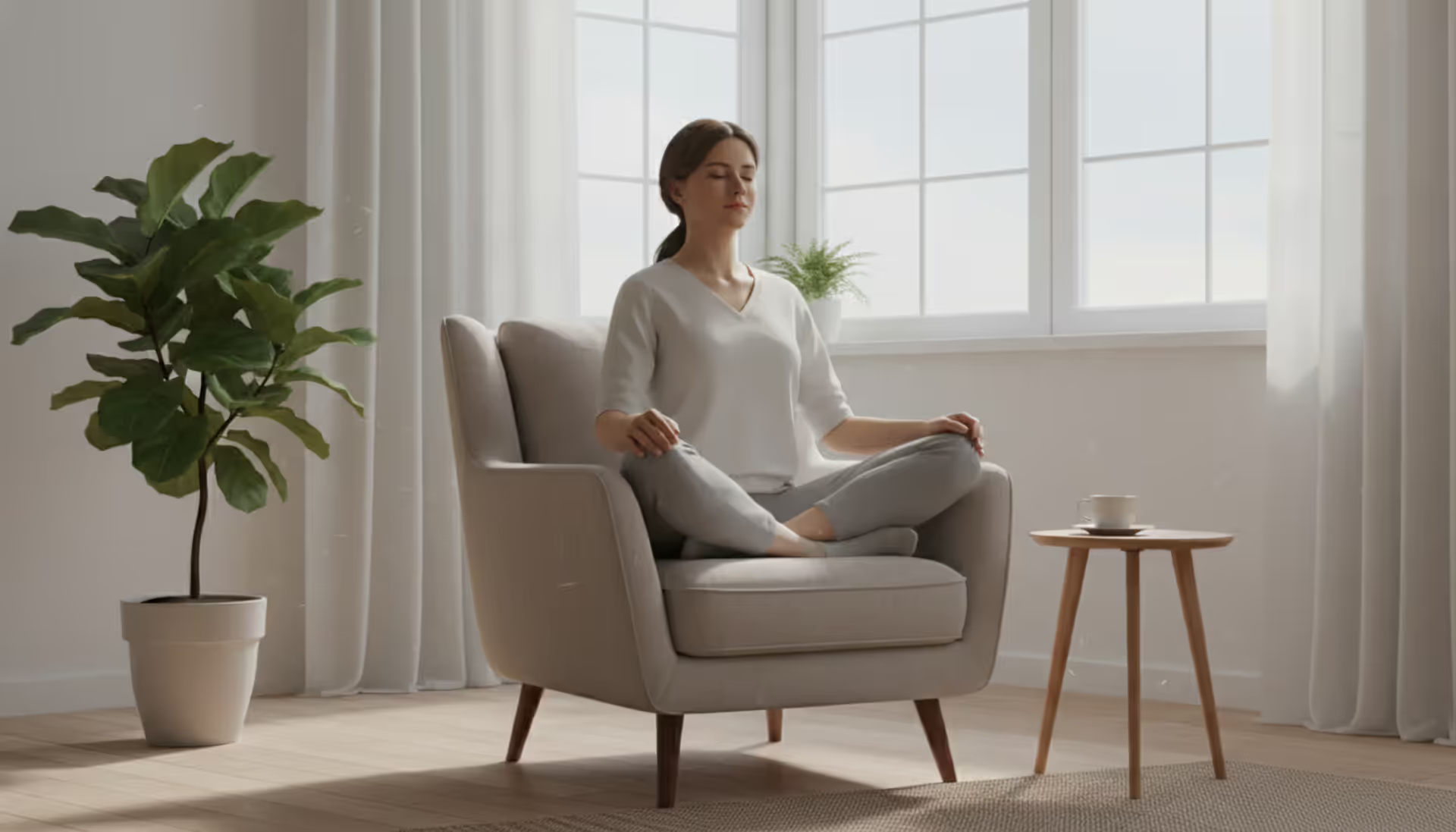
A person sitting comfortably in an armchair by a large window with soft morning light, eyes closed, hands resting on knees, peaceful minimal interior with a houseplant
If you've ever wondered whether meditation is right for you, or felt confused by conflicting advice about how to practice, you're not alone. Most people come to meditation with a head full of questions and a handful of misconceptions that can actually prevent them from experiencing its benefits.
This guide addresses the most common questions about meditation, clears up widespread myths, and gives you realistic expectations for what happens when you start a practice. Whether you're skeptical, curious, or ready to begin, you'll find straightforward answers here.
What meditation actually is (and what it isn't)
Meditation is a practice of directing your attention intentionally. That's it. You might focus on your breath, a sound, physical sensations, or even your thoughts themselves. The goal isn't to achieve a blank mind or enter some mystical state—it's to train your awareness.
The biggest misconception about meditation is that you're supposed to stop thinking entirely. This sets people up for immediate failure because the human brain generates thoughts constantly. That's what brains do. Meditation doesn't eliminate thoughts; it changes your relationship with them. You learn to notice when your mind wanders and gently guide it back without judgment.
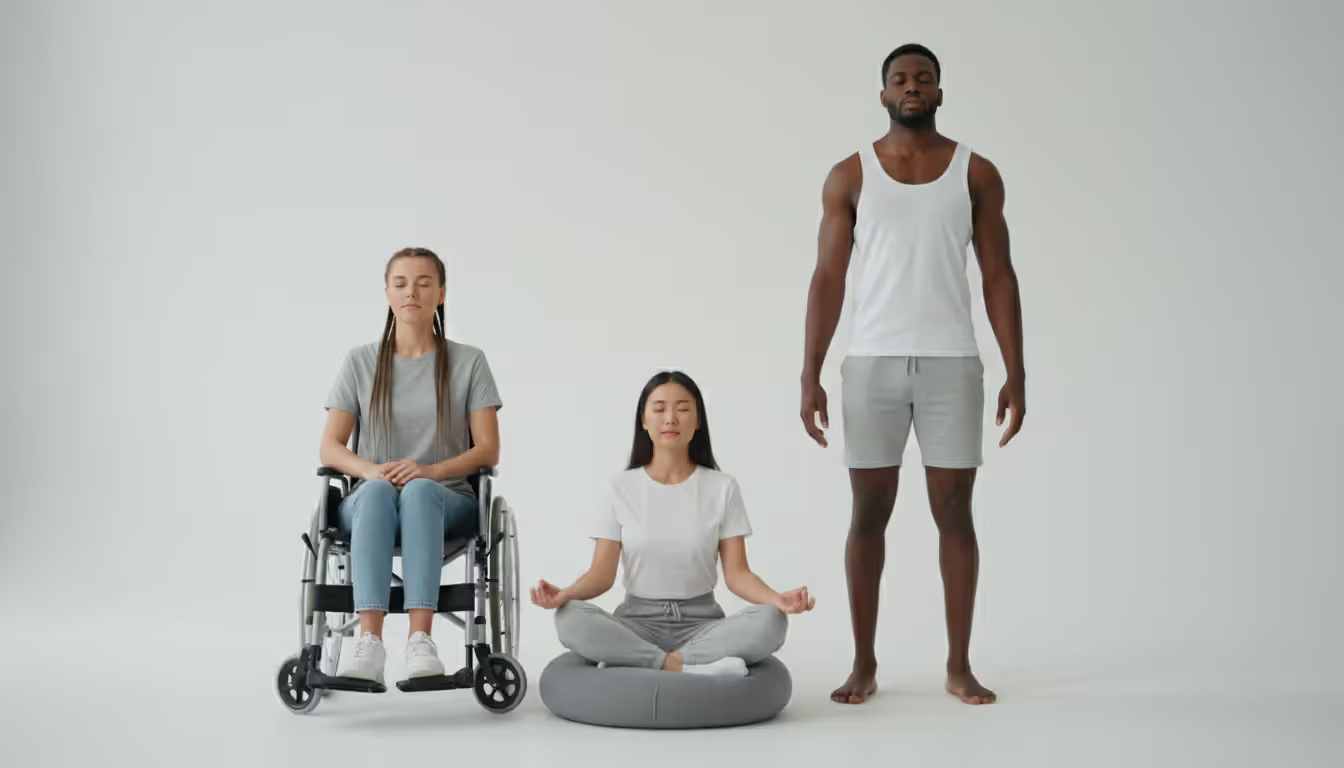
Another common misunderstanding: you don't need to sit cross-legged on the floor. While that posture works for some people, meditation can happen in a chair, on a cushion, standing, walking, or even lying down (though you might fall asleep). The physical position matters far less than your mental approach.
Meditation also isn't inherently religious or spiritual. While many traditions incorporate meditation as a spiritual practice, the technique itself is secular. Modern meditation research focuses on its neurological and psychological effects, completely separate from any belief system. You can meditate without adopting any particular worldview.
What meditation actually requires is consistency and patience. You're building a skill, similar to learning an instrument or a new language. The first sessions feel awkward and unproductive for most people. Your mind rebels, your body fidgets, and you wonder if you're doing it wrong. This is completely normal and doesn't mean meditation isn't for you.
Can anyone meditate? Addressing common doubts
The short answer is yes, with very few exceptions. Meditation is accessible to people across physical abilities, ages, mental health conditions, and personality types. But many people convince themselves they can't meditate based on unfounded concerns.
Physical limitations: You don't need perfect mobility or the ability to sit on the floor. People meditate in wheelchairs, hospital beds, and recliners. If you can direct your attention for even thirty seconds, you can meditate. Chronic pain doesn't disqualify you either—in fact, many pain management programs incorporate meditation specifically because it helps people change their relationship with discomfort.
Author: Lena Ashcroft;
Source: 5sensesspa.com
Mental health concerns: This requires nuance. For most people with anxiety or depression, meditation provides genuine relief. However, certain conditions—particularly active psychosis, severe PTSD, or dissociative disorders—may require modified approaches or clinical supervision. If you have concerns, discuss meditation with your therapist or psychiatrist before starting. They can recommend appropriate techniques or guided programs designed for your situation.
Religious conflicts: If your faith tradition discourages meditation, you'll need to make that decision for yourself. But recognize that focusing your attention on your breath for ten minutes doesn't require adopting Buddhist philosophy any more than doing yoga requires becoming Hindu. Secular meditation programs like MBSR (Mindfulness-Based Stress Reduction) deliberately remove religious elements.
Age: Children as young as five can learn simple meditation techniques, and people in their nineties start successful practices. Your brain retains neuroplasticity throughout life, meaning meditation can create beneficial changes regardless of when you begin.
Personality types: "I'm too hyper to meditate" is probably the most common self-disqualification. But people with ADHD, high anxiety, and restless personalities often benefit most from meditation. The practice doesn't require you to be naturally calm—it helps you develop calmness over time. Expecting to already possess the qualities meditation builds is like refusing to lift weights because you're not strong enough.
The real question isn't whether you can meditate, but whether you're willing to practice imperfectly and inconsistently at first while the habit takes root.
Biggest mistakes beginners make when starting meditation
We see measurable changes in attention and working memory with as little as 12 minutes daily over four weeks. But people often don't recognize these changes because they're looking for dramatic shifts in how meditation feels during the session, rather than noticing how they respond to their daily life differently
— Dr. Amishi Jha
New meditators typically sabotage themselves in predictable ways. Recognizing these patterns helps you avoid them.
Expecting immediate transformation: Meditation works, but not like flipping a switch. Some people notice subtle changes within a week or two—slightly better sleep, a moment of pause before reacting to frustration. But significant shifts in anxiety levels, emotional regulation, or focus typically emerge after several weeks of consistent practice. Starting meditation expecting to feel completely zen after three sessions leads to disappointment and quitting.
Trying to force a blank mind: This bears repeating because it's so common. When a thought appears, beginners often get frustrated and try to push it away forcefully. This creates tension and makes meditation unpleasant. The actual technique is noticing the thought without engaging with it, then returning attention to your anchor (breath, body sensation, etc.). Think of thoughts as clouds passing through the sky of your awareness—you don't need to grab them or shove them away.
Only meditating during crisis: Using meditation exclusively as an emergency anxiety tool is like only going to the gym when you're already injured. The practice builds resilience over time through regular sessions. If you only meditate when you're already overwhelmed, it won't feel effective because you haven't developed the skill yet. Daily five-minute sessions prevent more crises than desperate twenty-minute sessions during panic.
Inconsistent practice without a trigger: Motivation alone won't build a meditation habit. You need a consistent time and place. "I'll meditate whenever I have time" means you'll rarely meditate. Attaching the practice to an existing habit works better—right after your morning coffee, before your shower, immediately after arriving home from work. The specific time matters less than the consistency.
Author: Lena Ashcroft;
Source: 5sensesspa.com
Judging every session: Some meditation sessions feel calm and focused. Others are restless struggles where your mind won't settle. Beginners often rate each session as "good" or "bad," getting discouraged by difficult ones. But challenging sessions where you repeatedly redirect your wandering attention actually build more skill than easy, pleasant ones. You're practicing the redirect, not trying to achieve a particular feeling.
Quitting after a few days: Most people abandon meditation within the first week. They try it a few times, don't notice dramatic changes, and move on. Building any new habit requires pushing through initial resistance. Consider committing to thirty days before evaluating whether meditation works for you.
Common meditation myths debunked
Common Myth
The Reality
You must clear your mind completely
Meditation is about noticing thoughts without getting caught in them, not eliminating thoughts entirely. A wandering mind is normal and expected.
Meditation is religious or spiritual
While many traditions include meditation, the practice itself is secular. Modern programs focus on attention training and stress reduction without any spiritual elements.
You need 30+ minutes daily to see benefits
Research shows benefits from sessions as short as 5–10 minutes. Consistency matters more than duration, especially for beginners.
Only naturally calm people can meditate
Meditation is most valuable for restless, anxious, or stressed people. It's a skill you develop, not a personality requirement.
You're doing it wrong if your mind wanders
Mind-wandering is part of the process. Noticing it and redirecting attention is the actual practice—that's what builds the skill.
You need special equipment, apps, or classes
While these can help, all you truly need is a quiet place and a few minutes. The simplest techniques require nothing but your attention.
Meditation means sitting cross-legged on the floor
You can meditate in any comfortable position—chair, cushion, lying down, even walking. Physical posture is far less important than mental approach.
If you fall asleep, you're failing
Falling asleep during meditation usually means you're sleep-deprived. It's not failure—it's information about what your body needs. Try meditating at a different time or in a more alert posture.
What to expect when you start meditating
The first few sessions usually feel awkward. You'll notice how busy your mind is, how hard it is to sit still, and how quickly five minutes can feel like twenty. This discomfort is normal and temporary.
First week: You're building the habit and learning the basic technique. Your mind will wander constantly. You might feel restless or bored. Some people experience unexpected emotions—sadness, anxiety, or irritation that seems to come from nowhere. This happens because you're finally sitting still enough to notice what's been running in the background. Physical sensations are common too: itching, muscle tension, the urge to fidget. Notice these without immediately reacting.
Weeks 2-4: The practice starts feeling slightly more natural. You still struggle with wandering thoughts, but you notice them faster. You might catch yourself taking a breath before reacting to frustration during your day—a sign that the skill is transferring beyond your meditation sessions. Some people notice slightly better sleep or a bit more patience with annoyances.
Months 2-3: This is when many people notice more substantial changes. Anxiety might feel less overwhelming. You recover from stress faster. Small irritations that used to derail your mood for hours now pass more quickly. These shifts are subtle at first—you might not notice until you reflect back on how you would have reacted to a situation a month ago versus now.
Long-term (6+ months): With consistent practice, meditation becomes a reliable tool rather than something you're trying out. Your baseline stress level typically decreases. You develop more space between stimulus and response—someone cuts you off in traffic and you notice the anger arise, but you don't automatically get swept into it. Physical benefits often emerge here too: lower blood pressure, improved immune function, better focus.
Not everyone follows this timeline exactly. Some people notice benefits faster; others take longer. Progress isn't linear—you'll have periods where meditation feels easy and periods where it feels like a struggle again.
Author: Lena Ashcroft;
Source: 5sensesspa.com
How to know if meditation is working for you
Meditation benefits often appear outside the meditation session itself. You're not necessarily looking for blissful, thought-free sessions (though those occasionally happen). Instead, watch for these signs:
You pause before reacting: You notice a split-second gap between something happening and your response. In that gap, you have a choice about how to respond rather than automatically reacting.
Stress recovery improves: You still get stressed, but you return to baseline faster. A frustrating meeting doesn't ruin your entire afternoon the way it used to.
You notice thoughts as thoughts: You catch yourself in rumination or worry and recognize it as mental activity rather than absolute truth. This creates distance from anxious or negative thinking patterns.
Physical tension decreases: You realize you're not clenching your jaw as much, or your shoulders aren't perpetually hunched, or you're sleeping more soundly.
You're more present: You notice details you usually miss—the taste of your food, the sensation of water in the shower, what someone is actually saying rather than planning your response while they talk.
If you're not noticing any changes after 6-8 weeks of consistent practice (at least 5 days per week), consider adjusting your approach. Try a different technique, a different time of day, or a guided program with more structure. Meditation works differently for different people.
Author: Lena Ashcroft;
Source: 5sensesspa.com
Frequently asked meditation questions
How long should I meditate as a beginner?
Start with five minutes. This feels manageable and doesn't trigger resistance. Once five minutes becomes easy and automatic—usually after a week or two—increase to ten minutes. Many people eventually settle on 10–20 minute sessions. Research from 2025 indicates that even brief daily sessions produce measurable changes in stress response and attention. Duration matters less than establishing the habit first.
What should I do when my mind wanders?
Notice it without judgment, then gently return your attention to your breath or chosen focus point. This will happen dozens of times in a single session, especially at first. Each time you notice and redirect is a successful repetition—you're literally strengthening neural pathways for attention control. Don't get frustrated; the wandering and returning is the practice.
Do I need special equipment or apps to meditate?
No. Basic breath-focused meditation requires nothing but a quiet space and a few minutes. That said, apps like Insight Timer, Calm, or Headspace provide structure and guidance that many beginners find helpful. A cushion or meditation bench can make sitting more comfortable, but a regular chair works fine. Start simple—you can always add tools later if they enhance your practice.
What's the best time of day to meditate?
The best time is whenever you'll actually do it consistently. Many people prefer morning meditation because it sets a calm tone for the day and there are fewer interruptions. Others find evening meditation helps them decompress. Some do both—a short morning session and an evening wind-down. Experiment for a week or two to find what fits your schedule and energy patterns.
Can I meditate lying down or do I have to sit?
You can meditate lying down, but you'll probably fall asleep, especially if you're tired or practicing at bedtime. Sitting in a chair or on a cushion keeps you alert enough to maintain awareness while still being comfortable. If physical limitations require lying down, try keeping your eyes slightly open or doing the practice earlier in the day when you're more alert.
Is guided meditation better than silent meditation for beginners?
Guided meditation provides structure that helps beginners stay focused. A voice walking you through the process prevents your mind from wandering as far and gives you something to follow. Silent meditation offers more flexibility but requires more self-direction. Most people benefit from starting with guided sessions, then gradually incorporating silent practice as the skill develops. You don't have to choose one permanently—many experienced meditators use both.
Most meditation questions stem from misconceptions about what the practice requires and what it produces. You don't need to be naturally calm, spiritually inclined, or capable of stopping your thoughts. You need a few minutes, a willingness to practice imperfectly, and enough patience to let the benefits accumulate over time.
Start simple: five minutes, breathing, noticing when your mind wanders and gently returning attention to your breath. Do this most days. Adjust as needed. The meditation that works is the one you'll actually do consistently, not the one that sounds most impressive or requires the most dedication.
Your questions and doubts don't disqualify you from meditation—they're the normal starting point for nearly everyone who develops a lasting practice.
Meditation produces measurable changes in brain structure, nervous system function, and emotional regulation. Learn what meditation actually does, common reasons people start practicing, and science-backed benefits for mental and physical health that explain why millions now meditate regularly
Meditation has a reputation for being simple: sit down, close your eyes, breathe. Yet anyone who's tried it knows the reality feels nothing like that tidy description. Your legs ache, your mind races through grocery lists and old arguments, and the promised calm seems reserved for people who aren't you
Meditation didn't emerge from a single moment of invention. Archaeological evidence places the earliest practices at roughly 5,000 to 7,000 years ago, with wall art from the Indus Valley showing figures in meditative postures. The practice developed across multiple civilizations independently
Meditation falls into three research-backed categories: focused attention, open monitoring, and self-transcending. Understanding this framework helps you choose from 12 common techniques based on your goals, experience level, and lifestyle rather than getting lost in endless options
The content on this website is provided for general informational and educational purposes only. It is intended to explain concepts related to meditation, mindfulness, mental health, and spiritual practices.
All information on this website, including articles, guides, and examples, is presented for general educational purposes. Meditation outcomes may vary depending on individual practices, health conditions, and guidance.
This website does not provide medical, mental health, or spiritual advice, and the information presented should not be used as a substitute for consultation with qualified professionals.
The website and its authors are not responsible for any errors or omissions, or for any outcomes resulting from decisions made based on the information provided on this website.