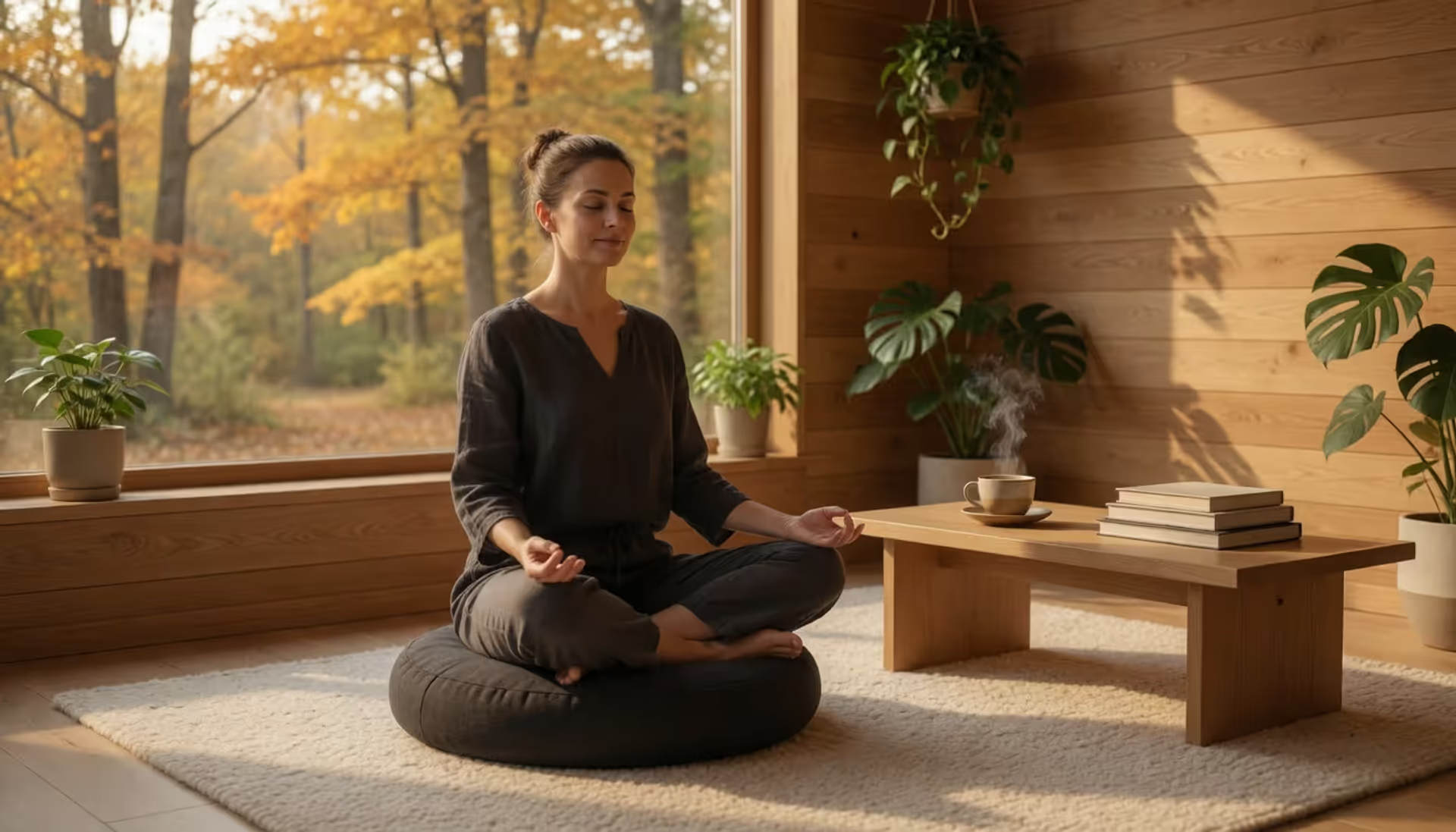
Want to learn meditation? Here's what you don't need: a quiet mountaintop retreat, expensive cushions, or the ability to empty your mind completely. (That last one's impossible anyway.)
What actually helps? Clear instructions you can follow, an approach that fits your real schedule, and enough patience to stick with it past the first frustrating week. Maybe you're sitting down to meditate for the first time, or maybe you've tried before and it fizzled out. Either way, solid meditation guidance turns those stop-start attempts into something that actually sticks—and works.
What Makes an Effective Meditation Guide
Good meditation instruction gets specific. Really specific.
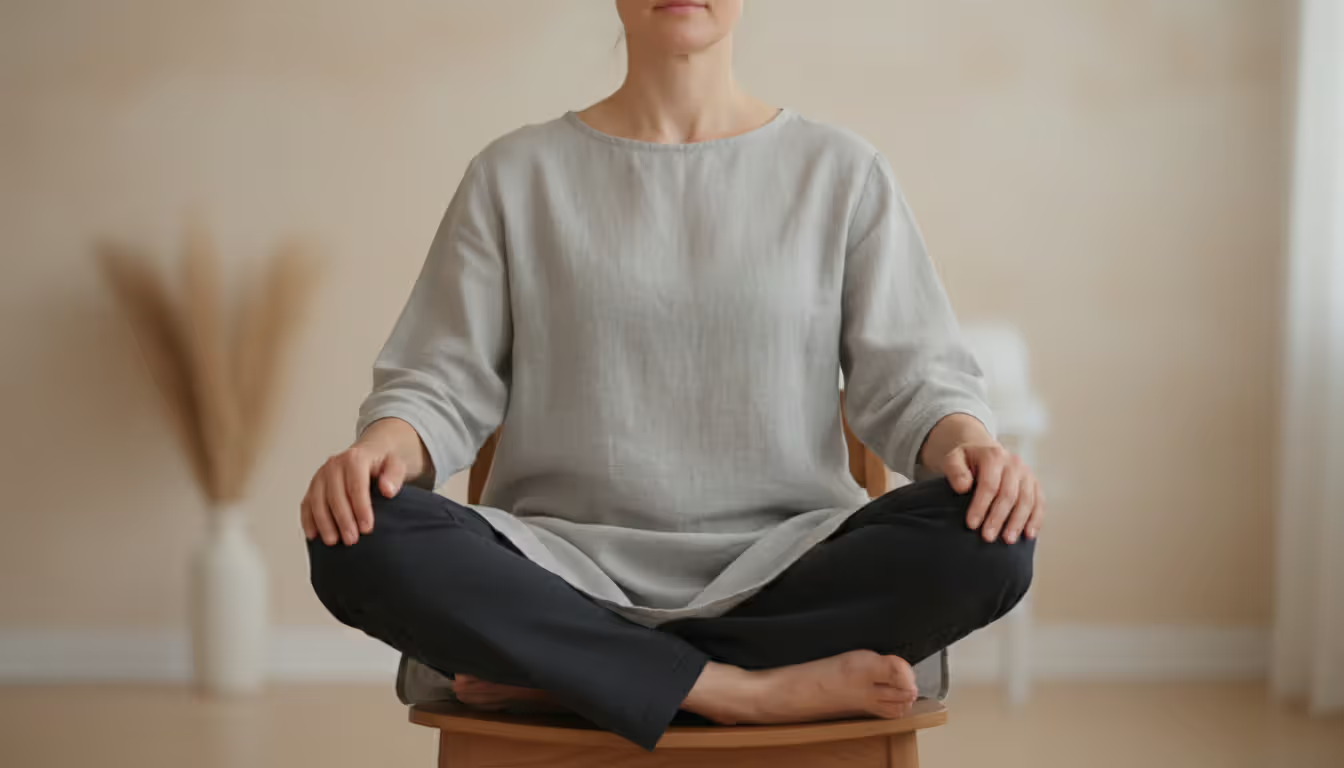
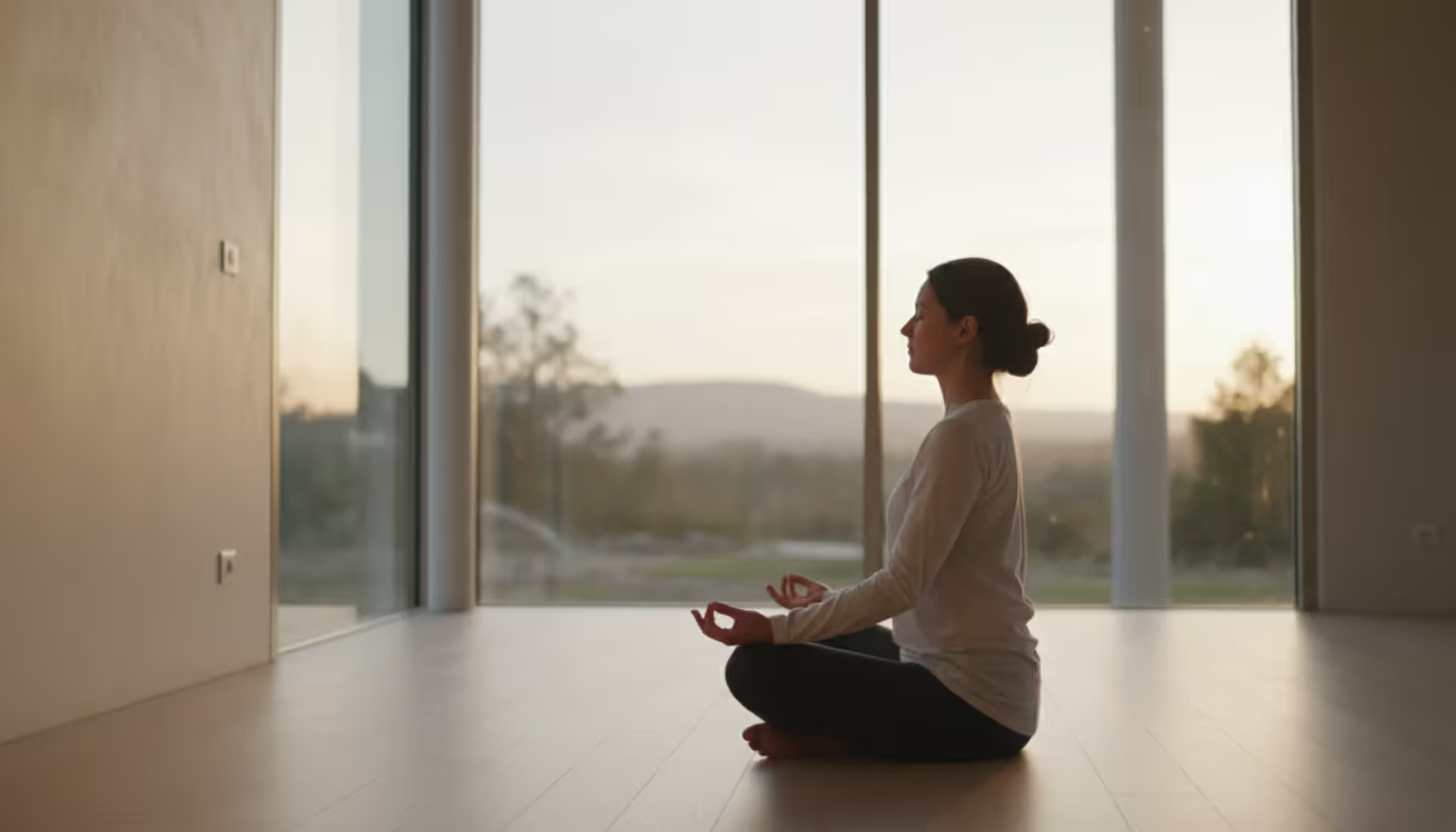
Take posture. A vague guide says "sit comfortably." A useful one explains: "Sit on the front third of your cushion so your hips tilt slightly forward. This keeps your spine naturally straight without effort. If you're in a chair, plant both feet flat on the floor." See the difference? One leaves you guessing; the other tells you exactly what to do.
Format shapes your experience more than you'd think. Audio guides pace your session in real-time—someone's voice walks you through each step, which stops beginners from spiraling into "wait, what do I do now?" thoughts. Written meditation instruction lets you read everything first, try it out, then check back if you forget something. Apps blend both worlds and throw in streak counters that turn out to be surprisingly motivating (nothing like a 47-day streak to get you sitting down even when you don't feel like it).
A complete meditation guide covers three phases most people ignore. Before: how to set up your space and what to do in those awkward first thirty seconds. During: the actual technique, broken into steps. After: how to stand up and rejoin your day without that jarring "back to chaos" feeling. Skip any phase and people feel lost, even if the core technique is solid.
Here's something else: different problems need different solutions. Someone meditating to manage panic attacks needs different meditation guidance than someone trying to improve their focus for chess tournaments. The best resources either specialize ("meditation for insomnia") or clearly map which techniques do what. Generic advice rarely helps anyone specifically.
How to Guide a Meditation Session for Yourself
Self-guided meditation gets easier when you remove decisions from the actual session. Your brain's already busy trying to settle down—don't make it also figure out logistics.
Setting Up Your Meditation Space
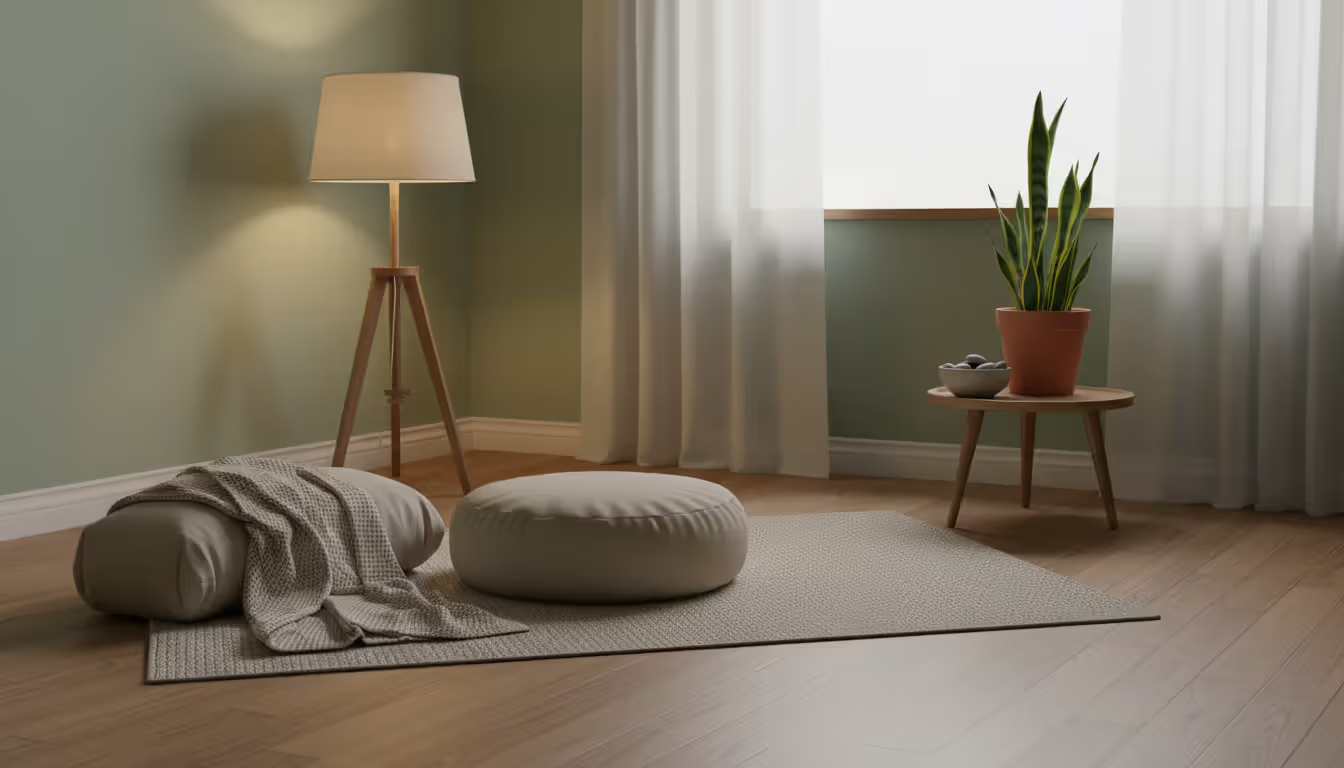
Pick one spot and use it every time. Not because it's mystical, but because your brain loves patterns. Same corner, same associations, same "oh, it's meditation time" response.
You need three things: a way to avoid interruptions (a closed door, a time slot when you're alone, or family members who know not to bother you), temperature that won't put you to sleep (cooler is better—warmth makes you drowsy), and minimal stuff in your sight line. That pile of unfolded laundry? Terrible meditation backdrop. Your brain will spend ten minutes planning when you'll fold it.
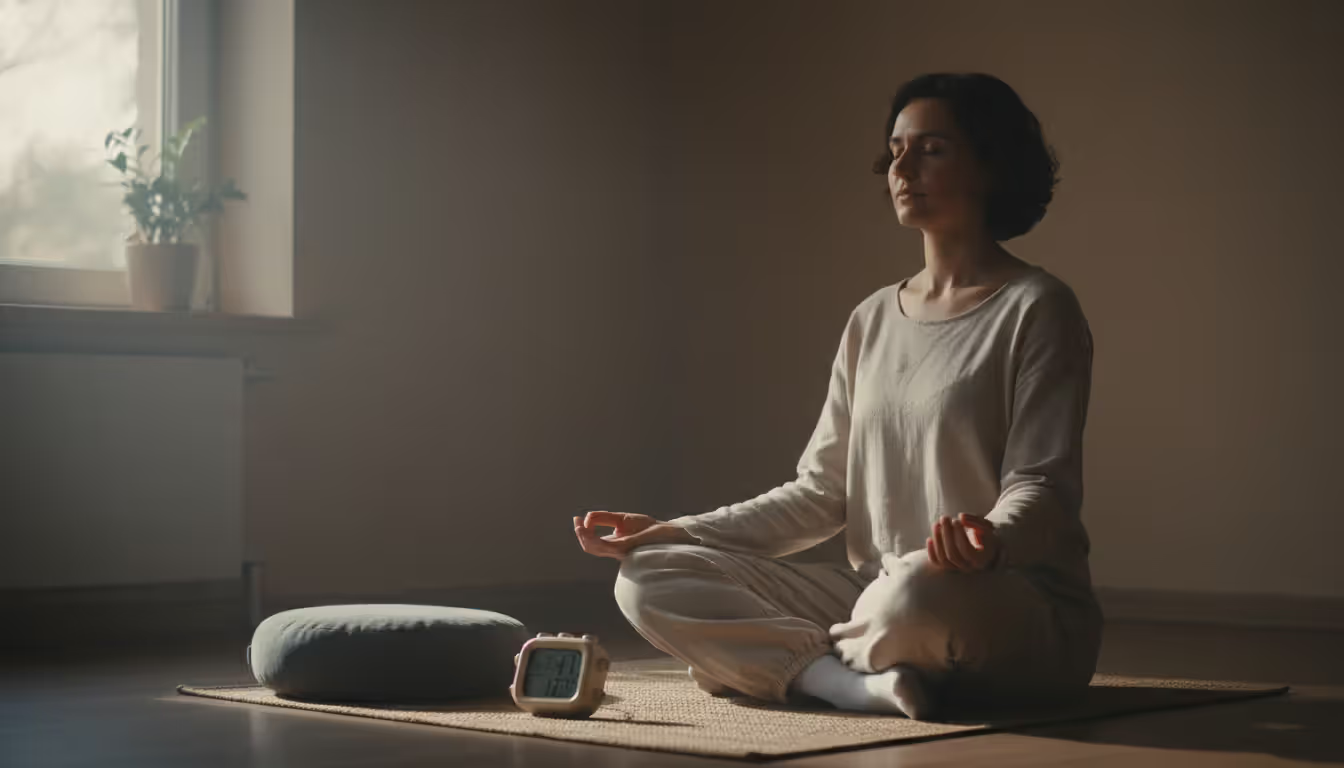
Keep your setup ready to go. Cushion already there, blanket folded nearby, timer within reach. Thirty seconds from decision to sitting beats five minutes of gathering supplies, which gives your resistance time to talk you out of it.
Avoid your workspace or anywhere you exercise. You've trained your brain that those spaces mean "activate and achieve." Meditation needs the opposite energy.
Author: Ethan Solberg;
Source: 5sensesspa.com
Basic Breathing Techniques to Start
Natural breath observation: sit down, notice where you feel breathing most clearly (tip of nose, chest rising, belly expanding), pick one spot, and keep noticing it there. You're watching breathing happen, not controlling it.
Mind wandering constantly? Count. Inhale—"one." Exhale—"two." Continue to ten, then restart. Lose count somewhere around five? (You will.) Start over at one. No self-criticism needed—losing count means you're meditating, not failing.
Try regulated breathing when you need more structure: breathe in for four seconds, pause for four, breathe out for four, pause for four. Repeat. The even pattern gives your mind a clearer job and triggers your body's relaxation response.
Here's a complete meditation walkthrough using breath: Timer set for five minutes? Good. Eyes closed or looking down at the floor. Three deliberate deep breaths, then let breathing return to its normal rhythm. Attention goes to your belly rising and falling. Thoughts will pull you away—not might, will. When they do, notice you drifted ("oh, I'm thinking about lunch"), and bring attention back to breathing. Keep going until the timer sounds. That's it.
Timing and Duration Recommendations
Five to ten minutes daily beats 30 minutes three times weekly. Always. Your brain builds patterns through repetition, and daily practice—even brief—creates stronger neural pathways than occasional longer sessions.
Meditate right after waking up, before checking your phone. Your mind's naturally quieter then, before the day dumps its first load of problems on you. Evening works if your mornings are impossible, but don't meditate within 30 minutes of bedtime if you tend to doze off during practice.
Want to go longer? Add one minute per week. This feels manageable. Jumping from ten to twenty minutes creates resistance and "I don't have time" excuses. Most people land between 15 and 25 minutes once they've practiced for a few months.
Common Meditation Techniques Explained
Different methods target different outcomes. Knowing several approaches means you can pick based on what you need today, not just what you learned first.
Technique Name
Best For
Difficulty Level
Typical Duration
Key Focus Point
Mindfulness
Reducing stress, staying present
Easy to start
10-20 minutes
Breath or bodily sensations
Body Scan
Releasing physical tension, sleep prep
Easy to start
15-30 minutes
Moving through body regions
Loving-Kindness
Building emotional strength, developing compassion
Takes some practice
15-20 minutes
Repeated goodwill phrases
Mantra
Sharpening concentration, mental clarity
Easy to start
10-20 minutes
Single word or phrase
Visualization
Clarifying goals, managing anxiety
Takes some practice
10-15 minutes
Detailed mental images
Mindfulness meditation means keeping attention on what's happening right now, without judging it. Pick your anchor (usually breathing), and every time you notice attention has wandered off, bring it back. The practice isn't preventing thoughts—those never stop. It's catching yourself when you've drifted, then choosing to return. Each return builds your attention muscles.
Body scan meditation moves your attention through your body systematically. Toes first—notice any feeling there. Warmth, tingling, pressure, or maybe nothing particular. After 20-30 seconds, move to your feet. Then ankles. Then calves. Work your way up to the top of your head. This builds body awareness and shows you where tension hides. Falling asleep during body scans? Common if you're practicing before bed, but if it happens during daytime sessions, you probably just need more sleep.
Loving-kindness meditation builds positive emotional states through repeated phrases. Start with yourself: "May I be safe, may I be healthy, may I be peaceful, may I live with ease." After a few minutes, direct those wishes toward someone you care about. Then a neutral person (the mail carrier, a barista). Eventually toward difficult people. Research shows this practice increases positive emotions and decreases depression symptoms.
Mantra meditation uses one word or phrase as your attention anchor. Pick something neutral—"one" or "peace" works better than emotionally loaded words. Repeat it silently, matching your breath rhythm or at its own pace. Thoughts interrupt? Return to your mantra. The repetition creates a rhythm many people find easier than watching breath alone.
Visualization meditation puts your imagination to purposeful use. Picture a peaceful place (beach, forest clearing, mountain ridge) and fill in sensory details—what sounds would you hear, what would the air smell like, what textures surround you? Or visualize a desired outcome or quality you want to develop. This works well for visual thinkers and helps with specific goals like athletic performance or preparing for public speaking.
Building Your Structured Meditation Plan
Random meditation attempts rarely stick. A structured meditation plan creates the framework that turns interest into routine.
Week one: Five minutes daily, breath awareness only. Your sole goal is consistency—same time, same place, seven days straight. Don't evaluate how "good" each session was or expect particular results.
Week two: Seven minutes. Add a simple before-and-after check: Before starting, notice your mental state (anxious? calm? distracted? focused?). After finishing, notice it again. This builds awareness without judgment.
Week three: Ten minutes. If your chosen time isn't working, try a different one. Maybe you're too groggy at 6am. Maybe you're too fried at 9pm.
Week four: Stay at ten minutes but try a second technique from the options above. Notice which feels more sustainable.
Weeks five through eight: Gradually increase toward 15 minutes. Hit resistance? Stay at your current duration another week instead of pushing through. This is your learn to meditate guide—it works at your actual pace, not some ideal timeline.
Track practice with simple calendar marks or a basic app. You're tracking whether you sat, not how "well" you meditated. Seeing consecutive days creates motivation to keep the streak alive.
Adjust based on what happens. Consistently drowsy? Try sitting instead of lying down, practicing earlier, or getting more sleep. Constantly restless? Try shorter sessions, more physical exercise beforehand, or techniques requiring more active attention like counting breaths.
Author: Ethan Solberg;
Source: 5sensesspa.com
Mistakes People Make When Learning to Meditate
Wanting immediate dramatic results guarantees disappointment. Meditation benefits accumulate slowly. You'll notice small things first—sleeping slightly better, pausing before reacting to your boss's email—before experiencing major shifts. Measure progress in weeks and months, not days.
Inconsistent practice kills momentum. Thirty minutes twice this week, then nothing for ten days? That builds almost nothing. Your brain needs regular exposure to form new patterns. Five minutes every day beats 35 minutes once weekly.
Mismatching technique to goal creates frustration. Want better work focus? Loving-kindness meditation might not be your best starting point. Dealing with anxiety? Visualization probably helps less than body scan or breath awareness. Match your method to your intention.
Bad posture causes unnecessary pain. You don't need lotus position, but you do need a spine that's relatively straight without being rigid. Slouching compresses your diaphragm, making breathing feel labored. Sitting on the front third of a cushion or chair helps maintain your spine's natural curves.
Treating meditation like another achievement to optimize misses the entire point. This isn't about becoming the best meditator or reaching advanced states. It's about changing how you relate to your mind. Someone who meditates imperfectly for years gains far more than someone who quits after failing to meet their own impossible standards.
Fighting your wandering mind creates more problems. Your mind wanders—that's its nature. The meditation instruction "return to the breath" doesn't mean you failed when you drifted. The return is the practice. Each time you notice distraction and choose to bring attention back, you're succeeding.
Author: Ethan Solberg;
Source: 5sensesspa.com
When to Use Self-Guided vs. Instructor-Led Meditation
Self-guided meditation gives you flexibility and independence. Practice on your schedule without apps, recordings, or classes. Develop your own relationship with the practice instead of depending on external support. This autonomy becomes valuable once you understand basic techniques and can maintain practice without help.
But self-guided meditation demands more discipline and knowledge. When challenges appear—persistent restlessness, weird experiences, or motivation crashes—you're alone to solve them. Beginners often benefit from instructor-led sessions providing structure, answering questions, and offering encouragement.
Instructor-led meditation, through apps, recordings, or live classes, offers several advantages. A voice guides you through each session, eliminating decisions about what to do next. Good instructors anticipate common struggles and address them in real-time. Group settings create accountability and community.
Drawbacks include less flexibility in timing and content, potential cost for quality instruction, and risk of becoming dependent on external guidance instead of building your own capacity.
Try this progression: Start with instructor-led meditation guidance for your first month. Use apps or recordings teaching multiple techniques. This builds foundational understanding and helps you discover which methods resonate.
Shift to partially self-guided practice in months two and three. Use guided sessions a few times weekly but practice independently other days. This develops your ability to maintain practice without constant external support.
Move toward primarily self-guided meditation after three months, using instructor-led sessions occasionally for inspiration, learning new techniques, or working through plateaus. This balanced approach builds both skill and independence.
Return to more instructor-led practice during challenging life periods when maintaining self-guided sessions gets difficult. Using support when you need it isn't weakness.
The waves don't stop coming, but you can develop the skill to navigate them
— Jon Kabat-Zinn
This captures meditation's core idea: you're not eliminating thoughts or achieving perfect calm, but developing a different way of working with your mental experience.
Frequently Asked Questions About Meditation Practice
How long should a beginner meditate each day?
Begin with five to ten minutes every day. Short enough to squeeze into any schedule, long enough to actually practice instead of just sitting down and standing up. Consistency at this duration builds the habit foundation. After two to three weeks of daily practice, add one or two minutes weekly until you reach 15-20 minutes, the amount research suggests provides substantial benefits for most people.
What do I do when my mind keeps wandering during meditation?
Mind wandering isn't a problem to fix—it's the normal condition in which you practice. When you catch your attention drifting to thoughts, sounds, or sensations, just bring it back to your chosen focus (breath, mantra, body sensations). The catching and returning is the meditation, not maintaining unbroken attention. Some sessions involve returning attention dozens of times. Those are dozens of successful practice repetitions, not failures.
Is morning or evening meditation more effective?
Morning meditation often feels easier since your mind hasn't accumulated the day's concerns yet. Meditating shortly after waking, before touching your phone, takes advantage of this natural quiet. Evening meditation can help transition from work mode to rest, though some people are too tired to stay alert. The most effective time? Whichever one you'll actually use every day. Try both for a week each and notice which fits better with your schedule and energy patterns.
Can I meditate lying down or must I sit upright?
Meditate in any position that keeps you alert. Sitting upright helps most people stay awake because the position signals your brain that you're doing something active, not sleeping. Lying down works for body scan meditation or when physical conditions make sitting uncomfortable, but expect to battle drowsiness more. Consistently falling asleep while lying down? Switch to sitting. Some people use a 45-degree recline as middle ground.
How long before I notice benefits from meditation?
Most people notice subtle changes within two to three weeks of daily practice: sleeping slightly better, brief moments of calm during stressful situations, or increased awareness of thought patterns. More substantial shifts in stress levels, emotional regulation, or focus typically show up after six to eight weeks of consistent practice. Research on meditation's brain structure effects shows measurable changes after eight weeks of regular practice. Noticing benefits requires paying attention to your experience, not just waiting for dramatic revelations.
Which meditation technique should I start with?
Mindfulness meditation using breath awareness works as the most accessible starting point for most people. No special beliefs required, no equipment needed, no preparation beyond sitting and breathing. Once you're comfortable with basic breath awareness after a few weeks, experiment with other techniques based on your goals: body scan for physical tension, loving-kindness for emotional resilience, mantra for concentration, or visualization for specific outcomes. Many experienced practitioners eventually use different techniques for different situations instead of sticking to just one.
Effective meditation guides share common elements: clear instructions, realistic expectations, and acknowledgment that everyone's path looks different. You now have multiple techniques to try, a framework for building consistent practice, and realistic guidance on common challenges.
The step-by-step meditation guide that works best? The one you'll actually use. Start simple—five minutes of breath awareness tomorrow morning. Notice what happens without judging it. Show up the next day and repeat. That's how meditation practice builds: not through perfect sessions or advanced techniques, but through consistent showing up and working with whatever your mind brings.
Your meditation guidance doesn't need complexity. Pick a technique, set a timer, sit down, begin. The structured meditation plan that transforms your practice isn't elaborate—it's regular. Everything else is just refinement.
Meditation produces measurable changes in brain structure, nervous system function, and emotional regulation. Learn what meditation actually does, common reasons people start practicing, and science-backed benefits for mental and physical health that explain why millions now meditate regularly
Meditation has a reputation for being simple: sit down, close your eyes, breathe. Yet anyone who's tried it knows the reality feels nothing like that tidy description. Your legs ache, your mind races through grocery lists and old arguments, and the promised calm seems reserved for people who aren't you
Meditation didn't emerge from a single moment of invention. Archaeological evidence places the earliest practices at roughly 5,000 to 7,000 years ago, with wall art from the Indus Valley showing figures in meditative postures. The practice developed across multiple civilizations independently
Meditation falls into three research-backed categories: focused attention, open monitoring, and self-transcending. Understanding this framework helps you choose from 12 common techniques based on your goals, experience level, and lifestyle rather than getting lost in endless options
The content on this website is provided for general informational and educational purposes only. It is intended to explain concepts related to meditation, mindfulness, mental health, and spiritual practices.
All information on this website, including articles, guides, and examples, is presented for general educational purposes. Meditation outcomes may vary depending on individual practices, health conditions, and guidance.
This website does not provide medical, mental health, or spiritual advice, and the information presented should not be used as a substitute for consultation with qualified professionals.
The website and its authors are not responsible for any errors or omissions, or for any outcomes resulting from decisions made based on the information provided on this website.