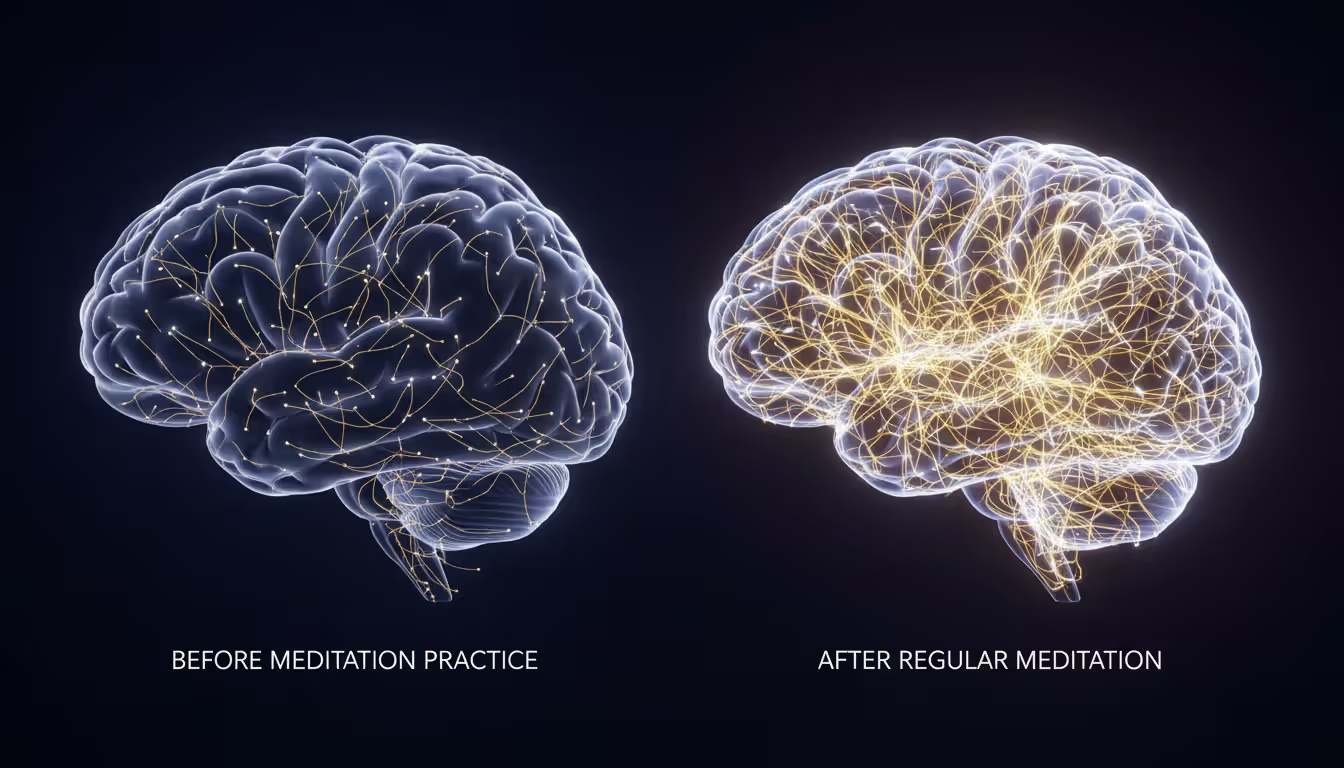
Meditation practice fundamentally alters brain structure and function through measurable neurological changes. Researchers using advanced imaging technology have documented shifts in gray matter density, modifications to neural connectivity, and alterations in brain wave patterns among regular meditators. These changes translate into tangible improvements in attention, emotional regulation, and cognitive performance.
Understanding these mechanisms helps explain why meditation produces benefits that extend far beyond the practice session itself. The brain's remarkable ability to reorganize and adapt—neuroplasticity—means that consistent meditation creates lasting structural modifications that support better mental health and cognitive function.
What Happens in Your Brain During Meditation
When you sit down to meditate, immediate neurological shifts occur within minutes. Brain imaging studies reveal that the default mode network (DMN)—a collection of brain regions active during mind-wandering and self-referential thinking—shows decreased activity during focused meditation practices. This network typically fires when you're planning, worrying, or ruminating about the past.
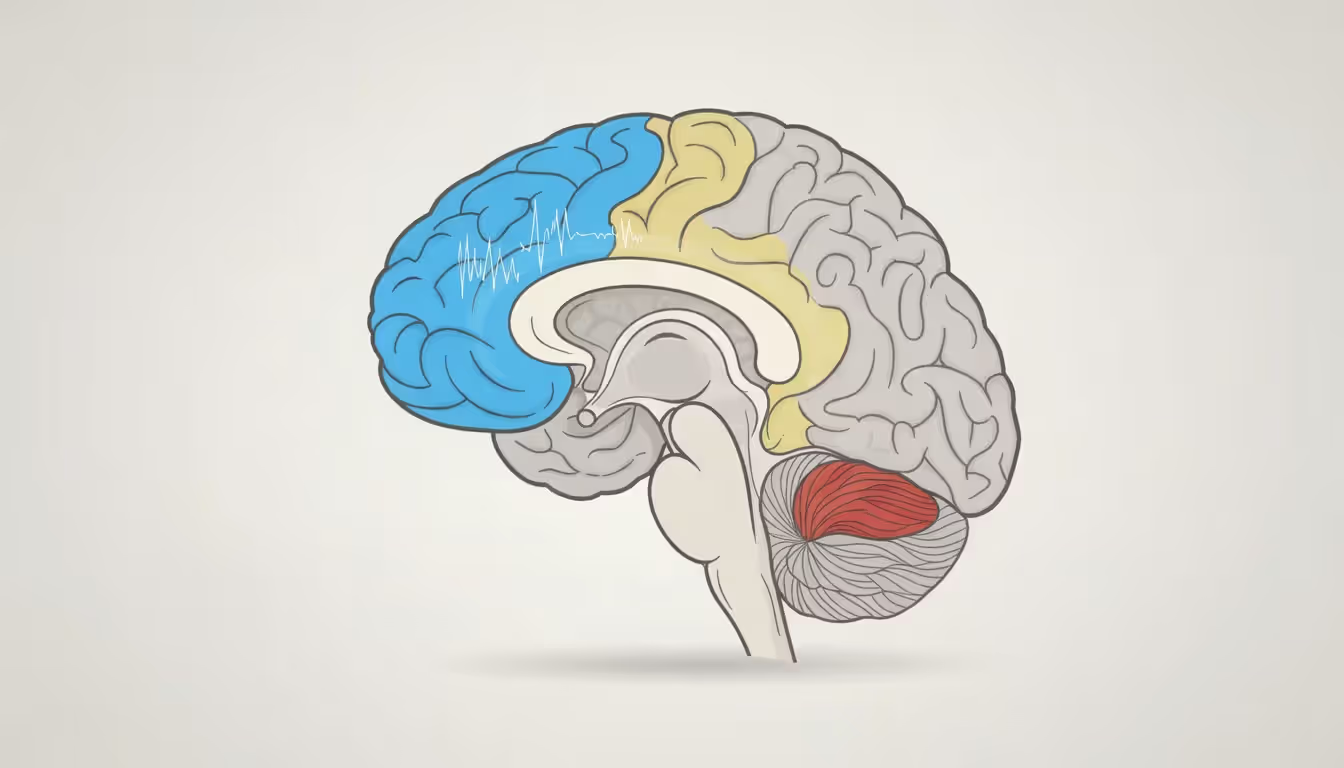
The prefrontal cortex, responsible for executive functions like decision-making and attention control, shows heightened activation during meditation. Simultaneously, the amygdala—your brain's threat-detection center—exhibits reduced activity, explaining the immediate calming effects many practitioners report.
Different meditation styles activate distinct neural pathways. Focused attention meditation, where you concentrate on breath or a mantra, engages the dorsolateral prefrontal cortex and anterior cingulate cortex, regions involved in sustained attention and conflict monitoring. Open monitoring meditation, which involves observing thoughts without attachment, activates the insula and temporal-parietal junction, areas associated with interoceptive awareness and perspective-taking.
Author: Caleb Montrose;
Source: 5sensesspa.com
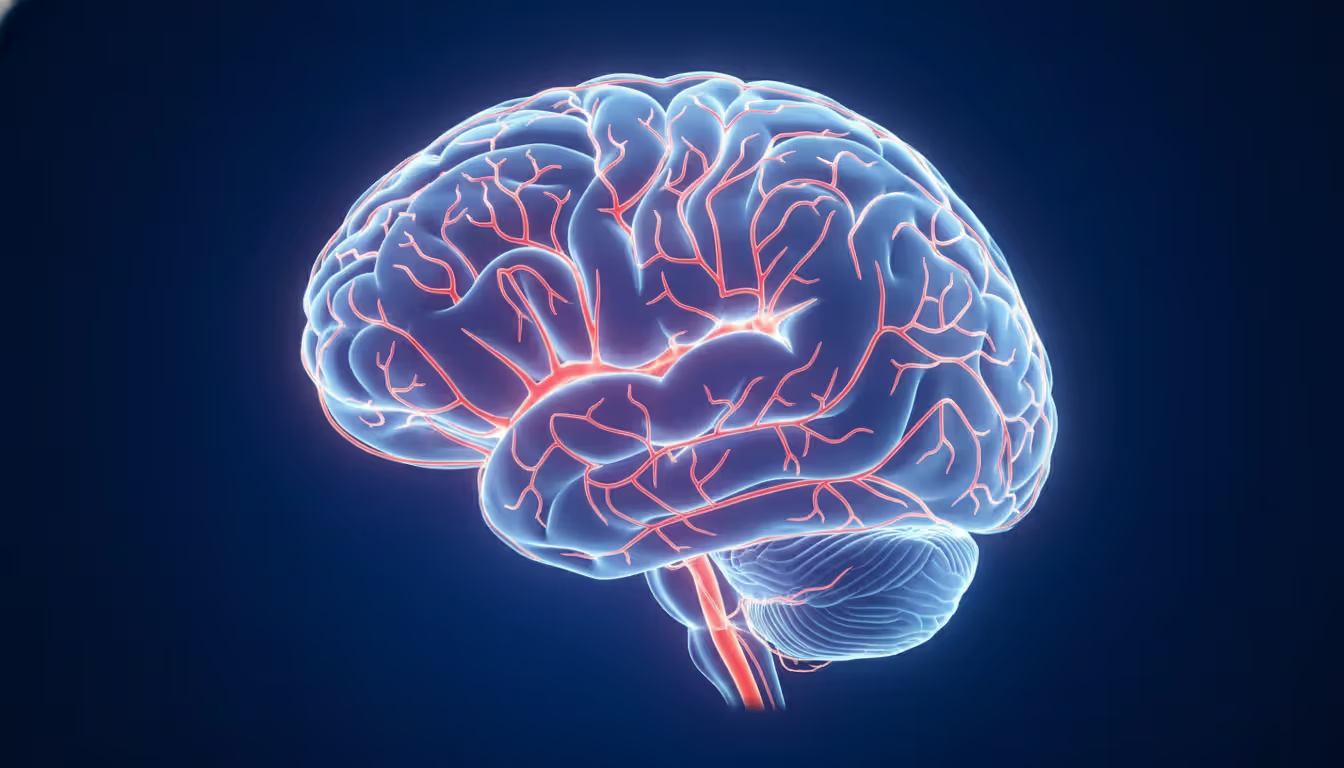
Blood flow patterns shift during practice as well. Regions associated with attention receive increased oxygenation, while areas linked to anxiety and stress response show decreased metabolic activity. These real-time changes create the mental clarity and relaxation practitioners experience during sessions.
Structural Brain Changes From Regular Meditation Practice
Long-term meditation practice produces measurable structural modifications visible on MRI scans. Research teams at Massachusetts General Hospital documented increased gray matter density in the hippocampus—critical for learning and memory—among participants who completed an eight-week mindfulness program. The same study found decreased gray matter in the amygdala, correlating with participants' self-reported stress reduction.
The prefrontal cortex shows increased cortical thickness in experienced meditators, particularly in regions governing attention and sensory processing. This thickening represents additional neural tissue, suggesting enhanced processing capacity in these areas. Interestingly, this effect appears most pronounced in older meditators, potentially offsetting age-related cortical thinning.
The anterior cingulate cortex, which helps regulate attention and emotion, demonstrates enhanced connectivity with other brain regions in regular practitioners. This improved integration allows for better coordination between cognitive and emotional processing, explaining why meditators often report improved emotional balance.
How Long Before You See Brain Changes
Structural brain modifications appear faster than many expect. Studies detect initial gray matter changes after just eight weeks of daily 30-minute practice sessions. However, the magnitude of change correlates with practice duration and consistency.
Beginners may notice functional improvements—better focus, reduced reactivity—within weeks, while structural changes require sustained practice. Research suggests that 20-30 minutes daily produces measurable results within two months. More extensive structural reorganization, particularly in connectivity patterns between brain regions, typically requires six months to several years of consistent practice.
The relationship isn't strictly linear. Someone practicing 45 minutes daily will likely see faster changes than someone practicing 15 minutes, but doubling practice time doesn't necessarily double the speed of change. Individual variation also matters—genetics, age, baseline brain structure, and even meditation technique influence how quickly changes manifest.
Gray Matter and Cortex Modifications
Gray matter contains the cell bodies of neurons, as opposed to white matter, which consists of connecting fibers. Increased gray matter density indicates more neural cell bodies or denser connections within a region, potentially improving that area's functional capacity.
Meditation-related gray matter increases concentrate in several key areas:
The hippocampus shows bilateral growth, supporting improved memory consolidation and emotional regulation. The posterior cingulate cortex, involved in self-referential processing and mind-wandering, demonstrates increased density despite showing decreased activation during meditation—suggesting improved efficiency rather than simply more activity.
The temporo-parietal junction, associated with empathy and perspective-taking, shows enhanced gray matter concentration in long-term practitioners. This finding aligns with research showing experienced meditators demonstrate greater compassion and social awareness.
Cortical thickness increases appear most robust in the prefrontal cortex and insula. These changes may protect against age-related cognitive decline, as one study found that 50-year-old meditators had cortical thickness comparable to 25-year-olds in specific regions.
Meditation's Impact on Brain Waves and Neural Activity
Brain waves represent synchronized electrical activity patterns measurable via EEG. Different wave frequencies correspond to distinct mental states, and meditation systematically shifts these patterns.
Brain Wave Type
Frequency Range
Mental State
Meditation Practice Type
Beta
13-30 Hz
Active thinking, alertness, concentration
Pre-meditation baseline
Alpha
8-12 Hz
Relaxed awareness, calm focus
Mindfulness, early meditation stages
Theta
4-7 Hz
Deep relaxation, light sleep, creative insight
Deep meditation, visualization
Delta
0.5-3 Hz
Deep sleep, unconsciousness
Advanced meditation, yogic sleep
Gamma
30-100 Hz
Peak cognitive function, heightened perception
Experienced practitioners, compassion meditation
During focused attention meditation, practitioners typically transition from beta to alpha wave dominance within 10-15 minutes. Alpha waves indicate relaxed but alert awareness—the brain is calm yet responsive. This state facilitates learning and reduces mental fatigue.
Experienced meditators can access theta states while maintaining awareness, a combination rarely observed outside meditation. Theta waves accompany deep relaxation and creative problem-solving, explaining why insights often emerge during or after practice.
Gamma wave activity presents one of meditation's most intriguing findings. Studies of Tibetan monks practicing compassion meditation revealed extraordinarily high gamma wave synchronization—far beyond levels typically observed. Gamma oscillations correlate with heightened sensory perception, information processing, and consciousness integration. This finding suggests meditation may enhance the brain's ability to bind information across different regions into coherent experience.
The transition between wave states becomes smoother with practice. Beginners may struggle to shift from beta to alpha, experiencing intrusive thoughts and restlessness. Experienced practitioners move fluidly between states, accessing deep relaxation quickly while maintaining metacognitive awareness.
Neuroplasticity and Long-Term Meditation Effects
Neuroplasticity—the brain's capacity to reorganize neural pathways based on experience—underlies meditation's lasting effects. Each meditation session strengthens specific neural circuits while allowing unused pathways to weaken, gradually reshaping brain architecture.
Attention networks demonstrate particularly robust plasticity effects. The dorsal attention network, responsible for voluntary attention control, shows enhanced connectivity in regular meditators. This translates to improved ability to sustain focus on chosen objects and resist distraction. Meanwhile, the ventral attention network, which handles involuntary attention shifts to salient stimuli, becomes less reactive, reducing susceptibility to interruption.
Emotional regulation circuits undergo significant reorganization. The connection between the prefrontal cortex and amygdala strengthens, improving top-down regulation of emotional responses. This enhanced connectivity explains why long-term meditators demonstrate reduced emotional reactivity and faster recovery from stressful events.
Author: Caleb Montrose;
Source: 5sensesspa.com
Memory consolidation pathways benefit from meditation-induced neuroplasticity. Enhanced hippocampal function improves the transfer of information from short-term to long-term memory. Working memory capacity—the ability to hold and manipulate information temporarily—increases with consistent practice, likely due to improved prefrontal cortex function.
The default mode network undergoes lasting modifications. While meditation acutely suppresses DMN activity, long-term practice alters its baseline functioning. Experienced meditators show reduced DMN activation even when not meditating, corresponding to decreased mind-wandering and rumination in daily life.
Interoceptive networks—brain regions processing internal bodily signals—demonstrate enhanced sensitivity and connectivity. The insula, particularly its anterior portion, shows structural and functional changes supporting better awareness of physiological states. This improvement helps practitioners recognize stress, hunger, or fatigue earlier, enabling more adaptive responses.
Can Meditation Help With Brain Fog and Cognitive Function
Brain fog—characterized by mental fatigue, difficulty concentrating, and sluggish thinking—responds favorably to regular meditation practice. The neurological mechanisms underlying meditation's cognitive benefits directly address factors contributing to brain fog.
Meditation improves cerebral blood flow, ensuring adequate oxygen and nutrient delivery to brain tissue. Studies using transcranial Doppler ultrasound demonstrate increased blood flow velocity in major cerebral arteries during and after meditation sessions. This enhanced circulation supports optimal neural function and may reduce the metabolic inefficiency contributing to mental fatigue.
The practice reduces inflammation markers associated with cognitive impairment. Chronic low-grade inflammation affects neurotransmitter production and neural signaling efficiency. Research indicates that eight weeks of mindfulness practice decreases inflammatory cytokines while increasing brain-derived neurotrophic factor (BDNF), a protein supporting neuron growth and survival.
Author: Caleb Montrose;
Source: 5sensesspa.com
Attention restoration represents another key mechanism. Brain fog often stems from attentional fatigue—the depletion of cognitive resources from sustained focus or information overload. Meditation provides a form of mental rest distinct from passive relaxation, allowing attention systems to recover while maintaining alertness. This restoration effect explains why brief meditation breaks improve subsequent cognitive performance.
Working memory improvements directly counter brain fog symptoms. Tasks requiring simultaneous information processing and retention—like following complex conversations or multitasking—become easier as meditation enhances prefrontal cortex function. Studies show working memory capacity increases measurably after eight weeks of practice.
Sleep quality improvements contribute significantly to reduced brain fog. Meditation regulates circadian rhythms and reduces hyperarousal, leading to deeper, more restorative sleep. Since sleep deprivation significantly impairs cognitive function, meditation's sleep benefits indirectly enhance daytime mental clarity.
Executive function gains—improved planning, decision-making, and cognitive flexibility—help practitioners navigate complex situations more efficiently, reducing the mental overload that triggers brain fog. Enhanced cognitive control means less energy wasted on task-switching and distraction management.
What Neuroscience Research Says About Mindfulness Meditation
The neuroscience of mindfulness has evolved from preliminary case studies to rigorous randomized controlled trials using advanced neuroimaging. Major research institutions have contributed converging evidence about meditation's brain effects.
Harvard Medical School researchers, led by Dr. Sara Lazar, pioneered structural MRI studies demonstrating cortical thickness increases in meditators. Their 2005 study found experienced practitioners had thicker cortices in regions associated with attention and sensory processing, with effects most pronounced in older participants. Follow-up work documented gray matter changes in just eight weeks of mindfulness-based stress reduction training.
We found differences in brain volume after eight weeks in five different regions in the brains of the two groups. In the group that learned meditation, we found thickening in four regions: the posterior cingulate, the left hippocampus, the temporo-parietal junction, and an area of the brainstem called the Pons
— Dr. Sara Lazar
University of Wisconsin-Madison's Center for Healthy Minds, directed by Dr. Richard Davidson, has produced extensive research on meditation and emotional regulation. Their work with Tibetan monks revealed extraordinary gamma wave synchronization during compassion meditation, suggesting meditation can produce brain states rarely observed otherwise. Subsequent studies with non-monastic participants showed similar patterns emerge with consistent practice.
UCLA's Laboratory of Neuro Imaging found that long-term meditators had larger volumes of gray matter throughout the brain, with particularly pronounced differences in the hippocampus and orbito-frontal cortex. Their research suggests meditation may protect against age-related brain atrophy.
Brown University researchers studying the neuroscience of mindfulness have focused on addiction and craving. Their work demonstrates that meditation alters activity in the posterior cingulate cortex—a key node in the default mode network implicated in addictive behaviors. This research has informed mindfulness-based interventions for substance use disorders.
Stanford University's neuroscience research has explored meditation's effects on attention networks and stress response systems. Their studies reveal that even brief mindfulness training modulates amygdala reactivity to emotional stimuli, suggesting rapid neuroplasticity in emotional processing circuits.
Research limitations warrant acknowledgment. Many studies involve relatively small sample sizes, and participant self-selection may introduce bias—people drawn to meditation research might differ systematically from the general population. Controlling for placebo effects presents challenges, as creating a convincing meditation placebo proves difficult. Additionally, most research examines mindfulness-based approaches, leaving other meditation traditions less thoroughly investigated.
Methodological improvements continue advancing the field. Longitudinal studies with active control groups, larger sample sizes, and standardized protocols increasingly characterize contemporary research. Advanced imaging techniques like diffusion tensor imaging now reveal white matter connectivity changes previously undetectable.
Author: Caleb Montrose;
Source: 5sensesspa.com
Frequently Asked Questions About Meditation and the Brain
How quickly does meditation change your brain?
Functional changes—shifts in brain activity patterns—can occur within a single session. Structural modifications appear more gradually, with initial gray matter changes detectable after eight weeks of daily 30-minute practice. Significant connectivity changes and cortical thickening typically require several months to years. Individual factors like practice consistency, duration, technique, age, and genetics influence the timeline. Some people notice cognitive improvements within two weeks, while structural changes continue accumulating over years of practice.
Does meditation increase gray matter in everyone?
Most research participants show gray matter increases with consistent practice, but individual responses vary. Factors affecting outcomes include baseline brain structure, age, meditation technique, practice duration and frequency, and genetic variations affecting neuroplasticity. Some individuals demonstrate robust changes within weeks, while others show minimal structural modification despite functional improvements. The absence of detectable gray matter changes doesn't mean meditation isn't working—functional connectivity and efficiency improvements may occur without visible density increases.
Which type of meditation has the strongest brain effects?
Different practices produce distinct neural effects rather than uniformly "stronger" changes. Focused attention meditation (concentrating on breath or mantra) particularly strengthens attention networks and prefrontal cortex activity. Open monitoring meditation (observing thoughts non-judgmentally) enhances insula activation and metacognitive awareness. Compassion meditation produces exceptional gamma wave synchronization and affects social cognition networks. Transcendental meditation shows strong effects on default mode network regulation. The "best" type depends on your goals—attention improvement, emotional regulation, or stress reduction—and personal preference affects consistency, the most critical factor for brain changes.
Can you reverse brain changes if you stop meditating?
Research on this question remains limited, but available evidence suggests partial reversal occurs with discontinued practice. Brain plasticity works bidirectionally—unused neural pathways weaken over time. Studies of experienced meditators who stopped practicing showed gradual reduction in some structural changes, though not complete reversal to pre-meditation baseline. Functional benefits like improved attention and emotional regulation diminish more quickly than structural changes. However, even after extended breaks, returning to practice often produces faster re-adaptation than initial learning, suggesting lasting neural modifications. Occasional practice may maintain some benefits, though less robustly than daily sessions.
How much meditation is needed to see neurological benefits?
Research demonstrates benefits across a range of practice durations. Minimum effective dose appears to be 10-15 minutes daily for functional improvements in attention and stress response. Structural brain changes typically require 20-30 minutes daily for at least eight weeks. Optimal benefits emerge with 30-45 minutes daily, though returns diminish beyond this point—doubling practice time doesn't double benefits. Consistency matters more than duration; 20 minutes daily produces better results than 90 minutes weekly. Brief sessions (5-10 minutes) still provide value, particularly for maintaining existing benefits or managing acute stress.
Does meditation work differently on younger vs. older brains?
Age influences meditation's neurological effects in several ways. Younger brains demonstrate greater overall plasticity, potentially adapting more quickly to meditation training. However, older practitioners show particularly robust effects in areas typically declining with age—meditation may counteract age-related cortical thinning more dramatically than enhancing already-thick cortices in young adults. Adolescent brains, still undergoing development, may experience different effects than mature adult brains, though research in this population remains limited. Older adults often report greater subjective benefits, possibly because meditation addresses age-related cognitive concerns more directly. Neurological benefits occur across the lifespan, but the specific changes and their magnitude vary with age.
Meditation produces measurable, meaningful changes in brain structure and function through multiple neurological mechanisms. From immediate shifts in brain wave patterns during practice sessions to long-term structural modifications in gray matter density and neural connectivity, the evidence demonstrates that meditation fundamentally alters how the brain operates.
These changes translate into practical benefits: improved attention and focus, enhanced emotional regulation, better memory consolidation, reduced stress reactivity, and potentially protective effects against age-related cognitive decline. The brain's remarkable neuroplasticity allows meditation to reshape neural circuits, strengthening beneficial pathways while reducing activity in networks associated with anxiety and rumination.
Starting a meditation practice doesn't require extensive time commitments—research shows that 20-30 minutes daily produces detectable brain changes within eight weeks. Consistency matters more than duration, and even brief sessions provide value. Whether you're addressing brain fog, seeking cognitive enhancement, or simply curious about meditation's effects, the neuroscience clearly supports its capacity to create lasting positive changes in brain health and function.
Research shows 8-14% of meditators experience significant adverse effects. From anxiety amplification to dark night experiences, meditation isn't risk-free. Understand physical and psychological dangers, who's most vulnerable, and how to recognize when practice becomes harmful
Discover how meditation interrupts the stress cycle through proven physiological mechanisms. This comprehensive guide covers meditation types, nervous system effects, cortisol reduction, workplace practices, and research-backed techniques for building a sustainable stress meditation practice
Your stomach churns before a big presentation. A stressful week leaves you bloated and uncomfortable. The connection between your mental state and digestive system isn't just in your head—it's a biological reality that meditation can help address through the gut-brain axis and vagus nerve activation
Sharing meditation with your romantic partner creates a unique space for emotional intimacy that most couples never experience. Research shows couples who practice mindfulness together report 23% higher relationship satisfaction while building deeper connection at a neurological level
The content on this website is provided for general informational and educational purposes only. It is intended to explain concepts related to meditation, mindfulness, mental health, and spiritual practices.
All information on this website, including articles, guides, and examples, is presented for general educational purposes. Meditation outcomes may vary depending on individual practices, health conditions, and guidance.
This website does not provide medical, mental health, or spiritual advice, and the information presented should not be used as a substitute for consultation with qualified professionals.
The website and its authors are not responsible for any errors or omissions, or for any outcomes resulting from decisions made based on the information provided on this website.