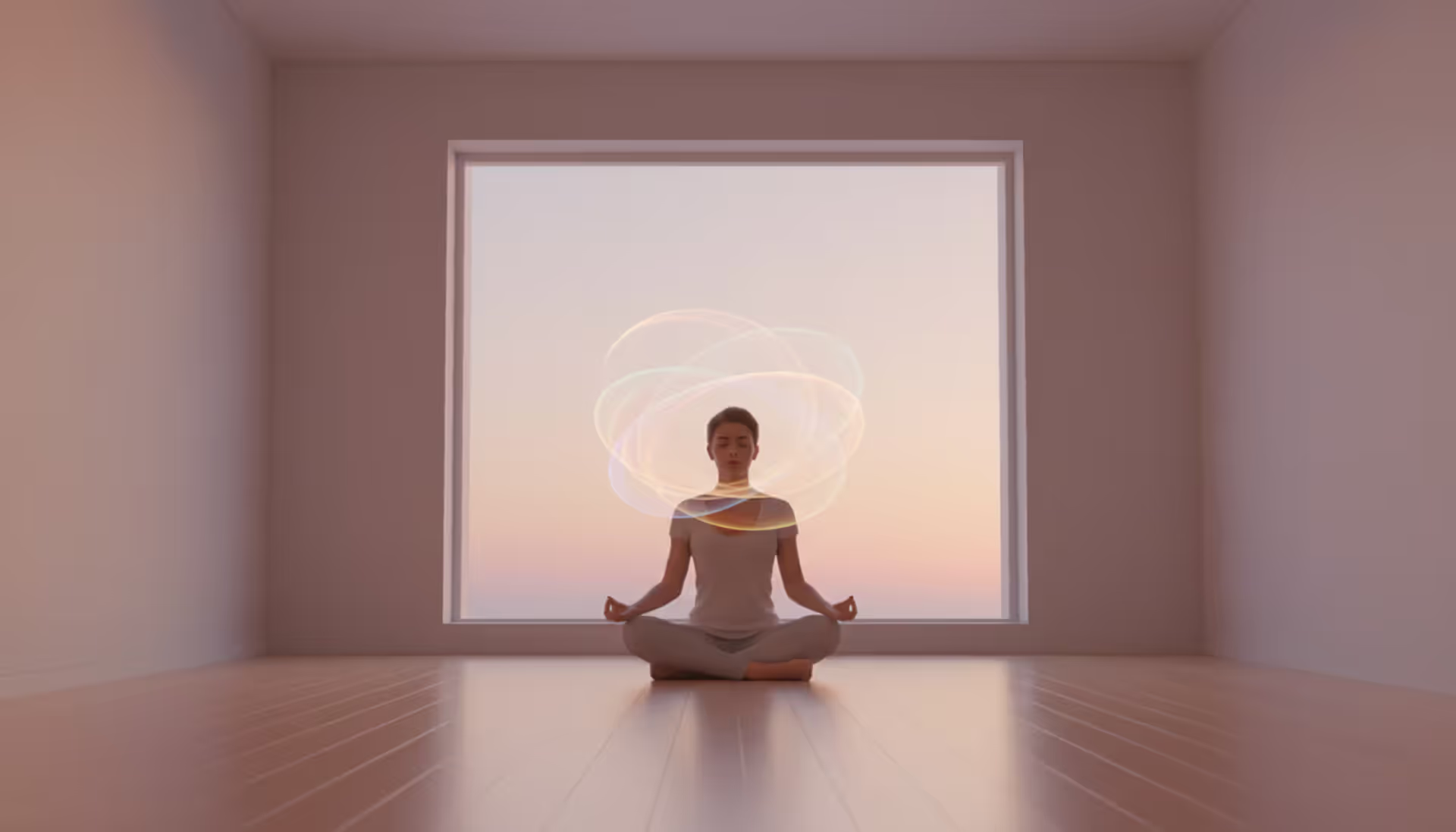
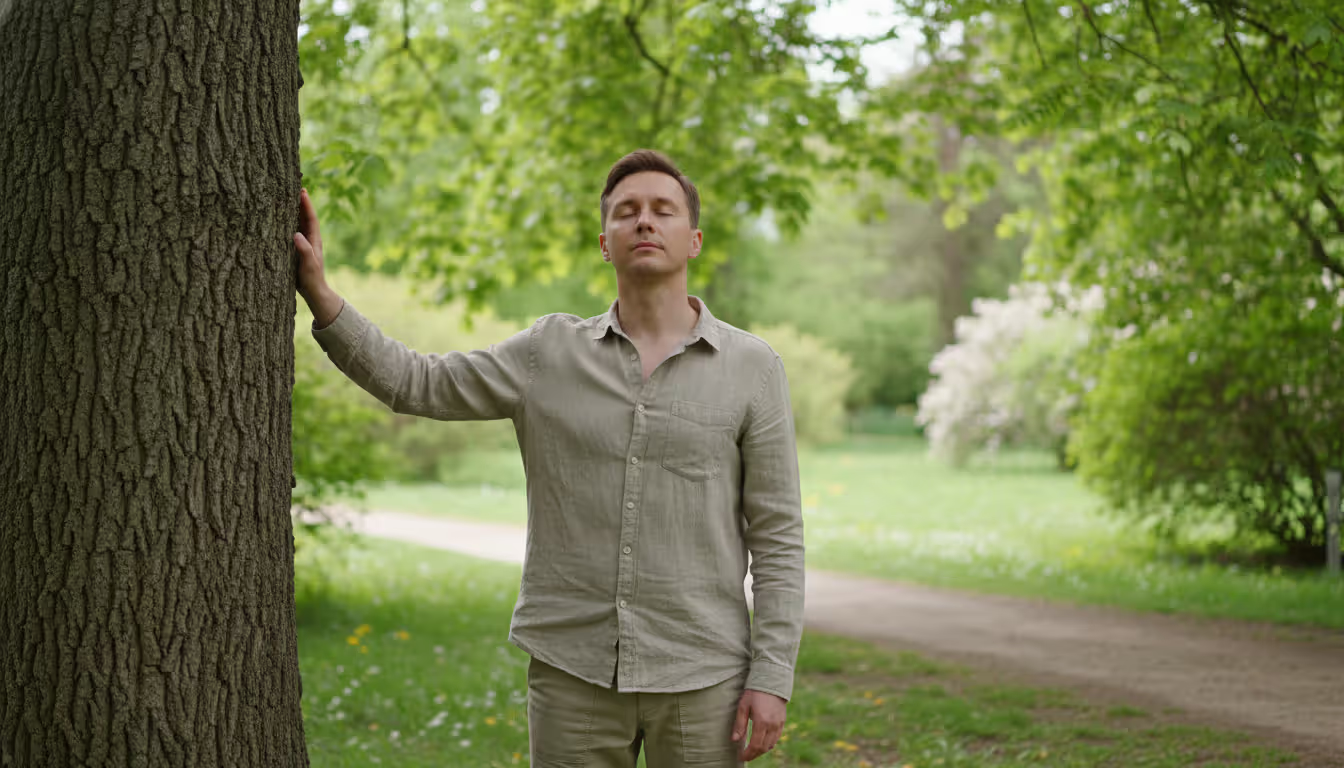
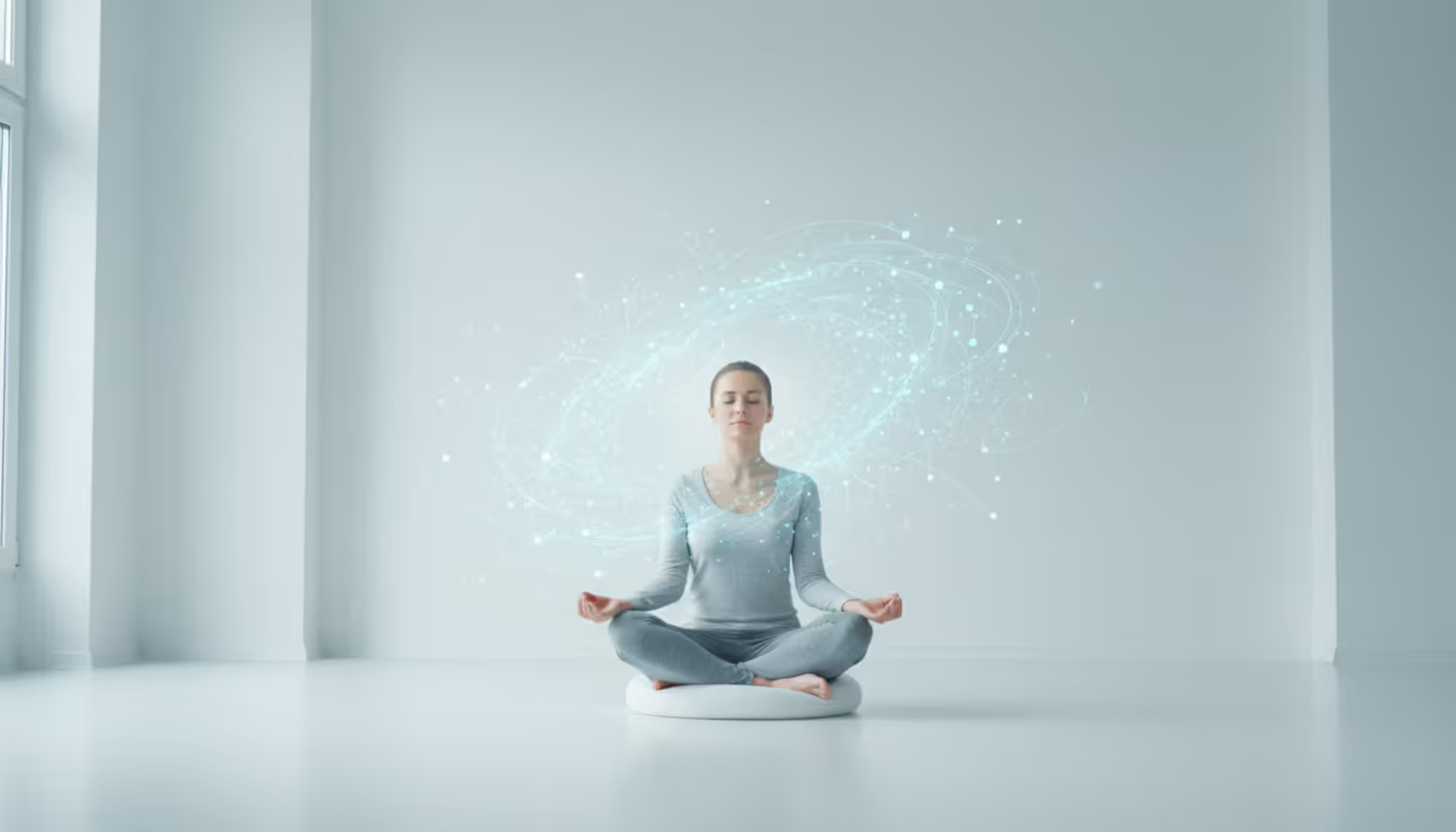
Person sitting in a calm meditation pose with eyes closed in a minimalist bright room with soft sunrise light and abstract glow around the head symbolizing mental clarity
Your phone buzzes with another work email at 9 PM. There's $847 in your checking account and rent's due in three days. Your partner just gave you that look—you know the one. And somewhere in the background, Instagram reminds you that everyone else seems to have it together.
Sound familiar?
Here's the thing: your body still responds to these daily pressures the same way your ancestors reacted to spotting a predator. Elevated heart rate, shallow breathing, cortisol flooding your bloodstream. Except you're dealing with fifty of these micro-threats every single day, and there's no lion to outrun and reset your system.
You can't eliminate stress—that's just reality. But you can completely change how it affects you. Meditation isn't about sitting cross-legged and achieving enlightenment. It's a practical tool that costs nothing, works anywhere, and actually changes your brain's wiring. Not metaphorically. Literally.
Scientists can now see these changes on brain scans. After eight weeks of regular practice, specific brain regions grow denser. Hormone levels shift. Your nervous system develops a better "off switch." These aren't claims from wellness influencers—they're findings from places like Harvard Medical School and published in journals like JAMA.
This guide will show you exactly how it works and how to start, even if you've tried before and thought "my brain's too busy for this."
How Does Meditation Help with Stress
Think about the last time someone cut you off in traffic. What happened in your body before you even finished the thought "what an idiot"? Your chest tightened. Hands gripped the wheel. Jaw clenched.
That's your amygdala—your brain's alarm system—reacting in milliseconds. It doesn't wait for your rational mind to assess the situation. It just reacts.
Here's what meditation actually does: it builds up your prefrontal cortex, the part of your brain that can hit pause on that alarm. With practice, you get better at noticing "oh, I'm having a stress response" before you're fully swept into it. That split-second of awareness? That's everything.
Let me be clear—you won't suddenly stop having stress reactions. You'll just recover faster. Way faster.
During meditation, you practice a specific pattern thousands of times. A worrying thought appears (maybe that presentation next Tuesday). You notice it. You don't argue with it or try to suppress it. You just acknowledge "there's that thought again" and bring attention back to your breath.
Seems simple, right? Almost too simple.
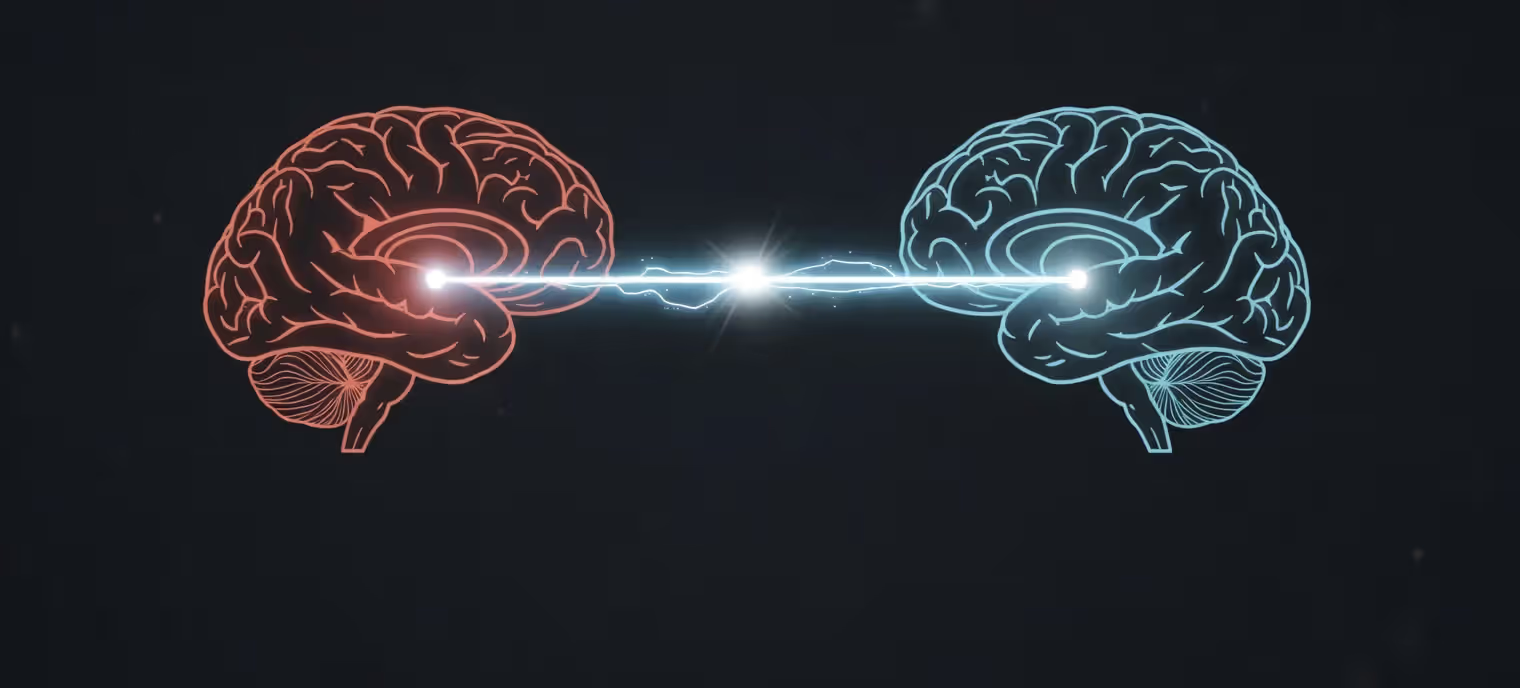
But here's what's happening under the hood: every time you notice and redirect, you're strengthening specific neural pathways. Brain scans show that experienced meditators have thicker connections between their prefrontal cortex and amygdala. Translation: a more responsive emergency brake for your stress response.
The problem with modern stress is that your body can't tell the difference between a work deadline and actual physical danger. Both trigger the same ancient survival system. Meditation recalibrates your threat detector so it stops treating every email like a charging bear.
One study tracked people's stress responses before and after eight weeks of meditation practice. Same stressful situations, completely different reactions. Their heart rates still increased, but returned to baseline 60% faster. They still felt anxious, but the intensity dropped by nearly half.
That's the real goal here—not eliminating stress, but shrinking the time you spend stuck in it.
Author: Caleb Montrose;
Source: 5sensesspa.com
How Meditation Calms the Nervous System
Your nervous system has two modes: gas pedal (sympathetic) and brake pedal (parasympathetic). Most people spend their entire day riding the gas—elevated heart rate, shallow chest breathing, constantly tensed shoulders.
Meditation activates the brake.
The main mechanism? Your vagus nerve. This nerve connects your brain to your heart, lungs, and digestive system. When you breathe slowly and intentionally—which happens in basically every meditation style—you're directly stimulating this nerve. It sends a signal back to your brain: "We're safe. Stand down."
You can actually measure this. Scientists track something called heart rate variability (HRV), which sounds technical but basically measures how well your body switches between stressed and relaxed states. Higher HRV means you're more resilient and adaptable. Chronic stress tanks your HRV. Regular meditation rebuilds it.
A 2024 study measured HRV in 180 people before and after a twelve-week meditation program. The meditation group showed an average 23% improvement in HRV. The control group? No change.
These aren't just feelings—they're measurable physical shifts. During meditation, your oxygen consumption drops by 10-20%. Your blood pressure decreases. Skin conductance (a marker of anxiety) goes down. These changes start happening within 15 minutes of practice.
Even better: these benefits spill over into your regular day. After several weeks of consistent practice, your baseline stress markers improve. You're calmer even when you're not meditating.
Does Meditation Reduce Cortisol
Short answer: yes. Longer answer: it depends on how much you practice and where you're starting from.
Cortisol isn't the enemy—you need it to wake up in the morning and handle challenges. The problem is chronic elevation. When cortisol stays high for weeks and months, it wrecks your sleep, weakens your immune system, increases inflammation, and feeds anxiety and depression.
A major 2025 meta-analysis looked at 37 different studies measuring cortisol levels in meditators. The findings: people who meditated for at least eight weeks showed cortisol reductions between 12-16% compared to non-meditators.
Here's the interesting part: the effect was strongest in people who started with the highest stress levels. If your cortisol is already in normal range, meditation won't drop it much lower—it seems to restore balance rather than just suppress the hormone.
Don't expect instant results though. Most research shows measurable cortisol changes appearing after 4-6 weeks of daily practice, typically 15-30 minutes per session. Individual sessions can temporarily lower cortisol, especially longer ones (30-45 minutes), but the lasting changes take time.
One Harvard study measured cortisol in office workers before and after an 8-week meditation program. Their baseline cortisol (measured via saliva samples throughout the day) dropped by an average of 14%. Three months after the program ended, the levels stayed low—suggesting the changes stick even when practice becomes less frequent.
Author: Caleb Montrose;
Source: 5sensesspa.com
Physical Changes During Meditation Practice
Within five minutes of starting meditation, measurable shifts occur in your body. Your metabolism slows in a way that's distinct from sleep or just sitting quietly. Blood lactate levels (associated with anxiety and muscle tension) drop significantly.
Your brainwaves shift from beta (active thinking, problem-solving) to alpha and theta (relaxed awareness, deep calm). This isn't sleep—you're still conscious and aware. It's a unique state that combines rest with alertness.
Blood flow in your brain literally redistributes. The default mode network—brain regions active during worry and rumination—quiets down. Meanwhile, areas controlling attention and body awareness light up.
Scientists using fMRI scans have tracked these patterns in real-time. When experienced meditators sit down to practice, you can watch specific brain regions activate and deactivate in predictable sequences. The changes are consistent enough that researchers can often tell whether someone is meditating just by looking at their brain scan.
Long-term practitioners show actual structural changes. The cortex (the brain's outer layer) becomes measurably thicker in regions associated with attention, sensory processing, and emotional regulation. These aren't subtle differences—we're talking about growth visible on standard brain imaging.
Sara Lazar's team at Harvard found that 50-year-old long-term meditators had the same cortical thickness in certain brain regions as 25-year-olds. Meditation appears to slow or even reverse typical age-related cortical thinning.
Types of Meditation for Tension Relief
No single meditation style works for everyone. Your personality, schedule, and specific stress patterns all matter. Here's what actually works, based on research and what real people stick with:
Releases unconscious muscle clenching, improves body awareness, helps with insomnia
Breath Focus
Acute anxiety, panic symptoms, need quick relief
3-20 min
Easiest to learn
Fast-acting, works anywhere (even in meetings), directly calms nervous system
Guided Audio
Complete beginners, specific issues, feeling lost
10-30 min
Minimal learning curve
Provides structure, addresses targeted problems, reduces "am I doing this right?" anxiety
Loving-Kindness
Relationship stress, self-criticism, anger
10-20 min
Moderate difficulty
Softens harsh self-talk, builds compassion, improves mood and social connection
Transcendental Meditation
Deep stress relief, willing to invest in training
20 min twice daily
Requires certified instruction
Extensively researched, produces deep relaxation states, strong stress reduction
Mindfulness means sitting still and placing attention on something happening right now—usually your breath, but could be body sensations or sounds around you. When your mind wanders (and it will, constantly), you notice that it wandered and bring it back. That's it. That's the whole practice.
Sounds too simple to do anything, right? But that redirect—noticing and returning—strengthens the exact brain circuits involved in emotional regulation and impulse control.
Body scan involves slowly moving attention through different body parts—starting at your toes, moving up through your legs, torso, arms, shoulders, neck, and face. You're not trying to relax anything, just noticing what's there. Tightness in your jaw? Just notice it. Warmth in your hands? Notice that too.
Most people discover they've been unconsciously clenching muscles for hours or days. Your shoulders might be up near your ears. Your stomach muscles rigid. Just the act of noticing often allows natural release.
Breath-focused practices range from simple breath counting (counting each exhale up to ten, then starting over) to structured patterns like box breathing: inhale for 4 counts, hold for 4, exhale for 4, hold for 4. Repeat.
Your breath is always available, always happening right now. It's the most portable anchor you have. Stressed breathing is shallow and fast. Deliberately slowing it down triggers your parasympathetic nervous system within minutes.
Guided meditations use a recorded voice walking you through the process. This works great if silent meditation feels too unstructured or your mind immediately races to your to-do list. The guidance gives your thinking mind something to follow.
Apps like Insight Timer have thousands of free options. Search for "stress relief" or "workplace anxiety" and you'll find dozens of 10-minute options you can try during lunch.
Loving-kindness involves silently repeating phrases like "May I be peaceful, may I be healthy, may I be safe" while directing genuine goodwill toward yourself, then toward others (friends, neutral people, even difficult people).
This sounds touchy-feely, but research shows it's particularly effective for reducing self-attacking thoughts and improving positive emotions. If your stress involves relationship conflicts or harsh inner criticism, this style often helps more than breath-focused approaches.
Starting a Stress Meditation Practice
Here's what doesn't work: deciding you're going to meditate for 30 minutes every morning starting tomorrow, buying a special cushion, downloading three apps, and feeling motivated for exactly four days before you quit.
Here's what does work: committing to 5 minutes (seriously, just five) at a time that's already built into your routine.
Your brain changes through repetition, not occasional heroic efforts. Ten meditation sessions of 5 minutes each will produce more lasting change than one 50-minute session followed by nothing for two weeks.
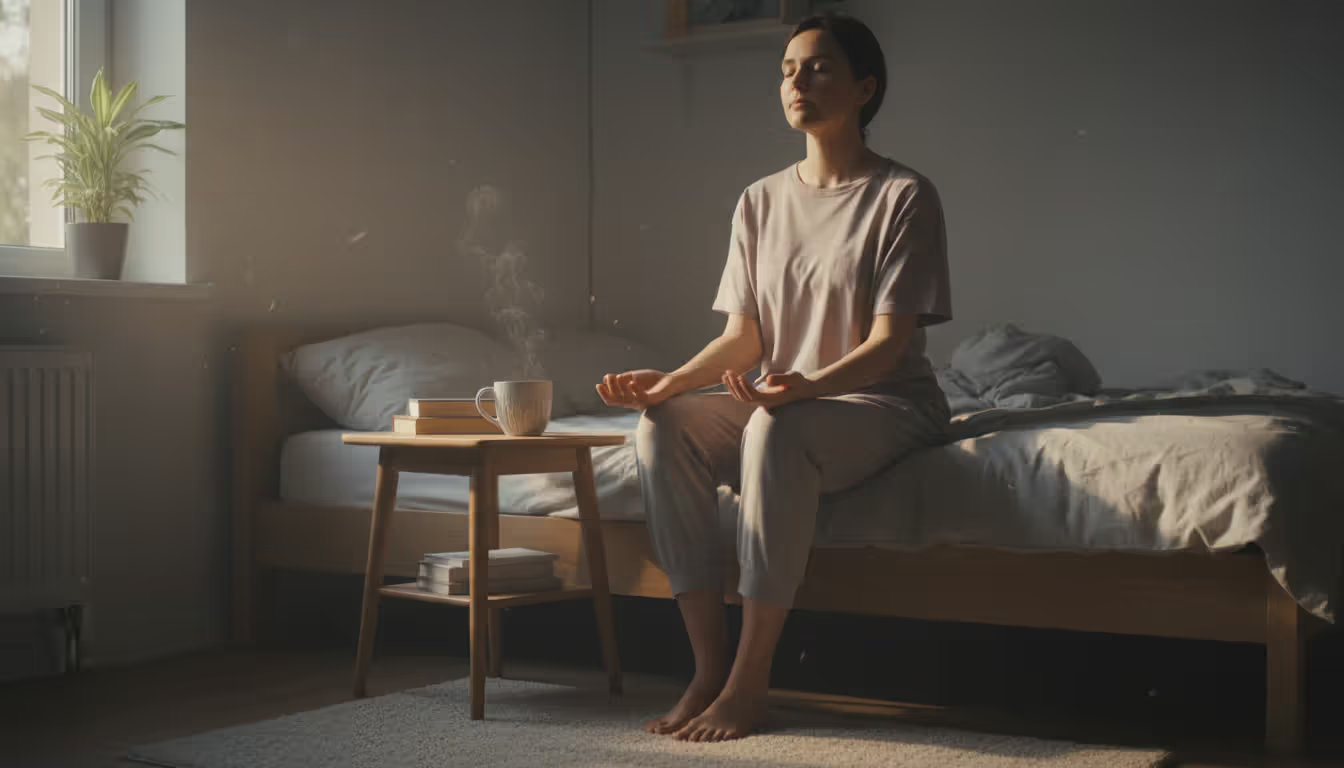
Start with something stupidly achievable. Right after you brush your teeth in the morning, sit on the edge of your bed and do 5 minutes of breath counting. That's it. Do this for two weeks before changing anything.
Most people pick morning because it sets a calmer tone before the day's chaos accelerates. But if you're not a morning person, evening works fine—it helps decompress accumulated stress and often improves sleep quality.
You don't need a meditation room. You don't need a cushion. You need a spot where you won't be interrupted for 5-10 minutes. Some people meditate in their parked car before heading into work. Others use a chair in their bedroom. One person I know sits in their office bathroom stall for 7 minutes every afternoon.
Common obstacles you'll hit:
Physical discomfort: Don't force yourself into cross-legged positions if that hurts your knees or back. Sit in a regular chair with your feet flat on the floor. Comfort matters more than looking like a meditation poster.
Mental restlessness: Your mind will race. You'll think about what to make for dinner, that email you forgot to send, whether you left the stove on. This is completely normal. The practice isn't achieving mental silence—it's noticing when you've drifted and coming back. You might do this 40 times in a 10-minute session. That's 40 successful repetitions, not failure.
Believing you're bad at it: There's no such thing as bad meditation. If you showed up and attempted to focus, you did it right. Even "terrible" sessions where your mind raced the whole time are building the neural pathways you need.
Track your practice with simple calendar check marks. Jerry Seinfeld famously used this "don't break the chain" method for writing jokes. It works for meditation too. Seeing a string of consecutive days creates surprising motivation to keep going.
Author: Caleb Montrose;
Source: 5sensesspa.com
Guided Meditations for the Workplace
Office environments create specific stress patterns: back-to-back meetings, difficult conversations with colleagues, decision fatigue, constant interruptions. Standard meditation advice often doesn't fit these contexts.
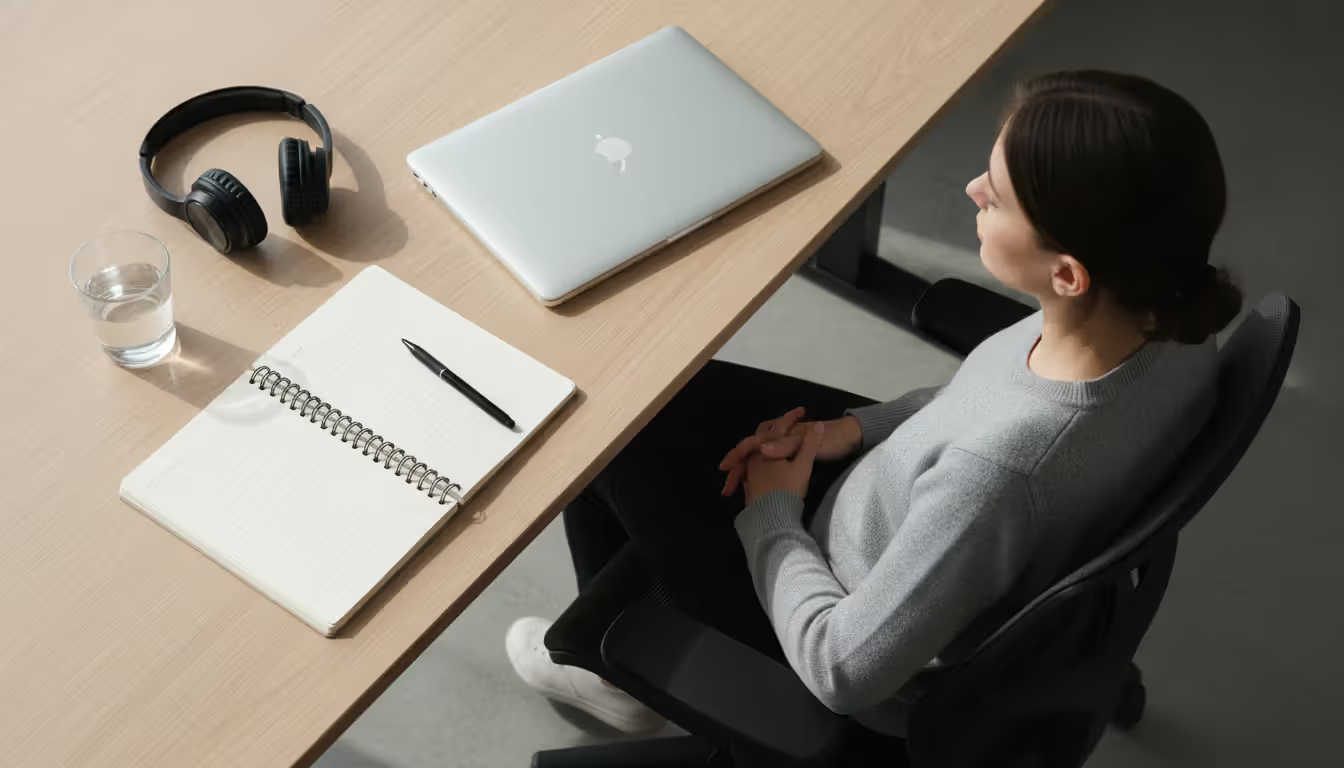
Workplace meditation needs to be quick (3-10 minutes), discreet (ideally doesn't require lying down or obviously closing your eyes in an open office), and targeted to specific situations.
Apps like Calm for Business and Headspace for Work have meditations specifically for things like "before a difficult conversation" or "midday energy reset" or "letting go of a mistake." These typically run 5-8 minutes.
A simple technique you can do at your desk: Set a timer for 5 minutes. Close your eyes (or lower your gaze if that feels too conspicuous). Count each exhale from 1 to 10, then start over. When you lose count—and you will—just start back at 1. That's it.
One manager I know blocks off 15 minutes on his calendar every day at 2 PM labeled "focus time" and uses it for workplace meditation. His team thinks he's doing deep work. He's actually sitting in his office doing breath counting to reset from morning stress before afternoon meetings.
Some companies now have designated quiet rooms or wellness spaces. If yours doesn't, propose one to HR. Frame it as a productivity and retention investment—which it is. Even a small unused conference room with a lock and a "do not disturb" sign works.
The key is building it into your actual routine rather than waiting for an ideal moment. That moment won't come. Schedule it like you'd schedule a meeting.
Creating a Daily Meditation Routine
Habit research shows that linking new behaviors to existing routines dramatically increases follow-through. Don't just decide to "meditate daily." Decide: "Right after I pour my morning coffee, I'll sit in the kitchen chair and meditate for 7 minutes."
That specificity matters. Your brain loves automatic patterns. Give it a clear trigger (finishing coffee) and a specific action (kitchen chair, 7 minutes).
Commit to a 14-day experiment rather than an open-ended "I should do this forever." Tell yourself: "I'm testing this for two weeks, then I'll evaluate." This removes the overwhelming pressure of permanent commitment while giving enough time to notice real benefits.
Most people see changes in sleep quality and stress reactivity within this window. You might notice you're recovering from frustrations faster, or that your mind feels slightly less cluttered in the morning.
Expect resistance around days 3-5 and again around day 11. These are predictable drop-off points. The initial excitement has faded but benefits haven't fully emerged yet. Push through these windows and the practice becomes noticeably easier.
Having an accountability partner helps. Find someone else who wants to build a meditation habit. Text each other daily confirmations: "Done" or "Skipped today." Just knowing someone's checking creates enough social pressure to follow through on days when motivation is low.
Use implementation intentions: "If I feel resistance to meditating, I'll sit down anyway and commit to just 2 minutes." You can always stop at 2 minutes. But usually, starting is the hardest part—once you're sitting, continuing to 5 or 10 feels easier.
Formal practice builds a skill you can use all day in micro-doses. These techniques take 30 seconds to 2 minutes and work anywhere:
Breathing resets: Before responding to a frustrating email, take three slow breaths. Before walking into a tense meeting, pause outside the door for three breaths. Between work tasks, take three breaths. This creates tiny gaps that prevent stress from compounding throughout the day.
Progressive muscle relaxation: Starting with your feet, tense the muscles hard for 5 seconds, then release completely. Notice the difference between tension and relaxation. Move up through calves, thighs, stomach, hands, arms, shoulders, jaw, forehead. The whole sequence takes 10-15 minutes and concretely demonstrates the difference between holding and releasing.
This works particularly well right before bed if stress is affecting your sleep.
Grounding exercises: When stress creates mental spiraling or panic symptoms, the 5-4-3-2-1 technique interrupts the pattern. Name 5 things you can see right now. 4 things you're touching. 3 sounds you hear. 2 things you smell. 1 thing you taste.
This yanks your attention out of anxious thoughts and into immediate sensory reality. Your parasympathetic system responds to this shift within seconds.
Mindful transitions: Instead of rushing from task to task, pause for three breaths between activities. Finished a work call? Three breaths. About to start cooking dinner? Three breaths. Just got in your car? Three breaths before driving.
These tiny pauses prevent the stress snowball effect where tension from one situation bleeds into everything else.
Single-tasking: When eating lunch, just eat. Notice flavors, textures, temperature. Not while scrolling Instagram or answering emails. When walking, feel each foot contact the ground rather than mentally rehearsing upcoming conversations.
This reduces cognitive overload—trying to process too many inputs simultaneously—which is a massive but often invisible stress source.
What Research Says About Meditation and Stress Relief
The science on meditation has evolved from preliminary studies to large-scale randomized controlled trials published in top medical journals. Here's what we actually know:
A 2023 study in JAMA Psychiatry randomly assigned 276 people with diagnosed generalized anxiety disorder to either an 8-week mindfulness meditation program or standard pharmaceutical treatment (anxiolytic medication). Results: the meditation group showed equivalent anxiety reduction compared to medication, with fewer side effects and better maintenance of improvements at 6-month follow-up.
Think about that. Meditation matched pharmaceutical intervention for clinical anxiety.
Massachusetts General Hospital researchers scanned people's brains before and after 8 weeks of Mindfulness-Based Stress Reduction (MBSR). They found increased gray matter density in the hippocampus (involved in learning and memory) and decreased amygdala density (your threat-detection center). These structural changes directly correlated with participants' reported stress reduction.
Not just "I feel better"—actual visible brain changes matching the subjective experience.
A comprehensive 2025 meta-analysis reviewed 104 studies including over 9,000 participants. Conclusion: meditation produces significant stress reduction across diverse populations, with effect sizes comparable to other established interventions. Programs lasting 8+ weeks with sessions of 20+ minutes showed the strongest effects, though even brief daily practices yielded measurable benefits.
We found long-term meditators have increased gray matter in the insula and sensory regions, part of the auditory and sensory cortex—which makes sense since mindfulness meditation emphasizes sensory awareness. We also saw more gray matter in the frontal cortex, associated with working memory and executive decision-making
— Dr. Sara Lazar
Workplace meditation programs show encouraging ROI. A 2024 study of 350 employees at a financial services firm found that those completing a 10-week mindfulness program reported 28% lower stress levels, 20% better sleep quality, and took 32% fewer stress-related sick days compared to control groups. The company calculated roughly $3 return for every $1 invested.
Not every study shows dramatic effects—some find minimal changes, particularly when meditation is practiced inconsistently or for very short durations. The research consensus: meditation works best as one component of comprehensive stress management alongside adequate sleep, regular exercise, social connection, and addressing practical stressors when possible.
Frequently Asked Questions
How long does it take for meditation to reduce stress?
You might notice subtle shifts within 2-3 weeks of daily practice—maybe you recover from annoyances a bit faster or sleep slightly better. More substantial changes typically appear after 6-8 weeks. That said, individual sessions can provide immediate stress relief. Your heart rate and cortisol can drop within 20 minutes of meditation. But lasting changes to your baseline stress reactivity require consistent practice that rewires habitual patterns. Think of it like strength training: one workout helps, but real transformation takes weeks of consistency.
Can meditation replace therapy for stress management?
No—meditation complements therapy but shouldn't replace it for clinical conditions. If stress is severely impairing your daily functioning, damaging your relationships or work performance, or involves thoughts of self-harm, you need professional mental health support. That said, many therapists now incorporate meditation into treatment, and research suggests combining therapy with meditation often produces better outcomes than either alone. Meditation works best for managing everyday stress and building general resilience, not treating diagnosable disorders.
What type of meditation is best for beginners with stress?
Start with breath-focused meditation or guided audio sessions. Breath practices are straightforward—you don't need any special knowledge, and your breath gives you an immediate anchor when your mind wanders. Guided meditations provide structure that eliminates the "am I doing this right?" anxiety that trips up many beginners. Apps like Insight Timer, Calm, or Headspace offer free guided sessions specifically for stress relief. Start with 5-10 minutes rather than attempting longer sessions that might feel overwhelming.
How often should I meditate to see results?
Daily practice produces the most reliable benefits, even when sessions are short. Research shows that 10-20 minutes daily creates more substantial changes than longer but sporadic practice. Your brain adapts through consistent repetition—daily meditation reinforces the neural pathways involved in attention control and emotional regulation. If daily feels impossible, aim for 5-6 days weekly. Consistency matters more than perfection. Missing occasional days won't derail your progress, but frequent gaps prevent benefits from accumulating.
My mind keeps wandering during meditation—what am I doing wrong?
Nothing. Mind wandering happens to everyone, including people who've meditated for 30 years. The practice isn't achieving an empty mind—it's catching yourself when attention has drifted and gently bringing it back to your focal point (breath, body sensations, whatever you've chosen). You might redirect your attention 50 times in a 10-minute session. That redirection is the practice. Each time you notice and return, you're strengthening attentional control. Getting frustrated about wandering just adds another layer of stress. Instead, notice it happened ("oh, there I go again") and redirect without judgment.
Can I meditate if I feel too anxious to sit still?
Yes, but you might need modified approaches. If sitting motionless intensifies your anxiety, try walking meditation—focus on the physical sensations of each step. Some people find gentle movement practices like yoga or tai chi provide better entry points than seated stillness. You can also start with very brief sessions—even 2-3 minutes—and gradually extend duration as sitting becomes more comfortable. Highly anxious people sometimes respond better to progressive muscle relaxation than breath focus because it gives the mind specific sequential tasks. If anxiety is severe or includes panic symptoms, consult a mental health professional who can recommend appropriate modifications or determine whether meditation suits your current condition.
Meditation won't make stress disappear from your life. That's not the point. The point is fundamentally changing your relationship with stress—developing awareness of your patterns and reducing how long you stay stuck in reactions.
The evidence is solid: regular meditation produces measurable changes in brain structure, hormone regulation, and nervous system function that translate to real-world stress reduction. But knowing the science doesn't help unless you actually practice.
The most effective meditation practice is whichever one you'll actually do consistently. Start small, experiment with different approaches, and prioritize building a sustainable routine over perfecting technique. Whether you have 5 minutes or 45, whether you practice in a quiet room or a noisy office, meditation offers accessible tools for managing the unavoidable pressures of modern life.
The benefits extend beyond your formal practice sessions. As you develop better awareness of your stress patterns and stronger capacity for nervous system regulation, you'll likely notice improvements in sleep, relationships, decision-making, and overall wellbeing. Stress won't vanish, but your capacity to handle it without becoming overwhelmed will steadily expand.
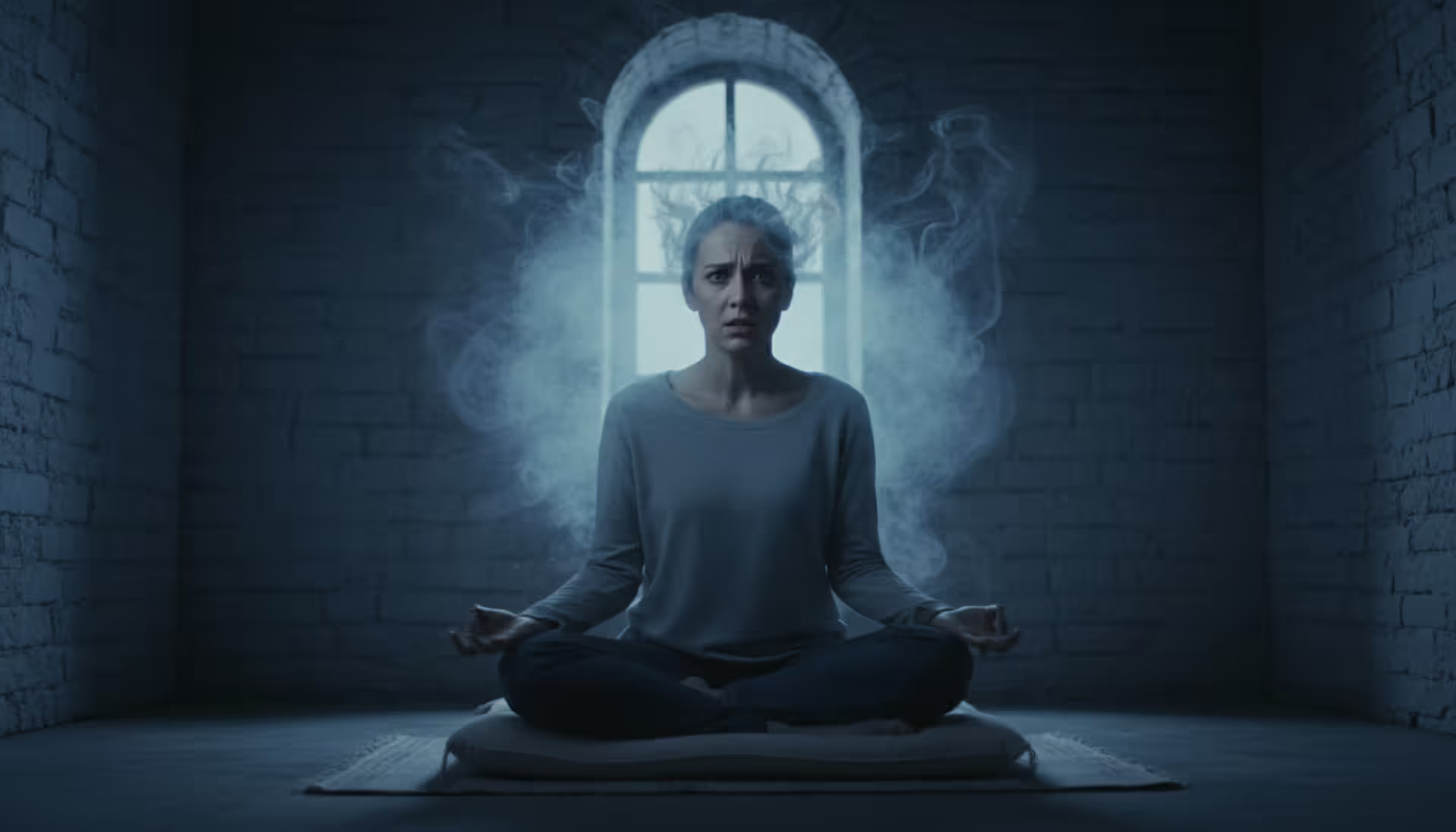
Research shows 8-14% of meditators experience significant adverse effects. From anxiety amplification to dark night experiences, meditation isn't risk-free. Understand physical and psychological dangers, who's most vulnerable, and how to recognize when practice becomes harmful
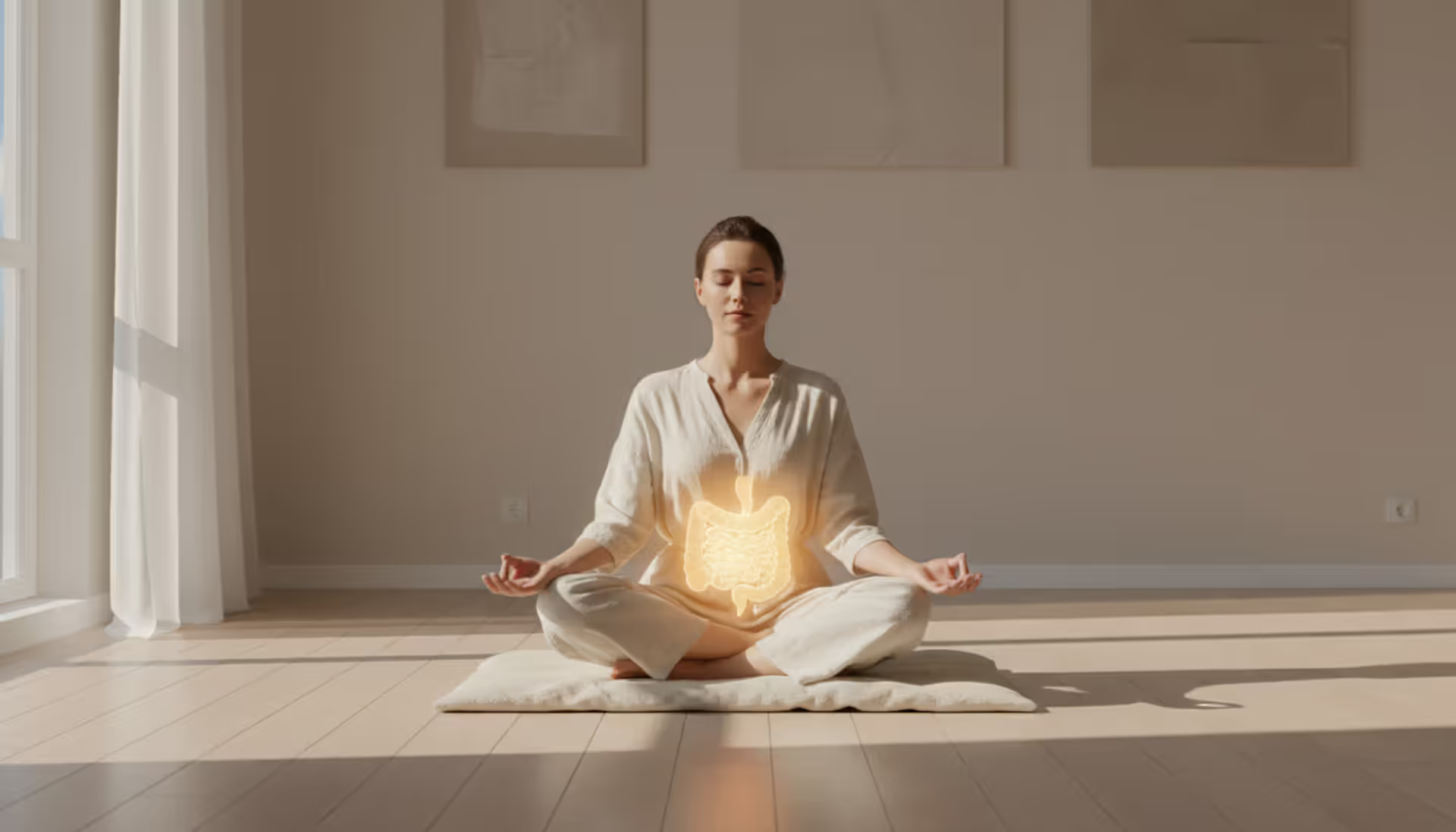
Your stomach churns before a big presentation. A stressful week leaves you bloated and uncomfortable. The connection between your mental state and digestive system isn't just in your head—it's a biological reality that meditation can help address through the gut-brain axis and vagus nerve activation
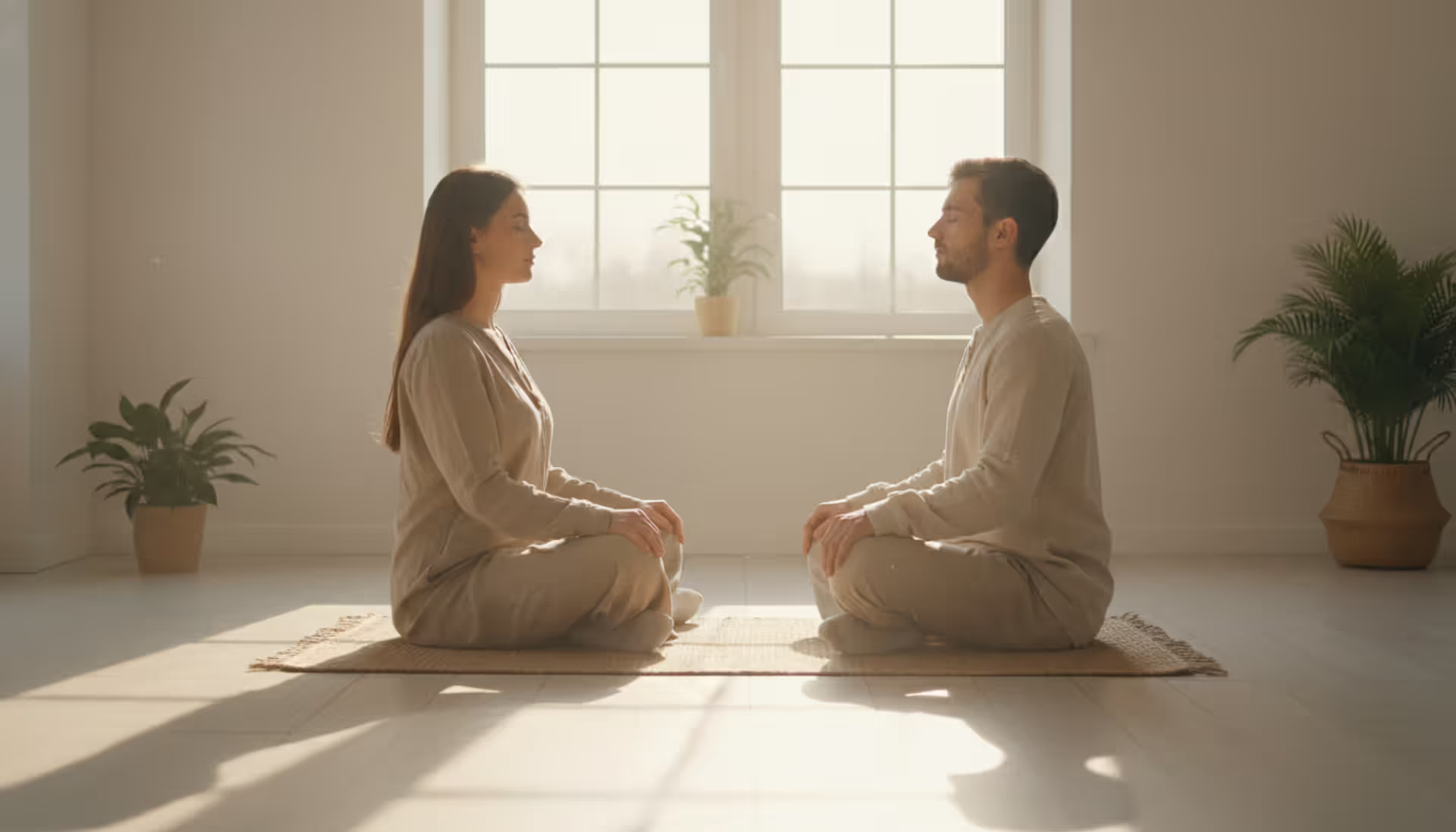
Sharing meditation with your romantic partner creates a unique space for emotional intimacy that most couples never experience. Research shows couples who practice mindfulness together report 23% higher relationship satisfaction while building deeper connection at a neurological level
Living with chronic pain requires more than medication. Research shows meditation fundamentally changes how the brain processes pain signals, offering relief through neuroplastic changes. Learn evidence-based techniques including body scans, MBSR, and breath-focused practices that reduce pain intensity by 22-30%
The content on this website is provided for general informational and educational purposes only. It is intended to explain concepts related to meditation, mindfulness, mental health, and spiritual practices.
All information on this website, including articles, guides, and examples, is presented for general educational purposes. Meditation outcomes may vary depending on individual practices, health conditions, and guidance.
This website does not provide medical, mental health, or spiritual advice, and the information presented should not be used as a substitute for consultation with qualified professionals.
The website and its authors are not responsible for any errors or omissions, or for any outcomes resulting from decisions made based on the information provided on this website.