If you've spent nights staring at the ceiling while your mind replays tomorrow's to-do list, you're not alone. Roughly 30% of American adults report symptoms of insomnia, and many are searching for alternatives to prescription sleep aids. Meditation has emerged as a popular solution, but does it actually work, or is it just another wellness trend?
The short answer: yes, meditation can significantly improve sleep quality for many people. Research shows that regular meditation practice changes how your brain processes stress, regulates hormones tied to sleep cycles, and helps you shift from a state of mental hyperactivity to one that promotes rest. But not all meditation techniques work equally well for sleep, and timing matters more than most people realize.
How Meditation Affects Sleep Quality and Brain Activity
When you meditate, you're not just "relaxing"—you're actively reshaping your nervous system's response to stress. Your body operates through two primary modes: the sympathetic nervous system (fight-or-flight) and the parasympathetic nervous system (rest-and-digest). Most sleep problems stem from an overactive sympathetic response that keeps cortisol levels elevated long after you've left the office or put down your phone.
A 2025 study published in JAMA Internal Medicine found that participants who practiced mindfulness meditation for eight weeks experienced a 42% reduction in insomnia severity compared to a control group. Brain imaging showed decreased activity in the amygdala—the region responsible for processing threats and anxiety—and increased activation in the prefrontal cortex, which governs rational thought and emotional regulation.
Meditation influences sleep through several biological pathways. First, it lowers cortisol production in the evening hours when this stress hormone should naturally decline. Second, regular practice appears to support melatonin production, though researchers are still mapping the exact mechanisms. Third, meditation increases GABA (gamma-aminobutyric acid), a neurotransmitter that promotes calmness and reduces neural excitability.
The changes aren't just chemical. Meditation and sleep quality are linked through what scientists call "cognitive arousal"—the racing thoughts that keep you awake. By training your attention to return to a single focal point (breath, body sensations, or a guided voice), you build the mental skill of disengaging from thought loops. This skill transfers directly to bedtime, when your brain tries to solve problems that don't need solving at 11 PM.
Author: Lena Ashcroft;
Source: 5sensesspa.com
One fascinating finding: experienced meditators show different sleep architecture on EEG scans. They spend more time in slow-wave sleep (the deepest, most restorative stage) and experience fewer nighttime awakenings. The effect isn't immediate—it typically takes 4-6 weeks of consistent practice—but it's measurable and persistent.
Best Types of Meditation for Better Sleep
Not all meditation approaches work equally well when your goal is falling asleep faster. Some techniques energize and focus the mind, which is counterproductive at bedtime. The best sleep meditation practices share a common feature: they direct attention toward physical sensations rather than abstract concepts or visualization.
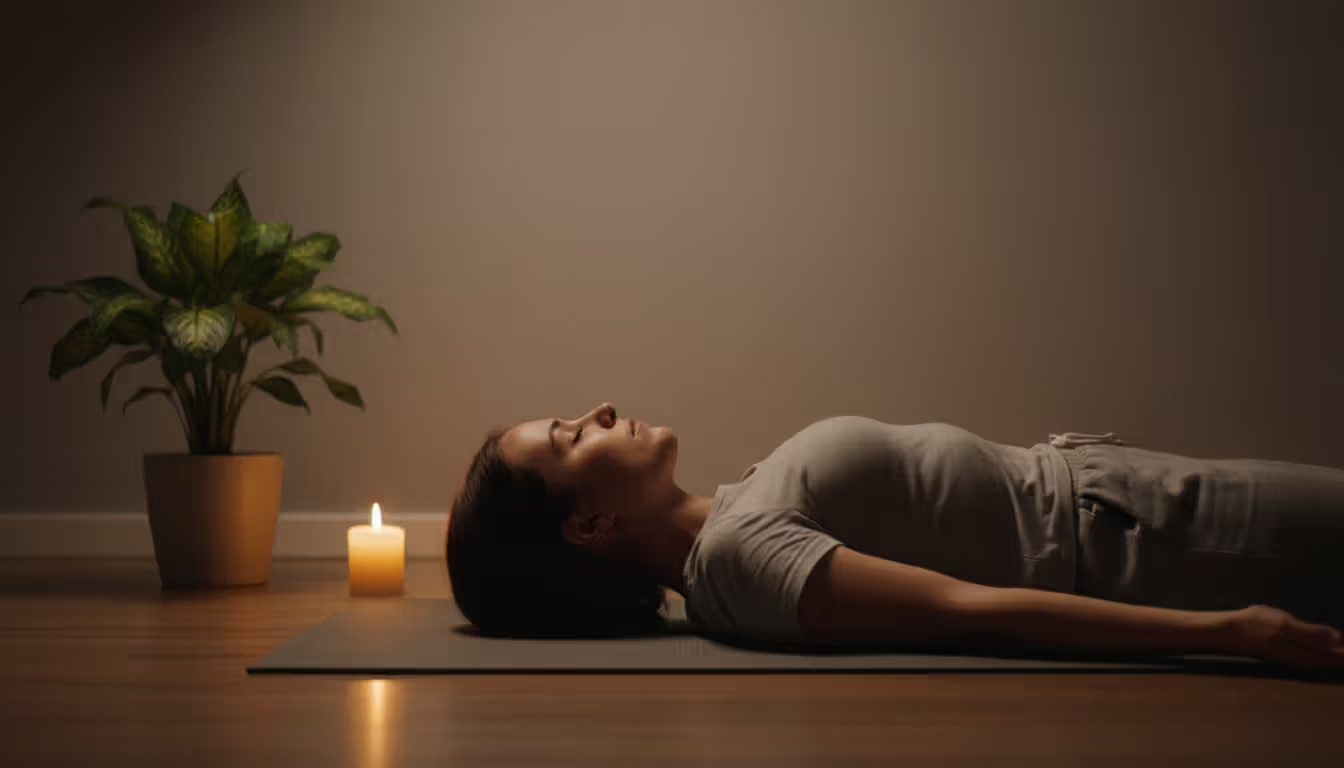
Body scan meditation tops the list for sleep effectiveness. You systematically move attention through different body parts, noticing tension without trying to change it. This practice works because it anchors awareness in present-moment sensations, interrupting the mental time-travel (worrying about tomorrow, replaying today) that fuels insomnia.
Breathing exercises offer another reliable approach. The 4-7-8 technique—inhale for 4 counts, hold for 7, exhale for 8—activates the vagus nerve and triggers a parasympathetic response. Unlike body scans, breathing practices work quickly, making them ideal for those middle-of-the-night awakenings when you need to fall back asleep fast.
Progressive muscle relaxation combines movement with awareness. You tense specific muscle groups for 5 seconds, then release completely. The contrast helps you recognize what tension feels like, and the physical effort (when done gently) tires the body just enough to promote drowsiness.
Yoga nidra, sometimes called "yogic sleep," guides you through a state between waking and sleeping. Sessions typically last 20-30 minutes and involve minimal movement. Research indicates that 30 minutes of yoga nidra can provide rest equivalent to 2-3 hours of regular sleep, though this claim needs more rigorous testing.
Author: Lena Ashcroft;
Source: 5sensesspa.com
Guided Meditation for Sleep Problems
If you're new to meditation or find your mind particularly restless, guided meditation for insomnia offers distinct advantages. A recorded voice provides continuous anchors for attention, reducing the likelihood you'll drift into worry. The best sleep-focused guided sessions use a narrator with a slow, monotone delivery—excitement and enthusiasm are great for morning motivation but terrible for bedtime.
Guided sessions also remove decision fatigue. When you're exhausted, figuring out "what to focus on next" becomes one more cognitive task. A well-designed recording handles the sequencing, letting you simply follow along. Many people report that hearing the same guided meditation nightly creates a Pavlovian response; their body begins the sleep process as soon as the familiar voice starts.
The downside: dependency. If you can only fall asleep with a specific recording, you're vulnerable when traveling or when technology fails. Use guided sessions as training wheels, gradually introducing silent meditation sessions once the techniques feel familiar.
Mindfulness Techniques for Restless Nights
Mindfulness for better sleep differs from concentration-based practices. Instead of focusing intensely on one thing, you maintain open awareness of whatever arises—sounds, sensations, thoughts—without engaging with any of it. Think of it as watching clouds pass rather than climbing onto each one for a ride.
For restless sleep, a technique called "noting" proves particularly useful. When a thought appears ("Did I send that email?"), you mentally note "thinking" and return to breath awareness. When you notice tension, you note "tension." When you hear a car pass, you note "hearing." This practice prevents the sticky engagement that turns a single thought into a 20-minute planning session.
Another mindfulness approach: acceptance of wakefulness. Paradoxically, trying to force sleep often backfires. When you notice anxiety about not sleeping, acknowledge it ("There's anxiety") without adding judgment ("This is terrible; I'll be exhausted tomorrow"). This breaks the secondary suffering—the stress about being stressed—that often does more damage than the original sleep disruption.
How to Practice Meditation Before Bed
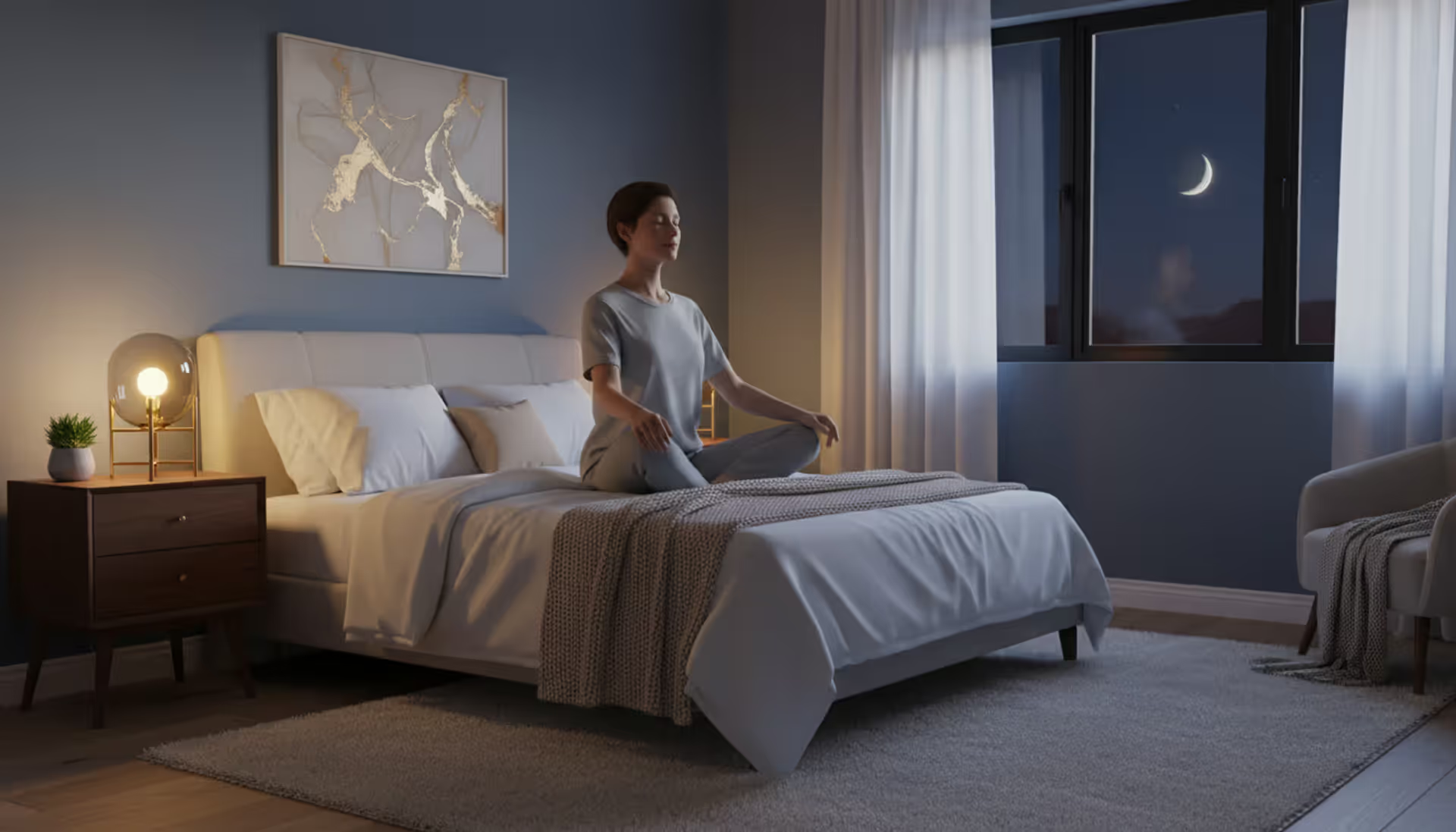
Timing determines success more than technique. Meditating immediately before turning off the lights works for some people but backfires for others. If meditation energizes you or you tend to fall asleep mid-session, practice 30-60 minutes before your target bedtime. This creates a buffer zone where meditation calms your system without the pressure of "needing" to fall asleep during practice.
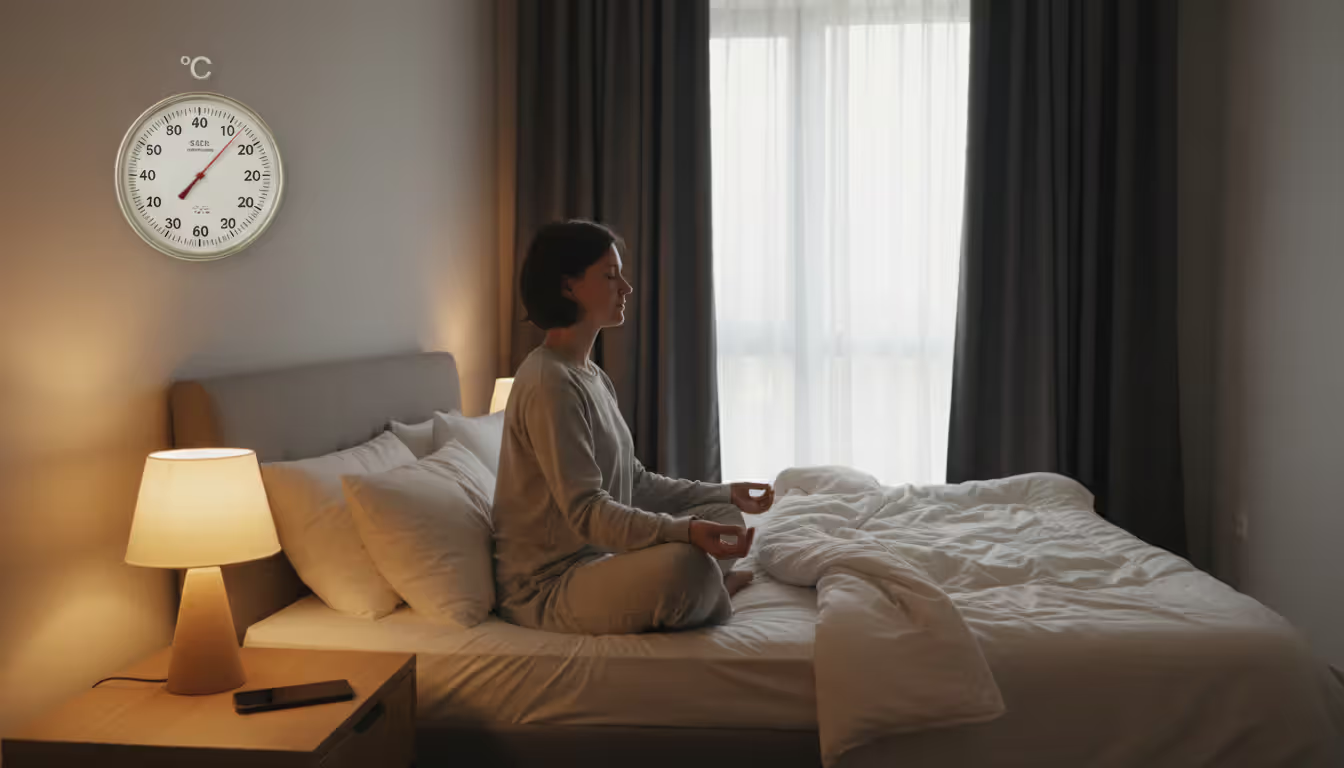
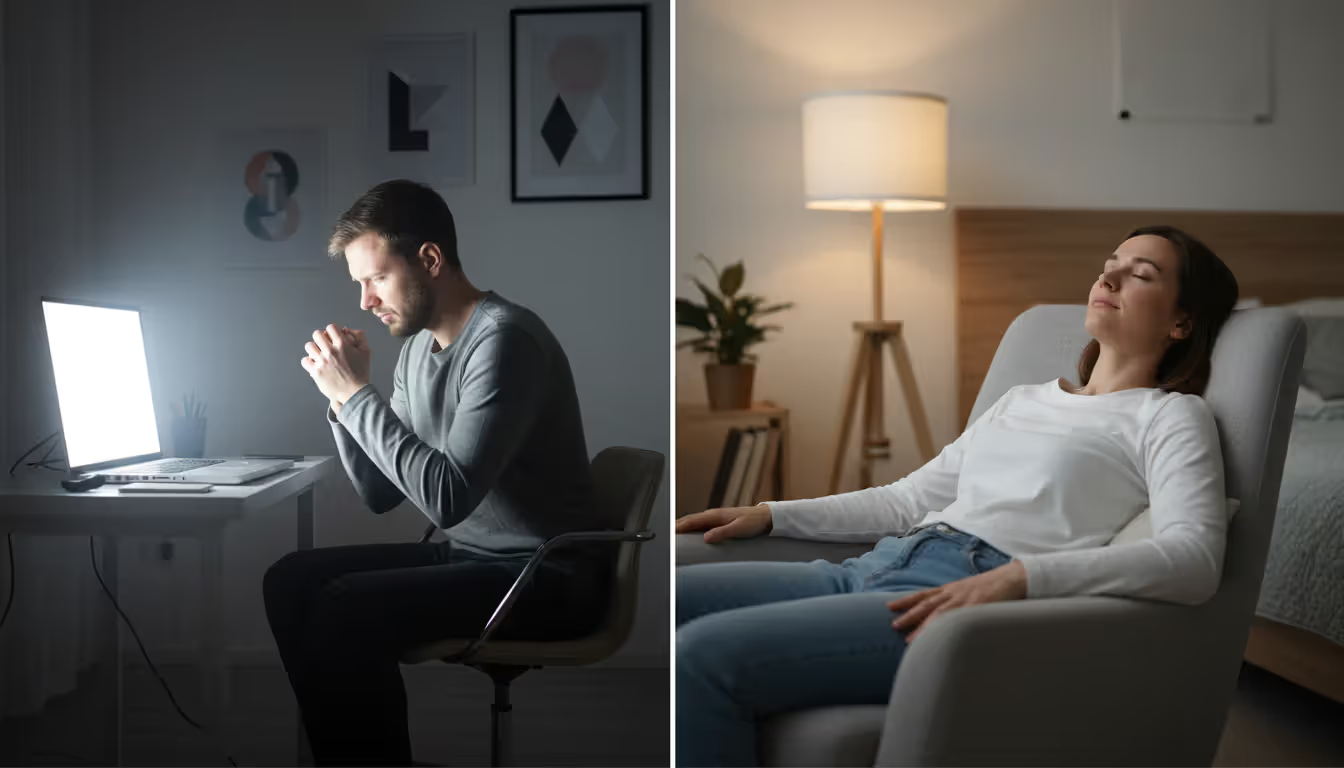
Start by establishing a consistent pre-bed routine that signals to your brain that sleep is approaching. Dim lights 90 minutes before bed (bright light suppresses melatonin), set your bedroom temperature to 65-68°F, and eliminate screens for at least 30 minutes before meditation. Blue light exposure disrupts circadian rhythms, and the dopamine hits from social media or email create the opposite brain state you're trying to achieve.
Your meditation space matters less than consistency. Some people prefer sitting upright in a chair to avoid falling asleep prematurely; others lie in bed and accept that they might drift off mid-practice. Neither approach is wrong—match the position to your goal. If you struggle to fall asleep, lying down makes sense. If you fall asleep too easily but wake frequently, sitting upright builds the skill of relaxed wakefulness that you can then transfer to bed.
Author: Lena Ashcroft;
Source: 5sensesspa.com
Duration should match your experience level and current state. Beginners often benefit from 5-10 minute sessions. Experienced practitioners might meditate for 20-30 minutes. On nights when you're particularly wired, longer sessions help; when you're already drowsy, shorter practices prevent frustration if you can't maintain focus.
Avoid these common setup mistakes: meditating in a cold room (your body needs to cool down to sleep, but shivering creates tension), practicing immediately after a large meal (digestion is activating), or using meditation as a last-resort panic button only on your worst nights (inconsistent practice yields inconsistent results).
Sleep Meditation Techniques That Work in 10 Minutes or Less
When you need quick results, these 10 minute meditation sleep techniques deliver without requiring extensive training:
Box Breathing (4 minutes): Inhale for 4 counts, hold for 4, exhale for 4, hold empty for 4. Repeat for 12-15 cycles. This technique, used by Navy SEALs to manage stress, rapidly shifts your nervous system. The equal-length holds distinguish it from other breathing patterns and create a focusing effect that quiets mental chatter.
Body Scan Express (6-8 minutes): Start at your toes, spend 20-30 seconds noticing sensations in each body region, moving upward to your head. Skip the detailed attention of longer scans; just touch each area briefly. The systematic progression has a hypnotic quality that promotes drowsiness.
Counting Breaths (5-10 minutes): Count each exhale from 1 to 10, then start over. When you lose count (you will), return to 1 without self-criticism. The simplicity makes this accessible even when you're exhausted and cognitively depleted. If you make it to 10 repeatedly, you're probably ready to sleep.
Gratitude Body Scan (7 minutes): Combine body awareness with gratitude by thanking each body part for its work today. "Thank you, feet, for carrying me." This adds a positive emotional component that counteracts the negativity bias that often fuels nighttime worry.
The Senses Countdown (5 minutes): Notice 5 things you can hear, 4 you can feel (fabric on skin, temperature), 3 you can see (even in darkness, you can see shadows or the ceiling), 2 you can smell, 1 you can taste. This grounding technique pulls attention from abstract worry into immediate sensory experience.
The key to all quick techniques: consistency matters more than perfection. Doing a 5-minute practice nightly beats an occasional 30-minute session. Your nervous system learns through repetition, and the ritual itself becomes a sleep trigger over time.
Technique
Duration
Best For
Difficulty Level
When to Use
Box Breathing
4-5 min
Acute anxiety, racing heart
Beginner
Middle-of-night awakenings
Body Scan Express
6-8 min
Physical tension, restlessness
Beginner
Initial sleep onset
4-7-8 Breathing
3-4 min
Quick relaxation, travel
Beginner
Anywhere, anytime
Counting Breaths
5-10 min
Busy mind, thought loops
Beginner
Consistent bedtime routine
Yoga Nidra (short)
10-15 min
Deep exhaustion, burnout
Intermediate
Weekend sleep recovery
Progressive Muscle Relaxation
8-10 min
Chronic tension, TMJ, headaches
Beginner
High-stress days
Does Meditation Help With Insomnia and Sleep Disorders
Meditation for insomnia shows promising results in clinical research, but it's not a universal cure. A 2024 meta-analysis of 18 randomized controlled trials found that mindfulness-based interventions reduced insomnia severity by an average of 30-40%. The effect size was comparable to cognitive behavioral therapy for insomnia (CBT-I), which is considered the gold standard non-pharmaceutical treatment.
However, meditation works best for specific types of sleep problems. If your insomnia stems from stress, anxiety, or an overactive mind, meditation directly addresses the root cause. If it's caused by sleep apnea, restless leg syndrome, or chronic pain, meditation might improve your relationship with the problem but won't fix the underlying condition. You'll need medical treatment alongside any meditation practice.
Meditation for restless sleep—characterized by frequent awakenings and difficulty returning to sleep—shows particularly strong results. The skill of disengaging from thoughts transfers directly to those 3 AM moments when your brain wants to solve problems. Instead of a 45-minute thought spiral, you notice thinking, return to breath awareness, and often fall back asleep within 10-15 minutes.
Realistic expectations matter. Meditation typically improves sleep quality (how rested you feel, number of awakenings) before it improves sleep quantity (total hours). You might notice you feel more refreshed after 6.5 hours of sleep than you previously did after 8 hours. The total hours often increase later, after 8-12 weeks of consistent practice.
When meditation isn't enough: if you've practiced consistently for 8 weeks without improvement, or if your insomnia is severe enough to impair daily functioning, consult a sleep specialist. Meditation can complement medical treatment but shouldn't replace it when clinical intervention is needed. Some sleep disorders require diagnosis through sleep studies, and delaying treatment can worsen underlying conditions.
One important caveat: some people experience paradoxical effects, where meditation initially worsens sleep. This usually happens when someone practices intensively (60+ minutes daily) or uses energizing techniques (visualization, mantra meditation) close to bedtime. If this occurs, reduce duration, switch to body-based practices, or move meditation to morning hours.
The relationship between meditation and sleep quality isn't just about relaxation—it's about changing your relationship with wakefulness itself. When patients stop fighting their sleeplessness and instead use meditation to be peacefully awake, the anxiety that perpetuates insomnia often dissolves, and sleep returns naturally
— Dr. Sarah Mitchell
Common Mistakes When Using Meditation for Sleep
The biggest mistake: treating meditation as a performance with pass/fail outcomes. When you meditate with the desperate goal of "making yourself fall asleep," you create the exact mental tension that prevents sleep. Your nervous system detects the striving and remains activated. Better approach: meditate to practice being calmly awake. Sleep becomes a side effect rather than a target.
Timing errors undermine many well-intentioned efforts. Meditating at inconsistent times confuses your circadian rhythm. Your body thrives on predictability; a meditation practice at 9 PM one night and midnight the next doesn't build the conditioned response that makes meditation an effective sleep trigger. Pick a consistent time and stick with it for at least three weeks.
Using stimulating meditation techniques before bed ranks high on the mistake list. Kundalini practices, intense visualization, or mantra meditation with upright posture can energize rather than calm. These techniques have value, but not at 10 PM when you need to sleep in an hour. Save energizing practices for morning; use body-based, calming techniques at night.
Practicing in a stimulating environment defeats the purpose. Meditating with bright overhead lights, in a warm room, or immediately after checking work email creates conflicting signals. Your environment should whisper "sleep is coming" through every detail: dim lighting, cool temperature, absence of screens, comfortable clothing.
Inconsistency produces inconsistent results. Meditating only when you're desperate—after three bad nights when you're exhausted and anxious—means you're always practicing in the worst possible state. Meditation builds skills that compound over time. Sporadic practice is like going to the gym once every two weeks and wondering why you're not getting stronger.
Author: Lena Ashcroft;
Source: 5sensesspa.com
Unrealistic expectations about immediate results set people up for disappointment. Pharmaceutical sleep aids work the first night (though with side effects and dependency risks). Meditation typically requires 2-4 weeks of consistent practice before you notice clear improvements. Some people respond faster; others need 6-8 weeks. The changes are real but gradual.
Finally, some people make meditation too complicated. They research dozens of techniques, download multiple apps, and keep switching approaches every few days. Pick one simple technique (body scan or breath counting), practice it for at least three weeks, then evaluate. Technique-hopping prevents you from developing the familiarity that makes meditation effective.
FAQ: Meditation and Sleep Questions
How long does it take for meditation to improve sleep?
Most people notice subtle improvements within 2-3 weeks of daily practice—falling asleep slightly faster or waking less frequently. Significant changes typically appear after 4-6 weeks. Consistency matters more than session length; 10 minutes nightly beats occasional 30-minute sessions. If you see no improvement after 8 weeks, consider adjusting your technique, timing, or consulting a sleep specialist to rule out underlying disorders.
Can meditation replace sleep medication?
Meditation can be as effective as some sleep medications for certain types of insomnia, particularly when anxiety or stress is the root cause. However, never discontinue prescribed medication without medical supervision. Many people successfully reduce medication dosage while building a meditation practice, but this should happen gradually under a doctor's guidance. Meditation works best as a long-term solution, while medication might be necessary for short-term crisis management.
What's the best time to meditate for better sleep?
The optimal window is 30-90 minutes before your target bedtime. This allows meditation to calm your nervous system without the pressure of needing to fall asleep immediately. Some people benefit from a short second session (3-5 minutes) right before lights-out. Morning meditation also improves sleep indirectly by reducing overall stress and anxiety throughout the day. Avoid intense meditation within 2-3 hours of bedtime if it tends to energize you.
Is it normal to fall asleep during meditation?
Yes, especially when you're sleep-deprived or practicing lying down. If your goal is building meditation skills, sit upright to stay alert. If your goal is falling asleep, lying down and drifting off mid-practice is perfectly fine—you've succeeded. Some practitioners consider falling asleep a "failed" meditation session, but for sleep purposes, it's a win. As you become less sleep-deprived, you'll naturally stay awake longer during practice.
How often should I meditate to see sleep benefits?
Daily practice produces the most reliable results. Your nervous system learns through repetition, and consistent timing helps establish meditation as a sleep trigger. If daily practice feels overwhelming, start with 5 nights per week minimum. Weekend-only meditation rarely produces noticeable sleep improvements because you're not building the neural patterns and behavioral conditioning that make meditation effective for sleep.
Does meditation work for chronic insomnia?
Research shows meditation can significantly help chronic insomnia, particularly when combined with sleep hygiene improvements and cognitive behavioral therapy techniques. A 2025 study found that 60% of chronic insomnia patients experienced meaningful improvement after 8 weeks of mindfulness meditation. However, chronic insomnia sometimes has multiple causes (medical conditions, medications, sleep disorders), so meditation should be part of a comprehensive approach. Work with a sleep specialist to identify all contributing factors.
Meditation offers a scientifically validated approach to improving sleep quality without the side effects and dependency risks of pharmaceutical options. The practice works by shifting your nervous system from stress-response mode to rest-and-recovery mode, reducing the cognitive arousal that keeps many people awake, and building the mental skill of disengaging from thought loops.
The most effective approach combines consistency, appropriate technique selection, and realistic expectations. Start with simple practices like body scans or breath counting, meditate at the same time each evening, and give the process at least 4-6 weeks before evaluating results. Quick techniques work well for busy schedules, but remember that meditation builds skills gradually—you're training your nervous system, not flipping a switch.
For many people struggling with stress-related sleep problems, meditation provides exactly what sleeping pills cannot: a sustainable, side-effect-free method that addresses root causes rather than just symptoms. The time investment is modest—as little as 5-10 minutes daily—and the benefits extend beyond sleep to improved emotional regulation, reduced anxiety, and better stress management throughout your day.
If you've tried everything else without success, meditation deserves a legitimate trial. Give it eight weeks of consistent practice before deciding whether it works for you. The research suggests you have better than even odds of sleeping better, feeling more rested, and developing a valuable life skill that serves you far beyond the bedroom.
Research shows 8-14% of meditators experience significant adverse effects. From anxiety amplification to dark night experiences, meditation isn't risk-free. Understand physical and psychological dangers, who's most vulnerable, and how to recognize when practice becomes harmful
Discover how meditation interrupts the stress cycle through proven physiological mechanisms. This comprehensive guide covers meditation types, nervous system effects, cortisol reduction, workplace practices, and research-backed techniques for building a sustainable stress meditation practice
Your stomach churns before a big presentation. A stressful week leaves you bloated and uncomfortable. The connection between your mental state and digestive system isn't just in your head—it's a biological reality that meditation can help address through the gut-brain axis and vagus nerve activation
Sharing meditation with your romantic partner creates a unique space for emotional intimacy that most couples never experience. Research shows couples who practice mindfulness together report 23% higher relationship satisfaction while building deeper connection at a neurological level
The content on this website is provided for general informational and educational purposes only. It is intended to explain concepts related to meditation, mindfulness, mental health, and spiritual practices.
All information on this website, including articles, guides, and examples, is presented for general educational purposes. Meditation outcomes may vary depending on individual practices, health conditions, and guidance.
This website does not provide medical, mental health, or spiritual advice, and the information presented should not be used as a substitute for consultation with qualified professionals.
The website and its authors are not responsible for any errors or omissions, or for any outcomes resulting from decisions made based on the information provided on this website.