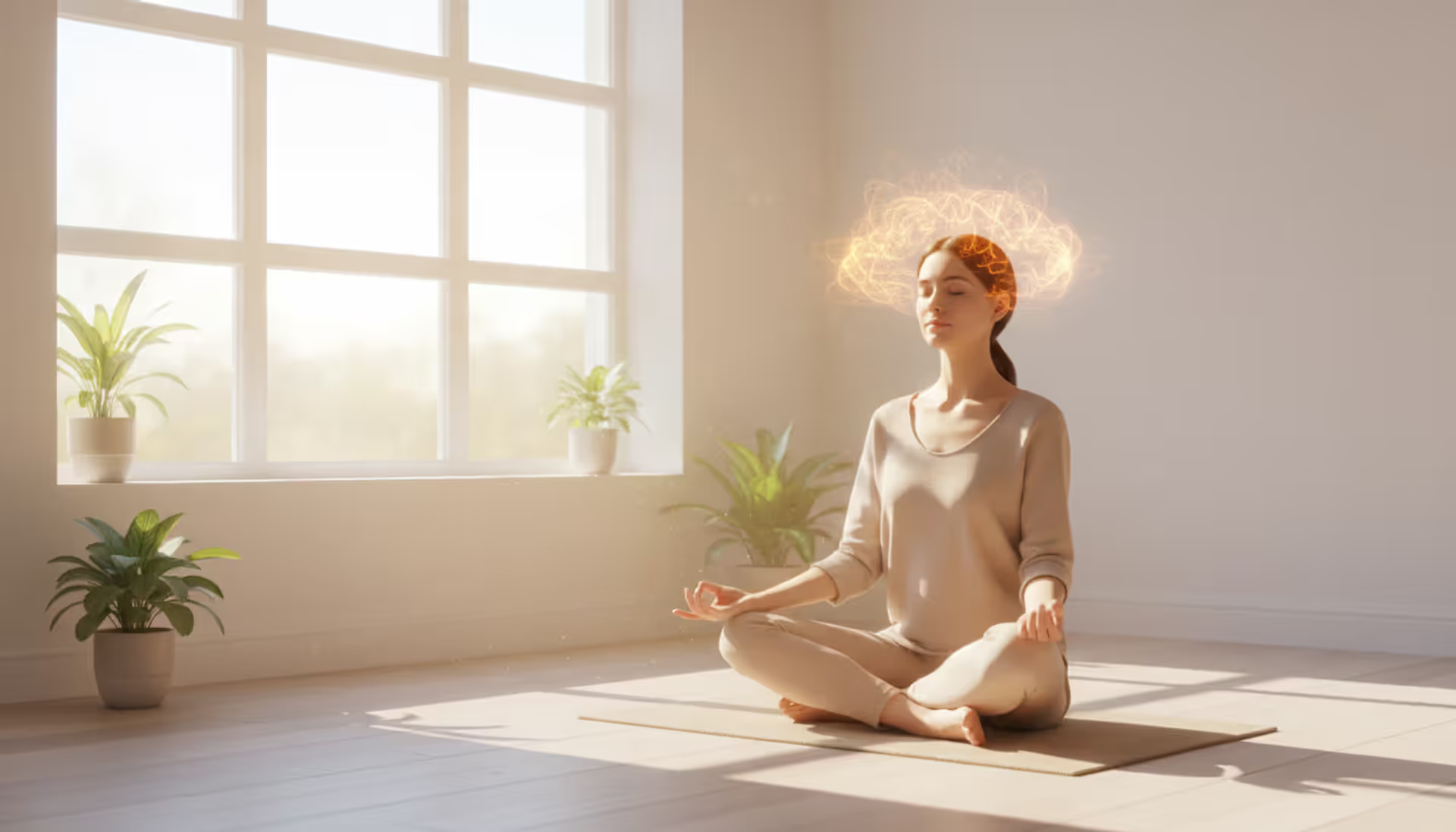
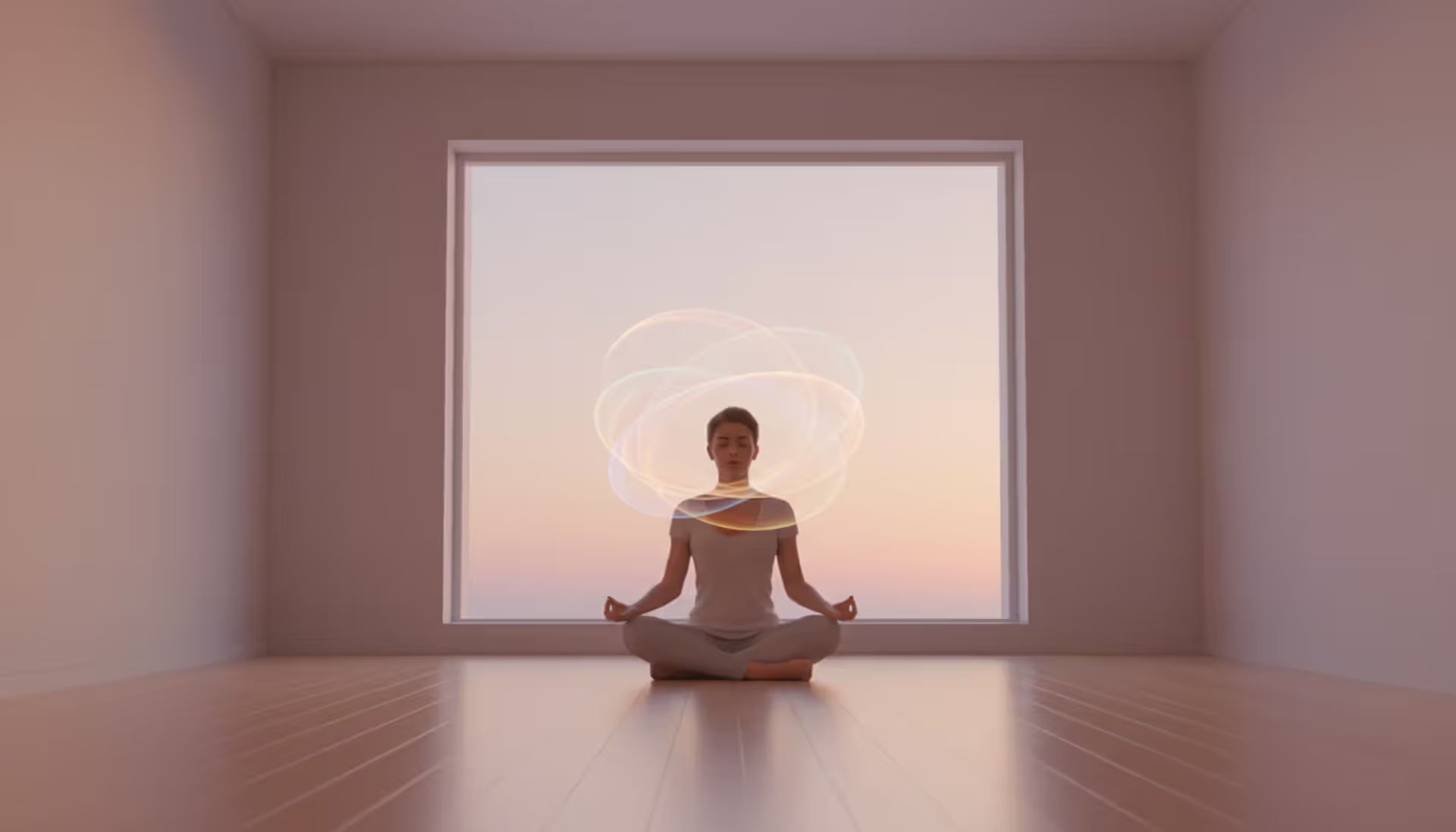
A person meditating peacefully in a bright minimalist room with soft morning light, eyes closed, hands resting on knees, subtle glow around the head symbolizing mental healing
More than 21 million American adults live with depression each day. That's roughly one in ten people searching for relief that actually works. While medication and therapy remain standard treatments, a growing number of doctors now recommend meditation as part of the treatment plan—not just as a relaxation technique, but as a tool that changes how the brain processes emotions.
Here's what the science actually shows: consistent meditation practice reduces depression symptoms by 20-40% for most people who stick with it. That's similar to what many antidepressants achieve in mild to moderate cases. But there's a catch—meditation isn't a magic bullet that works overnight or helps everyone equally. Your results depend on which techniques you use, how severe your depression is, and whether you practice consistently enough for your brain to change.
How Meditation Affects Depression in the Brain
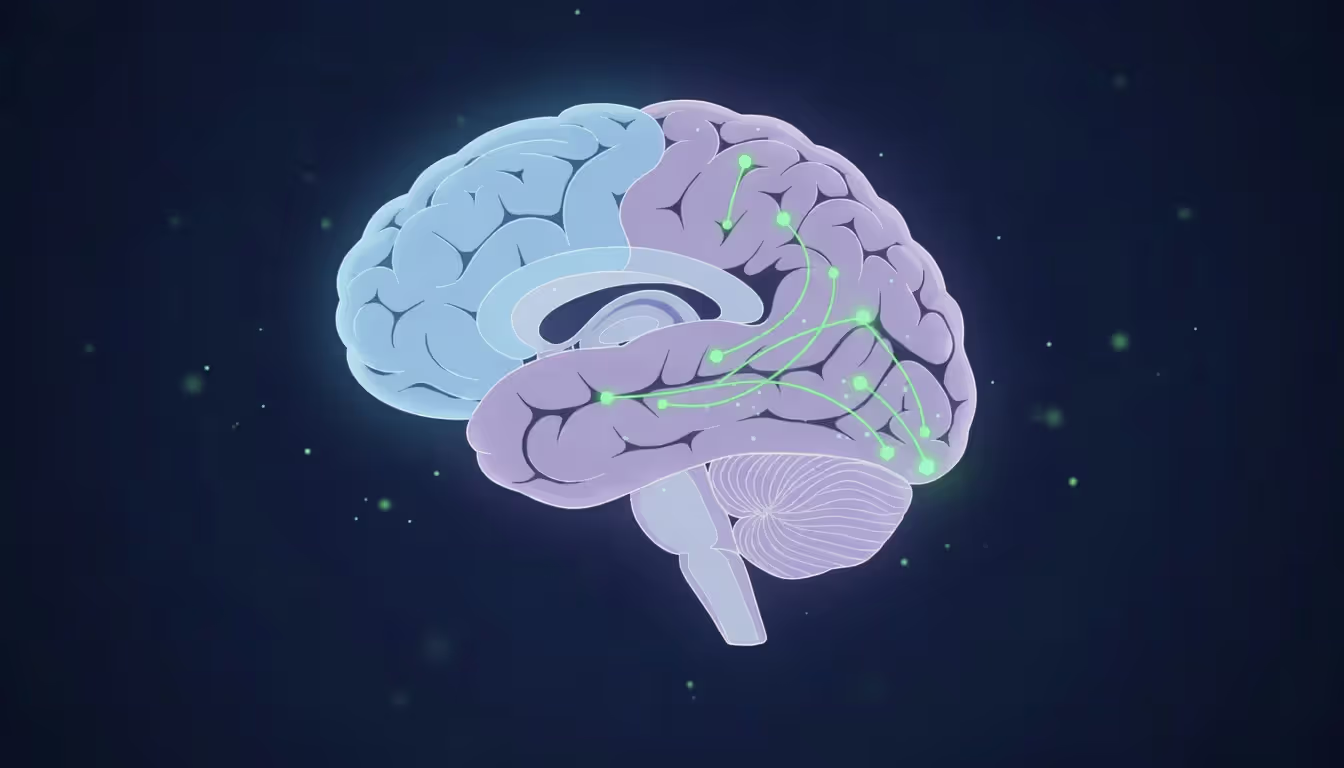
Your prefrontal cortex—the brain's command center for decision-making and emotional control—literally gets thicker when you meditate regularly. Brain scans prove it. This matters tremendously if you're depressed, because depression shrinks this exact region, making it harder to pull yourself out of negative thinking spirals.
Think of the default mode network (DMN) as your brain's autopilot. It kicks in when you're not focused on anything particular—like when you're in the shower or driving a familiar route. In healthy brains, the DMN helps you plan and reflect. In depressed brains, it goes haywire. Instead of productive thinking, you get stuck replaying the same painful thoughts over and over. Scientists call this rumination, and it's one of depression's cruelest tricks.
Here's where meditation gets interesting: fMRI brain scans reveal that just eight weeks of daily practice can calm an overactive DMN. Your brain literally rewires itself to spend less time in that harmful repetitive thinking mode.
What about serotonin? Everyone's heard that depression involves low serotonin, right? Well, meditation doesn't flood your brain with serotonin the way Prozac does. Instead, it works more subtly—increasing the building blocks your body uses to make serotonin and helping your brain's serotonin receptors work more efficiently. A 2025 study in Biological Psychiatry tracked people meditating daily for twelve weeks. Their serotonin metabolite levels (the breakdown products that indicate serotonin activity) jumped 15% higher than the control group who didn't meditate.
Then there's cortisol—your body's main stress hormone. Constantly elevated cortisol doesn't just make you feel stressed; it disrupts sleep, damages your ability to form new neural connections, and throws your brain chemistry completely out of balance. Regular meditators show cortisol levels 20-30% lower than non-meditators, but you need to stick with it for at least three months to see this shift.
The hippocampus deserves special attention. This seahorse-shaped structure handles memory storage and emotion processing. Chronic depression actually shrinks it—scientists can measure the reduction on brain scans. But meditation reverses some of this damage. Studies document hippocampal gray matter increasing by roughly 5% after eight weeks of practice, essentially growing back some of what depression took away.
Author: Ethan Solberg;
Source: 5sensesspa.com
Types of Meditation That Help Depression
Not every meditation style helps depression equally. You wouldn't use a hammer to tighten a screw, and you shouldn't use just any meditation technique to treat depression. These three approaches have the strongest research backing.
Mindfulness-Based Cognitive Therapy for Depression
MBCT merges two powerful approaches: the thought-pattern work from cognitive behavioral therapy with the present-moment awareness from mindfulness meditation. Psychologists created it specifically to stop depression from coming back in people who've already had multiple episodes.
The standard program runs eight weeks. You attend a two-hour group session weekly and practice 45 minutes daily at home. What makes MBCT different from regular meditation? It directly teaches you to spot the twisted thinking patterns depression creates—like when you assume one mistake means you're a complete failure, or when you catastrophize a minor setback into a life-ending disaster.
The numbers are striking: MBCT cuts relapse rates by 43% in people who've suffered three or more major depressive episodes. That's nearly half the relapses prevented just by learning to watch your thoughts differently.
Unlike generic mindfulness apps, MBCT gives you specific tools for those moments when your brain starts spiraling. You learn to recognize early warning signs—maybe you start sleeping more, or everything suddenly feels pointless—and intervene before you slide into a full episode.
Guided Meditation Practices
When you're depressed, even deciding what to have for breakfast feels overwhelming. Choosing how to meditate and directing your own practice? That can feel impossible. Guided meditation solves this by having someone else—usually via audio recording—tell you exactly what to do.
A voice walks you through: "Notice your breath. Now scan your attention to your left foot. Notice any sensations there without judging them." You just follow along. No decisions required.
This structure matters enormously for depression. The illness saps your ability to initiate activities and maintain focus. Guided sessions remove those barriers. Research comparing the two approaches found that 65% of beginners still practiced guided meditation after three months, versus only 40% sticking with self-directed practice.
Most guided sessions designed for depression run 10-30 minutes and focus on themes you actually need: building self-compassion instead of self-criticism, letting go of rumination, finding things to appreciate even when everything feels gray.
Interestingly, after six months of consistent practice, the difference between guided and unguided meditation disappears. Both groups show similar symptom improvement. Think of guided meditation as training wheels—helpful when you're learning, but eventually you might not need them.
Author: Ethan Solberg;
Source: 5sensesspa.com
Body Scan and Breath-Focused Techniques
Body scan meditation means systematically moving your attention through your entire body, from toes to head or head to toes. You simply notice what you feel in each area—warmth, coolness, tension, numbness, tingling—without trying to change anything.
Why does this help depression? Because depression often creates a strange disconnection from your physical self. Everything feels numb or you stop noticing your body entirely. Body scans rebuild that connection, what scientists call interoceptive awareness—your ability to sense what's happening inside your body. Better interoceptive awareness correlates directly with improved mood regulation.
A typical body scan takes 20-30 minutes. You might think 30 minutes of lying still focusing on your pinky toe sounds boring, but that's actually the point. Depression thrives on mental chaos. This practice trains sustained, calm attention.
Breath-focused meditation is even simpler. You pick a spot—maybe your nostrils, chest, or belly—and notice the sensations of breathing there. When your mind wanders (it will, constantly), you gently bring attention back to the breath. That's it. That's the whole practice.
The genius of breath meditation? It requires zero equipment, zero beliefs, zero special conditions. You can do it for five minutes or fifty. And here's what most people get wrong: you're not supposed to breathe in any special way. Just notice your natural breathing. Trying to control it actually makes the practice less effective.
What Research Says About Meditation and Mood Improvement
The evidence base has grown substantial enough that major medical journals now regularly publish meditation research. A 2025 meta-analysis in JAMA Psychiatry combined results from 47 randomized controlled trials involving 3,515 participants. The overall effect size (Hedges' g = 0.38) indicates moderate symptom reduction—statistically similar to what antidepressants achieve for mild to moderate depression.
Here's what the strongest studies found:
Research Study
Type of Practice
Participants
Symptom Reduction
Practice Period
Goldberg et al., 2022
MBCT
424
34% decrease
8 weeks
Hofmann & Gómez, 2023
Various mindfulness approaches
2,993 (combined analysis)
37% compared to controls
8-12 weeks
Wielgosz et al., 2024
Loving-kindness meditation
178
28% improvement
6 weeks
Parsons et al., 2025
Breath awareness
312
22% symptom drop
4 weeks
Desbordes et al., 2025
Mixed mindfulness techniques
1,456 (combined analysis)
31% versus waiting list group
8 weeks
But averages hide important details. Several factors predict who responds best: any previous meditation experience helps, moderate depression responds better than severe depression, lower anxiety levels alongside the depression improves outcomes, and consistent daily practice beats sporadic longer sessions every time.
People with severe depression—PHQ-9 scores above 20, indicating symptoms like frequent suicidal thoughts or inability to function—show much smaller improvements from meditation alone. They typically need medication or intensive therapy combined with meditation, not meditation as the only treatment.
Meditation can be remarkably effective for depression, but we need to match the practice to the person. For someone in a severe depressive episode with suicidal ideation, meditation alone is insufficient and potentially risky. For someone with mild to moderate symptoms or in maintenance after acute treatment, meditation offers substantial benefit with minimal side effects
— Dr. Willoughby Britton
Timing matters more than most people realize. Studies show essentially no measurable improvement before three weeks of daily practice. Benefits accumulate steadily through week twelve, then plateau. The sweet spot for most people? Twenty to thirty minutes daily rather than hour-long sessions a few times weekly. Consistency beats duration every time.
How to Start a Depression Meditation Practice
Starting any new habit while depressed feels like running a marathon with ankle weights. Depression tells you it won't work, you'll fail at it like everything else, and you don't have the energy anyway. So you need a strategy that accounts for these obstacles instead of pretending they don't exist.
Start with just five minutes. Not the twenty or thirty you see recommended everywhere. Five. Set a timer on your phone so you're not constantly wondering how much longer. Practice at the exact same time every day—before breakfast, during lunch break, right after you get home from work, whatever. Habit research shows that consistency of timing matters more than duration when you're building a new routine.
Pick one single technique and use only that technique for at least three weeks. Don't browse meditation apps trying different styles every few days. You're building a skill, and that requires repetition of the same practice. Breath-focused meditation or a simple guided session works well for beginners.
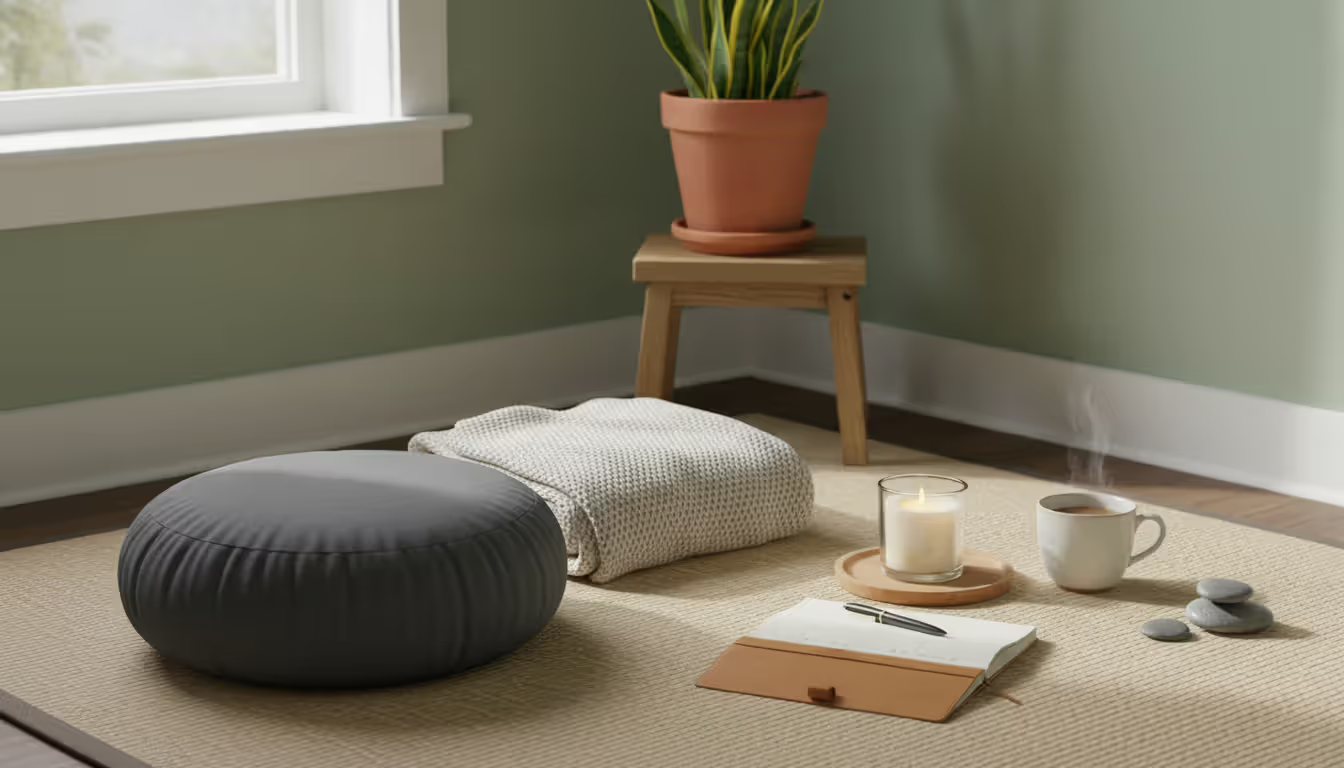
Use the same physical spot every time. The same chair, the same corner of your bedroom, the same cushion. Your brain creates associations with locations. After a couple weeks, just sitting in that spot will trigger the "okay, time to meditate" response automatically, bypassing the motivation problem.
Expect the first two weeks to feel pointless or frustrating. This is completely normal—you're not doing it wrong. Your mind will wander every few seconds. Thoughts will intrude constantly. You'll feel restless and bored. This is what meditation actually is: noticing your mind wandered, bringing attention back, noticing it wandered again, bringing it back again. That returning process is the practice, not some peaceful blank-mind state.
Track completion, not quality. Put a checkmark on a calendar when you finish your five minutes. Don't rate how "good" the session was, because depression will tell you every session sucked. The only metric that matters: did you do it?
After three solid weeks of daily five-minute sessions, you can increase to ten if you want. But longer isn't necessarily better. Twenty focused minutes beats forty distracted minutes.
Consider joining a class or group, even online. Depression isolates you, making everything harder. Group practice provides structure and the psychological benefit of knowing others are doing this with you. Many hospitals, meditation centers, and community organizations offer free or sliding-scale classes. Reddit's meditation communities and various Discord servers offer free virtual group sessions.
Here's something most people miss: practice during your okay moments, not just during crisis. If you only meditate when you're desperate and panicking, you're trying to build a skill while your brain is in emergency mode. That's like learning to swim during a storm. Practice when you're somewhat stable, so the skill is already there when things get rough.
Author: Ethan Solberg;
Source: 5sensesspa.com
When Meditation Alone Is Not Enough
Meditation has real limitations. Pretending otherwise is dangerous. Severe depression—with suicidal thoughts, complete inability to function, or breaks from reality—requires immediate professional intervention. Meditation might complement treatment, but it absolutely cannot replace it.
Warning signs that you need professional help now, regardless of meditation practice: worsening symptoms despite three weeks of consistent practice, any suicidal thoughts or plans, inability to handle basic self-care like eating or bathing, symptoms interfering completely with work or relationships, or hearing voices and having paranoid thoughts.
If you're experiencing any of these, contact a mental health crisis line immediately (988 in the US) or go to an emergency room.
Combined treatment typically works better than any single approach. A 2024 study compared three groups: meditation alone, cognitive behavioral therapy alone, and meditation plus therapy together. The combination group showed 52% symptom reduction. Meditation alone? 34%. Therapy alone? 38%. The combination clearly won.
Meditation can work alongside antidepressant medication too. Some people find meditation helps manage medication side effects or supports gradually tapering off medication under medical supervision. But never, ever stop prescribed psychiatric medication on your own. Suddenly quitting antidepressants can trigger severe withdrawal symptoms and rapid relapse. Any medication changes require working with your prescribing doctor.
Certain conditions require modified approaches. Trauma survivors, especially those with PTSD, sometimes find silent meditation triggering—sitting quietly with thoughts can surface traumatic memories without adequate support. Trauma-informed meditation practices or movement-based options like walking meditation work better. People with ADHD might need shorter sessions or active practices instead of seated stillness.
Watch out for meditation becoming another form of avoidance. Some people use practice to escape difficult emotions or dodge necessary life changes—like staying in a harmful relationship or avoiding career decisions. Effective meditation means facing your experience with compassion, not hiding from reality. If you're using meditation to numb out or distract yourself, it's not therapeutic anymore.
Author: Ethan Solberg;
Source: 5sensesspa.com
Common Mistakes When Using Meditation for Low Mood
Expecting immediate relief ranks as mistake number one. People try meditation for three days, feel no different, and quit. But meditation builds brain changes gradually. Most research shows minimal impact before the three-week mark, with optimal results appearing around eight to twelve weeks. Think of it like starting an exercise program—one workout doesn't make you fit, but consistent training over weeks creates measurable changes.
Inconsistent practice sabotages progress. Three thirty-minute sessions weekly produces worse results than seven ten-minute sessions. Your brain responds to repeated, regular stimulation. Sporadic practice doesn't create the neural pathway changes that reduce depression. If you keep missing sessions, reduce the length rather than the frequency.
Using the wrong technique wastes your effort. Someone whose depression involves constant rumination needs practices that interrupt thought loops—breath focus or body scans work well. But contemplative practices that involve thinking about philosophical concepts might actually make rumination worse. If you're constantly exhausted, movement meditation might work better than trying to sit still. Match the technique to your specific symptoms.
Ignoring severe symptoms is genuinely dangerous. Meditation cannot fix serious chemical imbalances, resolve complex trauma, or substitute for medication when you actually need it. Using meditation to avoid getting professional help when you're severely depressed delays effective treatment and allows the condition to worsen, sometimes catastrophically.
Judging each session's quality creates needless frustration. There's no such thing as a "good" or "bad" meditation session—only sessions you completed or skipped. Depression distorts your perception of everything, making experiences feel worse than they actually are. Don't trust how meditation feels in the moment as a measure of whether it's working. Focus on showing up consistently, not on subjective quality.
Trying to practice in chaotic environments sets you up to fail. Yes, experienced meditators can practice anywhere, even in noisy spaces. But as a beginner, you need reasonable quiet and minimal interruptions. Attempting to meditate with TV blaring, kids yelling for attention, or your phone pinging with notifications makes building basic concentration skills nearly impossible. Find a quieter time and space.
Frequently Asked Questions About Meditation and Depression
How long does it take for meditation to help with depression?
You might notice subtle shifts after two to three weeks of daily practice—maybe slightly better sleep or marginally less rumination. More obvious improvements typically show up around the eight-week mark. Research demonstrates continued benefits through twelve weeks, after which improvements level off rather than increasing further. But everyone's timeline differs based on how severe your depression is, how consistently you practice, and which technique you're using. Some people report feeling somewhat better within days, while others need the full six weeks before noticing anything. What matters most? Daily practice, even if it's brief, beats occasional long sessions.
Can meditation replace antidepressants for depression?
For mild to moderate depression, meditation sometimes provides comparable symptom relief to medication, but you absolutely must work with your doctor on this decision. Never stop taking prescribed antidepressants without medical supervision—sudden withdrawal causes serious side effects including dizziness, electric shock sensations, and rapid depression relapse. Meditation combines well with medication, often allowing lower doses or helping manage side effects. For severe depression, meditation by itself won't be enough—you need comprehensive treatment that might include medication, therapy, and meditation together. Some people successfully transition off antidepressants using meditation as part of a careful, medically supervised tapering plan. But this requires professional guidance, not going it alone.
What type of meditation is best for depression and anxiety?
Mindfulness-Based Cognitive Therapy (MBCT) has the most robust research specifically targeting depression, especially for preventing relapse after you've recovered from an episode. For depression and anxiety occurring together, breath-focused meditation and body scans work particularly well because they interrupt rumination while simultaneously calming your nervous system. Guided meditation helps beginners and people with severe symptoms who struggle with unstructured practice—having instructions to follow removes decision-making burden. Loving-kindness meditation shows especially strong results when depression involves harsh self-criticism. Honestly, the "best" type depends on your preferences and specific symptoms. Try different approaches for three weeks each before deciding what works for you.
How often should I meditate to see improvements in mood?
Daily practice produces the clearest results. Research consistently shows that daily meditation, even for shorter periods, outperforms longer but less frequent sessions. Most people who get good results practice 15-30 minutes each day, though starting with 5-10 minutes and gradually building up prevents overwhelm and improves long-term adherence. Practicing at the same time daily strengthens habit formation—your brain starts anticipating and preparing for the practice. Missing occasional sessions won't erase your progress, but frequent gaps prevent the cumulative brain changes that create lasting mood improvement. Aim for at least six days weekly to build momentum.
Is guided meditation more effective than unguided practice for depression?
For people just starting out and those with moderate to severe depression, guided meditation offers real advantages: built-in structure reduces decision fatigue, verbal instructions help maintain focus, and specific themes directly address depression-related thought patterns. Research shows guided practice significantly improves adherence—beginners are about 60% more likely to maintain consistent practice with guidance than without it. However, after several months of regular practice, outcomes between guided and unguided meditation become essentially equivalent. Long-term practitioners often prefer unguided sessions because they allow more flexibility and sometimes deeper concentration. The smart approach? Start with guided meditation to build the skill, then gradually incorporate unguided practice as you get more comfortable.
Can meditation make depression worse?
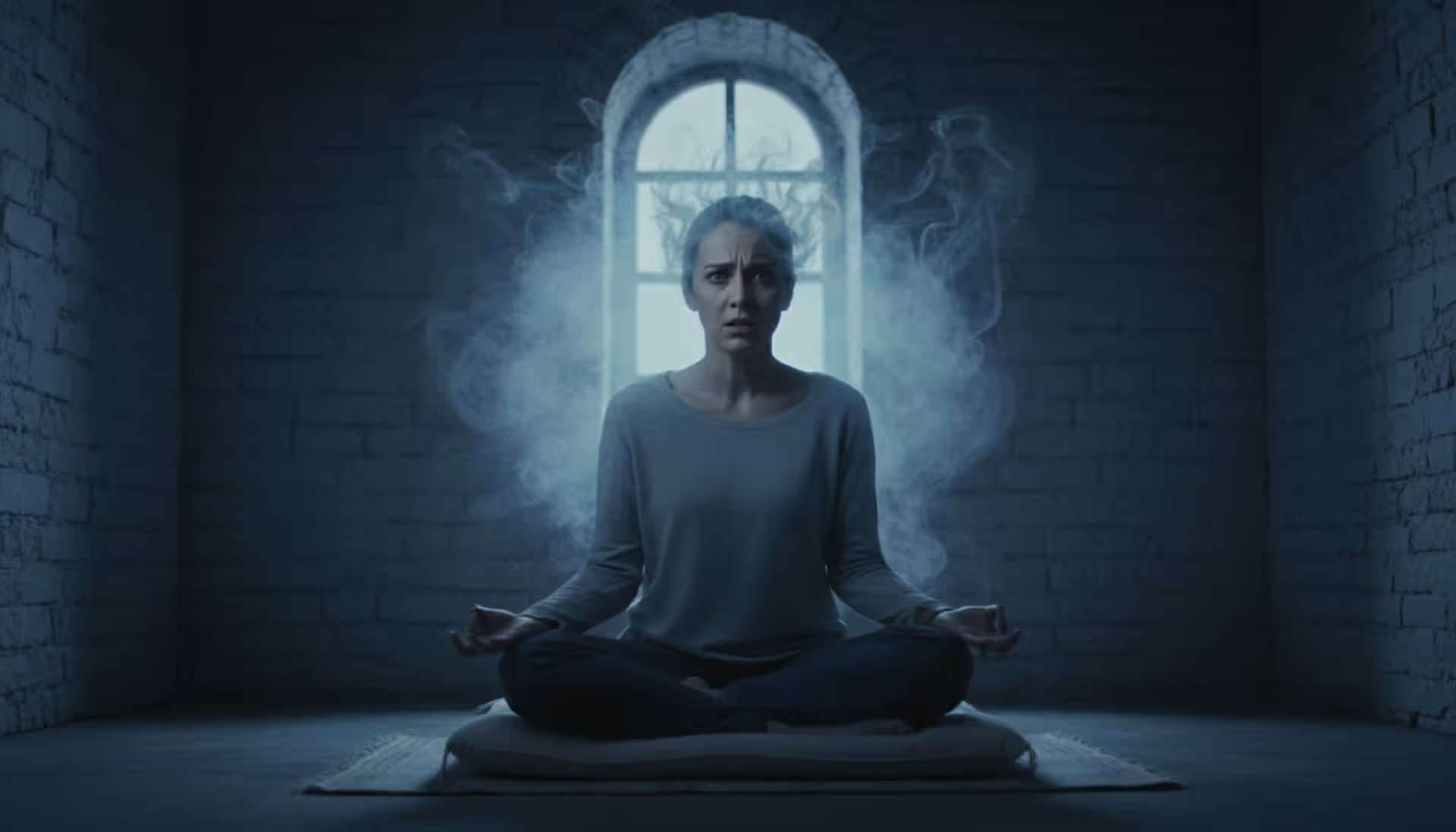
Sometimes, yes. People with trauma histories may find silent meditation triggering because sitting quietly can surface traumatic memories without adequate therapeutic support to process them. Certain meditation styles that emphasize closely observing negative emotions might temporarily intensify distress before any improvement occurs—this is sometimes called the "dark night" phenomenon. People with severe depression occasionally experience increased hopelessness if meditation doesn't produce quick results, especially if they've pinned all their hopes on it. If meditation consistently makes your symptoms worse after three weeks, try a different technique, shorter sessions, or consult a meditation teacher who has experience working with mental health issues. Some people need trauma-informed approaches or should postpone meditation practice until acute symptoms stabilize through other treatments first.
Meditation provides a scientifically validated tool for managing depression, with research documenting meaningful symptom reduction that rivals some conventional treatments. The brain changes meditation produces—enhanced prefrontal cortex activity, balanced default mode network function, better serotonin regulation, and lower cortisol levels—directly target depression's biological mechanisms.
Getting results requires matching your meditation approach to your specific needs, maintaining daily practice for at least eight weeks (not just when you feel like it), and holding realistic expectations about what meditation can and cannot do. MBCT, guided meditation, and breath-focused techniques each offer distinct advantages depending on your particular depression symptoms.
Integrated care works better than relying on meditation alone. Professional treatment remains essential for severe depression, while meditation serves as a powerful complement to therapy and medication for mild to moderate symptoms. The practice demands patience—benefits accumulate through repeated sessions over weeks, not through dramatic breakthrough experiences.
Beginning with manageable five-minute daily sessions, selecting one technique to learn thoroughly, and prioritizing consistency over perfection creates sustainable practice. Avoiding common pitfalls like expecting instant results, practicing sporadically, or using meditation to delay necessary professional intervention maximizes your chances of genuine improvement while preventing discouragement.
For many people struggling with depression, meditation offers an accessible, low-cost tool with minimal side effects and substantial research support behind it. While it's definitely not a universal cure that helps everyone equally, it represents a valuable option worth trying under appropriate circumstances with realistic expectations about what it can achieve.
Research shows 8-14% of meditators experience significant adverse effects. From anxiety amplification to dark night experiences, meditation isn't risk-free. Understand physical and psychological dangers, who's most vulnerable, and how to recognize when practice becomes harmful
Discover how meditation interrupts the stress cycle through proven physiological mechanisms. This comprehensive guide covers meditation types, nervous system effects, cortisol reduction, workplace practices, and research-backed techniques for building a sustainable stress meditation practice
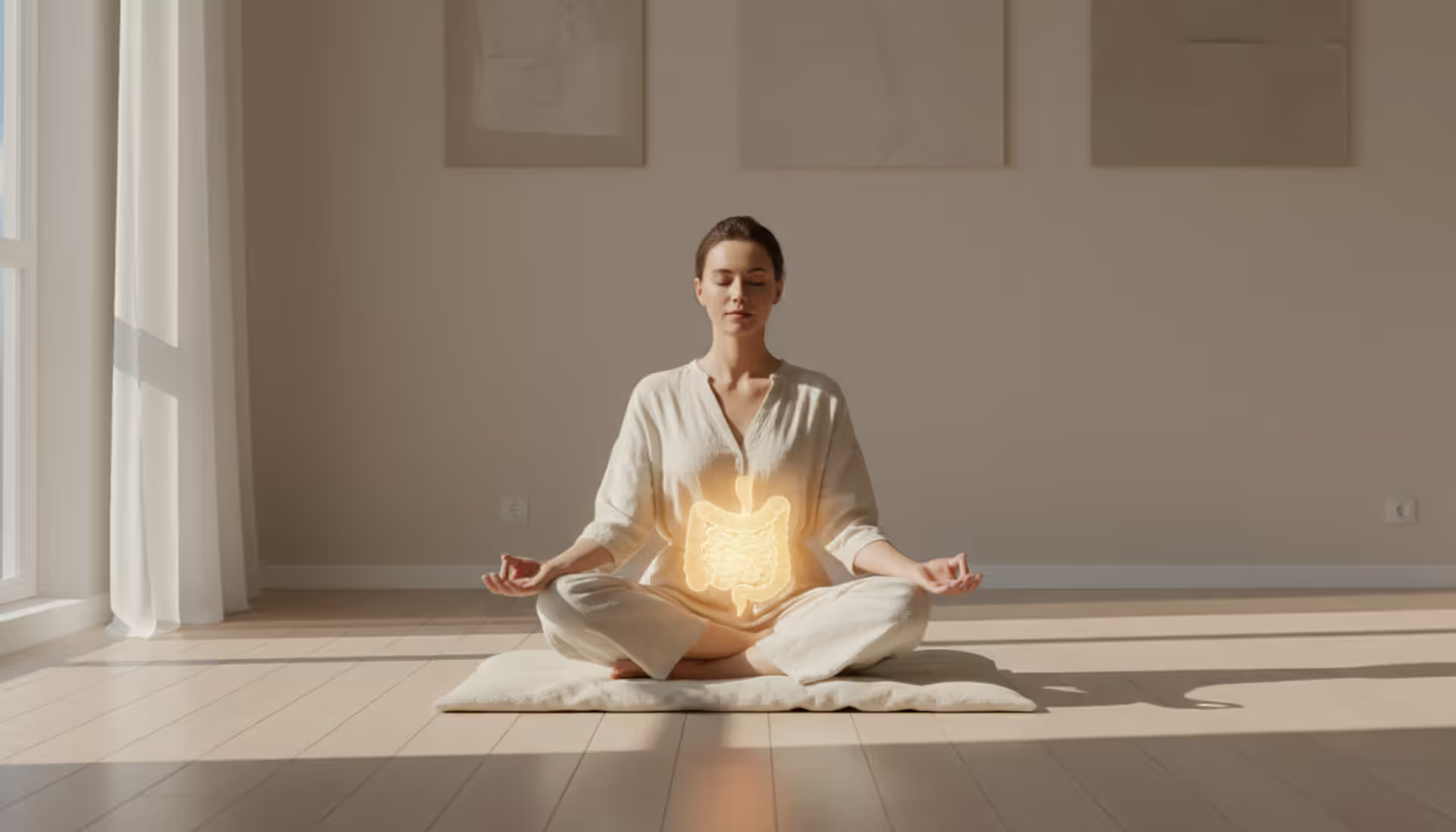
Your stomach churns before a big presentation. A stressful week leaves you bloated and uncomfortable. The connection between your mental state and digestive system isn't just in your head—it's a biological reality that meditation can help address through the gut-brain axis and vagus nerve activation
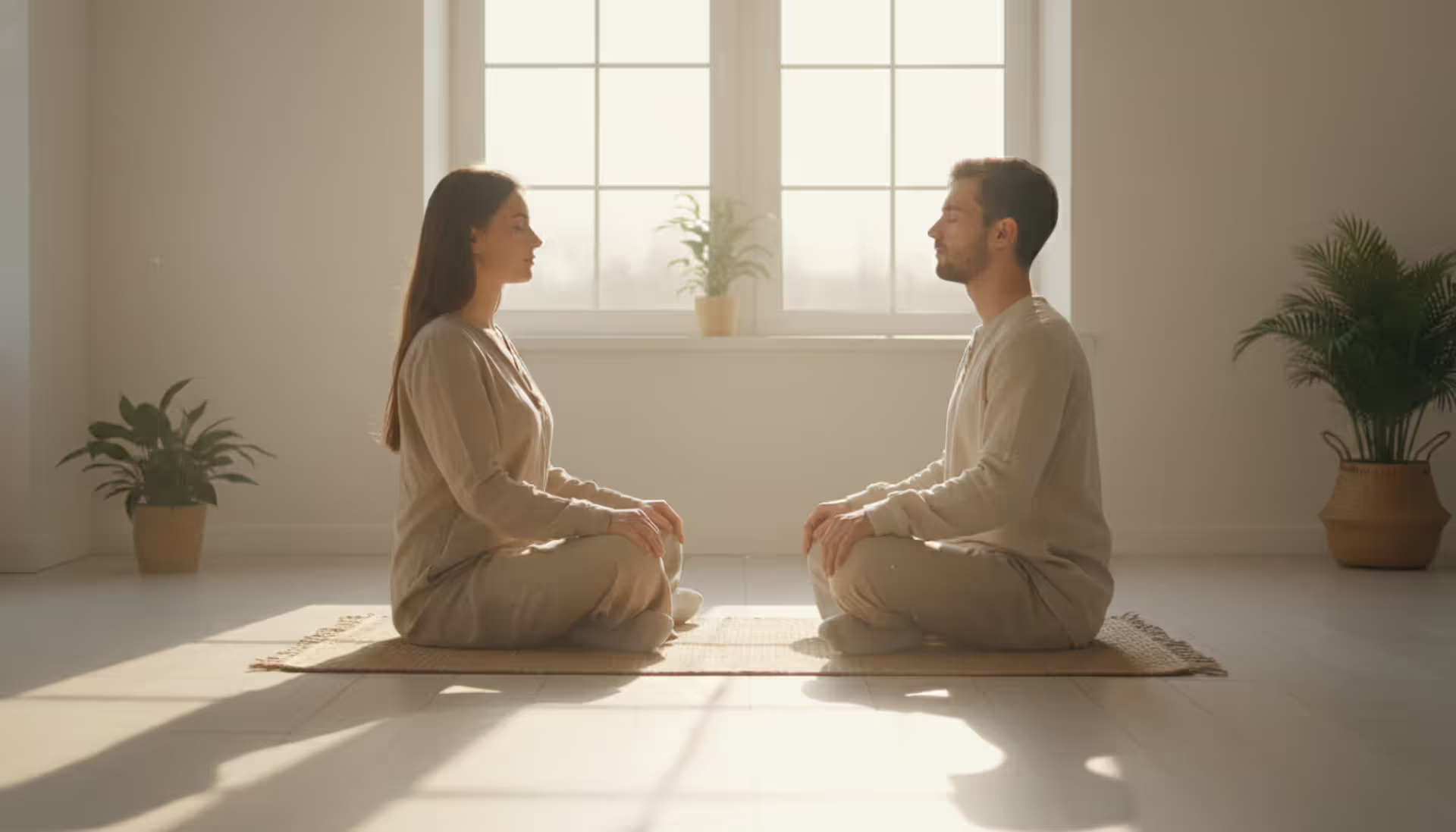
Sharing meditation with your romantic partner creates a unique space for emotional intimacy that most couples never experience. Research shows couples who practice mindfulness together report 23% higher relationship satisfaction while building deeper connection at a neurological level
The content on this website is provided for general informational and educational purposes only. It is intended to explain concepts related to meditation, mindfulness, mental health, and spiritual practices.
All information on this website, including articles, guides, and examples, is presented for general educational purposes. Meditation outcomes may vary depending on individual practices, health conditions, and guidance.
This website does not provide medical, mental health, or spiritual advice, and the information presented should not be used as a substitute for consultation with qualified professionals.
The website and its authors are not responsible for any errors or omissions, or for any outcomes resulting from decisions made based on the information provided on this website.