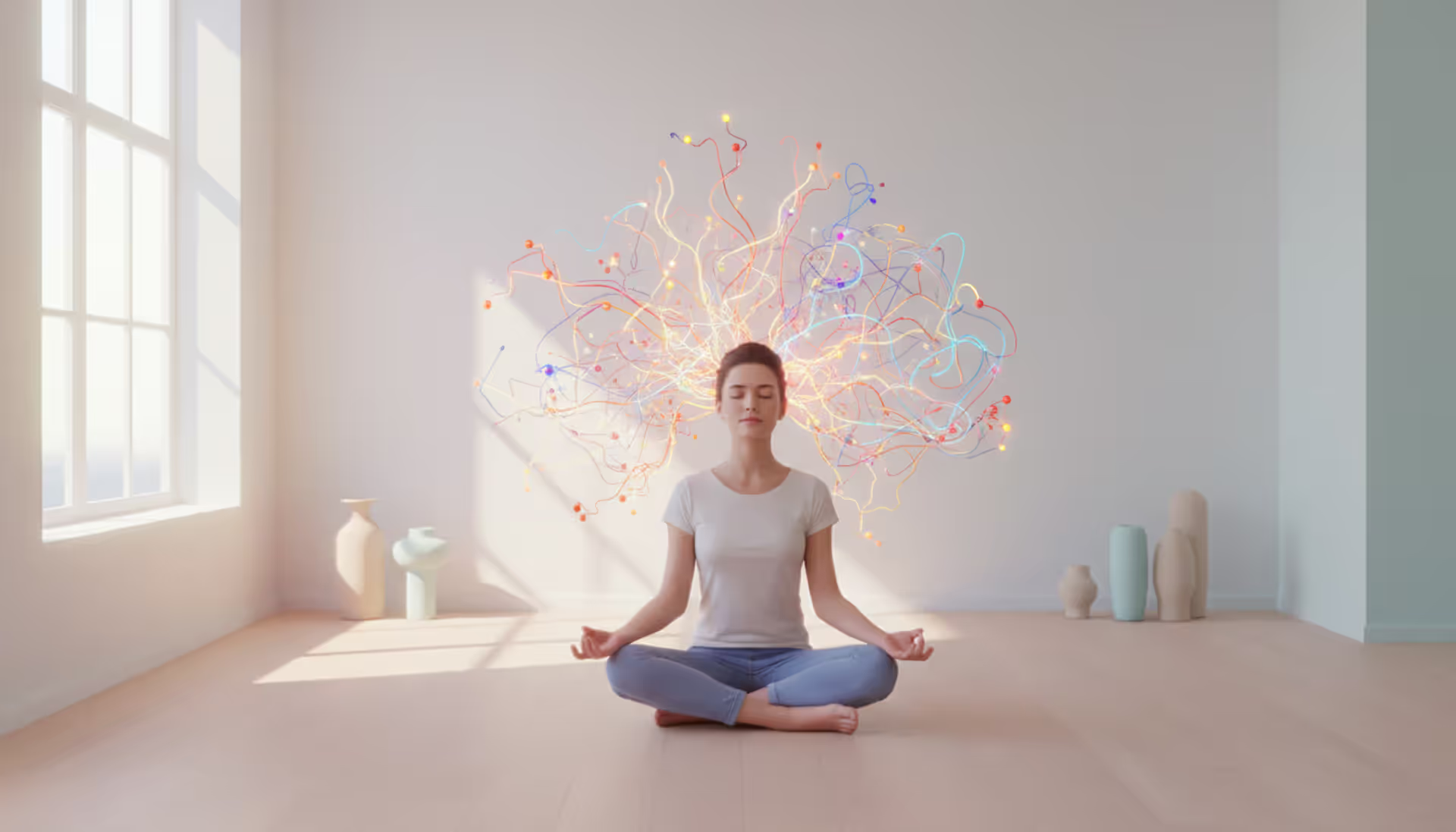
Person meditating in a calm room with stylized neural connections and brain activity visualization around their head, representing ADHD and meditation concept
Attention-deficit/hyperactivity disorder creates a constant battle with focus that most people without the condition struggle to understand. While medication remains the primary treatment, growing evidence suggests meditation offers meaningful benefits for managing ADHD symptoms—though not in the ways many expect.
How ADHD Affects Focus and Attention
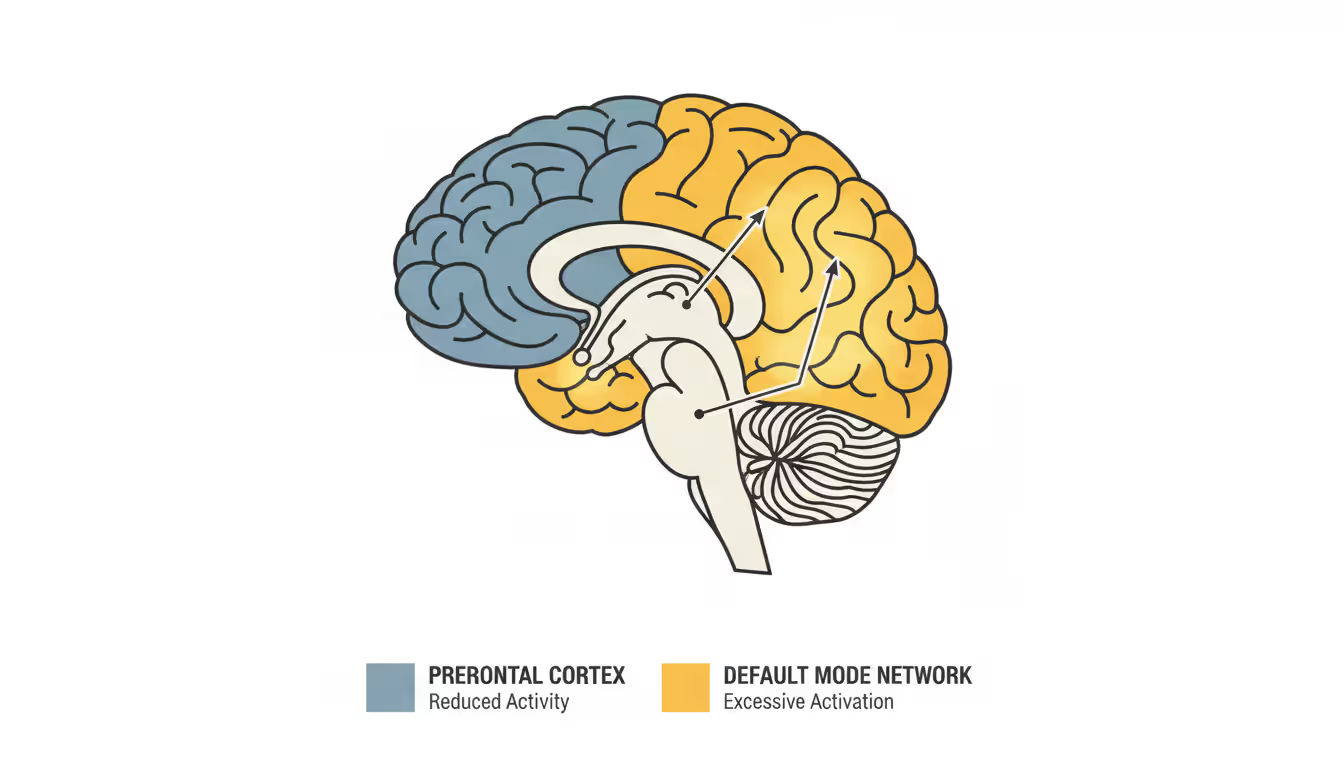
ADHD fundamentally alters how the brain regulates attention and executive function. The prefrontal cortex, responsible for planning and impulse control, shows reduced activity in people with ADHD. Simultaneously, dopamine and norepinephrine—neurotransmitters critical for sustained attention—function irregularly.
This creates a specific problem: the ADHD brain doesn't lack the ability to focus but rather struggles to direct and sustain attention intentionally. Someone with ADHD might hyperfocus on a video game for hours yet find reading a single page of required material nearly impossible. This isn't laziness or poor discipline.
The default mode network (DMN), active during mind-wandering and self-referential thinking, shows excessive activation in ADHD brains. This network should quiet during focused tasks, but in ADHD, it intrudes constantly. The result: thoughts drift mid-sentence, conversations get lost, and tasks require repeated restarts.
Traditional focus strategies often fail because they assume a neurotypical attention system. Telling someone with ADHD to "just concentrate harder" is like asking someone with poor vision to squint better. The underlying mechanism needs support, not just willpower. Meditation and attention training address these neurological patterns rather than fighting against them.
Author: Caleb Montrose;
Source: 5sensesspa.com
What Research Says About Meditation for ADHD
Clinical evidence for meditation's effectiveness in ADHD has strengthened considerably over the past decade. A 2023 meta-analysis published in the Journal of Attention Disorders examined 18 randomized controlled trials involving over 1,200 participants. The findings showed moderate improvements in attention metrics and small-to-moderate reductions in hyperactivity symptoms among adults who practiced mindfulness meditation regularly for eight weeks or longer.
Research from UCLA's Mindful Awareness Research Center demonstrated that adults with ADHD who completed an eight-week mindfulness program showed 30% improvement on attention tests compared to control groups. Brain imaging revealed increased activity in the prefrontal cortex during sustained attention tasks—exactly the region that typically underperforms in ADHD.
Can meditation help with ADHD as effectively as medication? The research suggests they work differently. A 2025 study comparing mindfulness training to stimulant medication found that while medication produced faster and larger improvements in attention span, meditation showed superior results for emotional regulation and stress reduction. Participants using both approaches reported the best overall symptom management.
Mindfulness for ADHD appears particularly effective for specific symptom clusters. Studies consistently show stronger effects on executive function and emotional dysregulation than on core hyperactivity symptoms. One participant described it this way: "Meditation didn't make my brain less chaotic, but it gave me a better relationship with the chaos."
Not all research shows positive results. Several studies found no significant improvements when meditation sessions were too short (under 10 minutes) or inconsistent. The benefits appear dose-dependent—more practice correlates with better outcomes, though with diminishing returns beyond 30 minutes daily.
How Meditation Improves Concentration and Cognitive Performance
Does meditation improve focus through actual brain changes or just temporary effects? Neuroimaging studies reveal structural modifications after consistent practice. Gray matter density increases in the hippocampus and prefrontal cortex—regions involved in learning and executive control. These changes emerge after approximately 40-60 hours of cumulative practice.
The mechanism involves neuroplasticity: repeatedly directing attention back to a meditation object (breath, body sensation, sound) strengthens the neural circuits responsible for attention control. Think of it as resistance training for focus. Each time attention wanders and you notice and redirect it, you've completed one "rep."
Author: Caleb Montrose;
Source: 5sensesspa.com
Does meditation increase focus by creating new abilities or enhancing existing ones? Research suggests the latter. Meditation doesn't add attention capacity but improves attention allocation—the brain becomes more efficient at deploying limited attention resources. For ADHD brains chronically struggling with attention allocation, this makes a practical difference.
Meditation for cognitive performance works partly by regulating the default mode network. Regular meditators show reduced DMN activation during tasks requiring focus. For ADHD individuals, this means fewer intrusive thoughts derailing concentration. One study participant noted she could finally "finish reading a paragraph without my mind jumping to what I'm having for dinner."
Meditation for concentration also improves what researchers call "meta-awareness"—the ability to notice when attention has drifted. ADHD often involves delayed awareness of distraction; you realize you've been off-task only after several minutes. Meditation training speeds this recognition, shrinking the gap between distraction and awareness from minutes to seconds.
The stress-reduction component matters too. Chronic stress impairs prefrontal cortex function, worsening ADHD symptoms. Meditation's documented stress-reduction effects create better conditions for the attention systems to function. Lower cortisol levels mean better executive function.
Meditation doesn't cure ADHD, but it can fundamentally change how individuals relate to their symptoms. We see patients develop greater awareness of their attention patterns and improved ability to redirect focus without the self-criticism that often accompanies ADHD. These metacognitive skills complement medication rather than replace it
— Dr. Lidia Zylowska
Proven Meditation Techniques for ADHD Focus
Different ADHD meditation techniques suit different symptom profiles and preferences. No single approach works universally, and many people benefit from combining methods.
Mindfulness Meditation
Mindfulness meditation involves observing thoughts, sensations, and emotions without judgment or engagement. For ADHD, this practice builds awareness of distraction patterns. You sit quietly, focus on breathing, and when thoughts arise—which they will constantly—you acknowledge them and return attention to breath.
The ADHD-specific adaptation: shorter sessions with more structured guidance. Instead of 30-minute silent sits, start with 5-7 minutes using guided audio. The external voice provides regular attention anchors, preventing the extended mind-wandering that frustrates ADHD practitioners.
Common mistake: treating wandering thoughts as failure. With ADHD, your mind will wander dozens of times in five minutes. That's not poor meditation—that's the practice. Each return to focus is the actual exercise.
Focused Attention Meditation
This technique emphasizes sustained concentration on a single object: breath, a candle flame, a repeated phrase, or physical sensation. Meditation for ADHD focus often works better with concrete, sensory-rich objects rather than abstract concepts.
Try focusing on the physical sensation of breath at your nostrils—the cool air entering, warm air exiting. When attention drifts (not if, but when), redirect it to that specific sensation. The narrow focus provides clear feedback about whether you're on-task.
For severe attention difficulties, use a more engaging object. Some ADHD meditators find success with a small object in hand—feeling its texture, temperature, and weight provides stronger sensory input that's easier to maintain attention on than breath alone.
Body Scan Practices
Body scan meditation involves systematically moving attention through different body parts, noticing sensations without trying to change them. Start at your toes, spend 20-30 seconds noticing sensations there, then move to feet, ankles, calves, and so on.
This works well for ADHD because it provides a structured sequence—you always know where attention should be next. The movement prevents boredom, a significant obstacle for ADHD practitioners. The practice also builds interoceptive awareness, which often correlates with improved emotional regulation.
ADHD adaptation: use shorter intervals per body part (15-20 seconds instead of 60) and complete the full scan in 8-10 minutes rather than 30-45. Some practitioners prefer scanning upward (feet to head) rather than downward, finding it energizing rather than sleep-inducing.
Author: Caleb Montrose;
Source: 5sensesspa.com
Breathing Exercises
Specific breathing patterns can activate the parasympathetic nervous system, reducing hyperactivity and mental restlessness. Box breathing—inhale for four counts, hold for four, exhale for four, hold for four—provides a clear structure that ADHD minds often find easier than open monitoring.
The 4-7-8 technique (inhale for 4, hold for 7, exhale for 8) creates mild oxygen reduction that triggers relaxation responses. This works particularly well before tasks requiring sustained focus or when hyperactivity feels overwhelming.
Counting breaths provides another ADHD-friendly option: count each exhale from one to ten, then restart. When you lose count—which will happen—simply restart at one without judgment. This builds the notice-and-redirect skill central to attention control.
Starting meditation with ADHD requires different strategies than standard beginner advice. The "sit for 20 minutes in silence" approach typically fails quickly.
Begin with three minutes. Not five, not ten—three. Set a timer. This feels absurdly short, which is the point. ADHD brains respond better to easily achievable goals than ambitious ones that lead to failure and abandonment. Complete three minutes daily for one week before increasing duration.
Time of day matters more for ADHD practitioners. Many find morning meditation difficult because ADHD symptoms often peak after waking. Mid-morning (after medication takes effect, if using) or early afternoon works better. Some people benefit from brief sessions before challenging tasks rather than a single long session.
Environment setup should minimize distractions without creating unrealistic requirements. A quiet room helps, but waiting for perfect silence ensures you'll never start. Noise-canceling headphones playing guided meditation or white noise can work better than seeking absolute quiet.
Use guided meditations initially. The external voice provides regular attention anchors and prevents extended mind-wandering. Apps like Headspace, Calm, and Insight Timer offer ADHD-specific programs. The structure compensates for executive function difficulties.
Realistic expectations prevent discouragement. You won't experience dramatic focus improvements in week one. Most people notice subtle changes around week 4-6: slightly longer attention spans, faster recognition of distraction, or reduced frustration with interruptions. Significant benefits typically emerge after 8-12 weeks of consistent practice.
Common obstacles include:
Forgetting to practice: Set a daily alarm. Link meditation to an existing habit (after coffee, before lunch). Put your meditation cushion somewhere you'll trip over it.
Physical restlessness: Try walking meditation or gentle yoga instead of seated practice. Movement-based meditation suits ADHD brains better than forced stillness.
Perceived failure: Wandering thoughts aren't failure—they're the raw material of practice. A session with 50 distractions where you redirected attention 50 times is more valuable than a calm session with few distractions.
Inconsistency: Missing days happens. The research shows benefits from cumulative practice hours, not perfect streaks. Four days of practice weekly beats zero days while you feel guilty about breaking a streak.
Track practice in a simple way—checkmarks on a calendar, not detailed journals requiring sustained effort. The tracking itself shouldn't require the executive function you're trying to develop.
Author: Caleb Montrose;
Source: 5sensesspa.com
Meditation vs Other ADHD Focus Strategies
How does meditation compare to established ADHD treatments? The evidence suggests complementary rather than competitive relationships.
Medication: Stimulant medications (methylphenidate, amphetamines) typically produce larger and faster attention improvements than meditation. They work within 30-60 minutes; meditation requires weeks. However, medication doesn't teach attention regulation skills or address emotional dysregulation. Can meditation help with ADHD enough to replace medication? For most people, no—but it can reduce required doses or improve outcomes when combined with medication.
Cognitive Behavioral Therapy: CBT teaches specific skills for managing ADHD symptoms—organization systems, time management, emotional regulation strategies. Meditation builds the underlying attention control that makes implementing CBT strategies easier. Research shows combined approaches outperform either alone.
Exercise: Physical activity produces immediate attention improvements lasting 1-2 hours post-exercise. A 2025 study found 30 minutes of moderate-intensity exercise produced attention gains comparable to low-dose stimulant medication. Exercise works faster than meditation but requires more time and physical effort. Many people benefit from both—exercise for immediate effects, meditation for long-term skill building.
Dietary interventions: Elimination diets, omega-3 supplementation, and reduced sugar intake show modest benefits in some studies. Effects are smaller and less consistent than meditation, medication, or exercise. Diet modifications work best as part of comprehensive approaches rather than standalone treatments.
Sleep optimization: Poor sleep severely worsens ADHD symptoms. Improving sleep hygiene produces benefits comparable to meditation for cognitive performance. Interestingly, meditation often improves sleep quality, creating a positive feedback loop.
The most effective approach typically combines multiple strategies: medication for baseline symptom management, exercise for immediate attention boosts, meditation for skill development, and CBT for practical strategies. Meditation for cognitive performance adds value to other treatments rather than replacing them.
Frequently Asked Questions About Meditation and ADHD
How long does it take for meditation to help with ADHD symptoms?
Most research participants notice subtle improvements after 4-6 weeks of daily practice, with more significant changes emerging at 8-12 weeks. This assumes 10-20 minutes of daily practice. Shorter or inconsistent practice delays results. Unlike medication, which works within an hour, meditation builds skills gradually. Some people report immediate stress reduction after single sessions, but sustained attention improvements require weeks of consistent practice.
Can meditation replace ADHD medication?
For most people, no. Research shows meditation produces smaller attention improvements than stimulant medication, though it offers benefits medication doesn't address—particularly emotional regulation and stress reduction. Some individuals with mild ADHD successfully manage symptoms with meditation, exercise, and behavioral strategies alone, but this represents a minority. The question shouldn't be meditation versus medication but whether adding meditation to your current treatment improves outcomes. Studies consistently show combined approaches work best.
How long should someone with ADHD meditate each day?
Research suggests 10-20 minutes daily produces meaningful benefits. Longer sessions don't necessarily improve results—a 2024 study found no additional attention benefits beyond 30 minutes daily. Starting with 3-5 minutes and gradually increasing prevents the discouragement that comes from overly ambitious initial goals. Consistency matters more than duration; seven days of 10-minute sessions beats one 70-minute session weekly. Some people benefit from multiple short sessions (two 8-minute sessions) rather than one longer period.
Is meditation harder for people with ADHD?
Yes, in specific ways. ADHD brains experience more frequent mind-wandering and greater difficulty sustaining attention on meditation objects. Physical restlessness makes sitting still challenging. However, this doesn't mean meditation is impossible or less beneficial—just that it requires adapted approaches. Shorter sessions, guided audio, movement-based practices, and realistic expectations about wandering thoughts all help. The difficulty itself is part of the practice; each attention redirect strengthens focus circuits.
What type of meditation works best for ADHD?
No single technique works universally. Mindfulness meditation shows the strongest research support for ADHD symptoms. Focused attention practices build sustained concentration but feel harder initially. Body scans work well for people with significant hyperactivity. Breathing exercises provide quick focus resets. Most people benefit from trying multiple approaches and combining techniques. Walking meditation or yoga might suit those who struggle with seated stillness. The best meditation is the one you'll actually practice consistently.
Can children with ADHD benefit from meditation?
Research indicates yes, though approaches need age-appropriate modifications. Studies with children ages 7-12 show improvements in attention, impulse control, and emotional regulation after 8-12 weeks of practice. Sessions should be shorter (3-8 minutes), more interactive, and often movement-based. School-based mindfulness programs have shown promising results. However, children typically need more guidance and external structure than adults. Parent involvement improves consistency. Meditation works best as part of comprehensive treatment including behavioral interventions and, when appropriate, medication.
Meditation offers genuine benefits for ADHD symptoms, particularly for improving attention regulation, reducing stress, and enhancing emotional control. The evidence supports its use as a complementary treatment alongside medication, therapy, and lifestyle interventions rather than a standalone solution.
The practice requires realistic expectations and ADHD-appropriate adaptations. Starting with very short sessions, using guided audio, choosing engaging meditation objects, and accepting frequent mind-wandering as normal rather than failure all improve success rates. Benefits emerge gradually over weeks and months, not days.
The most valuable aspect of meditation for many ADHD individuals isn't necessarily improved focus duration but rather faster recognition of distraction and reduced self-criticism about attention difficulties. These metacognitive skills create better relationships with ADHD symptoms even when the symptoms themselves remain challenging.
Whether meditation helps with your specific ADHD symptoms depends on consistent practice over at least 8-12 weeks, choosing techniques matching your symptom profile, and integrating meditation into a broader treatment approach. The research suggests trying it—with appropriate expectations and adaptations—offers meaningful potential benefits with minimal risks.
Research shows 8-14% of meditators experience significant adverse effects. From anxiety amplification to dark night experiences, meditation isn't risk-free. Understand physical and psychological dangers, who's most vulnerable, and how to recognize when practice becomes harmful
Discover how meditation interrupts the stress cycle through proven physiological mechanisms. This comprehensive guide covers meditation types, nervous system effects, cortisol reduction, workplace practices, and research-backed techniques for building a sustainable stress meditation practice
Your stomach churns before a big presentation. A stressful week leaves you bloated and uncomfortable. The connection between your mental state and digestive system isn't just in your head—it's a biological reality that meditation can help address through the gut-brain axis and vagus nerve activation
Sharing meditation with your romantic partner creates a unique space for emotional intimacy that most couples never experience. Research shows couples who practice mindfulness together report 23% higher relationship satisfaction while building deeper connection at a neurological level
The content on this website is provided for general informational and educational purposes only. It is intended to explain concepts related to meditation, mindfulness, mental health, and spiritual practices.
All information on this website, including articles, guides, and examples, is presented for general educational purposes. Meditation outcomes may vary depending on individual practices, health conditions, and guidance.
This website does not provide medical, mental health, or spiritual advice, and the information presented should not be used as a substitute for consultation with qualified professionals.
The website and its authors are not responsible for any errors or omissions, or for any outcomes resulting from decisions made based on the information provided on this website.